


Medical training organizations lose leads not because Google Ads doesn't work, but because they can't see who's already interested. A hospital's continuing-education coordinator researches ACLS recertification options across three sessions before ever filling out a form, and by the time she does, the campaign that first caught her attention gets no credit. Compliance adds another layer: healthcare marketing carries HIPAA obligations that most industries don't face, and certification programs run on hard enrollment deadlines and licensing cycles that make timing as important as targeting. Whether you're promoting Certified Medical Training Ads or Healthcare Professional Training Workshops, the organizations winning in this channel pair precise keyword and audience strategy with visibility into the anonymous traffic that would otherwise disappear. This guide covers both, plus how to integrate Google Ads with your Learning Management System without compromising compliance.
How to Generate Google Ads for Medical Training Leads: A Step-by-Step Guide
Healthcare education marketers can accelerate enrollment growth by applying advanced digital marketing for healthcare strategies, using granular targeting and real-time audience engagement to capture high-intent prospects. Delivering timely, relevant messaging to healthcare professionals searching for certified medical training ads ensures programs remain top-of-mind during key decision periods.
Integrating predictive analytics and dynamic audience management into Google Ads for Medical Training eliminates the guessing game around lead qualification. When visitor identification technology ties anonymous traffic to named organizations, revenue teams can prioritize outreach to buyers who are actively evaluating medical training courses.
- Establish clear goals and KPIs: Define what successful healthcare lead generation looks like for your program. This might include increasing applications for online medical courses, boosting attendance at in-person workshops, or raising brand awareness among professional associations. Teams that employ real-time lead engagement tools can respond instantly when a prospect reaches a critical step, preventing missed opportunities and maximizing conversion rates throughout the funnel.
- Conduct thorough keyword research: Target phrases like 'Healthcare Professional Training Workshops,' 'Online Medical Courses Advertising,' and 'Certified Medical Training Ads' to focus spend on high-converting queries. AI-driven keyword modeling helps reveal new intent signals as search patterns shift, allowing marketers to dynamically adjust bids and content themes. By monitoring visitor journeys in real time, marketers can shift budget to audiences demonstrating active research behavior or purchase readiness.
- Develop specific ad group structures: Align each ad group to a distinct service or certification within your medical training portfolio, ensuring Google Ads compliance with industry regulations. This structure streamlines campaign management and allows for granular performance analysis. As leads progress through the decision cycle, dynamic audience segmentation ensures they see the most relevant messaging, whether they are first-time visitors or returning applicants.
- Design consistent landing pages: Create landing pages that directly match ad copy, featuring clear CTAs and educational value propositions. A seamless experience from click to conversion reduces friction and increases patient engagement, especially when forms are pre-populated for returning leads or tailored to the user’s previous interactions. Continuous A/B testing refines layouts and messaging based on real-world performance data.
- Invest in performance tracking: Implement analytics that capture both online and offline interactions to optimize ad spend and improve engagement. Advanced conversion tracking enables attribution of phone calls, event registrations, and completed applications back to specific ads or keywords. By syncing enriched lead and account data into CRMs and ad platforms, marketers can automate nurture flows and retargeting, ensuring that no high-value prospect falls through the cracks.
To see how these strategies work in action and streamline your enrollment marketing, get started for free with Sona.
Why Does Google Ads Matter for Medical Training?

Medical training organizations operate in a fast-evolving landscape where competition for student enrollment and practitioner engagement is increasingly steep. With Google Ads, these programs effectively reach highly specialized audiences, such as trauma care coordinators, surgical technologists, and continuing medical education (CME) seekers, at the critical moment they search for relevant courses or certifications. For an overview of how Google Ads drives results in healthcare marketing, see using Google Ads in healthcare marketing. This direct access eliminates wasted impressions and helps marketing and sales teams respond to genuine intent signals, reducing friction caused by fragmented data or slow lead follow-up.
The ability to promote CME programs in real time is a game changer for driving registrations and maintaining program relevance. When prospects express interest, immediate engagement is crucial to prevent valuable leads from losing interest or turning to competitors. Google Ads empowers medical training providers to stay top-of-mind throughout the decision journey, ensuring timely communication and nurturing of every inquiry.
For organizations facing tight windows for class start dates or regulatory recertification, Google Ads enables the deployment of highly targeted, time-sensitive campaigns. This immediate response capacity surpasses traditional outbound approaches, accelerating the path from inquiry to enrollment. Digital marketing for healthcare leverages precision targeting to boost online visibility, especially in underserved or emerging geographic regions where awareness is limited and efficient reach is essential.
Advanced technology now allows training providers to optimize for predictive buying stages, using live behavioral data to identify when medical professionals are most likely to convert. By shifting budget and bidding strategies toward those showing in-market behavior, teams maximize healthcare lead generation outcomes. Platforms equipped with real-time company-level identification and CRM integration further enhance Google Ads campaigns by revealing which organizations are actively researching medical training, allowing for dynamic audience updates and high-impact, personalized outreach as leads progress through the funnel. To see these capabilities in action, get started for free with Sona.
Common Types of Google Ads Campaigns for Medical Training

- Search Campaigns: Search campaigns for medical training capture urgent, high-intent queries from prospective students and healthcare professionals. Bidding on keywords tied to specific certifications or enrollment deadlines, such as an upcoming recertification cutoff, ensures ads appear precisely when candidates are researching their next career step. Within Search, Responsive Search Ads let you test multiple headlines and descriptions so Google can surface the combination that resonates with a given query, while identification tools move marketers past anonymous clicks by revealing which companies and people are visiting your website, scoring visitor intent, and triggering automated sales actions. This clarity reduces wasted ad spend and prioritizes budget toward genuine prospects with demonstrated interest in medical education. For more on attracting and retaining patients through Google Ads in healthcare, see this overview of Google Ads for healthcare.
- Display Ads: Display ads serve as a critical touchpoint for reinforcing a medical training brand across healthcare industry sites and educational resources. These visual placements help maintain visibility among audiences browsing relevant content, making them effective for both nurturing early interest and reminding decision-makers of upcoming program deadlines. Modern platforms provide real-time audience segmentation and targeting, enabling revenue teams to focus display campaigns on organizations and professionals who have already demonstrated fit or intent. To further refine your display strategy, explore our playbook on amplifying cold outreach with website visitor intelligence.
- Video Ads: Video campaigns, particularly on platforms like YouTube, are increasingly important for medical training programs seeking to educate and engage prospective students at scale. Through tutorials, testimonials, or virtual campus tours, video ads communicate complex program value and differentiate offerings. Enhanced buyer journey analytics reveal which viewers are not just watching but actively researching or engaging with course content, allowing marketers to dynamically update audience segments and focus follow-up efforts on those showing the most promising in-market behavior. To see how video campaigns can drive results in healthcare marketing, watch this effective Google Ads for healthcare video.
- Remarketing: Remarketing campaigns are essential in converting previous site visitors who have shown interest in specific courses, certifications, or information sessions but have not yet engaged further. By segmenting audiences based on past interactions, such as downloading a syllabus or viewing a class schedule, marketers can deliver highly relevant follow-up ads timed to drive action before enrollment closes. Integration with CRM and ad platforms ensures these dynamic audiences are automatically updated as leads progress through the funnel, maximizing engagement with firms and individuals that have already demonstrated purchase intent.
- Performance Max: Performance Max campaigns pool inventory across Search, Display, YouTube, and Gmail into a single goal-driven campaign, which suits medical training providers who want broad reach around a specific enrollment period without managing each channel separately. Feeding it strong conversion signals, such as completed applications rather than form starts, matters more here than in single-channel campaigns, since the algorithm allocates budget across placements based on what it's told counts as a valuable outcome.
Where to Find Growth Opportunities in Medical Training Advertising

Targeting growth opportunities in medical training advertising requires a refined approach that goes beyond generic healthcare PPC. Medical training providers who zero in on specialized vertical keywords can reach audiences with immediate intent, ensuring that every click is more likely to turn into a qualified inquiry or enrollment. For actionable insights on niche healthcare PPC, review this overview of Google Ads in healthcare marketing and explore proven tactics in our B2B marketing playbooks.
- Vertical Keyword Targeting: Focusing on niche medical training fields, such as phlebotomy certification, EMT refresher courses, or advanced diagnostic imaging programs, captures highly motivated prospects. These keywords attract professionals seeking specific upskilling opportunities, resulting in higher conversion rates and lower wasted ad spend. Using dynamic keyword segmentation, campaigns can identify and prioritize segments where intent signals are strongest, particularly as audiences demonstrate readiness through repeated research or inquiry behaviors. Integrating real-time web visitor identification, marketers can now pinpoint which organizations or individuals are engaging with high-value program pages, allowing for more precise retargeting and custom landing experiences that address their certification needs.
- Competitor Gap Analysis: Advancing beyond basic competitive research, smart medical training marketers analyze gaps in existing campaign coverage and intent data. They identify underserved segments, such as allied health professionals in rural areas or recent graduates seeking specialty credentials, that competitors are overlooking. Predictive analytics play a key role here, surfacing emerging patterns in student demand or shifting licensure requirements. When high-intent audiences are detected but not yet addressed in existing campaigns, budget and creative resources are redirected to capture these missed opportunities. Enhanced intent data, combined with real-time lead scoring and CRM enrichment, enables seamless audience syncing into Google Ads and downstream platforms, ensuring that every campaign update is informed by the latest market dynamics and prospect engagement scores.
- Industry-Specific Placements: Medical training institutions can amplify their reach by placing ads within trade forums, certification directories, and specialty medical portals frequented by healthcare professionals. This strategy ensures campaigns are visible to decision-makers and learners who are actively seeking new qualifications or continuing education opportunities. By leveraging contextual placement and advanced audience segmentation, ads can be tailored to appear on pages discussing licensure changes, new clinical techniques, or regulatory updates. As leads interact with these touchpoints, dynamic audiences update automatically, keeping remarketing lists current and maximizing follow-up precision. With integrated conversion tracking, marketers gain a holistic view of which placements and creative assets drive the highest enrollment ROI, optimizing both immediate and long-term growth potential in medical training advertising.
Ready to uncover new growth opportunities? Get started for free with Sona.
How to Apply Audience Segmentation for Medical Training

Audience segmentation for medical training programs requires more than broad demographic filters. The most effective digital marketing for healthcare uses a nuanced approach, aligning program offerings with the unique needs of diverse medical professionals and students. Precision segmentation minimizes wasted spend by ensuring only relevant, high-intent leads enter the funnel, improving both engagement and conversion rates for healthcare PPC campaigns.
- Define Segments: Every medical training audience includes a range of specializations and experience levels. Segmenting by discipline, such as phlebotomy, radiology, or EMT training, ensures campaigns deliver tailored messaging that resonates with the unique motivations of each group. Further refinement by experience allows you to address beginners seeking foundational certifications differently than seasoned professionals pursuing continuing education credits. Dynamic segmentation, powered by unified data across digital channels, prevents cold, unqualified traffic from draining resources. With real-time visitor identification and company-level analytics, marketers can pinpoint organizations or individuals expressing interest in specific medical training paths, allowing for immediate and personalized outreach.
- Intent Signals Overlay: Surface-level segmentation misses the critical factor of intent. By overlaying behavioral indicators, such as recent site visits to certification pages, downloads of course brochures, or webinar attendance, revenue teams can identify professionals actively evaluating new training opportunities. This approach supports Google Ads for Medical Training strategies that shift budgets toward audiences demonstrating readiness for enrollment, rather than passive browsers. Technology platforms that unify web, CRM, and ad performance data make it possible to ensure intent signals are never siloed. This synchronization drives timely and relevant ad placements, so continuing education campaigns reach in-market prospects at the exact moment they’re most likely to convert.
- Create Segment-Based Ad Groups: Tailoring ad groups and budgets to each audience segment maximizes the impact of every healthcare marketing dollar. For example, allocate separate ad groups for nurses seeking advanced cardiac life support certification versus allied health professionals exploring entry-level courses. Messaging, creative, and call-to-action are adjusted to reflect the specific career goals and qualification requirements of each group. When audience lists are dynamically refreshed based on lead activity, the marketing team maintains a constantly updated understanding of the buyer journey. Automated sync of enriched audiences between CRM and ad platforms allows medical practice advertising to immediately adjust targeting as leads progress, ensuring that no high-value prospect falls through the cracks. This level of granularity supports compliance efforts, as only compliant, opt-in contacts receive targeted medical training ads, and all engagement can be attributed back to actual enrollment outcomes for precise ROI measurement. To elevate your segmentation strategy, get started for free with Sona and unlock powerful automation for medical training campaigns.
This is also where measurement changes the economics. With Sona Marketing Measurement you can identify the companies behind your ad clicks, not just anonymous sessions, and segment audiences by which accounts actually become customers. That lets you build bid adjustments and audience signals around the segments that convert and de-prioritize the ones that don't, so you feed Google's algorithms "this click became a paying medical training customer" instead of just "someone filled out a form."
Keyword Strategy & Sample Target Terms
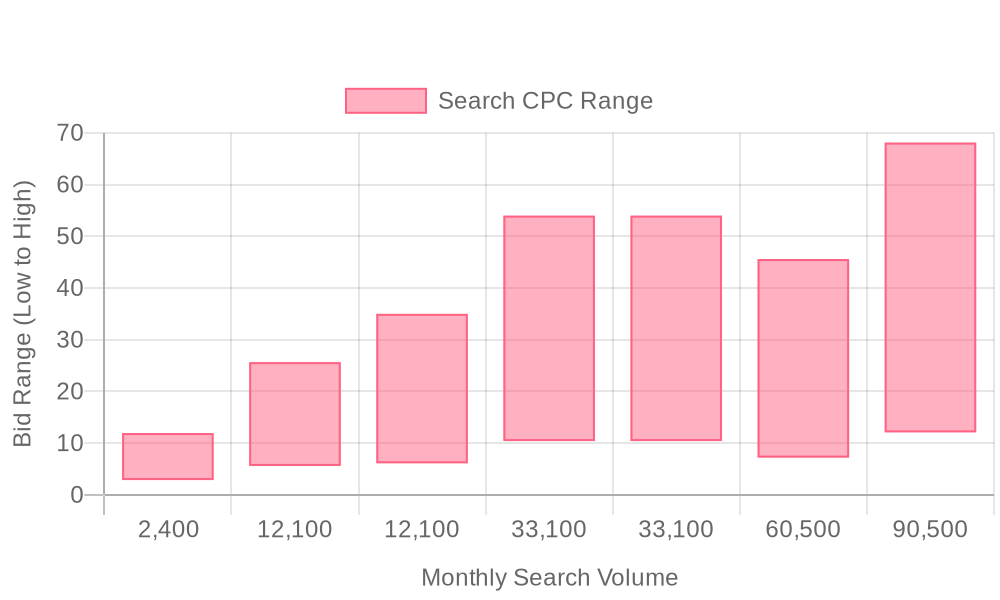
| Industry | Keyword | Monthly Search Volume | Competition Level | Low Bid | High Bid |
| Medical Training | medical training | 2400 | LOW | 2.87 | 11.95 |
| Medical Training | medical assistant school | 12100 | MEDIUM | 5.59 | 25.66 |
| Medical Training | medical coding classes | 12100 | MEDIUM | 6.11 | 35 |
| Medical Training | billing and coding classes | 33100 | LOW | 10.4 | 53.98 |
| Medical Training | medical billing and coding school | 33100 | LOW | 10.4 | 53.98 |
| Medical Training | medical billing and coding certification | 60500 | LOW | 7.21 | 45.59 |
| Medical Training | medical billing and coding classes | 90500 | LOW | 12.09 | 68.11 |
Precision in keyword strategy is vital for medical training organizations seeking to maximize every dollar of ad spend. By identifying and targeting decision-makers at the moment they are searching for relevant certifications or educational resources, marketing teams can eliminate guesswork and manual lead qualification, accelerating their pipeline. High-intent keywords act as gateways to direct engagement with healthcare professionals and administrators actively seeking to enroll, upskill, or certify staff, which elevates both relevance and conversion rates.
- Strategic Value in Precision Targeting: A refined keyword approach ensures outreach reaches medical program directors, HR managers at hospitals, and individual practitioners when they are evaluating new training options. For example, segmenting by intent, targeting terms like "accredited ACLS certification online" or "hospital staff phlebotomy training course", prioritizes users who are both empowered to make a purchasing decision and are in-market. When platforms integrate visitor identification, teams can move beyond anonymous clicks to attribute search behavior to actual organizations, allowing campaign optimization based on real business outcomes.
- Utilize High-Intent Keywords: Focusing on terms such as "healthcare marketing," "Google Ads compliance," "medical training ads," and "digital marketing for healthcare" ensures that ad spend is allocated toward users with a high likelihood of taking action. Additional terms like "patient engagement strategies," "healthcare PPC campaigns," "medical practice advertising," and "healthcare lead generation" further refine reach. By continuously monitoring search query reports and leveraging real-time intent data, marketers can shift budgets toward keywords driving conversions within specific healthcare segments. Audience lists also become dynamic, updating as leads engage deeper with education content or progress through the funnel, improving targeting precision as user behavior evolves.
Advanced conversion tracking completes the loop, attributing both online signups and offline enrollments to specific keyword paths. When CRM and ad platforms are connected, high-value leads can be re-synced into audience segments, ensuring follow-up ads remain highly relevant and compliant. This closed-loop approach enables teams to measure true ROI on keywords, adjust for seasonality in medical education demand, and drive personalized engagement that accelerates program enrollment. To streamline your campaign setup and access these capabilities, get started for free with Sona.
Step-by-Step Campaign Execution Framework
Step 1: Build Targeted Keyword Lists
Effective Google Ads for Medical Training begins with precise keyword planning tailored to the unique needs of healthcare learners. Start by identifying long-tail keywords that reflect the specific certifications, locations, and formats relevant to your programs, such as “EMT certification classes in Atlanta” or “phlebotomy night course online.” For an in-depth overview of how Google Ads can attract and retain patients in healthcare, explore this overview of Google Ads in healthcare marketing. The addition of negative keywords, such as “free training” or “volunteer” filters, helps exclude low-value clicks and keeps budgets focused on qualified prospects.
Equally important is the ability to map keywords to the buyer’s journey, predicting whether a visitor is in the exploration phase or ready to register. By continuously reviewing search term reports and integrating real-time intent data, marketers can dynamically update these lists to match changes in demand. Tools that identify anonymous website visitors and match them to company accounts add another layer of value, enabling revenue teams to attribute keywords to actual organizations and adjust targeting strategies based on which healthcare employers or student segments are showing in-market signals.
The upgrade most medical training advertisers miss is going beyond raw keyword volume to layer in intent and identity signals. By connecting website-visitor data and CRM records with Sona Marketing Measurement, you can see which specific search terms bring in the accounts and customers that actually convert, and weight your keyword and bidding strategy toward those rather than the terms with the highest search volume alone.
Step 2: Develop Persuasive Ad Copy
Ad copy for medical training programs has to do two things at once: address the prospect's pain point and satisfy the compliance requirements that govern healthcare marketing claims. Lead with outcomes, exam pass rates, employer partnerships, or how quickly a certification can be completed alongside a working schedule, rather than generic program descriptions. To further refine your messaging and stay compliant, review these regulations and best practices in medical advertising. Testimonials from healthcare employers build credibility, and a genuine deadline, an upcoming cohort start date or an early-enrollment window ahead of a licensing renewal period, gives prospects a reason to act now rather than bookmark the page.
Advanced identification of anonymous visitors enhances this step by allowing marketers to segment audiences based on industry, company size, or stage in the decision cycle. This enables the delivery of highly relevant ad variations, such as tailored messaging for career changers versus current healthcare professionals seeking recertification. When creative is aligned with real-time account-level insights, ads resonate more deeply and drive higher engagement across channels.
Step 3: Optimize Landing Pages
Landing pages must be tightly aligned with each ad group, delivering a seamless experience from click to conversion. Each page should have a clear, singular call-to-action, such as “Reserve Your Spot” or “Download Course Guide”, that matches the intent of the original keyword and ad copy. Avoid distractions by eliminating extraneous navigation and focusing attention on form fills, click-to-call buttons, or live chat for immediate engagement.
Personalized landing pages can leverage data from previous interactions, displaying relevant course dates, locations, or instructor profiles based on a visitor’s prior behavior. Marketers using unified data platforms can trigger dynamic content blocks for known accounts, ensuring that decision-makers from healthcare organizations see tailored enrollment offers or cohort-specific pricing. To discover more strategies for effective landing page optimization, check out our marketing analytics blog. This level of precision minimizes drop-off and maximizes lead capture efficiency.
Step 4: Implement Data-Driven Optimizations
Continuous improvement in Google Ads for Medical Training hinges on robust data integration and responsive optimization. By connecting CRM platforms and ad accounts, marketers can synchronize lead and account data in real time, enriching campaign audiences with job titles, industry segments, and verified intent signals. For a step-by-step guide to leveraging Google Ads for healthcare lead generation, explore this Google Ads for healthcare guide for hospitals. This enables automated budget shifts toward high-converting accounts and fuels lookalike audience expansion, dynamically updating targeting as leads progress through the funnel.
Advanced conversion tracking closes the loop between online ad engagement and offline actions, such as phone inquiries, campus visits, or completed applications. With granular attribution, revenue teams gain a clear view of which keywords, audiences, and creative variants drive true ROI, supporting more informed decisions on where to scale spend or refine messaging. The result is a demand generation engine that not only attracts high-quality healthcare learners but also delivers measurable business outcomes for medical training providers. To put this framework into practice, get started for free with Sona.
Google Ads has become a core channel for healthcare marketers seeking to reach patients at the right moment. Compared to traditional media, it offers precise targeting and clear ROI measurement. For healthcare organizations, paid search can be a powerful lever for driving appointments, but it also comes with unique regulatory and privacy considerations. Marketers should review Google Ads for healthcare marketing before launching campaigns to understand the landscape.
Regulatory compliance remains paramount in healthcare advertising. Patient privacy laws like HIPAA directly impact how organizations collect, store, and use data for ad targeting. To navigate these complexities, marketers can consult guidance on HIPAA compliance for Google Ads.
Building high-performing campaigns requires a deep understanding of keyword intent, ad copy, and landing page experience. Step-by-step resources, such as this Google Ads guide for hospitals, help teams design patient acquisition strategies that prioritize trust and clarity.
Healthcare marketers can also benefit from leveraging audience segmentation and intent data. Platforms like Sona’s Audiences tool allow teams to create real-time, signal-based segments that sync directly with ad platforms for hyper-personalized targeting.
Finally, ongoing education is essential for staying competitive and compliant. Google’s own Skillshop for Google Ads offers official training and certifications to help marketers master the platform’s tools and regulations.
Sona Marketing Measurement closes the gap between clicks and revenue. It captures every ad click with first-party measurement, ties that click through UTM capture and ad-platform APIs to the actual record in your CRM, and reports ROAS by keyword and campaign instead of by last-click form fill. Feeding that revenue signal back into Smart Bidding and Performance Max compounds over time: the algorithms optimize toward booked medical training revenue, not cheap leads.
Beyond Google Ads: Winning the AI Answers Medical Training Buyers Now Trust
Paid search captures demand at the moment someone types a query. But a fast-growing share of medical training buyers no longer start at Google at all, they ask ChatGPT, Gemini, or Perplexity before they ever run a search, and Google's own AI Overviews increasingly summarize an answer above the traditional results. If your business isn't referenced in those AI answers, you're invisible at the exact moment buyers build their shortlist.
Sona AI Visibility shows where your business shows up across ChatGPT, Gemini, Perplexity, Google AI Overviews, and 10+ engines, and, much like a keyword report, which prompts actually send you buyers, so you can prioritize the ones that convert. Run the two together and you cover the entire buyer path: get cited where buyers research (AI Visibility), then prove which of that demand turns into booked revenue (Marketing Measurement).
Helpful resources
Conclusion
Step 5: Monitor Compliance and Iterate
The programs that win in this channel treat Google Ads as one input into a larger system, one that also tells them which clicks turned into enrolled students and which prompts in ChatGPT or Gemini are already sending them prospects. As AI search reshapes how healthcare professionals research certifications, the training providers who connect ad spend to actual revenue, and who show up in the answers buyers see before they ever type a query, will out-enroll competitors still optimizing for clicks alone.
FAQ
What are the best practices for Google Ads in medical training?
Best practices include establishing clear goals and KPIs, conducting thorough keyword research, developing specific ad group structures, designing consistent landing pages, and investing in performance tracking.
How can I create compliant Google Ads for healthcare training?
To create compliant ads, ensure your ad group structures adhere to industry regulations, use precise targeting, and incorporate trust markers like testimonials while ensuring all campaigns comply with patient privacy laws such as HIPAA.
What are the key strategies for advertising medical training services?
Key strategies involve integrating Google Ads with Learning Management Systems, using predictive analytics, conducting competitor gap analysis, and employing industry-specific placements to target high-intent audiences.
How do I optimize Google Ads for healthcare education?
Optimize by using advanced conversion tracking, integrating CRM data with ad platforms, implementing data-driven optimizations, and continuously refining keyword strategies based on search patterns and intent signals.
What are the common pitfalls in Google Ads for medical training?
Common pitfalls include missing high-value prospects due to lack of tracking, not aligning ad copy with landing pages, and failing to segment audiences accurately, which can lead to wasted ad spend and missed opportunities.







