A homeowner with a burst pipe doesn't compare quotes for a week, they call whoever answers first. That urgency is what makes late lead capture so costly in home services: a form filled out at midnight and answered the next afternoon is a lead a competitor already closed. Modern tools now flag and qualify website visitors before they ever fill out a form, feeding that intelligence into Google Ads so outreach starts while the need is still urgent. Google Ads lets home service businesses show up at the exact moment someone searches "plumbers near me" or "emergency electrician," turning that search into a booked job rather than a missed opportunity.
How to Generate Home Services Leads with Google Ads: A Step-by-Step Guide

The best-performing home service advertisers treat paid search as one part of a connected system, not a standalone channel. Tying Google Ads data to CRM and job-booking records lets a business see which campaigns produce booked jobs, not just form fills, and adjust spend accordingly. For a deeper look at connecting digital efforts to revenue, see this overview of revenue operations.
A single generic campaign rarely speaks to both the homeowner with a flooded basement and the one scheduling routine HVAC maintenance. Segmenting Google Ads by service urgency and household behavior lets home service marketers write to each need directly. Identity Resolution reveals which companies and households are actively in-market, so budget follows the visitors most likely to book. For more on how Google Home Service Ads work, see this Google Home Service Ads guide.
- Embrace a data-driven approach: Home service lead generation improves when paid search data feeds the same system as CRM and job records. Connecting the two gives a full view of the path from ad click to booked appointment, so teams can see which campaigns bring in emergency calls versus scheduled maintenance, and shift budget accordingly. See measuring marketing's influence on the sales pipeline for practical guidance.
- Develop targeted keyword strategies for local homeowners: Strong home service campaigns start with local keyword research built around urgency and season, an HVAC search spikes differently in July than January, and a search for "emergency" carries different intent than "annual inspection." Dynamic audience segmentation keeps targeting current as leads move from search to booking. For campaign setup, see this step-by-step Google Local Services Ads guide.
- Optimize landing pages for conversions: Conversion rates soar when landing pages deliver a seamless, relevant experience. Aligning landing page messaging with ad copy, including trust signals like reviews or certifications, and simplifying forms are proven ways to boost engagement. Integrating visitor identification tools further enhances performance by personalizing the experience for repeat or high-value visitors, driving more qualified home service lead generation.
- Track and optimize performance continuously: Ongoing optimization is critical. By connecting Google Ads with advanced analytics and conversion tracking, marketers can attribute leads to specific campaigns, both online and offline, calculating true ROI. This feedback loop enables rapid testing and scaling of successful tactics, while underperforming segments are adjusted or paused. Explore this guide to offline attribution to maximize measurement across all channels.
- Integrate cross-channel strategies for brand cohesion: Cohesive branding across channels builds trust and amplifies local advertising for home services. Syncing CRM and enriched lead data into Google Ads or marketing automation platforms ensures personalized follow-ups, while retargeting campaigns keep brands top-of-mind as homeowners move closer to booking a service.
Abandoning generic campaigns in favor of advanced segmentation positions home service companies to attract, convert, and retain customers more efficiently. With access to real-time intent signals and unified data, marketers can deliver higher-quality experiences and outperform traditional Google Ads strategies for contractors and local service providers. If you’re ready to see these strategies in action, get started for free with Sona and unlock smarter home services marketing.
Why Does Google Ads Matter for Home Services?

Home service providers operate in a digital market where urgency, relevance, and precision targeting directly impact revenue performance. Google Ads is uniquely positioned to capture high-intent homeowners exactly when they search for solutions, such as "emergency plumbing repair" or "same-day HVAC service," ensuring that providers connect with prospects who are ready to convert. For a deeper dive into why Google Ads is essential for home service companies, review this introductory guide outlining the platform’s unique advantages.
- Highly Specialized Audience: Homeowners searching for immediate solutions expect expertise and reliability. Google Ads enables service providers to appear precisely when these needs arise, outperforming broader platforms that often capture less qualified traffic. When a platform unifies visitor identification, marketers gain the ability to pinpoint not just anonymous clicks but the actual companies and decision-makers engaging with high-value service pages. This granular view is essential for building custom audiences, ensuring follow-up is prioritized on leads with true revenue potential.
- Quick Turnaround Times: The home services sector thrives on rapid response. Google Ads empowers businesses to shift budget and messaging in real time, capitalizing on urgent search activity. With advanced in-market intent signals, marketers can reallocate spend to keywords and audiences demonstrating immediate need, driving a higher volume of actionable leads. Real-time lead enrichment lets teams recognize which prospects are actively moving through the funnel, so engagement efforts sync with buyer readiness, not arbitrary timelines.
- Emerging Local Markets: Expanding into new regions requires more than blanket advertising. Google Ads delivers hyper-local targeting, allowing brands to dominate search results in specific zip codes or neighborhoods where demand spikes. Dynamic audience segmentation ensures that as new leads engage or existing customers reactivate, targeting parameters update automatically. This keeps campaigns focused on the most promising accounts, eliminating wasted impressions and increasing overall efficiency for local advertising in home services.
- Comprehensive Data Insight: Closed-loop measurement is critical for home service marketing teams to optimize spend and prove ROI. Google Ads offers detailed conversion tracking, but when combined with next-generation attribution, teams can measure impact from the first click through to contract signature, regardless of whether the conversion happens online or offline. Integrating CRM and ad platforms synchronizes enriched lead data across tools like Google Ads, HubSpot, and Salesforce, feeding back crucial intelligence to continually refine targeting, messaging, and spend allocation. This unified approach transforms fragmented campaign data into actionable insights, fueling sustainable home service lead generation and growth.
Common Types of Google Ads Campaigns for Home Services

- Search Campaigns: Search campaigns capture high-intent prospects who are actively seeking solutions for their home service needs. With keyword targeting, businesses can position their offers in front of homeowners at the exact moment they express demand, driving immediate inquiries for services like plumbing, HVAC repair, or landscaping. Enhanced by platforms that unify intent data, marketers can move beyond anonymous clicks to identify specific companies and people, allowing for personalized follow-up and tailored ad messaging that increases conversion rates.
- Display Ads: Display campaigns maintain brand visibility by placing service offers across relevant industry websites and local news outlets. This format is essential for building awareness and keeping your company top-of-mind during longer consideration cycles, such as home renovations or seasonal maintenance. With dynamic audience syncing, businesses can ensure their display ads reach updated segments as leads progress through the funnel, maximizing exposure to in-market prospects and improving nurturing efficiency.
- Video Ads: Video campaigns use visual storytelling to showcase expertise, highlight project outcomes, and communicate trustworthiness, key differentiators for home service providers. These ads are effective for demonstrating before-and-after transformations or explaining complex procedures in a relatable format. Unified measurement across digital touchpoints allows businesses to attribute video engagement to downstream conversions, integrating offline interactions, such as phone bookings, for a more accurate view of ROI.
- Remarketing: Remarketing campaigns reinforce brand presence to users who previously engaged with your website or ads but did not convert. By leveraging real-time intent signals, businesses can prioritize re-engagement efforts toward high-value accounts showing renewed interest in services, such as returning to a booking page or downloading a maintenance checklist. For practical tips on maximizing ROI in home service advertising, see this guide to Google Ads for home services.
- Assets: Ad assets enhance basic search ads by including critical information like location, service area, and direct contact options, which build credibility and drive higher engagement. For home services, assets can display special offers, certifications, or Google Guarantee badges, increasing trust and click-through rates. When assets are integrated with CRM and marketing automation platforms, contact and service details stay consistent across every ad, enabling seamless transitions from digital inquiry to sales follow-up.
Delayed follow-up is a common challenge in home service marketing, often resulting in lost opportunities as hot leads cool before sales teams can respond. By automating engagement triggers and syncing enriched leads from campaigns directly into CRM systems, businesses ensure sales outreach is immediate and informed, aligning marketing momentum with sales activity for maximum impact across all campaign types. To see how you can streamline your ad-to-CRM workflow, get started for free with Sona.
Where to Find Growth Opportunities in Home Services

The home services sector continues to evolve, presenting untapped opportunities for businesses ready to move beyond generic outreach. Modern growth requires a shift from broad tactics to precision targeting and integrated insight, uncovering demand where competition remains low and customer needs are specific. For additional strategies on maximizing marketing impact, explore our playbooks for B2B growth.
- Vertical keyword targeting: Exploring niche-specific keywords enables providers to reach highly motivated buyers searching for specialized solutions, such as "tankless water heater repair" or "eco-friendly pest control." This granular approach uncovers underserved segments that general campaigns often overlook, allowing for cost-effective Google Ads for Home Services campaigns with higher conversion rates. When marketers enrich their keyword lists with real-time identification and company-level insights, they not only match the right message to the right moment but also identify the organizations behind high-value queries, turning anonymous clicks into actionable leads.
- Competitor gap analysis: Systematic analysis of local competitors reveals customer segments and service areas that remain underserved. By mapping out which services competitors are heavily targeting and which are neglected, home service companies can strategically develop offers and campaigns for overlooked neighborhoods or emerging needs. This data-driven approach, especially when powered by integrated sales and marketing platforms, lets revenue teams focus spend where it will yield measurable lift, ensuring outreach aligns with both market gaps and shifting consumer demand.
- Industry-specific platforms: Many home service businesses overlook the potential of sector-focused directories, forums, and review sites where organic presence is weak but buyer activity is high. Consistent engagement on these platforms, combined with targeted local advertising for home services, builds brand authority and attracts high-intent prospects. When these audience interactions are seamlessly captured and segmented in real time, marketers can update retargeting pools in real time, ensuring that every campaign speaks to the right pain points as prospects progress through the buying journey.
- Content retargeting strategies: Educational content tailored to common service questions, such as maintenance guides or cost calculators, serves as a magnet for early-stage buyers. By tagging and tracking content interactions, marketers can dynamically build retargeting audiences based on both topic interest and engagement depth. As leads demonstrate stronger intent, platforms that unify this engagement data allow for automated audience sync across Google Ads for contractors and major CRMs, supporting highly personalized follow-ups and nurturing sequences that drive higher close rates.
Disconnected intent signals can undermine even the most sophisticated home service marketing strategies. When sales and marketing teams operate from fragmented data, outreach becomes generic and conversion rates suffer. Integrating intent signals from website visits, ad clicks, and CRM activity provides a unified view of each prospect. This empowers sales reps to prioritize outreach based on true buying readiness, ensures marketing budgets focus on in-market opportunities, and bridges the gap between digital engagement and offline conversion, ultimately delivering stronger ROI and sustained growth in the home services space. To see how this unified approach can work for your business, get started for free with Sona.
How to Apply Audience Segmentation for Home Services

Audience segmentation in home services marketing enables businesses to deliver relevant messaging that aligns with real customer needs. By focusing on well-defined segments, service providers can boost engagement, lower acquisition costs, and accelerate conversion rates across both search and local service ad campaigns. For additional strategies on generating high-quality leads through local service ads, see this Google Local Services Ads resource for home service providers.
- Define Segments: Start by identifying high-value customer groups based on property type, service urgency, and demographic details. Segment homeowners facing emergency repairs separately from those booking routine maintenance, so each campaign speaks to a distinct timeline and motivation. With Sona's Identity Resolution, marketers can pinpoint not just anonymous traffic but specific visitors and companies, matching campaigns to the real decision-makers behind each inquiry.
- Overlay Intent Signals: Recognize and act on in-market behaviors, such as repeat website visits or searches for “same-day HVAC repair.” By layering in these intent signals, marketers can prioritize budget allocation toward segments most likely to convert. Advanced platforms capture real-time signals and update lead statuses dynamically, enabling marketing teams to shift spend to the highest-converting audiences as they emerge.
- Create Segment-Specific Ad Groups: Tailor messaging, ad extensions, and landing experiences to each customer segment. For instance, ads targeting property managers might highlight volume discounts and streamlined scheduling, while homeowner-focused ads promote trust badges and satisfaction guarantees. Modern platforms keep these audience segments automatically updated as leads progress through the funnel, ensuring messaging evolves as customer needs shift. If you want to experience seamless segmentation and targeting, get started for free with Sona.
This is also where measurement changes the economics. With Sona Marketing Measurement you can identify the companies and buyers behind your ad clicks, not just anonymous sessions, and segment audiences by who actually becomes a customer. That lets you build bid adjustments and audience signals around the segments that convert and de-prioritize the ones that don't, so you feed Google's algorithms "this click became a paying home services customer" instead of just "someone filled out a form."
Keyword Strategy & Sample Target Terms
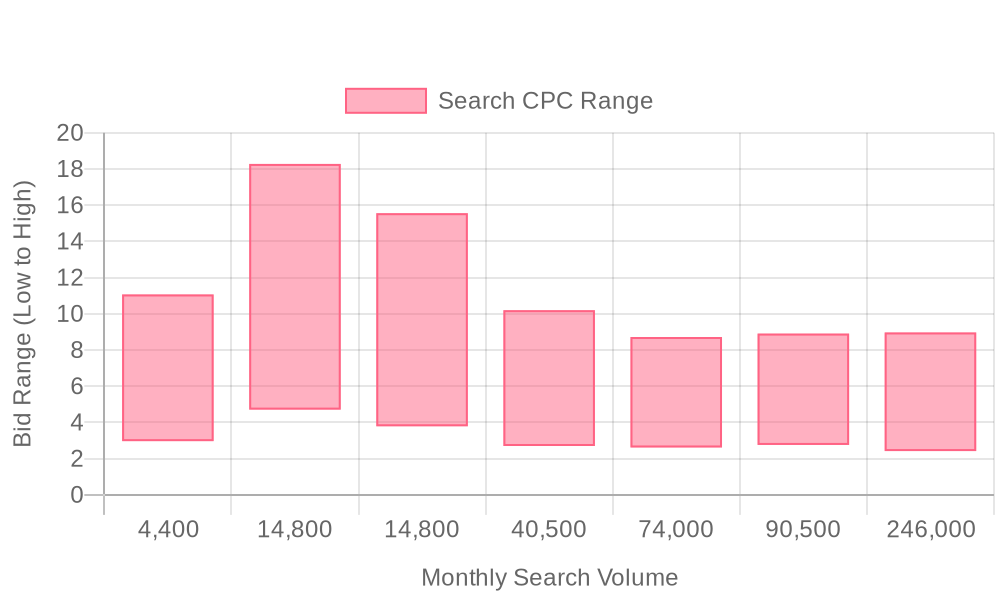
| Industry | Keyword | Monthly Search Volume | Competition Level | Low Bid | High Bid |
| Home Services | care homes near me | 4400 | MEDIUM | 2.97 | 11.07 |
| Home Services | home services | 14800 | MEDIUM | 4.71 | 18.28 |
| Home Services | respite care near me | 14800 | LOW | 3.79 | 15.56 |
| Home Services | home health care near me | 40500 | LOW | 2.7 | 10.2 |
| Home Services | home health aide | 74000 | LOW | 2.62 | 8.72 |
| Home Services | home health care | 90500 | LOW | 2.76 | 8.91 |
| Home Services | nursing homes near me | 246000 | LOW | 2.42 | 8.97 |
Effective keyword strategy for home services marketing begins with a sharp focus on the searcher's intent. Selecting high-intent keywords such as "hvac repair near me," "emergency plumber," or "roof leak repair today" ensures ad spend is directed towards homeowners who are ready to engage a provider, not those passively browsing. Long-tail keywords that combine service type, urgency, and local modifiers often yield the highest conversion rates, given their alignment with real-time needs and specific geographic relevance. Explore a comprehensive guide to Google keyword matching options to understand how these ads can enhance targeting and drive qualified leads.
Strategic keyword selection is not just about visibility; it’s about filtering out noise and targeting only the most valuable traffic. Incorporating negative keywords such as "DIY," "free," or "how to" shields your campaigns from irrelevant clicks and preserves budget for leads with immediate purchase intent. This approach also sharpens your targeting, improving both click-through rates and lead quality. For B2B teams managing multiple service lines or locations, integrating keyword data with broader content marketing initiatives allows for a unified messaging strategy across digital channels, increasing brand consistency and lowering wasted spend.
Modern platforms now allow marketers to go beyond anonymous traffic and identify which companies or households are actively searching for home services. When in-market behavior is detected, budgets can be dynamically reallocated toward high-converting accounts and localities that show elevated intent signals. Dynamic audience segmentation ensures that as leads move through the funnel, submitting a quote request, booking an estimate, or engaging via chat, audience lists refresh in real time, so ad dollars target only those closest to conversion. Sona enables enriched audience segments to sync with Google Ads and CRM systems, ensuring your campaigns always reflect the latest prospect data and improving home service lead generation and ROI. To experience these capabilities, you can get started for free with Sona and optimize your keyword-driven campaigns.
Step-by-Step Campaign Execution Framework
Step 1: Build Targeted Keyword Lists
A successful Google Ads for Home Services campaign begins with a meticulous approach to keyword selection. Service providers should categorize keywords by specific offerings, such as plumbing repair, HVAC installation, or electrical troubleshooting, while layering in local modifiers like city names, neighborhoods, or service areas. Incorporating long-tail and question-based queries, such as "emergency water heater repair near me" or "how to fix a tripped breaker in Boston," captures high-intent local searches and reduces wasted spend. Negative keywords play a pivotal role in filtering out irrelevant traffic; excluding terms like "DIY" or "free" protects budgets and ensures only qualified leads engage with your ads. For a comprehensive overview of how to maximize your keyword strategy, review this Google Home Service Ads guide.
Sona enables marketers to move beyond anonymous traffic by identifying visitors and companies engaging with your ads, allowing for hyper-targeted lists that continuously update as prospects move through the funnel. This alignment ensures that only in-market, high-conversion potential audiences are targeted, resulting in a more efficient use of advertising spend. For more practical advice on advanced segmentation, consult our playbook on signal-based audience building.
The upgrade most home services advertisers miss is going beyond raw keyword volume to layer in intent and identity signals. By connecting website-visitor data and CRM records with Sona Marketing Measurement, you can see which specific search terms bring in the accounts and customers that actually convert, and weight your keyword and bidding strategy toward those rather than the terms with the highest search volume alone.
Step 2: Develop Compelling Ad Copy
Crafting ad copy for home service campaigns requires a deep understanding of customer pain points and the urgency that defines most service requests. Copy should directly address common concerns, like reliability, speed of response, and safety, while emphasizing trust signals such as professional certifications, years of experience, and verified customer reviews. Strategic calls to action, including phrases like "Book Now," "24/7 Emergency Service," or "Get a Free Estimate Today," drive urgency and increase click-through rates. Discover more strategies for writing effective service ads that resonate with your target market.
When real-time intent data is integrated, marketers can adjust messaging dynamically to reflect the visitor’s stage in the buying process. By leveraging unified behavioral insights, ad copy can be tailored for prospects who previously engaged with your landing pages or requested quotes, further increasing relevance and conversion rates.
Step 3: Design Effective Landing Pages
The landing page is where the lead journey shifts from interest to action. Ensuring a seamless connection between keywords, ad copy, and landing page content is critical for maintaining user trust and improving Quality Score. Pages should be visually clean, mobile-optimized, and reinforce credibility with elements like verified customer testimonials, industry accreditations, and comprehensive FAQs that address common barriers to booking a service. Prominent forms and click-to-call buttons increase conversion opportunities and reduce friction for users in urgent need. For step-by-step instructions on optimizing landing pages for home services, see this setup and optimization guide.
With Sona, marketers can sync enriched lead and account data directly to landing pages, ensuring every visitor sees content and offers tailored to their profile or company. This personalization improves engagement rates and supports more accurate measurement of online and offline conversions.
Step 4: Implement Data-Driven Optimizations
Continuous optimization distinguishes high-performing Google Ads campaigns for home services from underperformers. Employing smart bidding strategies, such as Target CPA or Target ROAS, enables campaigns to automatically adjust spend toward actions most likely to drive revenue. Regular A/B testing of headlines, CTAs, and value propositions identifies creative elements that resonate best with your target audience. Integrating offline conversion tracking closes the attribution loop, allowing marketers to attribute booked jobs or closed deals back to specific keywords and ads. Explore cost-effective Google Ads campaign strategies for additional insights into maximizing ROI.
Sona enhances this process by unifying ad engagement data with CRM and sales outcomes, enabling marketers to attribute revenue to the exact campaigns and channels responsible. Dynamic audience updates ensure that as leads progress or convert, retargeting and lookalike campaigns adapt in real-time, driving sustained pipeline growth and increasing overall marketing efficiency.
An effective campaign execution framework also relies on prompt response to engagement triggers, ensuring that sales teams are immediately notified when high-value leads engage with ads or landing pages. This synchronization between marketing and sales maximizes the impact of every advertising dollar spent, driving higher ROI and facilitating scalable home service lead generation. To experience these capabilities firsthand, get started for free with Sona and see how seamless campaign execution can transform your results.
Sona Marketing Measurement closes the gap between clicks and revenue. It captures ad clicks with first-party, company-level measurement rather than individual tracking, then ties that click through UTM capture and ad-platform APIs to the actual record in your CRM, and reports ROAS by keyword and campaign instead of by last-click form fill. Feeding that revenue signal back into Smart Bidding and Performance Max compounds over time: the algorithms optimize toward booked home services revenue, not cheap leads.
Tips on Expanding Your Home Services Presence
Growing a home services brand takes more than running more ads, it takes reach that compounds through partnerships and content built around real customer questions. Discover more actionable strategies in our B2B marketing playbooks.
- Cross-promote educational content: Repurposing high-performing blog posts, how-to videos, or customer testimonials across your website, Google Ads, and email campaigns solidifies your brand's expertise. When this content is featured in local service ads or supported by targeted Google Ads for Home Services, it not only nurtures prospective customers but also reinforces your market authority, driving higher conversion rates.
- Partner with local associations: Collaborating with local trade organizations or neighborhood groups amplifies your exposure through co-branded advertising, sponsored content, and event participation. These alliances generate referral traffic from trusted sources and can be tracked directly within your Google Ads campaigns to gauge impact and ROI. Real-time visitor identification further ensures that every referral is captured, segmented, and nurtured appropriately.
- Utilize search query data for new topics: Analyzing the search queries that trigger your Google Ads for contractors or home service marketing efforts uncovers valuable insight into emerging customer needs and trending topics. Feeding this intelligence back into your content marketing strategy enables you to develop guides, FAQs, or video explainers that address real-time demand, keeping your brand top-of-mind as consumer preferences shift. For guidance on optimizing your campaigns, explore our resource hub.
Ensuring continuity across all digital touchpoints, web, ads, social, and partner channels, prevents messaging fragmentation that can cause potential clients to disengage. When campaign audiences and lead lists update dynamically as users interact with various assets, every engagement feels personalized and relevant. This seamless experience, underpinned by unified data and advanced attribution, strengthens brand loyalty and drives higher lifetime value from each customer. If you’re ready to unify your digital strategy, get started for free with Sona to see how seamless data activation can drive measurable results.
Beyond Google Ads: Winning the AI Answers Home Services Buyers Now Trust
Paid search captures demand at the moment someone types a query. But a fast-growing share of home services buyers no longer start at Google at all, they ask ChatGPT, Gemini, or Perplexity before they ever run a search, and Google's own AI Overviews increasingly summarize an answer above the traditional results. If your business isn't referenced in those AI answers, you're invisible at the exact moment buyers build their shortlist.
Sona AI Visibility shows where your business shows up across ChatGPT, Gemini, Perplexity, Google AI Overviews, and 10+ engines, and, much like a keyword report, which prompts actually send you buyers, so you can prioritize the ones that convert. Run the two together and you cover the entire buyer path: get cited where buyers research (AI Visibility), then prove which of that demand turns into booked revenue (Marketing Measurement).
Helpful resources
Conclusion
Home services buyers search with urgency, and Google Ads remains one of the few channels built to meet that urgency at the exact moment it appears. The businesses winning this channel aren't spending more, they're connecting ad data to what actually happens after the click: a booked job, a service call, a repeat customer.
The next shift is already underway: buyers researching home services increasingly ask AI tools before they search, and campaigns that connect Google Ads performance to AI visibility and real booked revenue will be the ones still winning that attention a year from now.
FAQ
What are Google Ads for home services?
Google Ads for home services are targeted advertisements that allow home service businesses to reach potential customers actively searching for services like plumbing, HVAC repair, or electrical work, enhancing online visibility and bridging the gap between awareness and conversion.
How can I effectively use Google Ads for my home service business?
To effectively use Google Ads, you should prioritize data integration, precise targeting, continuous campaign optimization, and segment your ads based on firmographic and behavioral data to deliver tailored messaging that resonates with local homeowners.
What is the cost of Google Ads for home services?
The article does not specify the cost of Google Ads for home services, but it suggests optimizing spend through data-driven strategies and targeting high-conversion segments to ensure effective use of budget.
What are the best practices for running Google Ads in the home services industry?
Best practices include embracing a data-driven approach, developing targeted keyword strategies, optimizing landing pages for conversions, tracking performance continuously, and integrating cross-channel strategies for brand cohesion.
How do Local Service Ads differ from traditional Google Ads for home services?
Local Service Ads differ by focusing on hyper-local targeting and ensuring businesses appear in search results precisely when homeowners are looking for immediate solutions, often including features like Google Guarantee badges to build trust.