


Bus repair services live and die by response time. A fleet manager with three coaches down and a school run in six hours isn't comparison shopping, they're searching for whoever can fix it now, and incomplete or outdated account data often means that shop never sees the lead coming. Google Ads lets service providers intercept decision-makers at the exact moment they're searching for repairs or maintenance, but only if targeting is built on accurate, company-level data rather than guesswork. Paired with offline efforts like trade shows and direct mail, these campaigns offer precision targeting, real-time results, and ROI measurement that ties ad spend directly to booked work.
How to Generate Bus Repair Leads with Google Ads: A Step-by-Step Guide

Bus repair companies face short buying cycles and a narrow buyer pool: fleet managers, transportation directors, and procurement officers who need answers fast and often under compliance pressure. A data-driven approach with Google Ads for bus repair shops lets these businesses align spend with real-world demand, surfacing service offers exactly when commercial fleets are searching for urgent solutions. Many bus repair businesses can't tell which companies are visiting their key pages, which makes it hard to prioritize outreach toward the highest-value accounts. Elevating analytics from basic web traffic to account-level insights lets marketers focus campaigns on the companies and buyer personas showing real intent, such as researching DOT-compliance inspections or emergency repair coverage.
Advanced targeting strategies are core to effective Google Ads for Bus Repair Services. Utilizing dynamic audience lists, refreshed in real time as companies enter or exit the sales funnel, ensures ad spend focuses on the freshest, most qualified leads at all times. This method supports seamless alignment between ad messaging, landing page content, and sales follow-up, reducing wasted budget and increasing lead-to-customer conversion rates. Integrating directly with APIs or platforms that identify visitors and update audience segments on the fly, marketers can deploy bus repair service promotions that are always relevant to active, high-potential buyers.
Landing page alignment is another critical element. High-performing campaigns drive visitors to pages tailored to their specific commercial needs, such as emergency bus repair, preventive maintenance contracts, or fleet management solutions. Conversion rates climb when each landing page matches the search intent and includes clear calls to action, real-time availability badges, and proof of commercial credentials. Optimization techniques such as advanced conversion tracking, linking both online and offline interactions, allow teams to measure true ROI, informing budget reallocation toward the highest-performing segments. When online advertising for bus repair is fully integrated with CRM and enriched account data, marketers not only see which companies are engaging but can also sync those leads into sales workflows in Google Ads, HubSpot, or Salesforce, making every touchpoint actionable. Ready to see the impact for yourself? Get started for free with Sona.
Why Google Ads Matter for Bus Repair Services

Bus repair services operate in a high-stakes environment where rapid response and operational reliability are non-negotiable. Digital marketing strategies built around Google Ads empower these businesses to intercept urgent, high-value repair requests at the exact moment fleet managers and operations leaders are searching for solutions. By capturing this intent in real time, bus repair advertising shifts from broad outreach to precision targeting, helping teams fill their pipeline with commercial leads that demand immediate action. For deeper insights into how PPC campaigns drive business growth for coach and bus companies, explore the impact of PPC on a coach and bus company’s website traffic.
The ability to connect technical teams with procurement officers or facility managers is critical in bus repair shop marketing. Google Ads for Bus Repair Services enables the delivery of timely, relevant offers to those tasked with keeping transit vehicles on the road. Marketers can now leverage online advertising for bus repair to surface breakdown response, scheduled maintenance, and compliance inspection promotions directly in front of decision-makers who control repair budgets and vendor selection.
- Reaching a Specialized Audience: Google Ads targeting for bus repair distinguishes between consumer and commercial intent, allowing campaigns to prioritize fleet operators, school districts, and transit authorities. By identifying visitors not just as anonymous clicks but as specific companies or accounts, marketers increase the quality of every lead and accelerate deal velocity.
- Immediate Demand Fulfillment: PPC for bus repair services is uniquely suited to address urgent, time-sensitive requests. Integration with real-time intent signals means that ads and follow-up outreach can be automatically triggered as soon as a prospect exhibits buying behavior, ensuring no opportunity is lost to a slow response.
- Emerging Market Reach: Bus maintenance marketing can quickly be scaled to target new cities, regions, or underserved areas. Dynamic geotargeting and up-to-date audience segmentation enable businesses to allocate budget to where demand is spiking, making expansion campaigns more cost-efficient and data-driven.
- Integrated Analytics: Every click, call, and booked repair can be measured with end-to-end transparency. Advanced conversion tracking, including offline attribution, ensures that marketing teams gain granular insight into which keywords, audiences, and creative combinations are driving confirmed work orders. By syncing enriched audience and lead data into connected CRMs, B2B revenue teams can unify their digital marketing for bus repair and sales performance into one actionable system.
Common Types of Google Ads Campaigns for Bus Repair Services
These formats work together across a mix of campaign types, including Search, Display, Video, and Performance Max, which combines Google's inventory and automated bidding to find converting fleet accounts across channels from a single campaign.

- Search Campaigns: Search campaigns are the frontline of digital marketing for bus repair, capturing urgent, high-intent queries like “emergency bus engine repair” or “school bus brake service near me.” These campaigns target commercial buyers who are actively seeking solutions, enabling bus repair shops to meet pressing needs at the exact decision-making moment. By leveraging real-time visitor identification and intent signals, marketers can automatically prioritize spend on inbound leads from verified fleet operators or transit agencies, ensuring budget is focused on those most likely to convert.
- Display Ads: Display campaigns keep your brand top of mind for fleet managers, transit authorities, and other commercial prospects who may not convert immediately. By reaching buyers across industry sites and transportation forums, display ads reinforce your expertise throughout the buying journey. Marketers using dynamic audience sync find that display ad audiences stay relevant as buyers move between research, budgeting, and procurement stages, driving higher engagement and recall during contract reviews.
- Video Ads: Video campaigns provide a powerful way to communicate technical expertise and instill trust by showcasing complex repair processes or highlighting technician certifications. These visual narratives appeal to procurement leaders and fleet supervisors looking for proven solutions to reduce downtime. With advanced attribution tracking, marketers can measure which video content generates booked appointments or inbound calls, optimizing creative assets for true business outcomes.
- Remarketing: Remarketing campaigns re-engage visitors who have demonstrated interest, such as those who explored service pages or requested quotes, but did not convert. By leveraging insights from synced buyer stages, remarketing ads can deliver personalized offers based on the visitor’s previous interactions, such as promoting annual maintenance contracts to those who viewed compliance services. Integration with CRM and ad platforms ensures that remarketing audiences update in real time as leads advance, increasing conversion rates and reducing wasted impressions.
- Ad Assets: Ad assets add critical information such as location, service hours, and certifications directly to your search results, building trust with commercial buyers. For bus repair services, assets like callouts, structured snippets, and location details help emphasize DOT compliance, 24/7 emergency availability, and regional coverage. Monitoring ad asset performance alongside offline conversions, such as phone bookings or on-site inspections, enables marketers to pinpoint which details most influence work order volume and adjust strategy accordingly. To experience these targeting and tracking capabilities firsthand, get started for free with Sona.
Where to Find Growth Opportunities for Bus Repair Services

Bus repair businesses can accelerate growth by leveraging digital marketing strategies that align with real buyer intent. Sophisticated targeting, data-driven content, and tailored outreach uncover prospects who are actively seeking specialized maintenance or fleet solutions.
- Vertical keyword targeting: Use industry-specific phrases like "school bus engine overhaul" or "transit fleet brake service" to capture high-intent searches. Identifying these terms ensures ads reach decision-makers who are evaluating providers for large-scale contracts or urgent repairs. Explore step-by-step Google Ads campaigns for transport companies for more ideas.
- Competitor gap analysis: Employ auction insights and market intelligence tools to pinpoint keywords and geographic segments where competitors underperform. This approach highlights underserved niches or time slots where your ads can dominate, especially when combined with real-time account intent data.
- Niche directories and forums: Participate in transportation industry directories and fleet management forums where your competitors may not be present. These platforms offer a channel to share expertise, answer technical questions, and build relationships with fleet managers or procurement officers who bypass traditional search.
- Educational retargeting: Develop retargeting campaigns using educational assets such as maintenance whitepapers or instructional video series. By mapping these resources to the buyer stage, you can nurture leads who previously engaged with your site but require additional trust or technical validation before requesting a quote.
Marketing teams using advanced platforms benefit from real-time identification of anonymous website visitors, allowing them to correlate traffic spikes with specific companies or fleet operators. As a result, budgets can be shifted toward high-value accounts showing in-market behavior, rather than relying on broad targeting. Dynamic audience segmentation ensures that as contacts move through the research and RFP process, ad messaging evolves to address their current challenges, whether that’s emergency roadside service or preventive contract negotiations. Integrating CRM and ad platforms allows for seamless syncing of enriched audiences and conversion events, ensuring that both online and offline engagements are attributed to the right campaigns and that true ROI is measured across every touchpoint. To streamline your own growth strategy, get started for free with Sona.
How to Apply Audience Segmentation for Bus Repair

Effective audience segmentation gives bus repair businesses a competitive edge by ensuring ad spend is allocated only to prospects most likely to convert. Targeted campaigns can prioritize high-value opportunities and minimize wasted impressions, resulting in more qualified leads and improved conversion rates. For more actionable strategies, explore our playbooks for demand generation.
- Define Segments: Differentiating between public and private fleet managers is essential to prioritize repair urgency and tailor outreach. Public transit agencies often require immediate response and compliance documentation, while private fleet operators may focus on cost efficiency and flexible scheduling. Using modern identification technology, marketers can move beyond anonymous website traffic to recognize specific companies or organizations that visit their site, allowing for tailored segment creation based on real business profiles.
- Overlay Intent Signals: Overlaying real-time behavioral data with static firmographic details enables marketers to detect when specific fleets are actively in-market for services, such as searching for urgent repairs or seasonal maintenance. By integrating intent signals, campaigns can dynamically shift budgets and messaging to target those accounts demonstrating immediate need, increasing the likelihood of capturing high-value commercial leads.
- Ad Group Strategy: Structuring ad groups around these defined segments ensures messaging addresses the unique pain points of each audience. Budgets can be adjusted in real time as segments move through different stages of the buying journey, such as initial research, quote requests, or emergency breakdowns. Leveraging dynamic audience updates means ads remain relevant and responsive, delivering the right message as leads progress.
- Conversion Path Validation: Advanced analytics platforms support accurate tracking and evaluation of all lead sources, both online and offline. For bus repair advertising, this includes monitoring inbound calls, web forms, and even offline workshop visits. Integrating enriched audience and lead data seamlessly with CRM systems and Google Ads enables full-funnel attribution, so revenue teams can measure ROI with precision and optimize campaigns based on actual closed business, not just form fills. This approach ensures every conversion, whether digital or in-person, is captured and valued appropriately in bus repair shop marketing.
This is also where measurement changes the economics. With Sona Marketing Measurement you can identify the companies behind your ad clicks, not just anonymous sessions, and segment audiences by who actually becomes a customer. That lets you build bid adjustments and audience signals around the segments that convert and de-prioritize the ones that don't, so you feed Google's algorithms "this click became a paying bus repair services customer" instead of just "someone filled out a form."
Keyword Strategy & Sample Target Terms
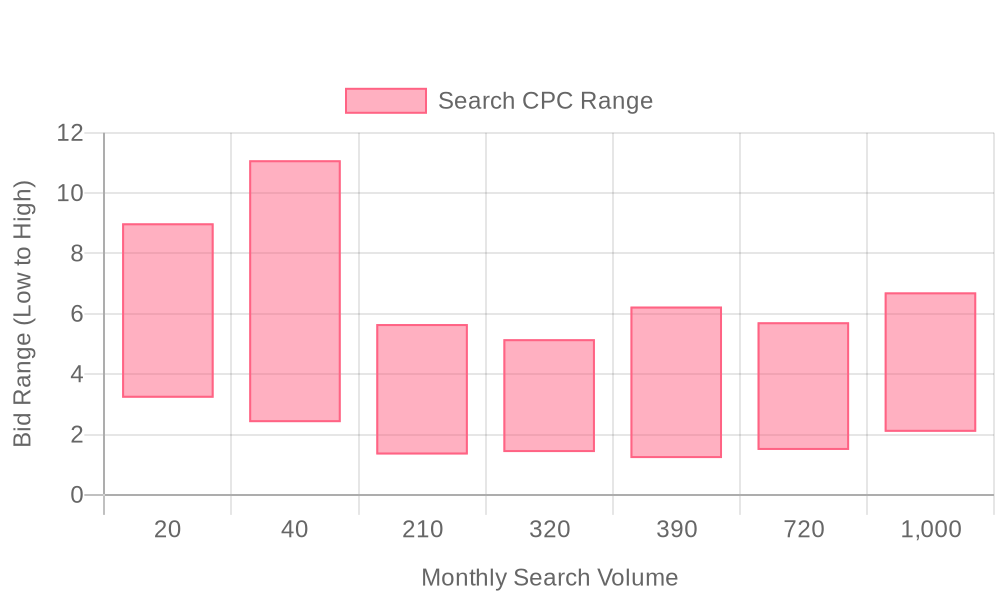
| Industry | Keyword | Monthly Search Volume | Competition Level | Low Bid | High Bid |
| Bus Repair Services | shuttle bus ac repair | 20 | MEDIUM | 3.22 | 9 |
| Bus Repair Services | mobile bus mechanic near me | 40 | MEDIUM | 2.41 | 11.09 |
| Bus Repair Services | bus repair shops near me | 210 | MEDIUM | 1.34 | 5.66 |
| Bus Repair Services | bus mechanic near me | 320 | MEDIUM | 1.42 | 5.16 |
| Bus Repair Services | shuttle bus repair near me | 390 | LOW | 1.22 | 6.24 |
| Bus Repair Services | bus repair near me | 720 | LOW | 1.49 | 5.72 |
| Bus Repair Services | bus repair | 1000 | LOW | 2.09 | 6.71 |
Effective keyword targeting is the cornerstone of high-performance Google Ads for Bus Repair Services. By narrowing in on high-intent search queries, bus repair shops can intercept commercial fleet operators, transit agencies, and school districts at the exact moment they seek urgent maintenance or long-term service contracts. Precision in keyword strategy directly impacts lead quality, conversion rates, and the overall efficiency of bus repair shop marketing budgets. For a breakdown of high-performing keyword ideas tailored to auto and bus repair, review this list of top auto repair shop keywords.
Top-performing campaigns prioritize terms such as 'bus repair services near me,' 'bus engine repair,' and 'local bus maintenance services.' These core phrases capture direct service requests from fleet managers and procurement professionals. Integrating long-tail keywords like 'emergency coach transmission repair' or 'school bus brake inspection service' further increases the likelihood of reaching decision-makers with clear intent, while question-based searches such as 'how to schedule bus maintenance' or 'best bus repair shop for fleets' attract users ready to take action. For additional strategies to optimize your paid campaigns, explore our marketing playbooks.
Long-tail and question-based keywords consistently outperform generic phrases by driving more qualified leads and improving cost-per-acquisition. These detailed terms align with the complex needs of commercial vehicle owners, helping bus maintenance marketing teams segment audiences by urgency and service type. To ensure every advertising dollar works harder, it is essential to apply robust negative keyword lists, excluding terms like 'bus driver jobs,' 'bus tours,' or unrelated maintenance topics. This approach prevents wasted spend and focuses impressions on prospects most likely to engage with online advertising for bus repair.
Advanced data platforms allow marketers to go beyond anonymous traffic, identifying not just keywords but also specific companies and contacts conducting high-value searches. Sona's Identity Resolution surfaces which businesses are actively seeking bus repair services in real time, so budgets can shift dynamically toward the segments most likely to convert. When integrated with CRM and ad platforms, enriched audience data updates automatically as leads progress through the funnel, supporting bus repair service promotions and retargeting strategies with unmatched precision. This unified approach to digital marketing for bus repair maximizes ROI tracking and drives measurable growth for commercial repair providers. To see these benefits in action, get started for free with Sona.
Step-by-Step Campaign Execution Framework
A strong digital marketing strategy for bus repair services requires precision, speed, and ongoing adaptation. Successful campaigns use a systematic approach that connects real user intent with measurable business outcomes at every stage. To dig deeper into optimizing digital campaigns for B2B and service industries, explore the latest blog content on advanced marketing strategies.
Step 1: Build Targeted Keyword Lists
Effective keyword segmentation is the foundation for high-performing Google Ads for bus repair services. Segment lists by specific repair types, such as engine diagnostics, electrical system repair, or emergency roadside assistance, and include local modifiers like city names or "near me." This ensures ads capture both urgent commercial inquiries and recurring fleet maintenance needs. By leveraging platforms that identify which companies and decision-makers are visiting your website, marketers can prioritize keywords with the highest conversion potential. For a comprehensive list of high-performing terms, review these auto repair shop keywords to inform your targeting strategy.
The upgrade most bus repair services advertisers miss is going beyond raw keyword volume to layer in intent and identity signals. By connecting website-visitor data and CRM records with Sona Marketing Measurement, you can see which specific search terms bring in the accounts and customers that actually convert, and weight your keyword and bidding strategy toward those rather than the terms with the highest search volume alone.
Step 2: Develop Compelling Ad Copy
Ad copy must address the unique pressures facing fleet managers and transit authorities. Headlines highlighting rapid response times, certified technicians, and minimal downtime speak directly to the urgent needs of these customers. Incorporating predictive insights about buying stage allows for nuanced messaging: for example, those comparing vendors see value-driven differentiators, while those indicating immediate need are shown emergency contact and fast dispatch options. Integrating real-time behavioral data ensures that messaging stays relevant and resonates with both new prospects and returning decision-makers.
Step 3: Design Effective Landing Pages
Landing pages should deliver a seamless experience from ad click to conversion. Pages tailored for bus repair service promotions, such as seasonal maintenance offers or contract fleet servicing, reduce friction in the user journey. Streamlined forms, clear calls-to-action, and trust signals like service certifications or case studies improve completion rates. By tracking both online and offline conversions, marketers can attribute leads accurately and optimize landing page elements for higher ROI. Insights from this analysis of PPC’s impact on coach and bus companies can guide your landing page improvements.
Step 4: Implement Data-Driven Optimizations
Continuous improvement is achieved by analyzing conversion data and adapting strategy in real time. Automated insights reveal which campaigns drive the most valuable work orders and highlight new keyword opportunities as user behavior shifts. Dynamic audience lists automatically update as leads progress through the sales funnel, allowing for tailored retargeting and budget reallocation toward high-intent accounts. Synchronizing enriched audience data and conversions between Google Ads, CRM, and sales systems enables revenue teams to focus on the most profitable segments, ensuring every dollar spent on PPC for bus repair services delivers measurable business impact.
Sona Marketing Measurement closes the gap between clicks and revenue. It captures every ad click with first-party measurement, ties that click through UTM capture and ad-platform APIs to the actual record in your CRM, and reports ROAS by keyword and campaign instead of by last-click form fill. Feeding that revenue signal back into Smart Bidding and Performance Max compounds over time: the algorithms optimize toward booked bus repair services revenue, not cheap leads.
Tips on Expanding Your Bus Repair Presence
Bus repair businesses that prioritize digital marketing for bus repair gain a measurable edge in attracting high-value accounts. Executing a scaled approach requires not just larger budgets, but smarter tactics that respond to shifting demand signals and the unique needs of commercial fleet clients. See how Sona's Identity Resolution can help you capture more opportunities with real-time company-level insights.
- Promote educational content in retargeting campaigns: Retargeting efforts go beyond simple reminders by serving fleet managers and decision-makers with content that answers operational pain points, such as preventive maintenance checklists or cost-reduction guides. Leveraging analytics to identify top topics allows your campaigns to nurture leads more effectively through the consideration phase.
- Upsell maintenance packages using CRM insights: Integrating CRM data with your ad targeting enables segmentation by lifecycle stage, ensuring that upsell offers for bus maintenance packages reach only those accounts ready for expansion. When audiences sync in real time, decision-makers receive timely, personalized promotions based on recent service history or inquiry behavior.
- Partner with industry bodies for alliances and co-branding efforts: Aligning with recognized transportation and fleet associations enhances brand credibility and extends your reach to pre-qualified, high-intent audiences. Co-branded educational content or joint webinars can be distributed through both Google Ads for bus repair services, driving lead quality and fostering trust.
- Utilize search data to identify and target new content opportunities: Continuous analysis of search trends and keyword performance uncovers emerging topics and services relevant to bus repair advertising. By creating new content and ad groups to address these findings, providers expand coverage and capture untapped leads, especially when combined with dynamic audience updates as prospects move through the funnel.
Precise keyword segmentation and smart audience targeting are foundational to effective bus repair shop marketing. By connecting CRM and intent data directly to ad platforms, marketers can activate high-value segments and adapt creative to match where each lead sits in the buying journey. This approach not only closes the loop on ROI measurement by unifying online and offline conversion data but also ensures that budget and messaging shift automatically to the highest-converting accounts. As a result, bus repair providers can maximize every dollar spent, scale their presence rapidly, and maintain a competitive edge in the evolving landscape of online advertising for bus repair.
Beyond Google Ads: Winning the AI Answers Bus Repair Services Buyers Now Trust
Paid search captures demand at the moment someone types a query. But a fast-growing share of bus repair services buyers no longer start at Google at all, they ask ChatGPT, Gemini, or Perplexity before they ever run a search, and Google's own AI Overviews increasingly summarize an answer above the traditional results. If your business isn't referenced in those AI answers, you're invisible at the exact moment buyers build their shortlist.
Sona AI Visibility shows where your business shows up across ChatGPT, Gemini, Perplexity, Google AI Overviews, and 10+ engines, and, much like a keyword report, which prompts actually send you buyers, so you can prioritize the ones that convert. Run the two together and you cover the entire buyer path: get cited where buyers research (AI Visibility), then prove which of that demand turns into booked revenue (Marketing Measurement).
Helpful resources
Conclusion
Bus repair advertising rewards the shops that treat urgency as a targeting signal, not just a selling point. Fleet managers searching at 2am for emergency brake service, transit agencies renewing compliance contracts, school districts budgeting for the next semester: each buys differently, and the shops winning that business are the ones whose campaigns, landing pages, and follow-up already reflect it.
The next shift is already underway: buyers increasingly research vendors through AI answers before they ever run a search, which means visibility now has to extend past the search results page. Shops that pair sharp Google Ads targeting with a presence in those AI-driven answers will be the ones fleet managers find first, regardless of where the search actually starts.
Ready to elevate your advertising game? Start for free and put these strategies to work.
FAQ
What are the best practices for Google Ads in the bus repair industry?
Best practices include using advanced targeting strategies, aligning landing page content with ad messaging, and integrating real-time analytics to measure ROI and optimize spend.
How can I optimize my Google Ads for bus repair services?
Optimization can be achieved by targeting dynamic audience lists, ensuring landing pages match search intent, and using advanced conversion tracking to inform budget allocation.
What budget should I allocate for Google Ads for bus repair services?
The budget should be aligned with demand and optimized based on real-time data insights to focus on high-intent accounts, ensuring efficient use of ad spend.
What keywords should I target for bus repair Google Ads?
Target industry-specific and high-intent keywords such as 'bus repair services near me' and long-tail terms like 'emergency bus engine repair' to capture urgent service requests.
How do I measure the success of my Google Ads campaigns for bus repair services?
Success can be measured through advanced conversion tracking, integrating online and offline interactions, and assessing ROI based on conversion rates and revenue impact.







