


Broadcast schools lose prospective students not because interest is scarce, but because most high-value visitors never fill out a form, so they vanish from the CRM before anyone can follow up. Google Ads closes that gap: it puts your programs in front of people at the moment they're searching for broadcasting or media production training, and it lets you track that interest from first click through to application. Used well, it offers precision, scalability, and real-time adaptability, connecting you with high-intent audiences and complementing the rest of your enrollment marketing. Here's how to put it to work for your school.
How to Generate Google Ads for Broadcast School Leads: A Step-by-Step Guide

Precise lead generation is critical for broadcast schools competing in a saturated digital landscape. Effective campaigns ensure that budgets drive meaningful engagement with future students and decision-makers who demonstrate real interest, not just casual browsers. For a comprehensive overview of strategies tailored to education, see this guide to Google Ads for schools.
Modern marketing teams pair advertising data with intent signals to spot high-potential prospects before they ever submit an inquiry. Tighter integration between ad platforms and CRM systems makes it possible to deliver personalized messaging to the right audience at the right moment, which shows up directly in conversion rates.
A step-by-step approach to Google Ads lead generation for broadcast schools includes:
- Strategic audience targeting: Move beyond generic demographics by leveraging precise audience intelligence to pinpoint candidates actively researching broadcasting programs, whether they're recent high school grads comparing certificate tracks or career-changers evaluating accredited degree options.
- Dynamic keyword selection: Continuously optimize keyword lists with data from both web activity and CRM sources, ensuring campaigns stay relevant as market trends shift. Access actionable guides in the Sona playbooks.
- Intent-driven creative and messaging: Tailor ad copy and visuals to address the unique aspirations and needs of prospective students, increasing engagement and click-through rates.
- Conversion tracking and attribution: Implement online and offline tracking, attributing enrollments and inquiries back to specific ads and audience segments, for a clear view of campaign ROI.
- Automated audience sync: Ensure that lead and account lists update in real time by leveraging Sona Destinations, maximizing retargeting effectiveness through seamless integration with Google Ads and leading CRMs.
By unifying data across touchpoints, broadcast schools can focus budgets on warm leads, personalize outreach, and track every step from first click to enrollment. If you're ready to elevate your lead generation, get started for free with Sona and transform how your marketing drives enrollment.
Why Does Google Ads Matter for Broadcast Schools?

Broadcast schools operate in a highly competitive educational sector where visibility and timing are critical for attracting qualified applicants. With Google Ads, schools can precisely target individuals actively searching for specialized training, ensuring their programs appear in front of motivated prospects when intent is highest.
Granular targeting and robust analytics let broadcast schools get more out of every dollar spent. With Sona's Audiences tool, schools can see which visitor segments show real intent to enroll and shift spend toward them, improving lead quality and enrollment growth.
Modern digital marketing goes beyond broad demographic targeting. With Identity Resolution, broadcast schools can see which companies and organizations are engaging with their ads and landing pages, even before a visitor fills out a form. That insight lets marketing teams shift resources toward the accounts showing the strongest interest, sharpening both outreach and spend. For additional strategies, explore our latest blog insights.
In a market where prospective students often compare several broadcasting programs before applying, the ability to update audiences as leads move through the decision journey matters. Integration with CRM and marketing automation systems keeps enriched leads and priority audiences in sync across Google Ads, so teams can deliver timely, personalized follow-up and measure real campaign impact with advanced attribution.
Common Types of Google Ads Campaigns for Broadcast School Services

- Search Campaigns: Search ads put your broadcast school in front of prospects at the exact moment they're searching for programs, certifications, or accreditation details, including Responsive Search Ads, an ad format that tests multiple headlines and descriptions to find what resonates with each query. These campaigns use keyword targeting to catch high-intent searches like "broadcast journalism certificate" or "accredited media production school," capturing prospective students as they actively compare options. Leveraging Identity Resolution and real-time intent data, marketers can see which organizations or individuals are engaging and follow up with messaging tailored to that stage of the buyer's journey.
- Display Campaigns: Display ads ensure that your school remains visible to prospects who have shown interest but are not yet ready to commit. These visually engaging banners can run across Google's Display Network, reinforcing brand recognition and keeping your school top of mind. Marketers benefit from dynamic audience updates, automatically adjusting who sees the ads as leads progress, ensuring that messaging always reflects the prospect's current interest and stage.
- Video Campaigns: Video ads, especially on platforms like YouTube, are highly effective for showcasing campus life, testimonials, and program highlights. These campaigns build emotional resonance and provide a deeper look into your educational offering. Advanced conversion tracking linked with both online and offline sources enables accurate measurement of campaign effectiveness, connecting views and engagements to actual inquiries or enrollments. For a step-by-step setup guide, see this YouTube tutorial for schools.
- Remarketing Campaigns: Remarketing targets users who have visited your site or engaged with your content but have not completed a desired action, such as submitting an application or requesting information. By syncing CRM data and enriched audience segments, marketers can deliver highly personalized ads that nudge warm leads back into the funnel, increasing conversion rates and minimizing wasted ad spend. Review our playbooks for optimizing remarketing to maximize these efforts.
- Branded Campaigns: Branded campaigns protect your school's name and reputation by ensuring your institution appears at the top of results for searches containing your brand or program names. These campaigns maintain control over messaging and help intercept competitors bidding on your terms. Consistency across branded and non-branded campaigns prevents fragmented experiences and ensures every interaction feels intentional and coordinated. Learn more in our ultimate guide to account-based marketing.
- Event Promotion Campaigns: For open houses, webinars, or campus tours, event-focused campaigns drive registrations and attendance from targeted segments. By leveraging CRM and ad platform sync, marketers can create lookalike audiences or retarget previous attendees, optimizing spend toward those most likely to convert.
- Performance Max Campaigns: Performance Max lets you run a single campaign across Search, Display, YouTube, and Gmail, using Google's automation to find prospective students wherever they're most likely to engage. For broadcast schools, this is useful for reaching passive researchers, people who haven't typed a branded search yet but are consuming related video or content, and feeding the algorithm signals about which accounts convert via Sona Marketing Measurement.
Mapping each campaign type to specific buyer stages matters: ad creative and landing pages should answer the questions a prospect actually has at that point, whether it's "is this program accredited" early on or "what's the application deadline" near the end. As audiences shift, dynamic updates and unified attribution provide a closed-loop view of performance, so you can see Google Ads spend relative to enrollment and ROI rather than just clicks. Consistent messaging and clean data flow across campaign formats prevent wasted spend and keep every dollar working.
Where to Find Growth Opportunities?

Growth opportunities in the broadcast education sector require a strategic approach that leverages both data-driven insights and targeted digital advertising. Many institutions overlook the power of vertical keyword targeting, missing high-intent prospects who search for specialized programs or technical certifications unique to broadcasting. By systematically mapping out these niche keyword segments, broadcast schools can capture interest from students who are already searching for relevant course offerings but may not yet be familiar with your brand. For schools looking to refine their approach, this guide to Google Ads strategies for education outlines actionable tactics to maximize digital reach.
Competitive gap analysis is another essential method for surfacing untapped markets. By auditing competitor ad placements and messaging, schools can identify under-served segments or regions where their competitors lack visibility. This process often uncovers overlooked keywords and placements that attract candidates actively seeking broadcast training, offering a cost-efficient way to outperform rivals. To further refine your targeting, leverage precise audience intelligence to ensure your ads reach the right prospects at the perfect stage of their decision journey.
Many broadcast schools generate steady inquiry or demo volume without converting much of it into enrollments, often because follow-up is slow or messaging stays generic after the first touch. Content retargeting closes that gap by keeping your program's value proposition in front of high-intent prospects as they research other schools. Synchronized retargeting, where audiences update automatically as leads move through the funnel, keeps follow-up ads relevant instead of repetitive. Pairing enriched lead data with your ad platforms and CRM means ad spend stays focused on the prospects most likely to enroll. If you want to see how this can work for your institution, get started for free with Sona.
How to Apply Audience Segmentation for Broadcast Schools

Precise audience segmentation is critical for broadcast schools aiming to maximize the impact of their digital advertising. Tailoring ad delivery based on distinct interests or education levels leads to more relevant messaging and higher engagement rates. For actionable tactics, explore this guide for schools using Google Ads to understand how segmentation can drive enrollment and engagement.
Segmenting accounts using firmographic data, such as company size, industry focus, or geographic reach, enables broadcast schools to address the unique needs of each audience subset. Instead of generic messaging, each segment receives creative assets and calls to action that directly speak to their motivations, whether it's technical program offerings or advanced certification tracks. Consider leveraging precise audience intelligence to build real-time, signal-based segments that ensure your targeting and creative are always aligned to the right audience.
Leveraging real-time intent signals further sharpens audience segmentation. By monitoring behavioral cues, such as website visits or content downloads, broadcast schools can dynamically update audience lists and retarget those showing in-market behavior. Integration with platforms that support CRM and ad audience sync ensures that as prospects move through the funnel, campaign messaging evolves accordingly. Ready to streamline your segmentation and activation? Get started for free with Sona.
This is also where measurement changes the economics. With Sona Marketing Measurement you can identify the companies and buyers behind your ad clicks, not just anonymous sessions, and segment audiences by who actually becomes a customer. That lets you build bid adjustments and audience signals around the segments that convert and de-prioritize the ones that don't, so you feed Google's algorithms "this click became a paying broadcast school customer" instead of just "someone filled out a form."
Keyword Strategy & Sample Target Terms
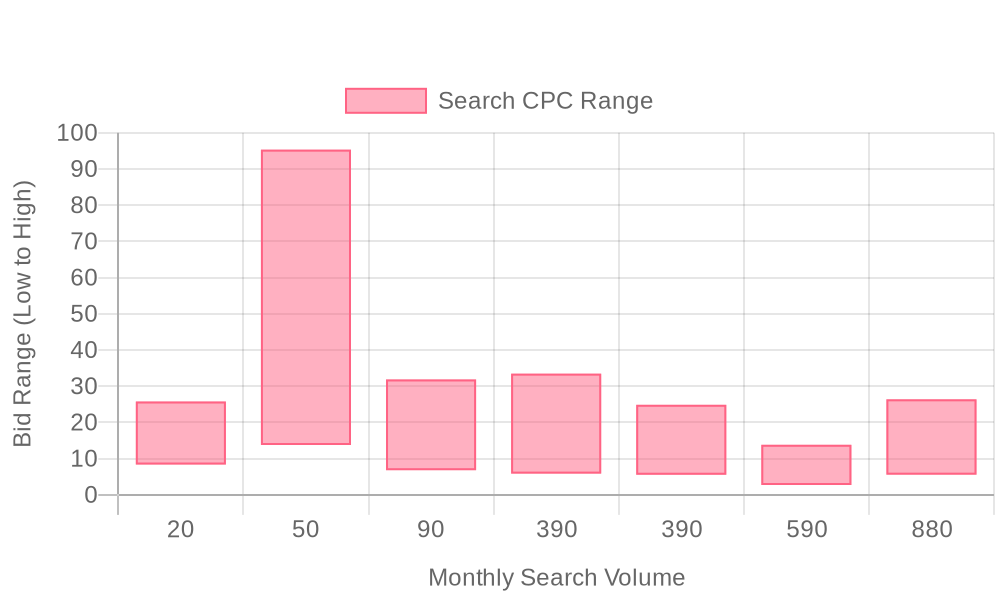
| Industry | Keyword | Monthly Search Volume | Competition Level | Low Bid | High Bid |
| Broadcast Schools | sportscasting schools | 20 | HIGH | 8.39 | 25.79 |
| Broadcast Schools | sports broadcasting schools online | 50 | MEDIUM | 13.78 | 95.34 |
| Broadcast Schools | online sports broadcasting degree | 90 | MEDIUM | 6.82 | 31.87 |
| Broadcast Schools | sports broadcasting schools | 390 | MEDIUM | 5.88 | 33.47 |
| Broadcast Schools | broadcasting schools near me | 390 | MEDIUM | 5.56 | 24.87 |
| Broadcast Schools | best sports broadcasting schools | 590 | LOW | 2.73 | 13.84 |
| Broadcast Schools | broadcast schools | 880 | MEDIUM | 5.59 | 26.39 |
A refined keyword strategy is essential for broadcast schools aiming to attract high-intent prospects and maximize the impact of their digital advertising investments. By targeting search terms that closely mirror user intent, marketing teams can connect with individuals actively seeking broadcast education, industry certifications, or specialized training. High-value keyword selection ensures ads reach prospective students who are most likely to engage, inquire, and enroll, learn more from this guide outlining Google Ads strategies for schools.
Identify high-volume, high-conversion keyword clusters such as "broadcast school programs," "broadcasting courses online," "radio and TV broadcasting degree," and "media production certification." For broader reach, include variations like "best broadcasting schools" or "audio engineering training." Tailoring keywords to align with the unique offerings of your program helps capture users at different stages of the decision-making process. For additional insights, explore our collection of marketing strategy articles.
Negative keywords play a crucial role in filtering out irrelevant traffic. Exclude terms related to unrelated industries, free resources, or non-accredited programs to optimize ad spend and improve lead quality. Regularly update negative keyword lists based on search term reports to prevent budget waste and ensure relevance.
Advanced platforms streamline keyword management by analyzing real user behavior and intent signals. With real-time data on which queries actually convert, and the ability to adjust targeting as demand shifts seasonally (spikes around enrollment deadlines and post-graduation career pivots are common in this trade), teams can put budget behind terms that produce real applicants rather than clicks. This also supports dynamic audience segmentation, refining targeting as prospects move from awareness to application. For teams managing multi-channel campaigns, syncing enriched keyword and audience data across platforms keeps messaging consistent and spend efficient.
Step-by-Step Campaign Execution Framework
Step 1: Build Targeted Keyword Lists
Developing a high-performing Google Ads campaign for broadcast schools begins with systematic keyword research. Focus on keywords that reflect specific programs, certifications, and career outcomes, then refine lists with local and industry-specific modifiers. For example, "broadcast media training in [city]" or "audio engineering certification for high school grads" bring intent and relevance to your targeting.
Analyzing historic search queries and mapping keywords against student personas allows you to prioritize terms that align with applicant motivations. Integrating real-time intent data ensures your lists adapt as new trends emerge, letting you redirect budget to keywords attracting high-converting prospects. With unified data streams, you can identify not just what keywords drive traffic, but which terms lead to qualified inquiries, improving cost efficiency and campaign ROI. For a detailed guide on leveraging Google Ads for school enrollment and engagement, explore this guide outlining strategies for schools.
The upgrade most broadcast schools advertisers miss is going beyond raw keyword volume to layer in intent and identity signals. By connecting website-visitor data and CRM records with Sona Marketing Measurement, you can see which specific search terms bring in the accounts and students who actually enroll, and weight your keyword and bidding strategy toward those terms instead of the ones with the highest volume alone.
Step 2: Develop Compelling Ad Copy
Ad copy must speak directly to prospective students' needs, highlighting what sets your broadcast school apart with proof points and clear benefits. Use headlines that address career advancement, hands-on experience, or industry connections, pairing them with trust markers like alumni testimonials or accreditation badges. Emphasize incentives such as free campus tours, scholarship opportunities, or fast-track programs to drive clicks among high-intent searchers.
A/B testing multiple ad variations uncovers which messages resonate best with each audience segment, while dynamic audience insights allow you to update copy as prospects move through the decision journey. Real-time feedback loops help you quickly identify underperforming ads and shift resources to creatives delivering the highest engagement and conversion rates. As your CRM and ad platforms stay synchronized, messaging can be tailored to nurture leads based on their latest interactions, ensuring relevance at every touchpoint. For more strategies on optimizing marketing and sales messaging, browse our library of actionable guides.
Step 3: Design Effective Landing Pages
Every click from your ad should lead to a landing page that mirrors its promise and makes conversion seamless. Structure pages around a single call to action, with persuasive elements like student success stories, program highlights, and clear enrollment steps. Remove navigation distractions to keep prospects focused on completing forms, booking tours, or requesting information.
Seamless integrations with your CRM allow for real-time capture and enrichment of leads, auto-populating data fields and triggering personalized follow-ups. With Identity Resolution in place, previously anonymous traffic becomes visible at the company level, revealing which organizations are showing interest even before someone submits a form. Advanced attribution connects form fills and offline conversions back to the original ad interaction, so you can see which campaigns actually drive enrollments. This closed-loop approach keeps ad spend and content focused on the highest-yield audiences. For practical examples of these landing page strategies in action, review Google's official advertising solutions for education.
Tips on Expanding Your Broadcast School Presence
Broadcast schools operate in a highly competitive digital landscape, where differentiation relies on data-driven engagement strategies. Consistent, relevant messaging across channels ensures prospective students remain connected from discovery to enrollment. For practical insights on optimizing your multichannel approach, explore the latest strategies on our blog.
To maximize reach, cross-promote educational content within retargeting campaigns. This approach keeps your brand visible to users who have already expressed interest, reinforcing key value propositions and driving them further down the funnel. By leveraging dynamic audience segmentation, you can identify and nurture high-intent leads more effectively. Audience lists should update in real time, reflecting changes in user behavior and ensuring that messaging remains aligned with each prospect's current stage in the decision-making process.
Segmenting audiences also unlocks upsell opportunities. For example, students who have engaged with entry-level courses can be retargeted with advanced program offerings. Syncing CRM data with advertising platforms enables seamless movement of enriched lead information into campaigns, powering highly personalized outreach and boosting conversion rates. To see how educational institutions are leveraging Google's ad ecosystem, view this guide for schools using Google Ads.
Partnerships with media associations and industry groups can significantly expand referral traffic. Collaborative content, such as webinars or joint blog posts, introduces your broadcast school to new audiences while building credibility. To avoid fragmented messaging, align referral campaigns with insights from audience analytics.
Beyond Google Ads: Winning the AI Answers Broadcast Schools Buyers Now Trust
Paid search captures demand at the moment someone types a query. But a fast-growing share of broadcast schools buyers no longer start at Google at all, they ask ChatGPT, Gemini, or Perplexity before they ever run a search, and Google's own AI Overviews increasingly summarize an answer above the traditional results. If your business isn't referenced in those AI answers, you're invisible at the exact moment buyers build their shortlist.
Sona AI Visibility shows where your business shows up across ChatGPT, Gemini, Perplexity, Google AI Overviews, and 10+ engines, and, much like a keyword report, which prompts actually send you buyers, so you can prioritize the ones that convert. Run the two together and you cover the entire buyer path: get cited where buyers research (AI Visibility), then prove which of that demand turns into booked revenue (Marketing Measurement).
Helpful resources
Conclusion
Google Ads works for broadcast schools when it's treated as a system, not a campaign: keyword targeting, ad copy, and landing pages that track through to enrollment, not just clicks. Schools that connect that chain consistently see it in enrollment numbers, not just impressions.
The schools that will pull ahead over the next few enrollment cycles are the ones that stop treating paid search as a lead-generation line item and start treating it as one part of a measurement system, tying Google Ads spend to which accounts and students actually enroll, and showing up in the AI-driven research prospective students now do before they ever visit a campus site.
Ready to see this in action for your school? Start for free and connect your Google Ads data to real enrollment outcomes.
FAQ
What are the best practices for using Google Ads in broadcast schools?
Broadcast schools should leverage strategic audience targeting, dynamic keyword selection, intent-driven creative messaging, and automated audience sync to maximize the effectiveness of their Google Ads campaigns.
How can broadcast schools target their ads effectively on Google?
Broadcast schools can target their ads effectively by using precise audience intelligence to identify high-potential prospects and tailoring messaging to the unique needs of prospective students.
What are some successful Google Ads campaigns for broadcast schools?
Successful campaigns include search ads for capturing high-intent queries, display ads for brand reinforcement, video ads for emotional engagement, and remarketing to re-engage warm leads.
How much does it cost to run Google Ads for a broadcast school?
The cost of running Google Ads for a broadcast school varies based on campaign objectives, targeting strategies, and the competitive landscape, but optimizing spend by focusing on high-intent keywords and precise audience targeting can improve cost efficiency.
What are the common mistakes to avoid when using Google Ads for broadcast schools?
Common mistakes include failing to track conversions accurately, not using negative keywords to filter irrelevant traffic, and ignoring the importance of personalized messaging and audience segmentation.
How can broadcast schools measure the success of their Google Ads campaigns?
Broadcast schools can measure campaign success by implementing conversion tracking, attributing enrollments and inquiries to specific ads, and analyzing campaign ROI using advanced attribution methods.
What are some alternative platforms to Google Ads for broadcast schools?
Broadcast schools can explore platforms like YouTube for video campaigns and consider partnerships with media associations or industry groups for referral traffic to expand their digital presence.
How can broadcast schools optimize their Google Ads for better results?
Optimization can be achieved by continuously updating keyword lists, tailoring ad copy, using real-time data for audience updates, and integrating CRM systems to personalize outreach effectively.
What types of ad formats work best for broadcast schools on Google Ads?
Ad formats like search ads for capturing intent, display ads for brand reinforcement, video ads for emotional engagement, and remarketing ads for re-engaging prospects are effective for broadcast schools.







