


Secondary schools compete for a shrinking pool of applicants, and most of that competition now plays out before a family ever tours a campus. Parents research tuition, academic tracks, and extracurriculars online months before an open house, often comparing several schools at once. Generic Google Ads campaigns waste budget on families outside a school's catchment area or academic focus, and disconnected intent signals make it hard to know which visitors are actually close to applying. This guide breaks down how secondary schools can use Google Ads deliberately, matching keywords, ad creative, and follow-up to where a family actually sits in the enrollment decision, to convert more of that early research into applications.
How to Generate Google Ads for Secondary Schools Leads with Google Ads: A Step-by-Step Guide

Effective lead generation for secondary schools demands more than generic online advertising. Families researching schools expect personalized experiences, a clear sense of what makes a program distinct, and a smooth path from first click to inquiry. For schools that want to identify which prospective families are browsing admissions pages, tuition information, or program details, Sona's Identity Resolution can turn that anonymous traffic into named, qualified leads at the company or household level.
A data-driven Google Ads strategy tailored to secondary education empowers schools to reach high-intent audiences, highlight their unique offerings, and optimize every dollar of ad spend. This guide breaks down the essential steps to maximize new student inquiries and open day registrations, while maintaining brand integrity and measurable performance. For a deeper dive into Google Ads for schools, explore actionable tips for schools to maximize marketing results.
- Audience and Keyword Targeting Specific to Schools: Successful campaigns begin with in-depth audience segmentation and precise keyword targeting. Use demographic filters like parental status, age, and location to ensure your ads reach families of prospective students in your catchment area or boarding market. Keyword research should move beyond basic terms, focusing on program-specific and intent-driven phrases such as “STEM high school near me” or “private schools with arts programs.” By incorporating real-time audience data and leveraging intent signals, marketers can identify and prioritize audiences who are actively researching secondary education options. Dynamic audience lists automatically update as users engage with school content, ensuring that ads target the right families at the right moment in their decision process.
- Creating Engaging Ads Aligned with School Branding: Ad creative must speak directly to the aspirations and concerns of parents and students. Headlines and descriptions should spotlight your school's differentiators, such as graduation rates, extracurricular opportunities, or unique learning environments, while maintaining a consistent brand voice. Search ads perform better when paired with ad assets, including sitelinks to campus tour bookings, callouts for scholarships, or location details. Responsive search ads let you test multiple headline and description combinations, so Google's system can surface whichever message performs best. By integrating visitor identification technology, schools can personalize ad content based on prior website interactions, highlighting relevant programs or events for each segment.
- Optimizing Performance for Better ROI: Ongoing optimization is critical for sustained results. Monitor metrics such as click-through rate, cost per inquiry, and conversion rate to identify underperforming segments or creative. Advanced conversion tracking, covering both online forms and offline actions like phone calls or in-person visits, enables true ROI measurement. Marketers can attribute actual enrollments back to original ad engagements, closing the loop between digital outreach and admissions. Real-time data helps shift budget to high-converting campaigns, audiences, or geographies, ensuring efficient use of school marketing funds. For strategies on measuring marketing's impact, review methods for quantifying marketing’s contribution to the sales pipeline.
- Cross-channel Strategies to Integrate Online and Offline Efforts: The most effective campaigns connect digital touchpoints with offline admissions activities. Syncing lead data and audience lists with CRM systems, such as HubSpot or Salesforce, ensures that every inquiry is tracked and nurtured through the funnel. When a family registers for an open day through a Google ad, automated workflows can trigger personalized follow-up emails, reminder calls, or targeted remarketing ads. Unifying online and offline data empowers schools to deliver a consistent, high-touch experience while accurately tracking which channels contribute to enrollment growth. Learn how seamless CRM data activation can keep your admissions and marketing teams aligned in real-time.
By following these steps, secondary schools can maximize their visibility and efficiency in lead generation, ensuring campaigns are relevant and engaging for every prospective family. If you're ready to streamline your student recruitment efforts, get started for free with Sona.
Why Does Google Ads Matter for Secondary Schools

Secondary schools face increasingly complex marketing challenges as families rely on digital research to inform their education choices. Google Ads gives schools the power to connect with high-intent audiences at the moment they search for programs, location, or educational values that match their goals. By leveraging advanced targeting capabilities, secondary schools ensure their message reaches parents and students who are actively evaluating school options in the right geographic and demographic segments. For a deeper look at how educational institutions can leverage Google Ads to attract more students, see how Google Ads benefits schools.
Specific audience targeting in Google Ads allows schools to filter for parents of teens, families in defined districts, or those searching for specialized programs. Bid adjustments and real-time demographic controls let schools allocate more budget to zip codes or audience groups proven to generate quality inquiries. With dynamic updates, marketers can track which audience segments are progressing through the funnel and adjust creative or bids to match their evolving intent. Explore our step-by-step guides for optimizing your school's marketing, sales, and lead generation workflows.
Data-driven insights transform what was once anonymous website traffic into actionable intelligence. Using modern visitor identification and intent analysis, marketing teams can pinpoint which companies and households are engaging with their content and prioritize outreach. As soon as a prospective family moves from initial interest to high-conversion behavior, revenue teams can shift spend or trigger follow-up, ensuring no high-value lead is left behind.
The integration of online and offline conversion tracking reveals the true ROI of every campaign. By syncing Google Ads audiences and leads directly into CRM systems, schools gain a unified, real-time view of engagement across all channels. This closed-loop clarity eliminates guesswork, enabling secondary schools to refine their digital marketing for schools strategy and systematically increase enrollment at a lower cost per acquisition.
Common Types of Google Ads Campaigns for Education Services

- Search Campaigns: These campaigns reach families and students actively searching, phrases like "private secondary schools near me" or "enroll in STEM high school" signal genuine intent to apply soon. Bidding on these terms captures demand at the moment a decision is forming, often ahead of an application deadline or open house. Advanced audience identification shows which households or organizations are visiting admissions pages, so admissions teams can follow up while interest is still warm. Real-time intent signals let marketing teams shift budget toward the queries converting best, whether that's a specific grade level, academic program, or catchment area.
- Display Ads: Display campaigns build awareness across education blogs, local news sites, and parent forums, useful during the long research window before applications open. Visual banners reinforce school branding and keep a campus in view while a family compares options. As audience segments update when leads move from initial interest to event registration, display creative can shift with them, promoting an open house to new visitors and an application deadline to those further along. See how schools can leverage Google Ads for practical steps.
- Video Ads: Video conveys the texture of campus life, faculty, classrooms, athletics, in a way text and static images cannot. YouTube lets secondary schools target parents and students based on recent search activity and content preferences, such as researching boarding schools or arts programs. With enriched audience data, schools can prioritize video placements for users already showing intent, like time spent on a virtual tour page, and use that to drive open day sign-ups.
- Remarketing: Remarketing campaigns re-engage families who have already visited the school’s website or engaged with online events. By serving timely reminders about open days, scholarship deadlines, or application status, remarketing helps prevent high-value leads from going cold. As visitor data syncs seamlessly with marketing automation and CRM systems, remarketing lists update in real time, allowing ads to automatically follow up as leads move through the admissions funnel. To explore more tactics, review remarketing campaign strategies.
- Assets: Ad assets enhance standard search ads with additional actionable information. Call assets connect prospective parents directly with admissions staff, while location assets display campus addresses and map links for easy visit planning. Sitelink and structured snippet assets guide users to specific program pages, virtual tours, or financial aid information, improving both click-through rates and conversion potential. When asset performance is tied into unified reporting insights, schools gain a holistic view of which touchpoints accelerate inquiries and event registrations.
Where to Find Growth Opportunities for School Marketing

Secondary schools committed to enrollment growth need to move well beyond generic digital marketing tactics. The most successful teams blend precise targeting, dynamic data integration, and ongoing competitive intelligence to uncover untapped segments and drive higher-quality inquiries. Leveraging real-time audience insights enables marketers to spot emerging segments and tailor outreach as new student interests develop.
- Vertical Keyword Targeting: Focusing ad spend on program-specific and extracurricular-related keywords delivers more relevant traffic and improves lead quality. For example, campaigns centered on "STEM summer camp for high schoolers" or "international baccalaureate program near me" capture families seeking specialized offerings. Using a platform that surfaces trending search terms and intent signals allows schools to reallocate budget as interests shift, such as the rising popularity of esports or AP courses. For a deeper dive into keyword targeting, see how educational institutions use Google Ads to attract more students.
- Competitor Analysis: Identifying and exploiting gaps in the strategies of other local or regional schools is critical for standing out in a crowded landscape. Advanced analytics let marketing teams benchmark share of voice, spot under-served topics, and diagnose creative or keyword blind spots. The most sophisticated approaches connect anonymous web traffic to company and household-level data, enabling more targeted outreach and custom audience building. By syncing these insights directly into ad and CRM systems, teams can update targeting to match the evolving journey of high-value leads, see our step-by-step guides for optimizing these workflows.
- Industry Placements: Schools reach the right families by advertising on education-focused sites, community forums, and niche publications where prospective students and parents actively engage. Real-time placement data ensures ads appear only on channels proven to drive conversions for similar institutions. When audience data seamlessly syncs into CRM and ad platforms, marketers gain immediate visibility into which placements and creative assets generate the strongest response, helping to optimize spend and keep campaigns agile.
How to Apply Audience Segmentation for Schools

Audience segmentation is essential for schools aiming to maximize the efficiency and impact of their Google Ads campaigns. Segmentation allows marketing teams to split large audiences into meaningful groups based on unique characteristics, ensuring every interaction is relevant and personalized. This approach not only reduces wasted spend but also increases the likelihood of connecting with families actively seeking educational opportunities. For an overview of how schools can leverage Google Ads to attract more students, see Google Ads for education.
- Segment Definitions: Effective segmentation starts with clear definitions based on parent demographics or interests. Schools can group families by location, age of children, academic focus, or extracurricular interests, then deliver messaging that reflects these distinctions. For example, a campaign targeting parents of incoming high schoolers in a specific region will differ from one aimed at families interested in STEM or arts programs. This level of detail ensures each ad is received as timely and relevant, rather than generic or misplaced. To further refine your approach, explore real-time audience segmentation capabilities that enable highly targeted, actionable groups for digital campaigns.
- Adjustments for Intent: Leveraging real-time intent signals, such as recent searches for open houses or requests for admission packets, empowers schools to prioritize high-intent leads. By tracking these behaviors, marketers can shift budget and creative focus toward segments currently researching enrollment, rather than cold audiences. When paired with platforms that identify website visitors and their behavioral patterns, this method helps move beyond anonymous clicks, surfacing the actual families and companies engaging with school marketing assets. This level of insight is especially useful for retargeting campaigns, as it enables dynamic audience updates as prospects advance from initial interest to application.
- Segment-specific Messaging: Customizing ad copy based on segment ensures that each family receives messaging that matches their needs and stage in the decision process. Creative can highlight open day events for parents who've shown recent interest, while others might see messaging about scholarship deadlines or unique extracurricular offerings. By syncing enriched audience data from CRM systems and other sources directly into Google Ads, schools ensure that lists remain accurate and up to date, so outreach is always relevant. This targeted communication improves conversion rates, builds trust, and supports a more streamlined, data-driven approach to online advertising for schools.
This is also where measurement changes the economics. With Sona Marketing Measurement you can identify the companies and buyers behind your ad clicks, not just anonymous sessions, and segment audiences by who actually enrolls. That lets you build bid adjustments and audience signals around the segments that convert and de-prioritize the ones that don't, so you feed Google's algorithms "this click became a paying secondary schools customer" instead of just "someone filled out a form."
Keyword Strategy & Sample Target Terms
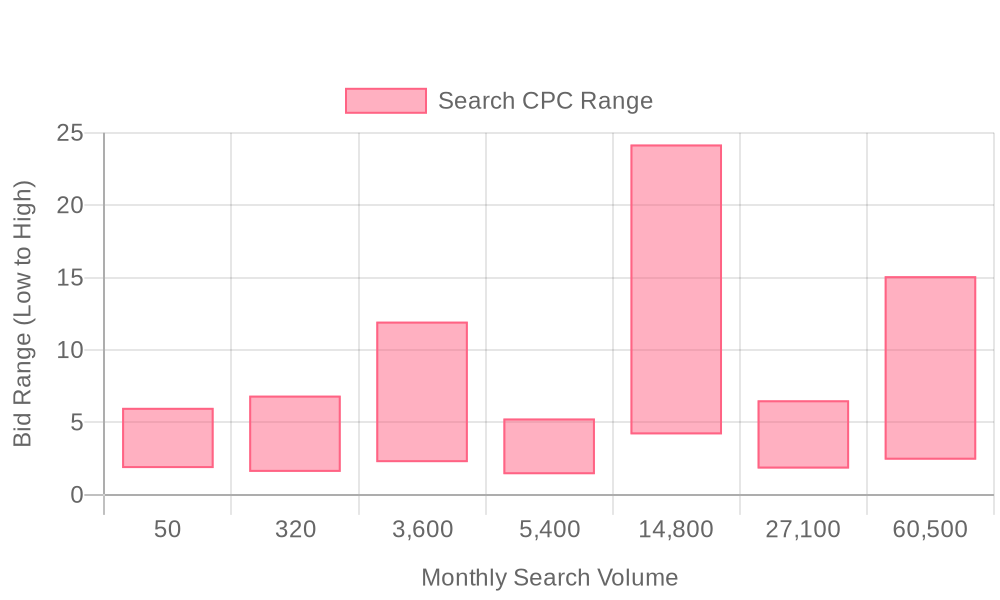
| Industry | Keyword | Monthly Search Volume | Competition Level | Low Bid | High Bid |
| Secondary Schools | private secondary schools near me | 50 | LOW | 1.85 | 6.01 |
| Secondary Schools | secondary schools near me | 320 | LOW | 1.59 | 6.85 |
| Secondary Schools | alternative high schools near me | 3600 | LOW | 2.26 | 11.96 |
| Secondary Schools | christian high schools near me | 5400 | LOW | 1.43 | 5.27 |
| Secondary Schools | secondary education | 14800 | LOW | 4.18 | 24.19 |
| Secondary Schools | private high schools near me | 27100 | LOW | 1.82 | 6.53 |
| Secondary Schools | secondary schools | 60500 | LOW | 2.43 | 15.1 |
Effective keyword strategy is the foundation of high-performing Google Ads for Secondary Schools campaigns. To capture families at every stage of the enrollment journey, schools must balance broad, high-volume keywords with niche, intent-driven terms that reflect specific academic interests, extracurricular programs, and location-based needs. This approach ensures campaigns engage both active searchers comparing local schools and those exploring specialized offerings, such as STEM programs or international baccalaureate curricula. For actionable guidance on maximizing keyword impact, see this overview of Google Ads for education.
A comprehensive keyword portfolio should include general discovery terms like "secondary schools near me," as well as targeted queries such as "best private high schools in [city]," "boarding school open days," and "college prep schools with robotics." Incorporating negative keywords, such as "elementary," "free," or "job openings", prevents wasted spend on irrelevant traffic. By using search term reports and analyzing intent signals, marketers can quickly identify high-converting queries and expand into emerging areas where demand is shifting.
Revenue-driven teams benefit from platforms that connect keyword performance with downstream enrollment outcomes. For instance, when a parent searches "enroll in STEM-focused secondary school," real-time visitor identification uncovers whether that interest aligns with previously engaged website visitors. Dynamic audience segmentation ensures that as a family progresses from research to inquiry or application, they receive increasingly personalized ad experiences. By syncing enriched audience data and lead activity directly into downstream systems, marketing and admissions teams see not just which keywords drive clicks, but which ones move prospective students through the entire journey, from first touch to enrollment.
Schools that regularly audit and refine their keyword lists, leveraging both quantitative metrics and behavioral insights, consistently outperform those relying on static, generic terms. This ongoing optimization is essential for maximizing the impact of Google Ads campaigns for education, lowering cost per inquiry, and driving measurable enrollment growth.
Step-by-Step Campaign Execution Framework
A structured approach is essential for schools aiming to maximize the value of Google Ads for Secondary Schools. Each step in this execution framework addresses a critical stage in the campaign lifecycle, reducing wasted spend and improving both lead quality and conversion rates. By operationalizing data at every turn, secondary schools can reach more qualified families, drive event registrations, and accelerate enrollment pipelines.
Step 1: Build Targeted Keyword Lists
Identifying the right keywords establishes the foundation for every successful Google Ads campaign. Schools should prioritize terms closely tied to academic offerings, extracurricular programs, and local or regional intent, such as “private STEM high school in [city],” “boarding schools with scholarships,” or “open day registration for [school name].” For a deeper dive into maximizing keyword relevance and campaign results, review these actionable tips for schools. Including modifiers that reflect parent concerns or student aspirations narrows the audience to those most likely to convert. Negative keywords are equally important for filtering out searches unrelated to admissions or education, protecting budgets from low-value traffic.
When audience data is unified and enriched, keyword development becomes far more precise. For example, connecting CRM insights to search intent allows marketers to identify which academic programs or open days drive the most interest among high-fit prospects. This enables more granular keyword targeting, ensuring ad spend focuses on in-market families and high-potential localities.
The upgrade most secondary schools advertisers miss is going beyond raw keyword volume to layer in intent and identity signals. By connecting website-visitor data and CRM records with Sona Marketing Measurement, you can see which specific search terms bring in the accounts and customers that actually convert, and weight your keyword and bidding strategy toward those rather than the terms with the highest search volume alone.
Step 2: Develop Compelling Ads
Ad creative must resonate with both parents and students, emphasizing what sets the school apart in a crowded educational landscape. Headlines that call out student achievements, college acceptance rates, or unique extracurriculars catch attention early. Supporting copy should reinforce trust, highlight community culture, and prompt immediate action, like booking a tour or downloading a prospectus. Responsive search ads allow schools to test multiple value propositions and calls-to-action, letting the platform optimize delivery based on real-time engagement data.
Real-time visitor identification elevates ad messaging by surfacing which themes or attributes are most compelling to each audience segment. Marketers can then dynamically adjust creative to reflect the latest in-market behaviors, tailoring offers for families researching specific programs or responding to seasonal enrollment cycles. This data-driven customization consistently improves click-through and conversion rates.
Step 3: Design Conversion-Ready Landing Pages
Every click should lead to a landing page that is tightly aligned with the ad’s promise, visually engaging, and optimized for mobile experiences. Essential elements include a clear headline, succinct program details, authentic testimonials, and a frictionless inquiry or registration form. Trust signals, such as accreditation badges or recent rankings, reinforce credibility. The landing page should focus on a single conversion goal, minimizing distractions and guiding visitors toward completing a form or scheduling a visit.
Integrating online and offline conversion tracking provides a holistic view of which landing pages and creative elements are driving true ROI. For a look at best practices for tracking conversions, see Google Ads best practices. By syncing CRM data with Google Ads, schools can attribute enrollments or open day registrations to the originating campaign, ad group, and even keyword. This closed-loop measurement supports continual landing page optimization, ensuring every touchpoint contributes to enrollment growth.
Step 4: Data-Driven Optimizations
Continuous campaign refinement is the hallmark of effective digital marketing for schools. Conversion data should inform automated bidding strategies, budget reallocations, and audience segment updates. For example, if a particular academic program or event consistently yields higher inquiry rates, resources can be shifted to maximize exposure in those areas. Strategic bid adjustments during peak enrollment periods ensure the school appears at the top of relevant search results when interest is highest.
Dynamic audience management is equally crucial. As prospects engage with content, downloading brochures, attending webinars, or interacting with application forms, their audience status should update automatically. This enables precise retargeting with timely, relevant messages and excludes families who have already converted, reducing wasted impressions. For practical steps on leveraging Google Ads in education, explore how schools can leverage Google Ads. Advanced attribution ensures both online and offline conversions are captured, providing actionable insights for future campaign planning and budget optimization.
To see how these strategies work in action, get started for free with Sona and unlock data-driven campaign execution for your school.
Sona Marketing Measurement closes the gap between clicks and revenue. It captures ad clicks with first-party tracking rather than third-party cookies, ties that click through UTM capture and ad-platform APIs to the actual record in your CRM, and reports ROAS by keyword and campaign instead of by last-click form fill. Feeding that revenue signal back into Smart Bidding and Performance Max compounds over time: the algorithms optimize toward booked secondary schools revenue, not cheap leads.
Tips on Expanding Your School's Online Presence
Expanding your school’s online presence requires a blend of technology and thoughtful messaging that directly addresses the needs of prospective students and families. Success hinges on using data-driven insights to craft campaigns that reach the right audiences with relevance and credibility. For more ways to enhance your digital marketing efforts, visit our marketing and analytics blog.
- Educational Asset Promotion: Embedding whitepapers, academic reports, or success stories into retargeting campaigns keeps your institution top-of-mind for website visitors who have yet to convert. By integrating visitor identification, marketers can move beyond anonymous traffic and deliver this content to specific prospects, ensuring that valuable educational materials reach decision-makers and influencers at key moments in their research process.
- Partnerships: Establishing collaborations with local educational organizations or community groups can significantly boost referral traffic and trust. When these partnerships are supported by real-time audience data, schools can prioritize and nurture relationships with high-potential partners, driving both digital and offline engagement that translates directly into qualified inquiries and applications.
- Geographical Localization: Tailoring advertisements to specific regions enables schools to speak to the unique priorities of local communities. Dynamic audience building ensures that as leads express interest in certain programs or events, their profiles update automatically, allowing for hyper-localized messaging that resonates with families in target catchment areas. This level of personalization enhances ad relevance and improves campaign efficiency, maximizing the impact of every marketing dollar.
Harnessing technologies that unify online and offline signals, such as advanced conversion tracking and CRM-ad sync, lets schools attribute inquiries and enrollments back to individual campaigns with precision. This not only provides a clear understanding of ROI but also allows for rapid optimization as audience behavior shifts throughout the year. Learn more actionable ways schools can maximize marketing results in this Google Ads guide for schools.
Beyond Google Ads: Winning the AI Answers Secondary Schools Buyers Now Trust
Paid search captures demand at the moment someone types a query. But a fast-growing share of secondary schools buyers no longer start at Google at all, they ask ChatGPT, Gemini, or Perplexity before they ever run a search, and Google's own AI Overviews increasingly summarize an answer above the traditional results. If your business isn't referenced in those AI answers, you're invisible at the exact moment buyers build their shortlist.
Sona AI Visibility shows where your business shows up across ChatGPT, Gemini, Perplexity, Google AI Overviews, and 10+ engines, and, much like a keyword report, which prompts actually send you buyers, so you can prioritize the ones that convert. Run the two together and you cover the entire buyer path: get cited where buyers research (AI Visibility), then prove which of that demand turns into booked revenue (Marketing Measurement).
Helpful resources
Conclusion
Google Ads works for secondary schools when the targeting, creative, and follow-up all reflect where a specific family sits in their decision, not when campaigns chase generic education keywords and hope for inquiries.
The schools pulling ahead are the ones connecting ad spend to actual enrollment data rather than form fills, and increasingly, the ones showing up in the AI answers parents now consult before they ever visit a website. That combination, precise targeting plus closed-loop measurement, is what turns a Google Ads budget into a predictable enrollment pipeline rather than a recurring expense.
FAQ
What are the best practices for using Google Ads in schools?
Best practices include precise audience and keyword targeting, creating engaging ads aligned with school branding, using data-driven insights for optimization, and integrating online and offline marketing efforts.
How can secondary schools create effective Google Ads?
Schools can create effective Google Ads by tailoring ad content to specific audience segments, emphasizing unique school offerings, and using responsive search ads to optimize messaging.
What budget should schools allocate for Google Ads?
Schools should allocate their budget based on high-converting campaigns and audiences, using real-time data to adjust spend towards keywords and demographics that drive the most engagement.
What types of Google Ads are most effective for schools?
Effective types of Google Ads for schools include search campaigns, display ads, video ads, remarketing, and using ad extensions to enhance visibility and engagement.
How can schools measure the success of their Google Ads campaigns?
Schools can measure success by tracking metrics such as click-through rate, conversion rate, and cost per inquiry, and by integrating online and offline conversions to assess true ROI.







