


Business schools compete for a shrinking pool of applicants who now research programs across a dozen digital touchpoints before ever filling out a form. Traditional recruiting methods miss high-value prospects entirely, especially the ones browsing anonymously until they're ready to inquire. Google Ads solves the timing problem: it puts your school in front of a candidate at the exact moment they search for an MBA, executive program, or specialized degree. Tools that identify the companies and accounts behind that anonymous traffic sharpen the targeting further, so admissions teams spend against real interest instead of guesswork. Used well, Google Ads becomes the mechanism that catches decision-makers at the moment they're most receptive, not just another line item in the media plan.
How to Generate Google Ads for Business Schools Leads: A Step-by-Step Guide

Business schools face a unique challenge: attracting high-intent prospects who are actively seeking advanced educational opportunities, but may be overwhelmed by competing programs and generic messaging. A data-driven Google Ads strategy allows your institution to precisely reach and engage ideal candidates at every stage of their decision-making journey, ensuring that your marketing dollars are allocated to prospects most likely to convert.
Modern revenue teams need insight that goes beyond clicks and impressions. With unified go-to-market data, marketers can see not just which campaigns generate clicks, but which individual prospects and companies are engaging with ads, demo forms, and landing pages. Sona's Identity Resolution reveals the companies and people behind that traffic, turning online advertising from guesswork into a measurable, scalable growth engine.
Building an effective Google Ads campaign for business schools starts with a framework that fits into your broader multichannel marketing, not one bolted on separately. Aspiring MBA and executive-education candidates search differently than undergraduates: they compare rankings and ROI, research part-time versus full-time formats, and often circle an application deadline months in advance, which makes timing and urgency signals as important as the keywords themselves. Explore actionable Google Ads tips for schools to refine your targeting, and use intent signals and real-time behavioral data to shift budget toward accounts showing that intent as soon as it appears.
Aligning your landing pages and ad creatives to maximize conversions is critical, especially for business schools where demo interest and campus visit bookings frequently stall before completion. Personalization plays a major role: dynamic audience building ensures that messaging and offers update automatically as leads progress through the funnel, increasing relevance and reducing friction for each prospect. When a candidate abandons a demo form or leaves a critical page, tailored Google Ads can be served to re-engage them with the program details, resources, or events most likely to spark action.
Continuous performance optimization is essential for business schools competing for top-tier applicants. Advanced conversion tracking and attribution allow you to measure the true ROI of each campaign, including both online and offline events, such as applications submitted after an admissions phone call or in-person info session. Integrating your CRM with Google Ads ensures that enriched leads and audience segments are always in sync, so your retargeting and lookalike modeling efforts remain current and effective across channels.
A holistic approach to education marketing means insights from Google Ads campaigns for colleges can inform strategy on other platforms, driving efficiencies and uncovering new opportunities for student recruitment ads. By building a feedback loop between channels and unifying first-party prospect engagement data, your team can make smarter decisions, iterate faster, and consistently improve outcomes for both marketing and admissions stakeholders. If you're ready to elevate your campaigns, get started for free with Sona today and accelerate your student recruitment.
Why Does Google Ads Matter for Business Schools

Business schools compete in a crowded field where identifying motivated prospects matters more than reaching the widest audience. Google Ads captures high-intent search queries from candidates actively researching MBA programs, executive education, or specialized business degrees. See this overview for education marketing for more on how institutions apply Google Ads to student acquisition. Surfacing ads at the moment a candidate is comparing programs establishes relevance right when consideration is happening, not after it's passed.
Targeted outreach through Google Ads helps business schools solve the problem of anonymous web traffic. With company-level visitor identification and real-time behavioral insight, marketers can see which organizations, and which roles within them, are showing genuine interest. That shifts campaign focus and budget toward high-converting prospects, accelerating the pipeline and enabling more personalized follow-up across the enrollment funnel.
Immediate impact is a defining advantage of Google Ads for business schools. Unlike organic channels that require months to gain traction, paid campaigns generate visibility and qualified inquiries within hours of launch. This rapid feedback loop shortens the time from initial impression to meaningful connection, driving measurable results during peak recruitment seasons or when launching new program offerings. To dive deeper into optimizing paid campaigns for education, explore our blog on marketing analytics.
Enhanced visibility is critical for institutions looking to expand into new markets or reach underrepresented student profiles. Google Ads extends brand presence into highly specific regions, industries, or cohorts, outperforming traditional outreach methods that often fall short in fragmented media landscapes. This localized targeting ensures every dollar spent reaches the right audience, maximizing return on investment and supporting long-term enrollment diversity goals. For teams seeking dynamic audience segmentation, advanced tools can support these targeting strategies.
Informed decision-making is central to any business school's growth strategy. Google Ads provides granular tracking from the first click through to application and enrollment, letting teams refine messaging, creative, and spend based on real performance data. Integrating enriched lead insight with CRM and marketing automation turns campaign results into actionable intelligence, guiding sharper decisions across digital marketing for schools.
Common Types of Google Ads Campaigns for Business Schools

- Search Campaigns: Search campaigns are essential for converting high-intent prospects who are actively researching programs such as "MBA programs near me" or "top business schools for executives." By structuring campaigns with precise keyword targeting and integrating real-time visitor identification, marketers can move beyond anonymous clicks to pinpoint which organizations and individuals are exploring their offerings. This granular visibility supports dynamic budget allocation, ensuring spend is directed toward audiences demonstrating the strongest intent and highest likelihood to convert. For tips on setting up effective Google Ads in education, explore this step-by-step guide.
- Display Ads: Display campaigns play a vital role in reinforcing your brand message across a curated network of educational, professional, and industry websites. Strategic placements help schools remain top-of-mind as students evaluate their options, while advanced segmentation capabilities ensure that ads reach relevant audiences at meaningful touchpoints. When display efforts are guided by unified audience data, campaign managers can adapt creative and targeting as prospects engage with other digital content, keeping brand engagement consistent and relevant throughout the decision journey.
- Video Ads: Video advertising offers an immersive way to showcase campus life, program highlights, or alumni testimonials. Engaging video content drives higher recall and emotional connection, especially when delivered on platforms like YouTube where prospective students spend significant time researching educational options. By monitoring real-time engagement and intent signals, teams can retarget viewers who watch key portions of a video, nurturing interest with tailored messages that align with their demonstrated interests.
- Remarketing: Remarketing campaigns are crucial for recapturing the attention of prospects who have previously interacted with your website or digital assets. Leveraging cross-platform signals, remarketing enables timely follow-ups with tailored offers, event invitations, or application deadline reminders. Dynamic audience management ensures that segments update as leads progress through the funnel, so messages evolve based on each candidate’s engagement history, increasing overall conversion rates. For more on dynamic retargeting strategies, explore our intent-driven retargeting playbook.
- Assets: Ad assets such as location, call, and sitelink assets enhance the visibility and credibility of business school ads, providing additional pathways for engagement. These assets let schools surface critical information, such as campus tours, direct inquiry lines, or links to application resources, at the moment of search. When assets are informed by unified CRM and intent data, every touchpoint can be personalized, streamlining the journey from search to inquiry or application.
Where to Find Growth Opportunities?
Growth-focused business schools consistently outperform by identifying and acting on opportunities beyond their primary marketing channels. Expanding into underutilized digital spaces ensures a steady flow of high-quality student leads while maintaining cost efficiency. For a step-by-step look at how educational institutions can use Google Ads to attract students and boost enrollment, see this guide to Google Ads for education. If you want to see how advanced marketing analytics can fuel optimization, explore our blog on marketing analytics.
- Vertical keyword targeting: Leveraging vertical keywords allows business schools to reach niche educational markets that align closely with specialized program offerings. Instead of broad, high-competition terms, targeting program-specific queries (such as "MBA in healthcare management" or "executive leadership programs for engineers") ensures that ads show up for high-intent searches. This approach not only boosts relevance but also improves conversion rates by focusing on audiences actively seeking your educational solutions. When these keywords are mapped to real-time behavioral signals, budget can be shifted instantly to segments showing the highest intent, maximizing ad spend efficiency.
- Competitor research for segment discovery: Using advanced research tools to analyze competitor campaigns reveals untapped audience segments. By examining gaps in competitor keyword portfolios and ad placements, business schools can uncover search themes or geographies overlooked by others. Integrating this intelligence with visitor identification enables marketers to pinpoint exactly which companies or student profiles are engaging with their ads, moving beyond anonymous impressions to actionable prospect lists.
- Industry-specific placements: Advertising on forums, review sites, or educational content hubs relevant to prospective business students increases visibility among decision-makers not reached through standard search or display networks. Placement targeting offers the precision needed to engage with students vetting MBA programs or researching career advancement options. Marketers who connect these placements with dynamic audience management can continuously update remarketing lists as prospects engage with different content, ensuring that messaging stays relevant throughout the decision cycle.
- Content retargeting with educational assets: Webinars, thought-leadership articles, and downloadable whitepapers provide value to prospective students while serving as powerful retargeting anchors. By tracking which accounts engage with these assets, business schools can nurture high-fit prospects through the funnel with tailored ad experiences. Integration of advanced conversion tracking and CRM sync closes the loop, enabling teams to attribute both online and offline touchpoints to marketing efforts and optimize future campaigns for true ROI.
This holistic approach, grounded in precise targeting and enriched by real-time data, enables business schools to find and capitalize on growth opportunities that traditional digital marketing for schools channels often miss.
How to Apply Audience Segmentation for Business Schools

Business schools that leverage advanced audience segmentation consistently outperform generic, one-size-fits-all digital marketing approaches. Precise segmentation ensures campaigns are tailored to the unique motivations and backgrounds of each prospective student cohort, resulting in higher engagement rates and improved return on ad spend. For a deeper look at segmentation strategies and analytics, visit the marketing analytics blog.
- Define Segments: Begin by distinguishing between undergraduate and graduate prospects, as well as domestic and international candidates. Rely on accurate enrollment and CRM data to prevent wasted budget on low-value or misaligned audiences. This ensures each advertising dollar reaches individuals most likely to convert, and eliminates the risk of serving executive MBA messaging to undergraduates or vice versa. Sona's Identity Resolution can dynamically identify which companies, organizations, or job titles are visiting program pages, so budget is never spent blindly.
- Overlay Intent Signals: Next, incorporate intent data to further qualify each audience segment. Executive MBA prospects, for example, often demonstrate distinct online behaviors, such as researching part-time, hybrid, or cohort-based formats, compared to early-career MBA applicants who may focus on full-time programs. Real-time analysis of in-market activity enables marketers to shift spend toward audiences actively comparing business school options, rather than those merely browsing education content. This optimization ensures that outreach aligns closely with current student needs, improving the odds of capturing applications from high-converting leads. For more actionable Google Ads tips for schools, explore this Google Ads guide for education.
- Create Segment-specific Ad Groups: Customizing ad groups for each audience segment allows for tailored messaging and strategic budget allocation. For instance, ad copy and creative for international students should emphasize visa support, global alumni networks, and language resources, while domestic campaigns focus on career placement outcomes and local business connections. Dynamic audience syncing ensures that as prospects move from awareness to consideration, such as after downloading a program brochure or attending a virtual info session, they are automatically included in more targeted ad groups, keeping messaging relevant and timely.
- Ensure Accurate Conversion Tracking: Integrate conversion tracking deeply with your CRM and enrollment platforms, allowing measurement of both online and offline actions such as form fills, event registrations, and application submissions. Advanced attribution models reveal which audience segments and channels deliver the highest ROI, connecting digital touchpoints to actual enrollments. Syncing enriched lead data directly into ad platforms and CRM systems lets business schools continuously refine targeting, optimize messaging, and report on true marketing impact.
This is also where measurement changes the economics. With Sona Marketing Measurement you can identify the companies behind your ad clicks, not just anonymous sessions, and segment audiences by who actually becomes a customer. That lets you build bid adjustments and audience signals around the segments that convert, and de-prioritize the ones that don't, so you feed Google's algorithms "this click became a paying business schools customer" instead of just "someone filled out a form."
Keyword Strategy & Sample Target Terms
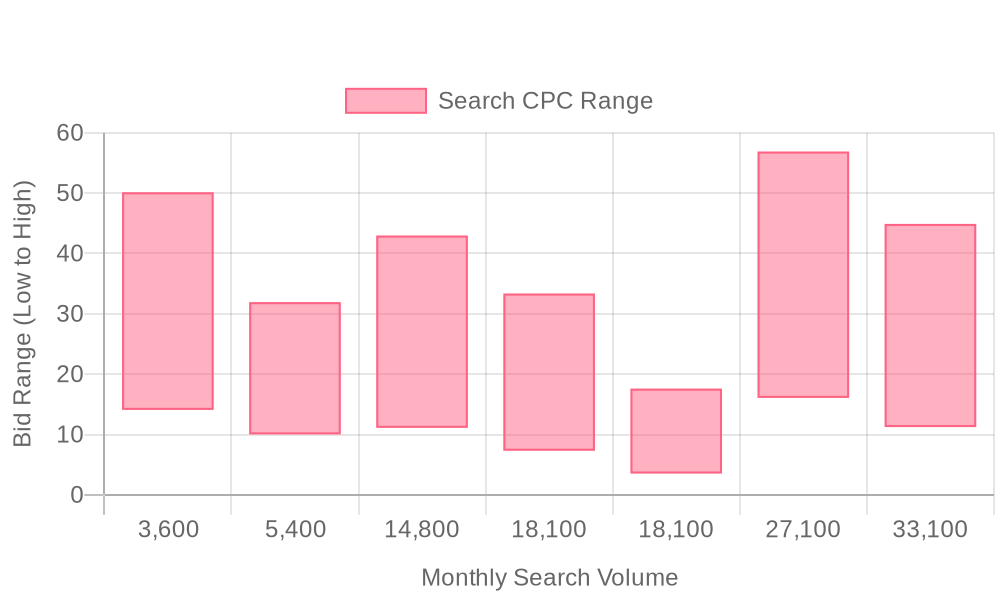
| Industry | Keyword | Monthly Search Volume | Competition Level | Low Bid | High Bid |
| Business Schools | affordable online mba programs | 3600 | MEDIUM | 14.09 | 50.14 |
| Business Schools | executive mba programs | 5400 | MEDIUM | 10.03 | 31.93 |
| Business Schools | mba programs | 14800 | MEDIUM | 11.12 | 42.96 |
| Business Schools | business schools | 18100 | MEDIUM | 7.33 | 33.35 |
| Business Schools | business classes | 18100 | LOW | 3.55 | 17.6 |
| Business Schools | online mba programs | 27100 | MEDIUM | 16.08 | 56.88 |
| Business Schools | best online mba programs | 33100 | MEDIUM | 11.24 | 44.9 |
Effective Google Ads strategies for business schools begin with meticulous keyword planning, as the right terms ensure relevant visibility and efficient budget allocation. Strategic keyword targeting allows institutions to intercept prospective students researching MBA programs, executive education, or specialized certificates, focusing spend on high-value in-market audiences. By integrating account-based insights, marketers can identify which business professionals or recent graduates are actively comparing schools, then dynamically adjust keyword focus as intent signals shift.
Precision targeting depends on leveraging granular data to capture students at the moment of research. Rather than relying on broad terms like "business degree," advanced campaigns deploy long-tail and program-specific keywords such as "MBA in finance New York" or "best executive MBA Europe." These nuanced terms not only reduce wasted spend but attract candidates whose search behavior indicates a strong fit and intent to convert.
Measurable ROI becomes possible when keyword performance is directly linked to enrollment outcomes. Enhanced data enrichment and attribution capabilities enable marketing teams to connect clicks and impressions with actual student applications, interviews, and accepted offers. For actionable insights and optimization tips, explore this Google Ads guide for education. By continuously syncing this conversion data back into campaign management, teams can double down on high-performing terms while pausing underperformers, ensuring a cycle of ongoing improvement.
Channel synergy amplifies results by weaving Google Ads into a broader digital marketing mix. Retargeting strategies, powered by unified visitor identification, let business schools re-engage prospective students who interacted with key website pages or started an application but didn't finish it. Responsive budget shifting, informed by real-time engagement and intent signals, keeps campaigns effective even as applicant interest ebbs and flows across the admissions cycle.
Step-by-Step Campaign Execution Framework
Step 1: Build Targeted Keyword Lists
Effective Google Ads for business schools begins with a rigorous approach to keyword selection and structure. Classifying keywords by program type, such as full-time MBA, part-time MBA, executive education, or specialized master’s, ensures each campaign segment aligns with the nuanced intent of distinct applicant profiles. Geo-targeting fine-tunes reach, enabling teams to prioritize local, regional, or international prospects based on institutional priorities or emerging markets. For actionable strategies on education-specific keyword targeting, explore this Google Ads keyword guide for education. Leveraging long-tail keywords is essential; phrases like “STEM MBA in New York” or “part-time business analytics program for working professionals” naturally filter for high-value leads who are closer to conversion and more likely to engage.
When data unification platforms are integrated, teams gain a clearer picture of which keyword themes generate the most qualified pipeline. Instead of relying solely on front-end click or impression metrics, marketers can identify which queries correlate with application starts, interview bookings, or admits. Dynamic keyword lists adapt as market demand shifts and new high-intent segments are detected through real-time behavioral signals across digital channels, maximizing efficiency and budget allocation.
The upgrade most business schools advertisers miss is going beyond raw keyword volume to layer in intent and identity signals. By connecting website-visitor data and CRM records with Sona Marketing Measurement, you can see which specific search terms bring in the accounts and customers that actually convert, and weight your keyword and bidding strategy toward those rather than the terms with the highest search volume alone.
Step 2: Develop Engaging Ad Copy
Developing ad copy for business school campaigns requires more than just keyword insertion. Headlines must immediately highlight unique program benefits, such as accelerated graduation timelines, dual-degree options, or exclusive industry partnerships, that distinguish your offering in a competitive field. Including trust markers, like global rankings or alumni success stories, builds credibility and reassures prospects evaluating multiple institutions. For a comprehensive breakdown of ad copy best practices and examples, visit this step-by-step Google Ads setup guide for education. Incentives, such as application fee waivers or early-bird scholarship alerts, deliver a targeted nudge for users retargeted with custom messaging after visiting your site or engaging with content.
With advanced visitor identification, marketing teams can move beyond generic messaging to personalize ads based on known behaviors or company affiliations. For instance, if a prospective student has previously engaged with leadership development seminar content, retargeting ads can reference those interests, making outreach more relevant and increasing the likelihood of inquiry. This level of granularity ensures that every ad dollar works harder, aligning creative assets with the prospect’s place in the decision funnel.
Step 3: Design Landing Pages for Conversion
A seamless experience from ad click to landing page is critical for converting prospective students. Each landing page should provide a direct 1:1 alignment with the ad’s promise, featuring detailed program information, clear calls to action, and content tailored to the prospect’s segment. Highlighting academic accolades, graduate outcomes, and compelling student testimonials strengthens trust and addresses common barriers to engagement. When traditional forms go unsubmitted, intelligent follow-up mechanisms, such as chatbots or progressive forms, capture additional data points and re-engage high-value visitors. For more inspiration on optimizing education landing pages for conversions, see this guide to Google Ads for schools.
By tying real-time site behavior to CRM records, marketing teams can attribute form fills, event registrations, and even offline interactions back to the original campaign and keyword. This unified data view enables precise optimization of landing page elements, from headline variations to the placement of trust signals, ensuring every touchpoint is engineered for maximum conversion efficiency.
Step 4: Implement Continuous Optimizations
Achieving sustained enrollment growth requires ongoing measurement and improvement across every stage of the funnel. Tracking both micro-conversions (like brochure downloads or webinar signups) and macro-conversions (such as applications or deposits) provides a comprehensive understanding of which tactics are driving measurable impact. For a broader look at optimization strategies in education PPC, review this comprehensive education PPC guide. Integrating CRM and ad platform data allows teams to segment out unqualified leads, focus spend on the highest-fit prospects, and reduce wasted effort.
Smart bidding strategies, such as Target CPA or custom conversion value models, adapt in real time as new performance insights emerge. When audience and lead data is dynamically synced between Google Ads and core systems, automated workflows ensure that outreach, retargeting, and budget allocation are always aligned with the latest intelligence. This data-driven approach empowers business schools to refine audience definitions, bid strategies, and creative content continuously, maximizing ROI and driving real enrollment results. Ready to optimize your enrollment funnel? Get started for free with Sona.
Sona Marketing Measurement closes the gap between clicks and revenue. It captures every ad click with first-party measurement, then ties that click through UTM capture and ad-platform APIs to the actual record in your CRM, and reports ROAS by keyword and campaign instead of by last-click form fill. Feeding that revenue signal back into Smart Bidding and Performance Max compounds over time: the algorithms optimize toward booked business schools revenue, not cheap leads.
Expanding Your Business School's Digital Presence

A strong digital presence is essential for business schools seeking to engage prospective students and expand institutional influence. Modern education marketing leverages targeted online advertising and data-driven outreach to connect with high-intent candidates, optimize recruitment spend, and amplify program visibility. For a detailed look at how schools can use Google Ads to boost enrollment, explore this comprehensive guide to Google Ads for education. To further refine your strategy, visit our marketing analytics blog for actionable insights.
- Cross-promote digital brochures via retargeting: Retargeting campaigns ensure that your most compelling assets, such as interactive program brochures or virtual open house invitations, reach audiences who have already engaged with your website or application forms. With visitor identification and journey mapping, you can move beyond anonymous web traffic to precisely deliver tailored brochure content to individuals and companies demonstrating strong intent. This approach supports your content marketing objectives by driving repeated exposure and increasing the likelihood of conversion among high-interest segments.
- Utilize segmented audiences to upsell workshops or certifications: By enriching and scoring your audience data, you can segment prospects based on their engagement level, program interest, or past application activity. This segmentation allows you to present additional offerings, such as executive education workshops or industry-recognized certifications, to the right audience at the right time. Dynamic audience tools update these segments in real time as leads progress through the funnel, ensuring your upsell efforts remain relevant and timely for every prospect.
- Partner with academic networks for increased traffic and collaboration: Collaborating with respected academic networks and professional associations can drive qualified traffic to your digital properties and facilitate strategic partnerships. Maximizing audience fit requires connecting your campaigns with channels that attract students aligned with your institution’s mission. By integrating campaign data and performance insights, you can identify which partnerships and content placements deliver the best engagement, enabling future collaborations to be both efficient and impactful.
- Localize your efforts to target students in specific regions: Localizing advertising campaigns enables business schools to reach students in priority regions with messaging tailored to local culture, application timelines, or career outcomes. Granular insights from Google Ads, combined with intent tracking, allow marketers to shift budget and creative assets toward high-converting cities, countries, or even zip codes. CRM and ad platform sync ensures that enriched local audiences transition smoothly from digital ad click to inquiry follow-up, streamlining the process for both admissions and marketing teams.
A unified, data-driven approach to digital marketing for business schools delivers measurable improvements in student recruitment, brand strength, and program growth. Combining retargeting, segmented audience enrichment, strategic partnerships, and localization builds a digital presence that stands out in a competitive global market.
Beyond Google Ads: Winning the AI Answers Business Schools Buyers Now Trust
Paid search captures demand at the moment someone types a query. But a fast-growing share of business schools buyers no longer start at Google at all, they ask ChatGPT, Gemini, or Perplexity before they ever run a search, and Google's own AI Overviews increasingly summarize an answer above the traditional results. If your business isn't referenced in those AI answers, you're invisible at the exact moment buyers build their shortlist.
Sona AI Visibility shows where your business shows up across ChatGPT, Gemini, Perplexity, Google AI Overviews, and 10+ engines, and, much like a keyword report, which prompts actually send you buyers, so you can prioritize the ones that convert. Run the two together and you cover the entire buyer path: get cited where buyers research (AI Visibility), then prove which of that demand turns into booked revenue (Marketing Measurement).
Helpful resources
Conclusion
The business schools that pull ahead over the next few admissions cycles won't be the ones spending the most on Google Ads, they'll be the ones that can trace a search query all the way to an enrolled student and adjust accordingly. That means treating identity resolution, intent signals, and revenue attribution as core infrastructure, not add-ons layered in after the campaigns launch. Pair that discipline with visibility in the AI tools where candidates now start their research, and your school shows up at both ends of the decision, the first search and the final comparison.
If you're ready to take your marketing efforts to the next level, start for free.
FAQ
What are the benefits of using Google Ads for business schools?
Google Ads offers business schools the ability to target high-intent prospects precisely when they are searching for educational opportunities, enhancing visibility and engagement, and allowing for immediate impact and measurable results.
How can business schools create effective Google Ads campaigns?
Business schools can create effective Google Ads campaigns by using a strategic framework that includes precise keyword targeting, personalized ad messaging, optimized landing pages, and continuous performance optimization.
What keywords should business schools target in Google Ads?
Business schools should target long-tail and program-specific keywords like 'MBA in finance New York' or 'best executive MBA Europe' to attract high-value, high-intent prospects.
What budget should business schools allocate for Google Ads?
The budget for Google Ads should be flexible and data-driven, allowing for shifts towards high-converting accounts as real-time behavioral and intent signals are monitored.
How can business schools measure the success of their Google Ads?
Business schools can measure the success of Google Ads by integrating conversion tracking and CRM systems to attribute online and offline actions directly to campaigns, ensuring marketing efforts are aligned with enrollment outcomes.







