


BLS certification providers compete for a narrow window of attention: someone's certification is expiring, their employer just mandated recertification, or a new hire needs proof of training before a start date. Google Ads is often the fastest way to reach that person at the moment they search, but many providers still struggle to find specialized healthcare audiences and track enrollments back to the ad that produced them. Precise targeting and closed-loop measurement close both gaps, connecting digital clicks to the offline sign-ups and classroom seats that actually matter.
How to Generate BLS Certification Leads with Google Ads: A Step-by-Step Guide

Healthcare training providers face the challenge of connecting with specialized audiences in a crowded digital landscape. Effective Google Ads strategies help overcome wasted spend and surface high-value BLS certification leads by focusing on precision, personalization, and real-time insights.
Integrating Google Ads into a multi-channel marketing approach delivers measurable value across the entire lead lifecycle. By unifying digital campaign data with CRM and offline touchpoints, organizations gain a granular understanding of which channels and creative assets drive the most qualified BLS certification prospects. See our Google Ads certification guide for a deeper look at optimizing campaign structures for regulated industries.
- Data-driven Audience Targeting: Advanced segmentation is essential for BLS certification marketers. Google Ads, when integrated with robust data platforms, enables the identification of healthcare professionals and organizations with active certification needs. Audience lists can evolve dynamically as intent signals shift, ensuring ad spend is focused on the highest converting segments.
- Aligned Landing Pages And Creative Assets: Tailoring landing pages and ad creatives to reflect the specific needs of nurses, EMTs, or corporate compliance teams improves conversion rates. Data-driven insights allow for rapid message testing and refinement, addressing inefficiencies when speaking to diverse demographics.
- Performance Optimization And Cross-channel Impact: Centralized campaign management surfaces which tactics, search, display, or remarketing, produce the strongest ROI for BLS certification offerings. Marketers can track leads from first click through offline enrollment, closing the loop on attribution and enabling continuous budget optimization. For more insights on maximizing ad returns, check out our guide on Google Ads ROAS.
- Unifying Fragmented Data Silos: By syncing CRM, ad, and web analytics data, marketers move beyond anonymous web traffic to pinpoint visitor identity and engagement history. This reduces friction in follow-up and allows for timely, relevant outreach to in-market leads.
This guide equips healthcare professionals and education providers to maximize BLS certification lead generation through actionable, stepwise strategies that unify data, optimize performance, and drive predictable growth.
Why Does Google Ads Matter for BLS Certification

Modern healthcare training providers face persistent challenges in reaching professionals who need Basic Life Support (BLS) certification. Traditional channels often fail to connect with active seekers, making digital visibility a critical advantage for organizations that want to grow enrollments and drive engagement in a regulated, time-sensitive market.
Google Ads delivers the precision and speed required for BLS certification providers to attract qualified leads. With robust audience targeting and instant search visibility, healthcare marketers can respond swiftly to spikes in demand, positioning their brand in front of individuals and institutions searching for accredited certification options. The Google Ads certification guide provides a deeper look at this trend.
- Capture Specialized Audiences: Google Ads allows healthcare marketers to reach healthcare professionals, HR directors, and compliance officers actively searching for BLS certification, bypassing the passive, broad reach of offline campaigns.
- Accelerate Lead Generation: Paid search and display placements enable BLS training providers to generate inquiries and bookings rapidly, which is essential in meeting regulatory deadlines and organizational onboarding cycles.
- Enable Closed-loop Measurement: By integrating campaign, CRM, and behavioral data, providers overcome the fragmentation that plagues healthcare marketing analytics. Unified data flows allow marketers to attribute enrollments to specific campaigns, adjust spend in real time, and iterate strategies based on performance at every funnel stage.
Precise visitor identification further enhances these benefits by transforming anonymous web traffic into actionable company-level insights. Sona's Identity Resolution helps reveal the organizations behind web visits, enabling smarter targeting for BLS certification providers.
Real-time intent signals inform budget shifts toward high-converting segments, while dynamic audience management ensures that messaging and offers evolve as leads progress through the BLS certification journey. With advanced tracking capabilities, marketers can attribute both online registrations and offline enrollments, measuring ROI with accuracy and confidence. Integration between CRM systems and ad platforms allows enriched audience segments and lead data to seamlessly power remarketing and lookalike strategies, giving BLS certification providers a measurable edge in a competitive space. For more insights on maximizing paid media impact, check out our guide on Google Ads ROI.
Common Types of Google Ads Campaigns for BLS Certification

BLS certification providers face a highly competitive environment that demands precise digital marketing to reach motivated learners and organizations. Google Ads offers a spectrum of campaign types that allow you to engage prospective students at every stage: from discovery to decision. For B2B teams, integrating these campaign types with advanced data intelligence ensures every ad dollar connects with genuine, high-intent prospects.
- Search Campaigns: Capture prospective learners who are actively looking for BLS certification by targeting keywords such as “BLS certification near me” or “online BLS renewal.” These campaigns put your offer in front of decision-makers at the pivotal moment of intent, driving high-value traffic to your site. Sona's Identity Resolution helps pinpoint which companies are engaging with your ads, allowing marketers to prioritize budget for accounts demonstrating strong purchase signals.
- Display Ads: Maintain brand presence on websites frequented by healthcare professionals, HR managers, and compliance officers. Display campaigns help reinforce your value proposition and keep your training center top-of-mind even when prospects are not actively searching. For more insights on optimizing audience targeting, check out our guide on retargeting strategies.
- Video Ads: Use video to demonstrate the impact and credibility of your BLS certification program. Video ads can highlight instructor expertise, accreditation, and real-world benefits, engaging viewers on platforms like YouTube. Google Skillshop provides a deeper look at creative best practices and targeting strategies for video campaigns.
- Remarketing: Re-engage individuals who have previously visited your site or interacted with your ads but have not yet completed enrollment. Remarketing campaigns can deliver personalized messages, such as reminders about upcoming class dates or limited-time offers, to nudge leads toward conversion. By leveraging advanced online and offline conversion tracking, you can measure which remarketing touchpoints are most effective, attributing enrollments back to specific audience segments or campaign strategies.
These campaign types, when orchestrated with unified data and granular audience intelligence, allow BLS certification providers to efficiently scale outreach, maximize ROI, and drive measurable enrollment growth. To see how your team could benefit from integrated audience intelligence, book a demo.
Where to Find Growth Opportunities
Growth-focused healthcare marketers recognize that real expansion comes from strategies tuned to the unique needs of their target segments. By moving beyond the standard digital channels, organizations offering BLS certification can engage new audiences and outperform stagnant competitors. Precision targeting, data-driven segmentation, and continuous optimization open the door to fresh enrollment streams and higher ROI.
- Use Vertical Keywords: Focus on search terms specific to the BLS certification process, healthcare advertising guidelines, and compliance topics. These keywords, such as “Google Ads for BLS certification” or “accredited BLS renewal Chicago,” connect you directly to high-intent audiences that generic keywords rarely reach. Healthcare ad policy provides essential compliance requirements for marketers in this space.
- Perform Competitor Gap Analysis: Analyze competitor campaigns to reveal underserved segments or overlooked certification needs. This method pinpoints where demand exists but supply is thin, such as BLS training for specialized clinics or corporate health teams. Integrating real-time intent data allows you to shift budgets swiftly when new market gaps appear, ensuring you capture in-market buyers before competitors do. For more insights on leveraging buying signals, check out our guide on retargeting strategies.
- Leverage Placements In Niche Educational Forums: Expand your reach by promoting BLS certification programs within forums, online communities, and industry-specific learning hubs. These placements bring your offer in front of healthcare professionals, educators, and compliance officers who rely on peer recommendations and expert content. Audience data from these sources can be dynamically synced into your CRM and Google Ads, enabling personalized retargeting and seamless progression through the buyer’s journey.
- Retarget Educational Content: Re-engage previous site visitors by retargeting content such as webinars, certification guides, or training schedules. This approach recaptures those who showed interest but were not ready to commit, nurturing them with relevant resources until they convert. Sona Destinations helps automate the enrichment and syncing of audience data between your CRM and ad platforms, ensuring every touchpoint reflects the latest engagement and increases campaign efficiency.
How to Apply Audience Segmentation for BLS Certification

Effective audience segmentation is fundamental in driving higher quality leads and more efficient budget allocation for BLS certification providers. By distinguishing between unique learner demographics, marketers can avoid wasted spend on irrelevant audiences and instead focus messaging on segments most likely to convert. Segmentation ensures that marketing resources are directed toward healthcare professionals, corporate compliance officers, educators, or individuals seeking recertification, each with their own motivations and buying cycles.
- Define Segments: Identify core audience groups such as hospital staff, clinic teams, first responders, and workplace safety managers. This process eliminates messaging inefficiencies by allowing for precise language and value propositions in each campaign. Leveraging visitor identification capabilities, marketers can move beyond anonymous web traffic and pinpoint high-potential accounts, supporting hyper-targeted outreach. Sona's Identity Resolution helps reveal key decision makers in your traffic, enabling more targeted engagement.
- Overlay Intent Signals: Segmenting by intent further refines targeting. For example, users searching for “BLS certification cost” are closer to purchase than those browsing “what is BLS certification.” Real-time tracking of in-market behavior helps shift budget toward accounts actively evaluating training options, maximizing the likelihood of driving qualified conversions. Integrating these insights with dynamic audience lists keeps campaigns agile as prospects move from awareness to decision.
- Create Ad Groups: Within each segment, develop tailored ad groups to reflect the unique needs and questions of every audience. Messaging for hospital HR teams should highlight group discounts and compliance, while ads for individual learners might promote flexible scheduling or online certification. By syncing enriched audience profiles into Google Ads, marketers ensure each ad group remains relevant as contacts progress through the funnel. Google Skillshop provides a deeper look at optimizing ad structures for specialized audiences.
- Validate Conversion Paths: Accurate conversion tracking is essential to measure the true ROI of segmented campaigns. This means tying both online and offline actions, like on-site registrations or phone enrollments, back to the original ad click. Automating the integration with CRM systems allows for seamless attribution, closing the loop between lead generation and final enrollment. When audience and conversion data flow directly between platforms, marketing teams gain a comprehensive view of the customer journey and can optimize spend where it matters most. For more insights on attribution strategies, check out our guide on affiliate revenue attribution.
This is also where measurement changes the economics. With Sona Marketing Measurement you can identify the companies and buyers behind your ad clicks, not just anonymous sessions, and segment audiences by who actually becomes a customer. That lets you build bid adjustments and audience signals around the segments that convert and de-prioritize the ones that don't, so you feed Google's algorithms "this click became a paying BLS certification customer" instead of just "someone filled out a form."
Keyword Strategy & Sample Target Terms
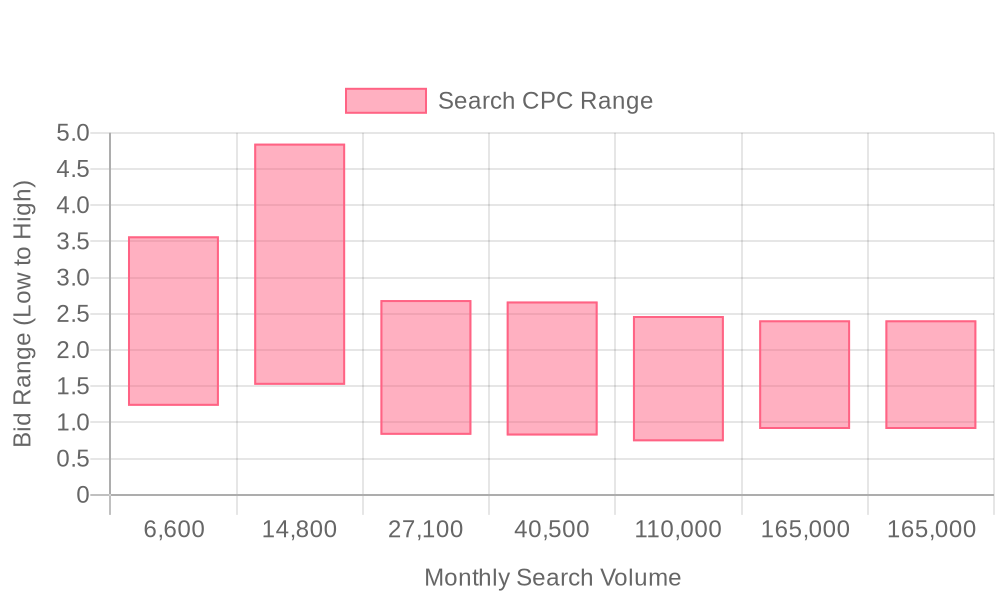
| Industry | Keyword | Monthly Search Volume | Competition Level | Low Bid | High Bid |
| BLS Certification | bls renewal | 6600 | MEDIUM | 1.23 | 3.57 |
| BLS Certification | bls certification online | 14800 | HIGH | 1.52 | 4.85 |
| BLS Certification | bls certification near me | 27100 | MEDIUM | 0.83 | 2.69 |
| BLS Certification | american heart association bls | 40500 | MEDIUM | 0.82 | 2.67 |
| BLS Certification | bls | 110000 | LOW | 0.74 | 2.47 |
| BLS Certification | bls certification | 165000 | MEDIUM | 0.91 | 2.41 |
| BLS Certification | basic life support certification | 165000 | MEDIUM | 0.91 | 2.41 |
Precise keyword targeting is foundational for BLS certification providers aiming to capture high-intent search traffic while minimizing wasted spend. Success depends on identifying the terms prospective students, healthcare organizations, and HR decision-makers use when seeking BLS training and certification resources online.
Strategically, top-performing campaigns prioritize core terms like “BLS certification,” “Google Ads for BLS certification,” and “BLS certification process.” These can be expanded with transactional modifiers such as “near me,” “online,” “renewal,” or “cost.” Aligning keywords with audience needs, such as “BLS certification for healthcare professionals” or “BLS certification for hospitals,” ensures relevance and attracts qualified leads. Incorporating negative keywords like “free,” “expired,” or unrelated course types reduces irrelevant clicks, conserving budget for prospects more likely to convert.
In highly regulated verticals like healthcare, weaving in compliance-focused keywords, such as “healthcare advertising guidelines” and “Google Ads healthcare policy,” connects your message to decision-makers who value trust and transparency. Google Ads Policy provides a deeper look at compliance requirements for campaigns operating in this space.
Campaigns also benefit from supporting terms around digital advertising expertise, including “Google Ads certification exam,” “Google Ads certification benefits,” and “Google Ads training.” By mapping these terms to each stage of the buying journey, marketers can more effectively segment audiences, tailor messaging, and prioritize budget toward segments showing real-time intent.
When using a unifying data platform, teams can automatically surface additional target terms based on real visitor intent signals. This builds on the strategies outlined in Intent Retargeting, where dynamic audience lists adjust as leads progress through the funnel. The result: higher conversion rates and reduced acquisition costs, as campaigns focus on those most likely to enroll or recommend BLS certification programs.
Step-by-Step Campaign Execution Framework
A structured campaign execution process brings clarity and efficiency to digital healthcare marketing. Each step in this framework is designed to move prospects from initial awareness to qualified conversions while maintaining compliance with healthcare advertising guidelines and maximizing the impact of your spend.
Step 1: Build Targeted Keyword Lists
Precision in keyword selection determines the quality of your inbound leads. Start by identifying keywords that reflect intent and are directly tied to BLS certification needs, such as "BLS certification process," "Google Ads for healthcare," and "BLS certification near me." Layer in localized terms to capture demand in specific geographies and add service-specific modifiers for audiences like hospitals, clinics, or corporate safety teams. Refine lists by excluding broad or irrelevant terms that attract unqualified traffic, concentrating on queries used by genuine decision-makers.
Marketers can go further by using identity resolution to reveal which companies and professionals are searching for certification solutions. Sona's Identity Resolution helps you filter out low-value segments and focus spend on accounts with real buying potential.
The upgrade most BLS certification advertisers miss is going beyond raw keyword volume to layer in intent and identity signals. By connecting website-visitor data and CRM records with Sona Marketing Measurement, you can see which specific search terms bring in the accounts and customers that actually convert, and weight your keyword and bidding strategy toward those rather than the terms with the highest search volume alone.
Step 2: Develop Engaging Ad Copy
Effective ads speak directly to industry pain points and establish trust. Use messaging that addresses regulatory compliance, certification urgency, and continuing education requirements. Integrate trust symbols, such as American Heart Association approval or references to Google Ads certification benefits, to reassure prospects and differentiate your offering. Google Ads Certification Guide provides a deeper look at this trend. Highlight unique aspects of your training and streamline calls to action to drive direct engagement.
Real-time intent signals can be leveraged to dynamically adjust ad copy for visitors demonstrating immediate interest in certification. By aligning messaging with what’s resonating in the market, you elevate relevance and improve click-through rates among high-converting audiences.
Step 3: Create Highly Relevant Landing Pages
Landing pages must be tightly aligned with ad messaging and tailored to the specific audience segment. For BLS certification, this means clear explanations of the certification process, transparent pricing, available schedules, and compliance with all Google Ads healthcare policy requirements. Healthcare Policy Standards outlines current advertising standards for healthcare marketers. Use concise forms, testimonials, and visual trust marks to build credibility quickly. Each landing page should answer the visitor’s most pressing questions and facilitate seamless enrollment or inquiry.
Syncing enriched audience and lead data from your CRM into Google Ads ensures that landing page content adapts to the visitor’s lifecycle stage. This personalization increases conversion rates by addressing each prospect’s unique needs and readiness to buy.
Step 4: Optimize Based on Performance Metrics
Optimization is an ongoing process focused on maximizing return and efficiency. Track metrics such as conversion rate, cost per acquisition, and engagement by segment. Use Brand Lift measurement to understand how ads influence brand awareness and decision-making in your target market. Brand Lift Insights explores how this can be applied in digital campaigns. Analyze user behavior on landing pages to identify friction points and iteratively improve the experience.
By integrating advanced conversion tracking and attributing both online and offline outcomes, revenue teams gain a complete view of campaign ROI. For more insights on measuring and optimizing revenue attribution, check out our guide on Revenue Attribution. Audience lists update dynamically as leads progress through the sales funnel, allowing for timely retargeting and nurturing of qualified prospects.
Sona Marketing Measurement closes the gap between clicks and revenue. It captures every ad click with first-party measurement, then ties that click through UTM capture and ad-platform APIs to the actual record in your CRM, and reports ROAS by keyword and campaign instead of by last-click form fill. Feeding that revenue signal back into Smart Bidding and Performance Max compounds over time: the algorithms optimize toward booked BLS certification revenue, not cheap leads.
Tips on Expanding Your BLS Certification Presence

BLS certification providers who want to grow their market presence must go beyond traditional advertising and adopt a multi-channel, insight-driven approach. Sophisticated digital strategies now make it possible to reach highly qualified audiences, nurture prospects, and measure marketing impact with precision.
- Cross-promote Educational Resources: Sharing high-value content such as study guides, practice tests, and industry updates helps nurture leads and fill gaps that static ads often miss. By tracking in-market behaviors and visitor journeys, marketers can identify which resources drive the most engagement, then shift budget toward the highest-converting assets. Sona's Identity Resolution helps reveal which companies and professionals interact with specific content, enabling refined follow-up and more personalized outreach.
- Localize And Customize Campaigns: Adapting messaging and offers based on geolocation and unique learner needs increases campaign relevance and boosts conversion rates. For example, targeting metropolitan areas with a high concentration of healthcare employers or tailoring ad copy for different professional segments ensures the right message reaches the right audience. Intent retargeting provides actionable strategies for automatically updating targeting as contacts progress through the BLS certification process, ensuring ongoing relevance and timely engagement.
- Integrate With Industry Associations: Partnerships with respected associations not only deliver referral traffic but also lend credibility to certification programs. These collaborations often drive a steady influx of qualified leads who are already motivated to complete training. Syncing CRM and ad platforms ensures that new association leads are seamlessly added to retargeting lists and nurtured through both digital and offline channels, providing a unified experience and maximizing ROI.
By leveraging advanced segmentation, real-time intent analysis, and enriched audience data, BLS providers can overcome the limitations of generic advertising and build a robust pipeline of high-value candidates. For a deeper dive into optimizing your marketing funnel, request a demo to see how data-driven insights unify strategy and execution from initial interest to final enrollment.
Beyond Google Ads: Winning the AI Answers BLS Certification Buyers Now Trust
Paid search captures demand at the moment someone types a query. But a fast-growing share of BLS certification buyers no longer start at Google at all, they ask ChatGPT, Gemini, or Perplexity before they ever run a search, and Google's own AI Overviews increasingly summarize an answer above the traditional results. If your business isn't referenced in those AI answers, you're invisible at the exact moment buyers build their shortlist.
Sona AI Visibility shows where your business shows up across ChatGPT, Gemini, Perplexity, Google AI Overviews, and 10+ engines, and, much like a keyword report, which prompts actually send you buyers, so you can prioritize the ones that convert. Run the two together and you cover the entire buyer path: get cited where buyers research (AI Visibility), then prove which of that demand turns into booked revenue (Marketing Measurement).
Helpful resources
Conclusion
Getting BLS certification providers in front of the right buyer, at renewal time, at onboarding, at the moment a compliance deadline looms, means treating Google Ads as one part of a system that also tracks who converts and why. Keyword lists tuned to certification and compliance language, landing pages built for the specific audience clicking through, and measurement that follows a lead from click to completed course all compound on each other.
The providers who pull ahead won't be the ones bidding highest on "BLS certification near me," they'll be the ones who can prove which keyword, which ad, and which landing page actually produced a certified graduate. Start a free trial to connect that picture for your own campaigns.
FAQ
What are the requirements for Google Ads healthcare certification?
The requirements for Google Ads healthcare certification include adhering to compliance standards outlined in the Google Ads healthcare policy, which ensures that healthcare advertising meets regulatory guidelines.
How do I apply for Google Ads certification for healthcare?
To apply for Google Ads certification for healthcare, you should follow a structured campaign execution process and ensure compliance with Google Ads healthcare policies, focusing on precision targeting and audience segmentation.
What is the cost of Google Ads certification for BLS?
The article does not specify the cost of Google Ads certification for BLS, but it emphasizes the importance of using Google Ads to capture high-intent prospects and optimize lead generation strategies.
Are there specific guidelines for healthcare advertising on Google Ads?
Yes, there are specific guidelines for healthcare advertising on Google Ads, including compliance with Google Ads healthcare policy requirements to ensure that campaigns are aligned with regulatory standards.
How does Brand Lift measurement work in Google Ads?
Brand Lift measurement in Google Ads helps understand how ads influence brand awareness and decision-making in the target market, providing insights into the effectiveness of digital campaigns.







