


Healthcare employers renew PALS certifications on a clock, and the search traffic follows that clock: spikes ahead of hospital compliance deadlines, steady demand from EMS programs, and a constant undercurrent of clinicians hunting for the fastest accredited option. Google Ads lets course providers meet that demand at the exact moment someone searches, rather than waiting for it to find them. This guide lays out Google Ads strategies built specifically for the PALS certification market, from targeting and keyword selection to measurement that ties ad spend to actual enrollments.
How to Generate Google Ads for PALS Certification Courses Leads: A Step-by-Step Guide

Precise, data-driven marketing is transforming how PALS certification course providers attract their best-fit leads. Modern revenue teams are moving beyond basic demographic targeting by leveraging real-time visitor identification, enabling campaigns to focus budget on the highest-intent prospects. The result is a more efficient allocation of resources and measurable improvements in lead quality.
Campaigns that dynamically adapt to shifts in user behavior outperform static approaches. When ad platforms are integrated with unified data sources, marketers can see not just which companies are visiting, but also which decision-makers are showing genuine purchase intent. This level of audience segmentation ensures that every click moves prospects closer to enrollment, while unified data empowers teams to make smarter, real-time optimizations.
- Identify Key Audiences: Segmentation is foundational to successful PALS certification course campaigns. By combining demographic insights with behavior-based signals, B2B marketers uncover which healthcare professionals and organizations are most likely to convert. Company-level identification reveals which hospitals, EMS agencies, and training departments are visiting your site, distinguishing casual browsers from teams actively researching pediatric life support certification for their staff. For compliance-sensitive targeting, review Google Ads healthcare ad policies to ensure your campaigns meet regulatory requirements.
- Keyword Targeting: Effective keyword strategies anchor every high-performing campaign. Revenue teams leverage precise data to prioritize search terms such as "PALS certification courses," "AHA PALS training," and "online PALS certification." By cross-referencing which companies have shown interest in specific course content, teams can adjust bids and messaging in real time. Intent data best practices help ensure budget is directed to keywords proven to drive qualified traffic, while negative keyword lists filter out irrelevant clicks, such as those searching for unrelated apps or free materials.
- Ad Copy Creation: Compelling ad messaging is crafted to address the unique pain points of healthcare professionals seeking PALS certification. Clear calls to action, such as "Register for Accredited PALS Today," support higher click-through and conversion rates. With dynamic audience updates, marketers can deploy personalized retargeting that reignites interest among users who previously paused their enrollment journey. Adding sitelink and callout assets, such as course dates or accreditation badges, gives healthcare professionals more reasons to click. Explore Google’s official training to refine your ad copywriting and campaign optimization skills.
- Landing Page Design: Optimized landing pages mirror the intent of the ad that drives each visit. Seamless user experiences are prioritized, guiding healthcare professionals through concise course details, instructor credentials, and clear next steps for enrollment. When ad and landing page content are tightly aligned, bounce rates decrease and engagement metrics improve. Personalized on-site content powered by real-time data increases the likelihood of course sign-up and repeat engagement.
Why Does Google Ads Matter for PALS Certification Courses?

Standing out in the PALS certification space requires more than a standard digital presence. Google Ads delivers a direct line to healthcare professionals searching for timely, accredited training, making it a critical lever for institutions ready to capture high-value inquiries. For those new to Google Ads, this Coursera course directory offers a range of formal training options for marketers and advertisers.
With precise audience targeting, marketing teams can pinpoint the right users at the exact moment they search for PALS certification courses. Account-level granularity enables deeper visitor identification, allowing organizations to move beyond surface-level metrics and understand the real decision-makers viewing their ads.
Faster enrollment conversion is possible when modern tools enable real-time audience profiling and retargeting. By monitoring in-market behaviors, institutions shift budget toward accounts displaying high intent, capturing leads at crucial decision-making points and shortening the sales cycle.
Increased visibility results from strategically segmenting audiences, ensuring maximum relevance whether reaching established healthcare hubs or expanding into new regions. Dynamic audience updates allow for continuous refinement, so messaging always aligns with where leads are in the funnel.
Integrated analytics within Google Ads provide granular insight from initial search through to enrollment. When these insights are unified with CRM data, marketers gain clear attribution for both online and offline conversions, uncovering the true ROI of every campaign touchpoint and enabling sustained, data-driven growth.
Common Types of Google Ads Campaigns for PALS Certification

- Search Campaigns: Search campaigns are essential for capturing healthcare professionals actively seeking PALS certification courses. By using intent-driven keywords and segmenting ad groups by location or course type, marketers can match messaging to the learner's stage and intent. Responsive search ads, a Search ad format that tests multiple headlines and descriptions, help identify which messaging resonates with recertifying clinicians versus first-time candidates. Identifying website visitors at the account level allows tailored content delivery and reduces wasted spend on generic clicks. Aligning search queries with real-time intent signals, revenue teams can quickly prioritize budget toward accounts showing high conversion potential.
- Display Ads: Display campaigns keep PALS course offerings visible as targeted users browse medical or educational content across the web. A data-driven approach to audience targeting leverages firmographic data, ensuring impressions reach hospital staff, EMS teams, or medical students most likely to enroll. With dynamic audience updates, marketers seamlessly retarget leads as they move through the funnel or as their interest in PALS content deepens.
- Video Ads: Video ads engage prospective PALS students by showcasing instructor testimonials, course walkthroughs, or real-world success stories. Segmenting video content by educational leadership roles or regions increases relevance and encourages direct engagement. Marketers can pinpoint which viewers are showing purchase intent based on engagement metrics, then sync enriched audience data into their ad and CRM platforms for follow-up. This closed-loop feedback enables continuous improvement in creative strategy and audience targeting.
- Remarketing: Remarketing campaigns re-engage visitors who viewed PALS course pages but did not enroll, delivering timely, personalized reminders that nudge them back into the funnel. By identifying visitors at the company level, marketers can deliver tailored messaging that references the organization's prior activity or addresses common objections around scheduling and recertification deadlines. Real-time audience updates ensure follow-up ads align with the prospect's latest behavior, and advanced conversion tracking ties both online and offline enrollments back to specific campaigns for true ROI measurement.
Where to Find Growth Opportunities?

Expanding reach and driving enrollments in PALS certification courses requires identifying segments that traditional marketing often misses. Revenue teams leveraging precise data and intent signals can uncover overlooked opportunities that outperform broad, generic campaigns.
- Specialty Keyword Targeting: Focusing on specific terms like "AHA PALS renewal," "pediatric life support recertification," or "emergency responder PALS online" ensures campaigns surface for high-intent professionals. Modern platforms help marketers move beyond simple search volume, using real-time audience insights to prioritize keywords tied to urgent needs or compliance cycles, such as hospital credentialing deadlines that drive a predictable spike in recertification searches.
- Competitor Analysis: Identifying where other PALS course providers rely on generic messaging enables marketers to position exclusive course formats, flexible scheduling, or bundled training as clear differentiators. By analyzing gaps in competitors' offerings and cross-referencing this with granular visitor and company data, teams can craft messaging that resonates with high-value prospects overlooked by broad market approaches.
- Content Retargeting: Educational content, such as on-demand webinars or interactive course previews, brings value to initial visitors and guides them back to complete enrollment. Integrating visitor identification allows marketers to retarget not just anonymous browsers but specific professionals and organizations. Real-time sync between CRM and ad platforms with automated data activation ensures campaigns adapt as leads progress, maximizing conversion potential for every segment.
How to Apply Audience Segmentation for PALS Certification

Precise audience segmentation is the foundation of high-impact campaign performance for PALS certification course providers. Distinguishing between unique professional profiles and their learning motivations ensures every ad dollar is spent reaching those most likely to convert. Segmenting at this level increases relevance, improves engagement, and drives measurable enrollment growth. For more actionable frameworks, explore this collection of marketing playbooks.
- Define Segments: Begin by mapping your core audience groups. Recent healthcare graduates typically focus on rapid certification, cost, and convenience, while experienced professionals prioritize recertification options, schedule flexibility, and employer-approved credentials. Segmenting on factors such as job title, years of experience, and certification history allows campaigns to deliver tailored messaging that resonates with each group. Review official PALS course options to align your messaging with in-demand certifications.
- Overlay Intent Signals: Enhance segments by integrating real-time intent signals, such as previous course completion rates or demonstrated interest in pediatric healthcare advancements. When your data platform surfaces in-market activity, like multiple visits to certification details or completion of a precourse assessment, budgets and creative assets can be dynamically shifted to prioritize users showing the highest likelihood to enroll. This approach places your message in front of prospects when readiness to purchase peaks.
- Ad Group Customization: Each segment requires its own ad creative, value propositions, and bidding strategies. For example, entry-level professionals may respond to messaging about career advancement and bundled course discounts, while veteran clinicians prefer reminders about compliance deadlines and streamlined recertification. Allocating budgets based on predicted lifetime value and segment responsiveness prevents campaign dilution and amplifies ROI. Use dynamic audience segmentation to automate these adjustments and maintain precise targeting.
- Track Conversion Paths: Connect every user action, from ad impression to course registration, back to specific segments and campaigns. When CRM data and ad reporting are unified, you can see how each audience moves through the funnel and which touchpoints actually drive enrollments. This closed-loop measurement empowers sales and marketing teams to follow up with tailored outreach, optimize keyword lists, and further refine audience definitions for future campaigns. Integrating real-time data sync between your CRM and Google Ads ensures that audience lists automatically update as leads progress, eliminating manual data lag and missed opportunities.
This is also where measurement changes the economics. With Sona Marketing Measurement you can identify the companies and buyers behind your ad clicks, not just anonymous sessions, and segment audiences by who actually becomes a customer. That lets you build bid adjustments and audience signals around the segments that convert and de-prioritize the ones that don't, feeding Google's algorithms a signal like "this click became a paying PALS certification courses customer" instead of just "someone filled out a form."
Keyword Strategy & Sample Target Terms
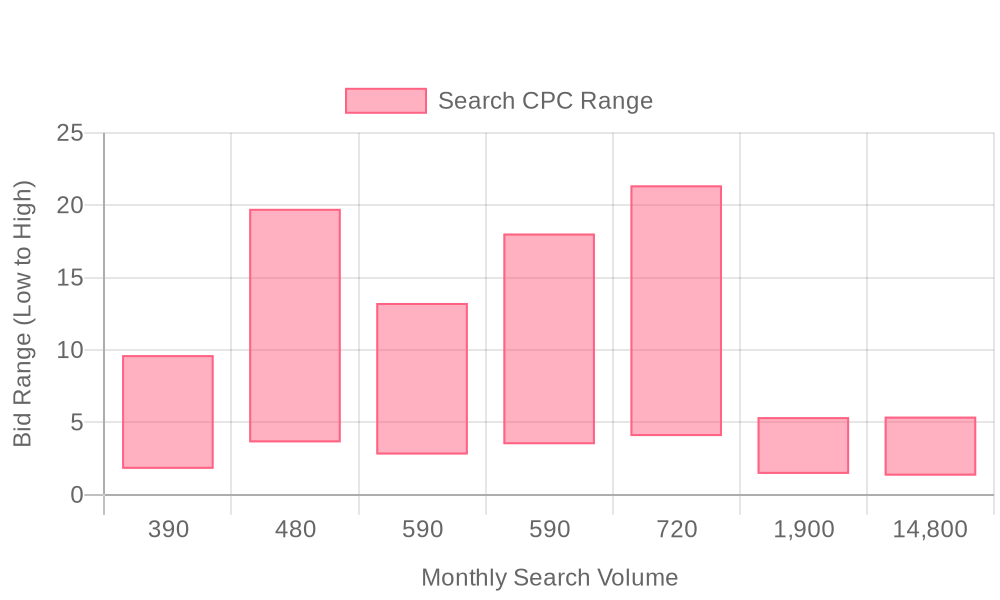
| Industry | Keyword | Monthly Search Volume | Competition Level | Low Bid | High Bid |
| PALS Certification Courses | pals certification courses | 390 | LOW | 1.8 | 9.65 |
| PALS Certification Courses | online pals course | 480 | LOW | 3.63 | 19.75 |
| PALS Certification Courses | pals renewal | 590 | MEDIUM | 2.79 | 13.25 |
| PALS Certification Courses | pals certification online | 590 | LOW | 3.5 | 18.04 |
| PALS Certification Courses | pals recertification | 720 | MEDIUM | 4.06 | 21.37 |
| PALS Certification Courses | pals certification near me | 1900 | LOW | 1.45 | 5.37 |
| PALS Certification Courses | pals certification | 14800 | MEDIUM | 1.33 | 5.4 |
A robust keyword strategy for Google Ads for PALS Certification Courses enables B2B marketers to reach healthcare professionals at the precise moment they are evaluating certification options. Thoughtful term selection ensures that every ad dollar is focused on high-value prospects who are likely to enroll, not just browse. Leveraging real-time engagement data, marketing teams can dynamically adjust bids in response to in-market behavior, prioritizing accounts demonstrating active purchase intent.
- High-Volume Terms: Keywords like "Google Ads certification" and "PALS courses online" drive the bulk of initial traffic and are indispensable for capturing broad interest at the top of the funnel. These terms reliably attract professionals searching for reputable certification options or seeking to fulfill recertification requirements. By unifying keyword performance data with customer-level insights, marketers can identify which high-volume queries consistently lead to qualified enrollments, then allocate additional budget to those segments as intent signals spike.
- Long Tail Keywords: Phrases such as "best PALS Google Ads course reviews" or "AHA PALS certification with online exam" capture users with specific needs and a higher likelihood to convert. To optimize for these valuable queries, marketers can utilize Google’s official training and certification platform to stay updated on best practices for ad relevance and conversion tracking. Sophisticated tracking enables marketers to recognize which long tail terms correlate with high-value leads, ensuring remarketing audiences are continuously updated as contacts progress in their buying journey.
- Negative Keywords: Filtering out terms like "free courses" and "unaccredited PALS" preserves budget by excluding low-intent clicks and unqualified leads. Incorporating negative keywords based on historical CRM data helps refine campaign efficiency, focusing spend on prospects most likely to move through the funnel. Real-time exclusion of irrelevant traffic also prevents skewed performance metrics, allowing for more accurate optimization and attribution.
By combining these approaches with advanced audience sync, marketers ensure every impression and click is informed by unified, cross-channel data. This precision transforms keyword targeting from a blunt instrument into a dynamic driver of pipeline growth for PALS certification course providers.
Step-by-Step Campaign Execution Framework
Executing high-performance campaigns for PALS certification courses requires a framework grounded in precision, measurability, and targeted engagement. This approach ensures every marketing dollar is working toward driving enrollment from qualified healthcare professionals. Advanced teams unify their go-to-market data to identify intent signals, enabling adaptive strategies that capture in-market leads as they emerge.
Step 1: Build Targeted Keyword Lists
Start with a rigorous keyword discovery process. Focus on high-intent search phrases such as "PALS certification near me," "AHA PALS course," and "PALS recertification online." By analyzing real search behavior, marketers can prioritize keywords that signal candidates are actively comparing providers or preparing for re-certification windows. Integrating real-time visitor identification unlocks the ability to pinpoint which organizations or job roles are landing on your course pages, allowing for direct outreach and tailored campaign adjustments.
Refining keyword lists with exclusion terms prevents budget waste on irrelevant clicks like “PALS app free” or “PALS study guide only.” Dynamic keyword refinement, powered by centralized data insights, ensures campaigns always reflect the latest in-market trends and competitor movements, maximizing relevancy as user intent shifts. For marketers new to Google Ads, a directory of Google Ads courses can help build foundational skills for healthcare campaigns.
The upgrade most PALS certification courses advertisers miss is going beyond raw keyword volume to layer in intent and identity signals. By connecting website-visitor data and CRM records with Sona Marketing Measurement, you can see which specific search terms bring in the accounts and customers that actually convert, and weight your keyword and bidding strategy toward those rather than the terms with the highest search volume alone.
Step 2: Create Engaging Ad Copy
Develop ad copy that speaks directly to the motivations of healthcare professionals seeking PALS certification. Use compelling, personalized calls-to-action such as “Reserve Your Accredited Spot” or “Earn PALS Certification, 100% Online.” Incorporate authentic learner testimonials to establish trust and credibility, addressing common pain points like scheduling flexibility or approval by leading medical organizations.
Ad copy performance improves when teams leverage unified data to analyze which messages drive the highest engagement for specific audience segments. With dynamic audiences that update as leads progress through the funnel, marketers can automatically adjust creative and offers, ensuring relevance whether a candidate is new to PALS or returning for renewal.
Step 3: Optimize Landing Pages
Landing pages must deliver a seamless transition from ad click to course registration. Maintain a consistent message from creative to landing content, reinforcing the value proposition presented in the ad. Highlight accreditation, course access options, and a clear enrollment call-to-action above the fold. Real-time intent data enables marketers to personalize landing page experiences for repeat visitors or those from high-priority accounts, increasing conversion rates.
Continuous A/B testing, grounded in unified go-to-market data, allows for rapid adjustments to page layouts, headlines, and CTAs based on actual user interaction. Integrating advanced conversion tracking ensures both online and offline registrations are attributed back to the original ad interaction, providing a holistic view of campaign ROI.
Step 4: Implement Data-Driven Optimizations
Ongoing campaign success relies on a cycle of measurement and real-time optimization. Analyze performance data by channel, keyword, and audience segment to identify what’s driving conversions and where budget can be reallocated for greater impact. Leveraging in-market behavior insights allows teams to shift spend toward the highest-converting accounts as activity spikes.
Syncing CRM and enriched audience data with ad platforms ensures remarketing and lookalike campaigns remain accurate as leads move through the enrollment process. Automated workflows can trigger audience updates and bid adjustments the moment a lead registers, preventing wasted impressions and supporting a streamlined, revenue-focused demand generation strategy. To see how unified data and intent-driven marketing can transform your PALS course campaigns, get started for free with Sona.
Sona Marketing Measurement closes the gap between clicks and revenue. It captures every ad click with first-party tracking, ties that click through UTM capture and ad-platform APIs to the actual record in your CRM, and reports ROAS by keyword and campaign instead of by last-click form fill. Feeding that revenue signal back into Smart Bidding and Performance Max compounds over time: the algorithms optimize toward booked PALS certification courses revenue, not cheap leads.
Tips on Expanding Your Google Ads for PALS Certification Presence
Expanding visibility for PALS certification courses within Google Ads requires a blend of advanced targeting, localized execution, and strategic content deployment. Marketers who leverage unified, real-time data can engage their highest-value prospects, ensuring that outreach is both timely and relevant at every touchpoint.
- Educational Asset Retargeting: Integrate downloadable course guides or interactive sample modules into remarketing campaigns to showcase immediate value to site visitors. When enriched audience signals are fed directly from your CRM into Google Ads, marketers can identify which visitors engaged with specific assets and retarget them with tailored messaging based on their demonstrated interests. This approach moves beyond generic follow-up, delivering content that resonates with where each lead is in the decision process.
- Localized Campaigns: Adjust campaign structure and creative assets by region to reflect unique certification requirements, regional demand cycles, and local educational trends. Real-time data integration allows marketers to monitor shifts in demand at the city or state level, reallocating budget to regions where search intent is peaking. Dynamic audience segmentation ensures that local leads are nurtured differently than national or remote prospects, increasing the relevance and conversion rates of every ad impression.
- Partnerships with Legal Associations: Form collaborative campaigns with medical and legal associations to reinforce credibility and extend reach into trusted networks. Syncing partner-supplied lead lists with your ad platforms can automate the creation of custom audiences, ensuring that joint promotional efforts target verified professionals most likely to enroll. These partnerships not only drive higher-quality traffic but also enhance the perceived authority of your PALS certification offerings, supporting longer-term enrollment growth. For examples of course options for PALS, review resources from the American Heart Association.
Effectively leveraging Google Ads for PALS Certification Courses is not just about reach, but about precision and insight. By connecting intent data, automating audience updates, and measuring conversions across online and offline touchpoints, educators and training providers can continually refine their campaigns. This results in sustained visibility, improved lead quality, and higher enrollment rates for critical certification programs.
Beyond Google Ads: Winning the AI Answers PALS Certification Courses Buyers Now Trust
Paid search captures demand at the moment someone types a query. But a fast-growing share of PALS certification courses buyers no longer start at Google at all, they ask ChatGPT, Gemini, or Perplexity before they ever run a search, and Google's own AI Overviews increasingly summarize an answer above the traditional results. If your business isn't referenced in those AI answers, you're invisible at the exact moment buyers build their shortlist.
Sona AI Visibility shows where your business shows up across ChatGPT, Gemini, Perplexity, Google AI Overviews, and 10+ engines, and, much like a keyword report, which prompts actually send you buyers, so you can prioritize the ones that convert. Run the two together and you cover the entire buyer path: get cited where buyers research (AI Visibility), then prove which of that demand turns into booked revenue (Marketing Measurement).
Helpful resources
Conclusion
Google Ads for PALS certification courses works best when targeting, messaging, and measurement all point at the same goal: getting the right healthcare professionals to enroll before their compliance deadline hits. That means treating audience segmentation, keyword strategy, and landing page design as one connected system rather than separate tasks.
The providers who win this space treat paid search as one part of a larger measurement loop, not a lead-generation afterthought. As AI tools increasingly shape where healthcare professionals start their research, pairing Google Ads with visibility into AI-driven discovery and revenue-based measurement will separate the certification programs that scale from the ones still guessing at what's working.
FAQ
What are the best Google Ads courses for PALS certification?
For those new to Google Ads, Coursera offers a course directory with formal training options for marketers and advertisers.
Is there a free Google Ads certification course available?
Yes, marketers can get started for free with Sona for insights and strategies tailored to Google Ads for PALS certification courses.
How long does it take to complete Google Ads certification?
The article does not specify the duration of Google Ads certification courses.
What topics are covered in Google Ads certification courses?
Google Ads certification courses cover audience targeting, keyword strategies, ad copy creation, and landing page design, with a focus on healthcare professionals seeking PALS certification.
What is the value of Google Ads certification for PALS professionals?
Google Ads certification helps PALS professionals by delivering a direct line to healthcare professionals searching for accredited training, enhancing visibility, and improving lead quality.







