


A cracked valve seat doesn't wait for a convenient time to fail, and the buyers searching for someone to fix it are already halfway to a decision by the time they type a query. Effective B2B strategy for valve maintenance still leans on a mix of channels: social media for ongoing brand presence, email for nurturing relationships, trade shows for face-to-face trust-building, direct mail for personal touchpoints, and industry publications for thought leadership. But Google Ads plays a distinct role in that mix, capturing plant managers and facility operators at the exact moment they're searching for a fix. Many valve maintenance businesses lose high-value prospects simply because their tracking can't tell them who's actually visiting. Company-level identification changes that: it lets you see which businesses are engaging with your ads and fold them into your targeting, so spend follows real decision-makers rather than anonymous traffic. That matters most in urgent-repair scenarios, when someone searching "emergency valve repair near me" needs an answer now, not after a multi-touch nurture sequence.
How to Generate Valve Maintenance Leads with Google Ads: A Step-by-Step Guide

Valve maintenance providers operate in a market where speed and precision directly impact revenue. Capturing leads before competitors reach them demands a blend of data-driven strategy and real-time insight.
Modern B2B marketers need to unify fragmented data, sharpen targeting, and reach high-intent buyers at the right moment. Google Ads for Valve Maintenance makes hyper-focused outreach possible, so spend concentrates on the prospects most likely to convert. For more on advanced strategies, explore our marketing analytics blog.
- Embrace a data-driven approach to integrate paid search effectively: Rely on unified analytics to inform every layer of your campaign, from keyword selection to creative messaging. This ties budget allocation to visible business outcomes and lets you shift spend as market signals change. Sharpen your strategy with visitor identification to see which companies are engaging with your ads.
- Utilize targeted keyword and audience strategies unique to valve maintenance: Develop highly specific keyword sets that reflect urgent needs and common pain points in valve maintenance. Harness precise audience intelligence to pinpoint companies and decision-makers, transforming anonymous traffic into actionable audiences for your Google Ads for valve services campaigns.
- Align landing pages and creative assets to amplify conversion rates: Direct ad traffic to purpose-built landing pages that speak to the needs of valve maintenance buyers. Optimize every touchpoint from headline to call-to-action, using insights from in-market behaviors to tailor messaging and increase relevance. Streamline your buyer journey tracking with marketing attribution tools.
- Continuously enhance performance through iterative optimization: Analyze conversion data in real-time and adjust bids, creatives, and audiences to maximize lead quality and minimize waste. Advanced attribution modeling enables marketers to trace every converted lead back to its source, offering clarity on true ROI and informing future spend.
- Build cross-channel linkages to fortify your marketing ecosystem: Sync enriched lead and audience data between Google Ads and your CRM to orchestrate follow-up and nurture. Integrate signals from site visits, content engagement, and offline interactions to keep your campaigns agile and always aligned with the highest-value opportunities. Automate data syncing to ensure seamless updates across platforms.
Timely follow-up matters in valve maintenance: capture a lead late, and a competitor engages first. Company-level visitor identification can flag a prospect's business before they ever convert, enabling intent-based audience segment creation in Google Ads so you serve timely, relevant ads while urgency is still high.
Ready to put these tactics into action? Get started for free with Sona. This framework is built for B2B marketers and service providers who want leaner lead generation without sacrificing reach.
Why does Google Ads matter for Valve Maintenance?

Valve maintenance providers operate in a market driven by urgent needs, technical complexity, and high-value contracts. Precision in digital outreach is critical: effective campaigns capture decision-makers at the exact moment their operational infrastructure demands attention. For a comprehensive overview of how service companies use Google Ads to generate leads and grow their business, see this Google Ads and Local Service Ads guide.
Google Ads enables valve maintenance teams to precisely target a complex, specialized audience, such as plant managers and facility directors, when they are actively searching for solutions. This direct access is invaluable for converting high-intent prospects into pipeline opportunities, especially for commercial setups and large-scale overhauls where relationships need to be nurtured, but speed to lead is equally vital. Learn more about building real-time audiences to maximize your ad targeting and reach the right decision-makers at the perfect moment.
- Complex, Specialized Audience: Marketers can identify and engage key decision-makers during critical search moments. By leveraging visitor identification technologies, campaigns move beyond anonymous impressions, pinpointing companies and individuals who are most likely to require urgent service or long-term maintenance contracts.
- Higher Margin Services: While email and outbound still play a role in relationship-building, Google Ads fills the gap for high-value projects that demand immediate response. Digital campaigns surface new opportunities for commercial installations and seasonal overhauls, where timing and relevance translate directly into revenue. For more actionable strategies, explore our marketing and analytics blog.
- Faster Demand Response: Valve failures and compliance needs create sudden demand spikes. Google Ads delivers instantaneous visibility, ensuring your services are top-of-mind when emergencies or regulatory deadlines drive purchase decisions.
- Visibility in Emerging Regions: Expanding into new metropolitan areas requires more than traditional outreach. Digital campaigns facilitate hyper-local targeting, making it possible to reach facility operators and infrastructure planners in developing markets with precision that print and events cannot match.
- Integrated Data Analysis: The ability to track every interaction, from ad click to signed contract, enables marketers to optimize campaigns, refine messaging, and prioritize follow-ups. With unified go-to-market data, you can dynamically update audiences and sync data as leads progress, attribute revenue accurately, and shift budget to the highest-converting segments for maximum ROI.
Consolidating company page views and CRM data into Google Ads unlocks custom audience targeting, aligning messages with specific interests and stages of the buying journey. That level of personalization and measurement turns valve maintenance advertising into a data-driven growth engine.
Common Types of Google Ads Campaigns for Valve Maintenance
Valve maintenance companies leverage Google Ads to accelerate lead generation, drive high-value projects, and shorten sales cycles. Effective campaign structures capture urgent demand and nurture long-term opportunities by aligning ad formats to every stage of the buying journey. For an overview of how service companies can leverage Google Ads and Local Service Ads to generate leads, see this Google Ads management guide for plumbing companies. For more strategies on optimizing your own campaigns, explore additional marketing best practices.
- Search Campaigns: These campaigns intercept high-intent buyers searching for valve maintenance solutions, repairs, or emergency services. By focusing on keywords relevant to urgent needs and technical services, search ads provide immediate visibility to prospects who are primed to convert. Marketers can optimize performance by connecting real-time intent signals and dynamically updating keyword lists as new maintenance trends emerge.
- Display Ads: Display advertising maintains brand awareness among facility managers, engineers, and procurement teams who may not be ready to act. Precise targeting on industry-specific forums and business networks ensures that valve maintenance services remain visible during research and planning phases. Integrated audience data allows for tailored creative that addresses known maintenance challenges, reinforcing messaging seen in other channels.
- Video Ads: Complex valve maintenance often requires visual explanation. Video ads demonstrate technical capabilities, showcase successful repairs, and highlight safety protocols, all crucial for building trust with industrial buyers. Embedding engagement data from video views into audience segmentation helps prioritize follow-up with stakeholders showing strong interest. To see how tracking key touchpoints can drive campaign impact, learn more about buyer journeys.
- Remarketing: Remarketing re-engages previous website visitors or those who interacted with ads but did not convert. For valve maintenance, this tactic is essential for nurturing leads through longer consideration cycles and multiple stakeholders. Unifying CRM data with ad platforms ensures remarketing lists target decision-makers actively weighing proposals, leading to higher conversion rates and shorter deal timelines.
- Assets: Utilizing ad assets such as location, callouts, and structured snippets adds credibility and urgency. Features like "24/7 emergency response," certifications, or on-site availability help establish trust with industrial clients evaluating providers. Integrating enriched account and user data ensures assets highlight the most relevant differentiators based on each prospect's needs.
Companies that sync sales pipeline accounts into Google Ads audiences, rather than leaving intent signals disconnected, see better outcomes. This approach keeps digital advertising aligned with live negotiations and pricing conversations, delivering ads that support ongoing sales efforts and accelerate pipeline velocity. For B2B teams, this tight integration between marketing data and ad targeting is essential for maximizing ROI in valve maintenance digital marketing.
Where to Find Growth Opportunities?

Expanding beyond traditional marketing channels is essential for valve maintenance providers seeking consistent revenue growth. Modern B2B teams who leverage digital marketing for valve services can uncover untapped audiences and generate more qualified valve maintenance leads through a strategic mix of targeting, attribution and insight-driven optimization.
- Vertical keyword targeting: Integrate highly specific valve maintenance and repair terms into your PPC strategies. Pair these vertical keywords with broader Google Ads for valve services to capture buyers at every stage, from general inquiries to high-intent searches.
- Competitor gap analysis: Use auction insights to identify which market segments competitors are missing. Mapping these gaps allows marketers to position valve maintenance advertising in less saturated areas, minimizing bid competition while maximizing visibility.
- Industry-specific site targeting: Reach decision-makers on niche forums and trade platforms often overlooked by organic content. This approach extends your Google Ads campaign setup to environments where technical buyers actively seek solutions.
- Content retargeting: Reinforce your pipeline by serving tailored ads to previous visitors or content engagers. Aligning this with your marketing calendar ensures continuous engagement and keeps your brand top-of-mind as prospects move closer to purchase.
The disconnect between digital touchpoints and closed revenue remains a challenge for many. Full-funnel attribution technology addresses this by linking every click, impression, and conversion from your Google Ads for valve maintenance campaigns directly to pipeline and revenue outcomes. By integrating advanced conversion tracking and CRM + ad sync, marketers can finally pinpoint which digital channels and campaign elements drive actual deals, enabling smarter budget allocation and measurable ROI. When visitor identification and real-time intent data are layered in, B2B teams shift resources toward the highest-converting accounts while dynamically updating audiences as leads progress, ensuring every advertising dollar is tied to true business impact.
How to Apply Audience Segmentation for Valve Maintenance

Precise audience segmentation elevates the performance of Google Ads for valve maintenance by ensuring each dollar spent targets the prospects most likely to convert. Modern B2B marketers use data-driven segmentation to align advertising campaigns with the unique needs and buying cycles of their valve maintenance clients, and can explore more on advanced tactics in the Sona blog.
- Define Segments: Start by separating your audience into core groups such as industrial operators, municipal facilities, and specialized contractors. Each segment has distinct priorities: for example, industrial clients often value uptime and efficiency, while municipal buyers prioritize regulatory compliance and long-term asset management. By mapping these segments against your customer journey, you ensure ads are contextually relevant at every stage.
- Overlay Intent Signals: Enhance your segments using real-time intent data. For valve maintenance, intent might include signals such as recent searches for “emergency valve repair,” interest in predictive maintenance technology, or engagement with compliance updates. AI-powered platforms can score these signals, helping marketers identify which accounts are actively considering services and which are conducting early research. This enables dynamic budget allocation toward high-intent, high-conversion segments.
- Create Ad Groups by Segment: Structure your Google Ads campaign so each audience segment gets its own ad group. This allows for tailored creative, bid strategies, and landing pages that speak directly to the segment’s pain points, whether it’s rapid response for urgent industrial repairs or detailed information for municipal RFP processes. Marketers leveraging Sona’s Audiences tool can further refine these segments, automatically updating audiences as new website visitors or CRM leads demonstrate stronger buying signals.
- Validate Conversion Paths: Integrate lead capture forms, quote requests, and phone calls directly with your CRM system for closed-loop tracking. This ensures every ad group’s performance is measured not just on clicks, but on actual sales-qualified leads and revenue. Unifying audience and conversion data across online and offline channels also makes it possible to track the entire buyer journey, attributing valve maintenance leads by source and optimizing your Google Ads strategies for the highest ROI.
Effective audience segmentation for valve maintenance advertising combines CRM integration, intent data, and ad group customization to deliver the right message to the right contact at the right time. Teams using unified go-to-market data platforms can identify anonymous visitors, sync enriched audiences into Google Ads, and automatically update targeting as prospects progress through the buying cycle.
This is also where measurement changes the economics. Sona Marketing Measurement identifies the companies behind your ad clicks, not just anonymous sessions, and lets you segment audiences by who actually becomes a customer. That lets you build bid adjustments and audience signals around the segments that convert and de-prioritize the ones that don't, so you feed Google's algorithms "this click became a paying valve maintenance customer" instead of just "someone filled out a form."
Keyword Strategy & Sample Target Terms
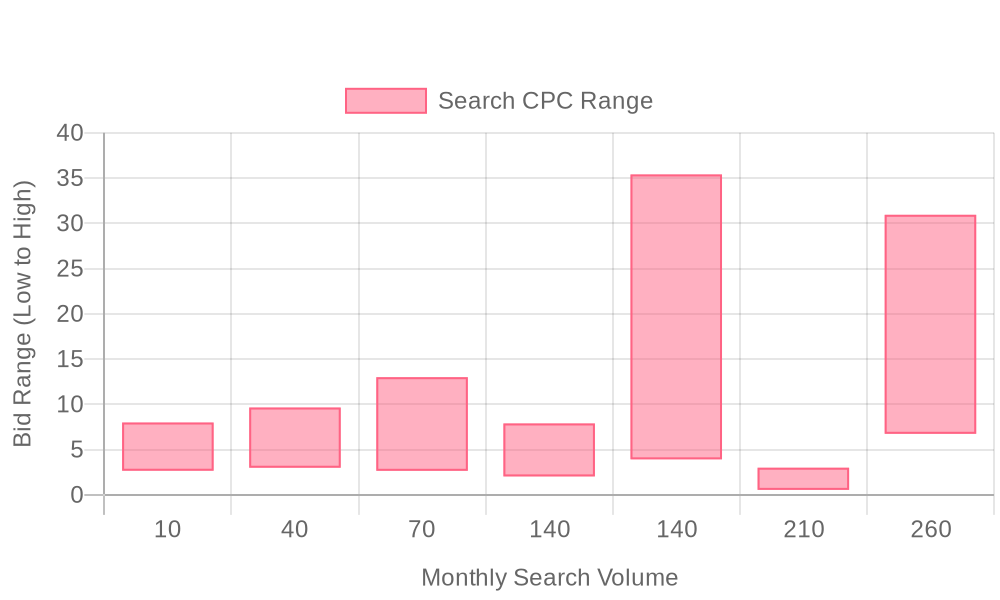
| Industry | Keyword | Monthly Search Volume | Competition Level | Low Bid | High Bid |
| Valve Maintenance | maxon valve repair | 10 | LOW | 2.67 | 7.99 |
| Valve Maintenance | valve repair companies | 40 | LOW | 3 | 9.65 |
| Valve Maintenance | industrial valve repair | 70 | LOW | 2.66 | 13 |
| Valve Maintenance | hydraulic valve repair | 140 | LOW | 2.04 | 7.89 |
| Valve Maintenance | backflow preventer maintenance | 140 | LOW | 3.93 | 35.4 |
| Valve Maintenance | tankless water heater service valve kit | 210 | HIGH | 0.55 | 3 |
| Valve Maintenance | water valve repair | 260 | LOW | 6.75 | 30.94 |
Valve maintenance companies face a unique challenge: their ideal customers often search with urgent, intent-driven queries. By prioritizing these high-intent search terms, marketing teams can ensure every ad dollar targets prospects with immediate service needs, not broad or informational traffic. To refine your approach, explore precision audience intelligence for more targeted outreach.
- Precision Targeting: Marketers can pinpoint facility managers, operations directors, and procurement officers at the exact moment they seek valve maintenance solutions. Using advanced visitor identification, it becomes possible to move beyond anonymous clicks and surface the companies and decision-makers evaluating services in real time.
- Measurable ROI: Every action is tracked from the first click through to contract closure, connecting ad investments directly to revenue outcomes. With robust conversion tracking and attribution, teams gain a clear view of how PPC for valve maintenance drives actual sales pipeline, not just web form submissions.
- Channel Synergy: Data-driven campaigns allow seamless retargeting across search, display, video, and even social channels. Dynamic audience updates ensure consistent messaging to both new prospects and returning decision-makers as they move through the funnel.
For Google Ads for valve maintenance, structuring keyword lists around urgent service needs, compliance requirements, and specific valve types is essential. Negative keywords should be leveraged to filter out unrelated or non-commercial queries, ensuring budgets are reserved for prospects ready to engage vendors. For an overview of how local service companies can maximize their ad performance, see this Google Ads management guide for plumbing companies. If you’re ready to apply these strategies in your own campaigns, get started for free with Sona.
Step-by-Step Campaign Execution Framework
Step 1: Build Targeted Keyword Lists
Precision in keyword strategy drives measurable improvement in Google Ads for valve maintenance. Start by segmenting keywords based on core service offerings, such as emergency repairs or scheduled routine checks, ensuring each group reflects a distinct customer intent profile. Strengthen local relevance with geo-modifiers targeting specific service areas to elevate visibility among high-value prospects seeking nearby solutions. For a comprehensive overview of how plumbing and maintenance companies can leverage Google Ads and Local Service Ads, see this guide to Google Ads for plumbing companies.
Incorporate long-tail and question-based queries to capture nuanced search behaviors and address urgent prospect needs. Filtering out irrelevant clicks through robust negative keyword lists further refines audience intent, reducing wasted spend and improving lead quality. When Sona is integrated, marketers gain real-time clarity on the companies and decision-makers behind each click, enabling targeted adjustments that consistently boost conversion rates.
The upgrade most valve maintenance advertisers miss is going beyond raw keyword volume to layer in intent and identity signals. By connecting website-visitor data and CRM records with Sona Marketing Measurement, you can see which specific search terms bring in the accounts and customers that actually convert, and weight your keyword and bidding strategy toward those rather than the terms with the highest search volume alone.
Step 2: Develop Compelling Ad Copy
Effective ad copy for valve maintenance advertising begins by addressing industry-specific pain points directly in the ad headlines and descriptions. Highlight certifications, years of experience, or unique guarantees to reinforce trust and differentiate your company within a crowded market. Calls to action should create urgency, prompting immediate engagement for pressing issues like leaks or compliance checks.
Strategic use of call extensions and structured snippets provides prospects with fast, actionable contact options and a clear picture of service breadth. By leveraging real-time intent insights, Sona empowers teams to align ad messaging dynamically with the most engaged segments, ensuring that high-intent leads are met with tailored, compelling offers at the moment of need.
Step 3: Design Effective Landing Pages
Landing pages must align tightly with their corresponding Google Ads campaigns for valve services, ensuring seamless user experiences and increased conversion rates. Each core service deserves its own focused landing page, allowing messaging and calls-to-action to speak directly to the specific needs of each client segment, such as industrial plant managers or municipal procurement officers. For a detailed look at optimizing Google Local Services Ads setup and landing pages, visit this optimization guide.
Maintain concise, visually clear layouts with strong, singular calls-to-action to direct visitors toward booking or inquiry forms without distraction. Integration with platforms like Sona enables real-time audience updating, so as leads engage and progress through the funnel, content and offers on landing pages remain highly relevant, driving more qualified valve maintenance leads.
Step 4: Implement Data-Driven Optimizations
Consistent improvement in Google Ads for valve maintenance depends on watching conversion metrics closely and adopting automated bidding and audience strategies as soon as the data supports it. Run A/B tests across headlines, copy, and calls-to-action to see what resonates with plant managers and facility operators. Feed those learnings back into your CRM and content strategy so every touchpoint reflects what you've learned. For help understanding how Local Services Ads work, consult the Google Ads Help Center.
Advanced attribution, the kind Sona's Buyer Journeys product enables, connects the entire path from ad click to contract closure. That clarifies the true impact of each channel, whether Google Ads, email, or direct outreach, on pipeline and revenue. Automated syncing of enriched leads and audience segments into platforms like Google Ads, HubSpot, and Salesforce keeps retargeting and nurturing accurate and timely, which is where the ROI actually comes from. Get started for free with Sona.
Sona Marketing Measurement closes the gap between clicks and revenue. It captures ad clicks with first-party measurement rather than third-party cookies, ties that click through UTM capture and ad-platform APIs to the actual record in your CRM, and reports ROAS by keyword and campaign instead of by last-click form fill. Feeding that revenue signal back into Smart Bidding and Performance Max compounds over time: the algorithms optimize toward booked valve maintenance revenue, not cheap leads.
Tips on Expanding Your Valve Maintenance Presence
Valve maintenance providers can unlock higher-value B2B opportunities by leveraging digital channels to reach intent-rich audiences and drive more targeted engagement. A data-driven approach to online advertising allows teams to consistently surface in-market accounts while delivering relevant messaging at each stage of the buyer journey.
- Promote educational materials through retargeting to extend reach: Retargeting campaigns are especially effective for valve maintenance firms aiming to maintain visibility with site visitors who have shown early but incomplete interest. By promoting in-depth guides, case studies, or maintenance best practices, marketers can re-engage qualified prospects and move them closer to conversion. Platforms that unify visitor identification and intent signals streamline the process, enabling teams to present the right resource to the right contact, even as prospects navigate between research phases.
- Upsell complementary services using CRM-driven audience segmentation: Successful valve maintenance advertising strategies incorporate CRM data to define granular audience segments for upsell or cross-sell campaigns. For example, clients who previously purchased routine maintenance may be ideal candidates for emergency repair packages or long-term monitoring solutions. When CRM and ad platforms remain in sync, enriched audience lists update dynamically as clients progress through the funnel, allowing for timely, personalized offers that drive incremental revenue.
- Localize ads via strategic geo-targeting to fortify regional presence: Geo-targeted campaigns ensure your valve maintenance services appear prominently in the regions you serve, limiting wasted spend and improving lead quality. By analyzing regional performance data and layering in company-level insights, teams can prioritize outreach in high-opportunity areas and tailor messaging to address local compliance standards or infrastructure pain points. For a detailed overview of how local service providers can benefit from Google Ads and Local Service Ads, see this guide on Google Ads and Local Service Ads management for plumbing companies.
- Utilize search query insight to develop new content and expand conversation topics: The search terms driving traffic and conversions for valve maintenance campaigns reveal evolving customer needs and industry concerns. By continuously mining this data, marketers can create content that addresses emerging topics, establish thought leadership, and attract new audiences. Syncing these insights with content and ad strategies ensures messaging stays relevant and authoritative, supporting long-term growth in digital marketing for valve services.
Sales representatives require actionable context to personalize outreach and maximize impact. Modern technology delivers this by aggregating and syncing intent signals, such as recent keyword activity or resource downloads, enabling teams to prioritize high-readiness accounts and engage with tailored messaging that resonates at the right moment.
Effective Google Ads for valve maintenance hinges on precision: targeted keywords that match service scope, segmented audiences reflecting buyer roles, compelling creative that stands out, and real-time analytics to optimize spend. When integrated with platforms that unify CRM, website, and ad performance data, marketing teams achieve seamless lead attribution, allowing them to prove ROI and continually refine their PPC for valve maintenance efforts. This holistic approach positions valve maintenance firms to capture demand, nurture relationships, and drive measurable pipeline growth.
Beyond Google Ads: Winning the AI Answers Valve Maintenance Buyers Now Trust
Paid search captures demand at the moment someone types a query. But a fast-growing share of valve maintenance buyers no longer start at Google at all, they ask ChatGPT, Gemini, or Perplexity before they ever run a search, and Google's own AI Overviews increasingly summarize an answer above the traditional results. If your business isn't referenced in those AI answers, you're invisible at the exact moment buyers build their shortlist.
Sona AI Visibility shows where your business shows up across ChatGPT, Gemini, Perplexity, Google AI Overviews, and 10+ engines, and, much like a keyword report, which prompts actually send you buyers, so you can prioritize the ones that convert. Run the two together and you cover the entire buyer path: get cited where buyers research (AI Visibility), then prove which of that demand turns into booked revenue (Marketing Measurement).
Helpful resources
Conclusion
Google Ads works for valve maintenance providers because it meets buyers at the moment their equipment fails or their compliance deadline looms, not weeks earlier when a brand impression might land and be forgotten.
The providers who pull ahead won't be the ones bidding highest on "valve repair," but the ones who can tell Google's algorithms which clicks actually became paying customers, and let that signal, not guesswork, steer where the next dollar goes. Start for free to see what that looks like with your own pipeline data.
FAQ
What are the best practices for Google Ads in valve maintenance?
Best practices include employing a data-driven approach, using targeted keyword and audience strategies, aligning landing pages to amplify conversion rates, and continuously enhancing performance through iterative optimization.
How can I create effective Google Ads for valve maintenance services?
Create effective ads by developing compelling ad copy that addresses industry-specific pain points, using call extensions, and designing effective landing pages that align tightly with ad campaigns.
What budget should I allocate for Google Ads in valve maintenance?
The budget should be tied to visible business outcomes, with dynamic allocation based on market signals and high-intent prospects, ensuring every dollar targets prospects with the greatest potential to convert.
Are there specific keywords for valve maintenance in Google Ads?
Yes, use highly specific keyword sets that reflect urgent needs and common pain points in valve maintenance, along with vertical keyword targeting to capture buyers at every stage.
How do I measure the success of my Google Ads for valve maintenance?
Measure success by analyzing conversion data, tracing every lead back to its source, and utilizing advanced attribution modeling to clarify true ROI and inform future spending decisions.







