


Utility contractors win jobs in the gap between a bid request and a burst pipe. Google Ads occupies that gap better than almost any other channel: it catches decision-makers at the exact moment they're searching for a substation upgrade, an emergency repair crew, or a licensed contractor for a municipal project. Paired with the offline relationships built at trade shows, through direct mail, and via industry publications, paid search becomes the bridge between broad awareness and a signed contract. For utility contractors specifically, that means intercepting buyers after a trade show follow-up or a mailer lands, targeting on the technical specifications and licensing language unique to the trade, tracking ROI from click to quote to closed deal, and remarketing to the same audiences reached through trade publications and events.
How to Generate Utility Contractor Leads with Google Ads: A Step-by-Step Guide
Utility contractors who master Google Ads open a direct channel to buyers ready to act on urgent, often regulated service needs. A systematic, data-driven approach makes every dollar work harder and outperforms less targeted marketing. For a comprehensive, industry-specific walkthrough, see this Google Ads for electricians guide.
Integrating Google Ads into your broader marketing mix empowers teams to capture demand at the precise moment it peaks, while aligning paid search data with CRM and offline insights for true multi-channel attribution. This playbook details how to harness the power of Google Ads for utility contractors, covering keyword and audience targeting, landing page strategies, conversion optimization, and the seamless integration of your campaigns into a unified demand engine. For more resources on marketing analytics and pipeline attribution, visit our marketing insights hub.
A Data-Driven Approach to Paid Search
Data is the core driver of effective PPC for utility contractors. Campaigns built on real-time insights deliver better targeting, eliminate wasted spend, and reveal the true value of every channel. When ad platforms and CRM systems sync, marketing teams can shift budget to accounts showing in-market intent, act on live funnel movements, and attribute conversions across both online and offline touchpoints. This unified approach turns Google Ads from an isolated lead source into a driver of pipeline acceleration and revenue predictability. To reveal which companies are visiting your website, even when no one fills out a form, Sona's Identity Resolution turns anonymous traffic into qualified pipeline.
Keyword and Audience Targeting Strategies
Precision in keyword targeting separates high-performing Google Ads for contractors from generic campaigns. Start with in-depth research to identify commercial intent keywords such as "emergency power restoration," "utility contractor near me," and niche services like "substation maintenance." Use negative keywords to eliminate irrelevant clicks, focusing every impression on real buyers. For step-by-step instructions tailored to contractors, see this Google Ads for contractors tutorial. Advanced audience targeting leverages real-time audience signals, such as repeated visits to pricing pages or engagement with specific service content, to dynamically adjust ad spend and messaging for maximum relevance.
Landing Page and Creative Alignment Techniques
Conversion rates rise sharply when ad messaging, creative, and landing pages remain tightly aligned. Each paid search click should land on a page that mirrors the promise of the ad, showcases clear calls-to-action, and addresses the unique pain points of utility buyers. Data from site engagement and lead capture can trigger rapid A/B testing, allowing teams to refine headlines, CTAs, and form fields for maximum impact. Explore conversion optimization playbooks for actionable strategies to optimize your creative and landing page experience.
Performance Optimization Tactics
Sustained ROI improvement in Google Ads for utility contractors relies on disciplined measurement and agile optimization. Key metrics include cost per lead, conversion rate, and pipeline contribution, tracked both within Google Ads and across the broader sales funnel. For a real-world perspective on maximizing PPC outcomes, review this Google Ads effectiveness analysis for contractors. Automated rules and real-time dashboards help teams pause underperforming ads, prioritize high-converting keywords, and adjust bids based on business priorities or seasonality. To attribute every lead to its true source, use multi-touch attribution methods that capture both online and offline interactions.
Cross-Channel Integration Methods
Google Ads thrives as part of a connected marketing ecosystem. Effective contractor advertising includes syncing audiences and leads between Google Ads, CRM, and marketing automation platforms. As leads engage with emails, webinars, and direct outreach, audience lists update in real time, fueling tailored retargeting and nurturing sequences. This closed-loop system ensures that marketing and sales teams operate from a single source of truth, with every campaign informed by the latest buyer signals and account movements. To automate the syncing of high-quality audience data into your CRM and ad platforms for seamless activation, explore Sona Destinations.
Why Does Google Ads Matter for Utility Contractors
Utility contractors operate in a landscape where every missed opportunity translates to lost revenue and diminished market share. Achieving consistent growth demands the ability to engage high-value accounts at the exact moment they search for specialized solutions.
- Complex, Specialized Audience: Reaching decision-makers in utility contracting requires more than broad targeting. Google Ads allows teams to zero in on specific job titles, company industries, and intent signals, surfacing ads only to those actively seeking services like substation upgrades or emergency power restoration. Marketers can move beyond generic impressions by leveraging company-level visitor identification and intent data to prioritize outreach and focus budget where it drives the highest pipeline impact.
- Higher Margin Services: While nurturing existing clients remains essential, acquiring new, lucrative projects is what fuels real growth. Google Ads enables precision targeting for high-margin services such as commercial installations or grid modernization projects. By leveraging dynamic audience updates, campaigns stay relevant as prospects shift from research to in-market status, ensuring contractor marketing always reaches accounts when they are most likely to convert.
- Faster Demand Response: Utility emergencies and urgent service requests demand rapid engagement. Google Ads delivers instant visibility to prospects during critical moments, overcoming the lag of manual follow-ups. With advanced conversion tracking and closed-loop attribution, utility contractors can capture, qualify, and route hot leads to sales teams in real time, dramatically reducing response times and increasing win rates.
- Visibility in Emerging Regions: Expanding into new territories often means low brand awareness and little organic traction. Google Ads empowers contractors to launch targeted campaigns focused on high-growth metros or underserved areas, using geographic filters to maximize spend efficiency. Audience sync capabilities further refine targeting, connecting ad delivery with CRM insights so teams focus on accounts with true expansion potential. For a step-by-step approach to setting up these campaigns, see this guide for contractors using Google Ads.
- Integrated Data Analysis: Proving marketing ROI can be challenging without unified data. Google Ads offers transparent, actionable reporting that seamlessly ties click and conversion data back to revenue outcomes. When combined with advanced attribution and CRM integration, utility contractors gain a holistic view of every touchpoint, empowering smarter budget allocation and ongoing campaign optimization.
Common Types of Google Ads Campaigns for Utility Contractors

- Search Campaigns: Utility contractors use Search campaigns to capture urgent, high-intent queries from organizations and property managers who are ready to act. These campaigns are ideal for intercepting prospects searching terms like “emergency utility repair near me” or “commercial electrical installation.” Integrating real-time visitor identification and intent data allows marketers to dynamically prioritize accounts showing immediate need, driving more qualified leads at a lower cost per acquisition. With platforms capable of syncing enriched account lists directly into ad platforms, the focus shifts from generic targeting to high-value prospects, making every dollar in your Google Ads budget for contractors work harder.
- Display Ads: Display campaigns keep your brand top-of-mind by reaching facility managers, engineers, and procurement teams as they browse industry news, forums, and content sites. Display ads reinforce the messaging from your online marketing for contractors, ensuring your value proposition stays visible throughout the research phase. When audience segments update in real time as leads progress through the funnel, display budgets can automatically retarget only those accounts showing new buying signals, eliminating wasted impressions and increasing the relevance of every ad served.
- Video Ads: Video campaigns give utility contractors the opportunity to showcase complex services, safety protocols, or unique project case studies. This format is particularly effective for demonstrating expertise in highly technical or regulated environments. By integrating advanced analytics and dynamic audience segmentation, marketers can push video ads to in-market buyers or decision-makers who have engaged with your thought leadership or previously interacted with your proposals, multiplying the impact of your content marketing investment.
- Remarketing: Remarketing campaigns target past website visitors, quote abandoners, or those who interacted with your proposal forms but have not yet engaged further. With advanced audience orchestration, remarketing lists instantly reflect changes in lead status, ensuring only engaged or newly qualified contacts see your follow-up ads. Combining CRM and website behavioral data lets you tailor messaging to where the prospect actually is in their journey, improving conversion rates for utility contractor lead generation.
- Assets: Ad assets add layers of trust and detail to your core Search and Display ads, displaying certifications, response times, or “Google Guaranteed” status. These assets validate the claims made in your other contractor advertising efforts and increase click-through rates by removing uncertainty for potential clients. When asset information is automatically updated from your CRM or project management systems, prospects always see the most accurate credentials, awards, or service highlights, creating a seamless experience from ad to conversion.
By structuring Google Ads campaigns around these core formats and ensuring all audience data, intent signals, and conversion outcomes are unified, utility contractors can achieve measurable improvements in ROI, lead quality, and sales velocity. This holistic approach bridges the gap between marketing and sales, empowering revenue teams to act on the most promising opportunities in real time. If you're ready to put these strategies into action, get started for free with Sona.
Where to Find Growth Opportunities?
Uncovering new growth opportunities in utility contractor marketing means moving beyond familiar channels and exploring untapped segments that align with your business goals. By focusing on areas where your competitors are underserving customers or where your own organic content does not reach, you can drive higher-quality leads and achieve more predictable returns.
- Vertical keyword targeting: Identify specialty service terms that complement your broader offering, such as "emergency transformer repair" or "substation maintenance." These targeted keywords allow you to capture demand from clients who need highly specific solutions, often resulting in higher conversion rates and less price sensitivity. Dynamic audience building ensures your ads appear to the right decision-makers as their needs shift, helping your campaigns remain agile and relevant.
- Competitor gap analysis: Use auction insights and platforms like SEMrush to pinpoint keyword segments and regions where competitors are less active or lack coverage. This intelligence helps you allocate budget more strategically, focusing spend on high-potential queries instead of saturated markets. Real-time intent data further refines this approach, letting you prioritize accounts that show immediate buying signals, which can improve the efficiency of your PPC for utility contractors.
- Industry-specific placements: Secure ad placements on trade directories, niche forums, and professional association websites that your organic strategy might overlook. These industry hubs attract highly qualified prospects who are actively researching solutions, making them ideal for utility contractor lead generation. Integrating CRM and ad data allows for seamless sync of enriched audiences into platforms like Google Ads, ensuring your message reaches the right contacts at the right time.
- Content retargeting: Develop retargeting campaigns that leverage whitepapers, implementation checklists, or technical how-to videos mapped to your content calendar. By segmenting audiences based on the resources they engage with, you can nurture leads through the funnel and re-engage those who have shown strong interest but have not yet converted. With advanced attribution and visitor identification, you measure the true ROI of each piece of content and optimize future spend for the highest-impact touchpoints. For an in-depth look at running effective Google Ads campaigns tailored to contractors, see this step-by-step guide for Google Ads for contractors.
How to Apply Audience Segmentation for Utility Contractors

Audience segmentation is the backbone of any effective Google Ads strategy for utility contractors. It allows teams to precisely match targeting and messaging with the decision journeys of high-value commercial, industrial, and municipal clients. By translating segmentation into campaign structure, you ensure every advertising dollar is invested where it can deliver the greatest impact across your sales funnel, learn more in this comprehensive Google Ads guide for electricians, which features segmentation strategies applicable across the utilities sector.
- Define Segments: Start by identifying your most critical customer types. For utility contractors, this often means separating segments such as hospitals, industrial plants, data centers, and public infrastructure clients. Within power generation, further distinctions are essential: nuclear facilities require a different approach than cogeneration plants or renewable energy projects. This granularity not only sharpens your ad creative but also enables more accurate forecasting and pipeline management.
- Overlay Intent Signals: Beyond basic demographics, layer in behavioral and contextual signals to pinpoint buyers in-market for specific services. For instance, segment audiences searching for routine maintenance contracts separately from those evaluating equipment upgrades or emergency outage response. Real-time intent data offers a powerful way to pivot spend and creative toward accounts exhibiting high-value behaviors, ensuring your campaigns are always aligned with live demand.
- Create Ad Groups by Segment: Building granular ad groups for each segment enables full customization of messaging, offers, and budget allocation. Hospitals may be most responsive to messaging around reliability and compliance, while industrial plants might prioritize uptime guarantees and rapid deployment. Dynamic audience management allows these groups to automatically update as prospects progress in their buying journey or as new accounts are identified, keeping campaigns agile and relevant.
- Validate Conversion Paths: Every segment should have its own clearly defined conversion tracking. Ensure your quote forms, call tracking, and contact requests are properly attributed to their source and funneled into your CRM. Advanced tracking solutions allow you to connect both online actions and offline contract signings, providing a complete view of true ROI. Seamless CRM and ad platform integration ensures enriched audience and lead data continually syncs, supporting accurate retargeting, reporting, and attribution for ongoing optimization.
By operationalizing audience segmentation in this way, utility contractors unlock higher lead quality, improved close rates, and more predictable outcomes from their Google Ads investments. This approach transforms your marketing from generic outreach to a precision engine for utility contractor lead generation, aligning every campaign with the most valuable opportunities in your pipeline.
This is also where measurement changes the economics. With Sona Marketing Measurement you can identify the companies behind your ad clicks, not just anonymous sessions, and segment audiences by who actually becomes a customer. That lets you build bid adjustments and audience signals around the segments that convert and de-prioritize the ones that don't, so you feed Google's algorithms "this click became a paying utility contractors customer" instead of just "someone filled out a form."
Keyword Strategy & Sample Target Terms
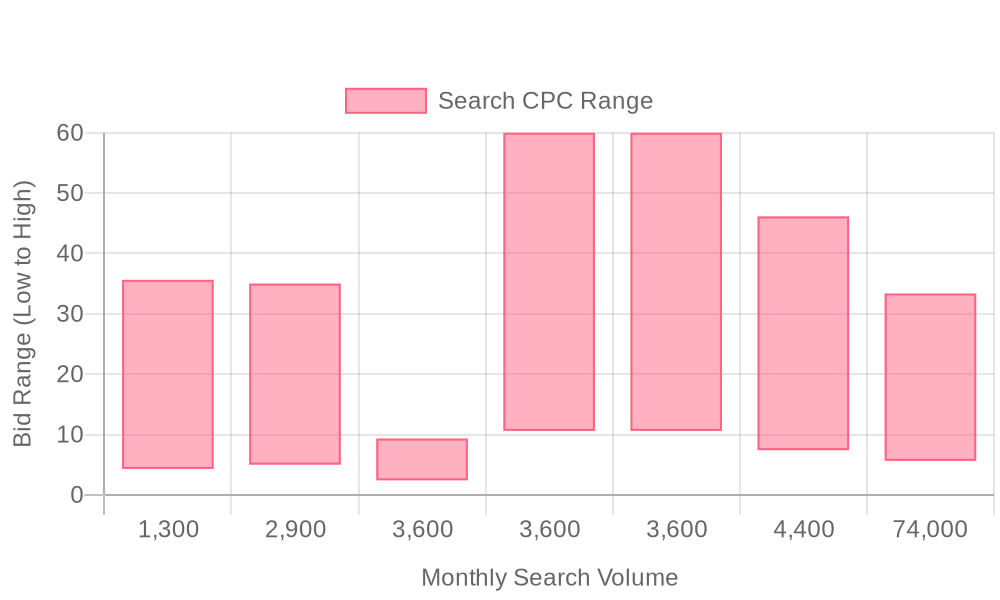
| Industry | Keyword | Monthly Search Volume | Competition Level | Low Bid | High Bid |
| Utility Contractors | natural gas contractors near me | 1300 | MEDIUM | 4.3 | 35.63 |
| Utility Contractors | residential electric companies near me | 2900 | MEDIUM | 5.02 | 35 |
| Utility Contractors | utility contractors | 3600 | LOW | 2.42 | 9.33 |
| Utility Contractors | sewer contractors near me | 3600 | MEDIUM | 10.61 | 60 |
| Utility Contractors | sewer companies near me | 3600 | MEDIUM | 10.61 | 60 |
| Utility Contractors | electric service near me | 4400 | MEDIUM | 7.41 | 46.14 |
| Utility Contractors | electric companies near me | 74000 | MEDIUM | 5.65 | 33.36 |
Utility contractor marketing succeeds when campaigns intercept decision-makers precisely as they search for critical services. Google Ads for Utility Contractors leverages intent-based targeting to capture prospects already evaluating solutions, ensuring every click is tied to a potential revenue opportunity. For a deeper dive into campaign setup and optimization tailored to the industry, review this comprehensive guide for electricians.
A robust keyword strategy anchors this approach. Marketers conduct in-depth research to identify transactional and service-specific terms, such as “emergency utility repair,” “substation maintenance contractor,” and “industrial electrical services.” These high-intent phrases drive qualified traffic, filtering out low-value queries and irrelevant audiences. Long-tail keywords like “utility contractor for municipal projects” or “licensed power line repair near me” further segment the market, allowing for pinpoint targeting across diverse geographic and service verticals. Explore more actionable insights in our collection of marketing playbooks.
- Precision Targeting: With the right keyword mapping, campaigns reach buyers exactly when they are ready to engage vendors. Smart segmentation ensures that ad impressions are served only to locations and industries relevant to your utility services, maximizing both relevance and click-through rates. Enhance your efforts by leveraging real-time audience data for even greater targeting accuracy.
- Measurable ROI: Conversion tracking links each search term to pipeline outcomes, giving revenue teams full visibility from initial click to closed deal. Solutions that enable advanced attribution, tying calls, form fills, and even offline conversations back to keywords, empower teams to double down on the most profitable queries and reduce wasted spend. For a guide to capturing ROI across all channels, see offline attribution strategies.
- Channel Synergy: Keyword audiences can be the foundation for dynamic retargeting across display, video, and social. When a utility buyer visits your site but does not convert, audiences update in real time, enabling retargeting with contextually relevant messages until the lead moves down the funnel or engages directly. Streamline this process by syncing data automatically with Destinations.
Company-level visitor identification lets revenue teams go beyond anonymous clicks, revealing which organizations are behind every search. This data makes it possible to prioritize outreach to high-potential accounts and shift budget in real time to keywords and segments with the strongest buying signals. As audiences and intent signals evolve, synced lists ensure that remarketing budgets are always focused on active, in-market utility buyers. This level of precision and responsiveness is critical for utility contractor lead generation, supporting both immediate pipeline goals and long-term efficiency. If you're ready to transform your utility contractor marketing, get started for free with Sona.
Step-by-Step Campaign Execution Framework
Step 1: Build Targeted Keyword Lists
A precise keyword list forms the backbone of any high-performing Google Ads for utility contractors campaign. Start by clustering keywords by core service lines such as installations, emergency repairs, compliance checks, and ongoing maintenance. For optimal local reach, always append geographic modifiers: city, neighborhood, county, and “near me” variations capture intent from searchers ready to hire within your service area. Incorporate long-tail questions and problem-based queries that reflect how business clients or facility managers phrase their needs, examples include “emergency transformer repair near me” or “licensed utility contractor for hospital backup generators.” For a comprehensive strategy, review this step-by-step guide to Google Ads for contractors.
Negative keyword filters are essential to avoid wasted spend. Exclude terms associated with DIY, training, residential-only jobs, or employment seekers to ensure each click represents real business opportunity. Modern PPC for utility contractors is further elevated by leveraging Sona's Identity Resolution to identify companies and the purchase stage of site visitors. When marketers can pinpoint which organizations are interacting with their ads and site, they allocate budget to the highest-intent accounts and quickly build dynamic audience lists for remarketing, keeping the funnel full of decision-ready prospects.
The upgrade most utility contractors advertisers miss is going beyond raw keyword volume to layer in intent and identity signals. By connecting website-visitor data and CRM records with Sona Marketing Measurement, you can see which specific search terms bring in the accounts and customers that actually convert, and weight your keyword and bidding strategy toward those rather than the terms with the highest search volume alone.
Step 2: Develop Compelling Ad Copy
Strong ad copy directly addresses the core pain points of utility buyers: reliability, compliance, safety, and speed. Headlines should immediately speak to urgent needs (“24/7 Emergency Utility Repair”) and be reinforced by trust markers such as industry certifications, customer star ratings, or proof of regulatory expertise. Utility contractor marketing thrives when ads display case wins or recognizable client names, providing instant credibility during the first impression. For practical examples, see these Google Ads best practices for electricians.
Urgency incentives like “Free Consultation” or “Same-Day Dispatch” drive immediate action. Use ad assets to increase your real estate on the search page: call assets enable direct phone leads, structured snippets highlight specialized services, and callouts reinforce safety, compliance, or insurance guarantees. When ad audiences and messaging are dynamically informed by Sona Audiences, marketers can serve personalized value propositions at scale. This lets campaigns adjust instantly as new decision-makers enter the pipeline or as accounts show higher readiness to convert.
Step 3: Design Effective Landing Pages
Landing pages should mirror the exact intent and offer of each ad group, ensuring a frictionless path from click to action. Segment pages by service verticals, such as rooftop HVAC, grid compliance audits, or substation retrofits, to speak directly to distinct buyer personas. Include ROI calculators for capital projects, prominent trust badges, and detailed FAQs addressing technical and regulatory concerns. Persistent, mobile-optimized calls to action keep utility contractor lead generation smooth for both desktop and field device users. Learn more about optimizing your landing pages and overall contractor ad spend in this PPC for construction companies resource.
Integrating Sona Destinations lets marketers surface which companies land on which pages, so follow-up can be personalized with relevant case studies and proposals. When offline conversions like signed contracts or site visits are tied back to specific ads and audiences, budget allocation becomes smarter and more precise, ensuring only the highest-value tactics are scaled.
Step 4: Implement Data-Driven Optimizations
Continuous data-driven optimization is mandatory for contractor advertising to achieve superior ROI. Track both micro-conversions (downloads, chat starts) and macro-conversions (qualified calls, booked inspections) to build a complete picture of performance. Smart bidding strategies such as Target CPA or Maximize Conversions automatically adjust based on real-time conversion likelihood, ensuring every dollar is spent where it can generate the most impact. Explore how PPC is transforming the energy sector in this industry case study.
A/B test headlines, CTA placements, and landing page layouts to reveal what resonates with different target accounts. Import offline conversion results, such as contract signings or on-site consultations, so bidding logic is always aligned to true revenue outcomes, not just form fills. By unifying online and offline attribution, marketers can confidently scale their Google Ads budget for contractors, knowing that every step of the funnel is driving measurable business growth. Audience lists and bidding strategies update in real time as prospects move through stages, allowing PPC management for contractors to remain agile and responsive in a competitive, data-centric market.
Sona Marketing Measurement closes the gap between clicks and revenue. It captures ad clicks with first-party measurement, ties that click through UTM capture and ad-platform APIs to the actual record in your CRM, and reports ROAS by keyword and campaign instead of by last-click form fill. Feeding that revenue signal back into Smart Bidding and Performance Max compounds over time: the algorithms optimize toward booked utility contractors revenue, not cheap leads.
Tips on Expanding Your Utility Contractor Presence
Expanding your utility contractor presence requires a data-driven blend of digital tactics designed for both immediate impact and long-term growth. High-performing utility teams recognize that the most valuable audiences are not just reached, but also nurtured with relevant, timely messaging that aligns with their stage in the buying journey. For more strategies on growing your digital presence, explore this guide to digital marketing for power and utility companies.
- Cross-promote educational assets in retargeting to support content marketing goals: Retargeting is more than another touchpoint; it's an opportunity to drive deeper engagement by serving educational resources to prospects who have shown initial interest. When you identify which companies are interacting with certain service pages or industry guides, Sona's Identity Resolution reveals website visitors and scores their intent, empowering you to tailor your ads to cross-promote whitepapers, webinars, and case studies tied to their needs. This precise matching between user intent and resource offering increases content consumption rates and moves prospects through the funnel more efficiently.
- Upsell related services via segmented audiences based on CRM data: Segmenting your remarketing audiences using enriched CRM data allows for intelligent upselling. For example, existing clients who recently completed a substation upgrade may be shown ads for preventative maintenance packages or energy efficiency audits. When audience segments dynamically update as deals progress, and CRM and ad platforms are in sync, your cross-sell and upsell messages always reach the right contacts at the right stage. This level of automation minimizes wasted impressions and leads to higher conversion rates.
- Partner with industry associations for referral traffic or co-branded ads: Industry partnerships unlock referral traffic and create opportunities for co-branded advertising. By collaborating with respected associations, you can extend your reach to vetted audiences and build valuable trust signals. Find actionable ideas for co-branded initiatives in the Sona blog, where you’ll discover tested approaches for B2B marketers. Co-branded ads leveraging shared industry credentials often enjoy higher engagement, as decision-makers perceive them as more credible and relevant compared to stand-alone ads.
- Localize by state or metro areas to grow share-of-voice in targeted regions: Geo-localization is essential for utility contractor marketing, as service areas are typically confined to specific markets. Customizing campaigns by state, metro, or even ZIP code allows you to dominate search results in the regions that matter most. Learn more about maximizing your ad spend in targeted regions from this analysis of Google Ads for contractors. With granular location targeting, budgets are allocated efficiently, and your brand consistently appears in front of high-potential accounts where you can actually deliver.
- Use search query data to identify new content topics for your broader marketing efforts: Search query analysis reveals not only how prospects are finding you but also highlights emerging pain points and service trends. By feeding these insights into your content strategy, you ensure that your website, blogs, and resources address the most pressing questions and needs of your market. For step-by-step tactics to unify paid and organic strategies, explore the Sona playbooks. This approach closes the loop between paid and organic efforts, fueling both short-term lead generation and long-term brand authority.
Utility contractors who weave these tactics into their digital strategy consistently outpace competitors in both lead quality and market share. Sona helps unify audience insights, intent signals, and CRM data so that every marketing dollar targets the accounts most likely to convert and grow. To see how these strategies can drive your pipeline, get started for free with Sona.
Beyond Google Ads: Winning the AI Answers Utility Contractors Buyers Now Trust
Paid search captures demand at the moment someone types a query. But a fast-growing share of utility contractors buyers no longer start at Google at all, they ask ChatGPT, Gemini, or Perplexity before they ever run a search, and Google's own AI Overviews increasingly summarize an answer above the traditional results. If your business isn't referenced in those AI answers, you're invisible at the exact moment buyers build their shortlist.
Sona AI Visibility shows where your business shows up across ChatGPT, Gemini, Perplexity, Google AI Overviews, and 10+ engines, and, much like a keyword report, which prompts actually send you buyers, so you can prioritize the ones that convert. Run the two together and you cover the entire buyer path: get cited where buyers research (AI Visibility), then prove which of that demand turns into booked revenue (Marketing Measurement).
Helpful resources
Conclusion
Google Ads works for utility contractors because it meets buyers at the moment they need a licensed crew, not at the moment a marketer wants their attention. Keyword targeting built around service lines and licensing language, landing pages that match the ad's promise, and conversion tracking that follows a lead from click to signed contract are what separate campaigns that fill a pipeline from campaigns that just spend a budget.
The contractors pulling ahead now are the ones treating Google Ads as one instrumented piece of a larger system, feeding CRM and offline outcomes back into bidding, and increasingly making sure their name surfaces when buyers ask an AI assistant instead of typing a search. That combination, not any single tactic, is what will separate the utility contractors winning the next decade of bids from the ones still guessing at attribution.
Ready to elevate your advertising game? Start for free to experience our platform and unlock its full potential for your business.
FAQ
What are the best practices for Google Ads for utility contractors?
Best practices include targeting high-intent keywords, aligning ad messaging with landing pages, using data-driven insights for optimization, and integrating campaigns with CRM for multi-channel attribution.
How much should utility contractors budget for Google Ads?
The article does not specify an exact budget, but emphasizes the importance of data-driven spending and optimizing campaigns to ensure each dollar contributes to measurable growth.
Do Google Ads effectively generate leads for utility contractors?
Yes, Google Ads can effectively generate leads by targeting high-intent prospects and integrating with offline sales processes to capture and qualify leads in real time.
What keywords should utility contractors target in Google Ads?
Utility contractors should target keywords with commercial intent such as 'emergency power restoration,' 'utility contractor near me,' and niche services like 'substation maintenance.'
How can utility contractors optimize their Google Ads campaigns?
Utility contractors can optimize their campaigns by using precise keyword targeting, aligning ad copy with landing pages, employing data-driven insights for real-time adjustments, and integrating ad performance with CRM data for holistic attribution.







