


A sewer contractor rarely gets a warm lead. The call comes when a pipe has already backed up, and the homeowner or property manager is searching for someone who can show up today, not next week. Missing those searchers, or losing track of the ones who visit your site but don't call, means losing jobs to whichever competitor answers first. Google Ads puts you in front of that exact moment: someone typing "sewer repair" or "emergency plumbing" with a problem that needs solving now. These campaigns let you target specific service areas, intercept high-intent searches, and track ROI from click to closed job. Whether you're moving beyond word of mouth or sharpening an existing digital budget, Google Ads is what connects online visibility to offline demand.
How to Generate Sewer Contractor Leads with Google Ads: A Step-by-Step Guide
Google Ads for Sewer Contractors offers a proven path to reach high-intent prospects at the exact moment they search for urgent and ongoing sewer services. By aligning your campaigns with the specific needs of your local market, you can consistently attract leads that turn into profitable jobs. For a deeper dive into Google Ads strategies tailored to plumbing and sewer professionals, check out this comprehensive guide for plumbers.
A data-driven approach to campaign setup and management allows for more precise targeting and efficient use of the Google Ads budget for contractors. Leveraging unified go-to-market data helps sewer contractor marketing teams connect every impression and click to a real business outcome. This guide details a stepwise framework that taps the power of online advertising for plumbers and sewer professionals, moving from keyword research to continual optimization.
- Keyword Research: In competitive local search, targeting the right terms is essential for effective PPC for sewer contractors. Focus on intent-driven keywords such as “sewer repair near me,” “emergency sewer services,” and “local plumber.” Expand your keyword lists with long-tail phrases that capture urgent needs and specific service types (trenchless repair, root intrusion, main line backups), while adding negative keywords to avoid wasted spend on DIY searches and unrelated plumbing queries. With Sona's Identity Resolution, marketers can go beyond anonymous traffic, identifying the companies (property management firms, municipal buyers) behind high-value searches to refine targeting and prioritize the segments most likely to close.
- Ad Creation: Crafting compelling ads is critical for converting searchers into leads. Highlight your unique selling points, such as rapid response times, specialized certifications, or 24/7 availability, directly in your ad copy. Segment ad groups based on firmographic or behavioral data to deliver messaging that resonates with different market segments. By integrating Sona's intent signals, you can dynamically adjust creative and offers for accounts showing high purchase readiness, so your ads speak directly to those most likely to convert. Enhance credibility and click-through rates with assets like customer reviews, direct call buttons, and verified local addresses.
- Landing Pages: A seamless user journey from ad click to landing page improves lead generation for sewer contractors. Landing pages should mirror ad messaging, reinforce trust with testimonials or certifications, and provide clear, actionable calls to action. Ensure forms are simple and conversion paths frictionless, minimizing the steps required to contact your team. With platforms that unify web analytics and CRM data, it becomes possible to attribute leads to specific ads and keywords, offering a holistic view of what drives real revenue.
- Performance Optimization: Ongoing optimization is vital for maximizing ROI in digital marketing for plumbing and sewer services. Use Smart Bidding strategies within Google Ads to automatically optimize for conversions based on historical and real-time data. Conduct regular A/B testing of ad copy and landing page layouts to identify top-performing variants. By leveraging advanced conversion tracking, including both online submissions and offline call conversions, you gain a complete picture of campaign impact. Syncing enriched audiences and lead data across Google Ads and CRM systems enables dynamic audience updates, reallocating budget to nurture accounts as they progress through the funnel and ensuring sustained performance improvements.
These steps form the foundation for high-impact Google Ads targeting for contractors, giving teams the insight and agility to win jobs before a competitor's truck does. Ready to put these strategies into action? Get started for free with Sona.
Why does Google Ads matter for Sewer Contractors?
Sewer contractors face intense local competition where speed and relevance determine who wins urgent service jobs. Traditional marketing often fails to reach property managers and homeowners at the moment they search for emergency sewer repair or maintenance. For actionable strategies on how Google Ads can specifically benefit plumbing and sewer professionals, explore this comprehensive guide for plumbing companies.
- Precision Targeting: Highly targeted Google Ads campaigns allow sewer contractors to reach prospects actively searching for services like "sewer line repair near me" or "24/7 sewer emergency." Moving beyond broad, generic ads, marketers can leverage real-time audience segmentation to identify not just anonymous clicks, but the actual companies and individuals behind high-value searches. This approach improves lead quality and maximizes the return on every ad dollar spent.
- Fast Demand Response: In emergency plumbing and sewer scenarios, capturing intent in real time is crucial. Rather than waiting for form fills or delayed callbacks, company-level identification lets contractors spot high-value visitors before they convert and serve timely, relevant ads. Syncing enriched lead data directly into Google Ads makes follow-up immediate and personalized, which matters most during a burst demand spike like a storm season or a municipal line failure.
- Data-Driven Insights: Comprehensive analytics are essential for ongoing campaign optimization and budget allocation. With modern attribution tools, sewer contractors can now track both online and offline conversions, closing the loop on lead generation and service appointments that originate from Google Ads. This unified view of performance enables revenue teams to pivot strategy, optimize spend, and accurately measure true marketing ROI, ensuring that every marketing dollar drives measurable business results.
Ready to maximize your Google Ads effectiveness? Get started for free with Sona.
Common Types of Google Ads Campaigns for Sewer Services

- Search Campaigns: Search campaigns let sewer contractors intercept high-intent prospects at the moment they need emergency repairs or routine maintenance. By structuring ad groups around urgent keywords and layering in-market signals, marketers can prioritize leads who've already shown buying intent through site visits or service inquiries. Integrating Sona's Identity Resolution lets teams move beyond anonymous clicks, matching search demand to verified company profiles and routing premium opportunities to sales for rapid follow-up. For additional peer insights on running Google Ads for service businesses, explore this community discussion.
- Display Ads: Display ads keep sewer service brands top-of-mind by appearing across industry-relevant websites and forums where property managers, facility teams, and homeowners gather information. Rather than casting a wide net, marketers can refine targeting by analyzing which companies and segments are engaging with visual content using dynamic audiences. With access to expert playbooks, display campaigns can be optimized in real time: focusing spend on firms showing early research activity and dynamically updating audiences as prospects move closer to making a service decision.
- Remarketing: Remarketing campaigns re-engage website visitors who showed interest but didn't convert, often because a decision got delayed by budget approval or a competing bid, common in B2B procurement cycles. By aligning ad creative with each stage of the customer journey, contractors can deliver messaging that addresses prior objections, cost concerns, timeline questions, warranty terms. This turns existing web traffic into a higher-converting pool instead of a one-time visit.
Where to Find Growth Opportunities?
- Industry-Specific Placements: Sewer contractors often see limited traction from mainstream digital channels. To expand reach, place targeted ads on niche directories, trade association sites, and specialized forums that attract property managers, municipal buyers, or facilities teams needing sewer services. These platforms put you in front of decision-makers outside typical organic search results, capturing intent-driven audiences less saturated by generic plumbing ads. When integrated with company-level identity resolution, your campaigns can move beyond anonymous clicks, showing you which companies and roles are engaging with your ads.
- Competitor Gap Analysis: Most sewer contractor marketing strategies overlook segments competitors ignore, such as emergency municipal contracts or recurring maintenance planners. Using competitor analysis tools like SEMrush, identify missed keywords, underserved regions, or unique service offerings that are not getting PPC coverage. Align your Google Ads targeting for contractors to these gaps and leverage real-time intent signals to shift budget toward accounts showing high conversion potential. This approach ensures resources are focused on opportunities with the greatest likelihood of producing qualified leads and measurable ROI.
- Content Retargeting: Prospects in the sewer and plumbing sector often require multiple touchpoints before converting. Retargeting with valuable content, such as compliance checklists, cost calculators, or seasonal maintenance guides, keeps your brand visible to interested buyers and moves them down the funnel. With dynamic audience updates, as leads engage with content or move closer to a buying decision, your retargeting segments automatically refresh to boost relevancy and efficiency. Syncing enriched contact data into your CRM and ad platforms ensures that follow-up is personalized and timely, optimizing lead generation for sewer contractors and maximizing the effectiveness of your online advertising for plumbers.
How to Apply Audience Segmentation for Sewer Contractors
Precise audience segmentation is critical for sewer contractors seeking efficient ROI from digital marketing for plumbing and sewer services. By tailoring messaging and offers to distinct customer groups, teams maximize relevance and minimize wasted spend. For step-by-step strategies in optimizing demand generation, explore the playbooks library.
- Define Segments: One-size-fits-all campaigns often result in reduced effectiveness and lower conversion rates. Distinguishing between residential and commercial audiences allows sewer contractor marketing teams to craft specific ad groups, creative, and landing pages aligned to each segment’s needs. Residential clients may prioritize quick response for emergencies, while commercial accounts might value scheduled maintenance and compliance. Smart segmentation also enables marketers to identify which companies are visiting their site, moving beyond anonymous traffic and informing outreach strategies that prioritize high-value targets.
- Overlay Intent Signals: Timing and context drive results in PPC for sewer contractors. Overlaying in-market intent signals ensures ads appear when prospects are most likely to convert, such as during urgent search moments for “emergency sewer repair” versus routine “sewer line inspection.” By leveraging real-time behavioral data, marketers dynamically shift budget toward audiences demonstrating purchase intent, ensuring spend is allocated to the accounts most likely to deliver pipeline. For firsthand advice and peer insights on Google Ads for drain cleaning and sewer contractors, review this community discussion.
- Validate Conversion Paths: Accurate conversion tracking is essential to measure the true impact of Google Ads for Sewer Contractors. Full CRM integration ensures every lead, whether originating online or offline, is captured with account-level granularity. This data sync enables revenue teams to prioritize timely follow-up, optimize sales workflows, and attribute revenue to the correct channels. Seamless syncing between CRM and ad platforms, including Google Ads and Salesforce, empowers teams to adjust targeting and messaging in real time based on enriched audience insights, ultimately driving more qualified opportunities from online advertising for plumbers.
Effective segmentation, intent overlay, and conversion validation allow sewer contractor marketing leaders to unify their go-to-market data, identify high-intent prospects, and increase the ROI of their Google Ads budget for contractors. For a deeper dive on optimizing re-engagement, see retargeting strategies. To streamline your segmentation, intent, and conversion tracking, get started for free with Sona.
This is also where measurement changes the economics. With Sona Marketing Measurement you can identify the companies behind your ad clicks, not just anonymous sessions, and segment audiences by who actually becomes a customer. That lets you build bid adjustments and audience signals around the segments that convert and de-prioritize the ones that don't, so you feed Google's algorithms "this click became a paying sewer contractors customer" instead of just "someone filled out a form."
Keyword Strategy & Sample Target Terms
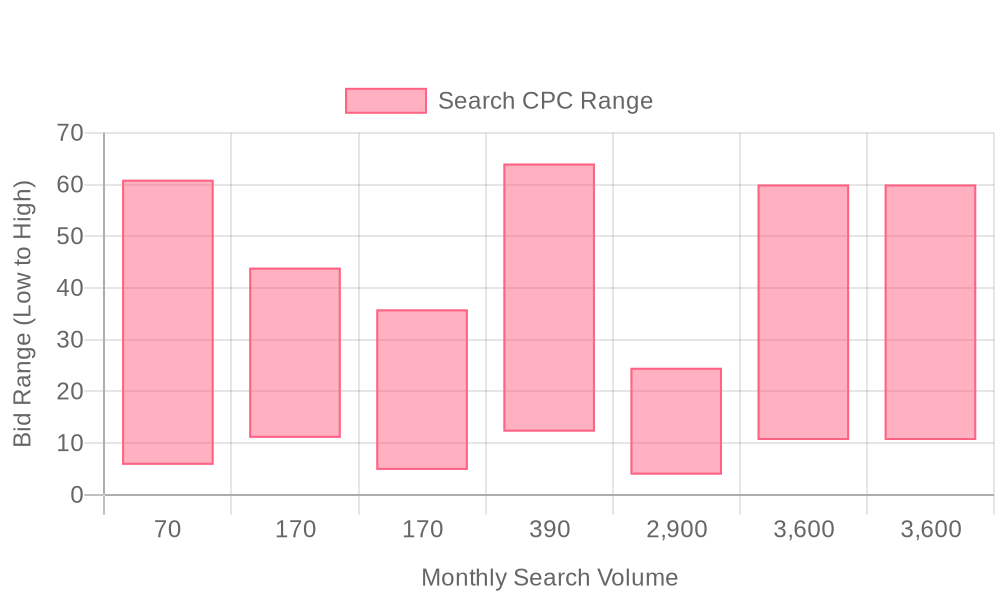
| Industry | Keyword | Monthly Search Volume | Competition Level | Low Bid | High Bid |
| Sewer Contractors | sewer lining companies near me | 70 | HIGH | 5.81 | 60.92 |
| Sewer Contractors | sewer contractors | 170 | MEDIUM | 11.04 | 43.93 |
| Sewer Contractors | sewer pipe lining companies near me | 170 | LOW | 4.83 | 35.86 |
| Sewer Contractors | sewer cleaning company near me | 390 | MEDIUM | 12.24 | 64.05 |
| Sewer Contractors | drainage companies near me | 2900 | MEDIUM | 3.92 | 24.57 |
| Sewer Contractors | sewer contractors near me | 3600 | MEDIUM | 10.61 | 60 |
| Sewer Contractors | sewer companies near me | 3600 | MEDIUM | 10.61 | 60 |
Sewer contractors operate in a demand-driven market where search intent directly correlates with buyer urgency and project value. Prioritizing high-volume, high-intent keywords like "sewer contractors near me" or "emergency sewer repair" ensures campaigns attract decision-makers seeking immediate assistance, resulting in more qualified inbound leads.
- High Volume, High Intent Keywords: Focusing on search terms such as "sewer contractors near me," "sewer line repair service," and "24/7 sewer emergency response" consistently positions your ads in front of prospects who are ready to engage. This approach filters out passive browsers and targets those with urgent needs, maximizing your Google Ads for Sewer Contractors budget efficiency and boosting conversion rates. Leveraging real-time audience insights allows teams to dynamically allocate spend toward the highest-converting keywords as demand shifts, ensuring every dollar works harder.
- Strategic Use of Local Modifiers: Incorporating geo-specific terms like city names, neighborhoods, or zip codes alongside core service keywords tightens your targeting and increases local relevance. Phrases such as "sewer repair Houston TX" or "Trenton NJ sewer contractors" enable precision in capturing local demand, improving both click-through and conversion rates. Connecting CRM and ad data ensures audience segments update in real time as leads move from inquiry to booking, giving sewer contractor marketing teams a granular view of campaign performance across regions. For seamless data sync between ad platforms and CRM, explore Sona Destinations.
- Negative Keywords: Filtering out terms associated with DIY solutions or general information seekers is essential to prevent wasted spend on unqualified traffic. Exclude phrases like "how to fix a sewer line yourself" or "sewer line troubleshooting guide" to focus ad delivery on users actively seeking professional service, not a weekend project. Integrating Sona's Identity Resolution with negative keyword lists further refines audience quality, helping B2B revenue teams maintain high lead quality while lowering cost per acquisition. For more advanced tactics, see retargeting strategies tailored for contractors.
Ready to maximize your Google Ads ROI? Get started for free with Sona.
Step-by-Step Campaign Execution Framework
Step 1: Build Targeted Keyword Lists
Successful Google Ads for sewer contractors starts with methodical keyword selection. Focusing on local, service-specific terms such as “emergency sewer repair,” “sewer line inspection,” and “trenchless sewer replacement” ensures your ads reach prospects searching for exactly what you offer. Geographic modifiers and long-tail queries further refine intent and minimize wasted spend; for actionable examples, see this community discussion on Google Ads for drain cleaning businesses.
Modern marketers can now identify not only keywords, but also the actual companies engaging with their ads. Sona's Identity Resolution delivers that insight, letting B2B revenue teams prioritize high-value accounts, a property management company running ten buildings looks different from a single homeowner, and tailor campaigns accordingly. Budgets then go to the audiences most likely to convert, instead of spreading thin across every click.
The upgrade most sewer contractors advertisers miss is going beyond raw keyword volume to layer in intent and identity signals. By connecting website-visitor data and CRM records with Sona Marketing Measurement, you can see which specific search terms bring in the accounts and customers that actually convert, and weight your keyword and bidding strategy toward those rather than the terms with the highest search volume alone.
Step 2: Develop Compelling Ad Copy
Every ad impression is an opportunity to communicate your value. Effective ad copy for sewer contractor marketing highlights urgent solutions, guarantees, and incentives, such as free consultations or rapid response times, that set your business apart. Incorporating clear calls to action like “Book a Free Estimate” or “24/7 Emergency Service” increases engagement and click-through rates; for inspiration, explore these ad copy strategies for plumbing and home services.
Leveraging real-time intent data empowers advertisers to dynamically adjust messaging based on audience behavior. When a lead demonstrates buying signals, campaigns can automatically surface relevant offers, ensuring that ad copy resonates at each stage of the customer journey. This approach transforms standard PPC for sewer contractors into a high-performance engine for capturing in-market demand.
Step 3: Design Effective Landing Pages
A seamless user experience from ad click to conversion is critical for sewer service advertising strategies. Landing pages must mirror ad promises, present trust signals (such as certifications and testimonials), and make it easy for visitors to take action. Optimized layouts use clear headlines, concise service descriptions, and visible contact forms or click-to-call buttons; review this Google Ads landing page guide for plumbing companies for additional insights.
Advanced platforms enable dynamic audience syncing, updating landing page content as leads progress through the funnel. Personalized experiences, tailored to the visitor’s company size, location, or service interest, drive higher conversion rates and reduce bounce. This unified approach supports both online advertising for plumbers and robust lead generation for sewer contractors.
Step 4: Implement Data-Driven Optimizations
Continuous optimization is the foundation of effective digital marketing for plumbing and sewer services. Real-time performance data guides bid adjustments, ad delivery schedules, and creative testing. Integrating offline conversion tracking (such as phone call outcomes or CRM updates) provides a complete view of campaign ROI, linking ad spend directly to revenue.
Marketers benefit from CRM and ad platform synchronization, automatically enriching Google Ads audiences with pipeline and sales data. This ensures that high-intent leads are prioritized, retargeting lists remain current, and every dollar of your Google Ads budget for contractors is invested with precision. By aligning online and offline signals, teams maximize the impact of Google Ads targeting for contractors and accelerate measurable growth. Get started for free with Sona.
Sona Marketing Measurement closes the gap between clicks and revenue. It captures every ad click with first-party measurement, ties that click through UTM capture and ad-platform APIs to the actual record in your CRM, and reports ROAS by keyword and campaign instead of by last-click form fill. Feeding that revenue signal back into Smart Bidding and Performance Max compounds over time: the algorithms optimize toward booked sewer contractors revenue, not cheap leads.
Tips on Expanding Your Sewer Service Presence

Establishing a dominant presence in the sewer services market requires more than running ads or relying solely on word-of-mouth. Revenue teams must strategically leverage digital channels, data-driven targeting, and proactive content distribution to win attention, authority, and high-value leads.
- Cross-Promote Educational Assets: Distributing educational resources through retargeting campaigns positions your brand as a trusted expert while maximizing the value of your existing content investment. By segmenting previous website visitors or engaged ad audiences, sewer contractors can resurface guides, maintenance checklists, or explainer videos to reinforce expertise and nurture trust. When unified with real-time visitor identification and intent signals, teams can prioritize retargeting spend on accounts and regions exhibiting surging interest, substantially improving conversion rates and lowering wasted budget. Seamless integration with your CRM allows dynamic updates to retargeting lists as leads progress or new contacts emerge, preserving message relevance and driving pipeline velocity.
- Partner with Associations: Collaborating with established industry associations unlocks referral traffic, amplifies reach, and provides valuable co-branded marketing opportunities. Joint webinars, association newsletters, and shared educational resources can introduce your sewer services to vetted, high-intent audiences. Tracking referral performance within your marketing platform enables precise attribution, helping revenue leaders quantify the value of each partnership and optimize future investment.
- Localize Campaigns: Hyper-localized ad targeting significantly boosts visibility in the neighborhoods and regions where your services deliver the highest ROI. Instead of broad targeting, focus Google Ads for Sewer Contractors on zip codes, cities, or metro areas with underserved demand or historic win rates. Using dynamic audience segments that update as leads move through your sales funnel ensures that your localized messaging always reaches the right prospects at the right stage.
To streamline your approach and maximize ROI, get started for free with Sona and unlock advanced targeting, attribution, and real-time insights tailored for sewer service marketers.
Beyond Google Ads: Winning the AI Answers Sewer Contractors Buyers Now Trust
Paid search captures demand at the moment someone types a query. But a fast-growing share of sewer contractors buyers no longer start at Google at all, they ask ChatGPT, Gemini, or Perplexity before they ever run a search, and Google's own AI Overviews increasingly summarize an answer above the traditional results. If your business isn't referenced in those AI answers, you're invisible at the exact moment buyers build their shortlist.
Sona AI Visibility shows where your business shows up across ChatGPT, Gemini, Perplexity, Google AI Overviews, and 10+ engines, and, much like a keyword report, which prompts actually send you buyers, so you can prioritize the ones that convert. Run the two together and you cover the entire buyer path: get cited where buyers research (AI Visibility), then prove which of that demand turns into booked revenue (Marketing Measurement).
Helpful resources
Conclusion
The sewer contractors who win the next few years of local search won't be the ones who simply run more ads, they'll be the ones who connect every click to the job it actually produced. That means treating keyword research, ad copy, and landing pages as one system, then feeding what happens after the click (the booked job, the closed estimate) back into how Google spends your budget.
Take the next step toward advertising that pays for itself. Start for free to see the platform in action.
FAQ
What are the best practices for Google Ads for sewer contractors?
Best practices for Google Ads for sewer contractors include targeting high-intent, location-specific keywords, crafting compelling ad copy with clear calls to action, designing optimized landing pages, using advanced visitor identification for precise targeting, and continuously optimizing campaigns based on data-driven insights.
How can sewer contractors effectively use Google Ads?
Sewer contractors can effectively use Google Ads by aligning campaigns with local market needs, targeting intent-driven keywords, personalizing ad creative based on real-time intent signals, and integrating CRM data to track and optimize performance.
What budget should sewer contractors allocate for Google Ads?
The budget sewer contractors should allocate for Google Ads depends on their local market competition and their specific advertising goals. A data-driven approach can help ensure efficient use of the budget by precisely targeting high-value prospects.
Are there specific keywords sewer contractors should target in Google Ads?
Yes, sewer contractors should target specific keywords such as 'sewer repair near me,' 'emergency sewer services,' and 'local plumber,' while also using local modifiers and excluding irrelevant search terms with negative keywords.
How do I measure the success of my Google Ads campaigns as a sewer contractor?
Success can be measured by tracking both online and offline conversions, using comprehensive analytics tools to close the loop on lead generation and service appointments, and optimizing based on performance data to measure true marketing ROI.







