


Industrial contractors lose winnable bids not because their crews or pricing fall short, but because the RFP or emergency call goes to whoever showed up first in the search results. A plant manager searching for "industrial pipe welding contractor" at 9 p.m. after a shutdown is ready to hire now, and most of that traffic never touches a CRM until someone fills out a form, if they fill one out at all. Identifying the companies behind that anonymous traffic, and prioritizing follow-up accordingly, is what separates contractors who convert high-intent searches from those who let them go cold. Google Ads is the tool built for that moment: it puts your business in front of buyers actively searching for contracting solutions, and when paired with CRM and offline data, it lets you trace a click all the way to a signed contract.
How to Generate Leads with Google Ads: A Step-by-Step Guide

Industrial contractors seeking to accelerate sales pipeline growth can leverage Google Ads to connect with high-intent decision-makers actively searching for specialized services. A data-driven, automated approach eliminates manual bottlenecks and ensures every qualified lead remains engaged, even during complex, multi-stakeholder buying cycles. Learn how to maximize your ad spend for construction-related PPC, and discover actionable tips in our marketing insights blog to support ongoing pipeline growth.
By combining granular keyword targeting, dynamic audience segmentation, and cross-channel data integration, B2B revenue teams can streamline lead generation and attribution. The following framework offers a practical roadmap for industrial contractors to maximize Google Ads performance and convert more buyers at every stage of the funnel.
- Implement a data-driven approach to Google Ads: Harnessing campaign analytics and intent signals is essential for industrial contractors facing long sales cycles and technical buyers. Automated visitor identification transforms anonymous site traffic into actionable account-level insights, allowing teams to recognize which companies are showing real-time purchase intent. Data enrichment and direct CRM syncing ensure that marketing and sales are aligned on the highest-value opportunities.
- Utilize specific keyword and audience targeting strategies: Focusing on high-intent keywords for contractors, such as “industrial piping installation near me” or “factory HVAC retrofit,” drives qualified traffic to your campaigns. Dynamic audience segmentation based on firmographic, technographic, and behavioral data ensures you reach procurement managers, project leads, and plant engineers as they move through the research and buying process. Dynamic audience updates, triggered by in-market actions, keep targeting relevant as accounts progress.
- Optimize landing pages and creatives for maximum conversion: Tailoring ad copy and landing pages to the technical pain points of industrial buyers increases engagement and form submissions. Highlight certifications, safety records, project case studies, and compliance, all core differentiators for industrial contractors. Real-time lead routing to sales or marketing automation ensures no high-value inquiry goes stale due to delayed follow-up.
- Continuously improve performance through data-driven tactics: Ongoing performance analysis enables rapid optimization of budget allocation, keyword bids, and creative variants. Advanced conversion tracking captures both online and offline actions, linking ad spend to true revenue outcomes and allowing for precise ROI measurement. Automated reporting dashboards unify Google Ads data with sales results, supporting agile campaign management.
Why Google Ads Matter for Industrial Contractors

Industrial contractors operate in a landscape defined by specialized expertise, complex procurement cycles, and high-value projects. Digital advertising must deliver precision and speed, reaching decision-makers such as plant managers and procurement leaders when infrastructure investments are under review or urgent needs arise. Google Ads provides the infrastructure to connect with these audiences at pivotal decision points, driving qualified inquiries and building a robust project pipeline. For more insights on the unique challenges and strategies in this sector, explore these Google Ads best practices for construction.
- Capturing specialized audiences: Google Ads allows targeting by job function, industry, and in-market behavior, enabling campaigns to reach procurement officers, plant operators, and engineering managers precisely when they are evaluating vendors. By leveraging advanced visitor identification and intent data, marketers can isolate high-potential accounts, focusing budget and creative on those most likely to convert.
- Winning high-margin projects: With high-intent keywords for contractors, advertising efforts can zero in on opportunities where contract values are significant. Dynamic audience segments ensure campaigns remain aligned with evolving buying committees, giving teams the ability to prioritize accounts showing real-time interest in specific industrial services or capabilities.
- Rapid response during peak demand: Industrial projects often require immediate mobilization, especially during outages, compliance changes, or emergencies. Google Ads enables instant campaign adjustments, allowing contractors to increase visibility and capture time-sensitive opportunities. Real-time analytics make it possible to shift spend toward high-converting regions or accounts, maximizing budget efficiency during critical periods. To see how top marketers approach analytics and rapid pivots, visit our marketing analytics blog.
- Expanding regional brand visibility: As industrial contractors move into new markets, Google Ads supports geo-targeted expansion with tailored messaging for each region. Marketers can identify previously anonymous visitors from target regions and sync enriched lead data into CRM, accelerating local reputation building and sales outreach.
- Tracking offline conversions: Industrial sales often close offline, requiring complete attribution to measure true campaign ROI. Advanced conversion tracking synchronizes online and offline data, ensuring every project inquiry, site visit, or contract signed is accurately attributed back to the marketing source. This unified measurement approach empowers revenue teams to optimize spend and prove the business impact of their digital advertising for contractors.
Common Types of Google Ads Campaigns for Industrial Contractor Services

- Search Campaigns: Industrial contractors benefit from search campaigns by capturing urgent, high-intent inquiries from decision-makers seeking immediate solutions. These campaigns excel at driving qualified traffic, especially when keyword targeting focuses on specific services, certifications, and project types. Integrating enriched lead and company data into these campaigns allows teams to go beyond anonymous clicks and directly prioritize accounts showing genuine purchasing intent, ensuring that urgent requests are never missed. Explore more actionable playbooks for improving marketing and sales processes.
- Performance Max: Performance Max campaigns pool inventory across Search, Display, YouTube, and Gmail to chase a single conversion goal, useful for industrial contractors who want Google's bidding models to find in-market plant managers and procurement leads across channels without building a separate campaign for each. Feeding it clean conversion data, including offline signals like signed contracts, keeps its automated bidding pointed at the accounts worth pursuing rather than just the cheapest clicks.
- Display Ads: Display campaigns keep industrial contractor brands visible on industry-relevant sites and publications where engineers, facilities managers, and procurement officers spend their time. Consistent display ad presence reinforces trust and nurtures brand recall throughout extended sales cycles. When audience segments are dynamically updated with real-time firmographic and behavioral data, display budgets stay focused on accounts that actively engage with similar services or have revisited your website, maximizing relevance. To see how display campaigns can maximize ad spend for construction, visit this guide to Google Ads PPC for construction.
- Video Ads: Short, targeted video campaigns provide a powerful channel to visually explain complex industrial services, safety processes, or equipment capabilities. Video formats allow contractors to showcase project expertise and unique value propositions, which builds credibility with technical buyers who need to see real-world applications. By identifying the most engaged viewers and syncing them into CRM and ad platforms, marketing teams can trigger timely follow-ups with buyers who demonstrate strong intent signals.
- Remarketing: Remarketing keeps your brand top-of-mind, re-engaging procurement teams and decision-makers who have previously shown interest but have not yet converted. Multi-touch remarketing campaigns offer tailored content, such as project case studies, compliance documentation, or testimonials, at each stage of the buyer journey. Dynamic audience updates ensure that only qualified, sales-ready accounts receive remarketing, while unifying online and offline engagement data provides clarity on which touchpoints drive conversions. For more on measuring marketing’s influence and optimizing attribution, see this guide to quantifying marketing’s contribution.
- Assets: Ad assets are critical for building trust in industrial contractor advertising campaigns. Location assets help buyers verify service-area relevance, while callout assets highlight key industry credentials and regulatory compliance. Using real-time data sync, these assets can be automatically updated to reflect new office openings, certifications, or recent project awards, ensuring prospects always see the most relevant and up-to-date information in every ad impression.
Where to Find Growth Opportunities

Growth-minded industrial contractors excel when they move beyond generic campaigns and embrace a data-driven approach to demand generation. By identifying the nuanced needs and behaviors of industrial buyers, contractors can unlock untapped client segments and outpace competitors with sharper digital advertising for contractors. Leveraging intent signals allows marketers to pinpoint high-value prospects and tailor their outreach for maximum impact.
- Vertical keyword targeting for niche services: Targeting high-intent keywords for contractors, such as “chemical plant piping retrofit” or “pharmaceutical facility HVAC upgrade”, ensures ad spend reaches decision-makers seeking specialized industrial solutions. Using refined keyword sets, contractors can attract qualified prospects who are actively searching for expertise, instead of wasting budget on broad, low-converting terms. Utilizing real-time audience segmentation further improves ad targeting precision.
- Conduct competitor analyses to identify service gaps: Systematic evaluation of PPC advertising for contractors in the industrial sector highlights under-served niches and overlooked service lines. By mapping competitor presence and messaging, marketers can realign their offers and Google Ads strategies for construction to win bids in areas where demand is high and competition is lower.
- Engage with industry-specific placements: Contextually relevant placements on trade publications, industrial forums, and engineering news sites amplify visibility among decision-makers. These placements, when orchestrated with company identification, allow marketers to identify companies visiting their landing pages and tailor follow-up outreach with precision.
- Utilize content retargeting to guide leads through the funnel: Pairing content assets, such as technical whitepapers or project case studies, with dynamic retargeting keeps your brand top-of-mind as buyers progress from research to RFQ. Real-time behavioral signals inform budget shifts, ensuring the highest-value accounts receive sustained, personalized engagement at each funnel stage. Unlock more strategies in our industrial marketing playbooks.
- Segment accounts based on firmographic data for tailored messaging: By leveraging firmographic segmentation, contractors can create account lists based on company size, industry, and location, then deliver personalized Google Ads messaging that directly addresses each segment’s operational challenges or compliance requirements. Dynamic audiences automatically update as new leads are identified or as accounts engage with specific service lines, streamlining contractor lead generation and increasing campaign efficiency.
Integrating all these tactics with unified data infrastructure enables revenue teams to continuously refine targeting, enrich audience lists, and sync high-value leads between Google Ads, sales platforms, and CRM systems. This approach ensures ad budget for contractors is allocated to the most promising opportunities, boosts ROI measurement accuracy, and empowers revenue teams to act on timely, actionable insights. To experience smarter segmentation and targeting firsthand, get started for free with Sona.
How to Apply Audience Segmentation for Industrial Contractors

Effective audience segmentation is fundamental for industrial contractors using Google Ads to maximize lead quality and ad spend efficiency. Segmenting your audience by industrial need, project type, or buying stage ensures every ad dollar targets accounts with the highest potential for engagement and conversion. This approach avoids the inefficiency of one-size-fits-all campaigns, which often result in wasted impressions and low-quality inquiries. For additional insight on optimizing Google Ads for construction, see this Google Ads PPC for construction overview.
- Define clear segments for different industrial needs: Start by mapping your audience into defined segments such as facility owners, plant managers, procurement teams, or engineering leads. Each segment reflects unique requirements, for example, energy plant upgrades versus pharmaceutical facility expansions, and often a different urgency profile: a compressor failure at a chemical plant needs a same-day response, while a planned turnaround gets bid months in advance. By structuring Google Ads ad groups around these verticals, contractors can tailor messaging and offers to address the specific pain points, regulatory concerns, and technical interests of each cohort. Sona's Identity Resolution enables marketers to move beyond anonymous website traffic, pinpointing not just visitor companies but also specific buying roles for more precise segmentation.
- Overlay intent signals to refine targeting: Industrial contracting projects are often triggered by clear signals, capital expenditure planning, compliance deadlines, or equipment lifecycle events. Integrating real-time intent data into your segmentation allows you to dynamically prioritize accounts displaying in-market behavior, such as recent visits to technical resource pages or RFP downloads. Sona surfaces these surges in buying activity so teams can automatically shift budget toward the segments most likely to convert, ensuring high-intent leads receive more personalized and timely ad engagement.
- Create tailored ad groups and creatives for each segment: Once clear segments are established and intent data is overlaid, build dedicated ad groups for each audience. Customize ad copy to highlight relevant certifications, past project experience in their sector, and solutions to industry-specific challenges. For example, ads speaking to food processing plant managers should stress hygiene compliance and rapid retrofit capabilities, while those for energy sector buyers can focus on outage minimization and safety records. Sona's audience tools keep audience lists dynamically updated as leads progress through the sales funnel, so creative stays aligned with their current needs and decision stage.
- Ensure conversion tracking is linked to your CRM for accurate follow-up prioritization: Accurate attribution is critical for industrial contractors, where deals can span months and involve multiple stakeholders. By connecting Google Ads conversion data with your CRM, every interaction, form fills, calls, or content downloads, can be traced back to the originating campaign and segment. Sona's destination integrations stream enriched leads and audience data directly into platforms like HubSpot and Salesforce, giving sales teams granular visibility into which ad segments generate the highest-value opportunities. This closed-loop tracking enables ongoing optimization, as budget can be reallocated to segments and creatives proven to drive qualified contractor lead generation.
If you want to see how segmentation and automation can drive better results for your industrial contracting ads, get started for free with Sona.
This is also where measurement changes the economics. With Sona Marketing Measurement you can identify the companies behind your ad clicks, not just anonymous sessions, and segment audiences by which accounts actually become customers. That lets you build bid adjustments and audience signals around the segments that convert and de-prioritize the ones that don't, so you feed Google's algorithms "this click became a paying industrial contractors customer" instead of just "someone filled out a form."
Keyword Strategy & Sample Target Terms
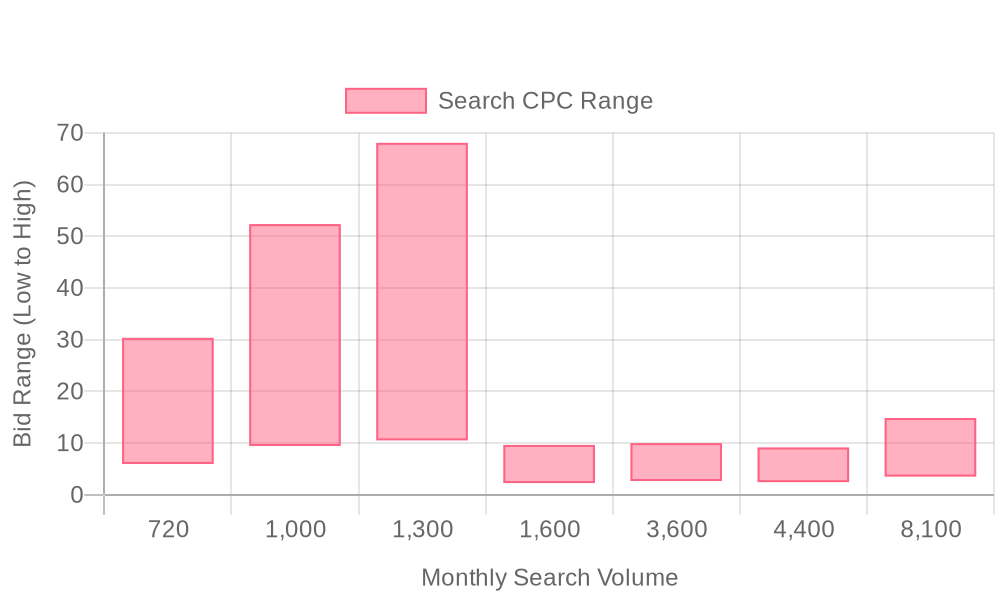
| Industry | Keyword | Monthly Search Volume | Competition Level | Low Bid | High Bid |
| Industrial Contractors | structural contractors near me | 720 | MEDIUM | 5.98 | 30.36 |
| Industrial Contractors | top hvac companies near me | 1000 | MEDIUM | 9.45 | 52.34 |
| Industrial Contractors | best hvac service near me | 1300 | MEDIUM | 10.55 | 68.05 |
| Industrial Contractors | industrial contractors | 1600 | LOW | 2.29 | 9.65 |
| Industrial Contractors | steel building contractors near me | 3600 | MEDIUM | 2.68 | 10 |
| Industrial Contractors | construction contract | 4400 | HIGH | 2.47 | 9.16 |
| Industrial Contractors | cement companies near me | 8100 | MEDIUM | 3.55 | 14.86 |
Precise keyword targeting is essential for industrial contractors aiming to reach procurement teams, facility managers, and decision-makers actively searching for specialized services. Prioritizing high-intent, industry-specific keywords allows campaigns to connect with prospects who are already evaluating vendors or preparing RFPs.
- Core service keywords: Terms such as "industrial contractors near me," "industrial construction companies," and "commercial HVAC companies near me" consistently capture bottom-funnel, purchase-ready traffic. These phrases reflect users with immediate needs, reducing wasted spend and accelerating lead qualification.
- Long-tail technical keywords: Including keywords like "ASME-certified pipe welding contractor" or "industrial plant shutdown services" targets clients seeking specialized expertise and ensures the ads appear for less competitive, high-converting searches.
- Negative keywords: Exclude irrelevant or low-quality traffic by filtering out terms like "DIY," "jobs," "tools," or any consumer-focused queries. This step preserves budget for enterprise buyers and prevents sales teams from sifting through unqualified leads.
- Geo-modified terms: Incorporate location-based keywords such as "industrial contractor Houston" or "mechanical contractor Chicago" to align with regional search intent and capture local project opportunities.
With unified data from website visits, CRM records, and ad engagement, marketers can identify which keywords drive the most valuable conversions, even beyond what is visible in Google Ads or standard CRM tracking. Real-time behavioral signals help prioritize spend on search terms linked to in-market accounts, allowing campaign managers to dynamically adjust bids and focus on the most promising opportunities. For additional insight on optimizing industrial campaign keywords and spend, explore this guide to PPC for industrial businesses. Enriched keyword data also supports dynamic audience creation, so as leads progress or new high-value prospects are identified, targeting adjusts instantly to match evolving intent across the buying journey. This approach ensures that every ad dollar is directed toward keywords proven to influence revenue outcomes for industrial contractors. Want to experience smarter keyword targeting? Get started for free with Sona.
Step-by-Step Campaign Execution Framework
Google Ads for industrial contractors requires a disciplined, data-driven approach that accounts for complex buying cycles and highly specific intent. Generic messaging and broad tactics produce subpar results in this sector where every click and conversion represents a significant business opportunity. The following framework ensures each campaign component is tailored to the unique demands of contractor marketing and industrial sales. For additional insights, explore our blog on B2B growth strategies.
Step 1: Build Targeted Keyword Lists
Precise keyword targeting is fundamental for PPC advertising for contractors. Start by grouping high-intent keywords according to core service types, such as “industrial electrical installation” or “plant maintenance contractors”, and layering in local modifiers to reach buyers in relevant geographies. This segmentation improves ad relevance and reduces wasted spend. Implementing a dynamic approach where keyword lists update based on real-time visitor behavior, powered by Sona's Identity Resolution, allows revenue teams to immediately capture emerging demand and outperform static lists. By leveraging enriched audience data, marketers can identify which companies are searching for specific industrial services and prioritize keywords that consistently attract decision-makers.
The upgrade most industrial contractors advertisers miss is going beyond raw keyword volume to layer in intent and identity signals. By connecting website-visitor data and CRM records with Sona Marketing Measurement, you can see which specific search terms bring in the accounts and customers that actually convert, and weight your keyword and bidding strategy toward those rather than the terms with the highest search volume alone.
Step 2: Develop Compelling Ad Copy
Ad copy must speak directly to the priorities of industrial buyers. Address pain points like missed project deadlines, difficulty finding qualified partners, or navigating complex compliance requirements. Integrate elements that build trust, such as industry certifications, safety records, and proof of past project success. With access to in-market behavioral signals, teams can rapidly A/B test copy variations and shift budget toward messages that resonate with active, high-value accounts. These insights enable ads to reflect the current needs and urgency of the audience, increasing both click-through and conversion rates. For practical playbooks on messaging, review our marketing playbooks.
Step 3: Design Effective Landing Pages
Landing pages for Google Ads campaigns targeting industrial contractors should align tightly with ad messaging and reinforce credibility. Incorporate detailed case studies, technical specifications, and testimonials from recognized industrial clients. Streamline the path to conversion with clear calls-to-action and minimal friction in form fill. By tracking both online and offline engagement, such as inbound calls and sales meetings, teams can attribute closed deals to specific campaigns, providing a full view of ROI. Real-time integration with CRM platforms ensures that leads generated from these pages are immediately routed to sales, accelerating the follow-up process and supporting sustained contractor lead generation.
Step 4: Implement Data-Driven Optimizations
Continuous optimization is critical for maximizing results in digital advertising for contractors. Smart bidding strategies adjust in real time based on conversion likelihood and account-level intent, ensuring budgets are concentrated on the prospects most likely to convert. Automated audience syncing across Google Ads and CRM platforms keeps targeting aligned with the latest funnel activity, so remarketing lists always reflect current pipeline opportunities. Advanced conversion tracking captures both online submissions and offline events, allowing revenue teams to measure the true impact of every dollar spent and refine their approach for higher efficiency. For tips on maximizing ROI, see this resource on Google Ads strategies for contractors.
Sona Marketing Measurement closes the gap between clicks and revenue. It captures every ad click with first-party measurement, then ties that click through UTM capture and ad-platform APIs to the actual record in your CRM, and reports ROAS by keyword and campaign instead of by last-click form fill. Feeding that revenue signal back into Smart Bidding and Performance Max compounds over time: the algorithms optimize toward booked industrial contractors revenue, not cheap leads.
Tips on Expanding Your Industrial Contractor Presence
Expanding your industrial contractor presence requires precision and a layered approach to digital advertising for contractors. Strategic execution ensures your brand not only reaches the right decision-makers but also achieves sustainable lead generation and measurable ROI. The most effective B2B revenue teams prioritize actionable targeting, segmented messaging, and continuous optimization to outperform industry benchmarks, see our latest B2B marketing insights for proven strategies.
- Promoting educational content through retargeting: Share technical guides, project case studies, or compliance updates with visitors who previously engaged but did not convert. With dynamic audience segmentation, you can identify high-value prospects and retarget them based on real-time behaviors, ensuring your content addresses specific stages in the decision-making cycle. This approach increases the likelihood of re-engagement and nurtures prospects toward qualified sales conversations.
- Upselling services using CRM-based audience segmentation: Sync enriched CRM data directly into your Google Ads environment to build custom segments of existing clients or past project contacts. By mapping high-margin services and cross-sell opportunities to these audiences, you create personalized ad experiences that reflect each account's current needs and lifecycle stage. For seamless data activation, sync audience data automatically into your CRM and ad platforms, ensuring your upsell campaigns evolve as client engagement changes.
- Partnering with industry associations to boost credibility: Align your campaigns with respected trade groups or certification bodies, ABC chapters, mechanical contractor associations, or welding and safety credentialing bodies, to enhance trust and authority. Featuring association memberships or event sponsorships in your ad creative can improve click-through rates, while co-branded content campaigns extend your reach among targeted industry verticals. Collaborations with associations also surface first-party intent data, helping you refine targeting for future initiatives.
- Localizing campaigns to improve presence in specific regions: Use granular geographic targeting to focus ad spend on high-potential industrial corridors, manufacturing hubs, or regions with strong procurement activity. Incorporate regional terminology and highlight local project experience in your messaging to boost relevance and credibility. By analyzing conversion trends at the local level, you can further optimize budgets and creative for each market.
Mastering Google Ads for industrial contractors starts with strategic keyword selection, sophisticated segmentation, and compelling creative tailored to technical buyers. Addressing sector-specific challenges such as lengthy sales cycles and complex stakeholder involvement is essential for contractor lead generation and conversion. With unified go-to-market data and advanced attribution, you gain a complete ROI picture, empowering your team to shift spend toward the audiences and messages driving the highest-value outcomes. To accelerate your results, get started for free with Sona and unlock precise targeting for your next campaign.
Beyond Google Ads: Winning the AI Answers Industrial Contractors Buyers Now Trust
Paid search captures demand the moment someone types a query. But a growing share of industrial contractors buyers no longer start at Google at all, they ask ChatGPT, Gemini, or Perplexity before running a search, and Google's own AI Overviews increasingly summarize an answer above the traditional results. If your business isn't referenced in those AI answers, you're invisible at the exact moment buyers build their shortlist.
Sona AI Visibility shows where your business shows up across ChatGPT, Gemini, Perplexity, Google AI Overviews, and 10+ engines, and, much like a keyword report, which prompts actually send you buyers, so you can prioritize the ones that convert. Run the two together and you cover the entire buyer path: get cited where buyers research (AI Visibility), then prove which of that demand turns into booked revenue (Marketing Measurement).
Helpful resources
Conclusion
The industrial contractors who win the most bids treat Google Ads as one input into a system, not a standalone channel: keyword targeting and segmentation identify the right buyers, and measurement tells you which of them actually signed. That feedback loop, clicks tied to closed contracts rather than form fills, is what separates campaigns that scale profitably from ones that just spend more each quarter.
As more of that research shifts into AI answers and away from ten blue links, the contractors who show up in both places, paid search and the AI engines buyers now consult first, will set the shortlist for everyone else. Start for free with Sona to unify that data and see the effect firsthand.
FAQ
How can I create an effective Google Ads campaign for my contracting business?
To create an effective Google Ads campaign, focus on precise keyword targeting, dynamic audience segmentation, and cross-channel data integration to streamline lead generation and attribution.
What budget should I allocate for Google Ads as a contractor?
Allocate your budget based on data-driven insights, ensuring it is concentrated on prospects most likely to convert by using smart bidding strategies and continuous performance analysis.
What are the best keywords to target in Google Ads for contractors?
Target high-intent, industry-specific keywords such as 'industrial contractors near me' and long-tail technical keywords like 'ASME-certified pipe welding contractor' to reach decision-makers actively searching for specialized services.
How do I measure the success of my Google Ads campaigns?
Measure success by linking advanced conversion tracking with CRM data to capture both online and offline actions, enabling precise ROI measurement from clicks to closed deals.
What common mistakes should contractors avoid when using Google Ads?
Avoid broad, one-size-fits-all campaigns and ensure your ad spend is not wasted on irrelevant or low-quality traffic by excluding terms like 'DIY' or 'jobs' through negative keywords.







