


A PSA 10 rookie card can sell for ten times its raw value, and the buyers chasing that grade are searching Google the moment a break airs or a Hall of Fame vote is announced. For sports card businesses, Google Ads is how you meet that urgency: collectors and investors typing highly specific, high-intent queries who need to find your inventory before a competitor's. The category rewards precision over volume, since a raw eBay browser and a buyer hunting a specific PSA 10 rookie are worlds apart in what they'll pay and how fast they'll act. Done well, Google Ads lets you sync campaigns to trending search terms, shifting card values, and the seasonal rhythms, from draft season to holiday gifting, that drive collector behavior in real time.
How to Generate Sports Cards Leads with Google Ads: A Step-by-Step Guide

High-performing sports card retailers differentiate themselves by leveraging a precision-focused Google Ads strategy that aligns with collector motivations and digital behavior. Addressing the unique needs of sports card buyers requires a blend of keyword intent, compelling ad creative, and seamless user journey optimization.
A tailored approach begins with understanding the collector’s journey, from initial product discovery to the final purchase. Each campaign component should be built on rich behavioral data, ensuring every touchpoint speaks directly to the interests and urgency of sports card enthusiasts.
- Keywords Strategy: Identify high-value search terms such as 'rare baseball cards for sale', 'graded rookie cards', and 'vintage sports card auctions'. Use intent signals to uncover niche long-tail keywords that signal stronger purchase readiness. By identifying the companies and accounts behind your website traffic, marketers can move beyond anonymous sessions and focus budget on buyers who consistently engage with these terms. Sona's Identity Resolution helps pinpoint actual buyer activity at the company level, allowing you to surface high-intent accounts for immediate follow-up.
- Ad Creative: Craft ads that showcase the excitement and exclusivity of your inventory. Use collector-centric language, highlighting authentication, limited editions, or upcoming live breaks, and include clear calls to action like “Bid Now” or “Shop Graded Releases.” Incentives such as free shipping on first orders or early access to auctions can further increase engagement. Collectibles Ad Strategies provides a deeper look at creative strategies tailored for collectibles advertising.
- Landing Page Optimization: Ensure that your landing pages mirror the keywords and promises in your ads. Pages should display relevant products up front, offer fast navigation by sport or card type, and provide trust signals like recent sales, grading certifications, and secure checkout options. By syncing enriched lead data with your CRM and Google Ads audiences, you can retarget recent visitors with personalized offers or trigger nurture campaigns for those who engaged but didn’t convert, increasing overall lead quality and conversion rates.
This data-driven approach enables sports card sellers to unify their advertising, retargeting, and sales processes. For more tactics on boosting ad performance, check out our guide on Google Ads ROAS. As a result, every ad dollar is optimized for measurable outcomes, driving more qualified leads and accelerating sales growth in the competitive sports card ecommerce landscape.
Why Does Google Ads Matter for Sports Cards?

Data-driven digital advertising is transforming the way sports card retailers and marketplaces capture collector demand. With heightened competition and shifting buying cycles, platforms like Google Ads enable precise outreach to those already primed to purchase, shortening the path from discovery to transaction. Giant Sports Cards provides a real-world example of how digital campaigns can accelerate e-commerce growth in this niche.
Advanced audience targeting allows marketers to identify buyers actively searching for vintage sets, newly released products, or rare graded cards. By analyzing user intent and leveraging granular keyword strategies, campaigns reach collectors who are more likely to convert, boosting both sales velocity and inventory turnover.
- Complex Audience Targeting: Google Ads can pinpoint segments with high transaction potential, such as investors seeking PSA-graded rookie cards or participants in live case breaks. When marketers move beyond anonymous website traffic and enrich visitor data, they unlock the ability to serve hyper-relevant ads to both known leads and net new prospects. For more insights on maximizing ad performance for sports collectibles, check out our guide on Google Ads ROI Tips.
- Service Premium Products: Timely promotion is essential in sports card ecommerce, especially for exclusive releases or limited-edition drops. Unlike traditional nurture sequences, paid campaigns surface high-value offers at the exact moment collectors are browsing, maximizing launch impact and minimizing missed opportunities.
- Immediate Demand Capture: The ability to dynamically adjust spend and creative messaging according to seasonality, such as Hall of Fame announcements or playoff spikes, ensures that advertising efforts stay aligned with real-time collector intent. With unified online and offline attribution, teams can measure the true ROI of every campaign and confidently allocate budget toward channels that drive profitable, rapid conversions.
Common Types of Google Ads Campaigns for Sports Cards

- Search Campaigns: Sports card retailers rely on search campaigns to intercept buyers at the moment of intent, capturing high-value queries such as "buy graded baseball cards" or "2024 NFL rookie cards for sale." This approach prioritizes precise keyword targeting, allowing advertisers to match inventory with nuanced collector interests and seasonality. By leveraging first-party audience data and real-time intent signals, marketers can shift budgets toward the specific cards and players trending with collectors, increasing campaign efficiency and ROI. Learn more about precision targeting.
- Display Ads: Display campaigns expand reach across forums, collector communities, and hobbyist news sites, ensuring your brand remains visible throughout the research and consideration phases. Sophisticated audience segmentation, powered by unified data from multiple touchpoints, enables dynamic creative updates as leads move through the funnel: for example, showing authenticated vintage card offers to high-value users who recently browsed similar products. This keeps your message relevant and top-of-mind, even when collectors are not actively searching. For more insights, check out our guide on audience segmentation.
- Video Ads: Video campaigns, including unboxing showcases and highlight reels of rare pulls, tap into the visual appeal central to sports card marketing. These ads drive engagement by capturing the excitement of live breaks and unique card features, resonating especially with younger collectors and social-first buyers. Advanced visitor identification tools help pinpoint which viewing audiences are most likely to convert, enabling rapid retargeting and audience expansion into platforms like YouTube and connected TV.
- Remarketing: Remarketing campaigns reconnect with users who viewed cards or added items to their cart but did not complete a purchase, presenting personalized offers or highlighting limited inventory. Integration between CRM platforms and Google Ads ensures that audience lists automatically update as buyer interest evolves, allowing for timely and relevant follow-up that increases the likelihood of conversion. Solutions such as ad attribution support closed-loop measurement by linking ad engagement directly to both online and offline sales, providing a complete picture of campaign performance and true return on ad spend.
Where to Find Growth Opportunities?

Maximizing online sports card sales begins with discovering where collector demand is rising and competition is under-leveraged. Revenue teams that approach growth systematically are more likely to unlock higher returns and build sustainable acquisition engines.
- Keyword Targeting: High-intent traffic comes from specialty search terms. Keywords such as "graded sports cards," "PSA 10 baseball cards," or "rare basketball rookie cards" reach buyers already deep in the purchase funnel. These granular phrases filter out browsers and window shoppers, directing spend toward collectors who search with a grading service and a condition in mind. Advanced Google Ads looks at how these strategies sharpen campaign effectiveness in this space.
- Competitive Gap Analysis: Growth often lives in the spaces competitors neglect. By tracking competitor ad placements, keyword gaps, and creative strategies, sports card ecommerce teams can spot where their offering can stand out, in both paid and organic channels. When these insights are paired with unified go-to-market data, marketers can pinpoint which collector cohorts are underserved and allocate budget accordingly. Sona's Identity Resolution connects anonymous web traffic to real buyer accounts, helping teams surface intent signals and prioritize the right prospects for outreach.
- Placement On Key Platforms: Collector communities thrive on platforms beyond the standard search and social channels. Industry hubs, specialty forums, and trading marketplaces frequently attract passionate buyers but may be overlooked in conventional media plans. By optimizing placements on these channels and syncing CRM-enriched audiences directly into campaign platforms, marketers ensure that ads reach verified high-value leads wherever they engage. Sports card marketing shares industry benchmarks for reaching buyers and creating buzz in these specialized verticals.
These strategies let sports card retailers and B2B teams identify actionable growth pockets, avoid wasted spend, and sustain engagement with collector audiences as the market evolves. For more insights on pinpointing underserved segments, check out our guide on stage segmentation.
How to Apply Audience Segmentation for Sports Cards
Maximizing the value of google ads for sports cards requires moving beyond generic messaging to create targeted, relevant experiences for each collector segment. Audience segmentation enables sports card marketers to engage in more precise PPC for sports cards, directly addressing the diverse motivations that drive online sports card sales and increase conversion rates.
- Define Segments: Start by identifying clear audience groups such as casual buyers seeking affordable entry-level cards, serious collectors focused on high-value or rare items, and enthusiasts of vintage versus modern releases. This distinction allows for tailored sports card marketing strategies that speak to the unique interests and purchasing behaviors within each group. Sona's Identity Resolution helps marketers recognize not just anonymous website traffic but the specific companies and visitors browsing inventory, uncovering high-value opportunities hiding in broad audiences.
- Overlay Intent Signals: Segmentation is significantly improved by isolating users based on real-time behaviors, such as search terms used, time spent on product pages, or engagement with card break content. In-market intent data helps shift Google Ads budget to high-converting segments, ensuring ads are delivered to those most likely to purchase. For strategies specific to collectibles and memorabilia brands, Google Ads strategies provides actionable tips. Dynamic audience lists update automatically as leads interact with new products or signals, allowing sports trading card ads to remain relevant as interests evolve throughout the buying journey.
- Ad Group Customization: Tailoring ad creative, messaging, and budget allocation to each defined segment greatly enhances campaign performance. For example, vintage collectors may respond to ad copy referencing Hall of Fame players and historical sets, while modern collectors engage more with recent releases or rookie cards. When CRM and ad platforms are synced, enriched lead data enables seamless retargeting and lookalike audience creation, allowing campaigns to adjust as contacts progress through the funnel. Advanced conversion tracking links online and offline activity, providing a complete view of ROI and enabling teams to optimize both their sports card ecommerce and advertising sports cards efforts.
Refined segmentation not only makes Google Ads tips for sports cards more actionable but also ensures every dollar spent is directed toward audiences with the highest potential return, transforming generic campaigns into highly personalized, results-driven initiatives. For more on segmenting by buyer journey stage, check out our guide on stage segmentation.
This is also where measurement changes the economics. With Sona Marketing Measurement you can identify the companies and buyers behind your ad clicks, not just anonymous sessions, and segment audiences by who actually becomes a customer. That lets you build bid adjustments and audience signals around the segments that convert and de-prioritize the ones that don't, so you feed Google's algorithms "this click became a paying sports cards customer" instead of just "someone filled out a form."
Keyword Strategy & Sample Target Terms
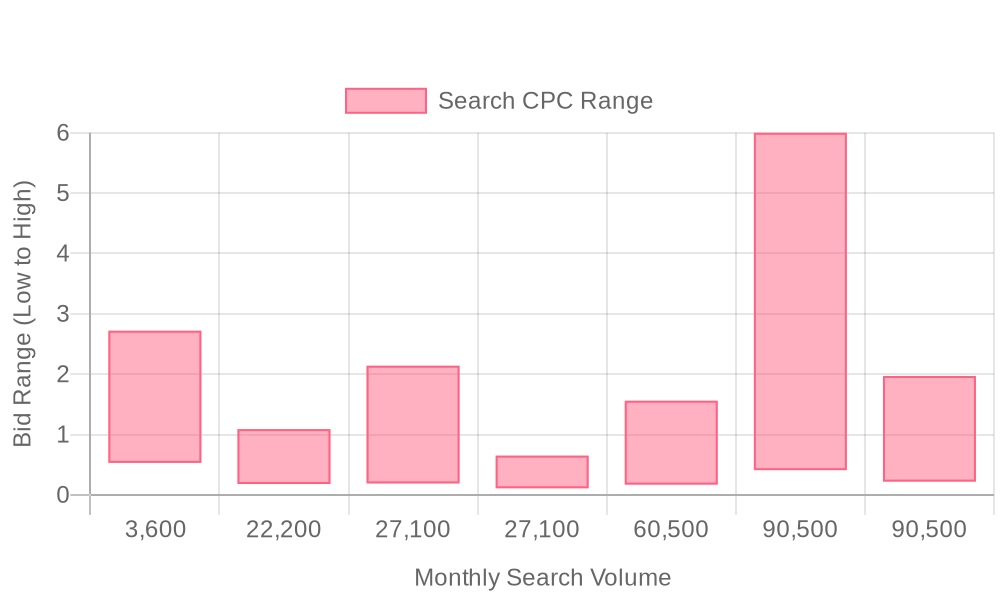
| Industry | Keyword | Monthly Search Volume | Competition Level | Low Bid | High Bid |
| Sports Cards | custom trading cards | 3600 | HIGH | 0.53 | 2.72 |
| Sports Cards | soccer cards | 22200 | HIGH | 0.18 | 1.09 |
| Sports Cards | basketball cards | 27100 | HIGH | 0.19 | 2.14 |
| Sports Cards | topps baseball cards | 27100 | HIGH | 0.11 | 0.65 |
| Sports Cards | football cards | 60500 | HIGH | 0.17 | 1.56 |
| Sports Cards | sports cards | 90500 | HIGH | 0.41 | 6 |
| Sports Cards | baseball cards | 90500 | HIGH | 0.22 | 1.97 |
Precision in keyword strategy is critical for sports card retailers aiming to maximize paid search ROI and connect with motivated collectors. Effective keyword mapping differentiates between broad intent and transactional readiness, allowing campaigns to capture both high-volume interest and niche purchase signals without overspending on irrelevant clicks.
High-volume searches such as "sports cards online," "buy baseball cards," and "sports trading card shop" consistently yield strong conversion potential. These terms are essential to anchor campaigns, as they target users actively searching for online sports card sales and related ecommerce platforms. Insights from Giant Sports Cards demonstrate how targeting these queries can drive notable results in the collectibles market.
Pursuing lower competition opportunities elevates efficiency by uncovering untapped demand among serious collectors. Long-tail keywords like "PSA graded Michael Jordan rookie for sale," "2023 Topps Chrome hobby box break," or "vintage basketball card marketplace" frequently reveal higher purchase intent and lower cost-per-click. We’ve covered optimization strategies for niche audiences in detail in our guide on intent retargeting.
Negative keyword applications are essential to filter out irrelevant or low-value traffic. By actively excluding phrases such as "homemade sports cards," "free card templates," or "sports card art project," marketers can prevent budget waste and ensure their ads only appear in front of genuine buyers. The result is a leaner, more profitable Google Ads budget and a sharper focus on advertising sports cards to the right audience.
Layering real-time visitor identification and intent signals into keyword selection further refines targeting. Sona surfaces intent signals that help marketers dynamically update their keyword lists as collector demand shifts, from a sudden run on a rookie's cards after a big game to renewed interest in a retiring player's vintage sets, supporting agile, data-driven campaign adjustments.
Step-by-Step Campaign Execution Framework
Launching high-impact google ads for sports cards requires a structured approach that eliminates guesswork and maximizes every marketing dollar. Consistency in execution and a focus on actionable data are the defining characteristics of campaigns that outperform industry averages for PPC for sports cards. Precision targeting provides a deeper look at this trend.
Step 1: Build Targeted Keyword Lists
Start with keyword clusters tailored to core collector personas and card categories. Segment lists by player names, card brands, grading services, and collector intent phrases such as "buy PSA 10 rookie card" or "vintage Topps baseball cards for sale." This granularity ensures ads are surfaced to buyers with the highest transaction intent, reducing wasted spend and improving ad rank. Modern marketers benefit by identifying not only high-performing keywords but also the companies and individuals engaging with those terms, elevating targeting precision and enabling more relevant follow-up. For more on segmenting and targeting, check out our guide on retargeting strategies.
The upgrade most sports cards advertisers miss is going beyond raw keyword volume to layer in intent and bid strategy signals. By connecting website-visitor data and CRM records with Sona Marketing Measurement, you can see which specific search terms bring in the accounts and customers that actually convert, and weight your keyword and bidding strategy toward those rather than the terms with the highest search volume alone.
Step 2: Write Compelling Ad Copy
Effective ad copy for sports trading card ads is direct, urgent, and aligned to collector motivations. Use action-driven language such as "Secure Your Limited Edition Now" or "Shop Graded Star Rookies Today" to prompt immediate engagement. Highlight unique selling points, like exclusive inventory or fast authentication, so ads resonate with both new and seasoned collectors. Teams can leverage real-time intent signals to dynamically adjust messaging, ensuring that only the most relevant ads reach users as their interests and behaviors shift.
Step 4: Apply Data-Driven Optimizations
Continuous improvement is non-negotiable in advertising sports cards online. Regularly analyze performance metrics such as CTR, conversion rate, and average order value to spot opportunities for refinement. Advanced conversion tracking, including attribution of both online and offline sales, delivers a holistic view of true ROI and informs smarter budget allocation. Dynamic audience management ensures retargeting lists and lookalike segments automatically update as leads progress through the funnel, keeping campaigns relevant and cost-effective. For tactical guidance on maximizing ad performance, see our guide on improving Google Ads ROI. Syncing CRM data with ad platforms further empowers teams to create hyper-targeted segments, nurture high-value prospects, and accelerate deal velocity across all touchpoints.
Sona Marketing Measurement closes the gap between clicks and revenue. It captures every ad click with first-party measurement, then ties that click through UTM capture and ad-platform APIs to the actual record in your CRM, and reports ROAS by keyword and campaign instead of by last-click form fill. Feeding that revenue signal back into Smart Bidding and Performance Max compounds over time: the algorithms optimize toward booked sports cards revenue, not cheap leads.
Tips on Expanding Your Sports Cards Presence

Sports card businesses operate in a rapidly evolving market with shifting buyer behaviors and intense competition. Sustained growth relies on strategic expansion that leverages both digital and partnership-driven channels to keep pace with audience demand and avoid stagnation.
- Cross-promote Assets: Creating and distributing educational content, such as guides on card grading, market trends, or collecting strategies, draws in new audiences searching for expertise. Well-optimized blog posts, video tutorials, and downloadable resources capture organic search intent and redirect visitors into retargeting flows for future ad campaigns. Identifying the companies and visitors behind that traffic in real time lets marketers see which content assets drive the most engagement and quickly adapt Google Ads strategies to promote top-performing resources to in-market collectors. Sona's Identity Resolution identifies anonymous website visitors and connects content performance with actual buyer intent.
- Upsell Additional Services: Using purchase data and behavioral insights, businesses can identify high-value customers interested in adjacent services like card grading, authentication, or secure shipping. Audience segmentation in Google Ads, enhanced with dynamic CRM and first-party data sync, allows for precise upsell targeting based on lifecycle stage or past purchase history. This approach increases the average value per customer while ensuring that promotional messages align with each collector’s interests, fueling both short-term conversions and long-term loyalty. Varos Benchmarks shares industry benchmarks for this approach.
- Leverage Partnerships: Collaborating with industry influencers, card show organizers, or collector associations amplifies brand reach and authority. Co-branded campaigns and joint content initiatives tap into established trust networks and introduce your brand to new segments without duplicating audience lists. For more insights on maximizing value from partner-driven marketing, check out our guide on Affiliate Revenue Attribution. By integrating partner-sourced leads into your dynamic audience pools, you can instantly update retargeting segments and shift ad budget toward newly identified high-intent accounts, further strengthening your sports card marketing presence across all digital touchpoints.
Beyond Google Ads: Winning the AI Answers Sports Cards Buyers Now Trust
Paid search captures demand at the moment someone types a query. But a fast-growing share of sports cards buyers no longer start at Google at all, they ask ChatGPT, Gemini, or Perplexity before they ever run a search, and Google's own AI Overviews increasingly summarize an answer above the traditional results. If your business isn't referenced in those AI answers, you're invisible at the exact moment buyers build their shortlist.
Sona AI Visibility shows where your business shows up across ChatGPT, Gemini, Perplexity, Google AI Overviews, and 10+ engines, and, much like a keyword report, which prompts actually send you buyers, so you can prioritize the ones that convert. Run the two together and you cover the entire buyer path: get cited where buyers research (AI Visibility), then prove which of that demand turns into booked revenue (Marketing Measurement).
Helpful resources
Conclusion
The sports card market moves on cycles no calendar can fully predict, a rookie's breakout season, a Hall of Fame vote, a player's retirement announcement, and Google Ads works because it meets collectors at the exact moment those cycles create urgency. The retailers who win aren't the ones spending the most, they're the ones whose keyword lists, ad copy, and landing pages already reflect this week's trending player before the demand spikes.
The next edge isn't just better targeting, it's proving which clicks became paying customers and feeding that signal back into your bidding, and making sure your business shows up when collectors ask an AI assistant before they ever type a search query.
FAQ
What are the best practices for using Google Ads for sports cards?
The best practices include leveraging precision-focused strategies that align with collector motivations, using high-value keywords, crafting compelling ad creatives, and optimizing landing pages to mirror keywords and promises in your ads.
How can I effectively target sports card collectors with Google Ads?
Effectively target collectors by using audience segmentation to define clear groups, overlay intent signals for precise targeting, and tailor ad creatives to each segment's interests and behaviors.
What budget should I allocate for Google Ads in the sports card niche?
Budget allocation should focus on high-intent keywords and precise targeting to ensure ads appear in front of genuine buyers, optimizing spend for high transaction potential.
Are there specific keywords to use for sports card advertising?
Yes, specific keywords include high-value search terms like 'graded rookie cards,' 'vintage sports card auctions,' and niche long-tail keywords indicating purchase readiness.
What are the common mistakes to avoid when using Google Ads for sports cards?
Common mistakes include missing high-value prospects, failing to optimize keywords and ad creatives, and not aligning landing pages with ad promises, which can lead to wasted budget and missed sales opportunities.







