


Sewing contractors win business the moment a procurement manager or facilities director types a search, not weeks later when a trade show follow-up finally lands. Google Ads matters here because it catches that buyer at peak intent, whether they're comparing quotes after a direct mail piece or researching a vendor right after meeting your team at a show. This guide covers how sewing contractors can use Google Ads to capture, convert, and measure that engagement, improving both lead quality and ROI. The common failure mode in this trade is losing high-value prospects to outdated account data or web visits that never get tracked back to a company; tightening the integration between Google Ads and your CRM closes that gap.
How to Generate Sewing Contractor Leads with Google Ads: A Step-by-Step Guide

Sewing contractors and the B2B marketers who support them are under pressure to deliver qualified leads fast, often against tight production schedules and seasonal order spikes. Precision matters because the buyers behind these searches, procurement leads, apparel brand sourcing managers, industrial clients, move quickly and will engage a competitor if your funnel is slow. A unified, data-driven approach keeps qualified prospects from slipping through account-data gaps. For ongoing marketing insights, visit the Sona blog.
This playbook presents a clear, actionable framework for integrating Google Ads for Sewing Contractors into your broader marketing mix. By addressing tracking gaps, optimizing for real-time buyer intent, and aligning campaign assets, you can drive measurable business outcomes and enhance visibility into both known and anonymous web traffic. For step-by-step inspiration, review this video tutorial for sewing businesses.
- A Data-Driven Paid Search Approach: Integrating Google Ads into sewing contractor marketing ensures a steady stream of qualified leads. By centralizing campaign data and activity, revenue teams can identify which ads and keywords drive the most valuable engagements. Advanced visitor identification uncovers previously anonymous web traffic, providing a fuller picture of opportunity and minimizing missed connections from high-intent buyers.
- Keyword and Audience Targeting for Sewing Contractors: Effective targeting begins with a deep understanding of the sewing contractor buyer's journey. Employ granular keyword segmentation tailored to search terms such as "industrial sewing services," "contract sewing manufacturers," and "custom textile production." Leveraging dynamic audiences that auto-sync with ad platforms, marketers can update audience segments as prospects shift from research to purchase intent, ensuring ad spend always reaches the most relevant accounts. For additional keyword strategies, check out this guide to calculating TAM, SAM, and SOM.
- Landing Page and Ad Creative Alignment: High-converting campaigns depend on seamless alignment between the ad message and landing page experience. Ensure that landing pages are customized for each ad group, highlighting specific service capabilities or unique selling points. Rapid lead capture minimizes drop-off, while real-time intent data allows marketers to surface the right content to prospects based on their browsing history and position in the funnel.
- Continuous Performance Optimization: Maintaining a competitive edge requires ongoing optimization of campaigns and audience segments. Utilize advanced conversion tracking to attribute both online and offline revenue back to specific ads and keywords, allowing for precise budget allocation. By syncing enriched lead and account data into platforms like Google Ads and CRM systems, marketers can automate updates and retargeting triggers, improving both efficiency and ROI. Explore actionable steps in the lead generation playbooks.
- Cross-Channel Integration for Maximum Impact: A cohesive marketing ecosystem integrates Google Ads with email, social, and direct outreach strategies. Unifying audience data across platforms enhances segmentation, enabling more personalized follow-up and reducing the risk of losing upsell or cross-sell opportunities. Real-time audience sync ensures that as leads progress through the funnel, tailored messaging is deployed automatically across all digital touchpoints.
This guide delivers the best practices and modern tactics that sewing contractors need to outperform the competition and drive sustainable growth using Google Ads. Visibility into every stage of the buyer journey, from anonymous visitor to closed deal, powers smarter decisions and maximizes the return on every marketing investment. If you're ready to put these strategies into action, get started for free with Sona.
Why Google Ads Matter for Sewing Contractors Businesses

Sewing contractors operate in a highly specialized B2B environment where pinpointing decision-makers is essential for capturing high-value projects. Google Ads unlocks direct access to facilities managers and procurement teams searching for niche sewing solutions, bypassing the broad, slow-burn awareness typical of social media.
- Complex, Specialized Audience: While general digital channels build brand presence, Google Ads targets professionals actively researching sewing contractor services, ensuring your message appears at the exact moment of need. This targeted approach bridges gaps left by passive channels, preventing missed opportunities among prospects who rarely engage on social platforms. Explore more strategies in our account-based marketing guide.
- Higher Margin Services: Email marketing retains existing clients, but Google Ads directly captures new, lucrative projects by intercepting high-intent searches. This immediacy reduces lag time, letting you reach prospects before competitors and accelerating the path to contract signings. Leverage intent signals to identify and prioritize your most engaged prospects.
- Immediate Demand Response: Fast turnaround matters when urgent repairs or seasonal surges strike. Google Ads delivers responsive visibility, connecting your team with businesses facing immediate challenges. This enables you to address critical needs in real time, a capability that long-term branding campaigns cannot replicate. Learn how to drive high-impact campaigns with first-party intent signals.
- Visibility in Emerging Regions: Expanding into growth markets is difficult with traditional outreach alone. Google Ads enables precise geographic targeting, allowing sewing contractors to break into underserved regions and engage potential clients where brand awareness may still be developing. For regional prospecting, consult this directory of sewing companies in Dallas.
- Integrated Data Analysis: Google Ads campaigns produce actionable measurement by linking digital activity to offline sales cycles. When paired with Sona, marketers can track the entire journey from initial click to closed contract, improving account data accuracy and eliminating fragmentation across touchpoints. This integrated view empowers sewing contractors to refine targeting, optimize spend, and maximize ROI on every campaign.
Common Types of Google Ads Campaigns for Sewing Contractors

Sewing contractors operate in a highly specialized market where digital visibility is essential for sustained growth. Strategically selected Google Ads campaign types allow these businesses to reach high-intent buyers, reinforce brand presence, and maximize marketing investments across the funnel. Each format plays a unique role in capturing demand, nurturing prospects, and converting leads with measurable precision. For ongoing tips on optimizing campaign performance, visit our blog for marketing insights.
- Search Campaigns: Search campaigns are foundational for sewing contractor lead generation. They capture urgent, bottom-of-funnel queries from prospects actively seeking services such as industrial sewing, contract manufacturing, or repair. By mapping high-intent keywords to specific service offerings, marketers ensure they intercept buyers at the moment of need. Integrating real-time visitor identification and enriched CRM data allows sewing contractors to reduce wasted spend and shift budget to accounts most likely to convert, giving clarity on which search terms drive genuine revenue.
- Display Ads: Display campaigns maintain awareness throughout the broader research journey. Prospects browsing industry blogs, forums, or supplier networks are reminded of your brand and unique capabilities, even when not actively searching. This channel reinforces other touchpoints, such as email or direct outreach, and helps prevent churn by keeping existing customers engaged with new offers or upsell opportunities. Dynamic audience syncing ensures display ads reach the right contacts as their buying signals evolve, making every impression more relevant.
- Video Ads: Video campaigns bring visual storytelling to complex sewing services, such as demonstrating custom stitching techniques or showcasing project outcomes. This format extends the impact of content marketing, capturing interest from prospects who prefer to see tangible proof of expertise. For inspiration on crafting compelling video ads in the sewing industry, explore these real-life Google Ads examples. Advanced engagement tracking surfaces signals often missed in static channels, allowing marketers to identify which viewers are ready for follow-up and which require further nurturing, ensuring no opportunity goes unnoticed.
- Remarketing: Remarketing campaigns re-engage site visitors who request quotes, download spec sheets, or abandon inquiry forms before completion. Multi-channel touchpoints, search, display, or YouTube, ensure every interaction is capitalized upon, moving leads closer to decision. By syncing remarketing lists with enriched CRM data, sewing contractors can deliver hyper-personalized ads based on visitor behavior, intent stage, or prior engagement, accelerating conversion velocity.
- Assets: Ad assets (formerly called extensions) add layers of trust and relevance to every ad impression. Including certifications, local service areas, or fast response times not only boosts click-through rates but also aids in segmentation for follow-up campaigns. When assets are dynamically updated based on real-time performance insights, marketers can ensure every ad surfaces the most relevant proof points to the right audience segment, supporting both acquisition and retention initiatives.
Where to Find Growth Opportunities?

Sewing contractor revenue teams can maximize growth by systematically expanding beyond traditional marketing channels and uncovering overlooked audience segments. Modern digital strategies empower teams to capture demand at every stage of the buying journey, increasing both lead quality and conversion rates. Get started for free with Sona.
- Vertical keyword targeting for specialty services: Targeting niche, service-specific keywords enables sewing contractors to capture demand for specialty offerings that generic campaigns often miss. By refining your keyword lists and ensuring comprehensive coverage, you prevent valuable queries from slipping through data gaps, directly supporting both your PPC and organic content strategy.
- Competitor gap analysis for missed segments: Using auction insights or advanced tools, teams can benchmark their performance against competitors to reveal audience segments or keywords that are currently underutilized. Identifying these gaps not only prevents loss of high-value prospects but also informs where to shift budget for the highest impact. Platforms that unify go-to-market data help quickly identify which prospects are engaging with competitors and prioritize outreach accordingly.
- Industry placements for untapped leads: Placing ads or sponsored content on sewing trade forums, directories, or industry-specific sites fills in the blind spots where organic reach may not extend. Untracked or anonymous traffic from these placements often signals a pool of potential leads that would otherwise remain hidden. Advanced visitor identification capabilities make it possible to pinpoint companies and decision-makers coming from these sources, supporting more targeted follow-up. Explore a directory of sewing companies in Dallas to identify B2B opportunities for industry placements.
- Content retargeting based on engagement signals: Integrating downloadable assets like whitepapers, checklists, or instructional videos into your content calendar enables nuanced retargeting that aligns with where prospects are in the buying process. Timely outreach triggered by content engagement ensures high-intent leads are nurtured with relevant messaging, while dynamic audience updates reflect real-time interest and progression through the funnel. This approach supports both sewing contractor lead generation and maximizes ROI from digital marketing investments.
How to Apply Audience Segmentation for Sewing Contractors

Precise audience segmentation transforms how sewing contractors connect with new business, repair clients, and recurring service opportunities. A segmented approach ensures every ad dollar targets the right company or consumer, increasing engagement and conversion rates. For additional inspiration when crafting campaigns, review these Google Ads examples for sewing shops.
- Define Segments: Identify clear audience groups based on business scale, specialty, and service focus. For example, differentiate between small contract shops seeking recurring repair versus large manufacturers commissioning custom projects. Unifying CRM and web analytics resolves outdated or incomplete records across segments. Sona's Identity Resolution supports this by revealing key companies and visitors even when they remain anonymous.
- Overlay Intent Signals: Use behavioral and contextual signals to distinguish between prospects searching for routine maintenance, urgent repairs, or specialty sewing projects, a distinction that matters since urgent repair queries convert faster and tolerate less competitor comparison. Recognizing these intent cues helps prioritize bidding and creative, while mapping anonymous visits to company profiles lets marketers engage high-value accounts before a form is ever submitted. Sona surfaces intent signals that identify and prioritize your most engaged prospects in real time.
- Create Ad Groups by Segment: Design unique ad groups for each segment, customizing budgets, creative, and ad scheduling to maximize relevance and response. Update messaging to match the prospect's stage in the buying cycle and product needs. As audience data refreshes automatically, marketers maintain consistent reach with evolving targets, ensuring campaigns do not stagnate or miss out on late-funnel buyers. Build real-time audience segments that sync with ad platforms and power hyper-personalized outreach.
- Validate Conversion Paths: Confirm that every contact, call, form, chat, or offline inquiry, is tracked and attributed correctly. Syncing conversion data between advertising platforms and CRMs means no lead slips through the cracks, and revenue teams can react in real time to inbound interest. Cross-channel reporting, including online and offline touchpoints, gives sewing contractors a transparent view of their true ROI, supporting smarter future investment.
Incorporating these segmentation practices elevates every aspect of digital marketing for sewing contractors, from PPC advertising to retargeting and local SEO. This unified approach empowers teams to generate more qualified leads, personalize outreach, and maximize the impact of every marketing dollar. For advanced strategies, explore retargeting strategies that further boost campaign efficiency. To put segmentation into practice, get started for free with Sona.
This is also where measurement changes the economics. With Sona Marketing Measurement you can identify the companies and buyers behind your ad clicks, not just anonymous sessions, and segment audiences by who actually becomes a customer. That lets you build bid adjustments and audience signals around the segments that convert and de-prioritize the ones that don't, so you feed Google's algorithms "this click became a paying sewing contractors customer" instead of just "someone filled out a form."
Keyword Strategy & Sample Target Terms
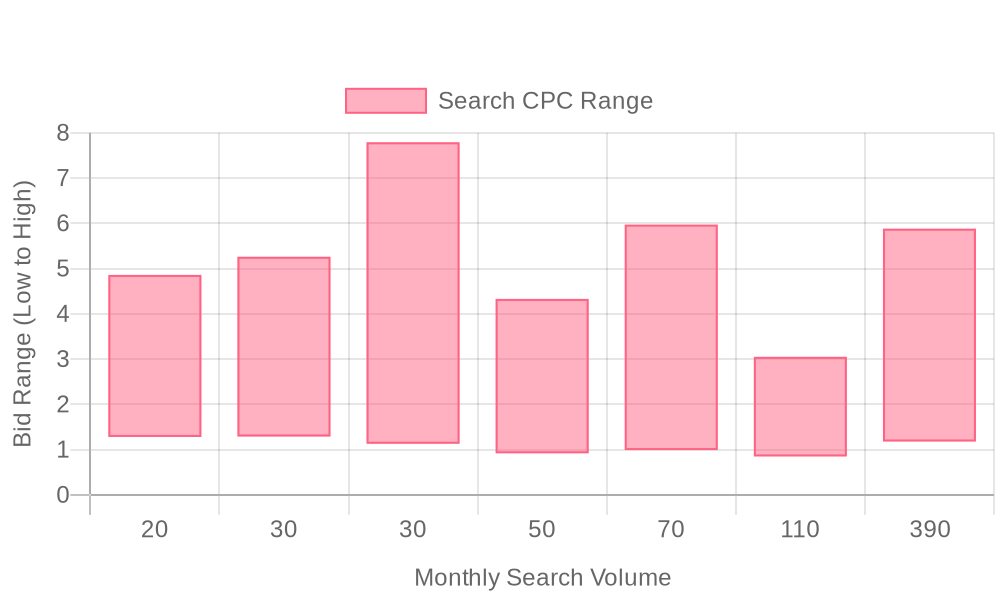
| Industry | Keyword | Monthly Search Volume | Competition Level | Low Bid | High Bid |
| Venetian Blind Cleaning Services | venetian blind cleaning service near me | 10 | MEDIUM | 0.59 | 4 |
| Venetian Blind Cleaning Services | venetian blind cleaning services | 40 | MEDIUM | 1.13 | 6.08 |
| Venetian Blind Cleaning Services | venetian blinds cleaning service | 40 | MEDIUM | 1.13 | 6.08 |
| Venetian Blind Cleaning Services | venetian blind cleaning near me | 50 | LOW | 1.1 | 5.32 |
| Venetian Blind Cleaning Services | venetian blinds cleaning near me | 50 | LOW | 1.1 | 5.32 |
| Venetian Blind Cleaning Services | venetian blind cleaning | 90 | HIGH | 0.37 | 3.79 |
| Venetian Blind Cleaning Services | cleaning venetian blinds | 390 | HIGH | 0.06 | 1.67 |
Google Ads for Sewing Contractors delivers a strategic bridge between awareness and conversion by capturing buyers at the precise moment they demonstrate intent. Instead of casting a wide net, this approach zeroes in on prospects actively seeking sewing services, maximizing the value of every marketing dollar. For inspiration on effective ad copy and strategy, review this collection of Google Ads examples for sewing shops.
- Precision Targeting: Identify decision-makers by targeting exact moments of need, solving the problem of unpursued leads. With real-time website visitor identification, marketers can move beyond anonymous traffic to pinpoint which organizations and contacts are engaging, allowing for refined audience segmentation and custom messaging aligned to high-value accounts.
- Measurable ROI: Track the entire user journey from initial click to final conversion, ensuring robust attribution and addressing issues with outdated or siloed account data. Advanced conversion tracking capabilities make it possible to attribute both online and offline actions, such as calls, form fills, and even offline sales, back to the original ad engagement, revealing true Google Ads ROI for contractors.
- Channel Synergy: Retarget website visitors across multiple online platforms, ensuring no engagement signals are lost. Dynamic audience management enables audiences to update automatically as leads move through the funnel; this means your retargeting and lookalike campaigns always reflect the latest intent data, helping to synchronize paid, owned, and earned channels for seamless sewing contractor lead generation.
Sample target terms should focus on high-intent, industry-specific queries to attract the right audience. Prioritize keywords such as "sewing contractor near me," "custom sewing services," "industrial sewing contractor quotes," "PPC advertising for sewing services," "sewing machine repair online marketing," "digital marketing for sewing contractors," "local SEO for sewing contractors," and "Google Ads strategies for sewing businesses." By continuously analyzing keyword performance, marketers can dynamically adjust bids, ad copy, and landing page content to optimize for both cost-efficiency and conversion rates. This data-driven approach ensures that every campaign is tuned to generate qualified leads and maximize revenue potential for B2B sewing businesses. To experience these strategies firsthand, get started for free with Sona.
Step-by-Step Campaign Execution Framework
Modern B2B sewing contractors need digital campaigns that drive measurable value, not just traffic. Achieving this requires a methodical approach to audience targeting, message alignment, and performance optimization. Each phase of campaign deployment should close the gap between anonymous research and qualified, high-intent engagement.
Precise execution across keyword targeting, ad creative, landing page experience, and data-driven optimization is crucial for maximizing Google Ads ROI for contractors. By leveraging unified go-to-market data, sewing contractor marketing teams can identify which touchpoints influence conversions and continuously refine strategies for stronger results.
Step 1: Build Targeted Keyword Lists
- Cluster by service type: Group keywords by core offerings such as installations, repairs, or specialty sewing services. This segmentation ensures marketing budgets reach the right audience segments and prevents wasted spend on irrelevant clicks.
- Localize with geographical modifiers: Integrate city, neighborhood, or zip code terms into your keyword sets to attract local, ready-to-buy customers. This increases relevance for searchers looking for nearby sewing contractors.
- Include niche, long-tail queries: Capture high-intent leads by targeting detailed search phrases, such as "industrial sewing machine repair in Dallas" or "emergency sewing contractor for apparel manufacturers." These keywords often drive lower-cost, higher-quality traffic.
- Implement negative keyword filters: Exclude unrelated terms (e.g., "sewing classes" or "DIY sewing kits") to cut inefficient ad spend and refine campaign reach.
Sewing contractor lead generation improves when these keyword clusters coordinate with your broader content strategy. Advanced visitor identification can help reveal which anonymous searches convert, allowing marketers to sync high-performing keyword segments across Google Ads and CRM systems for greater precision. For inspiration, review this collection of Google Ads examples for sewing shops.
The upgrade most sewing contractors advertisers miss is going beyond raw keyword volume to layer in intent and identity signals. By connecting website-visitor data and CRM records with Sona Marketing Measurement, you can see which specific search terms bring in the accounts and customers that actually convert, and weight your keyword and bidding strategy toward those rather than the terms with the highest search volume alone.
Step 2: Develop Compelling Ad Copy
- Focus headlines on pain points: Address industry-specific challenges such as urgent turnaround times, missed leads, or quality concerns directly in the ad copy. This positions your services as a solution to the most pressing problems faced by your target audience.
- Highlight trust markers: Incorporate industry certifications, positive reviews, and relevant case studies to establish credibility. This reassures potential clients that your sewing business is reliable and experienced.
- Encourage quick action: Use time-limited offers like complimentary consultations or same-day quotes to drive immediate engagement. Clear calls to action make it easy for prospects to convert.
- Employ ad extensions: Add callouts, structured snippets, and service-specific details to increase your ad's real estate and relevance, improving both click-through and quality scores.
Maintaining consistent messaging across Google Ads, social, and email campaigns reinforces brand trust. Dynamic audience capabilities ensure that ad creative adapts as leads progress through the funnel, delivering the right message at every stage of the buyer journey. For actionable guidance, follow this step-by-step video on Google Ads setup for contractors.
Step 3: Design Effective Landing Pages
- Align keyword → ad → page on a 1:1 basis: Every ad group should have a dedicated landing page tailored to the search intent and service type. This alignment eliminates confusion and boosts conversion rates for sewing contractor marketing.
- Distinguish segments by service or specialty: Use clear navigation and visual cues to help visitors identify whether you serve commercial, industrial, or niche sewing needs. This segmentation quickly directs potential clients to the information they care about most.
- Incorporate ROI calculators and credibility markers: Tools that let prospects estimate cost savings or turnaround times, combined with testimonials and certifications, help validate your value proposition.
- Ensure CTAs are intuitive and user-friendly: Prominent, mobile-optimized buttons streamline lead capture across all devices, minimizing friction in the conversion process.
Integrating landing page form data with your CRM and automation platforms allows for seamless lead nurturing. Marketers can sync enriched audience data into Google Ads, ensuring that follow-up efforts target only the most engaged and qualified prospects.
Step 4: Implement Data-Driven Optimizations
- Track both micro and macro conversions: Monitor actions such as form fills, quote requests, and phone calls, as well as deeper sales milestones. This granular data reveals which segments and creative variations drive true business outcomes.
- Use smart bidding strategies: Employ automated bidding models like Target CPA to dynamically adjust spend toward the highest-value leads, maximizing efficiency in PPC advertising for sewing services.
- Continuously A/B test elements: Experiment with new headlines, images, and layouts to identify top-performing combinations. Ongoing testing ensures that ad and landing page performance improves over time.
- Import offline conversion data: Feed closed-won deals and offline sales back into Google Ads to refine audience targeting and bid strategies, connecting digital ad spend to real-world results.
Google Ads insights can inform cross-channel retargeting strategies, helping sewing contractors deliver personalized follow-ups and content. Real-time attribution and audience updates ensure budget always shifts to the accounts showing the strongest in-market intent. To apply these techniques and streamline your workflow, get started for free with Sona.
Sona Marketing Measurement closes the gap between clicks and revenue. It captures every ad click with first-party measurement, then ties that click through UTM capture and ad-platform APIs to the actual record in your CRM, and reports ROAS by keyword and campaign instead of by last-click form fill. Feeding that revenue signal back into Smart Bidding and Performance Max compounds over time: the algorithms optimize toward booked sewing contractors revenue, not cheap leads.
Beyond Google Ads: Winning the AI Answers Sewing Contractors Buyers Now Trust
Paid search captures demand at the moment someone types a query. But a fast-growing share of sewing contractors buyers no longer start at Google at all, they ask ChatGPT, Gemini, or Perplexity before they ever run a search, and Google's own AI Overviews increasingly summarize an answer above the traditional results. If your business isn't referenced in those AI answers, you're invisible at the exact moment buyers build their shortlist.
Sona AI Visibility shows where your business shows up across ChatGPT, Gemini, Perplexity, Google AI Overviews, and 10+ engines, and, much like a keyword report, which prompts actually send you buyers, so you can prioritize the ones that convert. Run the two together and you cover the entire buyer path: get cited where buyers research (AI Visibility), then prove which of that demand turns into booked revenue (Marketing Measurement).
Helpful resources
Conclusion
Sewing contractors that treat Google Ads as one node in a connected measurement system, not a standalone lead source, will out-execute competitors still buying clicks blind. The next twelve months will separate contractors who can prove which keywords produce booked revenue from those still guessing based on form-fill counts.
Pair Google Ads with Sona's Marketing Measurement and Identity Resolution to see which keywords, not just which clicks, actually produce paying sewing contractors customers. Start for free to put that visibility to work.
FAQ
How can I set up a Google Ads campaign specifically for sewing contractors?
To set up a Google Ads campaign for sewing contractors, focus on precise keyword targeting related to sewing services, create compelling ad copy that addresses industry pain points, and ensure a seamless alignment between ad messages and landing page content.
What are the best keywords for Google Ads in the sewing contractor industry?
The best keywords include terms like 'industrial sewing services,' 'contract sewing manufacturers,' 'custom textile production,' and location-specific modifiers such as 'sewing contractor near me.'
How can I target local customers with Google Ads for my sewing contractor business?
Incorporate geographical modifiers in your keyword sets and use Google Ads' location targeting features to reach local customers actively seeking sewing services.
What is the average cost per click for Google Ads in the sewing contractor niche?
The article does not provide specific figures for the average cost per click; however, it emphasizes the importance of optimizing keyword performance for cost-efficiency.
How do I measure the success of my Google Ads campaign as a sewing contractor?
Success can be measured by tracking both micro and macro conversions, using smart bidding strategies, and continuously A/B testing to improve ad and landing page performance.
Are there any unique challenges in running Google Ads for a sewing contractor business?
Challenges include capturing high-intent buyers efficiently, addressing data gaps, and ensuring seamless integration of online and offline marketing efforts.
What are some examples of successful Google Ads campaigns for sewing contractors?
The article suggests reviewing Google Ads examples for sewing shops, which demonstrate effective ad copy and strategy tailored to the industry.
How can I optimize my Google Ads for better conversion rates in the sewing contractor industry?
Optimize by aligning ad messages with landing pages, employing real-time intent data for targeting, and using conversion tracking to refine budget allocation.
What is the difference between Google Ads and other online advertising options for sewing contractors?
Google Ads directly targets decision-makers searching for niche sewing solutions, providing immediate visibility and bypassing the slower awareness-building processes typical of social media.







