


A commercial facility manager searching "emergency boiler repair" at 11 p.m. is not browsing, they need someone on site by morning. Mechanical contractors live or die by these moments of urgent, high-stakes intent, yet most decision-makers research quietly online before ever picking up the phone, leaving contractors unsure which clicks are worth chasing. Google Ads solves this by putting your business in front of buyers at the instant they signal need, whether that's a property manager comparing HVAC installers or a hospital facilities director sourcing a compliant chiller upgrade. This guide covers targeting strategy, campaign structure, and performance tracking built specifically for how mechanical contracting deals actually get won.
How to Generate Mechanical Contractor Leads with Google Ads: A Step-by-Step Guide

Mechanical contractors can achieve efficient, scalable lead generation by leveraging Google Ads to engage prospects at the exact moment they need specialized services. The most effective digital strategies align campaign structure, targeting, and messaging around the decision-making behaviors of commercial and residential buyers. For a deeper dive into the unique PPC opportunities for contractors, explore this guide to Google Ads for contractors to maximize campaign impact.
- Set measurable objectives and KPIs to focus on capturing high-value prospects: Success begins with a clear definition of campaign objectives. Because mechanical contractor jobs range from a same-day repair call to a six-figure commercial retrofit, most campaigns track qualified lead volume, cost per acquisition, and booked job rate as core KPIs rather than raw click volume. Setting these benchmarks lets revenue teams weigh a residential service call differently from a bid on a new construction contract. By integrating intent data, contractors gain an immediate view of which ad groups, keywords, and landing pages are producing jobs booked, not just form fills.
- Define targeted keyword and audience strategies to minimize unqualified traffic: Keyword research for mechanical contractors centers on transactional, urgent phrases like "24/7 boiler repair" or "commercial HVAC installation," while excluding DIY and job-seeker searches with negative keyword lists so budget isn't wasted on browsers. Audience targeting sharpens further when Sona's Identity Resolution moves beyond anonymous sessions to recognize the company, and often the facilities role, behind each inquiry. That lets marketers prioritize in-market accounts, such as a property management firm mid-renovation, and dynamically update audience segments as contacts move through the sales funnel.
- Align landing pages with ad campaigns to ensure relevance and increase conversion rates: Every ad must deliver a seamless user experience by directing clicks to landing pages tailored to the searcher’s intent, geographic location, and service need. High-performing contractors customize these pages with localized messaging, trust signals, and rapid-response forms. When enriched visitor data and behavioral intent are piped directly into the CRM and ad platforms, each landing page interaction can be used to personalize follow-up and retargeting, increasing both immediate conversion rates and long-term pipeline value.
- Implement ongoing performance optimization strategies to maintain campaign effectiveness: Consistent optimization is essential for sustainable Google Ads ROI for contractors. This includes running structured A/B tests, adjusting bids based on real-time intent, and reallocating budget toward top-converting keywords and audiences. By unifying first-party and ad platform data, marketers gain a closed-loop feedback system that measures true ROI and identifies areas for incremental improvement, from keyword-level performance to channel attribution.
- Integrate with other marketing channels to create a unified approach that enhances intent-driven lead capture: Google Ads performs best as part of a coordinated multi-channel strategy. Syncing enriched audience data across Google Ads, CRM, email, and sales platforms enables more accurate retargeting, nurtures leads who aren't ready to convert immediately (a facilities director evaluating a 2026 budget, for instance), and closes the gap between online engagement and offline sales. Mechanical contractor marketing depends on this holistic approach, so every dollar spent accelerates intent into revenue.
Why Google Ads Matter for Mechanical Contractors

Effective contractor advertising strategies must deliver results where and when prospects are ready to act. Mechanical contractors benefit from Google Ads because it intercepts high-intent buyers at the moment they search for services like HVAC installation, boiler repair, or commercial refrigeration. For a deeper dive on how Google Ads can help generate leads and accelerate growth, see this comprehensive guide for contractors. This direct access to relevant demand accelerates the sales funnel and reduces time wasted on unqualified leads.
Precision targeting in Google Ads for mechanical contractors goes beyond basic demographics. Campaigns can segment audiences in real time based on technical needs, facility size, compliance requirements, or equipment brand preferences. This enables messaging that resonates with niche buyer groups and ensures marketing budgets support the most profitable service lines.
Strong ROI is achieved through measurable, closed-loop tracking from initial click to final contract. By integrating advanced conversion tracking, contractors can attribute both online inquiries and offline job completions to specific campaigns. For more ways to improve your measurement, explore our marketing and attribution blog.
Remarketing and audience synchronization features allow mechanical contractor marketing teams to follow up with website visitors and past customers. By dynamically updating audiences as prospects progress through the sales funnel, campaigns remain fresh and relevant, nurturing leads until they are ready to engage. This also supports cross-channel consistency, ensuring that Google Ads insights enhance email, social, and outbound sales efforts.
Integrating audience data and conversion events with CRM systems ensures that every marketing touchpoint is reflected in the broader sales pipeline. By syncing enriched audience segments into platforms like Google Ads or Salesforce, contractors can maintain alignment between marketing and sales, prioritizing high-value leads and allocating budget to the channels driving the strongest ROI. This unified approach maximizes efficiency, delivering more qualified opportunities and supporting sustainable business growth.
Common Google Ads Campaigns for Mechanical Contractors
Most mechanical contractor advertisers build their program around a handful of core Google Ads campaign types, layered with the ad formats and assets that fit each one.

- Search Campaigns: Search campaigns empower mechanical contractors to intercept high-intent queries at the precise moment decision-makers seek services like HVAC repair, commercial plumbing, or emergency electrical fixes. By aligning ad copy with specific pain points and urgent needs, these campaigns deliver timely solutions to prospects who are ready to act. Marketers can leverage website visitor identification to pinpoint which companies and individuals are engaging with these queries, enabling more strategic follow-up and refined lead nurturing.
- Display Ads: Display ads keep mechanical contractors visible across relevant industry websites, news outlets, and forums frequented by property managers and facility directors. Consistent brand exposure reinforces credibility and ensures your business remains top of mind when purchase decisions arise. With real-time audience segmentation, marketers can shift budget toward users demonstrating active project research or nearing a buying decision, maximizing campaign impact.
- Video Ads: Video campaigns give mechanical contractors a dynamic way to showcase complex installations, safety protocols, or technology-driven solutions. Demonstrating technical expertise and project outcomes visually helps prospects grasp the full scope of your capabilities, accelerating trust building. Marketers can use buyer journey tracking to analyze granular engagement data and build dynamic audiences for retargeting.
- Remarketing: Remarketing campaigns re-engage previous website visitors who explored service pages but did not convert, nurturing them with reminders and relevant offers. These campaigns are highly effective for longer sales cycles, keeping your services in front of prospects during the research and evaluation phases. Automated audience syncing with your CRM ensures remarketing lists update in real time as contacts engage with new content or shift pipeline stages.
- Assets: Ad assets (formerly called extensions) elevate contractor ads by displaying location maps, industry certifications, emergency service hours, and customer reviews directly in search results. These trust signals address common buyer concerns and improve click-through rates, especially for local and urgent service queries. For detailed guidance on optimizing Google Ads for contractors, see this comprehensive guide for Google Ads for contractors.
Identifying Growth Opportunities for Mechanical Contractors

Mechanical contractors have significant room to expand digital reach by targeting high-value market segments and leveraging underused advertising channels. Strategic use of vertical keyword targeting and data-driven audience refinement can unlock more consistent lead flow and higher average deal values.
- Vertical keyword targeting: Focusing on specialized search terms such as "commercial HVAC retrofits," "industrial boiler maintenance," or "chiller system upgrades" positions mechanical contractors to attract enterprise clients with complex needs and larger budgets. Custom keyword clusters aligned to these services help campaigns outpace generic "HVAC contractor" ads, driving more qualified traffic. With enriched audience profiles from first-party data, marketers can precisely match high-intent searchers to relevant offerings and adapt targeting dynamically as new service lines emerge.
- Competitor gap analysis: Identifying underserved markets through systematic analysis reveals segments where competitors underperform or lack visibility. For example, if search data shows low ad density for "critical environment HVAC" or "hospital mechanical systems," these become prime opportunities for targeted investment. Linking CRM intelligence with campaign analytics enables rapid budget shifts toward these overlooked segments, ensuring that ad spend consistently fuels new pipeline growth.
- Trade forum and directory placements: Mechanical contractors benefit from placements on industry-specific forums, association sites, and trade directories. These environments attract facility managers, construction leaders, and procurement teams actively seeking reliable vendors. By synchronizing campaign audiences with engagement signals from these channels, marketers can retarget visitors who showed interest but did not convert, nurturing them with tailored messaging and follow-up offers.
- Content retargeting strategies: Re-engaging users who interacted with technical articles, case studies, or project galleries delivers higher conversion rates than cold outreach. Sona's Identity Resolution can identify anonymous website visitors, match them to company records, and build remarketing audiences based on real-time content consumption. As leads evolve from research to purchase, audience lists update instantly, ensuring Google Ads campaigns always reflect the most accurate funnel stage and intent.
Each of these growth pillars relies on unified go-to-market data and cross-channel attribution to validate which segments, channels, or placements deliver the strongest ROI for mechanical contractor marketing. By integrating online and offline conversions, revenue teams can measure the full impact of Google Ads investment, optimize budget allocation, and scale winning strategies with confidence.
Audience Segmentation Strategies
Audience segmentation is essential for mechanical contractors seeking to maximize the value of their digital ad spend. By structuring audiences around specific industry verticals, such as hospitals, cogeneration plants, or manufacturing facilities, contractors can deliver messaging that speaks directly to the operational and compliance priorities of each segment. A hospital's mechanical needs (redundancy, code compliance, minimal downtime) are nothing like a manufacturing plant's (uptime, throughput, energy cost), and campaigns that reflect that distinction earn engagement from the people who actually control these budgets.
Overlaying these verticals with intent signals, such as whether an account is focused on maintenance, system upgrades, or new construction, elevates targeting precision. Mechanical contractor marketing teams can prioritize high-potential leads by analyzing recent online behaviors, project cycles, and search terms, many of which spike seasonally as facilities prepare equipment ahead of summer cooling or winter heating loads. This data-driven method allows for real-time budget shifts toward segments showing increased in-market activity, improving Google Ads ROI by focusing resources where conversion likelihood is highest.
Personalization extends beyond message relevance to encompass creative and budget allocation. Custom creative that references the specific needs of each vertical, like energy efficiency for hospitals or uptime reliability for industrial plants, drives superior click-through and conversion rates. Dynamic audience management lets budgets adjust as leads progress through the funnel, ensuring high-intent accounts receive targeted follow-up while lower-potential segments are nurtured efficiently. Integrating enriched audience data with Google Ads and CRM platforms enables seamless sync between campaign targeting, lead management, and sales handoff.
This is also where measurement changes the economics. With Sona Marketing Measurement you can identify the companies behind your ad clicks, not just anonymous sessions, and segment audiences by which accounts actually become customers. That lets you build bid adjustments and audience signals around the segments that convert and de-prioritize the ones that don't, so you feed Google's algorithms "this click became a paying mechanical contractors customer" instead of just "someone filled out a form."
Keyword Strategy & Sample Target Terms
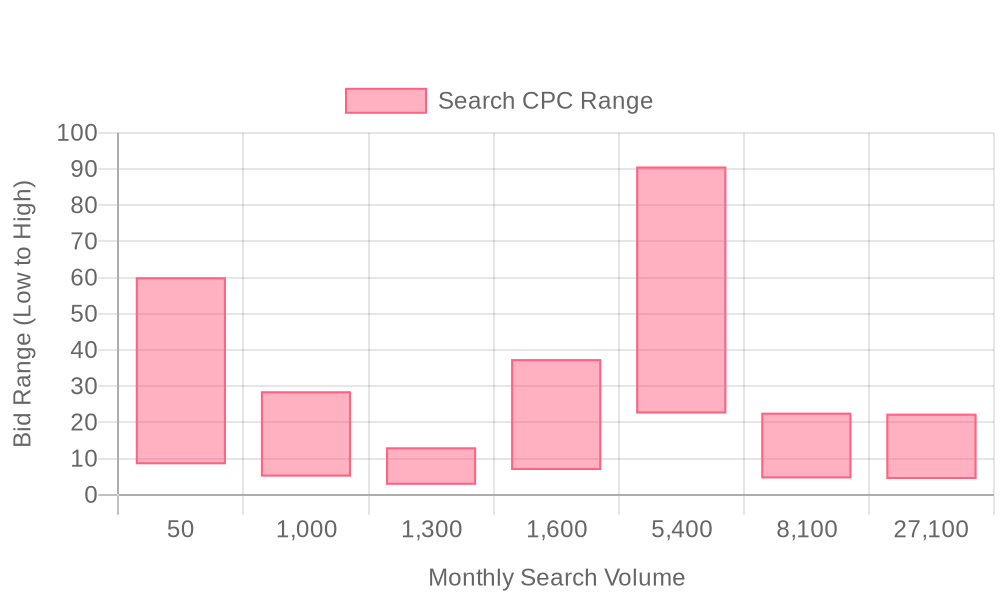
| Industry | Keyword | Monthly Search Volume | Competition Level | Low Bid | High Bid |
| Mechanical Contractors | hvac service technician near me | 50 | MEDIUM | 8.47 | 60.08 |
| Mechanical Contractors | commercial mechanical contractors near me | 1000 | MEDIUM | 5.07 | 28.6 |
| Mechanical Contractors | mechanical companies near me | 1300 | LOW | 2.8 | 13.12 |
| Mechanical Contractors | hvac service technician | 1600 | MEDIUM | 6.87 | 37.5 |
| Mechanical Contractors | air conditioner repair companies | 5400 | LOW | 22.51 | 90.67 |
| Mechanical Contractors | mechanical contractors near me | 8100 | MEDIUM | 4.57 | 22.68 |
| Mechanical Contractors | mechanical contractors | 27100 | LOW | 4.38 | 22.42 |
Mechanical contractors maximize digital ad ROI when campaigns focus investment around high-intent, conversion-ready search terms. The most effective keyword strategies identify phrases that commercial and industrial buyers use when their need is urgent and budgets are committed. By zeroing in on keywords such as "emergency HVAC repair," "industrial chiller installation," and "mechanical contractor near me," revenue teams connect with prospects at the precise moment of decision, driving both lead quality and cost efficiency. For additional insights into effective campaign planning, explore our marketing, attribution, and analytics articles.
Precision targeting advances further by layering in geographic and service-based modifiers. Including terms like "commercial HVAC contractor [city]," "licensed boiler installation [region]," or "24/7 mechanical service [metro area]" filters out low-value clicks and prioritizes local, in-market demand. This approach ensures every dollar is directed at prospects most likely to convert, while negative keywords such as "DIY," "jobs," or "free estimate" prevent wasted spend on irrelevant queries. Sophisticated campaign managers continually refine these lists by monitoring search term reports and live market feedback, as outlined in this comprehensive guide to Google Ads for contractors.
Campaigns benefit from Sona's Identity Resolution, which reveals which companies are actually engaging with ads. Marketers leveraging advanced tools no longer rely on anonymous impressions and clicks, they pinpoint organizations landing on service pages and adapt their keyword targeting accordingly. Real-time intent signals let budget shift dynamically toward keywords and accounts showing high engagement, ensuring advertising investment consistently aligns with the most valuable market segments.
Integration between CRM and ad platforms makes it possible to sync enriched lead and account data directly into Google Ads. As qualified leads move through the buying journey, keyword lists and audience segments update automatically. This dynamic approach to audience and keyword management allows for granular control, tight budget discipline, and maximized Google Ads ROI for contractors seeking measurable pipeline impact.
Executing Your Campaign Step-by-Step
Mechanical contractors using Google Ads achieve the highest ROI when every stage of campaign execution is grounded in data, audience precision, and a relentless focus on conversion outcomes. Each step of the process, from keyword research to analytics integration, lays the foundation for scalable, cost-efficient lead generation. For more insights into marketing analytics and strategy, explore our blog.
Step 1: Build Targeted Keyword Lists
A successful campaign for mechanical contractors starts with a comprehensive keyword list, meticulously curated to capture every relevant service and intent signal. Lists should span core offerings like HVAC repair, commercial refrigeration, and emergency boiler services, while filtering out irrelevant and low-converting terms. Filtering is critical: exclude DIY, career, and wholesale-related queries to avoid wasted spend. Leverage search volume and intent data to prioritize transactional and “near me” modifiers, ensuring ads appear at the precise moment prospects are seeking solutions.
Modern platforms empower marketers to go beyond generic search intent by identifying the actual companies and visitor profiles behind high-value queries. This allows for a more refined negative keyword strategy and ensures budget is channeled to audiences with real revenue potential. For a comprehensive guide to Google Ads for contractors, review the BuildBook resource.
The upgrade most mechanical contractors advertisers miss is going beyond raw keyword volume to layer in intent and identity signals. By connecting website-visitor data and CRM records with Sona Marketing Measurement, you can see which specific search terms bring in the accounts that actually convert, whether that's "emergency boiler repair" driving same-day service calls or "commercial chiller installation" driving six-figure contracts, and weight your keyword and bidding strategy toward those rather than the terms with the highest search volume alone.
Step 2: Write Relevant, High-Impact Ad Copy
Effective ad copy for mechanical contractors addresses the unique urgency and trust factors of the industry. Headlines should include geographic specificity (“24/7 Boiler Repair in Denver”), feature urgent service messaging (“Same-Day Dispatch Available”), and highlight credentials or guarantees (“NATE Certified, Satisfaction Guaranteed”). Descriptions reinforce these selling points, integrating service differentiators and direct calls to action that prompt immediate engagement.
By using real-time behavioral data and in-market signals, marketers can dynamically adapt messaging based on what is resonating with the most engaged prospects. This adaptive approach ensures ad copy remains hyper-relevant, maximizing click-through rates and conversion efficiency.
Step 3: Design Conversion-Focused Landing Pages
Each ad group requires a dedicated, conversion-optimized landing page aligned with its specific keyword and intent. For example, a campaign targeting “emergency HVAC repair” should direct users to a page that clearly outlines rapid response times, displays contact options prominently, and features testimonials or trust badges relevant to emergency scenarios.
Landing pages should be built with analytics hooks and forms that capture detailed visitor data, syncing with CRM systems for seamless lead enrichment. As users move through the funnel, dynamic audience segmentation can personalize follow-up messaging and offers, improving conversion rates across every stage.
Step 4: Optimize with Real-Time Data Feedback
Continuous, data-driven optimization is vital for mechanical contractor campaigns. Monitor performance through real-time dashboards, tracking metrics like conversion rate, cost per acquisition, and lead quality. Use these insights to adjust bids, pause underperforming keywords, and test new ad variations. For actionable steps on optimizing Google Ads, see this HVAC Google Ads guide.
Integration with advanced platforms allows for immediate budget reallocation when high-intent accounts are detected, ensuring spend is always aligned with the most promising opportunities. As campaigns run, audience segments automatically update based on engagement and funnel movement, driving higher relevance and improved ROI.
Sona Marketing Measurement closes the gap between clicks and revenue. It captures every ad click with first-party measurement, then ties that click through UTM capture and ad-platform APIs to the actual record in your CRM, and reports ROAS by keyword and campaign instead of by last-click form fill. Feeding that revenue signal back into Smart Bidding and Performance Max compounds over time: the algorithms optimize toward booked mechanical contractors revenue, not cheap leads.
Step 5: Monitor Conversion Paths and Integrate CRM
Robust conversion tracking completes the feedback loop, providing full visibility from first click to closed deal. Integrate Google Ads with CRM platforms to capture both online and offline conversion events, such as phone call bookings or in-person consultations. This closed-loop reporting framework surfaces which keywords, ads, and audiences directly contribute to revenue, not just leads.
Syncing enriched audience data and qualified leads directly into ad platforms streamlines retargeting and drives more precise follow-up campaigns. With every touchpoint tracked, mechanical contractors can attribute revenue to specific Google Ads investments, guiding smarter budget allocation and ongoing campaign refinement.
Expanding Your Presence in Mechanical Contracting

Mechanical contracting firms advancing their market presence rely on sophisticated digital strategies to accelerate growth and maximize high-value opportunities. Leaders in this sector recognize that consistent visibility and specialized outreach convert more decision-makers as competition intensifies and buyer journeys become more complex.
A high-performing digital footprint starts with educational content that resonates with both prospects and existing clients. Leveraging educational assets within retargeting campaigns enables mechanical contractors to continually reinforce their expertise, strengthening trust and nurturing leads that may require longer sales cycles. These campaigns also allow marketers to segment audiences based on behaviors, serving advanced guides or case studies to those who have already shown interest in core services, which improves overall conversion rates and supports a higher Google Ads ROI for contractors.
Upselling and cross-selling through segmented audiences provides a powerful means to nurture relationships while expanding wallet share. By identifying existing customers who have previously engaged with specific services, mechanical contractors can promote complementary offerings, such as preventive maintenance to clients who initially purchased installation. When audience segmentation is dynamically updated based on a contact’s journey stage or recent interactions, contractors ensure timely, relevant outreach that feels individualized and increases the likelihood of repeat business.
Partnering with recognized industry associations elevates reach and credibility, positioning a firm as a trusted authority in mechanical contracting, a field where licensing, certifications, and code compliance carry real weight with buyers. Co-branded campaigns, joint webinars, or association-sponsored content distributed through performance marketing channels increase brand exposure and funnel qualified leads into the pipeline. Contractors can also use these partnerships to sharpen Google Ads targeting, layering association membership data onto audience lists for more precise B2B outreach.
Utilizing search engine data for content creation remains essential to maintaining long-term relevance in mechanical contractor marketing. By analyzing keyword trends and intent signals, marketers can identify emerging topics, address common pain points, and produce resources that drive ongoing engagement. Integrating these insights into Google Ads for mechanical contractors ensures campaigns remain aligned with real-world demand, while performance feedback loops enable rapid iteration and optimization for higher lead generation.
Integrating Google Ads into the mechanical contractor marketing strategy requires more than basic keyword targeting or standard bidding tactics. Success comes from combining Sona's Identity Resolution and intent data to pinpoint in-market company accounts, syncing enriched CRM insights into advertising platforms, and dynamically segmenting audiences as they progress through the sales funnel. This unified approach lets mechanical contracting teams capture, nurture, and convert high-intent leads with precision, turning digital outreach into a scalable driver of revenue growth. To see how this can work for your business, get started for free with Sona.
Beyond Google Ads: Winning the AI Answers Mechanical Contractors Buyers Now Trust
Paid search captures demand at the moment someone types a query. But a fast-growing share of mechanical contractors buyers no longer start at Google at all, they ask ChatGPT, Gemini, or Perplexity before they ever run a search, and Google's own AI Overviews increasingly summarize an answer above the traditional results. If your business isn't referenced in those AI answers, you're invisible at the exact moment buyers build their shortlist.
Sona AI Visibility shows where your business shows up across ChatGPT, Gemini, Perplexity, Google AI Overviews, and 10+ engines, and, much like a keyword report, which prompts actually send you buyers, so you can prioritize the ones that convert. Run the two together and you cover the entire buyer path: get cited where buyers research (AI Visibility), then prove which of that demand turns into booked revenue (Marketing Measurement).
Helpful resources
Conclusion
The mechanical contractors who win with Google Ads treat it as an ongoing system, not a one-time setup: keyword lists tightened against search term reports, landing pages matched to the urgency of the query, and budget continually redirected toward the accounts that actually become customers.
The next competitive edge is showing up before the search even happens, in the AI answers buyers now consult when they're scoping a project. Contractors who pair tight Google Ads execution with visibility into AI-driven research and closed-loop revenue attribution will be the ones whose pipeline keeps compounding as buyer behavior keeps shifting.
To see the impact firsthand, start for free.
FAQ
How can mechanical contractors benefit from Google Ads?
Google Ads helps mechanical contractors connect with high-intent buyers at the exact moment they search for services, leading to efficient lead generation and reduced time wasted on unqualified leads.
What is the average cost of Google Ads for contractors?
The article does not specify an average cost for Google Ads for contractors, but emphasizes the importance of optimizing spend by focusing on high-intent keywords and precise targeting.
What strategies should mechanical contractors use for Google Ads?
Mechanical contractors should use strategies such as setting measurable objectives, targeting high-intent keywords, aligning landing pages with ad campaigns, and implementing ongoing performance optimization.
How do I measure the success of Google Ads for my contracting business?
Success can be measured by setting KPIs like qualified lead volume and cost per acquisition, using conversion tracking, and integrating data with CRM systems to attribute revenue to specific campaigns.
Are there specific keywords that work best for mechanical contractors in Google Ads?
Effective keywords for mechanical contractors include high-intent, conversion-ready terms like 'emergency HVAC repair' and 'commercial HVAC installation,' along with geographic and service-based modifiers.







