


A collapsed or leaning seawall is not a project homeowners shop around for leisurely. It's a safety hazard and a legal liability, and the search for a contractor usually starts within hours of noticing the damage. Google Ads works well for this trade precisely because it meets that urgency: it puts a seawall repair company in front of the property owner at the moment they're typing "emergency seawall repair" into their phone, not weeks later when a mailer arrives. Businesses that pair intent-based targeting with fast, relevant landing pages convert that urgency into booked assessments instead of losing the lead to whichever competitor answers first.
How to Generate Seawall Repair Leads with Google Ads: A Step-by-Step Guide

A high-performing Google Ads approach for seawall repair businesses is grounded in specificity: reaching the right property owners at the right moment. By focusing on localized, intent-driven keywords and aligning each campaign with actionable data, contractors can generate consistent, high-quality leads while maintaining cost-efficient ad spend. Immediate visibility during peak demand, such as after storms or during seasonal shoreline maintenance, helps companies capture urgent inquiries and convert them into booked assessments and projects. Contractors can also study how similar companies improved digital marketing ROI by reviewing this Atlas case study.
Precision in campaign setup enables advertisers to focus budgets on the highest-potential prospects, such as homeowners, property managers, and municipalities seeking timely repairs. When marketers layer visitor identification and intent data on top of keyword targeting, they unlock the ability to prioritize ad exposure for in-market accounts, reducing wasted impressions and accelerating the sales cycle. Unifying these insights with Google Ads management gives seawall repair companies a measurable edge in both acquisition and brand trust.
Keyword and Audience Targeting
Targeting begins with a deep understanding of what motivates property owners to search for seawall repair services. Keywords like "seawall repair near me," "emergency seawall stabilization," and "eco-friendly seawall repair" not only drive localized traffic but also appeal to environmentally-conscious customers and those facing urgent situations. Incorporating variations such as "marine construction company" or "seawall maintenance contractor" captures broader commercial and municipal demand, helping diversify the client pipeline. Companies in marine construction can also leverage AI to win more contracts by refining their audience targeting and campaign strategies.
Advanced campaign execution leverages technology to move beyond anonymous traffic. Marketers can now pinpoint which businesses are interacting with specific landing pages, allowing for strategic audience segmentation and tailored messaging. As these visitors demonstrate buying intent, such as by engaging with detailed service pages or requesting quotes, dynamic audience lists automatically update within Google Ads, ensuring retargeting efforts remain highly relevant and focused on the accounts most likely to convert. This continual audience enrichment process means that ad creative and offers evolve in real time as prospects advance through the funnel.
Landing Page Optimization
Landing pages are the critical bridge between ad clicks and lead conversion. For seawall repair, every landing page must directly reflect the core keywords and search intent driving each ad group. For example, ads targeting "eco-friendly seawall repair" should lead to a page that highlights sustainable materials, regulatory compliance, and environmental certifications, instilling trust and addressing objections before the first conversation. For property owners seeking reliable solutions, reviewing seawall repair services from established providers can offer valuable insight into effective landing page messaging.
Best-in-class campaigns use real-time visitor data to personalize landing page experiences. When a commercial property manager arrives via a branded search, the page dynamically displays portfolio work, technical specs, and relevant case studies. At the same time, residential leads see testimonials, before-and-after photos, and clear calls to action for free inspections. Integrating intent insights and lead source attribution into landing page analytics allows teams to optimize every headline, form field, and proof point, raising Quality Score and improving conversion rates across all audience segments.
Ad Assets
Ad assets are essential for maximizing the visibility and impact of seawall repair ads. Callout assets highlight key differentiators, such as "24/7 Emergency Service," "Licensed & Insured," or "NSF-Certified Materials," delivering critical information before a user even clicks. Structured snippets can feature service highlights, "Erosion Control, Seawall Installation, Polyurethane Injection", which help set expectations and qualify leads. For those interested in procurement opportunities, reviewing current seawall improvement bids can reveal additional targeting tactics and competitive offers.
Syncing CRM and ad platforms keeps assets reflecting the most current offers and capabilities. When a new seasonal promotion or warranty program launches, callouts and snippets update automatically across every relevant campaign. This link between audience data, campaign assets, and CRM lets seawall repair companies adapt messaging in real time and hold a consistent, compelling presence in search results. If you want to transform your lead generation and campaign management, get started for free with Sona.
Why Does Google Ads Matter for Seawall Repair
Seawall repair businesses operate in a market where timing and intent are critical. When property owners or contractors search for urgent solutions, Google Ads delivers high-visibility placements that connect those ready to act directly with trusted service providers. By leveraging Google Ads for construction, seawall companies can maximize visibility and generate leads when prospects are actively searching for help.
- Capturing High-Intent Searches: Google Ads enables seawall repair companies to target homeowners and contractors who are actively researching or seeking immediate repairs. These prospects are often facing serious safety or property preservation concerns, making their intent to purchase strong and immediate. By aligning ad visibility with urgent queries like “emergency seawall repair” or “fix collapsed seawall near me,” marketers can intercept buyers at the exact moment action is needed. Modern platforms can now map each account’s buyer stage segmentation, ensuring every ad aligns with the prospect’s readiness to engage, reducing wasted impressions and boosting conversion rates.
- Filling Seasonal Demand Gaps: Demand for seawall services spikes unpredictably, especially during severe weather events or hurricane seasons. Google Ads provides agility, allowing businesses to scale outreach precisely when demand surges and to maintain a steady pipeline during quieter months. By leveraging real-time intent signals, marketers can shift budget to high-converting audiences as conditions change, ensuring that every advertising dollar targets those most likely to convert.
- Geographic Precision: Seawall repair is inherently local, with service areas defined by coastlines and flood zones. Google Ads’ advanced geo-targeting allows providers to focus spend on high-risk, high-value regions, reaching property owners who need maintenance or urgent repairs. The ability to pinpoint not just locations but also specific neighborhoods or zip codes means marketing budgets are concentrated where seawall density and age create consistent service demand. When combined with unified audience data, advertisers can dynamically update targeting as prospects progress from research to purchase, creating a seamless experience that drives more qualified seawall repair leads.
Common Types of Google Ads Campaigns for Seawall Repair Services
- Search Campaigns: Search campaigns are the foundation for driving high-quality seawall repair leads. These campaigns capitalize on urgent queries such as “emergency seawall repair near me” or “coastal erosion contractor” that signal strong purchase intent. Targeting these transactional searches, sometimes with Responsive Search Ads to test headline and description combinations, keeps your listing in front of property owners seeking immediate help. Layer in visitor identification and marketers can identify the company or property manager behind the search, enabling tailored follow-up and higher conversion by matching ad messaging to the account.
- Display Ads: Display advertising expands brand presence across influential digital spaces frequented by coastal property stakeholders. Whether it’s educational content on marine construction or real estate news, display placements keep seawall repair brands top-of-mind for those researching property maintenance. Real-time intent monitoring can further refine these campaigns by shifting budget toward users who demonstrate in-market behavior, such as reading articles about storm damage or infrastructure grants, ensuring that spend is always prioritized toward high-converting audiences. For a real-world example of digital marketing performance improvements, see this Atlas case study.
- Segmentation for Relevance: Broad, catch-all campaigns dilute performance and result in wasted ad spend. Segmenting campaigns using firmographic data, property type, or urgency leads to more relevant ad experiences and better ROI. Dynamic audience updates, such as automatically moving a property owner from educational campaigns to high-intent offers after a site visit, allow for personalized messaging at scale. With CRM and ad platform sync, enriched audience segments flow seamlessly into Google Ads, aligning marketing and sales efforts for more valuable seawall repair opportunities.
- Video Ads: Video ad formats are highly effective for engaging property owners and facility managers who respond well to visual learning. Tutorials on preventative seawall maintenance or case studies on successful erosion control projects build trust and credibility. Video campaigns aligned with content marketing initiatives can be dynamically updated as leads move through the funnel, ensuring prospects see the right message, whether they’re just starting research or ready to schedule a site inspection. Advanced conversion tracking links video engagement to both online and offline actions, giving teams a comprehensive view of campaign impact.
- Performance Max: Performance Max campaigns pool Search, Display, YouTube, and Maps inventory into a single goal-driven campaign, which suits seawall repair companies with limited internal bandwidth for managing several campaign types separately. Feeding it strong conversion signals, such as booked inspections or signed contracts rather than just form fills, lets Google's bidding find property owners and property managers likely to convert across channels without a marketer manually assembling each audience.
Where to Find Growth Opportunities?
Identifying new avenues for sustainable growth in seawall repair marketing requires moving beyond traditional keyword lists and brand awareness tactics. By prioritizing vertical keyword targeting, advanced competitor analysis, and strategic content retargeting, companies unlock untapped demand and position themselves for accelerated pipeline expansion.
- Vertical Keyword Targeting: Focusing on highly specialized search terms such as "marine construction marketing" and "digital marketing for contractors" allows businesses to reach decision-makers seeking niche expertise. This approach ensures your campaigns surface for high-intent searches linked to seawall repair advertising, PPC for seawall services, and broader marine construction marketing themes. With enriched intent data, marketers can identify which service-specific phrases drive the most qualified inbound leads and adjust bid strategies in real time to maximize visibility for high-value projects.
- Competitor Gap Analysis: Leveraging platforms like SEMrush, marketers conduct granular analysis to uncover keyword and audience segments competitors have overlooked. These insights reveal content gaps, untapped local SEO for seawall repair, and emerging trends in digital marketing for contractors. By integrating real-time visitor identification, teams can prioritize spend on the most relevant opportunities and shift budget toward segments demonstrating in-market behavior, ensuring efficient use of advertising investment. For a real-world example of improved digital marketing performance, see this case study on Atlas and MagicClickz.
- Content Retargeting: Engagement multiplies when companies cross-promote educational articles, explainer videos, and case studies related to "coastal management" or "seawall technologies." This approach keeps your brand in front of stakeholders as they move from research to purchase, building trust and reinforcing expertise. Dynamic audience syncing ensures retargeting pools update automatically as leads progress through the funnel, while advanced conversion tracking links online interactions with offline sales activity, delivering a holistic view of true marketing ROI.
By layering these strategies, seawall repair brands gain an edge in discovering new growth pockets, personalizing engagement, and capturing market share in a sector driven by urgency and technical credibility. To explore how you can implement these growth tactics in your own marketing, get started for free with Sona.
How to Apply Audience Segmentation for Seawall Repair
Precision in audience segmentation is the foundation of effective seawall repair advertising, ensuring every marketing dollar directly supports high-value, relevant conversations. With a well-defined segmentation approach, campaigns consistently reach property owners and decision-makers who are most likely to convert, significantly improving lead quality and cost efficiency.
- Different Property Types: Segmenting audiences based on property type, residential versus commercial, transforms the impact of Google Ads for Seawall Repair. Residential prospects often respond to messaging focused on urgent home protection and neighborhood value, while commercial targets require proof of regulatory compliance, long-term durability, and budget-conscious maintenance solutions. By tailoring creative and ad copy to these distinctions, marketers generate higher relevance scores and more qualified inquiries.
- Intent Signals: Factoring search intent into audience segmentation sets apart high-performing seawall repair campaigns from generic PPC for seawall services. Emergency repair searches, such as “fix collapsed seawall now,” reflect urgent, high-conversion opportunities that demand immediate follow-up and mobile-first ad formats. Meanwhile, maintenance queries like “routine seawall inspection” signal longer buying cycles, where educational content and nurturing sequences will deliver better ROI. Real-time intent monitoring enables teams to dynamically adjust budget allocation, focusing resources on in-market prospects who are most likely to take action.
Reaching the right stakeholders is crucial when targeting multifaceted marine construction markets. Many organizations now rely on solutions that surface key decision-makers within property management companies, HOAs, or municipal agencies, allowing campaigns to target those who control repair budgets. By integrating visitor identification tools, marketers can move beyond anonymous website traffic and pinpoint the companies behind each visit, enabling more personalized outreach and customized messaging across the buying committee.
- Custom Ad Groups: Developing ad groups around unique offerings, such as “eco-friendly seawall solutions” or “premium marine-grade materials”, enables granular targeting within Google Ads for Seawall Repair. These segments ensure that each user sees messaging aligned with their priorities, whether it’s sustainability certifications or high-impact structural warranties. As prospects engage and move through the funnel, dynamic audiences update automatically, reflecting changes in engagement, readiness, and lead status. This ongoing refinement not only increases conversion rates but also strengthens online advertising for marine services by ensuring each touchpoint is relevant and timely. Contractors looking to win more marine construction jobs can also leverage AI solutions for lead generation.
Audience segmentation for seawall repair advertising is most effective when paired with advanced attribution and data sync capabilities. By connecting CRM data, marketers can track every interaction, online and offline, ensuring true ROI measurement. As enriched audiences and high-intent leads are synced seamlessly into Google Ads and sales platforms, teams streamline the transition from initial click to closed contract, maximizing every opportunity in the competitive marine construction marketing landscape. To experience these capabilities firsthand, get started for free with Sona.
This is also where measurement changes the economics. With Sona Marketing Measurement you can identify the companies and buyers behind your ad clicks, not just anonymous sessions, and segment audiences by who actually becomes a customer. That lets you build bid adjustments and audience signals around the segments that convert and de-prioritize the ones that don't, so you feed Google's algorithms "this click became a paying seawall repair customer" instead of just "someone filled out a form."
Keyword Strategy & Sample Target Terms
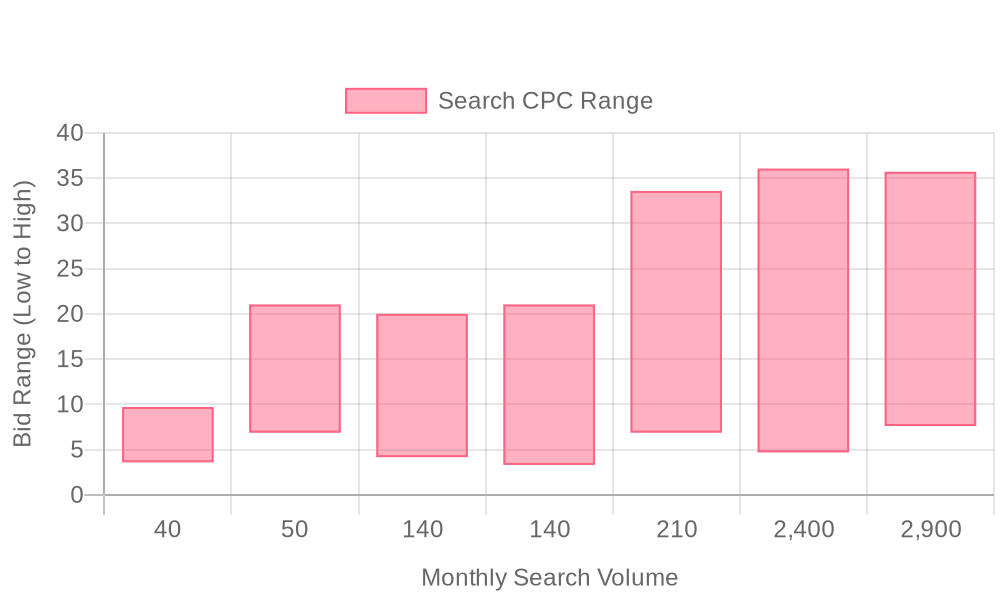
| Industry | Keyword | Monthly Search Volume | Competition Level | Low Bid | High Bid |
| Seawall Repair | sea wall repair cost | 40 | LOW | 3.6 | 9.71 |
| Seawall Repair | seawall maintenance | 50 | LOW | 6.87 | 21.03 |
| Seawall Repair | seawall cap repair | 140 | LOW | 4.17 | 20 |
| Seawall Repair | concrete seawall repair | 140 | LOW | 3.31 | 21.03 |
| Seawall Repair | seawall repair companies near me | 210 | LOW | 6.88 | 33.58 |
| Seawall Repair | seawall repair near me | 2400 | LOW | 4.7 | 36.04 |
| Seawall Repair | seawall repair | 2900 | LOW | 7.61 | 35.69 |
A well-structured keyword strategy is the backbone of high-performing Google Ads for seawall repair. Local SEO for seawall repair should remain a top priority, utilizing search phrases such as "seawall repair near me," "local seawall repair experts," and region-specific combinations like "Naples storm damage repair" or "Fort Myers seawall contractors." These hyper-local and seasonal terms consistently attract property owners searching for immediate solutions, helping businesses appear precisely when urgency is highest. For a deeper dive on leveraging paid search in construction and home services, see this Google Ads for construction guide.
Material and service keywords are equally critical for reaching decision-makers with specific needs. By focusing on phrases like "vinyl seawall repair," "concrete seawall replacement," and "seawall inspection and maintenance," marketers capture both residential and commercial buyers seeking specialized expertise. These granular terms drive higher-quality leads, as prospects are further along in the decision process and are actively comparing solutions for their unique property or infrastructure requirements. Including long-tail keywords such as "marine-grade polymer seawall stabilization" or "seawall void repair estimate" further refines targeting, drawing in high-intent audiences and reducing wasted spend on irrelevant clicks. For more B2B keyword and targeting insights, explore Sona’s blog on account identification.
Marketers leveraging advanced solutions can now move beyond anonymous keyword targeting: Sona's Identity Resolution reveals not just the search term, but the actual company or property owner behind each inquiry. This enables real-time budget shifts toward accounts showing in-market signals for seawall repair, such as multiple site visits, repeated searches, or engagement with technical landing pages. As leads move through the funnel, dynamic audience updates from Sona Audiences keep Google Ads campaigns focused on the most sales-ready prospects. To see how enriched CRM data and seamless Google Ads sync can power instant action on your highest-intent seawall repair leads, get started for free with Sona.
Step-by-Step Campaign Execution Framework
Step 1: Build Targeted Keyword Lists
The foundation of high-performing Google Ads for Seawall Repair begins with meticulous keyword research tailored to the nuances of marine construction marketing. Incorporate combinations of localized modifiers with core service terms to capture high-intent searches, such as “Naples seawall repair,” “emergency seawall restoration,” or “marine erosion control Sarasota.” This hyper-specific approach ensures each ad dollar focuses on property owners and decision-makers actively seeking immediate solutions, rather than casual browsers. For actionable strategies on keyword research and selection, explore this guide to Google Ads best practices for construction.
Filtering out non-converting traffic is equally critical. Integrate negative keywords like “DIY seawall repair,” “seawall repair cost estimator,” or “seawall maintenance how-to” to prevent budget waste on research-driven, non-commercial queries. Using Sona's Identity Resolution to pinpoint companies and individuals showing genuine in-market behavior helps marketers reallocate spend toward the most promising accounts. Real-time keyword performance data enables agile adjustments, shifting focus to terms driving qualified leads and high-value projects, while continuously expanding and refining negative lists.
The upgrade most seawall repair advertisers miss is going beyond raw keyword volume to layer in intent and identity signals. By connecting website-visitor data and CRM records with Sona Marketing Measurement, you can see which specific search terms bring in the accounts and customers that actually convert, and weight your keyword and bidding strategy toward those rather than the terms with the highest search volume alone.
Step 2: Develop Compelling Ad Copy
Effective ad copy for seawall repair PPC campaigns should emphasize urgency, authority, and trust, key drivers in the marine construction sector. Headlines that feature “same-day seawall inspection,” “certified marine engineers,” or “lifetime repair guarantees” directly address the pain points of waterfront property owners facing structural threats. Well-crafted descriptions reinforce peace of mind and showcase specialized expertise, which differentiates professional services from general contractors. Learn how dock building companies leverage AI tools to increase marine construction leads for further inspiration.
Personalization amplifies impact. By using real-time audience data, marketers can dynamically adjust ad messaging based on the funnel stage and engagement signals. For example, property managers who previously visited case study pages can be served ads highlighting commercial seawall solutions and project testimonials. This adaptive approach increases relevance and conversion rates, ensuring ad spend consistently targets high-intent prospects with messaging that matches their current needs.
Step 3: Design Effective Landing Pages
A seamless, mobile-optimized landing page is essential to convert paid clicks into seawall repair leads. Clear calls-to-action such as “Schedule Your Free Inspection” or “Request a Rapid Quote” should be prominently displayed, making it effortless for users to engage. The layout must prioritize speed and simplicity, guiding visitors from initial interest to form submission or direct call within seconds. For a real-world example of high-converting pages, review Savy & Sons’ seawall repair solutions.
Building trust is paramount in digital marketing for contractors. Incorporate frequently asked questions addressing technical methods, warranty details, and compliance standards alongside trust symbols like certifications, association badges, and verified reviews. By leveraging Sona’s Destinations feature to sync CRM and ad platform data, marketers can refine landing page experiences for key segments. This integration enables pre-population of forms and personalized follow-up, streamlining the conversion journey and increasing qualified leads.
Step 4: Implement Data-Driven Optimizations
Continuous improvement through data-driven optimizations separates effective seawall repair advertising from average campaigns. Regular A/B testing of headlines, descriptions, and visual elements reveals which creative combinations yield the highest click-through and conversion rates. Experimenting with urgency cues, trust language, and imagery tailored to storm events or local erosion issues can unlock incremental performance gains. To see how these tactics deliver results, view this case study on marketing ROI for construction.
Conversion data should directly inform bid strategies and budget allocation. Advanced tracking, including offline actions like phone consultations or on-site inspections, provides a holistic view of campaign ROI. Syncing enriched CRM data with Google Ads enables automated audience updates, ensuring the most engaged property owners and facility managers are prioritized for retargeting or lookalike expansion. This closed-loop measurement is easily achieved with Sona, empowering revenue teams to scale spend on proven channels, double down on high-performing keywords, and pivot quickly in response to real-time market shifts, maximizing every marketing dollar for seawall repair growth.
Ready to transform your campaign results? Get started for free with Sona.
Sona Marketing Measurement closes the gap between clicks and revenue. It captures every ad click with first-party, company-level tracking, then ties that click through UTM capture and ad-platform APIs to the actual record in your CRM, and reports ROAS by keyword and campaign instead of by last-click form fill. Feeding that revenue signal back into Smart Bidding and Performance Max compounds over time: the algorithms optimize toward booked seawall repair revenue, not cheap leads.
Tips on Expanding Your Seawall Repair Presence
Expanding your seawall repair presence requires a strategic approach that goes far beyond basic ad spend. The most successful businesses use a blend of partnership-building, targeted local marketing, and value-driven educational outreach to capture and nurture high-intent leads in their region. For inspiration on how digital campaigns can drive measurable ROI in marine construction and repair, review this case study on Atlas’s marketing performance.
- Leverage Partnership Opportunities: Collaborating with local businesses such as marinas, waterfront realtors, or marine hardware suppliers enables co-promotional Google Ads efforts that extend your reach and credibility. When these partnerships are integrated with unified ad data, you can identify mutual customers and optimize joint campaigns for higher-quality leads. By connecting your audience data in real time, you ensure that both your brand and your partners benefit from shared visibility, while also enabling attribution of new client sources across both organizations.
- Localize Marketing Efforts: Geo-targeting is essential for seawall repair advertising, as demand is highly concentrated in specific coastal regions prone to erosion or storm impact. Using dynamic audience segmentation, businesses can shift ad budget to the neighborhoods and zip codes with the highest in-market activity. If your platform syncs enriched intent data directly into Google Ads, you can refine campaigns to focus on homeowners most likely to require immediate repairs, providing a measurable lift in click-through and conversion rates compared to generic targeting.
- Promote Educational Content: Educational content marketing is a proven driver of engagement in marine construction marketing. Campaigns that promote guides on seawall maintenance, explain the long-term financial benefits of repairs, or break down critical timelines for property protection generate higher-quality inbound inquiries. Leveraging advanced analytics, you can track which content assets attract the most engaged leads, attributing both online and offline conversions to specific ad groups. As leads interact with your educational resources, dynamic audience rules update their status, allowing you to retarget with tailored offers or schedule follow-up at the optimal moment.
Combining these tactics with a robust follow-up and customized outreach program helps address the unique pain points facing the seawall repair industry. Prioritizing timely response and personalized engagement, supported by data-driven insights, positions your business as the trusted choice for property owners seeking reliable marine construction solutions. With the right mix of partnership, localization, and educational promotion, you can drive sustained growth and maximize your return on investment in digital marketing for contractors. If you’re ready to see how these strategies can be put into action, get started for free with Sona.
Beyond Google Ads: Winning the AI Answers Seawall Repair Buyers Now Trust
Paid search captures demand at the moment someone types a query. But a fast-growing share of seawall repair buyers no longer start at Google at all, they ask ChatGPT, Gemini, or Perplexity before they ever run a search, and Google's own AI Overviews increasingly summarize an answer above the traditional results. If your business isn't referenced in those AI answers, you're invisible at the exact moment buyers build their shortlist.
Sona AI Visibility shows where your business shows up across ChatGPT, Gemini, Perplexity, Google AI Overviews, and 10+ engines, and, much like a keyword report, which prompts actually send you buyers, so you can prioritize the ones that convert. Run the two together and you cover the entire buyer path: get cited where buyers research (AI Visibility), then prove which of that demand turns into booked revenue (Marketing Measurement).
Helpful resources
Conclusion
The seawall repair companies that win the most leads aren't necessarily the ones spending the most on ads, they're the ones who show up first when a property owner's shoreline is failing and time is short. Google Ads gives that visibility, but only when keyword targeting, landing pages, and follow-up all move as fast as the buyer's decision.
What separates the contractors who scale from those who stall is measurement: knowing which keywords, ads, and landing pages actually produce signed contracts rather than just clicks. Pair that discipline with the growing share of buyers researching through AI tools instead of search boxes, and the businesses investing now in both paid visibility and AI visibility will be the ones property owners find first, whether they type a query or ask an assistant.
FAQ
What are the best keywords for Google Ads in the seawall repair industry?
Keywords like 'seawall repair near me,' 'emergency seawall stabilization,' and 'eco-friendly seawall repair' are effective for targeting high-intent prospects in the seawall repair industry.
How can I create effective Google Ads for seawall repair services?
To create effective Google Ads, focus on localized, intent-driven keywords, use audience segmentation, and ensure your landing pages align with the search intent to convert clicks into leads.
What is the average cost per click for seawall repair keywords?
The article does not specify the average cost per click for seawall repair keywords.
How do I measure the success of my Google Ads for seawall repair?
Success can be measured by tracking conversion rates, utilizing real-time audience data for optimizations, and syncing CRM data with Google Ads to ensure lead quality.
What are common mistakes to avoid in Google Ads for seawall repair?
Common mistakes include failing to use negative keywords, not segmenting audiences properly, and not aligning ad copy with landing page content.







