


A rotted joist or a soft, spongy board is not a problem homeowners sit on. Deck repair searches spike the moment someone notices damage, often right before a barbecue, a home sale, or a spring inspection, and Google Ads is the fastest way to be the contractor they find first. Done well, it bridges the gap between online visibility and a signed work order. This guide walks through setting up and optimizing Google Ads campaigns built for how deck repair actually gets bought.
How to Generate Google Ads for Deck Repair Leads: A Step-by-Step Guide

A performance-driven Google Ads strategy enables deck repair businesses to consistently reach homeowners at the moment they need repairs, maximizing both lead quality and conversion rates. By leveraging data-rich targeting and dynamic campaign structures, revenue teams can move beyond guesswork to deliver campaigns with measurable business impact.
Deck repair marketers who act on Sona's intent signals can rapidly shift budget toward the highest-intent accounts. This keeps resources off low-propensity clicks and focused on prospects showing real urgency, people browsing repair galleries or filling out a quote request rather than researching DIY fixes.
Common Types of Google Ads Campaigns
- Search Campaigns: The most direct path to high-intent deck repair leads, search campaigns allow businesses to appear atop results when users search for urgent solutions (“deck repair near me,” “deck board replacement”). These campaigns are highly controllable and reward precise keyword targeting. For additional strategies tailored to deck repair, explore this Google Ads guide for decking businesses.
- Performance Max Campaigns: Performance Max maximizes conversions across Google's properties using images, video, and product feeds. For deck repair, it excels at remarketing, re-engaging site visitors with tailored offers and project photos as they browse YouTube or Gmail.
- Display Campaigns: Visual ads reach wider audiences on relevant sites, supporting brand awareness and retargeting. Deck repair companies can use display to reinforce seasonal promotions or highlight before-and-after project imagery to previous website visitors.
- Local Services Ads: These pay-per-lead campaigns appear above standard search results and are exclusive to verified local contractors. This is ideal for deck repair businesses focused on high-intent, geographically-targeted prospects.
Step 1: Build Targeted Keyword Lists
Begin by curating a list of high-commercial-intent keywords tailored to deck repair. Focus on phrases that capture urgent needs ("emergency deck repair," "deck safety inspection") as well as specific services and materials ("composite deck restoration," "cedar deck repair"). Group keywords by service and intent to facilitate granular ad group organization. Regularly update lists using search term reports to account for market shifts or seasonal events that affect deck repair demand. Learn more about keyword matching options and how to structure campaigns for maximum relevance.
The upgrade most deck repair advertisers miss is going beyond raw keyword volume to layer in intent and identity signals. By connecting website-visitor data and CRM records with Sona Marketing Measurement, you can see which specific search terms bring in the accounts and customers that actually convert, and weight your keyword and bidding strategy toward those rather than the terms with the highest search volume alone.
Step 2: Exclude Wasted Spend with Negative Keywords
Implement robust negative keyword lists to filter out non-converting searches. Exclude terms that indicate DIY research, material sales, or unrelated products (“how to fix deck,” “deck screws for sale,” “deck card game”). This tactic refines traffic quality and preserves budget for leads with genuine hiring intent. Continually review search terms to identify new exclusion opportunities, an essential practice for keeping campaigns lean and efficient. Learn more about negative keywords in PPC.
Step 3: Craft Compelling Ad Copy and Creative
Write ad copy that communicates both expertise and urgency. Headlines should state the service plainly (“24/7 Deck Repair Experts”), while descriptions reinforce differentiators like warranty offers, rapid response times, or local experience. Use ad assets to add more paths to conversion and highlight your value proposition. Work in seasonal hooks and trust signals to lift engagement.
Step 4: Design Conversion-Optimized Landing Pages
Direct ads to landing pages built for conversion, not a generic homepage. Each page should match the ad’s promise, showcase repair galleries, share testimonials, and present a clear call to action (“Book a Free Inspection”). Optimize for mobile with fast load times, sticky contact buttons, and form fields tuned for quick completion. Integrate call tracking and form attribution to accurately measure lead sources.
Sona Marketing Measurement closes the gap between clicks and revenue. It captures every ad click with first-party measurement, then ties that click through UTM capture and ad-platform APIs to the actual record in your CRM, and reports ROAS by keyword and campaign instead of by last-click form fill. Feeding that revenue signal back into Smart Bidding and Performance Max compounds over time: the algorithms optimize toward booked deck repair revenue, not cheap leads.
Step 5: Refine Geographic and Temporal Targeting
Set location targeting to focus on profitable neighborhoods and exclude low-value areas. Use radius targeting to cover a practical service area, and apply bid adjustments for ZIP codes with higher average deck values. Schedule ads for evenings and weekends, when homeowners are more likely to research repairs, and increase bids during peak spring-summer months when demand surges.
Step 6: Activate Retargeting and Performance Max
Implement remarketing by building audiences based on site behavior, such as visitors who viewed pricing or started a quote. Performance Max campaigns can automatically serve these users dynamic ads across multiple channels, reinforcing your brand and recapturing missed leads. Audiences should update in real time, ensuring that those who convert are suppressed and new prospects are added as they engage with your funnel.
Step 7: Implement Advanced Conversion Tracking and Attribution
Track all conversions, calls, forms, bookings, and sync them with your CRM for full-funnel attribution. Leverage technology to connect online interactions with offline sales, providing a holistic view of ROI. Use these insights to reallocate spend from low-performing keywords to those delivering actual contracts, not just clicks.
Step 8: Continuously Optimize for ROI
Review performance data biweekly, adding negative keywords, testing new ad variations, and adjusting bids based on conversion patterns. Optimize for revenue, not just volume, by analyzing which keywords and audiences drive the highest-value deals. With unified account and visitor data from Sona's Identity Resolution, marketers can spot high-value opportunities, deploy budget with precision, and sustain a lead flow that reflects real market demand for deck repair services. Ready to streamline your deck repair lead generation? Get started for free with Sona.
Why Does Google Ads Matter for Deck Repair?
Deck repair businesses face a crowded marketplace, rapid seasonal swings in demand, and a mix of budget-conscious and high-value prospects. Google Ads delivers immediate access to homeowners actively searching for repair solutions, offering a direct path to qualified leads at the moment of intent. For a practical breakdown of how deck businesses can leverage Google Ads for stronger lead generation, explore this guide to Google Ads for decking businesses.
Unlike traditional marketing, Google Ads for Deck Repair allows contractors to pinpoint local, high-intent customers and control budgets in real time. The platform’s pay-per-click model ensures investment is focused on prospects with the strongest commercial signals, maximizing lead quality and minimizing wasted spend. For more strategies on optimizing marketing investment, review our marketing performance management guide.
- Seasonal demand targeting: Deck repair searches surge in spring and summer as homeowners prepare outdoor spaces, creating windows of intense competition. Google Ads lets marketers dynamically shift spend and creative focus to align with these peaks, ensuring visibility precisely when intent is highest.
- Competitive differentiation: With many contractors vying for the same local customers, ad copy, visual galleries, and offer extensions in Google Ads help businesses showcase unique craftsmanship and rapid response times. This differentiation drives higher click-through rates and improves conversion potential compared to generic outreach.
- Data-driven lead generation: Advanced tracking within Google Ads enables businesses to attribute leads and revenue directly to keyword, device, and geography. When paired with platforms that unify CRM data and website interactions, marketers can see exactly which campaigns drive booked consultations and closed deals, informing future spend and creative strategy. Sona's Identity Resolution reveals which companies and people are visiting your website, even before they fill out a form.
- Audience precision: Google Ads targeting for home services allows deck repair companies to filter out DIY traffic, low-value shoppers, and irrelevant searches with negative keywords and audience exclusions. By layering in real-time audience identification, marketers can further refine their audience pools, optimizing retargeting to only the most engaged and qualified prospects.
Common Types of Google Ads Campaigns for Deck Repair Services
Selecting the optimal Google Ads campaign type is foundational for deck repair providers aiming to connect with high-intent homeowners and drive qualified leads. Each campaign format serves a unique function in amplifying local presence, capturing demand, and nurturing prospects through the sales funnel. For a comprehensive look at Google Ads strategies tailored to deck building, review this detailed guide for deck building companies, and explore more demand generation tactics in our actionable playbooks.
- Search Campaigns: Search campaigns place your deck repair services in front of homeowners actively seeking solutions, often during urgent moments. By targeting high-intent keywords such as “deck repair near me” or “emergency deck restoration,” contractors can intercept decision-ready prospects and direct them to conversion-optimized landing pages. Marketers using Sona's Identity Resolution can prioritize budget toward search queries from in-market accounts, allocating spend only to audiences showing real intent.
- Performance Max Campaigns: Performance Max unlocks access to the full Google inventory, Search, Display, YouTube, Gmail, and Discover, through a single campaign. For deck repair businesses, this means reaching homeowners at multiple touchpoints, from inspiring video walkthroughs to remarketing banners for quote abandoners. Integrating live audience and CRM signals allows asset groups and creative messaging to dynamically adjust, so ads are shown to homeowners as they move from initial research to requesting an estimate.
- Display Campaigns: Display campaigns visually reinforce your expertise to audiences browsing home improvement sites or reading articles about deck maintenance. By segmenting audiences based on engagement and past website behavior, repair contractors can keep their brand top-of-mind for prospects not yet ready to convert. Dynamic audience management ensures that recent visitors to your deck repair gallery, for example, are automatically added to a nurturing sequence, streamlining follow-up without manual list uploads.
- Remarketing Campaigns: Remarketing re-engages visitors who have interacted with your website or requested a quote but did not book an inspection. With advanced tracking in place, contractors can personalize follow-up ads, offering seasonal promotions or highlighting customer testimonials, to nudge prospects back into the sales process. Connecting offline CRM data, such as calls or in-person appointments, enables campaigns to exclude already-converted leads, making every impression and dollar count.
- Local Services Ads: Local Services Ads appear at the very top of search results and are designed for contractors ready to receive direct calls or message requests. Deck repair professionals can showcase trust signals like Google Guarantee and verified reviews, increasing credibility and conversion rates. When CRM and ad platforms are unified, these ads can immediately respond to high-value leads, accelerating response times and outpacing competitors.
- Video Campaigns: Video campaigns on YouTube and partner sites allow deck repair companies to visually demonstrate their craftsmanship, before-after transformations, and safety standards. Targeting can be refined using first-party data to ensure these videos appear for homeowners researching deck repairs or related home improvement projects. Real-time analytics offer insights into which creative assets drive the most engagement, so resources are continually allocated to top-performing content.
Where to Find Growth Opportunities?
Growth in the deck repair industry depends on uncovering untapped channels and optimizing every stage of the customer journey. Forward-thinking teams use real-time audience insights to shift resources toward the highest-converting audiences, ensuring their marketing spend consistently delivers quality leads.
To expand reach, deck repair businesses should analyze visitor-level data across every touchpoint. Identifying which companies and decision-makers are interacting with your website reveals new segments, especially when anonymous traffic is resolved into actionable contact records. This approach fuels both outbound and inbound strategies by surfacing in-market homeowners, property managers, or commercial clients who may not have engaged directly but signal intent through their digital behavior.
Dynamic audience building is another key driver. As prospects move through research, quoting, and consultation stages, automated audience updates allow deck repair marketers to retarget users with tailored offers based on their latest actions. For additional strategies on running effective Google Ads campaigns in the decking industry, see this guide on Google Ads for decking businesses. This level of precision minimizes wasted impressions and maximizes relevance.
Integrating CRM and ad platforms enables deck repair contractors to sync enriched lead data directly into Google Ads and their sales workflows. Advanced attribution connects every ad click to real business outcomes, so teams can measure ROI at the keyword and campaign level, reallocating budget to the tactics that drive the most revenue.
How to Apply Audience Segmentation for Deck Repair

Audience segmentation transforms deck repair marketing by allowing revenue teams to precisely tailor messaging and budget allocation for each customer group. By identifying the unique needs and triggers of homeowners, property managers, and commercial clients, marketers can align offers and creative to match real-world buying behaviors without overspending on generic outreach. For a deeper understanding of how Google Ads can drive deck repair leads, explore this guide to Google Ads for decking businesses.
Segmentation begins with a deep dive into first-party data: analyzing past projects, website engagement, and inbound call details to uncover patterns among high-value leads. With this foundation, marketers can group audiences based on geographic location, property type, urgency signals, and budget ranges. Real-time tracking of these segments enables agile campaign adjustments as the season shifts or local demand spikes, keeping spend efficient and lead quality consistently high. Learn practical strategies for segmentation in our demand generation playbooks.
Modern platforms now support dynamic audience updates, automatically moving leads between segments as they progress from research to booking. This ensures that every Google Ads for deck repair campaign is always reaching the most relevant prospects, whether they’re early-stage browsers or ready to request an estimate. Integration with CRM and ad platforms pushes enriched audience data directly into Google Ads, allowing for hyper-targeted retargeting and lookalike modeling that consistently outperforms static lists.
This is also where measurement changes the economics. With Sona Marketing Measurement you can identify the companies and buyers behind your ad clicks, not just anonymous sessions, and segment audiences by who actually becomes a customer. That lets you build bid adjustments and audience signals around the segments that convert and de-prioritize the ones that don't, so you feed Google's algorithms "this click became a paying deck repair customer" instead of just "someone filled out a form."
Keyword Strategy & Sample Target Terms
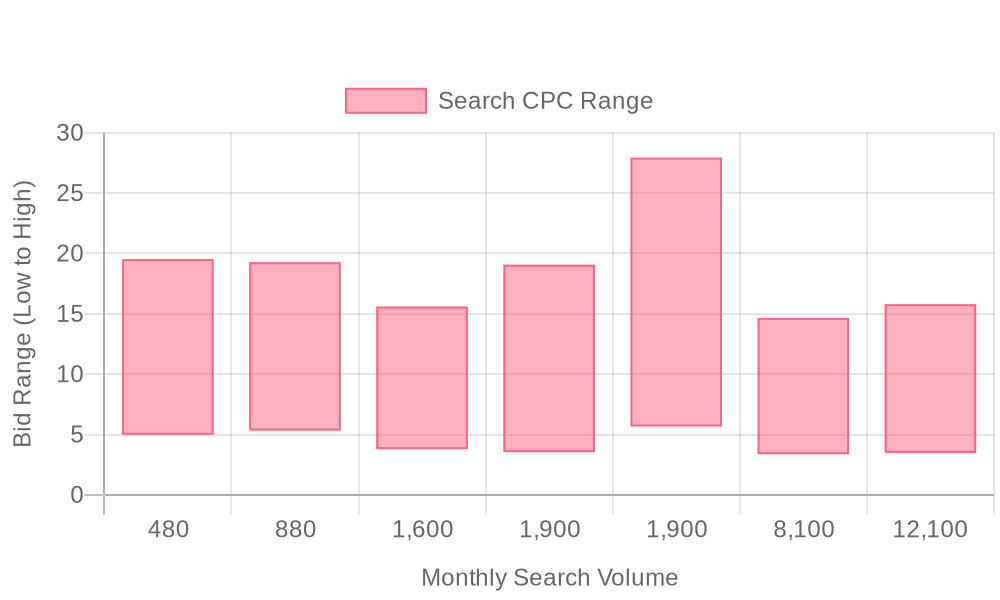
| Industry | Keyword | Monthly Search Volume | Competition Level | Low Bid | High Bid |
| Deck Repair | deck repair contractors near me | 480 | LOW | 4.98 | 19.54 |
| Deck Repair | pool deck repair near me | 880 | MEDIUM | 5.33 | 19.28 |
| Deck Repair | pool deck repair | 1600 | MEDIUM | 3.79 | 15.6 |
| Deck Repair | deck restoration near me | 1900 | MEDIUM | 3.54 | 19.07 |
| Deck Repair | deck replacement near me | 1900 | MEDIUM | 5.67 | 27.94 |
| Deck Repair | deck repair | 8100 | LOW | 3.37 | 14.66 |
| Deck Repair | deck repair near me | 12100 | MEDIUM | 3.48 | 15.8 |
Targeted keyword strategy is foundational for maximizing ROI in Google Ads for deck repair. By aligning campaigns around high-intent, service-specific search terms, marketers capture prospects who are ready to engage and convert, ultimately driving down acquisition costs and increasing lead quality. For a deep dive into how deck repair businesses can implement targeted Google Ads, see this overview of Google Ads for decking businesses.
Effective keyword strategy for deck repair advertising requires segmenting terms by commercial intent, geographic relevance, and service type. Focus on queries homeowners actually use when seeking urgent repairs, such as "deck repair near me," "emergency deck restoration," "composite deck repair service," "wood deck repair contractor," and "deck board replacement." Integrating city or neighborhood names into keywords (e.g., "deck repair Austin TX") further sharpens local targeting and improves relevance. Including long-tail variations like "fix rotted deck joists" or "replace warped deck boards" attracts prospects with urgent, project-specific needs, filtering out DIY researchers and low-intent traffic. For more keyword and campaign structuring tips, visit our blog on B2B marketing reports.
Negative keyword curation is equally critical. Exclude terms like "DIY," "free," "deck plans," and "deck repair kit" to prevent wasted spend on non-commercial searches. Regular negative keyword updates, informed by search term reports, ensure ongoing budget efficiency and campaign focus on revenue-driving audiences. Discover additional strategies for maximizing ROI from offline and online channels in our guide to offline attribution.
For revenue teams, leveraging real-time intent data unlocks the ability to adjust keyword investments dynamically as in-market demand shifts. When a surge in searches for "deck repair after storm" occurs post-weather event, budget can be reallocated to capture this spike, quickly capitalizing on high-conversion windows. Integrating CRM and web analytics with ad platforms enables enriched audience lists, so that when a lead expresses interest on your website, they move seamlessly into targeted Google Ads audiences for follow-up, without manual intervention.
The clearer view comes from moving past anonymous traffic to see which companies or individuals are actually searching for your highest-intent keywords. Sona's Identity Resolution surfaces that layer, so keyword clusters can be reprioritized as real buyer intent emerges rather than waiting on aggregate volume. That granularity keeps deck repair advertising aligned with actual market demand, tuned to engage the prospects most likely to book a job.
Tips on Expanding Your Deck Repair Services’ Presence

Expanding your deck repair business in a competitive market demands a precise, data-driven approach that goes beyond traditional advertising. Modern contractors who unify their digital data and respond to real-time homeowner intent consistently outperform peers still relying on generic outreach or word-of-mouth.
Begin by prioritizing local search visibility, since the majority of deck repair leads originate from homeowners searching “deck repair near me” or similar high-intent queries. Enhancing your Google Ads for Deck Repair campaigns with advanced targeting ensures your service appears in front of the right audience at the optimal moment. Use local SEO strategies in tandem with PPC to secure prime visibility in both paid and organic results, reinforcing your authority in the service area.
Leverage prospect insights by identifying the companies and individuals visiting your site, even if they have not filled out a form. This allows you to retarget these high-potential visitors with tailored offers and messaging, further optimizing your deck repair PPC campaigns. As audiences move through the funnel, dynamic updates ensure your most engaged leads receive timely, relevant follow-up, improving conversion rates and decreasing cost per acquisition.
Align your Google Ads targeting for home services with behavioral signals, shifting budget toward segments consistently showing in-market purchase intent, homeowners who've requested a quote after a storm, or property managers researching multi-unit deck maintenance ahead of a compliance inspection. By tracking both online and offline conversions, you get a full view of true ROI, sharpening how ad spend and follow-up resources get allocated. Syncing lead and customer data from your CRM, such as Salesforce or HubSpot, directly into Google Ads enables seamless retargeting and nurtures prospects through to closed deals.
The expansion of your deck repair presence relies on a combination of local market coverage, granular audience engagement, and closed-loop measurement. When these elements work in concert, your business is positioned to capture high-value projects, increase job volume, and maximize the return on every marketing dollar invested. To take the next step, get started for free with Sona and discover how unified data can accelerate your growth.
Beyond Google Ads: Winning the AI Answers Deck Repair Buyers Now Trust
Paid search captures demand at the moment someone types a query. But a fast-growing share of deck repair buyers no longer start at Google at all, they ask ChatGPT, Gemini, or Perplexity before they ever run a search, and Google's own AI Overviews increasingly summarize an answer above the traditional results. If your business isn't referenced in those AI answers, you're invisible at the exact moment buyers build their shortlist.
Sona AI Visibility shows where your business shows up across ChatGPT, Gemini, Perplexity, Google AI Overviews, and 10+ engines, and, much like a keyword report, which prompts actually send you buyers, so you can prioritize the ones that convert. Run the two together and you cover the entire buyer path: get cited where buyers research (AI Visibility), then prove which of that demand turns into booked revenue (Marketing Measurement).
Helpful resources
Conclusion
A well-run Google Ads account turns deck repair from a word-of-mouth business into a predictable pipeline. Targeted ads reach homeowners exactly when a board gives way or a railing fails, and put your crew in front of that decision before a competitor does.
The next shift is already underway: buyers increasingly ask AI tools before they search, and the contractors who show up in those answers, not just the search results, will win the jobs that never reach a Google search bar at all.
FAQ
What is the average cost per lead for deck repair using Google Ads?
The article does not provide a specific average cost per lead for deck repair using Google Ads.
How can I optimize my Google Ads for deck repair services?
You can optimize your Google Ads for deck repair services by building targeted keyword lists, excluding non-converting searches with negative keywords, crafting compelling ad copy, designing conversion-optimized landing pages, refining geographic and temporal targeting, activating retargeting, and implementing advanced conversion tracking.
What keywords should I target for deck repair Google Ads?
Target high-commercial-intent keywords such as 'emergency deck repair,' 'deck safety inspection,' 'composite deck restoration,' and 'cedar deck repair,' while excluding DIY and unrelated terms with negative keywords.
Are there specific ad formats that work best for deck repair?
Search campaigns, Performance Max campaigns, Display campaigns, Local Services Ads, and Video campaigns are effective formats for deck repair, each offering unique benefits like high-intent targeting and remarketing.
How do I measure the success of my Google Ads for deck repair?
Measure success through advanced conversion tracking and attribution, tracking all conversions such as calls and forms, and syncing with your CRM for full-funnel attribution to analyze which keywords and audiences drive the highest-value deals.







