


A walk-in cooler that fails on a Friday night doesn't wait for a quote next week, and that urgency is what makes Google Ads such a natural fit for restaurant supply businesses. It catches operators, chefs, and procurement managers at the exact moment they're searching for equipment, parts, or bulk goods, turning a search query into a sales conversation before a competitor even knows the lead exists. Done well, it means intercepting decision-makers precisely when they need something, standing out in a crowded, price-sensitive market, and tracing every click through to a closed sale. Done poorly, high-value prospects slip through unnoticed and follow-up arrives too late to matter.
How to Generate Google Ads for Restaurant Supplies Leads: A Step-by-Step Guide
Restaurant supply businesses operate in a results-driven B2B environment where digital visibility translates directly to new customer acquisition and revenue growth. With Google Ads, these suppliers can position their offerings in front of decision-makers precisely when purchasing intent peaks, eliminating wasted spend on broad, low-converting channels. For an overview of digital strategies tailored to the industry, see digital marketing for restaurant supply companies.
The most successful restaurant supply marketers leverage data-rich targeting, audience segmentation, and conversion tracking to ensure every dollar invested drives measurable pipeline impact. Integrating advanced solutions allows for the identification of the companies behind anonymous website visits, giving sales teams actionable insight into engaged accounts rather than just page views.
This playbook provides a comprehensive framework for using Google Ads within your marketing strategy:
- Insightful keyword and audience targeting: Focusing on the specialized needs of restaurant supply buyers, campaigns that prioritize high-intent search terms and dynamic audience lists outperform generic outreach. Real-time behavioral signals enable marketers to adapt bids and messaging as prospects move from research to purchase, substantially increasing lead quality and engagement rates.
- Alignment of landing pages and ad creatives: Cohesive messaging and conversion-focused landing pages, tailored to the specific product category or buyer segment, drive stronger results. When audiences are kept up to date as leads progress through the funnel, both ad creative and landing page content remain relevant, boosting conversion rates and pipeline velocity.
- Strategies for improving ROI via performance optimization: Advanced conversion tracking that attributes both online and offline activity empowers marketers to measure true return on investment. By synchronizing enriched lead data from CRM and sales platforms, teams can pinpoint which campaigns and keywords generate the most valuable opportunities, maximizing budget efficiency and eliminating missed sales.
- Cross-channel integration techniques: Automating the sync of qualified leads and audiences between Google Ads and other revenue platforms ensures marketing and sales teams can follow up in real time. This integration removes the friction of manual list uploads or delayed outreach, keeping restaurant supply prospects engaged and accelerating the sales cycle.
This guide suits restaurant suppliers, marketers, and business operators aiming to maximize qualified lead generation and overall marketing efficiency. For a step-by-step system to build, optimize, and scale Google Ads campaigns specific to the restaurant supply industry, get started for free with Sona to drive tangible business outcomes.
Why Does Google Ads Matter for Restaurant Supplies?

Restaurant supply businesses operate in a market where timing and precision determine whether a lead materializes into a sale. Google Ads empowers these companies to connect with procurement specialists and kitchen managers at the exact moment they search for commercial-grade equipment, parts, or upgrades. This level of specificity ensures that marketing budgets target genuine buyers and not casual browsers.
Unlike traditional digital channels, Google Ads provides immediate visibility and qualified traffic for urgent buyer needs or time-sensitive restaurant supply promotions. When a new restaurant opens or an existing one needs to replace a critical appliance, paid search delivers instant exposure, a crucial advantage when every hour can mean lost business for the buyer. PPC for restaurant supplies thus accelerates sales cycles and helps suppliers respond to shifting market demand without lengthy ramp-up periods.
Restaurant supply advertising also offers a unique advantage for expanding into new geographies or underserved local markets. With Google Ads, suppliers can adjust campaigns to target emerging foodservice hubs or specific metropolitan areas where business growth is accelerating. Access to granular search data helps restaurant equipment marketing teams understand market gaps and tailor ad spend for maximum impact.
The real power of Google Ads for restaurant supply businesses lies in its robust, data-driven insights. Every click, impression, and conversion is measured, enabling marketers to accurately attribute sales and optimize follow-up with high-value accounts. By integrating advanced conversion tracking and dynamic audience updates at each funnel stage, teams can prioritize the warmest opportunities and drive retention, not just acquisition. As digital marketing for restaurants becomes more competitive, unifying these insights with CRM and sales data ensures that marketing investment is both accountable and growth-oriented.
Common Types of Google Ads Campaign for Restaurant Supplies

Restaurant supply businesses must deploy a range of Google Ads campaign types to reach buyers at every stage, from urgent equipment procurement to ongoing brand engagement. By leveraging advanced data, marketers ensure ad spend is consistently allocated to the highest-value prospects, maximizing pipeline impact and shortening sales cycles.
- Search Campaigns: Search campaigns capture high-intent buyers actively seeking commercial kitchen equipment, replacement parts, or bulk supplies, often on a compressed timeline when a broken unit threatens service. These campaigns benefit from precise targeting, surfacing ads in response to specific queries like "buy restaurant dishwasher" or "bulk commercial cookware," as well as compliance-driven searches like "NSF-certified prep tables." Teams that identify the companies behind site visits in real time can push budget toward accounts showing strong purchase signals, driving more qualified leads and higher conversion rates.
- Display Ads: Display campaigns maintain a steady presence across relevant industry sites, trade publications, and procurement portals. This format keeps your brand top-of-mind among restaurant operators considering upgrades or expansions. With dynamic audience segmentation, ads automatically adjust to follow buyers as their needs evolve, ensuring tailored messaging aligns with their current position in the procurement cycle. For more on tailored digital marketing solutions, see digital marketing for restaurant supply.
- Video Ads: Video formats deliver rich storytelling for complex equipment and supply offerings, enabling suppliers to demonstrate features, performance, and compliance visually. These ads engage decision-makers who prefer hands-on product tours or instructional content before committing to a purchase. Marketers leveraging real-time intent signals can prioritize video distribution to accounts expressing specific equipment interests, improving engagement and accelerating product education.
- Remarketing: Remarketing campaigns re-engage visitors who have explored product pages or initiated quote requests but have not yet converted. By leveraging granular visitor identification, marketers can connect ad messaging to previous site interactions, delivering personalized follow-ups that reinforce value and address objections. For more practical tactics, explore our remarketing playbook.
- Assets: Ad assets enhance visibility and context, providing additional details like location, certifications, or rapid response benefits. These supplement core ads with trust signals such as "24/7 customer support," "same-day delivery," or "NSF-certified products." With advanced CRM and ad sync, businesses can automatically update asset content based on current promotions, inventory, or service availability, keeping campaigns fresh and competitive in a fast-moving market.
Where to Find Growth Opportunities?
Expanding your presence in the restaurant supply vertical requires a methodical approach to uncovering untapped demand and accelerating qualified lead flow. Growth hinges on identifying gaps where your expertise and product offerings solve distinct challenges for foodservice operators, procurement managers, or culinary entrepreneurs. By targeting precise segments, you can position your brand as the go-to resource for commercial kitchens, chains, and independent restaurants seeking specialized equipment or supplies.
- Vertical Keyword Targeting: Prioritize high-intent, niche keywords that align with underserved areas of the restaurant supply market. Instead of only bidding on broad terms like “restaurant equipment,” focus on granular queries such as “energy-efficient commercial ovens,” “bulk glassware for bars,” or “eco-friendly takeout containers.” This approach captures intent-driven buyers overlooked by competitors and ensures your Google Ads for Restaurant Supplies deliver relevant messaging. With dynamic intent data, you can continuously refine keyword lists to reflect in-market shifts and emerging product trends, reducing wasted spend and improving campaign efficiency.
- Competitor Gap Analysis: Deploy advanced analytics tools to benchmark your digital footprint against the competition. By mapping their keyword coverage and backlink profiles, you can quickly identify high-potential search terms and content topics that are underrepresented in their strategies. This insight empowers your team to launch PPC for restaurant supplies campaigns and content assets that fill those voids, capturing incremental demand. When visitor identification is layered into your analytics, you can precisely attribute new business from these competitive gaps, verifying the impact of every initiative on restaurant supply sales.
- Targeted Industry Platforms: Extend your reach by advertising on foodservice directories, culinary forums, and procurement platforms where traditional organic content often struggles to gain traction. These environments attract a concentrated audience of restaurant owners, chefs, and purchasing agents actively researching suppliers and products. Integrating digital marketing for restaurants across these channels with your Google Ads targeting for restaurants ensures consistent brand exposure and guides prospects from initial discovery through to conversion, especially when campaign audiences update dynamically as leads engage with your brand.
- Content Retargeting: Repurpose high-value assets such as whitepapers, equipment buying guides, or how-to videos to reinforce your core content marketing themes. By retargeting visitors who interact with these materials, you maintain top-of-mind awareness and nurture them toward purchase decisions. Real-time behavioral signals allow you to shift spend toward high-converting accounts, while advanced conversion tracking enables both online and offline attribution, providing a complete view of campaign ROI. With CRM and ad platform synchronization, enriched audience segments seamlessly transition into targeted campaigns, accelerating the path from research to purchase for your restaurant supply business.
Ready to accelerate your results? Get started for free with Sona.
How to Apply Audience Segmentation for Restaurant Supplies
Audience segmentation brings clarity and precision to every restaurant supply campaign, enabling marketers to prioritize their highest-value prospects and eliminate wasted spend. By applying advanced segmentation, marketing and sales teams can deliver tailored messaging to restaurant operators, procurement managers, and hospitality groups when their purchase intent is highest. For more guidance on elevating your strategy, explore this guide to account-based marketing.
- Define Segments: Accurately differentiating between independent restaurants, multi-unit chains, and institutional buyers is foundational for effective restaurant supply advertising. Segmentation ensures that follow-up and nurture streams are aligned with each group's distinct procurement cycles, equipment needs, and budget ranges. With enriched visitor identification, marketers can move past surface-level demographics, pinpointing which companies or buyer groups are visiting key product pages or requesting information. This level of granularity allows for immediate, relevant outreach and supports a pipeline that consistently delivers qualified leads.
- Overlay Intent Signals: Recognizing urgency is crucial in Google Ads for Restaurant Supplies. Overlaying real-time intent signals, such as a surge in searches for “open new restaurant equipment” or “upgrade commercial kitchen appliances”, lets marketers dynamically reallocate budget to audiences most likely to convert. Sophisticated intent data ensures advertising budgets are concentrated on in-market buyers demonstrating clear signals, from viewing high-value SKUs to engaging with promotional offers or financing information. For actionable PPC tips on restaurant growth, see this blog on effective PPC.
- Create Specific Ad Groups: Building tightly-focused ad groups for each restaurant segment allows for the delivery of relevant creative, targeted offers, and tailored landing pages. Budgets and bids can be adjusted based on the lifetime value of each segment, ensuring that chains looking to bulk-purchase receive a different message and follow-up than single-location operators. Dynamic audiences update in real time as prospects move through the buying journey, so marketing teams never miss the opportunity to re-engage a lead showing renewed interest or to suppress messaging to closed accounts. This channel consistency amplifies the impact of restaurant supply promotions across search, display, and remarketing.
- Validate Conversion Paths: Complete visibility into conversion paths is essential for measuring ROI in restaurant supply sales. Integrating advanced online and offline conversion tracking enables teams to attribute leads and deals back to the original ad click, even when the path includes sales calls, demos, or in-person visits. When CRM and advertising systems are tightly synchronized, enriched lead data flows seamlessly between marketing and sales, ensuring every conversion is captured and properly valued.
This is also where measurement changes the economics. With Sona Marketing Measurement you can identify the companies and buyers behind your ad clicks, not just anonymous sessions, and segment audiences by who actually becomes a customer. That lets you build bid adjustments and audience signals around the segments that convert and de-prioritize the ones that don't, so you feed Google's algorithms "this click became a paying restaurant supplies customer" instead of just "someone filled out a form."
Keyword Strategy & Sample Target Terms
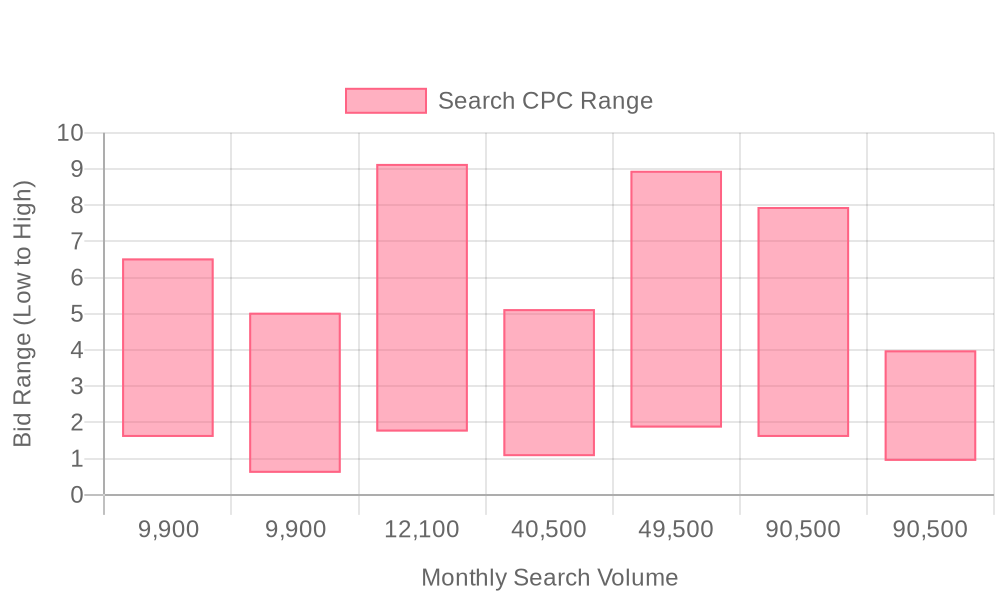
| Industry | Keyword | Monthly Search Volume | Competition Level | Low Bid | High Bid |
| Restaurant Supplies | commercial kitchen equipment | 9900 | HIGH | 1.6 | 6.53 |
| Restaurant Supplies | used restaurant equipment | 9900 | HIGH | 0.61 | 5.03 |
| Restaurant Supplies | restaurant equipment near me | 12100 | HIGH | 1.75 | 9.14 |
| Restaurant Supplies | restaurant supply near me | 40500 | HIGH | 1.07 | 5.13 |
| Restaurant Supplies | restaurant equipment | 49500 | HIGH | 1.86 | 8.95 |
| Restaurant Supplies | restaurant supplies | 90500 | HIGH | 1.6 | 7.95 |
| Restaurant Supplies | restaurant supply store | 90500 | HIGH | 0.94 | 3.99 |
Effective keyword strategy is the backbone of successful restaurant supply advertising. By aligning keyword selection with the critical purchase moments of decision-makers, marketers can ensure campaigns reach buyers precisely when they are searching for solutions, whether that's sourcing new kitchen equipment or replenishing essential supplies. This approach transforms Google Ads for Restaurant Supplies from a generic lead generation channel into a targeted, revenue-producing engine.
Precision targeting with high-intent keywords like "restaurant supply advertising," "PPC for restaurant supplies," and restaurant equipment marketing lets marketers bypass low-quality, broad traffic. Budget instead concentrates on buyers actively seeking commercial-grade products, so each click has a real shot at moving through the funnel. With company-level visitor identification and real-time intent monitoring, teams can see not just what's being searched but which accounts are behind the searches, and prioritize spend on the ones showing genuine buying signals.
Measurable ROI is achieved when conversion tracking is tightly integrated with CRM and sales tools. This enables online and offline attribution, revealing the actual revenue impact of each keyword and campaign. When enriched audience data is synced into platforms like Google Ads, marketers can automatically retarget past visitors or current leads with tailored offers, such as restaurant supply promotions or demo invitations. This channel synergy ensures that as prospects move between research and purchase phases, their ad experience adapts dynamically, boosting conversion rates and driving more efficient restaurant supply sales.
Channel synergy further amplifies results, especially as audiences are built and refined based on in-market behavior. As prospects engage with content or submit inquiries, dynamic audience segments update in real-time, allowing for seamless cross-channel retargeting. This holistic strategy ensures that every digital marketing for restaurants campaign is informed by unified, actionable data, leading to smarter Google Ads targeting for restaurants, increased engagement, and a measurable lift in sales pipeline for the restaurant supply business.
Step-by-Step Campaign Execution Framework
Step 1: Build Targeted Keyword Lists
Keyword segmentation is crucial for restaurant supply advertising. Start by mapping core product categories such as commercial refrigeration, industrial cookware, or janitorial supplies. Segment these lists by both product specificity and geographic region, capturing intent from searches like “restaurant equipment supplier in Dallas” or “bulk kitchen supplies for hotels.” For hands-on guidance, explore digital marketing solutions for restaurant supply and equipment companies. This structure enables granular bidding, ensuring budget allocation aligns with commercial demand across varied markets.
Integrating Sona's Identity Resolution further refines keyword targeting. Marketers can move beyond anonymous clicks to pinpoint business accounts actively searching for restaurant supply solutions. By layering in real-time intent signals, campaigns automatically prioritize high-value prospects, making every keyword dollar more accountable and adaptive to shifting buyer behaviors.
The upgrade most restaurant supplies advertisers miss is going beyond raw keyword volume to layer in intent and identity signals. By connecting website-visitor data and CRM records with Sona Marketing Measurement, you can see which specific search terms bring in the accounts and customers that actually convert, and weight your keyword and bidding strategy toward those rather than the terms with the highest search volume alone.
Step 2: Develop Compelling Ad Copy
Effective ad copy in Google Ads for Restaurant Supplies must address operational pain points and highlight differentiators such as same-day shipping, equipment warranties, or bulk order discounts. Use clear, benefit-driven language that speaks directly to foodservice professionals and procurement officers. For actionable tips, review these PPC advertising tips for restaurant growth. A compelling message not only attracts qualified leads but also sets expectations for follow-up, reducing the risk of missed sales opportunities.
Audience insights can power more personalized messaging. When ad platforms sync with CRM and engagement data, copy can dynamically adjust to match funnel stage or account status. This approach ensures prospects always receive the most relevant value proposition, whether they’re researching, comparing, or ready to purchase, improving conversion rates and driving more meaningful interactions.
Step 3: Design Effective Landing Pages
Landing pages for restaurant equipment marketing should align tightly with the ad’s promise, providing a seamless transition from search to site. Feature trust signals such as certifications, client logos, industry partnerships, and clear calls-to-action tailored for B2B buyers. Learn how restaurant equipment suppliers can grow online sales with digital strategies. Streamlined forms and prominent quote or demo requests accelerate lead capture, while detailed product specs satisfy technical evaluators.
Advanced platforms enable real-time updates to landing content based on visitor profile or campaign source. This means returning decision-makers can see case studies or promotional offers most relevant to their current needs, increasing engagement and reducing friction in the buying process.
Step 4: Implement Data-Driven Optimizations
Continuous monitoring and optimization separate average campaigns from best-in-class restaurant supply promotions. By tracking conversions, adjusting bids, and integrating offline sales data, marketers can measure the true impact of each channel on both immediate and long-term revenue. For strategies on maximizing visibility and bookings, see these best practices for Google Ads in the restaurant sector. Regular analysis of search terms, ad performance, and audience segments identifies new opportunities for refinement.
Automated audience updates ensure retargeting pools stay fresh as leads progress through the funnel. When CRM and ad platforms sync, sales teams gain visibility into which accounts are engaging, allowing for timely outreach and more accurate attribution. With unified online and offline conversion tracking, marketers gain a comprehensive ROI picture, enabling smarter investment and faster growth in restaurant supply sales.
Sona Marketing Measurement closes the gap between clicks and revenue. It captures ad clicks with first-party, company-level measurement rather than individual tracking, then ties that click through UTM capture and ad-platform APIs to the actual record in your CRM, and reports ROAS by keyword and campaign instead of by last-click form fill. Feeding that revenue signal back into Smart Bidding and Performance Max compounds over time: the algorithms optimize toward booked restaurant supplies revenue, not cheap leads.
Tips on Expanding Your Restaurant Supply Presence

Maximizing digital visibility in the restaurant supply sector demands more than standard advertising tactics. Marketers who prioritize data-driven audience segmentation, personalized messaging, and continuous optimization consistently outperform competitors in both lead generation and long-term customer retention.
- Cross-Promote Content: Educational resources are powerful tools for re-engaging past site visitors. By integrating product guides, how-tos, and industry insights into your retargeting campaigns, you create additional touchpoints that nurture prospects while reinforcing your expertise. When enriched visitor data is synced in real time from your web analytics, ad platforms can automatically deliver these resources to in-market buyers, significantly increasing post-click engagement and accelerating the sales cycle.
- Upsell Related Services: CRM-driven personalization enables timely, relevant promotions that resonate with distinct buyer segments. When audience data is unified and updated dynamically, your campaigns can trigger upsell offers, such as equipment maintenance contracts or training packages, right when a lead signals purchase intent. For more ideas on growing online sales, explore digital marketing services for restaurant equipment suppliers.
- Localize Marketing Efforts: Regional needs in the restaurant supply business are often overlooked but critical to conversion performance. Geo-targeted campaigns that reflect local regulations, delivery capabilities, or seasonal trends outperform generic messaging. By connecting CRM and ad data, marketers can identify which territories or metropolitan areas are producing the highest-quality leads, then automatically shift spend to those high-converting zones as new buyer intent signals emerge.
- Identify New Topics for Content Marketing: Search data is a goldmine for discovering content gaps and new areas of buyer interest. By continuously monitoring top-performing queries and tracking which themes resonate with converting audiences, you can prioritize content creation efforts around the products and services most likely to drive revenue. When this insight is fed back into your campaign and website strategy, it ensures an always-relevant content pipeline that aligns marketing with measurable sales outcomes.
Success in restaurant equipment marketing hinges on meticulous keyword targeting, segmented audience building, and high-impact ad creative that translates to effective landing pages. Marketers who leverage integrated data to inform every stage, from audience identification to conversion tracking, capture more high-intent leads and reinforce their brand in both digital and offline channels. Addressing operational pain points like missed prospects and slow follow-ups with real-time data synchronization ensures your team maintains a competitive edge and sustains growth in a crowded marketplace. Ready to optimize your approach? Get started for free with Sona.
Beyond Google Ads: Winning the AI Answers Restaurant Supplies Buyers Now Trust
Paid search captures demand the moment someone types a query. But a growing share of restaurant supplies buyers now ask ChatGPT, Gemini, or Perplexity before they ever run a search, and Google's own AI Overviews increasingly summarize an answer above the traditional results. If your business isn't referenced in those AI answers, you're invisible at the exact moment buyers build their shortlist.
Sona AI Visibility shows where your business shows up across ChatGPT, Gemini, Perplexity, Google AI Overviews, and 10+ engines, and, much like a keyword report, which prompts actually send you buyers, so you can prioritize the ones that convert. Run the two together and you cover the entire buyer path: get cited where buyers research (AI Visibility), then prove which of that demand turns into booked revenue (Marketing Measurement).
Helpful resources
Conclusion
The suppliers who pull ahead in this category are the ones treating Google Ads as one input into a larger measurement system, not a standalone channel. Tying ad clicks to CRM outcomes, watching which keywords produce buyers rather than just form fills, and showing up in the AI answers where research now starts, together these compound into a durable edge as procurement cycles get faster and more competitive.
To put these strategies to work, start for free and see the platform's capabilities firsthand.
FAQ
What are the best practices for using Google Ads for restaurant supplies?
The best practices include leveraging data-rich targeting, audience segmentation, and conversion tracking to ensure every dollar invested drives measurable impact, and synchronizing enriched lead data from CRM systems to maximize budget efficiency.
How can I optimize my Google Ads for restaurant equipment sales?
Optimize your Google Ads by focusing on high-intent keywords, aligning ad creatives with landing pages, using advanced conversion tracking, and integrating cross-channel marketing efforts to maintain consistent brand exposure.
What budget should I allocate for Google Ads in the restaurant supply industry?
The budget should be focused on targeting high-intent buyers and ensuring that every click has a high probability of converting, using advanced targeting and real-time intent signals to prioritize spend on valuable prospects.
What keywords should I target for Google Ads related to restaurant supplies?
Target high-intent, niche keywords that align with underserved areas of the market, such as 'energy-efficient commercial ovens' or 'bulk glassware for bars,' to capture intent-driven buyers and improve campaign efficiency.
How do I measure the success of my Google Ads campaigns for restaurant supplies?
Measure success through advanced conversion tracking that attributes both online and offline activity, ensuring you capture the actual revenue impact of each keyword and campaign, and using CRM and sales data for comprehensive ROI analysis.







