


Printing supplies buyers rarely browse. A shop manager searching for bulk toner or a facilities buyer sourcing wide-format ink already knows what they need and wants a supplier who can quote fast, hold stock, and meet delivery windows. That urgency, plus the category's mix of recurring consumables and occasional big equipment purchases, makes Google Ads a sharper tool here than in most B2B verticals, if the campaigns are built around how these buyers actually search. This guide walks through targeting, keyword strategy, and campaign structure specific to printing supplies, from eco-friendly ink searches to last-minute wholesale orders.
How to Generate Google Ads for Printing Supplies Leads: A Step-by-Step Guide
Printing supply marketers operate in a landscape where generic targeting is insufficient and high-value accounts require tailored engagement. Success hinges on precise audience segmentation and a data-driven approach that matches commercial intent with relevant messaging at every touchpoint.
Modern B2B strategies demand more than surface-level analytics; they require visibility into account-level engagement and buyer readiness. By integrating advanced data solutions, marketers can identify and prioritize in-market companies, ensuring Google Ads budgets fuel lead generation with measurable business impact.
- Keyword and audience targeting for printing supply buyers: Lead generation for printing supplies starts with keyword lists that reflect how professional buyers actually search, think bulk toner, wide-format ink, or consumables tied to a specific press model. Build out core commercial terms, add long-tail variations for specialized products, and cut irrelevant traffic with negative keywords. Account-level audience building lets marketers move past basic demographic filters to target decision-makers at companies actively researching print supplies. Sona's Identity Resolution identifies the companies behind anonymous site visits, so high-value prospects can be added to Google Ads audiences and budget shifted toward them in real time.
- Landing page and creative alignment for conversions: Landing pages aligned with ad creative provide a seamless journey for buyers, reinforcing the message that first captured their interest. For printing industry campaigns, this means showing relevant products, pricing, and trust signals (such as certifications and testimonials) on arrival. Creative assets should speak directly to a buyer’s stage in the journey, whether highlighting bulk order discounts or instant quote options. By leveraging solutions that track buyer engagement across the funnel, marketers can tailor landing page experiences based on account behavior and update ad creative dynamically as leads progress, resulting in higher conversion rates.
- Optimization tactics for sustained ROI: Continuous optimization matters in a crowded printing supplies market. Watch account-level engagement, use intent signals to catch shifts in prospect activity, and shift spend toward high-performing segments. As new leads surface or existing opportunities advance, dynamic audience lists keep remarketing relevant. Layering in conversion tracking that includes both online and offline actions, like a phone order or a distributor pickup, gives marketers a full view of campaign ROI and room to pivot quickly when engagement shifts.
- Cross-channel integration for ecosystem impact: Robust lead generation harnesses the power of cross-channel marketing, ensuring that insights from Google Ads inform broader digital and sales strategies. By syncing enriched audience data and lead signals between platforms like Google Ads, HubSpot, or Salesforce, marketers build unified profiles that support coordinated outreach. This ecosystem approach leverages intent signals from every channel, empowering marketers to deliver timely, personalized ads and nurture messaging as buyers move from search to site to sales engagement.
Focus on these foundational steps to align Google Ads with your printing supplies lead-generation efforts, or get started for free with Sona, and build a resilient, scalable revenue engine.
Why does Google Ads matter for Printing Supplies?
Digital visibility is integral for printing supplies providers aiming to outpace industry volatility and drive sustainable revenue growth. Google Ads offers a direct channel to engage purchasing professionals, print shop managers, and procurement teams precisely when they are evaluating suppliers or searching for urgent stock replenishment. For actionable tips on leveraging Google Ads in this sector, see these strategies for printing businesses.
With advanced targeting, printing supplies companies can promote higher-margin products and specialty services to segmented audiences, ensuring relevance and increasing average order values. Real-time campaign data enables rapid response to the fluctuating needs typical in the printing industry, allowing marketers to shift budgets toward high-performing offers or regions as soon as demand spikes.
Effective cross-channel ad syncing ensures that printing suppliers reach new geographies and verticals with consistent messaging, which is essential for expanding market share. Integrated analytics connect digital interactions to offline sales, equipping marketers with actionable insights to optimize spend. By identifying website visitors, teams can move beyond anonymous impressions to prioritize outreach for those most likely to convert, streamlining both sales and marketing efforts.
Unified data across CRM, ad platforms, and analytics gives marketers a foundation for smarter audience building and sharper retargeting. As leads move through the funnel, dynamic audience segmentation and real-time intent signals help printing suppliers deliver messaging tailored to where each account stands, whether that's a first-time buyer comparing prices or a returning customer due for a reorder. Ready to unlock more value from your digital campaigns? Get started for free with Sona.
Common Types of Google Ads Campaigns for Printing Supplies

- Search Campaigns: Targeting high-intent buyers is essential in the printing supplies sector. Search campaigns leverage intent signals from keyword queries like "bulk printer cartridges" or "eco-friendly toner," allowing marketers to capture demand at the moment of need. For additional insight on high-performing keywords in the print media industry, see this list of print media keywords.
- Display Ads: Maintaining brand visibility across industry-specific websites and publications keeps your printing supplies top-of-mind with procurement professionals and facility managers. Display placements are refined by dynamic audience updates, ensuring ad spend focuses on the right companies and job roles. Explore our blog for expert articles on optimizing display strategies in B2B markets.
- Video Ads: Video formats enable printing supply brands to showcase product differentiation, such as premium quality or sustainability credentials, in a visually compelling way. Video campaigns reach buyers at different funnel stages, and real-time engagement data allows teams to adjust messaging and targeting for maximum impact. For creative inspiration, review these effective ad copy examples.
- Remarketing: Re-engaging potential buyers who have visited your site or interacted with your brand is critical for long sales cycles common in printing supplies. Advanced remarketing strategies, powered by AI-driven cohort analysis, create dynamic audience segments that evolve as leads move through research and procurement stages.
- Assets: Ad assets (formerly called extensions) add trust signals to your campaigns, sharpening buyer confidence in a competitive market. Certifications, sustainability commitments, or fulfillment guarantees shown directly within an ad lift click-through rates and set your offering apart. Syncing certifications and product attributes from internal systems keeps every ad current on compliance and value propositions without manual updates.
Where to Find Growth Opportunities

Expanding reach in the printing supplies market requires precise targeting and sharp market analysis. High-growth brands consistently identify underexploited demand pockets and build agile campaigns that convert intent into revenue. For a deeper dive into B2B demand generation tactics, explore our actionable playbooks.
- Vertical keyword targeting: Aligning your Google Ads for printing supplies with specialty service keywords ensures your content strategy captures emerging buyer needs. For example, targeting searches related to “eco-friendly printing inks,” “bulk wholesale toner,” or “custom print fulfillment services” surfaces your business in front of procurement teams and facilities managers actively searching for solutions. By structuring keyword groups to mirror your most profitable service verticals, you build relevance and Quality Score, which in turn reduces cost per acquisition. Real-time audience intent data, sourced from both website engagement and CRM activity, enables you to allocate budget toward keywords that are trending up in conversion performance. Get inspiration for keyword targeting with this list of high-performing print media keywords.
- Competitor gap analysis: Using Google’s auction insights, you can uncover which market segments your competitors under-serve or ignore entirely. This includes identifying keyword clusters where your impression share outpaces rivals or where certain subcategories, like sustainable packaging supplies or direct-to-garment inks, lack strong competition. When audience segmentation is unified across ad platforms and CRM data, enriched with firmographic insights, you can aggressively pursue these gaps by syncing targeted audiences straight into Google Ads, ensuring that high-value accounts receive dedicated messaging and offers. Seamless data activation between your CRM and ad platforms helps maintain real-time alignment and campaign agility.
- Niche forum placements: Expanding beyond traditional search and display placements, advertising on specialized forums for print professionals and trade groups positions your brand directly within buying conversations. These placements offer higher engagement rates because they reach decision-makers actively evaluating new vendors and solutions. Dynamic audience management ensures your ads automatically update to include users who have interacted with your site or engaged with high-value content, so you maintain relevance as prospects move through the funnel.
- Retargeting with content: Deploying retargeting campaigns that promote downloadable assets, such as eco-friendly printing whitepapers or equipment demo videos, enables you to capitalize on sustainability trends and educate B2B buyers. Interest signals from these engagements feed into your audience pools, so campaigns can prioritize contacts most likely to convert. Advanced conversion tracking links both online behaviors and offline actions, such as phone inquiries or in-person demos, to your original ad spend, allowing you to measure true ROI and double down on the tactics that drive pipeline growth.
How to Apply Audience Segmentation for Printing Supplies

Audience segmentation is the foundation of high-impact digital marketing for printing suppliers. By dividing buyers into specific groups based on real purchase signals, marketers can reach commercial accounts, procurement teams, and specialized verticals with messaging tailored to their needs. This approach elevates campaign efficiency, concentrating spend on segments most likely to convert and maximizing the ROI on every ad impression. To explore how printing businesses are using digital ads to attract new customers, review these Google Ads strategies for printing services.
- Define Segments: Distinguishing between eco-conscious purchasers and those focused on standard supplies enables precise campaign targeting. Firmographic criteria, such as company size, industry, or purchasing authority, ensure that offers are delivered to the right business decision-makers. This level of granularity not only improves relevance but also reduces wasted budget on low-value prospects. For more tips, check out our essential guide to account-based marketing.
- Overlay Intent Signals: Leveraging behavioral data such as recent searches for bulk procurement, custom print jobs, or last-minute delivery helps marketers prioritize in-market buyers. Predictive insights drawn from digital touchpoints allow real-time budget shifts toward segments showing the highest likelihood of conversion. Marketers can further pinpoint visitors by identifying which companies are browsing high-margin products, giving sales teams actionable intelligence to accelerate deals.
- Create Custom Ad Groups: Crafting ad groups for each segment ensures that ad copy, offers, and landing pages resonate with the unique needs of every audience. Budget allocation becomes more strategic, channeling resources toward segments with the highest lifetime value or immediate buying intent. Dynamic audience updates, as leads progress through the funnel or change behavior, enable ongoing refinement, ensuring campaigns always align with the current state of each account.
- Validate Conversion Paths: Integrating CRM systems with ad platforms provides end-to-end visibility from ad click to closed deal. This connection lets revenue teams track how each segment moves through the buyer journey, so follow-up stays personalized and timely. With audience data synced automatically, marketers measure online and offline conversions accurately, attributing revenue to the campaigns and segments that actually drive business growth.
This is also where measurement changes the economics. With Sona Marketing Measurement you can identify the companies and buyers behind your ad clicks, not just anonymous sessions, and segment audiences by who actually becomes a customer. That lets you build bid adjustments and audience signals around the segments that convert and de-prioritize the ones that don't, so you feed Google's algorithms "this click became a paying printing supplies customer" instead of just "someone filled out a form."
Keyword Strategy & Sample Target Terms
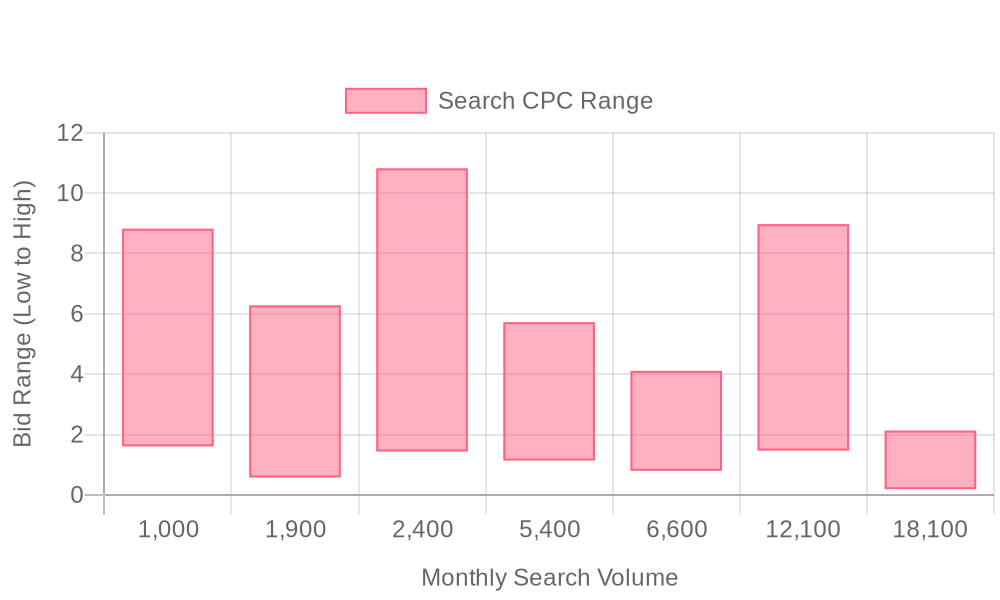
| Industry | Keyword | Monthly Search Volume | Competition Level | Low Bid | High Bid |
| Printing Supplies | printer cartridges | 1000 | HIGH | 1.61 | 8.82 |
| Printing Supplies | printing supplies | 1900 | HIGH | 0.58 | 6.28 |
| Printing Supplies | hp printer cartridges | 2400 | HIGH | 1.44 | 10.82 |
| Printing Supplies | printer ink cartridges | 5400 | HIGH | 1.14 | 5.72 |
| Printing Supplies | screen printing supplies | 6600 | HIGH | 0.8 | 4.11 |
| Printing Supplies | pocket folders | 12100 | HIGH | 1.47 | 8.97 |
| Printing Supplies | t shirt printing machine | 18100 | HIGH | 0.19 | 2.13 |
Keyword planning for Google Ads in the printing supplies industry requires an approach that aligns tightly with how buyers actually search and purchase. High-volume, high-intent keywords such as "eco-friendly printing supplies" or "local printing supplies discounts" attract commercial buyers who are ready to act. These terms map directly to procurement cycles and industry trends, ensuring that ad impressions reach audiences with clear purchasing objectives. For a comprehensive list of the most searched keywords in the printing industry, explore this printing industry keywords resource.
To expand reach while maintaining quality, integrating long-tail keywords is essential. Terms like specific printer model numbers or niche technology phrases ("latex ink cartridges for HP 570") target professionals researching specialized solutions. This strategy not only narrows the field to in-market prospects but also increases the likelihood of conversion due to precise alignment with buyer needs. Learn how precise audience intelligence can help you reach these highly targeted segments.
Incorporating negative keywords is critical for efficiency, allowing campaigns to filter out unqualified traffic and prevent budget waste. Excluding irrelevant queries like "DIY printables" or "printer troubleshooting tips" ensures ad spend remains focused on buyers with true commercial intent. To optimize this process, see how to use negative keywords effectively.
Regular analysis of search trends enables marketers to anticipate demand shifts, such as a surge in interest for sustainable materials or last-minute supply discounts. By leveraging these insights, keyword lists can be refreshed to capture emerging needs and outperform static, outdated strategies. Marketers using platforms that unify go-to-market data gain an edge by identifying which keywords drive the highest-value account activity, allowing for real-time budget reallocation to top-performing terms. Audience enrichment and CRM syncing further refine targeting, ensuring only the most relevant and valuable leads receive ad exposure as buyer intent signals evolve.
Step-by-Step Campaign Execution Framework
Step 1: Build Targeted Keyword Lists
Precision in keyword selection underpins every successful Google Ads for Printing Supplies initiative. Start by clustering keywords based on specific service types: for example, group "bulk toner cartridges," "large format printer ink," and "copier maintenance kits" into distinct ad groups. This approach ensures that ad relevance and Quality Score remain high, directly impacting cost efficiency and click-through rates. For a curated list of high-performing keywords relevant to the print media industry, visit print media keywords.
Next, localize campaigns by layering geographic modifiers onto high-intent queries. Phrases like "wholesale printer supplies Chicago" or "screen printing chemicals near Dallas" help capture customers with immediate proximity-based needs and reduce wasted spend. Negative keywords are essential for eliminating irrelevant clicks and wasted budget. Excluding terms such as "free templates" or "DIY cartridge refills" prevents non-commercial traffic from diluting campaign ROI. Platforms that unify search data and visitor identification allow for further refinement, enabling marketers to move beyond anonymous impressions and focus on engaged business prospects.
The upgrade most printing supplies advertisers miss is going beyond raw keyword volume to layer in intent and identity signals. By connecting website-visitor data and CRM records with Sona Marketing Measurement, you can see which specific search terms bring in the accounts and customers that actually convert, and weight your keyword and bidding strategy toward those rather than the terms with the highest search volume alone.
Step 2: Develop Compelling Ad Copy
Effective Google Ads for printing supplies must address industry pain points with direct, actionable messaging. Highlight common frustrations like missed lead opportunities and the consequences of slow response times, positioning your brand as the solution for urgent procurement needs. For inspiration, review a range of ad copy examples designed to spark compelling messaging for your campaigns.
Incorporate trust-building elements such as industry certifications, satisfaction guarantees, or real-time support availability to reassure decision-makers evaluating new suppliers. Leverage personalized offers that align with each buyer’s journey stage. Consider ad variants that prompt initial consultations for new prospects and bulk order discounts for returning customers. Data-driven platforms enhance this process by syncing real-time audience insights directly into your ad creation workflow, allowing for account-specific messaging and timely incentives. This enables campaigns to adapt messaging dynamically as leads progress through the funnel, ensuring each touchpoint is relevant and conversion-focused.
Step 3: Design Effective Landing Pages
Landing pages for printing supplies advertising must provide a seamless transition from ad to onsite experience. Each page should mirror the language and offer presented in the ad, creating an immediate sense of context for the visitor. Including ROI calculators, instant quote tools, and CTAs tailored to the visitor’s account attributes significantly improves conversion rates, especially when informed by company-level data.
Integrate trust signals and clear next steps to reduce friction for buyers. Showcasing client logos, compliance certifications, and real-time inventory levels builds confidence and urgency. When landing page views are connected with visitor identity tools, marketers can immediately spot which companies are engaging and prioritize follow-up actions, ensuring no high-value prospect slips through the cracks.
Step 4: Implement Data-Driven Optimizations
Continuous improvement is the foundation of effective PPC for printing. Strategic approaches, such as those outlined in PPC strategies for print providers, can help you refine campaigns for maximum efficiency. Use Test CPA bidding strategies to determine optimal spend for each audience segment, reallocating budget in real time as performance data evolves. By importing offline sales and engagement data, marketers gain a comprehensive view of the buyer journey, enabling smarter bid adjustments and more accurate ROI measurement.
Advanced conversion tracking closes the attribution gap between online engagement and offline sales, giving revenue teams a unified view of marketing impact. When audience and lead data are synced automatically between CRM and ad platforms, campaigns benefit from refreshed targeting and up-to-date exclusion lists. This results in more efficient spend, higher conversion rates, and a measurable improvement in pipeline velocity for B2B printing supply businesses.
Sona Marketing Measurement closes the gap between clicks and revenue. It captures ad clicks with first-party measurement, ties that activity through UTM capture and ad-platform APIs to the matching record in your CRM, and reports ROAS by keyword and campaign instead of by last-click form fill. Feeding that revenue signal back into Smart Bidding and Performance Max compounds over time: the algorithms optimize toward booked printing supplies revenue, not cheap leads.
Tips on Expanding Your Printing Supplies Presence

Expanding your reach in the printing supplies industry requires a blend of creativity and data-driven execution. Businesses that integrate both digital and community-focused strategies consistently outperform competitors in visibility and customer engagement. For expert insights on marketing measurement and B2B growth, visit the Sona blog.
- Cross-promoting eco-centric educational resources in retargeting campaigns: By weaving sustainability content into retargeting ads, you position your brand as a trusted authority while cultivating loyalty among environmentally conscious buyers. Offering subtle rewards, such as downloadable guides or exclusive content, can enhance engagement without appearing overly promotional. When audience segmentation is informed by real-time CRM data, these campaigns adapt to prospect behavior and preference, maximizing relevance.
- Offering discounts for first-time orders on essential supplies: Targeting new buyer segments with tailored offers can accelerate list growth and conversion rates. When discounts are informed by enriched CRM insights, you ensure the right prospects see the right offer at the critical moment in their purchasing journey. This approach also allows for dynamic adjustment and personalization as these leads move through the funnel. Streamline these efforts with automated data syncing to your CRM and ad platforms.
- Partnering with local businesses and associations to enhance referral traffic: Strategic partnerships signal a connected, community-driven presence, driving inbound leads from trusted sources. Local collaborations can be amplified by syncing partnership data with your digital campaigns, ensuring that referred audiences receive messaging that resonates with their context and needs. Learn how successful collaborations and digital marketing strategies have expanded reach in the industry by exploring this GoGoPrint case study.
- Utilizing local SEO efforts to promote relationships and strengthen regional market presence: Consistent, well-synchronized keyword strategies not only improve organic rankings but also reinforce your authority within target geographies. Effective local SEO, combined with audience data from online and offline touchpoints, enables your business to stand out in regional searches and capture high-intent commercial buyers.
Google Ads for printing supplies works best when it amplifies these initiatives rather than standing apart from them, delivering tailored messaging to segmented audiences at scale. For practical guidance on how printing businesses can use Google Ads to attract customers and generate leads, review this Google Ads for Printing Services guide. Tight alignment between campaign execution, audience insights, and real-time intent signals is what turns marketing spend into measurable, sustainable growth.
Beyond Google Ads: Winning the AI Answers Printing Supplies Buyers Now Trust
Paid search captures demand at the moment someone types a query. But a fast-growing share of printing supplies buyers no longer start at Google at all, they ask ChatGPT, Gemini, or Perplexity before they ever run a search, and Google's own AI Overviews increasingly summarize an answer above the traditional results. If your business isn't referenced in those AI answers, you're invisible at the exact moment buyers build their shortlist.
Sona AI Visibility shows where your business shows up across ChatGPT, Gemini, Perplexity, Google AI Overviews, and 10+ engines, and, much like a keyword report, which prompts actually send you buyers, so you can prioritize the ones that convert. Run the two together and you cover the entire buyer path: get cited where buyers research (AI Visibility), then prove which of that demand turns into booked revenue (Marketing Measurement).
Helpful resources
Conclusion
Google Ads works for printing supplies when campaigns reflect how this trade actually buys: fast, specific, and often under deadline pressure. Get the targeting, keyword structure, and measurement right, and the platform turns urgent searches into booked orders rather than anonymous clicks.
The suppliers who pull ahead won't just run more ads, they'll be the ones whose measurement ties clicks to actual booked revenue, so every dollar of spend gets smarter over time instead of chasing the same generic keywords as everyone else.
To fully experience the benefits of a unified approach to go-to-market data and actionable insights, start for free with us today.
FAQ
What are the best practices for Google Ads in the printing supplies industry?
Best practices include precise audience segmentation, using industry-specific keywords and negative keywords, aligning landing pages with ad creatives, continuous optimization of campaigns, and integrating cross-channel marketing strategies.
How can I optimize my Google Ads campaigns for printing supplies?
Optimize campaigns by monitoring account-level engagement, reallocating spend to high-performing segments, using intent signals to identify shifts in activity, and integrating advanced conversion tracking for a full view of ROI.
What keywords should I target for Google Ads related to printing supplies?
Target high-intent keywords such as 'eco-friendly printing supplies' and 'bulk printer cartridges,' and use long-tail keywords for specialized products, while excluding irrelevant clicks with negative keywords.
What is the ROI of using Google Ads for printing supplies?
Google Ads offers a direct channel to engage purchasing professionals and procurement teams, promoting higher-margin products and specialty services, and using integrated analytics to connect digital interactions to offline sales for measurable ROI.
How do I set up a Google Ads account for my printing supplies business?
Setting up involves building targeted keyword lists, developing compelling ad copy, designing effective landing pages, and implementing data-driven optimizations to ensure campaigns align with audience insights and business goals.







