


A real estate license student searching Google at 11 p.m. for "how to get a real estate license" is already deciding between three or four schools. Google Ads is how you get in front of that decision before a competitor does, catching motivated prospects at the exact moment they're comparing licensing programs, exam prep, and continuing education options. The harder problem is what happens next: most schools lose track of the visitors who click but don't enroll on the spot. Identity resolution now lets schools recognize those anonymous visitors, connect offline inquiries to digital activity, and act on intent signals as a prospect moves through the enrollment funnel.
How to Generate Real Estate School Leads with Google Ads: A Step-by-Step Guide

A modern real estate school cannot rely on passive website visits or word-of-mouth alone to drive enrollment. Purposeful digital advertising, especially with Google Ads, allows schools to focus resources on prospects with clear intent, resulting in higher-quality leads and measurable growth.
This guide presents a practical, results-focused approach to Google Ads for real estate schools, combining proven audience targeting, campaign optimization, and seamless data activation. By unifying the full spectrum of go-to-market data and leveraging advanced insights, real estate schools can engage high-intent prospects at the moment they are ready to take action, improving pipeline quality and maximizing return on ad spend.
- Develop Keyword And Audience Targeting: Real estate license seekers often show clear intent, browsing course pages, comparing state requirements, checking exam pass rates, well before they fill out a form. Sharper keyword and audience targeting catches that demand instead of letting it go unconverted.
Granular keyword targeting ensures your ads reach users searching for specific real estate licensing courses, online real estate classes, or continuing education. Layering in audience signals, such as recent site visitors, in-market learners, and prior students, helps marketers prioritize messaging and budget toward the most relevant prospects. When these audiences update dynamically based on real-time interactions, campaigns adapt to shifting intent, so spend follows whoever is closest to enrolling. Adding first-party data and CRM enrichment sharpens this further, helping schools identify brokerages or companies looking to sponsor group training and personalize follow-up accordingly. Sona's Audiences product supports this kind of precise segmentation for high-value campaigns.
- Streamline Landing Pages: Align landing pages with Google Ads messaging for maximum conversion.
Conversion rates for real estate advertising increase when landing pages mirror the intent and language of the original ad. Prospects arriving from PPC for real estate campaigns expect a seamless journey: clear next steps, mobile responsiveness, and content that explicitly addresses their needs. Optimized landing pages reduce friction by limiting form fields, highlighting accreditation, and featuring testimonials from successful alumni. This unification of ad and landing page messaging ensures that high-quality traffic generated by Google Ads strategies for real estate translates into tangible leads, not just empty clicks. WordStream provides a deeper look at this trend.
- Optimize Ad Performance: Continuously improve ad performance for better ROI.
The best real estate lead generation efforts are never static. Continuous monitoring allows revenue teams to identify which keywords, ad groups, and creatives deliver the highest conversion rates and adjust spend accordingly. Real-time conversion tracking, spanning both online sign-ups and offline enrollments, reveals the true impact of each campaign. Connecting ad performance data with CRM and sales systems enables teams to attribute enrollments to specific ads, refine audience segments, and improve future outreach with greater precision.
- Integrate With Other Channels: Combine Google Ads with content marketing and online courses for a cohesive strategy.
For holistic real estate digital marketing, Google Ads does not operate in isolation. Successful real estate schools amplify their search campaigns with educational content, webinars, and on-demand real estate online courses, capturing leads at every funnel stage. Sophisticated marketing teams leverage unified data to sync audiences and nurture prospects across email, paid social, and remarketing, creating tailored journeys that increase engagement and drive more qualified enrollments. For more insights on orchestrating multi-channel campaigns, check out our guide on intent-driven retargeting.
Why Does Google Ads Matter for Real Estate School?

Real estate schools operate in a competitive landscape where timely, precise outreach can determine enrollment success. Google Ads delivers a direct path to students actively researching licensing, exam prep, and continuing education, ensuring your programs surface when intent is highest.
By leveraging Google Ads, real estate schools address distinct audiences at every stage: from newcomers seeking entry-level licensing to professionals pursuing advanced certifications. Campaigns can tailor messaging and offers to these segments, aligning budget with the most relevant prospects and maximizing conversion opportunities. Learn more about Google Ads for real estate.
The platform's agility enables real estate schools to quickly respond to market fluctuations, such as seasonal spikes in real estate interest or changes in state licensing requirements. Rapid campaign launches and adjustments provide instant visibility, allowing you to capture demand as it emerges and outpace slower-moving competitors.
Geo-targeting features empower schools to expand into new or underserved markets. By deploying ads with specific location modifiers, you can reach prospective students in high-growth regions or target niche audiences in areas with little competition. This strategic reach is critical for scaling enrollments and diversifying your student base. For more insights, see our Google Ads ROAS guide.
Integrated analytics transform campaign performance measurement. Real estate schools gain closed-loop visibility into which keywords, audiences, and creative drive enrollments. Sona's Identity Resolution goes further, identifying the companies behind anonymous visitors so marketers can prioritize high-value follow-ups and sync enriched leads into platforms like Google Ads and CRM systems. This end-to-end data unification supports smarter marketing investment, measurable ROI, and continuous optimization.
Common Types of Google Ads Campaigns for Real Estate School

- Search Campaigns: Search campaigns target high-intent prospects as they actively look for real estate licensing courses, exam prep, or continuing education. Within Search, responsive search ads let you test multiple headlines and descriptions so Google can serve the combination that best matches a given query, converting interest generated from sources like webinars or social media directly into leads. For a deeper look at effective keyword targeting, see WordStream's tips tailored to the real estate sector.
- Display Ads: Display advertising keeps a school's brand visible across the web, particularly on educational and real estate forums where prospective students gather information. This constant presence reinforces brand recall and nurtures consideration throughout a lengthy research process. When visitor identification is integrated, marketers can move beyond anonymous impressions to see which companies are engaging, refining placement and creative strategy for maximum relevance. Sona's Identity Resolution supports this by enabling schools to pinpoint which visitors are interacting with specific ads.
- Video Ads: Video campaigns allow schools to showcase course highlights, instructor expertise, and student testimonials in engaging, visual formats. These ads build trust and differentiate a program in a crowded marketplace, driving deeper engagement with prospects. With advanced audience data, video ads can be served to users progressing through the funnel, such as those who have previously visited course pages or downloaded a brochure.
- Remarketing: Remarketing campaigns re-engage users who expressed interest but did not complete enrollment. By utilizing insights from account-level analytics, schools can deliver tailored messaging that addresses previous objections or highlights timely incentives. For more tips on retargeting with intent signals, check out our guide on intent retargeting. Dynamic audiences that update in real time ensure that remarketing efforts are focused on prospects demonstrating renewed intent, while advanced conversion tracking, online and offline, provides a complete view of true ROI and campaign effectiveness.
- Performance Max: Performance Max campaigns pool Search, Display, YouTube, and Discover inventory into a single campaign guided by your conversion goals. For real estate schools, this is useful for filling seats ahead of a licensing exam cycle or a new cohort start date, since Google's bidding can shift budget across channels as enrollment deadlines approach.
Where to Find Growth Opportunities

Real estate schools that want to accelerate enrollment growth must look beyond traditional advertising channels and surface new, data-driven opportunities. Unlocking the full potential of digital marketing requires precision in targeting, the ability to capture demand before competitors, and the agility to pivot strategy as market signals shift.
- Vertical Keyword Targeting For Specialized Courses Or Certifications: Focusing on niche keywords related to continuing education, broker licensing, or state-specific requirements allows marketers to reach high-intent prospects searching for exact offerings. Learn more at Wordstream for a deeper look at this trend, including high-performing keywords and targeting strategies for real estate education.
- Analyze Competitors To Find Gaps In Existing Offerings Through Tools Like Keyword Planners: Competitive analysis with robust keyword planning surfaces untapped segments and unaddressed queries in the market. Enriching this research with company-level visitor insights reveals which prospects are actively engaging with competitor content, helping teams redirect campaigns toward unclaimed demand.
- Strategic Placements In Industry Directories Or Forums: Real estate education buyers often consult trusted directories and peer communities before committing to a provider. By tracking engagement at the company and user level, marketers can identify which placements or syndication channels generate qualified leads, not just traffic, and adjust efforts to double down on high-converting sources. For more insights on optimizing conversion from directory placements, check out our guide on using website visitor intelligence.
- Use Remarketing To Engage With Content Seekers Leveraging Guides And Tutorials: Visitors engaging with how-to content, exam guides, or course comparison resources often signal early-stage intent. Dynamic audience segmentation ensures these individuals are seamlessly retargeted as they progress in their decision journey, with messaging tailored to their latest interactions. Integrating online and offline conversion events allows teams to accurately attribute enrollments back to initial engagement, even if the final sign-up happens via phone or in-person.
Growth-focused real estate schools that unify intent data, conversion tracking, and audience enrichment achieve a level of targeting and measurement that turns every impression and click into a strategic opportunity for enrollment. Platforms like Sona Attribution help schools track and measure the true impact of every touchpoint, enabling smarter budget allocation and higher ROI.
How to Apply Audience Segmentation for Real Estate School
Precise audience segmentation forms the foundation of successful real estate school marketing. By understanding the unique motivations and goals of different student profiles, marketing teams create campaigns that resonate and convert at a higher rate.
- Define Segments By Student Need: Differentiate marketing between new entrants seeking their first real estate license and experienced professionals pursuing continuing education. This segmentation ensures messaging, offers, and calls to action speak directly to each audience’s current career stage, increasing relevance and reducing wasted spend.
- Implement Intent Signals For High-interest Leads: Leverage behavioral data, such as frequent visits to licensing program pages or repeated downloads of exam prep materials, to identify prospective students with immediate intent. With real-time insight into these actions, marketers can dynamically adjust budget and creative, focusing on prospects most likely to convert. Sona surfaces intent signals that help teams pinpoint in-market leads for more efficient targeting.
- Customize Ad Content For Each Segment: Tailor ad copy, creative, and landing pages to address the specific concerns and aspirations of each group. For example, highlight flexible schedules and pass rates for career-changers, while emphasizing advanced certifications and networking opportunities for seasoned agents. Dynamic audience capabilities allow for seamless updates as leads progress through the enrollment funnel. See Google Ads for Real Estate for a deeper look at this trend.
- Integrate Conversion Tracking And Crm Sync: Ensure every conversion path, whether form fill, phone call, or live chat, is correctly tracked and attributed to the originating campaign. Integrating this data with CRM systems offers a unified view of the buyer journey, enabling sales and marketing teams to personalize outreach, nurture leads efficiently, and prove true campaign ROI. The ability to sync enriched audiences and conversion data into platforms like Google Ads and Salesforce empowers teams to close the loop between digital engagement and enrollment outcomes.
By elevating audience segmentation and integration, real estate schools can maximize the efficiency of their PPC for real estate and drive measurable growth across their marketing investment.
This is also where measurement changes the economics. With Sona Marketing Measurement you can identify the companies behind your ad clicks, not just anonymous sessions, and segment audiences by who actually becomes a customer. That lets you build bid adjustments and audience signals around the segments that convert and de-prioritize the ones that don't, so you feed Google's algorithms "this click became a paying real estate school customer" instead of just "someone filled out a form."
Keyword Strategy & Sample Target Terms
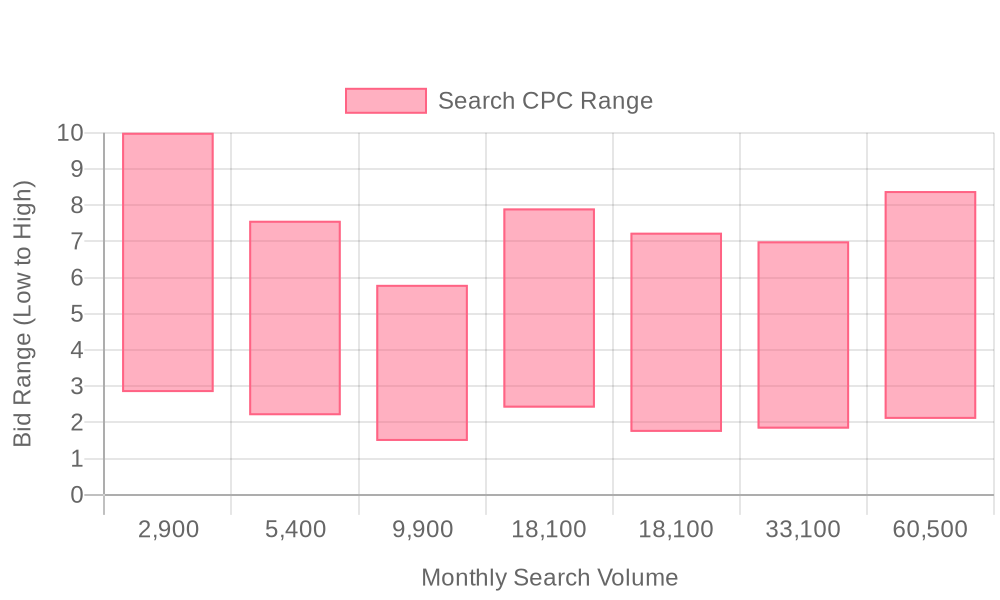
| Industry | Keyword | Monthly Search Volume | Competition Level | Low Bid | High Bid |
| Real Estate School | real estate school online | 2900 | MEDIUM | 2.84 | 10 |
| Real Estate School | online real estate classes | 5400 | HIGH | 2.2 | 7.57 |
| Real Estate School | real estate classes near me | 9900 | MEDIUM | 1.49 | 5.8 |
| Real Estate School | real estate course | 18100 | MEDIUM | 2.41 | 7.91 |
| Real Estate School | real estate school near me | 18100 | MEDIUM | 1.74 | 7.24 |
| Real Estate School | real estate classes | 33100 | HIGH | 1.83 | 7 |
| Real Estate School | real estate school | 60500 | MEDIUM | 2.1 | 8.39 |
Real estate schools can unlock campaign efficiency and maximize lead quality by prioritizing intent-driven keywords tailored to their audience. Competitive search environments demand precision: selecting terms like "real estate online courses," "PPC for real estate school," and "Google Ads tutorial for real estate" ensures ads appear in front of individuals actively seeking education and licensing solutions. Real estate keyword trends provide a deeper look at real estate keyword trends and benchmarks.
- Intent-driven Keywords: These terms capture prospects at the moment they are considering enrollment or certification. By focusing on phrases that reflect direct course interest, such as "real estate exam prep online" or "state-approved real estate school," marketers align spend with the highest-converting segments. This approach surfaces ads during critical decision-making windows, raising conversion rates and reducing wasted impressions.
- Geographical Modifiers: Incorporating location-based language like "real estate classes near me" or "online real estate courses Texas" allows campaigns to target local markets with precision. Geographic targeting helps real estate schools reach prospects within licensing boundaries or those seeking flexible remote options. When user location and query intent align, cost per acquisition drops and relevance increases. For more insights on optimizing local targeting, check out our guide on retargeting strategies.
- Long-tail Opportunities And Negative Keywords: Mining long-tail keywords such as "affordable real estate license classes for working adults" captures niche audiences overlooked by broader terms. Simultaneously, implementing essential negative keywords like "real estate agent jobs" or "free property management training" prevents wasted budget on irrelevant clicks. Optimizing keyword lists in this way ensures that every impression serves a qualified lead.
Marketers who unify their real-time search data and CRM insights can continuously refresh these keyword lists, reflecting the evolving preferences and behaviors of high-intent prospects. As leads move through stages, research, consideration, enrollment, dynamic audience segments update automatically, ensuring campaigns remain tightly focused on the most valuable prospects at every funnel stage. Solutions such as Sona Audiences support the creation and activation of these dynamic segments, helping teams refine targeting and maximize conversion potential. This closed-loop approach to keyword strategy not only improves ROI but also provides the actionable intelligence needed for ongoing campaign optimization.
Step-by-Step Campaign Execution Framework
Step 1: Build Targeted Keyword Lists
A robust keyword strategy is foundational for any Google Ads campaign in the real estate school space. Start by categorizing keywords according to specific courses, certifications, or exam prep services. This ensures each campaign is hyper-relevant and captures students seeking exactly what your program offers. Integrate geographical modifiers such as city, state, or region into your keyword groups to attract local prospects actively searching for real estate education in their area. Focusing on niche, industry-specific queries and question-based searches like "how to get a real estate license in [location]" captures users with strong intent to enroll. For practical examples of keyword targeting in this industry, WordStream provides a useful overview.
Precise audience targeting improves further when marketers layer in identity resolution. By pinpointing which companies and individuals are engaging with ads, teams can refine keyword coverage to prioritize segments with higher conversion potential. Sona's Identity Resolution helps marketers recognize high-intent visitors, allowing budgets to shift toward the keywords and audiences most likely to enroll.
The upgrade most real estate school advertisers miss is going beyond raw keyword volume to layer in intent and identity signals. By connecting website-visitor data and CRM records with Sona Marketing Measurement, you can see which specific search terms bring in the accounts and customers that actually convert, and weight your keyword and bidding strategy toward those rather than the terms with the highest search volume alone.
Step 2: Develop Compelling Ad Copy
Effective ad copy for real estate marketing must articulate clear differentiators. Highlight unique selling propositions such as top exam pass rates, exclusive industry partnerships, or notable alumni success stories. Infuse trust-building elements, including accreditations or positive testimonials, to reinforce credibility. Incorporate urgency-driving features like limited-time tuition discounts or upcoming class start dates, motivating quicker action from prospects.
Dynamic audience updates empower marketers to tailor messaging as leads move through the funnel. When synced with CRM and ad platforms, ad copy can reflect a user’s stage, showcasing introductory offers to new visitors and advanced certification paths to returning prospects. This level of personalization increases engagement and drives higher conversion rates. For more on using intent data to enhance ad messaging, check out the guide on intent retargeting.
Step 3: Design Effective Landing Pages
Landing pages for real estate online courses should be tightly aligned with the user’s search query and ad messaging. Each landing page must match its keyword-ad pair, minimizing friction and ensuring users immediately find the information they expect. Featuring ROI-driven content like alumni testimonials, graduate outcomes, and detailed course benefits builds trust and substantiates program value. Calls-to-action need to be prominent, concise, and accessible on all devices to streamline lead capture.
With enriched offline and online data integration, every touchpoint, form fill, phone call, or campus visit, feeds a unified view of user behavior. This enables revenue teams to build more accurate audiences for retargeting and optimize landing page elements based on conversion data, continuously improving lead quality. Luxury Presence provides a deeper look at best practices for real estate landing pages.
Step 4: Implement Data-Driven Optimizations
Sophisticated optimization strategies distinguish high-performing real estate Google Ads campaigns. Monitor both micro-conversions (such as brochure downloads or info session signups) and macro-conversions (completed enrollments), ensuring every step of the user journey is measurable. Smart bidding tools analyze historical performance, adjusting bids dynamically to maximize conversion value within budget constraints.
Integrating offline conversion data provides a holistic view of campaign impact, linking digital ad engagement to actual enrollments and revenue. Account-level granularity consolidates insights across multiple touchpoints, empowering teams to identify high-intent accounts and segment audiences with precision. Marketers can then sync enriched audience lists with Google Ads and CRM systems, enabling continuous, data-driven optimization that amplifies campaign efficiency and real estate lead generation outcomes. For guidance on maximizing Google Ads ROAS, see the guide on boosting ROAS.
Sona Marketing Measurement closes the gap between clicks and revenue. It captures every ad click with first-party tracking, then ties that click through UTM capture and ad-platform APIs to the actual record in your CRM, and reports ROAS by keyword and campaign instead of by last-click form fill. Feeding that revenue signal back into Smart Bidding and Performance Max compounds over time: the algorithms optimize toward booked real estate school revenue, not cheap leads.
Tips on Expanding Your Real Estate School's Presence

Expanding a real estate school's market presence requires more than routine advertising. Forward-thinking schools leverage educational partnerships and co-branded initiatives to gain visibility and credibility with prospects who are comparing multiple options.
- Educational Partnerships And Co-branding: Aligning with respected industry associations or complementary education providers amplifies reach and builds trust with target audiences. These relationships create co-marketing opportunities, such as webinars or scholarship programs, that introduce your school to new prospects and generate qualified leads.
- Content Retargeting And Educational Offers: Implementing content retargeting ensures that visitors who engage with your online resources are served tailored ads promoting course guides, licensing checklists, or informational webinars. This approach drives prospects back to high-value content and keeps your brand top-of-mind throughout their research journey. For more insights on maximizing retargeting impact, check out our guide on retargeting strategies.
- Locality-focused Campaigns: Running hyper-local campaigns increases your school’s relevance in regions with strong licensing demand or underserved markets. By segmenting campaigns geographically and layering in local market data, you can deliver messaging that resonates with community-specific pain points, regulatory nuances, and career motivations.
Success in google ads for real estate school hinges on precise keyword selection, nuanced audience segmentation, and a unified approach across marketing channels. Google Ads tips shares practical tactics for optimizing Google Ads in the real estate sector. Many schools struggle to measure the full impact of their advertising due to gaps in offline conversion tracking or disconnected CRM workflows. By integrating campaign data with CRM and enrollment systems, marketers can accurately attribute enrollments from initial click to completed registration, ensuring budgets are allocated toward the highest-yield efforts and uncovering true ROI. Modern platforms elevate this process by syncing enriched lead profiles and conversion events across Google Ads, Salesforce, and HubSpot, creating a seamless feedback loop that continuously refines targeting and messaging for ongoing growth.
Beyond Google Ads: Winning the AI Answers Real Estate School Buyers Now Trust
Paid search captures demand at the moment someone types a query. But a fast-growing share of real estate school buyers no longer start at Google at all, they ask ChatGPT, Gemini, or Perplexity before they ever run a search, and Google's own AI Overviews increasingly summarize an answer above the traditional results. If your business isn't referenced in those AI answers, you're invisible at the exact moment buyers build their shortlist.
Sona AI Visibility shows where your business shows up across ChatGPT, Gemini, Perplexity, Google AI Overviews, and 10+ engines, and, much like a keyword report, which prompts actually send you buyers, so you can prioritize the ones that convert. Run the two together and you cover the entire buyer path: get cited where buyers research (AI Visibility), then prove which of that demand turns into booked revenue (Marketing Measurement).
Helpful resources
Conclusion
Google Ads works for real estate schools when it's treated as an enrollment system, not a set of ads: keyword lists tied to licensing stages, landing pages that match search intent, and measurement that traces a click all the way to a seated student.
The schools that pull ahead over the next enrollment cycle won't be the ones bidding highest on "real estate license classes," they'll be the ones that can see which of those clicks actually became paying students, and adjust bidding and creative accordingly.
Ready to see how powerful data-driven advertising can be? Start a free trial to see it firsthand.
FAQ
What are the best practices for Google Ads in real estate?
Best practices include developing targeted keyword and audience strategies, optimizing ad performance with real-time data, aligning landing pages with ad messaging, and integrating with other marketing channels for a cohesive strategy.
How can I create effective Google Ads for my real estate business?
Create effective ads by using precise keyword targeting, developing compelling ad copy that highlights unique selling propositions, and ensuring landing pages are aligned with ad messaging for maximum conversion.
What budget should I allocate for Google Ads in real estate?
While the article does not specify an exact budget, it emphasizes the importance of aligning budget with high-intent prospects and continuously optimizing spend based on conversion data to maximize ROI.
What keywords should I target for real estate Google Ads?
Target intent-driven keywords that capture prospects actively seeking education and licensing solutions, such as 'real estate online courses' and 'exam prep online,' and consider using geographical modifiers for local targeting.
How do I measure the success of my Google Ads campaigns for real estate?
Measure success by tracking both online and offline conversions, integrating with CRM systems, and using analytics to attribute enrollments to specific campaigns, allowing for continuous optimization and accurate ROI assessment.







