


Real estate investors live and die by timing: a distressed seller searching "sell my house fast" at midnight, a landlord Googling "1031 exchange deadline" before a filing window closes. Google Ads puts you in front of that intent as it happens, which matters because these leads rarely show up cleanly in a CRM until someone acts on them. Layered into a broader strategy, alongside direct mail, networking, and referral pipelines, paid search becomes the channel that catches prospects other tactics miss.
How to Generate Real Estate Investing Leads with Google Ads: A Step-by-Step Guide

For real estate investors, Google Ads delivers something cold outreach can't: contact with sellers and buyers at the moment they're already searching. Precise targeting and measurable results let marketing and sales teams stop guessing and start meeting in-market prospects, distressed sellers, landlords looking to offload, cash buyers hunting deals, with the right offer at the right moment.
Google Ads rewards real estate investors who adjust campaigns as markets move, tightening or expanding targeting as inventory, interest rates, or seasonal listing patterns shift. Visitor identification and audience enrichment let revenue teams prioritize leads that match their ideal seller or investor profile, improving conversion odds without inflating spend. Sona's Identity Resolution helps pinpoint engaged visitors, enabling smarter segmentation and higher lead quality.
The gap between a prospect's first visit and a sales team's first call is where real estate deals die, especially with motivated sellers whose urgency fades within days. Automation now flags high-potential leads the moment they show intent, so a team can reach out while motivation is still high. See our guide on intent-driven retargeting.
To build a modern lead engine, focus on data-driven keyword targeting that reflects the nuances of real estate investor searches, from “sell my house fast” to “off-market multifamily deals in Austin.” Layering in audience segmentation allows you to tailor ad messaging for distinct seller groups, such as owners of distressed properties or motivated landlords, ensuring relevance and driving higher quality conversions.
Ad creative still has to work hard in a crowded market. Clear headlines, direct calls to action, and trust signals, such as testimonials or a track record of closed transactions, separate ads that get clicked from ads that get scrolled past.
Cross-channel integration is critical for maximizing marketing impact. Syncing enriched audience segments and lead data from Google Ads into your CRM and marketing automation systems keeps sales and marketing aligned, enables timely outreach, and supports continuous improvement. Ready to streamline real estate lead generation with automation? Start Here to see how unified data can unlock better ROI.
Why Does Google Ads Matter for Real Estate Investing?
Digital advertising has become a cornerstone of modern real estate investing, enabling professionals to engage prospects at the exact moment they express intent to buy or sell property. With intense competition and fluctuating inventory, investors must cut through the noise and reach decision-makers when timing is most critical.
- Targeted Reach: Google Ads lets real estate professionals pinpoint motivated sellers, cash buyers, and other high-value audiences right as they enter the market. Refining targeting with in-market signals and granular location data helps investors reach leads who are ready to transact, a level of efficiency broad, traditional outreach can't match.
- Quick Demand Response: Real estate cycles move fast, especially around property auctions and distressed listings. Google Ads provides the agility to launch targeted campaigns that capture buyer and seller interest at the height of demand. For more insights on maximizing your campaign impact, check out our guide on boosting Google Ads ROI.
- Advanced Analytics: Tracking that follows a lead from first click through to closing reveals which campaigns actually convert, not just which ones generate clicks. Integrating ad data with CRM and offline attribution surfaces true ROI by channel, so teams can shift spend toward what works and keep refining real estate PPC strategy as market conditions change.
Common Types of Google Ads Campaigns for Real Estate Investing

- Search Campaigns: Search is where real estate investors meet buyers and sellers actively typing their intent into Google, from a distressed homeowner searching "stop foreclosure" to an investor hunting "off-market duplex." Unified CRM insights let marketers match ad copy to that urgency, and pairing search data with first-party records means every click carries context, lifting conversion rates and cutting wasted spend. Sona's ROAS Optimization helps optimize ad performance and maximize spend efficiency.
- Display Ads: Display advertising keeps your brand visible on real estate portals and high-traffic sites while a prospect is still researching, before they've decided to sell or where to invest. Consistent messaging, backed by connected data, reinforces credibility with every impression a buyer or seller sees during that research window.
- Video Ads: Video campaigns allow real estate investors to deliver immersive property tours and educational content, building trust with visually driven buyers. Rich media assets combined with granular intent data highlight unique selling points and accelerate buyer decision-making. Marketers can also retarget video viewers who demonstrate high engagement, focusing follow-up efforts where interest is strongest.
- Remarketing: Remarketing re-engages users who've already looked at listings, filled out a lead form, or read property content, exactly the audience worth a second and third touch. Audiences update as users show renewed intent or move deeper into the funnel, so follow-up stays timely. Syncing CRM events with web engagement signals keeps remarketing spend focused on the most qualified leads. See our guide on intent-driven retargeting.
Where to Find Growth Opportunities?

Expanding reach in real estate investing requires precise tactics that drive measurable results. Growth stems from identifying and activating opportunities where competitors are absent and intent signals are strongest.
- Vertical Keyword Targeting For Niche Services: Niche keyword strategies connect investors with segments like probate property sellers, distressed homeowners, or multifamily acquisition targets. Building campaigns around phrases such as "sell inherited house fast" or "1031 exchange properties" attracts leads who are ready to transact, not just browsing.
- Assess Competitor Gaps For Market Segments: Studying competitor ad placements, messaging, and keyword choices exposes underserved audiences, an emerging neighborhood nobody's targeting yet, or an asset class competitors ignore. Real-time visitor identification and enriched audience data, like Sona's Identity Resolution, let marketers adjust targeting dynamically and capture new demand before rivals notice it.
- Engage In Industry-specific Forums And Overlooked Digital Spaces: Many high-intent prospects spend time in specialized forums and online communities dedicated to real estate investment strategies, property management, and local investment clubs. Active engagement and targeted advertising in these spaces increase awareness among audiences who may not be reached through traditional search. By syncing CRM and ad audiences across these niche environments, revenue teams ensure consistent messaging and efficient follow-up, turning overlooked prospects into qualified leads ready for further nurturing.
With unified go-to-market data, every growth opportunity becomes easier to validate, scale, and attribute back to specific Google Ads for real estate investing efforts. For more insights on optimizing campaigns, check out our guide on retargeting tactics. This approach minimizes wasted spend, accelerates pipeline velocity, and ensures marketing resonates with the right potential investors at the right moments.
How to Apply Audience Segmentation for Real Estate Investing

Accurate audience segmentation is essential to maximize returns from real estate advertising and avoid wasted spend. Real estate investors operate in markets with distinct customer journeys, and differentiating between residential and commercial targets ensures messaging and offers are relevant at every interaction. A nuanced approach to segmentation provides greater clarity on lead potential and helps drive engagement by matching solutions to real needs.
- Residential Vs. Commercial Segmentation: Residential buyers and sellers want speed, convenience, and a straightforward transaction. Commercial prospects evaluate yield, development potential, and regulatory factors, often with multiple stakeholders signing off on a deal. Segmenting ad groups by property type lets marketers tailor copy, visuals, and landing pages to each audience's actual priorities, lifting relevance and conversion.
- Investment Type Intent Layering: Within a property class, intent still varies, some users want direct ownership of single-family rentals, others research REITs or crowdfunding platforms instead. Layering intent signals from search behavior, content engagement, and past actions helps marketers prioritize in-market prospects and shift budget toward segments showing real purchase intent rather than passive browsing. Sona's Audiences supports dynamic segmentation and helps maximize advertising efficiency.
- Ad Group Customization By Investor Profile: Real estate investors are not a monolith. Customizing ad groups to reflect investor experience, risk tolerance, and deal size creates a more personalized buyer journey. Early-stage investors may need educational content and step-by-step guides, while seasoned professionals respond to data-driven market insights and exclusive investment opportunities. By actively monitoring how users move between research, evaluation, and commitment, marketers can refresh audience lists and retarget with messaging tailored to each stage. For more insights on segmenting by buying stage, check out our guide on stage segmentation.
A unified approach to audience segmentation ensures that every ad dollar is spent on prospects most likely to engage and convert. With advanced tracking and dynamic audience management, real estate marketers can consistently deliver messaging that meets prospects where they are in their investment journey, unlocking new opportunities for growth and measurable improvement in Google Ads for real estate investing. To see how segmentation can elevate your campaigns, get started with a tailored onboarding experience.
This is also where measurement changes the economics. With Sona Marketing Measurement you can identify the companies behind your ad clicks, not just anonymous sessions, and segment audiences by who actually becomes a customer. That lets you build bid adjustments and audience signals around segments that convert and de-prioritize the ones that don't, so you feed Google's algorithms "this click became a paying real estate investing customer" instead of just "someone filled out a form."
Keyword Strategy & Sample Target Terms
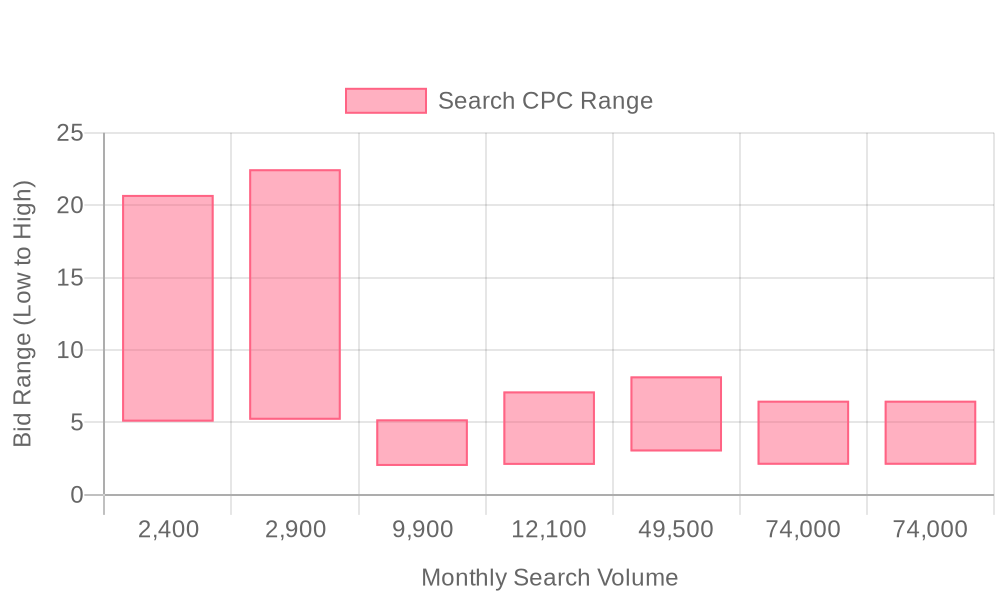
| Industry | Keyword | Monthly Search Volume | Competition Level | Low Bid | High Bid |
| Real Estate Investing | self directed ira real estate | 2400 | MEDIUM | 5.06 | 20.71 |
| Real Estate Investing | real estate investors near me | 2900 | MEDIUM | 5.19 | 22.48 |
| Real Estate Investing | investment property | 9900 | LOW | 2 | 5.21 |
| Real Estate Investing | reit investing | 12100 | MEDIUM | 2.07 | 7.14 |
| Real Estate Investing | real estate investing | 49500 | LOW | 3 | 8.18 |
| Real Estate Investing | reit | 74000 | LOW | 2.08 | 6.5 |
| Real Estate Investing | reits | 74000 | LOW | 2.08 | 6.5 |
A precise keyword strategy forms the cornerstone of effective google ads for real estate investing. Investors who target highly-localized and long-tail keywords can reach motivated sellers, landlords, and property owners at the decisive moment of their search journey. By mirroring the natural language and intent of these prospects, campaigns achieve greater relevance and higher quality leads.
Regular keyword audits ensure campaign budgets are allocated to search terms that align with current market behavior. Investors should focus on combinations like "sell my house fast [city]," "off-market homes [neighborhood]," and "investment property leads near me" to tap into high-intent audiences. For a deeper dive into successful campaign structures, AdWords Strategy provides practical examples of keyword use and budget optimization.
- Localized, Intent-driven Terms: Prioritize phrases that signal urgency or a readiness to act, such as "buy my house cash [ZIP code]" or "foreclosure help [city]." These terms consistently attract sellers who are seeking immediate solutions.
- Niche Investment Queries: Include specific search phrases like "probate property investor," "1031 exchange opportunities," or "distressed homes for sale" to reach owners with unique circumstances or investment goals.
- Negative Keyword Lists: Maintain and expand lists of terms that generate unqualified traffic, excluding searches for rentals, non-residential real estate, and unrelated services.
Investors using advanced marketing platforms can go beyond keyword targeting by correlating in-market search signals with real-time visitor identification. Sona's Identity Resolution supports identifying previously anonymous site visitors and their companies, allowing teams to focus spend on high-value leads.
As prospects move through the funnel, dynamic audience segments update automatically, ensuring ads reach qualified sellers, whether they are new site visitors or returning leads. For more insights on maximizing Google Ads ROI, check out our guide on Intent Retargeting. Integrating enriched audience and intent data into CRM and ad platforms keeps targeting aligned with actual pipeline and deal progress, ensuring every dollar spent on Google Ads is tied to measurable ROI.
Step-by-Step Campaign Execution Framework
Modern revenue teams in real estate investing require a campaign execution framework that eliminates delays, surfaces high-intent opportunities, and automates handoffs between marketing and sales. Direct, targeted tactics ensure that motivated sellers and investors are engaged during peak decision-making windows, reducing the risk of lost deals due to slow follow-up or misaligned messaging. When campaigns are built on unified data and real-time behavioral signals, every touchpoint can be fine-tuned for maximum conversion and measurable ROI.
Step 1: Build Targeted Keyword Lists
- Property And Location Segmentation: Segment keyword lists by asset type and local markets to capture intent-rich searches such as “sell my single-family home in Austin” or “multifamily investment property Phoenix.” Grouping keywords this way increases relevance and click-through rates, ensuring ad spend is allocated to the highest-value audiences.
- Question-based Queries: Incorporate question-focused keywords like “how to avoid foreclosure in Miami” or “best way to sell inherited property” to intercept prospects at the moment of need. These queries signal urgent intent and allow marketers to craft messaging that directly addresses the user’s pain points.
Audience enrichment lets marketers identify not just anonymous traffic but the actual companies and investor segments engaging with these terms, turning a keyword list into a map of who's really searching.
The upgrade most real estate investing advertisers miss is going beyond raw keyword volume to layer in intent and identity signals. By connecting website-visitor data and CRM records with Sona Marketing Measurement, you can see which specific search terms bring in the accounts and customers that actually convert, and weight your keyword and bidding strategy toward those rather than the terms with the highest search volume alone.
Step 2: Develop Compelling Ad Copy
- Pain Point-driven Headlines: Headlines such as “Get a Cash Offer in 24 Hours – No Repairs Needed” or “Trusted Real Estate Investors for Distressed Sales” immediately communicate solutions to urgent seller problems. By directly addressing investor pain points, ads attract the highest-quality leads and filter out casual browsers.
- Credibility And Urgency: Contextual storytelling within ad descriptions, such as referencing recent transactions or customer testimonials, builds immediate trust. Phrases like “Rated #1 by Local Sellers” or “We Buy 30+ Homes Monthly” add authority and foster confidence in your capability to close deals quickly.
Leveraging real-time intent data, ad platforms can dynamically adjust messaging based on a lead’s funnel position or recent behavior, ensuring that high-potential prospects see the most relevant offers. For more insights on optimizing paid campaigns, check out our guide on Retargeting Tactics.
Step 3: Design Effective Landing Pages
- Seamless Keyword-ad-page Alignment: Each ad should direct to a landing page tailored for the searcher’s specific needs, such as a form for “sell my house fast” queries or an educational guide for “how to invest in rental properties.” This alignment reduces friction and increases conversion rates by delivering precisely what the user expects.
- Trust-building Assets: Integrate client testimonials, before-and-after case studies, and transparent process explanations to validate your brand. Visual cues such as badges, association memberships, and real estate certifications further reinforce credibility.
Modern real estate teams tie landing page activity back to CRM records, routing high-intent visitors instantly to the right follow-up workflow. Sona's Destinations supports seamless lead syncing between landing pages and sales platforms for faster response times.
Step 4: Implement Data-Driven Optimizations
- Comprehensive Tracking: Monitor both conversion events (form fills, calls) and engagement metrics (time on page, bounce rate) to understand which assets and keywords drive the best outcomes. Use these insights to refine ad copy, landing pages, and audience segments in real time.
- Smart Bidding Strategies: Deploy advanced bidding tactics such as Target CPA, adjusting for factors like property value, seller motivation, and firmographic data. Real-time signals, such as recent website activity or CRM status, inform budget shifts toward accounts with the highest likelihood to close.
When campaign data, CRM records, and ad audiences are unified, marketers can sync enriched lead profiles directly into Google Ads and sales platforms. For those looking to maximize efficiency from the start, Start with Sona to automate campaign execution and attribution across your revenue funnel.
Sona Marketing Measurement closes the gap between clicks and revenue. It captures every ad click with first-party measurement, then ties that click through UTM capture and ad-platform APIs to the actual record in your CRM, and reports ROAS by keyword and campaign instead of by last-click form fill. Feeding that revenue signal back into Smart Bidding and Performance Max compounds over time: the algorithms optimize toward booked real estate investing revenue, not cheap leads.
Tips on Expanding Your Real Estate Investing Presence

Real estate investors face increasing pressure to reach motivated sellers and buyers in a landscape dominated by fragmented data and rapid market shifts. Unlocking the full potential of your marketing programs requires a unified, insight-driven approach that ensures every lead is actionable and every engagement is relevant.
- Partner With Local Real Estate Associations: Collaborative marketing with trusted local organizations expands reach into new neighborhoods and builds credibility with local audiences. Co-branded campaigns can be tracked and analyzed for performance, giving real estate investing teams a feedback loop that informs future strategy and content.
- Cross-promote Investing Tips Through Content Retargeting: Content retargeting nurtures audiences with educational resources, investment guides, and case studies tailored to their last interaction. Paired with Google Ads for real estate investing, it puts your best insights in front of prospects who've already shown interest, building engagement and trust faster. Sona's Identity Resolution helps teams power real-time visitor identification so effort goes toward qualified leads, not anonymous clicks.
- Leverage Google Ads Data To Discover New Content Opportunities: Analyze campaign engagement, search trends, and user interactions to spot emerging topics and neighborhood trends before they become mainstream. Marketers who integrate granular Google Ads targeting with advanced audience segmentation uncover untapped segments, optimizing ad spend and content calendars around the highest-value opportunities. For more insights on refining your Google Ads strategy, check out our guide on Google Ads ROI.
Google Ads lets real estate investors act on high-intent leads with precision. Smart segmentation and creative built for micro-markets sharpen relevance, while solid analytics show which campaigns actually convert. Connecting the ad ecosystem to CRM and sales platforms keeps every interaction tracked and every opportunity prioritized, so real estate advertising stays tied to growth, not just clicks.
Beyond Google Ads: Winning the AI Answers Real Estate Investing Buyers Now Trust
Paid search captures demand at the moment someone types a query. But a fast-growing share of real estate investing buyers no longer start at Google at all, they ask ChatGPT, Gemini, or Perplexity before they ever run a search, and Google's own AI Overviews increasingly summarize an answer above the traditional results. If your business isn't referenced in those AI answers, you're invisible at the exact moment buyers build their shortlist.
Sona AI Visibility shows where your business shows up across ChatGPT, Gemini, Perplexity, Google AI Overviews, and 10+ engines, and, much like a keyword report, which prompts actually send you buyers, so you can prioritize the ones that convert. Run the two together and you cover the entire buyer path: get cited where buyers research (AI Visibility), then prove which of that demand turns into booked revenue (Marketing Measurement).
Helpful resources
Conclusion
Google Ads works for real estate investors when it's treated as an intent-capture system, not a lead-volume dial. The campaigns, keywords, and creative covered here only pay off if they're feeding a pipeline your team can actually act on fast.
The bigger shift is what you connect those campaigns to: a CRM and measurement layer that tells you which clicks became closed deals, not just which ones became form fills. Investors who make that connection stop guessing at budget allocation and start compounding it, quarter over quarter, as the algorithm and the sales team both learn from the same data.
FAQ
What are the best practices for Google Ads in real estate?
Best practices include integrating Google Ads into a multi-channel strategy, using precision targeting and measurable results, and dynamically adjusting campaigns based on real-time performance and market shifts.
How much should I budget for Google Ads in real estate?
The article does not specify an exact budget but suggests focusing on high-value audiences and optimizing spend efficiency to control costs effectively.
What keywords should I target for real estate Google Ads?
Focus on data-driven keyword targeting such as 'sell my house fast' or 'off-market multifamily deals in Austin,' and include localized, intent-driven terms to reach motivated sellers.
How can I measure the success of my Google Ads campaigns for real estate?
Success can be measured through comprehensive tracking capabilities, integrating ad data with CRM, and analyzing conversion events to refine strategies for greater accuracy and profitability.
What are common mistakes to avoid with Google Ads for real estate?
Common mistakes include not integrating campaigns with other channels, not using precise targeting, and failing to adjust campaigns based on real-time data and market shifts.







