


Septic tanks fail at 2 a.m., municipal contracts have compliance deadlines, and a homeowner with a flooded basement searches for help within minutes, not days. Google Ads matters to pumping contractors because it meets buyers in exactly that window, when the need is immediate and the search is specific. Done well, it also lets you trace every click through to the signed job, so you know which keywords and campaigns actually built your pipeline instead of just adding to your ad spend. This guide walks through how to set up, target, and measure Google Ads for a pumping contractor business, from keyword selection to closed-loop revenue tracking.
How to Generate Leads for Pumping Contractors with Google Ads: A Step-by-Step Guide

Pumping contractors face distinct challenges in capturing high-value leads within a competitive landscape. A structured, data-driven Google Ads strategy can elevate visibility, attract qualified prospects, and improve marketing efficiency by surfacing which channels deliver the best returns. To see how contractors are leveraging Google Ads in practice, watch this video guide on Google Ads lead generation.
Precise targeting, tailored creative, and real-time optimization keep paid search campaigns accountable to results. Unified data and actionable insights let revenue teams identify in-market buyers, attribute conversions accurately, and scale the tactics that work across channels.
- Adopt a data-driven strategy for paid search: Pumping contractors benefit from granular campaign monitoring, advanced attribution, and real-time intent signals. Integrating web analytics with CRM data helps teams pinpoint which keywords convert, whether that's "emergency septic pumping" clicks that turn into same-day jobs or "commercial grease trap service" searches tied to recurring contracts, and adjust bidding on lead quality rather than click volume alone. Unifying Google Ads, offline touchpoints, and CRM engagement in one view shows which campaigns generate real revenue instead of vanity metrics.
- Employ keyword and audience targeting designed for pumping contractor services: Success starts with selecting high-intent keywords that reflect the unique needs of septic, well drilling, and construction-related pumping services. Audience segmentation, powered by unified company and contact data, allows marketers to reach decision-makers at businesses actively searching for these services. Teams using advanced visitor identification can transform anonymous web traffic into actionable audiences, syncing enriched segments into Google Ads for hyper-targeted outreach.
- Ensure creative and landing pages align for optimal conversion: Messaging and landing pages must speak directly to the operational, compliance, and scheduling needs of commercial and residential clients. Dynamic content, tailored to buyer intent and vertical, improves engagement and conversion rates. Seamless CRM integration ensures form fills, calls, and chatbot interactions are routed to sales instantly, reducing response times and increasing close rates. For more landing page strategies, explore our collection of actionable playbooks.
- Continuously optimize performance for better ROI: Real-time performance dashboards, integrated with both online and offline conversion data, enable ongoing campaign refinement. Advanced conversion tracking, both digital and call-based, ensures every lead source is measured accurately. Marketers can shift budget to the highest-performing keywords, ads, and channels, while identifying underperforming segments for rapid adjustment.
- Use cross-channel strategies to bolster overall marketing effectiveness: Pumping contractors operating in crowded markets gain an edge by orchestrating Google Ads, display, and social campaigns from a single, unified platform. Unified audience segments that update dynamically as leads progress through the funnel allow for precision retargeting and sequential messaging, improving engagement and accelerating deal velocity. For a deeper look at local ad solutions, review Google's Local Service Ads resource.
Modern marketing platforms let pumping contractors capture, enrich, and activate every opportunity. Unifying intent data, CRM insights, and campaign performance moves companies past guesswork toward repeatable, scalable pipelines, even in crowded local markets. Ready to take the next step? Get started for free with Sona.
Why Google Ads Matter for Pumping Contractors Businesses

Pumping contractors operate in a service-driven market where timing, specificity, and audience targeting directly influence revenue outcomes. Advanced digital strategies, especially those built on Google Ads, enable businesses to break through the noise and reach commercial or municipal clients who need pumping services urgently or for specialized projects. For a practical look at campaign setup and success, this video guide for contractors details effective Google Ads lead generation techniques.
- Capture specialized audiences: Google Ads allows pumping contractors to connect directly with prospects searching for solutions like septic pumping, industrial waste removal, or emergency dewatering. While many platforms cast a wide net, Google Ads sharpens focus on high-intent buyers. Sona's Identity Resolution helps marketers transform anonymous clicks into actionable company profiles, ensuring follow-up with the right accounts.
- Target higher margin projects: Instead of generic outreach, Google Ads pinpoints prospects seeking niche services, such as hazardous material pumping or large-scale municipal contracts. This approach drives quality over quantity, surfacing opportunities that align with the contractor's core expertise and profitability goals. Sona Audiences, in this context, adjusts in real time as leads demonstrate intent, allowing teams to prioritize and shift budget towards those most likely to convert.
- Deliver timely results for urgent needs: Many pumping projects arise from emergencies or regulatory deadlines. Google Ads positions contractors in front of decision-makers at the peak moment of need, whether for 24/7 spill response or compliance-driven maintenance. By syncing CRM and ad platforms, enriched leads can be routed instantly to sales, reducing response time and maximizing conversion.
- Expand reach into new markets: For contractors ready to move beyond existing territories, Google Ads provides the scale to test and enter new regions efficiently. Campaigns can be tailored to emerging geographies, while unified data analytics reveal which markets offer the best ROI. Integration across digital and offline channels ensures that the impact of both online inquiries and phone calls is tracked, giving a comprehensive view of expansion success.
- Enhance analytics with full-funnel tracking: Effective measurement is crucial for optimizing marketing spend. Google Ads, enhanced by advanced attribution tools, connects the dots from initial click to closed deal, even when the journey spans both online and offline touchpoints. This level of insight not only sharpens budget allocation but also supports data-driven decisions across marketing and sales teams, driving consistent improvements in performance.
Targeting precision, real-time intent data, dynamic audience updates, and solid attribution together let pumping contractors turn Google Ads into measurable business growth and operational agility. To put these strategies into action, get started for free with Sona.
Common Types of Google Ads Campaigns for Pumping Contractors
- Search Campaigns: Search campaigns capture urgent, bottom-of-funnel needs from clients actively seeking pumping contractors. These campaigns thrive on high-intent keywords such as "emergency septic pumping" or "well drilling near me." Consistent messaging across active campaigns matters; fragmented efforts dilute brand credibility and confuse potential clients. Solutions like Sona's Identity Resolution can reveal which companies are researching your services, helping unify data from multiple touchpoints so every click delivers a coherent, relevant message.
- Display Ads: Display campaigns maintain your brand's presence as prospects browse industry-relevant websites, forums, and local news outlets. Pumping contractors gain from persistent visibility, especially when targeting local construction businesses or facilities managers who might not be ready to buy but regularly consume related content. Integrating audience data from CRM and offline interactions allows these campaigns to serve banners only to relevant segments, increasing efficiency and minimizing wasted impressions. For more tips on optimizing multi-channel visibility, explore our marketing analytics blog.
- Video Ads: Video formats are ideal for explaining the complexities of pumping, septic services, or well drilling, especially in markets where education is needed. Short, informative clips can differentiate a contractor's offerings, showcase compliance certifications, and visually prove expertise. With real-time intent signals, video placements can be dynamically shifted to accounts showing increased research activity, maximizing engagement and nurturing leads through the funnel. See how contractors utilize video ads for lead generation in this YouTube video guide.
- Remarketing: Remarketing campaigns re-engage site visitors who previously requested quotes, browsed service pages, or abandoned lead forms. For pumping contractors, multiple touchpoints are often required before a contract is signed. Dynamic audience syncing ensures these remarketing lists update as prospects move from research to quote requests, allowing for timely, personalized follow-ups that drive conversions. For actionable strategies on segmenting your remarketing lists, check out our Buyer Journeys guide.
- Assets: Ad assets (formerly called extensions) enhance trust and drive direct action by displaying certifications, emergency response times, or special financing offers directly in the search results. For local contractors, callout assets and structured snippets can communicate local expertise and service guarantees. When ad platforms are fed enriched customer and lead data, these assets stay accurate and compelling, reflecting current qualifications and differentiators to support conversion rates.
Where to Find Growth Opportunities

Pumping contractors operate in a market where customer acquisition depends on precise targeting and constant innovation. Growth opportunities exist for those who consistently refine their outreach, prioritize actionable data, and leverage emerging digital channels to stay ahead of local competitors.
- Vertical keyword targeting for specialty services: Expand beyond generic search terms by identifying high-intent keywords unique to your expertise, such as "emergency septic tank pumping" or "industrial wastewater removal." This strategy drives qualified traffic from buyers actively seeking your exact services, not just general construction or plumbing solutions. With unified intent data, you can also uncover emerging trends within your niche and adjust your keyword bids in real time to capture new demand signals.
- Competitor gap analyses via auction insights: Auction insights reveal where competitors are bidding hard and where they're absent, showing underutilized segments you can capitalize on, such as niche services like hydro excavation or industrial wastewater removal that larger competitors overlook. Visitor identification tools help reveal which companies are engaging with your ads, enabling tailored follow-up and budget shifts toward high-value commercial accounts.
- Target industry-specific placements in niche forums or directories: Specialized placements in industry forums or local business directories reach decision-makers missed by broad search or display campaigns. Manual audience creation for these placements can lead to costly errors or stale targeting, whereas automated syncing with CRM and intent data ensures your audiences remain accurate and relevant as leads evolve across the funnel. For example, syncing enriched prospect lists into ad platforms guarantees that your messaging aligns with real-time buyer readiness.
- Retarget using educational content: Instead of relying solely on sales-focused retargeting, leverage educational assets, such as guides on regulatory compliance or maintenance best practices, to nurture prospects and reinforce your expertise. This approach enhances your content strategy while capturing mid-funnel engagement. Integrating advanced conversion tracking captures both online and offline touchpoints, ensuring you attribute revenue to the right campaign elements and continually optimize for true ROI.
How to Apply Audience Segmentation for Pumping Contractors

Modern pumping contractors can sharply elevate their marketing outcomes by moving beyond one-size-fits-all targeting. Segmenting audiences with precision unlocks more relevant messaging, higher-quality leads, and measurable improvements in campaign ROI. For a deeper look at advanced segmentation in B2B, explore the Essential Guide to Account-Based Marketing.
- Define Segments: Start by differentiating between core customer types, such as commercial property managers, municipal clients, and residential homeowners. Each group has distinct needs and purchasing cycles, so mapping them separately ensures that messaging and offers stay aligned with their expectations. For example, commercial and municipal clients may seek long-term partnerships and compliance guarantees, while residential clients often prioritize promptness and price transparency.
- Overlay Intent Signals: Integrate behavioral and situational signals to recognize urgency and service motivation. Identify prospects searching for emergency pumping services versus those planning scheduled maintenance or upgrades. Layering these intent signals onto your core segments lets you dynamically adjust ad content and budget allocation to match conversion likelihood. Platforms with real-time audience analytics allow marketers to shift spend toward high-value accounts showing strong purchase triggers.
- Create Ad Groups by Segment: Build tightly themed ad groups for each primary segment, customizing headlines, copy, and offers to resonate with their stage in the buying journey. Use messaging that addresses the pain points and decision criteria unique to each group. Consistency across ad text, landing pages, and follow-up ensures the experience feels tailored and credible, improving both click-through and conversion rates. Leveraging dynamic audience updates as leads progress through the funnel helps keep campaigns relevant and efficient.
- Validate Conversion Paths: Meticulously track each conversion event, whether it's a web form, phone call, or CRM entry, by integrating ad platforms with your CRM. This linkage allows for seamless online and offline attribution, so marketing and sales teams can pinpoint which campaigns drive valuable leads and actual revenue. Automated audience and lead sync between platforms such as Google Ads, HubSpot, and Salesforce ensures no high-intent opportunity is missed.
This is also where measurement changes the economics. With Sona Marketing Measurement you can identify the companies behind your ad clicks at the account level, not just anonymous sessions, and segment audiences by who actually becomes a customer. That lets you build bid adjustments and audience signals around the segments that convert and de-prioritize the ones that don't, so you feed Google's algorithms "this click became a paying pumping contractors customer" instead of just "someone filled out a form."
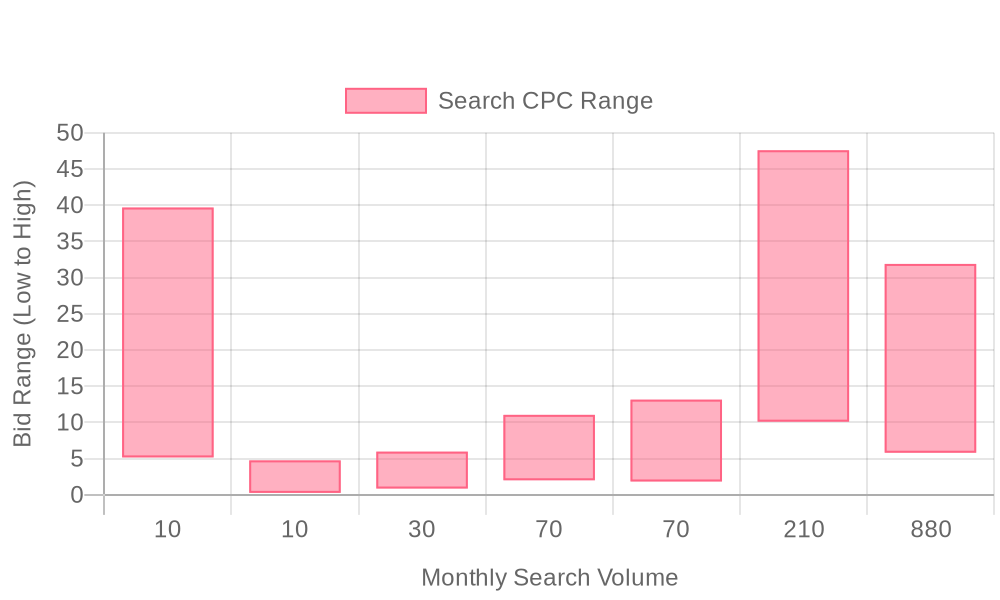
Keyword Strategy & Sample Target Terms
| Industry | Keyword | Monthly Search Volume | Competition Level | Low Bid | High Bid |
| Pumping Contractors | water pump contractors | 10 | MEDIUM | 5.18 | 39.68 |
| Pumping Contractors | mq contractor pump | 10 | HIGH | 0.28 | 4.76 |
| Pumping Contractors | multiquip contractor pump | 30 | HIGH | 0.88 | 5.97 |
| Pumping Contractors | pumping contractors | 70 | LOW | 2.02 | 11.05 |
| Pumping Contractors | contractor pump | 70 | MEDIUM | 1.85 | 13.15 |
| Pumping Contractors | sump pump contractor | 210 | LOW | 10.11 | 47.59 |
| Pumping Contractors | well water pump company | 880 | LOW | 5.82 | 31.89 |
Pumping contractors face distinct challenges in reaching customers who are actively searching for specialized services. Precision in keyword selection ensures your ads appear for high-value queries at the exact moment prospects are most likely to convert.
Effective keyword strategy bridges the gap between broad visibility and targeted intent, capturing interest from both urgent commercial requests and recurring maintenance clients. By aligning keywords with business goals, pumping contractors maximize ad spend efficiency, reduce wasted impressions, and accelerate lead generation. For step-by-step guides on aligning your strategy with business objectives, explore the ultimate guide to B2B marketing reports.
- Industry-Specific Keywords: Focus campaigns on terms such as "emergency pump repair," "industrial pumping services," "septic tank pumping near me," and "well pump replacement contractors." These phrases reflect strong buying intent, drive qualified traffic, and minimize irrelevant clicks. For actionable keyword and campaign examples, check out this video guide for contractors.
- Service Area Modifiers: Append local or regional terms like city names, ZIP codes, or service areas to capture high-converting, location-based searches. For example, "pumping contractors in Dallas" or "well drilling contractors Houston."
- Long-Tail Variations: Incorporate detailed queries such as "commercial sump pump installation for warehouses" or "licensed septic tank contractors for new construction." These terms attract niche audiences and support higher conversion rates.
- Negative Keywords: Exclude unrelated searches, such as "DIY pump repair" or "used pump equipment," to prevent budget leakage and maintain campaign relevance.
Managing keyword lists requires ongoing refinement to ensure optimal coverage without overspending on generic or low-intent terms. Leveraging unified go-to-market data lets marketers identify which search queries actually convert, so budgets shift quickly to the best-performing terms. When first-party and CRM data are synced into ad platforms, keyword targeting becomes more dynamic, automatically surfacing new high-intent opportunities as buyer behavior evolves.
Integrating real-time visitor identification and advanced intent signals lets pumping contractors go beyond basic keyword targeting. Marketers can prioritize accounts showing strong in-market activity, then adjust bidding and messaging to accelerate deal cycles for the most valuable leads. Regularly auditing keyword performance against sales and customer insights closes the loop, so campaign results keep improving instead of plateauing.
Step-by-Step Campaign Execution Framework
Step 1: Build Targeted Keyword Lists
Precise keyword targeting is the foundation for effective Google Ads for pumping contractors. Segmenting keywords by specific service offerings, such as well drilling, septic tank maintenance, or emergency pumping, ensures ads reach relevant searchers. Adding geographic modifiers like city or county names narrows your audience, driving higher-intent local leads and reducing wasted spend.
Include long-tail keywords that reflect buyers' specialized needs, for example, "24-hour septic pumping in Austin" or "licensed well drilling contractors near me." Negative keywords are equally crucial; filtering out unrelated searches prevents budget drain from irrelevant clicks. With unified data from Sona, marketers can pinpoint which service keywords drive actual inquiries and adapt keyword clusters in real time as new patterns emerge, aligning spend with high-conversion segments. For a video walkthrough on keyword research and targeting, check out this video guide.
The upgrade most pumping contractors advertisers miss is going beyond raw keyword volume to layer in intent and identity signals. By connecting website-visitor data and CRM records with Sona Marketing Measurement, you can see which specific search terms bring in the accounts and customers that actually convert, and weight your keyword and bidding strategy toward those rather than the terms with the highest search volume alone.
Step 2: Develop Compelling Ad Copy
Effective ad copy for pumping contractors must address urgent pain points, like rapid response or compliance guarantees, directly in headlines and descriptions. Incorporate trust signals such as certifications, years in business, or customer testimonials to establish credibility at a glance. Use urgency-driven incentives, like limited-time discounts or same-day service, to prompt faster action.
Leverage ad extensions to showcase additional services, coverage areas, or callout features, providing users a fuller picture before they click. When integrated with real-time intent insights, teams can highlight the most relevant offers based on what prospects are actively searching, ensuring each impression is as targeted and persuasive as possible. For more tips on crafting high-converting ad copy, explore our marketing analytics blog.
Step 3: Design Effective Landing Pages
Maintaining a seamless journey from keyword to ad to landing page is essential for converting high-value leads in construction and pumping services. Each landing page should reinforce the promise made in the ad, using ROI calculators, before-and-after visuals, and comprehensive FAQs to answer common prospect questions. Clear, direct calls to action, such as "Request a Free Estimate" or "Book Emergency Service," simplify the path to conversion.
Integrating landing pages with your CRM ensures every inquiry is captured, tracked, and attributed to its source. When Sona is part of the stack, audience and lead data flows directly into your CRM and sales pipeline, enabling immediate follow-up and richer personalization for every qualified lead.
Step 4: Implement Data-Driven Optimizations
Continuous optimization is critical to sustain and scale results from Google Ads for local contractors. Monitoring conversion actions and using smart bidding strategies, like Target CPA, allows teams to automate budget allocation toward the highest-performing keywords and ad groups. Regular A/B testing of headlines, CTAs, and landing page layouts uncovers insights that incrementally boost click-through and conversion rates.
Offline conversion imports further refine campaign performance, connecting digital engagement with revenue outcomes. With advanced attribution and dynamic audience syncing, marketers can measure true ROI, adjusting spend to focus on channels and tactics that consistently generate real business results, not just clicks or form fills. For official resources on Google's Local Service Ads, visit Google Local Service Ads. This unified approach ensures every marketing dollar is tied directly to pipeline growth and closed deals.
Sona Marketing Measurement closes the gap between clicks and revenue. It captures every ad click with first-party tracking, ties that click through UTM capture and ad-platform APIs to the actual record in your CRM, and reports ROAS by keyword and campaign instead of by last-click form fill. Feeding that revenue signal back into Smart Bidding and Performance Max compounds over time: the algorithms optimize toward booked pumping contractors revenue, not cheap leads.
Tips on Expanding Your Pumping Contractors Presence
Pumping contractors who prioritize digital presence see stronger market positioning and more consistent lead flow. A data-driven approach to advertising and content amplifies both brand credibility and long-term pipeline growth. For more on building a robust digital strategy, explore the Sona blog for actionable marketing insights.
- Use retargeting to promote educational assets supporting content goals: Reinforce your expertise by retargeting site visitors with high-value guides, whitepapers, or how-to resources. This approach keeps your brand top-of-mind and nurtures leads who are still in the research phase. When integrated with website visitor identification, retargeting can personalize follow-ups based on a prospect's level of engagement or intent, improving conversion rates and content ROI.
- Upsell related services by targeting segmented audiences informed by CRM data: Pumping contractors often offer a range of services, such as septic tank cleaning, well drilling, or emergency response. Segmenting audiences based on previous interactions or purchase history allows for tailored messaging that directly addresses each customer's needs. Syncing enriched CRM data enables dynamic audience lists in Google Ads, so offers automatically update as customers move through the sales cycle. This elevates upsell performance and ensures no opportunity is missed; learn how to automate this process in the audience segmentation playbook.
- Consider partnerships with industry associations for joint campaigns: Collaborating with trade organizations or regional construction groups can expand your reach and establish authority. Joint campaigns, whether co-branded webinars, shared content, or referral programs, drive higher engagement and open doors to new, qualified audiences. Leveraging real-time campaign analytics provides insight into which association partnerships deliver the strongest returns.
- Geolocate ads to grow market share in key areas: Pinpointing high-value regions, neighborhoods, or industrial zones ensures your marketing budget is allocated where it delivers the most impact. By layering in real-time intent data, you can shift spend toward localities with heightened demand or recent surges in project activity, enabling faster market penetration for services like pumping, septic, or well drilling. For a practical guide on using Google's local advertising solutions, visit Google Local Service Ads.
- Utilize search data to identify potential topics for new content: Analyzing search queries and campaign performance uncovers emerging trends and unmet informational needs in the pumping contractor sector. Developing new resources based on these insights increases your organic visibility and further supports paid initiatives. When connected to your complete marketing ecosystem, these insights fuel a feedback loop that sharpens both content strategy and audience targeting.
Beyond Google Ads: Winning the AI Answers Pumping Contractors Buyers Now Trust
Paid search captures demand at the moment someone types a query. But a fast-growing share of pumping contractors buyers no longer start at Google at all, they ask ChatGPT, Gemini, or Perplexity before they ever run a search, and Google's own AI Overviews increasingly summarize an answer above the traditional results. If your business isn't referenced in those AI answers, you're invisible at the exact moment buyers build their shortlist.
Sona AI Visibility shows where your business shows up across ChatGPT, Gemini, Perplexity, Google AI Overviews, and 10+ engines, and, much like a keyword report, which prompts actually send you buyers, so you can prioritize the ones that convert. Run the two together and you cover the entire buyer path: get cited where buyers research (AI Visibility), then prove which of that demand turns into booked revenue (Marketing Measurement).
Helpful resources
Conclusion
Google Ads works for pumping contractors because it puts your business in front of someone at the exact moment they need septic, well, or industrial pumping service, not before, not after. Treat that moment with precision: the right keyword, the right message, the right landing page, and you turn ad spend into a client roster instead of a line item.
The contractors who pull ahead won't be the ones spending the most, but the ones who can trace a dollar of ad spend to a signed job and adjust accordingly. As buyers increasingly ask AI tools for recommendations before they ever search, pairing that closed-loop measurement with visibility into AI answers positions your business to be found at both ends of the buyer's search, the query and the question.
FAQ
How can pumping contractors use Google Ads to increase their online visibility?
Pumping contractors can use Google Ads to intercept prospects at crucial moments when they're searching for services, allowing for precise targeting and enhanced visibility in both local and broader marketing efforts.
What are the best practices for setting up Google Ads campaigns for pumping contractors?
Best practices include adopting a data-driven strategy, employing precise keyword and audience targeting, aligning creative and landing pages, and continuously optimizing performance using real-time data.
How do Google Ads help in generating leads for pumping contractor businesses?
Google Ads helps generate leads by capturing high-intent prospects searching for pumping services, enabling contractors to connect with decision-makers and convert clicks into leads.
What are the most effective keywords for Google Ads in the pumping contractor industry?
Effective keywords include terms like 'emergency pump repair,' 'industrial pumping services,' and 'septic tank pumping near me,' which reflect strong buying intent and drive qualified traffic.
How can pumping contractors measure the ROI of their Google Ads campaigns?
Contractors can measure ROI by integrating web analytics with CRM data, using advanced conversion tracking, and shifting budgets towards high-performing campaigns based on real-time performance data.
Are there any specific Google Ads features that are particularly beneficial for pumping contractors?
Beneficial features include ad extensions for showcasing services and trust signals, audience segmentation for targeting, and real-time performance dashboards for ongoing optimization.
How can pumping contractors optimize their Google Ads for local search results?
Contractors can optimize for local search by appending geographic modifiers to keywords, geolocating ads to target high-value regions, and using local service ads to enhance visibility in specific areas.
Can Google Ads help pumping contractors target specific geographic areas?
Yes, Google Ads can be tailored to target specific geographic areas, allowing contractors to efficiently enter new regions and focus on locations with heightened demand.
What are some examples of successful Google Ads campaigns for pumping contractors?
Successful campaigns often include search campaigns for urgent needs, display ads for persistent visibility, and video ads for explaining complex services, all tailored to specific buyer intents.







