


Piping contractors win jobs by being visible the moment a facility manager or general contractor starts searching, not weeks later. Yet most of that early research happens anonymously: a visitor reads a service page, compares a few competitors, and leaves no trace of who they were or which company they represent. Google Ads, paired with tools that unmask the businesses behind anonymous traffic, lets contractors reach buyers at the exact moment they're searching for piping work and follow up before the trail goes cold. Done well, with sharp targeting, real-time data, and campaigns structured around how piping projects actually get bought, this approach turns paid search into a reliable source of qualified leads rather than a line item you hope pays off. This guide lays out a practical framework for building that kind of Google Ads strategy.
How to Generate Google Ads for Piping Contractors Leads with Google Ads: A Step-by-Step Guide

Piping contractors face a particular timing problem: most prospective clients, whether a facility manager sourcing emergency repair or a GC scoping a new build, research quietly online long before they call anyone. That gap between first search and first contact is where deals are lost, especially when follow-up lags by even a day. Website visitor identification closes it by showing which companies are already looking, so outreach can start while the need is still urgent.
Behavioral data narrows that gap further. Instead of tracking anonymous page views, marketing platforms can now surface the actual companies and, in many cases, the roles of the people behind key site visits, so outreach lands with the right decision-maker instead of a generic inbox. For a deeper dive into Google Ads strategies tailored to the plumbing and contractor industry, see this step-by-step Google Ads guide for plumbers.
Integrating Google Ads into your marketing mix enables a data-driven approach to lead generation for piping contractors. Rather than casting a wide net, targeted campaigns can engage buyers at every stage of the funnel, syncing real-time audience activity and intent signals directly into your CRM and sales systems. This ensures that every ad dollar is allocated to prospects most likely to convert, maximizing Google Ads ROI for contractors and driving measurable business growth.
A step-by-step framework, spanning keyword strategy, audience segmentation, campaign setup, and conversion tracking, offers the blueprint for effective PPC for piping contractors. Tactics like dynamic audience updates, enriched lead profiles, and omnichannel attribution help marketers unify their go-to-market data and optimize spend across all channels. For more expert strategies on marketing analytics and attribution, explore our marketing analytics blog.
Why Does Google Ads Matter for Piping Contractors?

Piping contractors operate in a market where timing, licensing, and trust are non-negotiable. A burst commercial main or a failed gas line generates a search with no patience for a slow reply, while a municipal or industrial project may take months of comparing licensed, bonded contractors before a decision gets made. Google Ads has to serve both moments: catching the emergency searcher within minutes and staying visible to the procurement team still building its shortlist.
Traditional outreach, cold calls, mailers, referral chasing, can't see any of this happening in real time. Google Ads can: it puts your business in front of active buyers the moment they search, using automation and intent signals to hold visibility without constant manual bid-tweaking.
Modern pay-per-click strategy runs on real-time analytics, letting piping marketing teams refine targeting as conditions change rather than waiting for a quarterly review. Automated bidding and audience segmentation keep spend concentrated on the leads most likely to close, supporting sharper lead generation for contractors.
Company-level identification now lets piping contractors see not just anonymous web traffic but the actual businesses, and often the specific project stakeholders, showing purchase intent. Feeding those insights into Sona and Google Ads targeting lets campaigns update as accounts move, keeping pace as project priorities and key contacts shift.
Local service ads for contractors and specialized search campaigns further enhance reach within target geographies, making it easier to meet urgent demand and fill the pipeline with qualified leads. By unifying campaign data and integrating advanced attribution models, revenue teams can accurately measure geographic performance, supporting smarter investment and long-term growth. To see how these strategies can work for your business, get started for free with Sona.
Common Types of Google Ads Campaigns for Piping Contractor Services

Choosing the right campaign type is what keeps piping contractor lead generation cost-efficient. Segmenting by firmographics and intent lets you speak differently to a project manager, a facility owner, and a procurement lead, which shows up as higher engagement and more qualified inquiries. Sona's Audiences tool can help build and dynamically update those segments.
- Search Campaigns: These campaigns position your services in front of prospects actively searching for piping contractors or related terms. By targeting transactional keywords, such as “industrial piping installation” or “emergency pipe repair,” you can connect with high-intent buyers. Integrating real-time intent signals and historical engagement data enables you to shift budget dynamically toward the most conversion-ready accounts, maximizing Google Ads ROI for contractors. Discover additional strategies for Google Ads for plumbers to further optimize your campaigns.
- Display Campaigns: Display placements help build brand awareness and keep your company top-of-mind with decision-makers browsing industry sites or construction news. Leveraging advanced audience segmentation, marketers can ensure ads reach only those in relevant sectors or geographies, such as commercial developers or industrial facility managers. With unified CRM and website visitor data, display audiences can automatically update as leads progress through the pipeline, making retargeting efforts more precise.
- Video Campaigns: Video ads allow piping contractors to showcase case studies, safety standards, or project walkthroughs, building authority and trust with new prospects. These campaigns excel at engaging stakeholders earlier in the sales cycle and can be targeted based on both firmographic attributes and in-market behavior, ensuring your content resonates with those actively evaluating suppliers. Learn more about attribution strategies for multi-touch campaigns in this guide.
- Remarketing Campaigns: Remarketing keeps your brand visible to potential clients who have previously interacted with your site but haven’t converted. By combining web interaction data with enriched firmographic profiles, remarketing lists can be fine-tuned to prioritize high-value accounts, ensuring that messaging and offers reflect the specific project needs or pain points identified in earlier touchpoints. This approach increases the likelihood of re-engagement and drives more pipeline-ready leads.
- Local Service Ads: For piping contractors focused on a specific geography, Local Service Ads drive cost-effective, high-quality leads by promoting your business at the top of local search results. These ad formats are particularly effective for urgent, service-based inquiries and allow for direct booking or callback requests. Syncing customer and lead data enables more accurate attribution and helps refine local targeting over time for ongoing campaign optimization.
- Performance Max: Performance Max campaigns let Google's automation place ads across Search, Display, YouTube, and Gmail from a single campaign, using your conversion data to find piping buyers wherever they're active. It pairs well with strong first-party signals, feeding in enriched account and conversion data helps the algorithm prioritize the accounts that actually turn into booked jobs rather than just cheap clicks.
Each of these campaign types addresses a distinct stage of the construction buying journey, from awareness to consideration and decision. When supported by unified audience and intent data, your Google Ads for Piping Contractors strategy becomes both scalable and accountable, aligning ad spend with real business outcomes.
Where to Find Growth Opportunities

For piping contractors, scalable growth hinges on actionable data and timely segmentation. Stale or incomplete account insights slow campaign momentum and limit the ability to zero in on high-value targets. Real-time data management is now essential for surfacing opportunities, as it ensures that pipeline-relevant audiences are always current and responsive to in-market signals.
Unlocking new revenue streams requires regularly auditing your account data and filling gaps that block segmentation. When audience lists update dynamically, campaigns can immediately respond to the most promising leads. Such agility supports Google Ads for piping contractors by enabling marketers to shift budget toward profiles with demonstrated intent, maximizing both reach and efficiency. For a look at how other contractors are leveraging paid search, check out these Google Ads strategies for contractors.
Strategic opportunity identification starts with looking beyond your existing channels. Expand visibility by targeting vertical keywords specific to the piping industry, leveraging placements on relevant construction and engineering platforms, and conducting competitor gap analysis to uncover untapped market segments. Using enriched account data, marketers can pinpoint companies and decision-makers visiting their site, fueling precise account identification and segmenting high-potential accounts in real time. This continuous data unification ensures that every dollar spent is aimed at the right audience, driving measurable improvements in ROI and lead generation.
How to Apply Audience Segmentation for Piping Contractors
Segmenting audiences is a critical step in optimizing Piping contractor advertising, as it allows marketing teams to focus on the most valuable prospects and reduce inefficient ad spend. Effective segmentation ensures each message reaches the right individuals, driving higher engagement and conversion rates within a competitive construction market. For practical tips, see how Google Ads for plumbers helps drive qualified leads, which can be adapted for piping contractors as well.
Achieving consistency across every channel strengthens campaign effectiveness by reinforcing messaging and brand identity. For B2B revenue teams, this alignment builds trust with decision-makers and shortens sales cycles, particularly when campaigns span Google Ads, LinkedIn, and industry-specific platforms. Explore additional strategies in our actionable marketing playbooks to further unify your approach.
By mapping customer journeys and analyzing intent signals, contractors can create customized ad groups that mirror how buyers actually move through the sales funnel. For instance, tracking in-market behavior with real-time audience updates lets marketers shift budget toward high-converting accounts and away from low-probability prospects. This granular view helps identify which companies are actively seeking piping solutions, allowing teams to tailor creative and offers accordingly.
Dynamic audience lists, powered by unified go-to-market data, ensure that as leads progress or disengage, campaigns automatically adjust targeting and messaging. Integrating CRM and offline lead data with digital ad platforms, such as Sona, further refines segmentation accuracy and attribution. This level of synchronization supports advanced conversion tracking, enabling piping contractors to measure both online and offline ROI with precision and optimize for true business outcomes.
This is also where measurement changes the economics. With Sona Marketing Measurement you can identify the companies and buyers behind your ad clicks, not just anonymous sessions, and segment audiences by who actually becomes a customer. That lets you build bid adjustments and audience signals around the segments that convert and de-prioritize the ones that don't, so you feed Google's algorithms "this click became a paying piping contractors customer" instead of just "someone filled out a form."
Keyword Strategy & Sample Target Terms
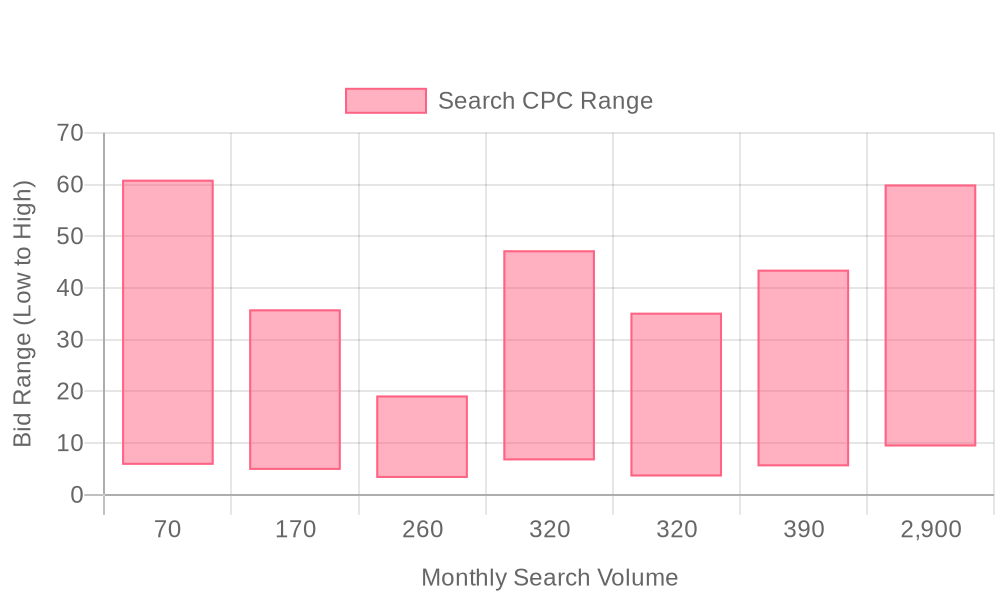
| Industry | Keyword | Monthly Search Volume | Competition Level | Low Bid | High Bid |
| Piping Contractors | sewer lining companies near me | 70 | HIGH | 5.81 | 60.92 |
| Piping Contractors | sewer pipe lining companies near me | 170 | LOW | 4.83 | 35.86 |
| Piping Contractors | piping contractors | 260 | LOW | 3.28 | 19.2 |
| Piping Contractors | pipe lining companies near me | 320 | MEDIUM | 6.68 | 47.28 |
| Piping Contractors | plumbers that install gas lines near me | 320 | MEDIUM | 3.57 | 35.21 |
| Piping Contractors | licensed plumber for gas line | 390 | MEDIUM | 5.53 | 43.53 |
| Piping Contractors | plumber for gas line | 2900 | MEDIUM | 9.37 | 60 |
Piping contractors gain a competitive edge by leveraging a well-structured keyword strategy that aligns with buyer intent and project urgency. Focusing on terms that reflect actual search behavior ensures that every advertising dollar targets prospects actively seeking piping services, increasing the likelihood of high-quality lead generation.
A data-driven approach to Google Ads for Piping Contractors means prioritizing keywords that capture both industry specificity and immediate need. High-intent modifiers such as “near me,” “emergency,” or “commercial piping services” filter out low-value clicks and concentrate spend on the most lucrative opportunities. For deeper insights into crafting effective Google Ads campaigns for specialty contractors, explore this guide to Google Ads for contractors. Sample target terms might include:
- Local intent keywords: “piping contractors near me,” “industrial pipe installation nearby,” “commercial piping repair cityname”
- Service-specific phrases: “underground piping installation,” “steam pipe maintenance,” “gas line piping contractors”
- Buyer-ready modifiers: “emergency piping contractor,” “licensed piping contractor for hire,” “24/7 piping repair service”
- Industry verticals: “construction piping contractors,” “HVAC piping installation,” “municipal piping project specialists”
Sophisticated keyword strategies increasingly rely on real-time behavioral data. By connecting campaign targeting with live audience signals, contractors can dynamically adjust keyword priorities and bidding. For example, when a visitor demonstrates repeated interest in commercial piping solutions, the system can automatically shift budget toward terms like “commercial piping contractors” or “industrial pipe replacement,” ensuring ads are always reaching the most in-market accounts.
Enriching keyword targeting with business intelligence also allows for granular audience segmentation and precise lead qualification. Integrating CRM and ad platform data ensures that keywords reflect actual sales cycles, not just search volume, which means spend is allocated to prospects most likely to convert. This approach fuels Google Ads ROI for contractors by unifying keyword selection, intent monitoring, and audience building into a single, high-performance workflow.
Step-by-Step Campaign Execution Framework
Executing high-performing Google Ads campaigns for piping contractors starts with a precise, data-driven approach. Each phase, keyword research, audience segmentation, ad creative, landing page alignment, and ongoing optimization, requires structured execution and constant adaptation to changing buyer signals. For an in-depth look at effective Google Ads strategies tailored specifically for plumbing and piping businesses, explore Google Ads for plumbers. To further refine your approach, access expert articles and the latest strategies in marketing analytics and campaign execution from our marketing and analytics blog.
A unified data strategy ensures every campaign element is responsive to real prospect behavior. By connecting anonymous website visits to real companies, marketers can tailor outreach and shift budget toward accounts with active, high-value intent. This targeted orchestration leads to increased qualified leads, better pipeline velocity, and a measurable lift in Google Ads ROI for contractors.
Step 1: Build Targeted Keyword Lists
Start with comprehensive keyword research tailored to the piping and construction sector. Focus on buyer intent by segmenting keywords into transactional, commercial, and informational groups, such as "emergency piping contractor," "industrial piping installation," and "piping system design consultation." Exclude irrelevant queries through negative keyword lists, preventing wasted spend and ensuring ads reach only those with real purchase intent, following Google Ads best practices for contractors.
Dynamic keyword refinement is possible when your CRM and ad platform are fully integrated. As new data is captured, from form fills, chats, or offline interactions, audience lists and keyword targets can be instantly updated, maintaining alignment between changing buyer behaviors and campaign strategy.
The upgrade most piping contractors advertisers miss is going beyond raw keyword volume to layer in intent and identity signals. By connecting website-visitor data and CRM records with Sona Marketing Measurement, you can see which specific search terms bring in the accounts and customers that actually convert, and weight your keyword and bidding strategy toward those rather than the terms with the highest search volume alone.
Step 2: Develop Segment-Specific Ad Copy
Craft messaging that speaks directly to each client segment. Enterprise procurement teams respond to value-driven headlines; facility managers often need urgent, direct language instead. Use ad assets to highlight differentiators: 24/7 emergency service, certifications, or project portfolios. See how leading contractors maximize performance with Google Ads for contractors.
When audience data flows seamlessly from your CRM into Google Ads, teams can trigger hyper-personalized copy variations based on account stage, industry, or purchase history. This approach boosts click-through and conversion rates, maximizing the impact of every ad dollar.
Step 3: Design Landing Pages for Buyer Stages
Align landing pages to the journey stage of each visitor. For top-of-funnel prospects, provide educational resources or project showcases. For high-intent leads, prioritize rapid contact forms, quote requests, and trust signals like testimonials and case studies. Dedicated PPC landing pages improve lead quality by aligning content and CTAs to the ad’s promise. Discover more strategies for optimizing your landing pages and campaigns in our actionable demand generation playbooks.
Real-time visitor identification allows for personalized landing page content, such as dynamically inserting a visitor’s company name or highlighting relevant case studies, improving engagement and reducing drop-off.
Step 4: Optimize Performance in Real Time
Maximize campaign results through constant, data-led optimization. Monitor click, conversion, and pipeline metrics to identify high-performing keywords, ad variants, and audience segments. Use A/B testing to refine ad copy and landing page elements, ensuring incremental improvements over time. For additional PPC optimization tips tailored to contractors, read PPC ad hacks for plumbers and HVAC companies.
Advanced conversion tracking, integrating both online and offline signals, provides a holistic view of true lead value. By syncing enriched audience and conversion data across Google Ads, HubSpot, and Salesforce, revenue teams can attribute pipeline contribution to specific campaigns and shift budget to the most effective strategies. This end-to-end visibility is essential for predictable, scalable piping contractor marketing.
Sona Marketing Measurement closes the gap between clicks and revenue. It captures ad clicks with first-party, company-level measurement rather than individual tracking, ties that click through UTM capture and ad-platform APIs to the actual record in your CRM, and reports ROAS by keyword and campaign instead of by last-click form fill. Feeding that revenue signal back into Smart Bidding and Performance Max compounds over time: the algorithms optimize toward booked piping contractors revenue, not cheap leads.
Tips on Expanding Your Piping Contractor Presence
Expansion in the piping contractor space requires more than a broad approach; success depends on adapting to shifting market conditions and using data-driven tactics to stay ahead of competitors. Teams that prioritize up-to-date prospect insights and dynamic outreach consistently outperform those relying on static lead lists or manual processes.
- Refresh audience data regularly: Manually maintained lists quickly become obsolete, missing new construction projects or emerging decision-makers. By activating platforms that continuously enrich contact and company data, contractors can target prospects who are actively researching piping services or have shifted roles within an organization. This accuracy enables precise campaign segmentation and ensures outreach is always relevant.
- Cross-promote educational content: Sharing high-value guides or case studies across digital channels positions your firm as a subject-matter expert while expanding reach beyond traditional sales touchpoints. Audience data tools that track engagement can reveal which markets or personas show the strongest interest, helping you allocate budget and content resources where they drive the most conversions. For actionable strategies tailored to contractors, review this Google Ads guide for contractors.
- Localize campaigns for new regions: Entering a new geographic area involves more than updating a zip code filter. Unifying firmographic and behavioral data allows you to build custom audiences based on local market signals, project demand, and regulatory trends. This approach ensures every campaign message resonates with the specific needs of new prospects, increasing response rates and accelerating market entry.
- Leverage strategic partnerships: Collaborating with engineering firms, suppliers, or general contractors extends your influence and opens new channels for lead generation. Data synchronization with CRM and ad platforms streamlines the process of identifying shared opportunities, tracking partner-influenced pipeline, and optimizing co-marketing efforts for measurable ROI.
- Dynamic retargeting for lead nurturing: As leads interact with your brand, filling out forms, attending webinars, or browsing pricing pages, real-time audience updates allow for timely and personalized retargeting, moving high-intent accounts through your funnel efficiently. This level of orchestration ensures ad spend is focused where it produces the greatest impact, contributing to higher Google Ads ROI for contractors and more predictable revenue growth.
These strategies build the foundation for scalable lead generation, faster market expansion, and stronger competitive differentiation as piping contractors move into new regions and partnerships.
Beyond Google Ads: Winning the AI Answers Piping Contractors Buyers Now Trust
Paid search captures demand at the moment someone types a query. But a fast-growing share of piping contractors buyers no longer start at Google at all, they ask ChatGPT, Gemini, or Perplexity before they ever run a search, and Google's own AI Overviews increasingly summarize an answer above the traditional results. If your business isn't referenced in those AI answers, you're invisible at the exact moment buyers build their shortlist.
Sona AI Visibility shows where your business shows up across ChatGPT, Gemini, Perplexity, Google AI Overviews, and 10+ engines, and, much like a keyword report, which prompts actually send you buyers, so you can prioritize the ones that convert. Run the two together and you cover the entire buyer path: get cited where buyers research (AI Visibility), then prove which of that demand turns into booked revenue (Marketing Measurement).
Helpful resources
Conclusion
Google Ads works for piping contractors when it's built around how the trade actually buys: an emergency call that needs an answer in minutes, and a commercial or municipal project that gets vetted for weeks before anyone signs. Campaigns that respect both timelines, backed by real-time data and precise targeting, turn search spend into booked jobs instead of anonymous clicks.
The contractors pulling ahead are the ones pairing that paid search foundation with visibility into how buyers now research: AI tools and overviews increasingly answer the question before a click ever happens. Building both muscles now, precise Google Ads execution and a presence in AI-driven answers, is what will keep a piping contractor's pipeline full as buyer research habits keep shifting.
To put these strategies to work, start for free and see how Sona's platform can sharpen your targeting, measurement, and lead follow-up.
FAQ
What are the best Google Ads strategies for piping contractors?
The best strategies involve leveraging keyword strategy, audience segmentation, campaign setup, and conversion tracking to target high-intent prospects and optimize ad spend.
How can piping contractors effectively use Google Ads to generate leads?
Piping contractors can generate leads by using precise targeting, real-time data analysis, and structured campaigns to engage buyers at every stage of the funnel.
What budget should piping contractors allocate for Google Ads?
Budget allocation should focus on targeting prospects most likely to convert, using data-driven insights to optimize spend and maximize ROI.
What keywords should piping contractors target in their Google Ads campaigns?
Piping contractors should focus on high-intent keywords such as 'emergency piping contractor,' 'commercial piping services,' and location-specific terms like 'piping contractors near me.'
How do local service ads work for piping contractors?
Local service ads promote the business at the top of local search results, driving high-quality leads through direct booking or callback requests, and are effective for urgent inquiries.







