


A vacant house left unwinterized in January, or a foreclosure cleanout that sits for weeks past a bank's deadline, costs real money fast. That urgency is exactly why Google Ads works so well for property preservation services: it catches property managers, asset managers, and real estate investors at the moment they're typing "vacant property services near me" or "emergency board up," not weeks later when the job's already gone to a competitor. Google Ads targets these decision-makers with precision and, when linked to CRM and sales data, ties ad spend to closed jobs rather than just clicks. The catch is that most companies never see the fuller picture: a property manager researches your services, doesn't fill out a form, and disappears from your CRM entirely, a common and costly gap in this industry.
How to Generate Property Preservation Services Leads with Google Ads: A Step-by-Step Guide

High-performance lead generation in property preservation services hinges on rapid, data-driven engagement. In this sector, the window to connect with decision-makers is brief; meticulous campaign execution and precise targeting give marketers a critical edge. For a step-by-step approach to launching effective campaigns, review this guide on setting up Google Ads for property management service, which breaks down the process for industry newcomers.
Integrating Google Ads for Property Preservation Services into a unified marketing strategy ensures that paid search investments capture demand at the moment of highest intent. A comprehensive framework, anchored in company-level identification data, helps revenue teams avoid costly gaps in coverage that competitors are ready to exploit.
- Data-driven paid search integration: Embedding Google Ads in your overall marketing mix allows you to capture and qualify leads the moment they express intent. Sona's Identity Resolution helps marketers identify not just anonymous website visitors, but the companies and buying groups behind the activity, accelerating prioritization and outreach. Learn how account identification turns your website into a goldmine.
- Property preservation buyer targeting: Success depends on targeting high-intent prospects with keywords and audience segments that reflect real buyer behavior in the property preservation industry. Dynamic audience layering lets marketers focus spend on accounts showing the strongest signals, ensuring investment aligns with market demand.
- Intent-based audience segmentation: By layering intent signals into Google Ads campaigns, marketers move beyond static demographic filters. Real-time behavioral data reveals which accounts are actively researching property preservation services, enabling campaign budgets to shift instantly to the highest-converting prospects.
- Landing page and creative alignment: Conversion rates rise when ads are tightly aligned with specialized landing pages tailored to property preservation buyers. Messaging continuity and trust signals encourage prospects to submit their information, driving measurable results.
- Continuous optimization and cross-channel integration: A cycle of testing, measurement, and refinement ensures ongoing ROI improvement. Integrating campaign data across Google Ads, CRM, and sales tools keeps audiences current as leads progress, while conversion tracking, both online and offline, delivers a complete view of marketing effectiveness.
This playbook serves B2B marketers, operational leaders, and local providers who must balance efficiency with volume, guiding them to generate qualified leads in a market where speed and precision drive revenue outcomes. Get started for free with Sona.
Why Does Google Ads Matter for Property Preservation Services?

Property preservation services operate in a highly specialized market where every lead counts. Decision-makers in this space require tailored solutions and move quickly when urgent needs arise, making timing and relevance critical for effective outreach.
- Complex, Specialized Audience: Google Ads enables property preservation teams to reach property managers and real estate professionals actively searching for solutions, bypassing the noise of general brand awareness channels. Teams can benefit from step-by-step Google Ads setup for property management, ensuring marketing budgets are spent engaging prospects who already recognize their need for property preservation services. Explore additional strategies for specialized audiences in the Sona blog.
- Higher Margin Services: By targeting keywords tied to high-value, complex projects, Google Ads helps companies connect with leads that represent meaningful revenue opportunities. Sona's Identity Resolution reveals which companies are visiting your website, even if they don't fill out a form, minimizing wasted spend on unqualified traffic while surfacing new projects from decision-makers not in your CRM.
- Faster Demand Response: Demand in property preservation spikes without warning, after a hurricane or ice storm, during a wave of foreclosures, or at the seasonal crunch of winterization deadlines. Google Ads responds in real time, giving crews visibility and lead capture exactly when work orders are being handed out. To prioritize the most engaged prospects during those surges, Sona surfaces intent signals that flag which accounts are actively shopping for help right now.
- Visibility in Emerging Regions: As property markets expand into new areas, Google Ads makes it possible to target campaigns to specific ZIP codes and localities. This precision ensures your brand is top-of-mind in regions experiencing growth or underserved by competitors. Take advantage of Sona Audiences to build real-time, hyper-targeted segments for your next campaign.
- Integrated Data Analysis: Google Ads provides granular, closed-loop measurement, allowing revenue teams to attribute pipeline and revenue to specific keywords, campaigns, and audiences. When unified with advanced platforms, this data closes the loop between ad spend and actual business outcomes, giving a full-funnel view of what drives results.
Common Types of Google Ads Campaigns for Property Preservation Services

- Search Campaigns: Reaching clients at the moment they express clear intent is critical in property preservation. Search campaigns allow you to intercept high-priority queries, such as emergency repairs or vacant property upkeep, ensuring your services are offered precisely when prospects are ready to act. With precise audience intelligence, marketers can move beyond anonymous clicks by pinpointing which companies and decision-makers are searching, refining prioritization and increasing win rates.
- Display Ads: Display campaigns keep your brand visible as property managers and real estate investors browse industry-specific content. These ads counteract the loss of potential leads from untracked visits or early-funnel interest by maintaining awareness across popular sites. For further tactics on effective display strategies, check out this step-by-step guide to set up Google Ads for property management services. When audience data is unified, teams can identify returning visitors and update messaging dynamically, ensuring your brand remains relevant throughout the property preservation buying cycle.
- Video Ads: Complex property preservation services often require visual context to build trust and understanding. Video campaigns provide a platform for demonstrating processes, showcasing before-and-after results, and sharing client testimonials. Leveraging intent signal tracking and engagement analytics helps allocate budget toward accounts most likely to convert, turning educational content into qualified pipeline.
- Remarketing: Many prospects research multiple vendors or leave forms incomplete before making a decision. Remarketing campaigns enable you to stay top-of-mind with these visitors by delivering timely, relevant ads as they continue their research journey. With dynamic audience updates, remarketing lists automatically adapt as prospects engage with new content or move closer to conversion.
- Performance Max: Performance Max campaigns pool inventory across Search, Display, YouTube, and Gmail into a single goal-based campaign, which suits property preservation companies juggling both emergency, high-urgency searches and longer research cycles from property managers planning ahead. Feeding it CRM conversion data, rather than just form-fill counts, lets Google's bidding optimize toward jobs that actually close.
- Assets: Trust signals make a measurable difference in the competitive property preservation landscape. Ad assets, such as location, service certifications, and callouts, boost credibility and improve conversion rates by offering immediate proof points. When CRM and ad platforms are synchronized, these assets can pull in up-to-date business details and social proof, reinforcing trust at every impression.
Where to Find Growth Opportunities?

Successful property preservation marketing starts by expanding reach beyond existing, saturated channels. Modern revenue teams in this sector face the challenge of incomplete interaction data, making it difficult to identify which strategies drive real business outcomes. For actionable insights on marketing analytics and attribution, explore the Sona blog.
- Vertical keyword targeting: Focus on specialty services relevant to property preservation, such as debris removal, winterization, or foreclosure cleanouts. Integrating these terms into your Google Ads for property preservation services campaigns allows you to align paid search with your broader content strategy. Using Sona’s Destinations feature, marketers can identify which niche keywords attract high-value accounts and adjust bids dynamically to capture engaged prospects.
- Competitor gap analysis: Analyze where competitors are underperforming or missing, revealing underserved segments in the market. Strategic budget allocation, informed by unified data and real-time intent signals, lets you prioritize these gaps and capture share with less competition. For example, property management PPC efforts can be refined by syncing CRM insights with Google Ads to zero in on local service ads for property preservation, reaching overlooked but motivated buyers.
- Industry-specific placements: Secure placements on trade forums and real estate advertising platforms that may not be accessible through organic means. This approach helps you engage with decision-makers in industry conversations and drive incremental leads from trusted channels. Real-time visitor identification enables you to measure which placements generate qualified interest from target accounts, optimizing spend and reach.
- Content retargeting integration: Retarget audiences who have engaged with key assets such as whitepapers, checklists, or video walkthroughs mapped to property preservation services. By syncing Sona Audiences into advertising platforms, marketers can update segments as leads progress through the funnel, ensuring timely follow-up and informed budget decisions. This results in a seamless connection between marketing calendar activities and Google Ads strategies, enhancing property management lead generation and campaign ROI.
To accelerate your marketing impact and unlock new growth channels, get started for free with Sona.
How to Apply Audience Segmentation for Property Preservation Services
Precise audience segmentation is pivotal for property preservation companies that want to maximize the effectiveness of their Google Ads investment. By aligning targeting with each stage of the customer journey, marketing teams address the common challenge of generic analytics that fail to reveal actionable insights or conversion drivers. For foundational strategies on Google Ads targeting for property management, this step-by-step guide for property management Google Ads provides actionable entry points, especially for those new to the space.
- Define Segments: Differentiate between residential vs. commercial properties. Property preservation services cater to a range of clients, from single-family homeowners to commercial real estate managers. Creating distinct audience segments for each allows marketers to tailor messaging, visuals, and offers that resonate with the priorities of these groups. Segmenting by property type also clarifies which services, routine maintenance, urgent repairs, or seasonal upkeep, are most relevant to each audience. To explore more audience segmentation frameworks, review our collection of actionable playbooks.
- Overlay Intent Signals: Identify intent, such as routine maintenance or urgent repairs. Layering intent data helps marketers distinguish between prospects seeking standard property care and those facing urgent issues. For example, visitors searching for “emergency property repairs” display different buying signals than those researching “scheduled maintenance plans.” Platforms that surface real-time intent signals enable teams to pivot budgets quickly, emphasizing high-converting, in-market accounts and minimizing spend on low-intent or irrelevant searches.
- Create Ad Groups by Segment: Customize creatives and budgets for segment-specific messages. With clearly defined segments and intent signals, building dedicated ad groups becomes straightforward. Customizing ad copy, extensions, and landing pages for each segment increases relevance and boosts quality scores. Budgets can be dynamically allocated to prioritize the highest-value or most urgent segments, ensuring efficient resource use and improved cost per lead. Dynamic audience capabilities allow these groupings to evolve as leads progress through the funnel, ensuring messaging remains relevant throughout the buyer journey.
- Validate Conversion Paths: Ensure form fills and calls are tracked and integrated with CRM to provide a complete ROI picture. Advanced conversion tracking is essential to connect ad engagement with downstream outcomes, whether online form submissions or phone inquiries. Integrating this data with your CRM enables full-funnel attribution, linking ad spend to closed deals for clearer ROI measurement. Seamless sync between Google Ads audiences and enriched lead data within sales platforms ensures all marketing activities are coordinated, allowing revenue teams to optimize campaigns with confidence based on actual performance data and not just surface-level clicks. For more, see our methods for measuring marketing’s influence on sales pipeline.
These segmentation practices empower property preservation marketers to deliver highly relevant, intent-driven campaigns, transforming raw analytics into actionable growth strategies and measurable outcomes. If you’re ready to put these strategies into practice, get started for free with Sona and unlock advanced segmentation for your next campaign.
This is also where measurement changes the economics. With Sona Marketing Measurement you can identify the companies and buyers behind your ad clicks, not just anonymous sessions, and segment audiences by who actually becomes a customer. That lets you build bid adjustments and audience signals around the segments that convert and de-prioritize the ones that don't, so you feed Google's algorithms "this click became a paying property preservation services customer" instead of just "someone filled out a form."
Keyword Strategy & Sample Target Terms
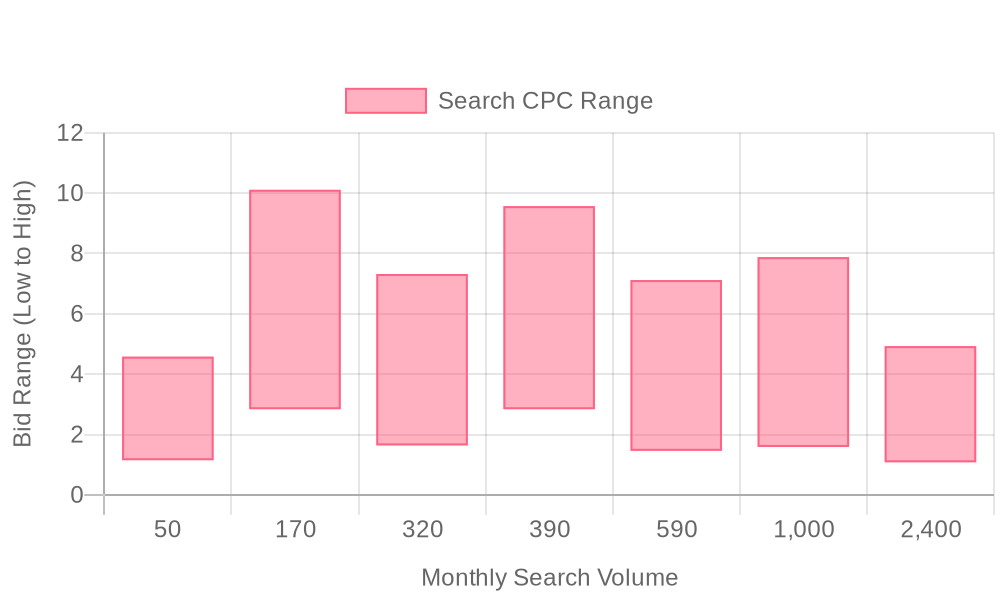
| Industry | Keyword | Monthly Search Volume | Competition Level | Low Bid | High Bid |
| Property Preservation Services | property preservation contractors needed | 50 | LOW | 1.15 | 4.58 |
| Property Preservation Services | property preservation vendors needed | 170 | LOW | 2.84 | 10.11 |
| Property Preservation Services | property preservation contractor | 320 | LOW | 1.64 | 7.32 |
| Property Preservation Services | banks looking for property preservation vendors | 390 | LOW | 2.84 | 9.57 |
| Property Preservation Services | property preservation services | 590 | LOW | 1.46 | 7.12 |
| Property Preservation Services | property preservation companies | 1000 | LOW | 1.59 | 7.88 |
| Property Preservation Services | property preservation | 2400 | LOW | 1.08 | 4.93 |
A focused keyword strategy is foundational for high-performing Google Ads for property preservation services. By pinpointing terms used by decision-makers and property managers actively seeking preservation solutions, advertisers can intercept demand at critical buying moments. Reliable keyword data transforms search intent into measurable opportunities, ensuring every click has genuine revenue potential, learn more about effective campaign setup in this step-by-step guide for Google Ads in property management.
Precision targeting is essential to drive qualified traffic. High volume, low competition keywords, such as "property preservation companies near me," "foreclosure cleanout services," or "property management debris removal", yield cost-effective leads while minimizing wasted spend. Incorporating negative keywords like "DIY" or "free" further cleanses incoming traffic, preventing budget drain from unqualified inquiries. For more strategies on optimizing keyword targeting and paid campaigns, explore our collection of actionable marketing playbooks.
The real advantage emerges when keyword data is unified across channels and connected to visitor identity. Instead of anonymous clicks, property preservation marketers can use Sona's Identity Resolution to reveal which companies and decision-makers engage with specific search terms. As intent signals update in real time, budget allocation shifts toward those most likely to convert, enabling marketers to act with unmatched agility. Seamless CRM and ad account integrations allow dynamic audience updates, connecting evolving keyword interest to both online and offline conversion tracking. This approach ensures property preservation companies attribute quote requests, calls, and site visits directly to the campaigns and keywords that drove them, maximizing channel synergy and ROI.
Step-by-Step Campaign Execution Framework
Step 1: Build Targeted Keyword Lists
Effective Google Ads for property preservation services start with tightly clustered keyword lists. Grouping keywords by specific service types such as "emergency board up," "winterization," or "debris removal" ensures ads appear for high-intent searches. Adding local modifiers like city names or ZIP codes targets prospects looking for solutions in their area, while long-tail phrases such as "foreclosure property cleanout near me" capture urgent, niche demand.
Marketers using unified data platforms can further refine keyword targeting by layering in real-time company and visitor insights. This approach identifies not just search terms, but also the organizational context behind each click, allowing for more strategic budget allocation. For a detailed step-by-step guide on campaign setup, see this step-by-step guide for property management Google Ads. Targeting becomes dynamic, reflecting changes in lead status and intent across the funnel for improved PPC performance and lead generation.
The upgrade most property preservation services advertisers miss is going beyond raw keyword volume to layer in intent and identity signals. By connecting website-visitor data and CRM records with Sona Marketing Measurement, you can see which specific search terms bring in the accounts and customers that actually convert, and weight your keyword and bidding strategy toward those rather than the terms with the highest search volume alone.
Step 2: Develop Compelling Ad Copy
Ad copy for property preservation must directly address common pain points, such as rapid response, compliance, and minimizing vacancy loss, while promoting urgency through incentives like same-day estimates. Messaging should be tailored for each keyword cluster, ensuring relevance from search to landing page.
Integrating behavioral and firmographic data into ad copy development enables marketers to personalize messaging based on the prospect's industry, company size, or recent activity. Responsive search ads, a format within Search campaigns, can automatically test and adapt headlines and descriptions as new insights surface, making every impression more likely to convert. To explore more actionable tactics for marketing campaigns, browse our collection of proven playbooks. This data-driven approach increases click-through rates and aligns ad spend with the highest-converting accounts.
Step 3: Design Effective Landing Pages
Landing pages for property preservation marketing must create a seamless path from keyword to conversion. Each landing page should mirror the promise of the ad, streamline information capture, and remove distractions that delay lead submission. Fast-loading forms, trust signals, and clear call-to-action buttons are essential for maximizing conversion rates.
Advanced platforms enable real-time syncing of captured lead data with CRM and marketing automation tools. This ensures that every inquiry, whether from online forms or direct calls, is tracked, enriched, and routed to sales instantly. Marketers benefit from unified visibility into each touchpoint, making follow-up timely and contextually relevant.
Step 4: Implement Data-Driven Optimizations
Consistent optimization is crucial for effective Google Ads for contractors and property preservation teams. Conversion tracking should cover both online and offline actions, linking ad spend to actual revenue outcomes. Smart bidding strategies use live performance data to automatically adjust bids for the highest-value leads.
With connected data infrastructure, marketers gain access to granular attribution and intent signals from across the buyer journey. Dynamic audiences update as leads engage with different channels, allowing for precise retargeting and budget reallocation. Automated syncing with sales and marketing systems ensures that updated contact and engagement data flows back into Google Ads, closing the loop and revealing true campaign ROI.
Sona Marketing Measurement closes the gap between clicks and revenue. It captures every ad click with first-party measurement, ties that click through UTM capture and ad-platform APIs to the actual record in your CRM, and reports ROAS by keyword and campaign instead of by last-click form fill. Feeding that revenue signal back into Smart Bidding and Performance Max compounds over time: the algorithms optimize toward booked property preservation services revenue, not cheap leads.
Tips on Expanding Your Property Preservation Services Presence

Property preservation firms face unique growth challenges, from fragmented lead data to the seasonal nature of real estate demand. Modern digital strategies empower teams to move beyond basic web analytics, unlocking more actionable, high-intent opportunities that fuel both pipeline and brand equity.
- Cross-promote educational assets in retargeting: Leverage retargeting not just for lead capture, but as a channel to amplify webinars, guides, or case studies. By mapping engagement signals and layering in content consumption data, marketers can fill attribution gaps that generic analytics miss, enabling precise nurturing across each stage of the buyer journey.
- Upsell related services using CRM data: Integrate CRM insights into paid media workflows to surface upsell and cross-sell opportunities. With unified lead tracking and enriched profile data, property preservation teams can match ad messaging to existing customers’ needs, making every touchpoint count for property management PPC and real estate advertising. For a detailed Google Ads setup walkthrough tailored to property management, see this step-by-step guide for property management service.
- Partner with industry associations for referral traffic: Strategic partnerships with local and national associations create new referral streams and open the door to co-branded ad campaigns. This approach helps recover high-value prospects lost through traditional channels and builds trust through third-party credibility. For more actionable tactics, explore our property management playbooks.
- Localize by metro areas: Hyperlocal targeting by metro or zip code increases share of voice and drives higher conversion rates. Local campaign segmentation improves lead prioritization, ensuring that sales teams focus on accounts most likely to convert within specific service territories, an essential tactic in property preservation marketing.
- Use search query data for new content topics: Analyze search query data from Google Ads for Property Preservation Services to identify emerging needs and gaps in your content library. This insight enables the creation of timely blog posts, FAQs, or landing pages that capture additional market share and improve property management lead generation.
Effective expansion for property preservation services relies on a blend of intent-driven advertising, CRM-aligned campaigns, and ongoing optimization against real-time performance insights. By unifying audience data and syncing high-value segments into Google Ads and CRM platforms, revenue teams can maximize ROI, scale personalized engagement, and move ahead of competitors in a crowded market.
Beyond Google Ads: Winning the AI Answers Property Preservation Services Buyers Now Trust
Paid search captures demand at the moment someone types a query. But a fast-growing share of property preservation services buyers no longer start at Google at all, they ask ChatGPT, Gemini, or Perplexity before they ever run a search, and Google's own AI Overviews increasingly summarize an answer above the traditional results. If your business isn't referenced in those AI answers, you're invisible at the exact moment buyers build their shortlist.
Sona AI Visibility shows where your business shows up across ChatGPT, Gemini, Perplexity, Google AI Overviews, and 10+ engines, and, much like a keyword report, which prompts actually send you buyers, so you can prioritize the ones that convert. Run the two together and you cover the entire buyer path: get cited where buyers research (AI Visibility), then prove which of that demand turns into booked revenue (Marketing Measurement).
Helpful resources
Conclusion
The property preservation companies pulling ahead right now aren't just running more ads, they're closing the loop between a search query and a signed work order, so every dollar spent teaches their campaigns what a real customer looks like. As buyer research increasingly starts inside AI chat tools rather than a search box, that same closed-loop data will decide who gets cited and who gets skipped.
To take full advantage of these insights and more, start for free to experience our platform's capabilities today. This is your chance to harness the power of unified go-to-market data, drive actionable insights, and elevate your property preservation services to new heights.
FAQ
What are the best practices for using Google Ads in property preservation?
Best practices include integrating Google Ads with a unified marketing strategy, targeting high-intent prospects with relevant keywords, ensuring alignment between ad messaging and landing pages, and continuously optimizing campaigns through testing and data analysis.
How can I optimize my Google Ads for property preservation services?
You can optimize your Google Ads by leveraging intent-based audience segmentation, developing compelling ad copy, designing effective landing pages, implementing data-driven optimizations, and continuously testing and refining your campaigns.
What budget should I allocate for Google Ads in property preservation?
While the article does not specify a precise budget, it suggests that budget allocation should be informed by strategic targeting of high-intent prospects and real-time performance data to ensure cost-effective lead generation.
Are there specific keywords to target for property preservation services?
Yes, targeting keywords like 'property preservation companies near me,' 'foreclosure cleanout services,' and 'property management debris removal' can capture high-intent prospects. Additionally, using negative keywords like 'DIY' or 'free' can help minimize unqualified traffic.
How do I measure the success of my Google Ads campaigns for property preservation?
Success can be measured by linking ad engagement to downstream outcomes using conversion tracking, integrating campaign data with CRM systems for full-funnel attribution, and adjusting strategies based on performance data to maximize ROI.







