


A burst pipe or a failed HVAC unit doesn't wait for business hours, and neither do the property managers searching for someone to fix it. Google Ads lets property maintenance companies show up at that exact moment, when a landlord, facilities director, or property manager is actively looking for help. Done well, it links digital intent to booked work in real time: precision targeting and ROI tracking let you lean into seasonal spikes and local demand patterns specific to property maintenance. Done poorly, weak tracking and slow follow-up let hot leads cool before anyone calls them back. This guide walks through how to set up a Google Ads campaign built for property maintenance businesses, so your ads reach the right audience and produce results you can actually trace.
How to Generate Property Maintenance Leads with Google Ads: A Step-by-Step Guide

Property maintenance companies need a proven, scalable approach to fill their sales pipeline with qualified leads. Google Ads provides the precision, speed, and intent-based targeting that modern B2B marketers and local operators require to drive measurable growth in a competitive space. To explore more strategies for data-driven growth, visit our marketing analytics blog.
Harnessing a data-driven approach unifies your paid search efforts with broader marketing strategies. This alignment ensures that your investment in Google Ads for Property Maintenance not only delivers results in isolation but also amplifies the impact of email, social, and outbound campaigns across your full funnel.
- Integrate paid search with marketing strategy: Uniting Google Ads with existing campaigns allows marketers to capture in-market demand as it emerges. For B2B teams, this synergy is critical: it leverages real-time audience data, so budget and messaging dynamically shift toward high-intent accounts. When platforms automatically identify which companies from your ICP are visiting your website and sync these audiences into your ad campaigns, every dollar spent goes further and conversion rates improve.
- Apply precise targeting and firmographic filters: Sophisticated audience targeting is essential for PPC for property management. By layering firmographic data (such as company size, industry, or location) with keyword intent signals, marketers can build property management campaigns that reach only decision-makers at property management firms or owners with significant portfolios. Dynamic audience lists that update as leads progress through the funnel enable teams to run timely retargeting ads, keeping messaging relevant and maximizing engagement.
- Enhance landing pages and creative assets: Success in digital marketing for property management depends on more than just getting the click. Landing pages should mirror ad messaging, load quickly on mobile, and highlight trust signals like testimonials or certifications. High-performing companies use analytics to identify which creative elements drive conversions, then adjust assets in real time to boost lead quality and lower acquisition costs.
- Continuously refine ad performance: Google Ads optimization is a process, not a set-and-forget tactic. Weekly reviews of search term reports, conversion pathways, and engagement metrics allow marketers to spot trends and fix underperforming ads. Advanced tracking, including tying ad clicks to both online form fills and offline sales activity, enables true ROI measurement and smarter budget allocation on future property management advertising.
- Strengthen cross-channel marketing ecosystem: Ensuring seamless transitions between channels is vital for property maintenance leads. When your CRM and ad platforms are integrated, enriched lead and account data are pushed back into Google Ads, updating audiences and exclusions in real time. This closed-loop approach ensures your message stays consistent and relevant, whether a prospect sees your brand via search, display, or email nurture.
A step-by-step, data-driven approach to Google Ads for property maintenance gives providers and B2B marketing teams a predictable path to scalable growth. When targeting, creative, and attribution work as one system, revenue teams close more deals while keeping cost per lead down and lifetime value up. To maximize your lead generation results, get started for free with Sona.
Why Does Google Ads Matter for Property Maintenance?

Property maintenance providers operate in a landscape where traditional marketing falls short at capturing high-intent prospects precisely when service is needed. Google Ads enables modern revenue teams to intercept decision-makers in real time, connecting maintenance firms directly with property owners and managers searching for solutions, whether that's a commercial building manager scheduling routine upkeep or a homeowner dealing with an emergency repair.
- Complex, Niche Audience: Traditional channels create broad reach, but Google Ads hones in on the exact decision-makers, property managers, landlords, and facility owners, who are actively evaluating vendors. Campaigns can exclude casual browsers and tenants, ensuring budgets are allocated to those most likely to convert. With unified data, marketers can identify which companies are visiting their site, enriching audience segments with firmographic details and surfacing high-value accounts for follow-up.
- Higher Margin Services: Property maintenance often involves project-based work with significant revenue potential, such as large-scale renovations or building upgrades. Google Ads allows for granular targeting of keywords and ad schedules, enabling businesses to capture demand from clients seeking upscale or specialized services that might not be reached through referrals or repeat business. Using real-time audience segmentation, marketers can prioritize outreach to in-market buyers for premium services.
- Faster Demand Response: In property management, emergencies drive urgency, burst pipes, HVAC failures, or storm damage cannot wait. Google Ads delivers instant visibility to prospects who need immediate solutions, while dynamic audience updates ensure that as leads move from inquiry to contract, marketing dollars are redirected toward new opportunities. Real-time intent data helps marketers shift budget to campaigns showing the highest engagement for urgent, high-value requests.
- Visibility in Emerging Markets: As property maintenance firms expand into new territories or aim to serve underserved communities, Google Ads geo-targeting and local service ads make it possible to build awareness at the neighborhood or city level. Marketers can launch test campaigns in specific ZIP codes, track location-based conversion patterns, and optimize spend based on market response.
- Integrated Data Analytics: Closed-loop measurement is essential for optimizing both marketing and sales efforts. Google Ads seamlessly integrates with advanced analytics platforms, enabling teams to track every touchpoint, from ad click to signed contract. When enriched CRM and ad data are synchronized, companies can prioritize follow-up with the highest-value leads, automate feedback loops, and accurately attribute revenue to campaigns that deliver true ROI.
Common Types of Google Ads Campaigns for Property Maintenance Services

- Search Campaigns: Search campaigns allow property maintenance providers to intercept high-intent prospects at the moment they need urgent services, such as emergency plumbing or HVAC repair. By targeting transactional keywords and tailoring ad copy to pain points, companies can efficiently capture bottom-funnel demand and turn digital interest into direct inquiries. When campaign data is unified with Sona's Identity Resolution, marketers can pinpoint which companies or property owners are searching, enabling more precise follow-ups and optimized budget allocation for the accounts most likely to convert.
- Display Ads: Display ads maintain brand presence across news sites, local blogs, and relevant industry platforms, supporting upper-funnel awareness and reinforcing messaging delivered through social media efforts. For property maintenance businesses, this format ensures ongoing visibility with both decision-makers and influencers, keeping services top-of-mind throughout the buyer’s journey. Leveraging Sona’s Audiences, marketers can ensure display campaigns consistently retarget those who have shown engagement, adjusting creative to match their progression through the sales funnel.
- Video Ads: Video campaigns provide a compelling medium to visually explain complex maintenance offerings, showcase project outcomes, or demonstrate rapid response capabilities. Video is especially effective for educating property managers and owners about preventive maintenance or the value of bundled services. Sona surfaces intent signals so marketers can prioritize video budget toward those who have recently searched for relevant topics, increasing the likelihood that these highly engaged viewers move forward with a consultation or quote request.
- Remarketing: Remarketing reengages previous website visitors, nurturing prospects who have explored services but not yet converted. Strategic remarketing lists segment audiences by behavior, such as viewing pricing pages or downloading maintenance checklists, enabling personalized follow-up ads that address specific objections or needs. As leads interact with various touchpoints, Sona’s Destinations keeps remarketing efforts relevant, ensuring messaging evolves in sync with each prospect’s journey toward becoming a qualified property maintenance lead.
- Assets: Ad assets, including location, call, and callout assets, add credibility and convenience to each ad unit. These elements validate service claims, highlight quick response times, and offer instant ways for prospects to connect, which is critical for urgent maintenance scenarios. When CRM and ad platforms are synced, assets can dynamically display the most relevant information for each audience segment, tailoring experiences to commercial property owners or residential clients as appropriate. For more tactics on effective campaign setup, explore our in-depth blog.
Where to Find Growth Opportunities?

Expanding beyond traditional digital channels is essential for property maintenance providers aiming to unlock new growth. By targeting vertical keywords that reflect specialized service needs, marketing teams can capture intent signals from prospects seeking unique solutions, not just generic repairs or cleaning.
Competitor analysis using auction insights uncovers gaps in the local market, revealing under-served service types and allowing campaigns to outpace less agile providers. This approach increases campaign relevance by targeting opportunities where competitors have weak coverage or lower ad visibility. Placing ads on industry-specific forums and trade associations further extends reach, especially where organic search listings are less prominent. These placements connect property maintenance firms with decision-makers actively searching for vetted partners, often before they enter broader comparison shopping.
Content retargeting takes advantage of whitepapers, educational videos, and case studies to nurture prospects who have shown early purchase intent but are not yet ready to convert. By identifying which visitors engage with in-depth resources, teams can craft remarketing campaigns that speak directly to their stage in the buying journey. Unified platforms help move from anonymous website traffic to pinpointing which company or decision-maker is engaging, enabling further personalization and prioritization in both ad creative and outbound sales.
Integrating real-time intent data with campaign management enables marketing teams to shift budget toward active, high-converting accounts. As leads progress through the funnel, dynamic audiences update automatically, ensuring retargeting and nurturing efforts stay aligned with current pipeline needs. Syncing enriched audience lists into Google Ads and CRM platforms keeps every touchpoint relevant, supporting accurate attribution and a clear line of sight from click to closed deal.
How to Apply Audience Segmentation for Property Maintenance

Audience segmentation in property maintenance marketing unlocks precise targeting, connecting each campaign with the right decision-makers and client profiles. By focusing on segment-driven strategies, marketing teams can increase lead quality, reduce wasted spend, and match offers to real-time service needs. To further refine your segmentation approach, explore dynamic audience segmentation capabilities or dive deeper into in-depth marketing analytics best practices.
- Define Segments: Start by categorizing your market based on meaningful operational differences: high-rise versus low-rise buildings, commercial versus residential properties, or even owner-occupied versus investor-held assets. This distinction is foundational for all subsequent targeting efforts, ensuring that creative and messaging speak directly to the actual needs of each group. For instance, commercial clients may prioritize compliance and scheduled maintenance, while residential property owners focus on urgent repairs and tenant satisfaction. Segmenting this way also allows marketers to build tailored campaigns for each property type, increasing engagement and improving cost efficiency. For a step-by-step guide on setting up Google Ads tailored to property management audiences, visit this property manager Google Ads guide.
- Overlay Intent Signals: Once segments are defined, overlay intent signals to prioritize follow-up and budget allocation. Signals such as recent requests for emergency repairs, seasonal maintenance inquiries, or high-frequency website visits indicate which prospects are most likely to convert. Integrating behavioral data with your CRM provides a real-time view of which accounts are in-market, letting you dynamically shift spend toward high-intent prospects. Advanced platforms can identify website visitors by company, even before they fill out forms, making it possible to engage warm accounts with relevant offers the moment they express need.
- Create Ad Groups by Segment: Developing dedicated ad groups for each segment allows you to tailor every element of your campaign. Headlines, copy, and extensions should address specific pain points: for example, “24/7 Emergency Response for High-Rise Buildings” or “Preventative Maintenance Packages for Commercial Portfolios.” This customization improves click-through rates and enhances relevancy, supporting stronger Quality Scores and lowering cost per acquisition. As leads engage and move through the funnel, dynamic audience lists update in real time, ensuring remarketing efforts only reach relevant, qualified prospects. Learn more in this actionable marketing playbook designed for property-focused campaigns.
- Validate Conversion Paths: Seamless integration between ad platforms and CRM systems is essential for tracking the customer journey and avoiding disconnects that can hinder conversions. Every service inquiry, whether booked through a landing page, phone call, or online form, should sync directly to lead management workflows. Sophisticated attribution allows you to connect online ad clicks with offline appointments and service outcomes, providing a clear view of true ROI. This level of integration means marketing and sales teams can respond to high-priority leads faster, personalize follow-ups based on property type or urgency, and continuously refine campaigns based on outcome data.
This is also where measurement changes the economics. With Sona Marketing Measurement, you can identify the companies and buyers behind your ad clicks, not just anonymous sessions, and segment audiences by who actually becomes a customer. That lets you build bid adjustments and audience signals around the segments that convert, and de-prioritize the ones that don't, so you feed Google's algorithms "this click became a paying property maintenance customer" instead of just "someone filled out a form."
Keyword Strategy & Sample Target Terms
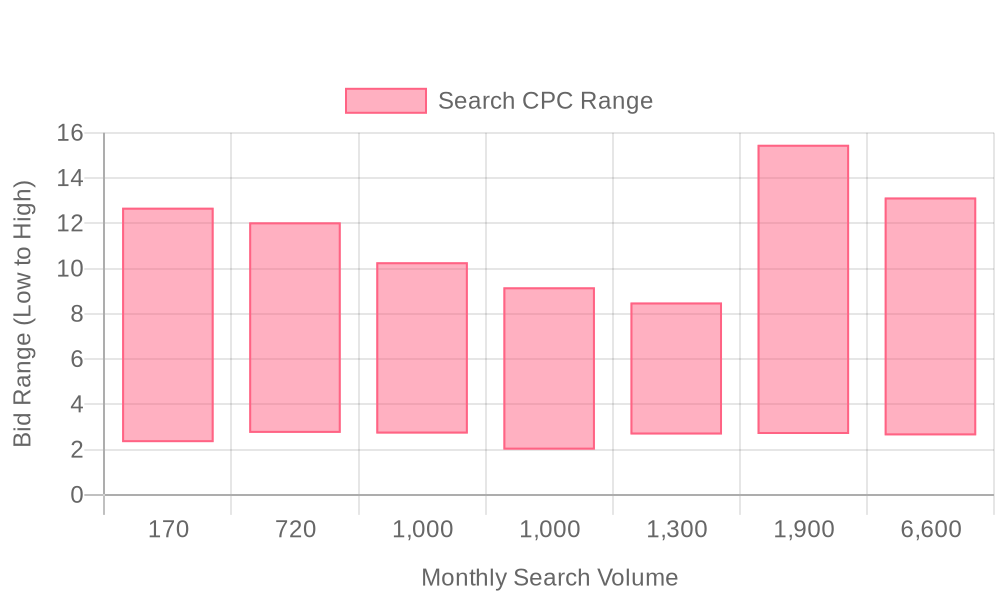
| Industry | Keyword | Monthly Search Volume | Competition Level | Low Bid | High Bid |
| Property Maintenance | property maintenance services near me | 170 | LOW | 2.33 | 12.69 |
| Property Maintenance | property maintenance companies near me | 720 | LOW | 2.74 | 12.04 |
| Property Maintenance | property maintenance services | 1000 | LOW | 2.71 | 10.28 |
| Property Maintenance | property maintenance company | 1000 | LOW | 2 | 9.17 |
| Property Maintenance | commercial property maintenance | 1300 | LOW | 2.67 | 8.5 |
| Property Maintenance | property maintenance near me | 1900 | LOW | 2.69 | 15.47 |
| Property Maintenance | property maintenance | 6600 | LOW | 2.63 | 13.14 |
A sophisticated keyword strategy is essential for maximizing ROI in Google Ads for property maintenance. Focus on intent-driven terms such as "emergency property repair," "commercial facility maintenance," or "24-hour handyman near me," which attract prospects ready to take action. Combine this with negative keywords like "DIY," "free estimate," and "tenant login" to filter out irrelevant clicks and ensure your spend targets only qualified property owners and decision-makers. For a practical example of how property managers can leverage Google Ads to drive more leads, review this guide on Google Ads for property managers.
Precision Targeting: Targeting the right audience starts with understanding the unique needs of property maintenance buyers. By building keyword lists that address both urgent and recurring needs, your ads reach commercial property managers, landlords, and facilities directors at their moment of need. Visitor identification technology helps you go beyond anonymous impressions by pinpointing which companies are engaging with your ads. For more actionable strategies, explore our marketing and sales playbooks.
Measurable ROI: Accurate measurement begins with tracking every interaction, from the initial click to offline service bookings. Integrating advanced conversion tracking provides full-funnel visibility, including call durations, form submissions, and even offline contract signings. This real-time intent data helps you dynamically adjust spend toward the highest-converting keywords and audiences. Enriching Google Ads campaigns with CRM data ensures your reporting reflects true business outcomes, not just surface-level metrics.
Channel Synergy: A strong multi-channel approach leverages consistent messaging across search, display, and social retargeting. Dynamic audience segments update automatically as prospects progress through the funnel, ensuring retargeting ads stay relevant and timely. Syncing enriched audience lists from your CRM into Google Ads and other platforms allows for precise retargeting and lookalike audience expansion. This unified approach reinforces your brand message while efficiently nurturing property maintenance leads to conversion.
Step-by-Step Campaign Execution Framework
Step 1: Build Targeted Keyword Lists
Crafting high-performing Google Ads for property maintenance starts with developing keyword clusters aligned to specific service offerings. Segment terms by intent, such as regular maintenance, emergency repairs, or seasonal upkeep, and enrich each cluster with geographic modifiers to ensure ads surface only for users in relevant locations. Long-tail, inquiry-based keywords like "emergency HVAC repair downtown" or "weekly landscaping service near me" help capture users with clear purchase intent, delivering higher-quality leads at a lower cost. Negative keyword filters, such as excluding "tenant portal" or "DIY home repair," prevent wasted spend on irrelevant clicks and keep campaigns focused on property owners and decision-makers.
When marketers leverage unified data platforms, keyword selection becomes even more intelligent. By integrating real-time visitor identification and intent signals, teams can prioritize high-converting segments and dynamically update their keyword lists as market demand shifts. This unified approach ensures property management campaigns continuously optimize for in-market audiences, driving stronger engagement and more consistent pipeline growth. For actionable strategies on growing your leads, see this step-by-step guide to Google Ads for property managers.
The upgrade most property maintenance advertisers miss is going beyond raw keyword volume to layer in intent and identity signals. By connecting website-visitor data and CRM records with Sona Marketing Measurement, you can see which specific search terms bring in the accounts and customers that actually convert, and weight your keyword and bidding strategy toward those rather than the terms with the highest search volume alone.
Step 2: Develop Compelling Ad Copy
Effective ad copy for property maintenance advertising directly addresses the pain points faced by property owners and facility managers. Headlines like "Prevent Expensive Repairs with Proactive Maintenance" or "Emergency Response Teams Available 24/7" resonate immediately with urgent needs. Including certifications, licenses, or industry accolades in descriptions builds authority, while limited-time offers or direct calls to action, such as "Book a Free Assessment Today", create urgency and encourage immediate response.
With access to rich audience data, marketers can personalize messaging by segment, aligning ad creative with the unique concerns of commercial property managers or residential landlords. This enables rapid testing and deployment of new copy variants based on live engagement metrics, ensuring that high-performing messages stay in rotation and underperformers are quickly replaced. For additional campaign tips tailored to this industry, explore these Google Ads best practices for property managers.
Step 3: Design Effective Landing Pages
Landing pages must maintain message continuity, guiding prospects seamlessly from their initial keyword search through ad interaction and onto a page that delivers on the ad’s promise. For Google Ads for property maintenance, this means clearly differentiating between service types, such as "Seasonal Landscaping Packages" versus "Year-Round Facility Maintenance", so visitors instantly recognize the relevance to their needs. Strong, simple calls to action like "Request Service Now" or "Download Maintenance Checklist" should be prominently placed, ensuring conversions are frictionless on both desktop and mobile devices.
A unified data ecosystem enhances landing page performance by tracking the entire visitor journey, linking ad clicks to on-page actions and offline touchpoints. This enables marketers to identify bottlenecks and attribute conversions accurately, refining layouts and copy in real time to lift lead quality and quantity. For a walkthrough on creating high-converting landing pages for this sector, check out this simple tutorial for property management Google Ads.
Step 4: Implement Data-Driven Optimizations
Ongoing optimization is essential for sustained ROI in property management digital marketing. Every stage, from initial click to closed deal, should be meticulously tracked, enabling full-funnel attribution and precise measurement of campaign effectiveness. Advanced bidding strategies, such as automated rules triggered by engagement or conversion thresholds, allow for more deliberate audience targeting, ensuring budgets flow toward top-performing segments and high-intent accounts.
When campaign data, CRM records, and ad platforms are synchronized, marketers can dynamically refresh audience lists, adjust bids based on live performance, and attribute revenue to both online and offline actions. This holistic approach uncovers cross-channel opportunities, boosts lead-to-client conversion rates, and empowers property management teams to continually refine their Google Ads strategies for maximum impact. See how you can get started for free with Sona to unlock unified insights and proactive optimization for greater growth in new maintenance contracts and client relationships.
Sona Marketing Measurement closes the gap between clicks and revenue. It captures ad clicks with first-party measurement at the company level, then ties that click through UTM capture and ad-platform APIs to the actual record in your CRM, and reports ROAS by keyword and campaign instead of by last-click form fill. Feeding that revenue signal back into Smart Bidding and Performance Max compounds over time: the algorithms optimize toward booked property maintenance revenue, not cheap leads.
Tips on Expanding Your Property Maintenance Presence
Promoting educational content in reengagement campaigns provides ongoing value and keeps your services top-of-mind for prospects and past clients. Sharing guides, checklists, or maintenance tips in follow-up sequences builds trust while positioning your business as a resource, not just a vendor, explore additional tactics in the Sona blog.
Audience data from CRM systems enables timely, informed upselling of related services when integrated directly into your Google Ads for Property Maintenance strategy. By using real-time audience insights from customer profiles, marketers can prioritize high-value accounts and launch upsell campaigns at key lifecycle moments, ensuring offers land when prospects are most receptive.
Collaboration with industry groups opens the door to referral traffic and co-branded marketing opportunities. Joint webinars, partner content, or community events can improve reach and credibility, especially when these initiatives are tied to targeted local ad campaigns that amplify shared messaging.
Localizing your campaigns sharpens your market presence in specific areas, making your outreach highly relevant to communities you serve. Combining geo-targeted PPC for property management ads with local landing pages allows your brand to address unique neighborhood needs, supporting both brand awareness and direct lead generation.
Leveraging search data ensures your marketing stays responsive to evolving trends, feeding fresh content topics into your campaigns and organic channels. Monitoring search intent and query patterns helps you proactively cover emerging property maintenance topics, from seasonal services to new compliance demands.
Addressing both informational and transactional queries creates a comprehensive digital marketing for property management approach. By mapping content and ad messaging to the full customer journey, you answer early-stage research questions and facilitate seamless conversions, ensuring prospects find exactly what they need, whether they're comparing vendors or ready to schedule service.
Beyond Google Ads: Winning the AI Answers Property Maintenance Buyers Now Trust
Paid search captures demand at the moment someone types a query. But a fast-growing share of property maintenance buyers no longer start at Google at all, they ask ChatGPT, Gemini, or Perplexity before they ever run a search, and Google's own AI Overviews increasingly summarize an answer above the traditional results. If your business isn't referenced in those AI answers, you're invisible at the exact moment buyers build their shortlist.
Sona AI Visibility shows where your business shows up across ChatGPT, Gemini, Perplexity, Google AI Overviews, and 10+ engines, and, much like a keyword report, which prompts actually send you buyers, so you can prioritize the ones that convert. Run the two together and you cover the entire buyer path: get cited where buyers research (AI Visibility), then prove which of that demand turns into booked revenue (Marketing Measurement).
Helpful resources
Conclusion
Google Ads rewards property maintenance businesses that treat it as infrastructure, not a campaign you launch and check on quarterly. The operators who win the click also win the follow-up, the attribution, and the next budget cycle.
The providers pulling ahead right now aren't just bidding smarter, they're closing the loop between ad spend and signed contracts, and increasingly, making sure their business shows up when buyers ask an AI assistant for a recommendation instead of typing a search query.
To take that next step, start for free and see how Sona unifies your data into insights that sharpen every part of your advertising strategy.
FAQ
What are the best practices for using Google Ads in property maintenance?
Best practices include integrating paid search with marketing strategy, applying precise targeting and firmographic filters, enhancing landing pages, continuously refining ad performance, and strengthening cross-channel marketing ecosystems.
How can I optimize my Google Ads for property management services?
Optimization involves weekly reviews of search term reports, conversion pathways, engagement metrics, and advanced tracking to measure ROI and adjust budgets towards high-performing segments.
What is the cost of Google Ads for property maintenance?
The article does not specify the exact cost of Google Ads for property maintenance, but it emphasizes the importance of precise targeting and budget allocation to maximize ROI.
How do I target the right audience with Google Ads for property management?
Target the right audience by using sophisticated audience targeting, firmographic filters, keyword intent signals, and dynamic audience lists to ensure campaigns reach decision-makers at property management firms.
What are the common mistakes to avoid in Google Ads for property maintenance?
Common mistakes include inadequate tracking, delayed follow-ups, failing to refine ad performance continuously, and not integrating Google Ads with broader marketing strategies.







