


A homeowner whose roof was torn off in a hailstorm, or a business owner staring at flood damage and a denied insurance claim, searches for a lawyer within hours, not weeks. That urgency is what makes Google Ads so effective for property damage lawyers: it puts your firm in front of someone at the exact moment they need help. Google Ads lets firms capture these high-intent leads as they search, with measurable ROI through detailed conversion tracking. The challenges are real, though. Missing high-value prospects or capturing leads too late can stall a campaign, which is why real-time data synchronization and sharp audience insights matter so much in this practice area.
How to Generate Property Damage Lawyer Leads with Google Ads: A Step-by-Step Guide

Generating qualified leads for property damage lawyers takes a disciplined approach that merges legal-industry expertise with data-driven advertising. Firms that win in this category identify high-intent prospects, optimize campaigns for rapid response, and use technology to unify and act on every intent signal.
Integrating Google Ads for property damage lawyers into your lead generation stack begins with a deep understanding of search intent and client pain points. Strategic execution combines targeted keyword selection, precise audience segmentation, and conversion-focused landing experiences designed to capture urgency in moments of need.
Common Types of Google Ads Campaigns
- Search Campaigns: These target keywords like “property damage attorney near me” or “insurance claim lawyer,” putting your ads in front of people actively looking for legal help right when they search. Responsive search ads, an ad format within this campaign type, let you rotate multiple headlines and descriptions so Google can surface the best-performing combination for each query.
- Display Campaigns: Visual banners on relevant websites build brand recognition among property owners researching insurance disputes. This format works especially well for retargeting, keeping your firm visible as someone moves from initial research toward calling a lawyer.
- Local Services Ads (LSAs): LSAs place property damage lawyers at the very top of Google's results, displaying verified credentials and enabling direct contact from high-intent leads. Because they're pay-per-lead rather than pay-per-click, they're a cost-efficient piece of law firm PPC campaigns targeting local searches.
- Remarketing Campaigns: These target previous website visitors with tailored ads, lifting conversion rates by keeping your firm visible to people who've shown interest but haven't yet called.
Step-by-Step Campaign Execution Framework
Step 1: Build Targeted Keyword Lists
Effective Google Ads strategies for law firms begin with identifying high-intent keywords tailored to property damage claims marketing. Focus on precise phrases such as “storm damage lawyer” and “commercial property insurance claim attorney” to capture those ready to take action. Use negative keywords to exclude unrelated queries, ensuring every dollar goes toward attracting viable leads.
Step 2: Structure Ad Groups by Case Type and Location
Organize your campaigns by segmenting ad groups according to claim type, residential, commercial, or disaster-related, and by geographic region. This structure allows you to customize messaging based on local risks and claim nuances, increasing both relevance and click-through rates. Audience segmentation becomes dynamic when CRM and web data sync in real time, allowing ad groups to adjust immediately as prospects progress through the funnel.
Step 3: Develop Compelling Ad Copy and Assets
Craft ad copy that addresses urgent property damage concerns, offering solutions such as “No upfront fees” or “Immediate claim review.” Add assets like callouts, structured snippets, and location links to give searchers more reasons to click and to guide them toward contacting you immediately. Consistent messaging, paired with fast-loading, mobile-optimized landing pages, turns clicks into consultations.
Step 4: Launch Conversion-Optimized Landing Pages
Conversion-focused landing pages are tailored for each campaign segment, featuring clear calls-to-action, concise claim process explanations, and trust signals like attorney credentials and client testimonials. By identifying the companies behind anonymous site visits through Sona's Identity Resolution and enriching those records in the CRM, marketers can flag high-value prospects and personalize follow-up, speeding up intake and improving lead quality.
Step 5: Enable Real-Time Conversion Tracking and Attribution
Set up advanced conversion tracking to capture every form submission, call, and chat interaction, connecting ad spend directly to retained clients. Synchronizing Google Ads with CRM systems ensures offline consultations and signed agreements are attributed back to their original campaigns, providing a true picture of ROI. Real-time intent signals and event triggers allow teams to reallocate budget to top-performing channels as soon as high-converting activity is detected.
Step 6: Optimize and Scale with Dynamic Audiences
Ongoing audience refinement is essential for sustainable law firm PPC campaigns. Use lookalike audiences and retargeting lists that automatically update as prospects move from site visitors to leads or clients. Real-time sync with CRM and web analytics platforms ensures your campaigns target the most lucrative segments, while continuous negative keyword expansion and search term analysis prevent wasted spend.
Together, these steps give property damage lawyers a repeatable framework for Google Ads lead generation that's both compliant and conversion-centric. For more on optimizing Google Ads to generate higher-quality case leads, see this guide for personal injury lawyers. Unify intent data, sharpen targeting, and automate attribution, and firms capture more high-quality cases while getting more out of every advertising dollar. To streamline your lead generation and targeting, get started for free with Sona.
Why Does Google Ads Matter for Property Damage Lawyers?

Property damage lawyers operate in a high-urgency environment where prospective clients demand immediate help after incidents like storms, fires, or accidents. Google Ads provides a direct path to these in-market leads, ensuring your firm appears at the top of search results just as potential clients are actively seeking legal representation. For a deeper look at how law firms leverage PPC, this overview of Google Ads for law firms breaks down strategies for boosting visibility and attracting new clients.
Google Ads gives law firms granular tracking of client acquisition costs and campaign ROI. When enriched CRM audience data syncs in, dynamic audience management refines targeting to reach the property owners most likely to need legal help after a loss, cutting wasted spend and increasing high-value case intake.
Attribution and conversion tracking close the loop between online inquiries and offline consultations or signed cases. By integrating enriched lead details and engagement history, law firms see which campaigns produce retained clients, not just clicks or form fills. That visibility supports smarter retargeting, sharper follow-up, and a steadily growing pipeline of qualified property damage claims.
Common Types of Google Ads Campaigns for Property Damage Lawyer Services

- Search Campaigns: Search campaigns are the cornerstone of property damage attorney advertising. They show text ads in response to specific queries, catching prospects actively searching for legal help after storms, floods, or fires. By layering in Sona's Identity Resolution, revenue teams can identify the companies behind urgent search queries and turn immediate demand into qualified leads.
- Display Ads: Display ads extend your reach beyond search, reinforcing your brand across news sites and relevant forums. Banners introduce your firm to property owners who aren't yet ready to call but will be once they've assessed the damage. Display placements also let marketers shift budget toward segments showing high engagement or a greater likelihood of filing a claim; when audience profiles are enriched with behavioral insights, these campaigns stay relevant instead of just generating impressions.
- Remarketing Ads: Remarketing ads re-engage users who have previously interacted with your site but have not yet converted. These campaigns are essential for law firm PPC campaigns, reminding warm prospects about your expertise in property damage claims and encouraging return visits. As leads move through the funnel, dynamic audiences automatically update, ensuring your remarketing efforts target only the most promising profiles based on recent engagement and intent signals. When remarketing lists are synchronized with CRM data and conversion events, ad spends are optimized and ROI improves as you focus on those most likely to convert.
Each campaign type plays a distinct role in a comprehensive digital marketing for lawyers strategy. By integrating advanced data unification and real-time intent analysis, property damage lawyers can ensure their ads consistently reach the right prospects, streamline lead generation, and maximize the impact of every advertising dollar. To start optimizing your property damage law campaigns, get started for free with Sona.
Where to Find Growth Opportunities in Law Firm Marketing

Law firms pursuing digital growth can uncover fresh opportunities by moving beyond traditional broad-match advertising and focusing on vertical keyword targeting. This approach allows property damage attorneys to reach clients searching for highly specific legal solutions, such as "storm damage insurance claim lawyer" or "commercial property loss attorney," surfacing in-market prospects who are ready to engage.
Analyzing competitor strategies using auction insights provides a real-time performance benchmark, revealing which firms are aggressively bidding on high-converting keywords and which market segments remain untapped. By monitoring impression share and overlapping audiences, law firms can identify gaps where their ads could claim more visibility or where unique service differentiators could attract qualified leads. To further refine your approach, explore actionable guides in the law firm marketing playbook library.
Targeting niche industry platforms also creates new engagement channels for property damage lawyers. Prospective clients often turn to localized directories, insurance forums, and real estate industry hubs when seeking help with claim denials or disaster recovery. Placing ads and sponsored content on these platforms ensures your services are present at the moment of need, capturing high-intent traffic that generic legal channels might overlook.
Importing offline conversions using advanced analytics closes the loop on campaign performance, allowing law firms to connect digital ad spending with real-world case signings and revenue. By leveraging solutions that unify CRM and ad data, marketers can attribute every retained client back to specific campaigns or keywords. This comprehensive measurement not only clarifies ROI, but also informs future budget allocation, ensuring resources are concentrated on sources that deliver the most valuable leads.
Unified data and CRM integration further sharpen the search for growth opportunities. Identifying the companies behind anonymous site visits and segmenting audiences dynamically lets marketing teams act the moment intent signals appear, shifting spend and nurturing prospects in real time. As leads move through the funnel or return for more information, audience updates and cross-platform syncing keep remarketing relevant and timely, improving both conversions and client lifetime value. Ready to see these growth opportunities in action? Get started for free with Sona.
How to Apply Audience Segmentation for Property Damage Lawyers

Audience segmentation is a critical lever for property damage lawyers seeking efficient, high-ROI Google Ads strategies. By dividing potential clients based on claim type, urgency, and intent, law firms can prioritize high-value opportunities and deliver relevant messaging at each stage of the client journey. For an in-depth look at optimizing Google Ads campaigns for personal injury and property damage, review this guide for personal injury lawyers.
For property damage claims, segmenting by claim categories, such as storm, fire, water, or commercial property loss, ensures ad spend targets the most relevant prospects. Overlaying these segments with urgency signals, like recent severe weather reports or spikes in search for “emergency property damage attorney,” allows marketers to allocate more budget during peak demand periods. Advanced audience segmentation also recognizes when a lead transitions from research to action, updating audience lists in real time so ads reflect the client’s current stage and needs.
Modern platforms let marketers move beyond basic demographic filters. With CRM-based audiences that auto-update, law firms can identify website visitors and sync enriched contact data directly into Google Ads. This captures in-market behavior, such as a policyholder comparing firms or downloading a property damage claim checklist, and feeds it back into targeting. Campaigns adjust automatically as leads progress, so high-intent prospects get tailored offers and timely follow-up. For more tactics, see Sona's property damage attorney playbooks.
By unifying digital advertising data with first-party CRM records, revenue teams gain a granular view of which property damage claim types and geographies drive the most qualified leads. This enables smarter budget allocation, more relevant ad creative, and the ability to measure both online and offline conversion outcomes. In a competitive legal market, agile audience segmentation and real-time campaign updates are essential to maximize the impact of property damage attorney advertising and law firm PPC campaigns. To see how these segmentation tactics can transform your results, get started for free with Sona.
This is also where measurement changes the economics. With Sona Marketing Measurement you can identify the companies behind your ad clicks, not just anonymous sessions, and segment audiences by which of those companies actually become customers. That lets you build bid adjustments and audience signals around the segments that convert, and de-prioritize the ones that don't, so you feed Google's algorithms "this click became a paying property damage lawyers customer" instead of just "someone filled out a form."
Keyword Strategy & Sample Target Terms
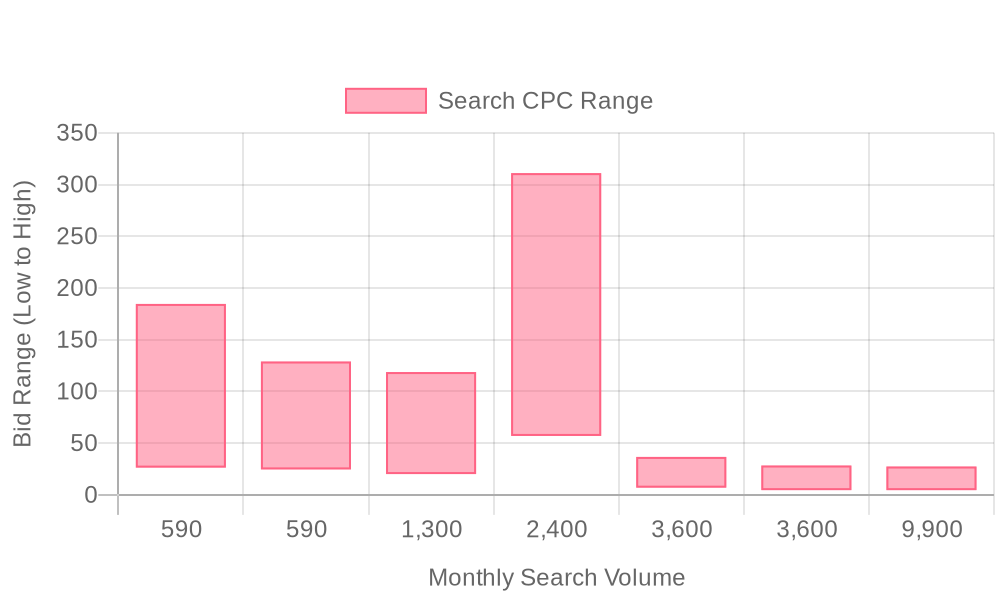
| Industry | Keyword | Monthly Search Volume | Competition Level | Low Bid | High Bid |
| Property Damage Lawyers | car property damage lawyers near me | 590 | HIGH | 26.4 | 184.55 |
| Property Damage Lawyers | automobile property damage lawyer near me | 590 | MEDIUM | 24.65 | 128.88 |
| Property Damage Lawyers | car accident property damage lawyer | 1300 | LOW | 20.13 | 118.73 |
| Property Damage Lawyers | vehicle damage lawyer | 2400 | LOW | 56.98 | 311.01 |
| Property Damage Lawyers | property damage lawyers | 3600 | MEDIUM | 7 | 36.71 |
| Property Damage Lawyers | property damage attorney | 3600 | MEDIUM | 4.62 | 28.36 |
| Property Damage Lawyers | property damage lawyers near me | 9900 | MEDIUM | 4.57 | 27.39 |
Effective keyword strategy underpins every profitable Google Ads campaign for property damage lawyers. Selecting the right mix of broad and niche search terms enables law firms to reach both mass-market prospects and individuals searching for specialized legal help. High-volume keywords such as “Google Ads for lawyers” and “property damage attorney advertising” generate visibility among general audiences, while granular phrases like “property damage claims marketing” and “lawyer lead generation” capture intent from those actively seeking representation. For a curated list of high-converting keywords designed for legal PPC, review this personal injury keywords resource. For more actionable insights, explore our playbooks on demand generation and PPC strategy.
Incorporating location and case-specific modifiers such as “commercial property damage lawyer near me” or “storm damage attorney [city]” ensures ads surface for high-value, urgent cases. This approach balances wide net exposure with fine-tuned relevance, positioning law firms to compete in both competitive and underserved regional markets. As digital marketing for lawyers becomes increasingly data-driven, leveraging firmographic and behavioral signals is essential. This allows marketers to not only discover new, high-converting keywords but also to prioritize those that align with in-market activity and real-time demand.
Modern platforms now allow law firms to identify anonymous website visitors and their companies, enabling marketers to move beyond keyword targeting to precise audience building. As prospects engage with landing pages or request consultations, dynamic audiences automatically update to reflect where each lead sits in the conversion funnel. This real-time data integration helps shift budget toward keywords and segments that are actively producing high-quality leads, increasing efficiency and improving the overall ROI of law firm PPC campaigns.
Additionally, advanced attribution and CRM integration push enriched lead data back into marketing systems. This means property damage law firms can sync newly identified high-intent audiences directly into Google Ads and connected CRMs, ensuring every dollar spent on paid search is traceable to a signed client or case. The result is a keyword strategy informed by both market demand and true revenue impact, giving property damage lawyers a sustainable edge in digital advertising. To see the impact of integrated keyword and audience strategies firsthand, get started for free with Sona.
Step-by-Step Campaign Execution Framework
Step 1: Build Targeted Keyword Lists
Begin by constructing keyword lists that mirror the specific intent and urgency of clients searching for property damage legal help. Include legal terminology like "property damage lawyer," "insurance claim attorney," and "storm damage law firm," then refine with geographic modifiers for high-value local traffic. This approach ensures your ads surface for the most relevant searches, reducing wasted spend and capturing prospects at the decision-making stage. For inspiration on high-converting legal terms, explore this curated list of personal injury keywords, and consider using real-time audience segmentation for more precise targeting.
Dynamic keyword strategies are especially effective for lawyer lead generation, as property damage queries often spike after regional disasters. By layering in data from CRM integrations, you can identify which locations and case types generate the highest quality leads, then expand or contract keyword groups accordingly. Real-time syncing between keyword performance and enriched audience data ensures you are targeting prospects most likely to convert.
The upgrade most property damage lawyers advertisers miss is going beyond raw keyword volume to layer in intent and identity signals. By connecting website-visitor data and CRM records with Sona Marketing Measurement, you can see which specific search terms bring in the accounts and customers that actually convert, and weight your keyword and bidding strategy toward those rather than the terms with the highest search volume alone.
Step 2: Create High-Impact Ad Copy
Effective ad copy for property damage attorneys must address immediate pain points, such as denied insurance claims, urgent repair needs, and confusion about next steps. Headlines like "Denied Insurance Claim? Speak to a Property Damage Attorney Today" or "Get the Settlement You Deserve After Storm Damage" convey both empathy and authority, building trust with high-intent prospects. For a detailed guide on crafting ads that convert, review this step-by-step Google Ads strategy for personal injury lawyers.
Use responsive ad formats to rotate multiple headlines and descriptions, allowing the platform to surface the best-performing combinations. By connecting real-time intent signals from your website and CRM, you can automatically adjust messaging to highlight the most relevant solutions for each audience segment. This not only improves click-through rates but also ensures ad spend is directed toward those most likely to engage.
Step 3: Design Conversion-Focused Landing Pages
Landing pages for property damage lawyer campaigns must reinforce the ad’s promise and streamline the conversion process. Feature a clear call-to-action above the fold, such as "Free Case Review" or "Immediate Claim Assessment," and minimize friction by limiting required form fields. Content should address common concerns, like timelines for insurance settlements and steps to document damages, while showcasing attorney expertise through case studies or testimonials. For ideas on structuring effective landing pages, see these top-performing legal billboard ad creatives.
Seamless integration with your CRM ensures every new lead is instantly logged, enriched, and routed to the appropriate team member for timely follow-up. This real-time pipeline visibility enables your intake and sales teams to act on high-value opportunities without delay, improving response times and increasing the likelihood of retaining qualified clients.
Step 4: Execute Data-Driven Optimization
Ongoing optimization is critical for PPC for property damage lawyers, as market dynamics and client intent can shift rapidly following disasters or regulatory changes. Monitor conversion rates, cost per lead, and quality of inquiries daily, using advanced attribution tools to connect both online and offline touchpoints. Reference industry PPC benchmarks for law firms to compare your performance and set realistic goals.
With unified analytics, revenue teams can quickly identify which campaigns, keywords, and audience segments drive the highest ROI. Automated rules can pause underperforming ads while enriched audience data flows back into targeting, creating a feedback loop that steadily improves performance. Syncing audience and conversion data between CRM and ad platforms keeps Google Ads strategy for law firms agile, transparent, and focused on revenue rather than raw click volume.
Sona Marketing Measurement closes the gap between clicks and revenue. It captures every ad click with first-party tracking, ties that click through UTM capture and ad-platform APIs to the actual record in your CRM, and reports ROAS by keyword and campaign instead of by last-click form fill. Feeding that revenue signal back into Smart Bidding and Performance Max compounds over time: the algorithms optimize toward booked property damage lawyers revenue, not cheap leads.
Tips on Expanding Your Property Damage Legal Practice Presence
Strategic digital marketing elevates a property damage law firm’s visibility in a competitive landscape. By combining educational remarketing, regional targeting, and co-branded content, firms can position themselves as trusted experts while efficiently scaling their lead acquisition. To learn more about key service areas, review this property damage defense overview and explore additional digital marketing strategies on our blog.
Using educational content in remarketing campaigns keeps your firm top-of-mind with property owners actively researching claims or insurance disputes. Delivering targeted resources, such as claim checklists, post-disaster guides, or explainer videos, adds tangible value for potential clients and nurtures trust throughout their decision journey. As users revisit your site or interact with your resources, dynamic audience segmentation automatically adapts to reflect their latest level of engagement and readiness to act. This fluid approach ensures your remarketing budget continually aligns with audiences most likely to convert, optimizing both spend and outcomes.
Partnering with established legal directories for co-branded content initiatives can extend your reach to highly engaged audiences. These partnerships leverage the credibility of trusted platforms while allowing your practice to showcase expertise through webinars, downloadable guides, or Q&A sessions. Co-branded content also enhances your firm's authority signals, benefiting both organic search rankings and paid campaign performance. When CRM and audience data sync seamlessly with your digital ad platforms, every new lead or site visitor can be retargeted automatically with the most relevant messaging, streamlining the workflow and increasing the likelihood of high-value conversions.
Regional targeting, powered by predictive buying analyses, identifies emerging hotspots for property damage claims, such as areas recently affected by severe weather or seasonal risks. Adaptive audience modeling uses real-time data to anticipate surges in demand, shifting budget and creative assets toward high-opportunity locales without manual oversight. This ensures your ads remain visible to property owners whose need for legal representation is most urgent, maximizing your share of qualified leads during critical windows.
Educational remarketing, authoritative partnerships, and regional targeting together build a resilient, responsive digital marketing presence. Grounded in unified data and dynamic audience insights, these tactics deliver steadier lead flow, better ROI, and lasting brand recognition in the property damage legal sector.
Beyond Google Ads: Winning the AI Answers Property Damage Lawyers Buyers Now Trust
Paid search captures demand at the moment someone types a query. But a fast-growing share of property damage lawyers buyers no longer start at Google at all, they ask ChatGPT, Gemini, or Perplexity before they ever run a search, and Google's own AI Overviews increasingly summarize an answer above the traditional results. If your business isn't referenced in those AI answers, you're invisible at the exact moment buyers build their shortlist.
Sona AI Visibility shows where your business shows up across ChatGPT, Gemini, Perplexity, Google AI Overviews, and 10+ engines, and, much like a keyword report, which prompts actually send you buyers, so you can prioritize the ones that convert. Run the two together and you cover the entire buyer path: get cited where buyers research (AI Visibility), then prove which of that demand turns into booked revenue (Marketing Measurement).
Helpful resources
Conclusion
Google Ads works for property damage lawyers because it meets clients at the exact moment urgency turns into a search. Firms that pair sharp keyword targeting with fast, well-attributed follow-up consistently out-compete those relying on volume alone.
The firms pulling ahead now are the ones connecting ad spend to signed cases, not just form fills, and showing up in the AI-generated answers where more buyers are starting their search. Get that measurement and visibility in place, and your Google Ads budget starts compounding instead of just spending.
To begin this transformative journey, start for free to experience our platform and its capabilities today.
FAQ
What are the best practices for Google Ads for property damage lawyers?
Best practices include using targeted keyword selection, precise audience segmentation, and conversion-focused landing pages to capture high-intent prospects effectively.
How much should property damage lawyers spend on Google Ads?
The article does not specify an exact amount but emphasizes spending efficiently by targeting high-intent keywords and optimizing campaigns for maximum ROI.
What keywords should property damage lawyers target in Google Ads?
Lawyers should target high-intent keywords such as 'storm damage lawyer' and 'commercial property insurance claim attorney' and use negative keywords to exclude unrelated queries.
How can property damage lawyers measure the success of their Google Ads campaigns?
Success can be measured through detailed conversion tracking, connecting ad spend to retained clients, and synchronizing Google Ads with CRM systems for accurate ROI assessment.
Are there specific Google Ads strategies for attracting property damage clients?
Strategies include using search, display, and remarketing campaigns, structuring ad groups by case type and location, and enabling real-time conversion tracking for dynamic budget allocation.







