


A burst pipe or a dead furnace doesn't wait for business hours, and the plumbing and heating companies that win the call are usually the ones showing up first in a Google search. Missing high-value prospects and losing track of anonymous website traffic are common frustrations that translate directly into lost jobs. Effective marketing for the trade blends online and offline channels, tying a search click to a booked appointment and, eventually, a completed job. For businesses running Google Ads, capturing intent at the exact moment someone searches for emergency service or a system upgrade matters more than volume alone. Tools that identify the companies and buyers behind that traffic help ensure ad spend reaches decision-makers with real, timely need. Here's why Google Ads deserves a central place in a plumbing and heating business's strategy, and how to connect online advertising to offline sales.
How to Generate Google Ads for Plumbing and Heating Leads with Google Ads: A Step-by-Step Approach
Plumbing and heating companies can accelerate lead generation by applying a structured Google Ads strategy tailored to their unique service cycles and local market conditions. Precision targeting, high-converting landing pages, and holistic performance tracking work in concert to deliver measurable business growth for revenue teams focused on efficiency. For a practical overview of how Google Ads can generate plumbing leads, explore this step-by-step guide for plumbers.
A successful approach hinges on leveraging enriched audience data and intent signals, ensuring every ad dollar targets prospects with the highest likelihood to convert. When real-time buyer intent is captured and activated, budget can shift dynamically toward in-market accounts, producing better Google Ads ROI and more consistent lead quality.
Keyword and Audience Targeting
Identifying the right keywords is foundational to plumbing advertising success. By isolating high-intent searches such as “emergency plumber near me,” “water heater repair,” and “furnace installation,” marketers reach prospects already seeking urgent solutions. Sophisticated audience targeting now extends beyond basic demographic filters. Marketers can enrich targeting with real-time audience data, pinpointing commercial property managers or facility directors responsible for HVAC decisions. This allows revenue teams to prioritize accounts showing active buying signals, rather than relying solely on broad search volume.
Dynamic audience management further refines targeting throughout the buyer journey. As visitors move from initial research to requesting quotes or scheduling service, audiences are automatically updated. Integration with CRM and website analytics enables marketers to sync these enriched segments directly into Google Ads, aligning campaign messaging with the prospect’s stage in the funnel. For actionable ways to enhance targeting strategy, review our collection of playbooks.
Landing Page Optimization

Landing pages tailored to each service line and keyword group significantly improve conversion rates for PPC for plumbers. For example, a user clicking on an ad for “boiler repair” should land on a page featuring boiler expertise, emergency dispatch options, and trust signals like certifications and customer reviews. For additional inspiration, see real-world plumbing advertising examples.
Optimized landing pages also streamline the path to conversion with clear calls-to-action, mobile-first form design, and real-time appointment scheduling. By connecting Sona's Identity Resolution data to page personalization, marketers ensure that high-fit prospects see messaging tailored to their property type, urgency level, or prior service history. These enhancements drive tangible gains in plumber lead generation and support ongoing plumbing business growth.
Performance Metrics
Robust performance measurement is essential for maximizing Google Ads ROI. Revenue teams should track both online conversions, such as web form submissions and click-to-call actions, and offline events like booked appointments and completed jobs. Integrating Google Ads with CRM platforms allows for seamless attribution across the customer journey, tying ad spend directly to revenue outcomes. To accurately measure which touchpoints matter most, learn about advanced conversion tracking.
Advanced conversion tracking solutions capture every touchpoint, providing visibility into which keywords, ad groups, and audience segments generate the highest-value leads. With unified measurement, marketers can optimize bids, refine targeting, and invest in the campaigns that consistently deliver qualified opportunities. For more on evaluating marketing’s impact, see our guide to measuring pipeline influence. This closed-loop reporting framework ensures that every advertising decision is data-driven and aligned with long-term business objectives.
Integration Techniques

Integrating Google Ads for Plumbing and Heating into a broader digital marketing for plumbing framework elevates the impact of every campaign. By unifying audience intelligence, conversion data, and CRM workflows, marketers create an agile engine for cross-channel engagement. For example, syncing enriched Google Ads audiences with email nurture tracks or outbound sales sequences ensures prospects receive consistent, personalized outreach at every stage.
Automated lead routing from ads into CRM triggers immediate follow-up, reducing response times and increasing close rates. When visitor identification and audience enrichment are fully integrated, revenue teams can orchestrate seamless transitions from online advertising for plumbers to offline sales engagement. This unified approach supports both immediate demand capture and sustained pipeline growth, giving service businesses a measurable edge over slower-moving competitors.
Why Google Ads Matter for Plumbing and Heating
Plumbing and heating businesses face fluctuating demand, hyper-local competition, and the need for instant engagement during emergencies. Google Ads offers a direct path to high-intent customers, ensuring companies appear precisely when clients search for urgent solutions or schedule proactive service.
- Targeting Complexity: Plumbing and heating marketers must reach homeowners, facility managers, and commercial buyers, each with distinct needs. Google Ads enables precision targeting, but true impact comes from identifying not just anonymous clicks but verified buyers and companies. Sona's Identity Resolution reveals which organizations are behind each visit, enabling teams to focus spend where decision-makers are browsing.
- Boosting Margins: With high-ticket repairs and installations driving profit, it's critical to align campaigns with the most valuable services, think boiler replacements, water heater installs, or full-system upgrades. Real-time analytics help marketers track which ad groups generate not only the most leads but the highest-value bookings, including those that start online and close via phone or field sales. For strategies on aligning Google Ads with high-value outcomes, explore measuring marketing’s influence on the sales pipeline.
- Quick Demand Response: Plumbing and heating emergencies require rapid response. Google Ads lets businesses immediately promote open appointments, 24/7 services, or same-day dispatch. For operations with advanced data sync, real-time intent signals can guide marketers to increase bids or activate special offers when in-market prospects show urgent interest, driving conversions in critical moments.
- Expanding Reach: Beyond core service zones, untapped neighborhoods and commercial districts represent growth opportunities. Google Ads, combined with placement and competitor analysis, provides insights into regional demand gaps. By layering in tools that unify and enrich account data, marketers can identify underserved markets and tailor creative to match local needs, ensuring efficient expansion without wasted spend. For actionable playbooks on expansion, see Sona’s collection of marketing playbooks.
- Analytics Enhancement: Plumbing and heating leaders must measure results across online and offline channels. Advanced tracking allows attribution of every lead, whether it originates from a web form, a phone call, or a technician's field visit, back to the original ad and keyword. When platforms connect CRM, sales, and Google Ads data, revenue teams clearly see which campaign elements fuel plumber lead generation and business growth, supporting agile, data-driven decisions for future investment.
Common Types of Google Ads Campaigns for Plumbing and Heating Services

- Search Campaigns: Search campaigns are the cornerstone of digital marketing for plumbing and heating companies. By targeting high-intent keywords such as "emergency plumber near me" or "furnace repair fast," these campaigns capture prospects ready to buy and maximize each dollar spent on PPC for plumbers. Within Search, Responsive Search Ads let you feed Google multiple headlines and descriptions that it assembles automatically for each query, which performs well against the wide range of ways people phrase an emergency repair request. Integrating real-time visitor identification lets marketers move beyond anonymous clicks to pinpoint which companies and individuals are searching for urgent services, allowing rapid prioritization of follow-up. For a comprehensive overview of effective strategies, explore this Google Ads guide for plumbers.
- Display Ads: Display ads keep a plumbing and heating brand top-of-mind as prospects browse relevant industry content across the web. These banners reinforce brand reliability during research phases, ensuring consistency before a decision is made. Marketers with unified audience data can dynamically update creative based on a visitor’s recent website behavior, promoting exactly the right service, such as water heater repair, when interest peaks.
- Video Ads: Video campaigns give plumbing and heating companies the chance to visually explain complex services, demonstrate credibility, and build trust. A well-placed video ad showcasing a team’s rapid response to emergencies can set a business apart in a crowded market. When audience engagement data is unified and analyzed, video ads can be deployed specifically to high-intent accounts or remarketing pools, dramatically increasing conversion rates.
- Remarketing: Remarketing ensures that prospects who previously visited your site but did not convert are re-engaged with tailored messaging. For plumbing advertising, this means following up with homeowners or facility managers who researched “24/7 emergency HVAC repair” but didn’t book. Dynamic audience segmentation updates in real time as users move through the funnel, enabling personalized offers that drive higher return on Google Ads for Plumbing and Heating investments.
- Assets: Call, sitelink, and location assets add immediate value by making it easier for prospects to connect with your business. Call assets allow instant bookings for urgent plumbing needs, sitelinks drive traffic to high-converting landing pages, and location assets boost local visibility. When these assets are connected to a CRM and attribution engine, every call or click is measured, and leads sync instantly for fast follow-up, improving both lead quality and Google Ads ROI.
Where to Find Growth Opportunities in Plumbing and Heating

Staying ahead in plumbing and heating marketing means finding the channels and timing most competitors overlook, especially around seasonal demand spikes like the first cold snap of fall or a summer heat wave that floods HVAC companies with AC repair calls. Businesses that plan campaigns around these predictable surges, and around the licensing and compliance language commercial buyers search for, capture leads before competitors even adjust their budgets.
- Vertical Keyword Targeting: High-performing plumbing and heating companies identify growth by targeting specialized keywords that reflect unique service offerings. By building content and ad groups around vertical-specific services, such as tankless water heater installation, radiant floor heating, or emergency pipe repairs, marketers can attract customers with immediate needs and higher purchase intent. Using intent data signals and behavioral triggers, revenue teams can prioritize these vertical segments, ensuring ad spend is directed to the highest-converting opportunities. When paired with precise audience intelligence, professionals can also pinpoint which companies or individuals are engaging with niche service pages, allowing for swift, targeted outreach.
- Competitor Analysis: In-depth competitor monitoring reveals service gaps and positioning weaknesses within your market. By analyzing competitors’ ad placements, keyword strategies, and creative approaches, plumbing and heating companies can differentiate their own campaigns, focusing on unique selling propositions that resonate with local buyers. For an in-depth look at how plumbers can leverage Google Ads to generate leads and grow their businesses, see this guide for plumbers. Leveraging unified data from site visits, ad engagement, and CRM records uncovers which segments your rivals under-serve, so you can tailor offers and messaging. Real-time intent signals further help reallocate budget toward accounts displaying immediate interest, accelerating acquisition.
- Industry Placements: Growth-minded marketers expand reach by targeting specialized trade forums, contractor directories, and local industry platforms where property managers, builders, and homeowners actively seek service providers. This approach increases visibility among niche audiences that generic search or social campaigns often miss. Using dynamic audience syncing, these placements can be continually refreshed: as leads visit your site or engage with specific content, they're automatically added to retargeting pools, keeping your brand top-of-mind throughout the buyer’s journey.
- Content Retargeting: Re-engaging prospects with educational content, such as maintenance checklists, seasonal preparation guides, or on-demand webinars, moves leads from awareness to decision. By mapping user journeys and tracking content consumption across channels, marketers can nurture each contact with relevant follow-ups. Advanced conversion tracking and CRM integration ensure every interaction, from guide downloads to phone calls, is attributed to the correct campaign, providing a full view of ROI and supporting optimized budget allocation. As audiences interact with new content, their profiles update in real time, allowing for personalized remarketing and higher conversion rates.
How to Apply Audience Segmentation in Google Ads for Plumbing and Heating

Plumbing and heating businesses that segment their Google Ads audiences realize higher lead quality and improved return on ad spend. Effective segmentation aligns campaign messaging with each stage of the customer journey, making every advertising dollar work harder for business growth. Discover more strategies for optimizing campaigns in our Google Ads guide for plumbers.
- Define Segments: Begin by separating core audiences such as residential homeowners and commercial property managers. Use firmographic data, like business size or property type, to distinguish between those seeking routine maintenance and those pursuing large-scale installations. Residential segments often prioritize emergency repairs and fast response, while commercial clients focus on preventative contracts and compliance. By building these audiences, campaigns can allocate budget more efficiently and ensure messaging matches the needs of each segment. Enhance your segmentation approach with real-time audience tools for tailored ad targeting.
- Overlay Intent Signals: Once foundational segments are established, overlay real-time intent signals to further refine targeting. For example, identify users actively researching “emergency water heater repair” versus those browsing general maintenance tips. Leveraging in-market behaviors and recent search activity allows marketers to shift investment toward accounts most likely to convert. Platforms that provide granular visitor identification can reveal which companies or decision-makers are showing high intent, turning anonymous website traffic into actionable prospects.
- Customized Ad Groups: Each defined segment should have bespoke ad groups tailored to its unique needs. Residential campaigns benefit from messaging around 24/7 availability, upfront pricing, and fast dispatch, while commercial ad groups highlight service contracts or regulatory expertise. Budget allocation can also be adjusted, prioritizing high-value segments during peak seasons or when intent surges. Dynamic audience technology updates these groups automatically as leads progress through the funnel, ensuring fresh messaging and optimal spend.
- Conversion Path Validation: With segmentation in place, track conversions across every touchpoint, calls, forms, and even offline appointments. Integrate conversion data directly with your CRM for a unified view of the sales pipeline. Advanced solutions enable online and offline attribution, assigning true value to each lead and optimizing for real revenue impact rather than vanity metrics. When audience and conversion data sync seamlessly with Google Ads and leading CRMs, teams gain end-to-end visibility and can nurture every qualified lead through to booking and beyond. To see how segmentation and automation can transform your campaigns, get started for free with Sona.
This is also where measurement changes the economics. With Sona Marketing Measurement you can identify the companies and buyers behind your ad clicks, not just anonymous sessions, and segment audiences by who actually becomes a customer. That lets you build bid adjustments and audience signals around the segments that convert and de-prioritize the ones that don't, so you feed Google's algorithms "this click became a paying plumbing and heating customer" instead of just "someone filled out a form."
Keyword Strategy & Sample Target Terms
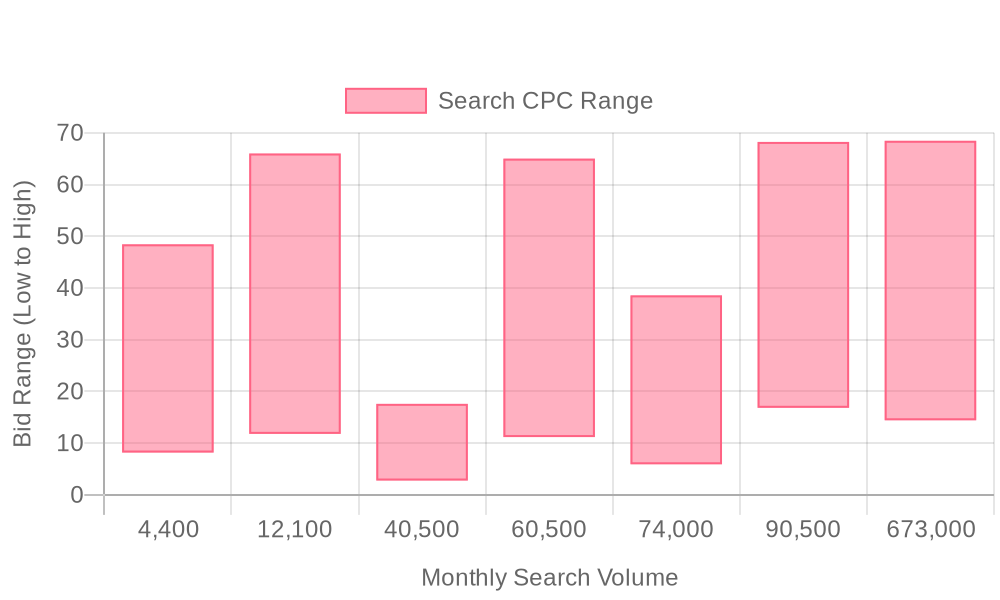
| Industry | Keyword | Monthly Search Volume | Competition Level | Low Bid | High Bid |
| Plumbing and Heating | plumbing and heating | 4400 | MEDIUM | 8.18 | 48.44 |
| Plumbing and Heating | hot water heater repair | 12100 | HIGH | 11.8 | 65.99 |
| Plumbing and Heating | water heater replacement cost | 40500 | HIGH | 2.78 | 17.59 |
| Plumbing and Heating | water heater repair near me | 60500 | LOW | 11.18 | 65 |
| Plumbing and Heating | water heater replacement | 74000 | MEDIUM | 5.92 | 38.56 |
| Plumbing and Heating | water heater repair | 90500 | LOW | 16.83 | 68.23 |
| Plumbing and Heating | plumbing | 673000 | LOW | 14.42 | 68.45 |
Plumbing and heating businesses thrive when campaigns emphasize high-intent, service-specific keywords directly aligned with urgent customer needs. Prioritizing search terms such as "emergency plumber near me," "24 hour heating repair," and "boiler installation in [city]" ensures ads attract prospects who are most likely to convert rapidly. For a comprehensive overview of Google Ads strategies tailored for plumbing businesses, review this Google Ads guide for plumbers. These terms consistently demonstrate strong click-through and conversion rates because they capture users at the critical decision-making stage.
Geo-targeted modifiers such as neighborhood names, ZIP codes, and city-specific phrases refine campaign reach, ensuring ads only surface for relevant local searches. Incorporating these elements into keyword lists, “water heater replacement downtown,” “furnace repair in [suburb],” or “plumbing company [ZIP code]”, keeps spend highly efficient while increasing ad relevance to local buyers. For more on optimizing your campaigns with actionable insights, explore our marketing playbooks.
Applying negative keywords such as “DIY,” “free,” or unrelated service terms prevents budget drain from low-intent or irrelevant queries. By actively excluding non-converting traffic, plumbing and heating marketers maintain focus on high-value opportunities and sustain strong return on ad spend. With advanced data platforms, teams can pinpoint which keywords triggered the highest-converting visits and dynamically update targeting, ensuring campaigns evolve alongside shifting market demand. For step-by-step instructions on integrating ad platform data, see how to import ad platform cost data into Google Analytics.
Modern marketers benefit from connecting keyword performance directly to real buyer journeys, from initial search through to booked service. Integrating real-time visitor identification and intent signals into the keyword strategy enables teams to instantly recognize high-value accounts, prioritize spend, and suppress bids for accounts already in the pipeline. As leads progress through the funnel, audiences and negative lists update automatically, keeping messaging and spend precisely attuned to live opportunities. Ready to drive more revenue from your campaigns? Get started for free with Sona.
Step-by-Step Campaign Execution Framework
Step 1: Build Targeted Keyword Lists
Crafting high-performing Google Ads for plumbing and heating starts with assembling granular keyword lists segmented by core service lines and precise locations. Grouping terms such as "emergency water heater repair" or "furnace installation in Chicago" ensures ads are surfaced to prospects with immediate, relevant needs. Applying negative keyword filters like "DIY," "free," or unrelated localities eliminates wasted spend on low-value clicks, directing budget toward genuine buyers. Plumbers seeking actionable keyword strategies can review this comprehensive Google Ads guide tailored for the industry.
Marketers gain a significant advantage when they combine traditional keyword research with real-time visitor identification. By linking search queries to actual business accounts and decision-makers, it's possible to prioritize spend on keywords that consistently attract in-market, high-value leads. Dynamic audience logic automatically updates target groups as users engage or convert, so campaigns continually adapt to the most promising opportunities.
The upgrade most plumbing and heating advertisers miss is going beyond raw keyword volume to layer in intent and identity signals. By connecting website-visitor data and CRM records with Sona Marketing Measurement, you can see which specific search terms bring in the accounts and customers that actually convert, and weight your keyword and bidding strategy toward those rather than the terms with the highest search volume alone.
Step 2: Develop Compelling Ad Copy
Effective ads for plumbing and heating services focus on common pain points, such as urgent repairs, after-hours availability, and guaranteed workmanship, using headlines that address customer urgency and trust. Highlighting competitive advantages like licensed technicians, rapid response, or transparent pricing directly in the ad copy helps differentiate your business in a crowded local market. For inspiration on ad messaging that converts, explore these real-world plumbing advertising examples.
Personalization further amplifies ad performance. By analyzing real-time intent signals, marketers can tailor messaging for customers actively comparing service providers or searching for last-minute help. This approach lets teams shift budget to high-converting accounts while ensuring each impression delivers a relevant, compelling message that drives action.
Step 3: Design Effective Landing Pages
Successful campaigns align each ad group with a dedicated landing page built for conversion. Plumbing and heating businesses see higher ROI when landing pages present clear calls to action, display proof points such as customer testimonials or Google Guaranteed badges, and offer a seamless mobile experience. Logical flows from ad click to booking or quote request reduce friction and maximize lead capture.
Integrating advanced conversion tracking with unified CRM data provides a holistic view of campaign impact. Marketers can attribute both online and offline conversions, connecting phone calls and form fills to specific keywords and ads. This closed-loop measurement enables continuous optimization of landing page content, layout, and calls to action for greater efficiency and improved lead quality. For a deeper understanding of campaign measurement, read this guide to measuring marketing’s influence.
Step 4: Implement Data-Driven Optimizations
To sustain growth, ongoing campaign refinement is essential. Conversion tracking and CRM integration allow marketers to monitor which keywords, ads, and landing pages produce the highest value leads. Bidding strategies can then be adjusted in real time, reallocating spend to the best-performing segments and pausing underperforming areas for efficient budget use. For a quick-reference on optimization, check out this Google Ads cheat sheet for plumbers.
Enhanced audience management is possible by syncing enriched data, such as newly qualified leads or changing company status, directly into Google Ads and connected platforms. This ensures that retargeting and lookalike audiences reflect the true state of the pipeline, improving both targeting precision and personalization. Marketers can import offline sales data and track the full journey from initial search to closed deal, creating a unified source of truth for Google Ads ROI and plumbing business growth. For more strategies, browse the Sona blog.
Sona Marketing Measurement closes the gap between clicks and revenue. It captures every ad click with first-party tracking, then ties that click through UTM capture and ad-platform APIs to the actual record in your CRM, and reports ROAS by keyword and campaign instead of by last-click form fill. Feeding that revenue signal back into Smart Bidding and Performance Max compounds over time: the algorithms optimize toward booked plumbing and heating revenue, not cheap leads.
Beyond Google Ads: Winning the AI Answers Plumbing and Heating Buyers Now Trust
Paid search captures demand at the moment someone types a query. But a fast-growing share of plumbing and heating buyers no longer start at Google at all, they ask ChatGPT, Gemini, or Perplexity before they ever run a search, and Google's own AI Overviews increasingly summarize an answer above the traditional results. If your business isn't referenced in those AI answers, you're invisible at the exact moment buyers build their shortlist.
Sona AI Visibility shows where your business shows up across ChatGPT, Gemini, Perplexity, Google AI Overviews, and 10+ engines, and, much like a keyword report, which prompts actually send you buyers, so you can prioritize the ones that convert. Run the two together and you cover the entire buyer path: get cited where buyers research (AI Visibility), then prove which of that demand turns into booked revenue (Marketing Measurement).
Helpful resources
Conclusion
Google Ads works for plumbing and heating businesses because it meets buyers at the exact moment a pipe bursts or a furnace fails, when search intent is highest and patience for research is lowest.
The businesses that pull ahead this year will be the ones that connect that first search click to the job that eventually gets booked, and use that connection to spend smarter with each campaign. Start for free with Sona and see which of your campaigns are actually producing paying customers, not just leads.
FAQ
What are the best Google Ads strategies for plumbing businesses?
The best strategies include precision targeting, high-converting landing pages, and leveraging enriched audience data and intent signals to capture high-intent prospects.
How can I optimize my Google Ads for better lead generation?
Optimize by using targeted keywords, creating personalized and mobile-friendly landing pages, and integrating CRM and analytics for performance tracking.
What budget should I allocate for Google Ads in the plumbing industry?
Budgets should be aligned with high-value service campaigns, using real-time analytics to adjust spend based on lead quality and conversion rates.
What are Local Service Ads and how do they work for plumbers?
The article does not specifically discuss Local Service Ads, so no direct answer is provided.
How do I measure the success of my Google Ads campaigns for plumbing?
Success can be measured by tracking both online and offline conversions, integrating Google Ads with CRM systems, and using advanced conversion tracking for comprehensive attribution.







