


A cracked heat exchanger doesn't wait for business hours, and neither do the homeowners who find one. Heating repair marketing has to work across online and offline channels at once: social media builds recognition before anyone needs you, email keeps past customers on a maintenance cadence, and SEO earns visibility for the research-phase searches. Trade shows, direct mail, and local sponsorships still matter for brand trust in a trade where customers let strangers into their homes. Google Ads sits in the middle of all of it, catching the homeowner who wakes up to a cold house or the property manager whose boiler just failed, at the exact moment they start typing. For Google Ads for Heating Repair Services, that middle-funnel role is where online and offline efforts meet:
How to Generate Google Ads for Heating Repair Services Leads with Google Ads: A Step-by-Step Guide

A results-driven Google Ads strategy lets heating repair marketers reach customers at the exact moment of need, making every advertising dollar accountable. By using intent signals and real-time behavioral data, teams can consistently capture high-quality leads and keep pipelines full, even in competitive local markets.
This playbook outlines a structured, data-backed approach that blends paid search with integrated audience targeting, creative best practices, and advanced measurement. The framework is designed to help heating repair businesses maximize lead generation, efficiently allocate budget, and unify their marketing data for sharper decision-making. For a deeper dive into Google Ads for HVAC, review this comprehensive guide for HVAC Google Ads.
- Data-Driven Paid Search: Integrate Google Ads for Heating Repair Services into your broader marketing mix to ensure consistent message alignment and campaign attribution. By syncing Google Ads with existing CRM and marketing automation systems, B2B operators can precisely track every lead's journey, from first click to scheduled appointment, enabling granular ROI analysis and informed budget shifts.
- Intent-Led Targeting and Audiences: Build keyword and audience strategies around high-intent heating repair queries, like "emergency furnace repair near me" or "24-hour heating service." Incorporate negative keywords to filter out low-value or DIY searchers. Connect company-level visitor identification and behavioral data to dynamically update your target audiences, so campaigns automatically prioritize accounts showing in-market signals or returning to your site.
- Conversion Alignment for Cold Traffic: Counteract the challenges of cold traffic by tightly aligning landing pages and ad creative. Use copy that reflects the urgency of heating failures and addresses local needs, paired with landing pages that reinforce trust through reviews, credentials, and fast contact options. Personalize content to match the user's stage in the buying journey, emergency, maintenance, or replacement, so every click meets a relevant, high-converting experience.
- Continuous Performance Optimization: Regularly analyze connected data streams to identify which keywords, ads, or landing pages are driving the best pipeline results. Use advanced conversion tracking and attribution to measure both online and offline outcomes, such as booked jobs and closed deals. Funnel these insights back into your campaigns, making weekly or monthly adjustments to maximize Google Ads ROI for contractors and eliminate wasted spend.
- Cross-Channel Marketing Integration: Unify your paid search, display, and remarketing efforts with other digital channels, including social and email. Automatically sync enriched audiences and lead data between Google Ads, Salesforce, HubSpot, and other platforms to ensure seamless retargeting and follow-up. This cross-channel approach breaks down traditional data silos, allowing for consistent messaging and smarter budget allocation across your entire HVAC advertising ecosystem.
Revenue teams that run this end-to-end methodology turn advertising into a predictable growth engine. By continuously refining keywords, audiences, creative, and measurement, heating repair marketers can stay ahead of seasonal demand swings, personalize engagement, and drive measurable business results. Ready to try this for your team? Get started for free with Sona.
Why Does Google Ads Matter for Heating Repair Services?
Google Ads enables heating repair service providers to engage decision-makers at the precise moment they are searching for immediate solutions, such as plant managers, procurement heads, and facilities directors. With precise audience intelligence, campaigns are no longer limited to surface-level traffic; marketers can now pinpoint high-fit prospects and adjust targeting for optimal reach.
For high-margin commercial projects and specialized installs, Google Ads excels at capturing new business from prospects who have not yet entered your existing funnel. By ranking leads according to potential value signals, you can allocate budget more intelligently and drive higher ROI for complex or big-ticket services.
When demand surges due to outages or seasonal emergencies, Google Ads delivers instant visibility and action. Integrating real-time intent signals ensures that engagement is not only immediate but also highly relevant, drastically reducing the risk of missed revenue opportunities during critical timeframes. For actionable tips on maximizing ad effectiveness during peak periods, review this comprehensive Google Ads guide for HVAC businesses.
Expanding into new geographic markets or rapidly growing metros is streamlined through Google Ads targeting. Regional performance analytics allow dynamic updates to campaign focus, so resources are deployed in territories where growth and demand are strongest.
Finally, closed-loop analytics in Google Ads provide a unified measurement system, linking digital engagement to actual contracts and job completions. This integrated data approach solves the persistent challenge of untracked offline conversions, allowing marketers to understand true Google Ads ROI for contractors and make data-backed decisions across all channels. To see how your team can unlock these insights, get started for free with Sona.
Common Types of Google Ads Campaigns for Heating Repair Services
Heating repair services face unique challenges in digital acquisition: urgent customer needs, seasonal demand spikes, and fragmented buyer journeys. Advanced Google Ads campaigns give these businesses the ability to intercept in-market leads, build brand recall, and convert high-value jobs with measurable efficiency. Modern B2B teams expect not just visibility but unified data and actionable insights that tie each campaign touchpoint directly to pipeline and revenue outcomes. For a deeper dive into building high-converting funnels, explore this comprehensive guide to HVAC Google Ads that outlines strategies for boosting lead generation and ROI.
- Search Campaigns: These campaigns target users who are actively searching for heating repair solutions, capturing bottom-funnel intent with tailored, service-specific keywords. By integrating real-time keyword and visitor data, revenue teams can shift budget toward the highest-converting queries and geographic pockets, ensuring every dollar is focused on urgent, high-value leads. When platforms sync CRM and site visitor intelligence directly with Google Ads, marketers can push dynamic, enriched audiences to search campaigns, eliminating wasted spend on anonymous clicks.
- Display Ads: Display placements keep your brand visible across industry websites, home improvement blogs, and local news outlets, reinforcing earlier touchpoints and nurturing prospects who may not convert on their first visit. With advanced visitor identification, these ads can be dynamically retargeted to decision-makers already identified in your CRM or sales pipeline, bridging the gap between anonymous browsing and known account engagement.
- Video Ads: Video unlocks the ability to visually demonstrate heating repair processes, showcase technician expertise, and build trust with prospects considering their options. Campaigns that synchronize video content with in-market intent signals, such as users researching emergency repairs, ensure that rich media spend aligns with the moments that matter most in the buyer journey. Dynamic audience updates allow businesses to move viewers seamlessly between educational and offer-focused messages as they progress toward conversion.
- Remarketing: Remarketing campaigns power multi-touch engagement by reactivating past website visitors, quote abandoners, and even prior customers due for maintenance. When audience segments are automatically refreshed to reflect new site interactions and lead stages, remarketing becomes a precision tool for aligning messaging with buyer readiness. This approach closes the loop on disconnected signals, driving higher conversion rates from leads who may have otherwise slipped through the cracks.
- Assets: Ad assets add compelling trust signals, such as real-time location, certification badges, and rapid response commitments, directly to your search and display ads. By using unified conversion and attribution data, marketers can ensure that these assets reinforce claims made in other channels, driving offline conversions and validating marketing impact across the entire buying cycle. Assets also support local SEO for HVAC, improving placement in both paid and organic results.
These campaign types, when coordinated with unified data and real-time behavioral insights, allow heating repair marketers to create a seamless, high-performance funnel that captures and converts demand at every stage.
Where to Find Growth Opportunities?

Revenue teams in heating repair services who want to accelerate growth need to move beyond generic digital marketing tactics. Identifying untapped demand segments ensures that every marketing dollar is invested where it drives the most measurable impact. Growth opportunities often lie in overlooked verticals and specialty niches that standard campaigns miss, making advanced targeting and analytics critical.
- Vertical keyword targeting: Focus on specialty services within HVAC and heating repair, such as radiant heating or hydronic systems, to surface high-intent opportunities that align with emerging regional demand. By layering these vertical keywords into your campaigns, you can continuously adapt to seasonal shifts and local search patterns, which sharpens both your Google Ads targeting for HVAC and your overall content strategy.
- Competitor gap analysis: Use auction insights and analytics tools to pinpoint underserved market segments where your competitors have limited or overpriced visibility. This approach highlights areas where your heating repair marketing can gain traction quickly, while also revealing which keywords and geographies are ripe for efficient expansion. For a comprehensive overview of Google Ads for HVAC lead generation and ROI, explore this guide for HVAC Google Ads.
- Industry-specific placements: Advertise on trade forums, home repair directories, or local business associations where organic search may not reach. These placements supplement your PPC for heating services by bringing your brand directly to decision-makers and homeowners in research mode, increasing visibility in valuable micro-communities.
- Content retargeting: Move beyond basic site retargeting by promoting downloadable guides, checklists, or how-to videos that signal a deeper level of buyer intent. Integrating these assets into your retargeting strategy supports your content marketing calendar, while platforms that identify visitors and map their engagement can help shift spend toward accounts showing readiness for conversion.
When all campaign signals and audience touchpoints are unified, your Google Ads for Heating Repair Services strategy becomes far more agile. Real-time visitor identification and intent data allow you to shift budget instantly to high-converting accounts, while dynamic audience lists update as leads progress through the funnel. By syncing enriched lead and account data directly into Google Ads and connected CRMs, you ensure that audience segments stay current and fully attributable, unlocking a cycle of ongoing optimization and higher Google Ads ROI for contractors.
How to Apply Audience Segmentation for Heating Repair Services
Precise audience segmentation transforms heating repair marketing from generic outreach to tailored engagement that directly reflects the customer journey. By mapping each segment’s unique needs and lifecycle stage, revenue teams can deliver messaging and offers that convert, while simultaneously optimizing spend for the highest-value opportunities. For more actionable insights, explore our collection of marketing playbooks designed to help modern marketers improve segmentation and lead generation.
- Define Segments: Start by categorizing your audience based on their core business type and operational pressures. For heating repair services, this may include differentiating between segments like hospitals requiring constant uptime, industrial facilities facing regulatory compliance, and commercial property managers prioritizing cost predictability. Each vertical faces distinct challenges, so ad messaging should address pain points such as emergency response for healthcare or preventative planning for industrial operators. Precise segmentation ensures campaigns speak directly to the actual decision-makers within these organizations, increasing relevance and response rates.
- Overlay Intent Signals: Layer in behavioral and contextual data to identify whether an account is in-market for routine maintenance, urgent repairs, or system upgrades. Monitoring search patterns, past engagement, and website activity enables real-time intent qualification. With advanced platform intelligence, marketers can shift budgets toward segments with spiking demand, such as those scheduling pre-winter tune-ups or actively researching replacement parts, rather than static audience lists. For a comprehensive approach to optimizing Google Ads for HVAC and heating repair, check out this guide to Google Ads for HVAC businesses.
- Create Ad Groups by Segment: Structure your campaigns so each segment has its own dedicated ad groups, creative, and budget. For instance, hospitals might see ads highlighting certified emergency rapid-response, while manufacturing plants receive messaging about minimizing production downtime. This granularity allows for budget allocation based on account value, segment-specific offers, and creative that resonates with each vertical’s language. Dynamic segmentation ensures audiences update automatically as accounts progress through the funnel, keeping ad groups fresh and sharply focused.
- Validate Conversion Paths: A seamless transition from ad click to sales engagement is critical for high-ticket, B2B heating repair services. Ensure that all digital touchpoints, quotes, phone calls, form fills, are meticulously tracked and connected to your CRM. Advanced conversion tracking closes the loop between online intent and offline sales, enabling accurate ROI calculation on every campaign. By syncing enriched audience data and tracked conversions directly into your sales platforms, you maintain lead velocity and avoid the risk of cooled-off interest that occurs when attribution is incomplete or delayed.
This is also where measurement changes the economics. With Sona Marketing Measurement you can identify the companies behind your ad clicks, not just anonymous sessions, and segment audiences by which accounts actually become customers. That lets you build bid adjustments and audience signals around the segments that convert and de-prioritize the ones that don't, so you feed Google's algorithms "this click became a paying heating repair services customer" instead of just "someone filled out a form."
Keyword Strategy & Sample Target Terms
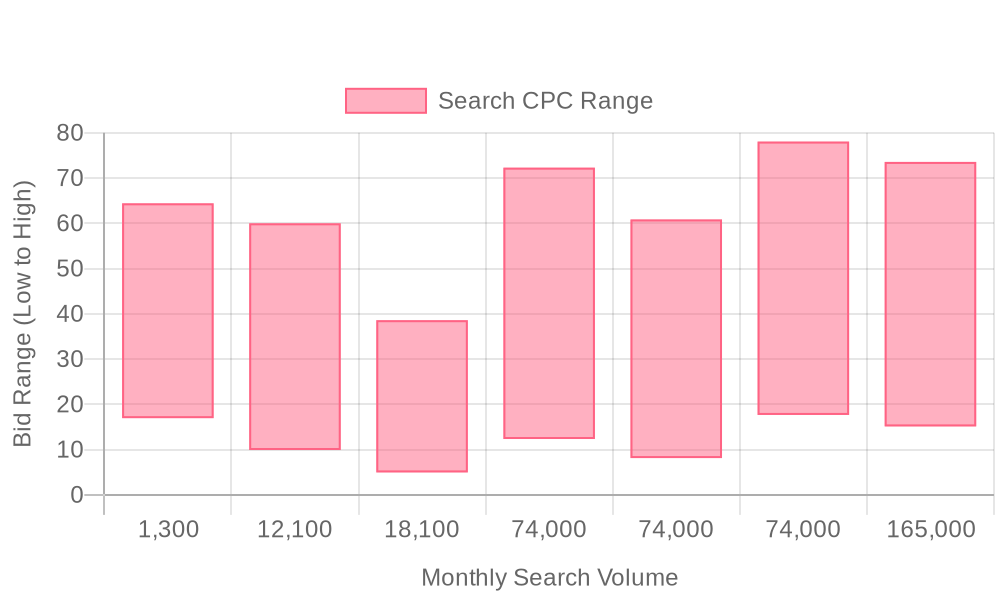
| Industry | Keyword | Monthly Search Volume | Competition Level | Low Bid | High Bid |
| Heating Repair Services | heating repair services | 1300 | LOW | 16.95 | 64.42 |
| Heating Repair Services | boiler repair near me | 12100 | LOW | 9.91 | 60 |
| Heating Repair Services | furnace replacement | 18100 | LOW | 4.97 | 38.6 |
| Heating Repair Services | hvac repair near me | 74000 | LOW | 12.34 | 72.29 |
| Heating Repair Services | hvac repair | 74000 | LOW | 8.13 | 60.85 |
| Heating Repair Services | heater repair near me | 74000 | LOW | 17.66 | 78.06 |
| Heating Repair Services | furnace repair | 165000 | LOW | 15.13 | 73.57 |
Heating repair services operate in a highly time-sensitive and intent-driven market. To consistently attract qualified leads, it is critical to target keywords that align with urgent service needs, local intent, and seasonal demand. A well-structured keyword strategy blends transactional phrases with geo-modifiers, allowing marketers to intercept prospects at the precise moment they need solutions. For a deeper dive into keyword planning, review this PPC keyword cheat sheet for HVAC to optimize your paid search campaigns.
- Emergency Service Keywords: High-converting terms such as "emergency furnace repair near me," "24/7 heating repair," and "heater not working" capture urgent buyers who are ready to convert. Prioritizing these phrases ensures your ads appear when decision-makers are searching for immediate help, maximizing the chance of direct engagement and reducing wasted clicks. For more actionable guidance, explore our playbooks for modern marketers.
- Local and Branded Terms: Incorporating city or neighborhood names, such as "heating repair in [city]" and "best furnace service [region]," enables granular targeting. This approach improves relevance and Quality Score while reducing cost-per-click by focusing on audiences most likely to schedule a service call. Leverage precise audience intelligence to further refine your local and branded keyword targeting.
- Preventative and Maintenance Phrases: Phrases like "furnace inspection," "heating system tune-up," and "HVAC maintenance plan" attract proactive homeowners and property managers. These terms support year-round pipeline building, allowing marketers to balance high-urgency demand with steady, preventive service leads. For more on campaign optimization, visit our blog hub for marketing insights.
Precision targeting goes beyond keyword selection by using ranked audience insights. With intent modeling, marketers can identify in-market accounts showing active buying signals and shift budgets accordingly. Sona helps revenue teams move from generic location targeting to dynamic audience creation, using real-time behavior and CRM data to update segments as prospects progress through the funnel. This ensures every paid click is optimized for conversion readiness, not just keyword match.
Measurable ROI is achieved by unifying online and offline touchpoints, tracking the journey from ad click, web visit, and form fill through to a closed service ticket or contract. By syncing enriched lead data and audience segments directly into ad platforms and CRM systems, marketers can attribute revenue to specific campaigns and keywords, closing the loop between digital spend and actual business outcomes. For step-by-step attribution advice, see our guide on measuring marketing's influence on the sales pipeline.
Channel synergy is critical in heating repair marketing, as prospects often interact across multiple digital touchpoints before committing. Retargeting strategies convert anonymous web traffic by re-engaging visitors on display networks, video, and social platforms with timely, relevant messages. Sona's Identity Resolution enables seamless audience syncing, so revenue teams can convert multi-channel engagement into actionable leads, turning interest from any entry point into pipeline.
Step-by-Step Campaign Execution Framework
Step 1: Build Targeted Keyword Lists
Strategic keyword development is foundational for high-performing Google Ads for Heating Repair Services. Begin by clustering terms according to core service types: installations, repairs, and compliance checks. Localize each group with city, neighborhood, and "near me" variations to capture geo-targeted intent. Incorporate long-tail queries such as "emergency furnace repair in [City]" and question-based searches like "why isn't my heater working?" to address specific user needs at different funnel stages.
Employ negative keywords to filter out irrelevant or low-converting traffic, ensuring budgets only support qualified clicks. For additional alignment, map keyword targeting to terminology used in your content marketing and on-site resources. By using company-level intent and engagement data, revenue teams can prioritize keyword lists based on real in-market signals, not just search volume. This data-driven approach ensures targeting focuses on accounts actively considering heating repair solutions, increasing both efficiency and lead quality.
For a comprehensive HVAC keyword resource, download the PPC keyword cheat sheet tailored for paid search campaigns.
The upgrade most heating repair services advertisers miss is going beyond raw keyword volume to layer in intent and identity signals. By connecting website-visitor data and CRM records with Sona Marketing Measurement, you can see which specific search terms bring in the accounts and customers that actually convert, and weight your keyword and bidding strategy toward those rather than the terms with the highest search volume alone.
Step 2: Develop Compelling Ad Copy
Effective ad copy for heating repair marketing addresses industry pain points directly in the headlines, such as urgent repairs or system failures during peak seasons. Highlight trust drivers, certifications, star ratings, and customer testimonials, to establish credibility and differentiate from less specialized competitors. Promote urgency with limited-time incentives like free estimates or same-day service offers, speaking to the needs of customers facing immediate heating issues.
Include ad extensions such as call buttons, structured snippets, and service highlights for greater relevance and visibility. Integrate consistent messaging from your social and email campaigns to reinforce brand trust across every touchpoint. Platforms that unify messaging and performance data across channels allow marketers to rapidly adapt ad copy based on real-time insights, ensuring each campaign resonates with the right audience segment. Messaging can be dynamically adjusted as leads progress through the buying journey, reflecting the latest interactions and preferences.
To explore proven ad copy strategies, review this guide on Google Ads for HVAC businesses.
Step 3: Design Effective Landing Pages
A high-converting landing page mirrors the keyword and ad promise, creating clear 1:1 alignment from search to conversion. Segment landing experiences by service type, such as rooftop HVAC units versus ground systems, to deliver more relevant content and solutions. Incorporate ROI calculators, trust badges, and detailed FAQs to address objections and showcase value, while maintaining persistent, visually prominent CTAs that are easy to access on any device.
Each form should connect directly to your CRM and marketing automation workflows, enabling instant lead routing and prioritization. When enriched lead data flows seamlessly from form submissions into downstream platforms, teams can respond faster and personalize follow-up based on web engagement and ad source. This creates a frictionless path from click to closed deal, with every interaction logged for full-funnel attribution and future campaign optimization.
For actionable tips and examples, see best practices for creating effective HVAC landing pages.
Step 4: Implement Data-Driven Optimizations
Robust optimization relies on tracking both micro and macro conversions, from call clicks and form fills to booked appointments and completed jobs. Employ Google's automated bidding strategies, such as Target CPA or Max Conversions, to extract maximum value from every impression and click. A/B test ad headlines, CTA placements, and landing page layouts regularly, using performance data to guide creative and structural changes.
Import offline conversions, such as in-person service completions, into your ad platform to close the loop and measure true ROI for every marketing dollar. By unifying online and offline data, marketers gain a complete view of what drives revenue, not just leads. Integrating this with content strategy ensures that high-performing topics and offer types inform future ads, resulting in a continuous feedback loop that elevates campaign performance across all channels. Audience segments can be dynamically updated as contacts move through the funnel, allowing for refined retargeting and more accurate budget allocation based on real-time intent signals.
Sona Marketing Measurement closes the gap between clicks and revenue. It captures ad clicks with first-party measurement, ties that click through UTM capture and ad-platform APIs to the actual record in your CRM, and reports ROAS by keyword and campaign instead of by last-click form fill. Feeding that revenue signal back into Smart Bidding and Performance Max compounds over time: the algorithms optimize toward booked heating repair services revenue, not cheap leads.
Tips on Expanding Your Heating Repair Services Digital Presence
Heating repair businesses that want to outpace competitors must look beyond basic pay-per-click tactics and build a cohesive, growth-oriented Google Ads strategy. Using data-driven insights and unified audience targeting, teams can turn every campaign into a scalable engine for both immediate leads and long-term brand value.
- Cross-promote educational assets in retargeting: Retargeting campaigns are a powerful touchpoint for re-engaging site visitors who didn’t convert on the first visit. By integrating educational guides, troubleshooting checklists, or seasonal maintenance videos into retargeting ads, you reinforce content marketing goals while establishing trust. Marketers using unified visitor identification can pinpoint which segments interacted with specific resources, enabling the delivery of the right educational asset to the right persona at the right moment.
- Upsell related services via segmented audiences: Not every visitor is ready for a full furnace replacement, but some may need duct cleaning, thermostat upgrades, or maintenance plans. Segmenting audiences using CRM data allows you to identify conversion gaps and present tailored service offerings to leads who have shown intent but not yet purchased. By syncing enriched audience segments from your CRM directly into Google Ads, you automate upsell campaigns and maximize cross-sell opportunities as contacts move through the funnel.
- Partner with industry associations for referral traffic: Collaborating with local HVAC associations or home service networks can amplify your reach, especially when launching co-branded ads or referral programs. These partnerships enhance credibility and give your brand exposure to vetted, high-intent audiences outside your existing database. Seamless integration between referral source data and ad platforms enables you to track which partnerships drive the most qualified leads and optimize spend accordingly.
- Localize by state or metro areas: Expanding your share-of-voice in targeted markets depends on tailored messaging and precise geographic segmentation. By analyzing regional search trends for heating repair marketing and customizing ad copy for each metro or state, your campaigns align with local consumer needs and seasonal demand spikes. Smart geographic targeting ensures optimal budget allocation and helps you dominate in priority regions, while intent signals from real-time visitor data guide where to increase or decrease ad presence.
- Use search query data to drive new content themes: Every search term report is a direct signal of what prospects care about most, revealing gaps in your existing content strategy. Marketers who analyze this data can quickly develop new blog posts, landing pages, or video assets that answer trending questions or address emerging pain points. Connecting Google Ads search insights with your broader content team ensures your marketing stays responsive and relevant, continuously fueling both paid and organic growth.
Beyond Google Ads: Winning the AI Answers Heating Repair Services Buyers Now Trust
Paid search captures demand at the moment someone types a query. But a fast-growing share of heating repair services buyers no longer start at Google at all, they ask ChatGPT, Gemini, or Perplexity before they ever run a search, and Google's own AI Overviews increasingly summarize an answer above the traditional results. If your business isn't referenced in those AI answers, you're invisible at the exact moment buyers build their shortlist.
Sona AI Visibility shows where your business shows up across ChatGPT, Gemini, Perplexity, Google AI Overviews, and 10+ engines, and, much like a keyword report, which prompts actually send you buyers, so you can prioritize the ones that convert. Run the two together and you cover the entire buyer path: get cited where buyers research (AI Visibility), then prove which of that demand turns into booked revenue (Marketing Measurement).
Helpful resources
Conclusion
Search will keep sending heating repair businesses their most urgent, highest-intent customers, the ones with no heat and no patience for research. What separates the operators winning that traffic from the ones bleeding budget is whether their Google Ads data connects to what actually happens after the click: the booked job, the completed repair, the maintenance contract signed a year later.
As AI tools increasingly shape where buyers start their search, and as Google keeps pushing automation deeper into bidding and targeting, the businesses that feed it accurate revenue data, not just click and form counts, will be the ones whose campaigns keep improving instead of plateauing. That's the shift worth making now, before the next heating season arrives.
To fully harness these opportunities, start for free to experience our platform's capabilities today.
FAQ
What are the best practices for Google Ads in the HVAC industry?
Best practices include integrating data-driven paid search with existing CRM systems, targeting high-intent keywords, aligning ad creative with landing pages, and continuously optimizing performance based on real-time data and conversion tracking.
How can I optimize my Google Ads for heating repair services?
To optimize Google Ads for heating repair, focus on intent-led targeting, use negative keywords to filter out low-value searches, align ad copy with user needs, and employ advanced conversion tracking to adjust strategies based on data.
What budget should I allocate for Google Ads for HVAC?
Budget allocation should be based on capturing high-intent leads, using precise audience targeting, and continuously analyzing ROI to shift funds toward high-performing keywords and campaigns.
How do I create effective ad copy for heating repair services?
Effective ad copy should address urgent repair needs, highlight trust factors like certifications, and include calls to action that emphasize immediate solutions. Incorporate ad extensions to enhance visibility and relevance.
What keywords should I target for heating repair Google Ads?
Target keywords such as 'emergency furnace repair,' '24/7 heating service,' and geo-specific terms like 'heating repair in [city]' to capture urgent and local search intent.







