


Online education providers compete for students who are researching programs on their own schedule, often comparing accreditation, price, and flexibility across multiple tabs before they ever fill out a form. Google Ads gives these providers a way to show up at the exact moment someone searches for a course, a certification, or a degree path, and to keep talking to that prospect through enrollment deadlines and financial aid decisions. This guide covers how to set up, target, and measure Google Ads campaigns for online education, and how to connect that spend to actual enrollments rather than form fills.
How to Generate Google Ads for Online Education Leads: A Step-by-Step Guide

Online education providers can capture sustained, high-quality lead flow by elevating every stage of their Google Ads strategy. Clear objectives, precise audience targeting, and agile measurement practices drive more consistent results than generic, siloed campaigns. Platforms that unify go-to-market data help teams identify high-intent prospects and deliver engagement at the right moment, turning disconnected efforts into a streamlined pipeline.
Generating leads through Google Ads for online education is a dynamic process that demands more than keyword bidding and basic analytics. Success hinges on connecting campaign goals to user intent, building audience lists that adapt in real time, and attributing conversions accurately across the entire student journey. When marketing and sales systems are seamlessly integrated, revenue teams can prioritize in-market accounts, synchronize messaging, and rapidly scale what’s working.
- Identify Key Campaign Objectives: Start with goals tied to the enrollment calendar, such as filling a specific cohort before its start date, driving applications ahead of a financial aid deadline, or building a waitlist for a new certification track. Online education leads cool fast: a prospect comparing three bootcamps will often enroll wherever someone responds first, so a campaign without a fast follow-up workflow can lose a ready buyer to a competitor within hours. Sona's Identity Resolution helps marketers see not only which campaigns drive conversions but which accounts show real buying signals, like repeat visits to a curriculum or tuition page, so teams can focus on the prospects closest to enrolling.
- Optimize Keyword Strategy: Effective Google Ads targeting strategies for online education begin with a granular approach to keyword selection. Use high-intent terms like 'online courses,' 'e-learning platforms,' and 'virtual classrooms' to ensure your ads surface for motivated learners. Replace broad, catch-all keywords with tailored lists that match specific course offerings, continuously refining based on audience signals and in-market behavior. Real-time visitor identification allows marketers to go beyond anonymous clicks, mapping keywords to actual companies and decision-makers engaging with your programs.
- Design High-Converting Ads: Ad copy should speak to the specific outcome a prospective student wants, whether that's a career switch, a promotion, or a credential an employer recognizes. Lead with accreditation, job placement rates, or instructor credentials where you have them, since these are the details that separate a legitimate program from the noise in this category. Responsive Search Ads let you test several headlines and descriptions within a single ad, and pairing that with dynamic audience updates means messaging can shift as a lead moves from browsing course listings to comparing tuition, improving both engagement and conversion.
- Create Aligned Landing Pages: Every click should land on a page that delivers immediate relevance and value, reinforcing the promise made in the ad. Cohesive experiences reduce bounce rates and encourage deeper exploration of your educational content. When audience data and segmentation power landing page personalization, each visitor receives the right information, increasing the likelihood of registration or inquiry.
- Track and Measure Success: Implement robust conversion tracking to assess the performance of every campaign element, ad, keyword, and landing page. With advanced conversion attribution, revenue teams can measure the true ROI of Google Ads for education, capturing both online and offline conversions across multiple touchpoints. Seamless CRM and ad platform sync ensures enriched lead data flows into sales pipelines, enabling faster, more personalized follow-up and more accurate reporting on campaign impact.
Addressing each of these areas systematically helps online education brands generate leads more efficiently, cut wasted ad spend, and build a framework that scales with enrollment cycles. Ready to take the next step? Get started for free with Sona.
Why Google Ads Matter for Online Education

Online education providers operate in a highly competitive landscape where standing out requires more than just compelling course content. Google Ads provides a direct path to visibility by connecting motivated learners with the programs and certifications they are actively searching for.
- Precise Targeting: Google Ads lets education marketers reach prospective students at the moment they express intent, such as searching for "online MBA programs" or "flexible coding bootcamp." With Sona's Identity Resolution, marketers can identify the companies behind anonymous site traffic and see which accounts are showing real interest, such as returning to a program page or comparing tuition. This lets teams focus spend on the visitors most likely to enroll, driving more efficient student acquisition.
- Dynamic Adjustments: The education sector faces unpredictable cycles, enrollment peaks, new course rollouts, or shifting program demand. Google Ads allows for rapid campaign updates, bid adjustments, and creative swaps as trends emerge. By integrating real-time audience data, revenue teams can quickly reallocate budget to capture surges in interest and ensure that high-converting accounts remain engaged.
- Maximized ROI: Every marketing dollar counts, especially as education budgets tighten. Google Ads supports granular tracking from click to enrollment, capturing data from initial touchpoints through to offline admissions activity. With unified conversion tracking, marketers can reliably attribute both online and offline actions, revealing which campaigns actually drive enrollments and which audiences need further nurturing.
- Integration with Other Channels: Marketing for online education rarely happens in isolation. Google Ads campaigns can be synced with social media and email initiatives, creating a seamless experience for prospective students. When audience segments update dynamically as leads move through the funnel, education marketers can ensure consistent messaging and timely follow-ups, significantly reducing the risk of losing high-intent prospects due to fragmented outreach.
Common Types of Google Ads Campaigns for Online Education Services

- Search Campaigns: Search campaigns are fundamental for online education providers aiming to reach prospects with strong purchase intent, including learners searching "online MBA" or "certified data analysis course" and comparing several accredited programs before applying. By focusing budgets and messaging on these high-intent keyword groups, education marketers ensure their ads appear precisely when potential students are making enrollment decisions. Within Search campaigns, Responsive Search Ads let you test multiple headlines and descriptions so Google can surface the combination that resonates with each query. With Sona's Identity Resolution, teams can move beyond anonymous clicks to see which companies or individuals are engaging, refining keyword lists and ad placements for better efficiency. For a step-by-step walkthrough, explore this Google Ads setup guide for online courses.
- Display Ads: Display campaigns boost brand presence across a broad range of education-focused websites, news portals, and forums. The visual nature of display ads allows institutions to reinforce brand messages and showcase unique value propositions with consistent frequency, nurturing awareness even before a prospect begins their formal search. Marketers can leverage dynamic audience capabilities, ensuring that display ads are seen by prospects who have shown early-stage interest or visited related pages, automatically updating as new leads emerge or existing ones progress through the enrollment funnel.
- Video Ads: Video campaigns bring online courses to life by delivering course previews, faculty introductions, and student testimonials through YouTube and partner networks. These immersive formats help reduce engagement drop-off by addressing common objections and illustrating real-world outcomes, making complex programs tangible and accessible. When paired with real-time intent data, marketers can dynamically allocate video budgets to segments or accounts demonstrating active research behaviors, increasing the likelihood of converting high-value prospects at crucial touchpoints.
- Remarketing: Remarketing campaigns give online education marketers a powerful tool to reconnect with users who have signaled interest but have not yet converted. By targeting past website visitors or previous leads, remarketing keeps educational offerings top-of-mind and encourages re-engagement with tailored messaging. With modern campaign orchestration, remarketing audiences are no longer static; as leads move through qualification stages or interact with new content, audience lists update automatically, and conversion tracking can attribute both online and offline actions, providing a holistic view of true campaign ROI. This approach ensures budgets are directed toward leads most likely to convert, resulting in timelier follow-ups and minimized loss of high-potential prospects. To see how seamless orchestration is possible for your team, get started for free with Sona.
- Performance Max: Performance Max campaigns let online education advertisers run a single campaign across Search, Display, YouTube, and Gmail, which suits programs with rolling enrollment or multiple course lines where manually managing separate campaigns per channel isn't practical. Feeding Performance Max with strong conversion signals, ideally tied to actual enrollments rather than just form fills, helps the algorithm find prospects who resemble your best students rather than just cheap clicks.
Where to Find Growth Opportunities for Online Education

Growth in online education relies on uncovering overlooked audiences and personalizing interactions across the marketing funnel. By leveraging data-driven tactics, education providers can move beyond generic outreach and create touchpoints that resonate with the right learners at the right time.
- Leverage Vertical Keyword Targeting: Focusing on niche topics such as 'online language lessons' or 'virtual coding bootcamp' connects your offering with students who are actively searching for specialized learning experiences. This approach avoids wasteful spend on broad terms and allows for tailored messaging that addresses unique student motivations. When platforms facilitate real-time intent data, marketers can identify which niche subjects are trending and immediately shift budget toward those with the highest enrollment potential, maximizing the impact of Google Ads for online courses and improving ROI.
- Conduct Competitor Analysis: Reviewing competitor campaigns shows where rival institutions are missing the mark, whether that's ignoring a certification niche or using generic messaging that doesn't speak to working professionals versus recent graduates. Spotting these gaps lets a provider position its programs as the answer to a need competitors have left unaddressed. When campaign and web analytics are unified, marketers can identify high-value visitors browsing both their own site and a competitor's, enabling faster, more relevant outreach to prospects actively comparing programs.
- Utilize Content Retargeting: Educational assets like guides, downloadable resources, or on-demand webinars serve as effective anchors for retargeting campaigns. Triggering ads based on previous engagements helps maintain continuity in nurturing and increases the likelihood of reactivating interest among users who may have paused their research. Dynamic audience capabilities ensure that as prospects interact with new content or progress in the decision journey, they are automatically moved into the most relevant retargeting segments, keeping communication personalized and aligned with their current needs.
Combining these tactics gives online education marketers the ability to transform anonymous website activity into actionable growth opportunities. Advanced platforms unify visitor identification and real-time engagement data, making it possible to sync enriched lead profiles directly into Google Ads and CRM systems. This bridges the gap between digital engagement and enrollment outcomes, supporting both short-term campaign performance and long-term revenue growth for educational organizations. Ready to put these strategies into action? Get started for free with Sona.
How to Apply Audience Segmentation for Online Education

Online education providers face high competition and sophisticated buyer journeys, making precise audience segmentation essential for maximizing campaign performance. Segmentation enables marketers to deliver relevant messaging to each user group, improving engagement rates and driving more qualified leads for online courses and degree programs. For additional strategies on elevating your campaigns, visit the Sona blog.
- Define Segments: Begin by creating clear audience segments based on educational interests and career objectives. For example, distinguish professionals seeking certification or upskilling from learners interested in personal enrichment or hobby-based courses. This separation allows for messaging that speaks directly to the motivations and pain points of each group. When segments are well-defined, messaging and offers become immediately more relevant, leading to increased click-through rates and improved lead quality for your Google Ads for online education campaigns.
- Overlay Intent Signals: Use behavioral data to assess where each user is in their learning journey and what drives their decision-making. By analyzing in-market actions like content downloads, website visits to program pages, and webinar sign-ups, marketers can align ad creative with demonstrated intent. For instance, those researching short courses require messaging focused on fast ROI and flexibility, while those exploring full degree programs need credibility, career outcomes, and accreditation details. Platforms that unify go-to-market data can identify high-intent visitors and surface in-market accounts in real time, allowing teams to prioritize spend and tailor outreach accordingly.
- Customize Creative per Segment: Crafting ad copy and creative assets specifically for each segment is crucial for boosting engagement. Segment-specific ads that address unique concerns, such as scheduling for working professionals or scholarship options for recent graduates, outperform generic messaging. When audience lists are dynamically updated based on user behavior, marketers can ensure prospects receive the right message as they progress through the funnel. Integrating enriched audience segments directly into Google Ads campaigns and CRM workflows enables synchronized, personalized engagement across every touchpoint.
This is also where measurement changes the economics. With Sona Marketing Measurement you can identify the companies behind your ad clicks, not just anonymous sessions, and segment audiences by who actually becomes a customer. That lets you build bid adjustments and audience signals around the segments that convert and de-prioritize the ones that don't, so you feed Google's algorithms "this click became a paying online education customer" instead of just "someone filled out a form."
Keyword Strategy & Sample Target Terms
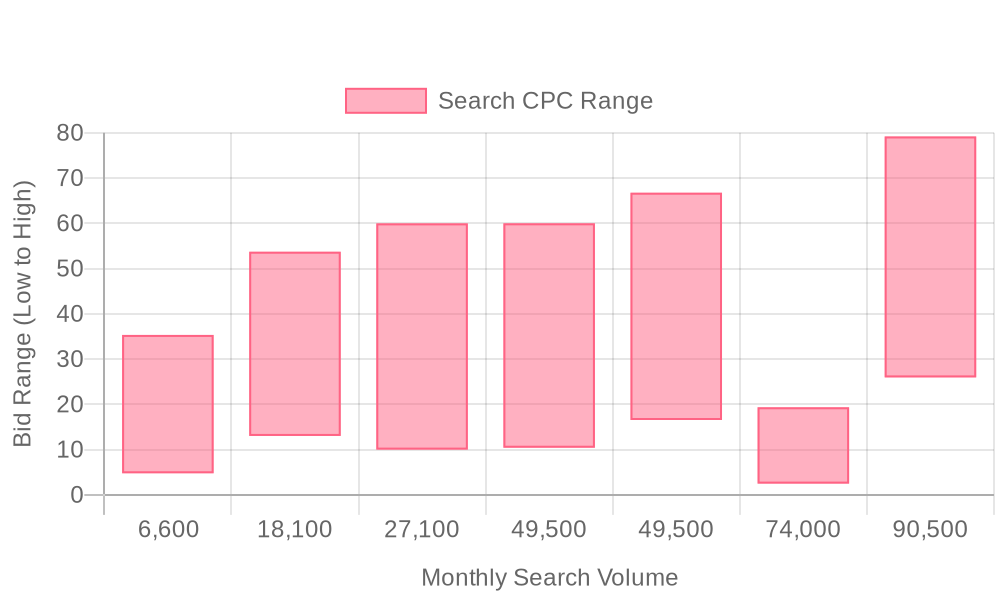
| Industry | Keyword | Monthly Search Volume | Competition Level | Low Bid | High Bid |
| Online Education | online education | 6600 | LOW | 4.78 | 35.34 |
| Online Education | best online colleges | 18100 | HIGH | 13.02 | 53.72 |
| Online Education | online school programs | 27100 | HIGH | 10 | 59.99 |
| Online Education | online school | 49500 | HIGH | 10.42 | 60 |
| Online Education | online college courses | 49500 | HIGH | 16.55 | 66.76 |
| Online Education | k12 online school | 74000 | MEDIUM | 2.49 | 19.36 |
| Online Education | online colleges | 90500 | HIGH | 25.96 | 79.19 |
A robust keyword strategy is the foundation of every successful Google Ads for Online Education initiative. B2B education marketers gain a competitive advantage by tailoring campaigns to match the language, intent, and search context of their prospective students or enterprise buyers. For further guidance, explore this overview of Google Ads strategies.
- Target Terms: Selecting high-impact keywords such as "Google Ads for online courses," "online education advertising," and "Google Ads for education" ensures campaigns reach professionals and learners who are actively searching for credible, scalable learning solutions. These core terms attract qualified leads by aligning ad copy and landing page experiences with searcher expectations and decision journeys. As education markets become more sophisticated, campaign managers who keep their target terms updated and seasonally relevant see higher impression shares and increased enrollment or enterprise lead volume. For more actionable tips, visit our blog.
- Long-Tail Keywords: Integrating intent-rich phrases like "best online certification programs for IT managers," "corporate training with Google Ads," or "how to promote online courses with Google Ads" captures prospects deeper in the buying cycle. Long-tail terms offer two key benefits: reduced bidding competition and higher conversion rates. They allow teams to focus budget on users most likely to convert, removing waste from generic, top-funnel traffic. When marketers leverage real-time intent signals, they can dynamically adjust keyword portfolios to prioritize searches with the greatest likelihood of driving high-value registrations or qualified MQLs.
- Negative Keywords: Proactively filtering out irrelevant or low-converting searches, such as "free online education resources" or "Google Ads careers," prevents wasted spend and campaign dilution. Negative keywords are essential for budget stewardship and optimizing every ad dollar. Revenue teams can use insights from cross-channel CRM data to refine these exclusions, ensuring campaigns only serve to the highest potential audiences. With advanced audience sync and attribution, negative keyword lists stay current, adapting as buyer needs and course offerings evolve.
A strategic approach to keywords, blending broad reach with precision targeting, delivers measurable improvements in campaign efficiency, student acquisition, and marketing ROI. Using unified data from across the funnel, marketers can continuously refine their keyword approach, making every click count toward their business goals in online education. To see how unified data can supercharge your campaigns, get started for free with Sona.
Step-by-Step Campaign Execution Framework
A methodical approach to Google Ads for online education transforms scattered campaign management into a source of predictable, scalable growth. Online education providers face unique pressures: high-value leads often cool quickly when campaign workflows are disconnected or manual, and marketing teams struggle to connect ad engagement to real enrollment outcomes. A unified campaign execution framework addresses these challenges, streamlining each step from keyword research through real-time optimization and attribution.
Step 1: Build Targeted Keyword Lists
Keyword selection is the foundation of every successful Google Ads campaign in online education. Organizing keywords by course type and segmenting audiences by learning objectives, job roles, or industry focus ensures that campaigns reach the right prospects at the right time. Incorporating firmographic data, such as company size, sector, or technology adoption, enables marketers to create highly specific keyword groups that reflect the decision-making environment of prospective students. By moving beyond generic search terms and aligning keywords with unique program attributes and buyer personas, education marketers can raise quality scores, reduce wasted spend, and increase qualified lead volume.
When visitor identification capabilities are integrated into the workflow, marketers can see which companies and individuals are searching for specific programs. This allows for hyper-targeted keyword expansion and negative keyword refinement based on actual in-market behaviors, ensuring spend is allocated to audiences most likely to convert. For a practical overview of Google Ads strategies tailored for course providers, explore this resource.
The upgrade most online education advertisers miss is going beyond raw keyword volume to layer in intent and identity signals. By connecting website-visitor data and CRM records with Sona Marketing Measurement, you can see which specific search terms bring in the accounts and customers that actually convert, and weight your keyword and bidding strategy toward those rather than the terms with the highest search volume alone.
Step 2: Develop Ad Copy That Resonates
Effective ad copy for online education must speak directly to the pain points of modern learners and decision-makers. Identifying these challenges, such as career advancement, upskilling, or flexible learning modalities, lets marketers craft messaging that addresses real obstacles and aspirations. Messaging should align with the user’s stage in the enrollment journey, from awareness (“Advance your career with accredited online courses”) to consideration (“Flexible, instructor-led programs for working professionals”) and decision (“Apply now for next cohort, limited seats available”). This level of specificity not only boosts click-through rates but also ensures that ad spend results in meaningful engagement.
When marketing teams harness real-time intent data, they can dynamically adjust ad messaging as leads move through the funnel. Audiences who have engaged with curriculum pages or started applications can be surfaced with ads focused on deadlines, financial aid, or student testimonials, driving urgency and personal relevance.
Step 3: Design Landing Pages for Seamless Experience
Landing pages for Google Ads in online education must create a frictionless path from ad click to inquiry or enrollment. Alignment between ad messaging and landing page content is critical: prospects should immediately see the course, benefit, or outcome promised in the ad. Elements such as clear calls-to-action, program highlights, student outcomes, and interactive elements help sustain engagement and drive conversions. Personalization, showcasing relevant courses or testimonials based on the ad or visitor segment, further improves conversion rates and reduces bounce.
Marketers equipped with advanced analytics can identify which segments engage most deeply and where drop-off occurs, allowing for continuous landing page refinement. By mapping anonymous and known visitor journeys, teams gain granular insights into which messages, formats, and offers drive actual applications, not just clicks.
Step 4: Implement Data-Driven Optimizations
Continuous, data-driven optimization is essential for maximizing Google Ads ROI for education. Campaign performance should be monitored at both the keyword and audience level, with adjustments made based on behavioral patterns, engagement depth, and offline conversion data. Automated rules can shift budgets toward high-converting programs or geographies, while underperforming segments are paused or retooled.
Advanced conversion tracking, including online and offline attribution, provides a holistic understanding of which campaigns generate true enrollments versus surface-level engagement. Connecting CRM and ad platforms enables revenue teams to sync enriched audiences, update retargeting lists as leads progress, and ensure that marketing and sales are always aligned on high-intent opportunities. This closed-loop approach ensures marketing efforts are continually refined for maximum impact, driving measurable growth in enrollments and ROI for online education providers. If you’re ready to see how this can work for you, get started for free with Sona.
Sona Marketing Measurement closes the gap between clicks and revenue. It captures ad clicks with first-party tracking, ties that click through UTM capture and ad-platform APIs to the actual record in your CRM, and reports ROAS by keyword and campaign instead of by last-click form fill. Feeding that revenue signal back into Smart Bidding and Performance Max compounds over time: the algorithms optimize toward booked online education revenue, not cheap leads.
Tips on Expanding Your Online Education Presence
Scaling your online education brand requires more than increasing ad spend. The key is to create consistent, high-value experiences that guide prospects from initial discovery to long-term engagement. For expert insights on optimizing campaigns, explore this overview of Google Ads strategies for online courses, or dive deeper into marketing analytics best practices for sustained growth.
A fragmented message or poorly sequenced touchpoints can erode trust and lower conversion rates. Strategic expansion, supported by the right data insights, ensures every interaction reinforces your institution’s reputation and value proposition.
- Cross-Promote Educational Assets: Reinforce your content strategy by integrating educational resources into retargeting campaigns. For example, guide users who previously engaged with a free webinar toward a related paid course, maintaining message consistency and nurturing intent at every stage. Leveraging unified data from your engagement channels helps you identify which content assets resonate most. With a platform that connects ad engagement to user profiles, you can align messaging across channels and ensure educational materials are surfaced contextually. This approach not only boosts relevance but also improves Google Ads targeting strategies by dynamically updating audiences based on real-time engagement signals.
- Upsell Courses via Audience Segmentation: Maximize lifetime value by using CRM data to segment your audience, identifying which learners are most likely to invest in advanced or complementary courses. When your Google Ads audiences sync directly with your CRM, you can act on behavioral and purchase data to deliver highly personalized upsell offers. This reduces wasted impressions and elevates conversion rates by serving the right offer to the right segment at the right time. Platforms that enable dynamic audience updates as learners progress through the funnel empower you to continuously refine your upsell and cross-sell efforts, ensuring your online course marketing adapts to shifting student needs.
- Localize Campaigns: Increase engagement by tailoring ads to specific geographic segments, such as targeting metropolitan areas with high demand for tech certifications or regions where your institution has local partnerships. Localized messaging, think city-specific testimonials or references to regional job markets, creates stronger personal connections and improves ad performance. When you unify location-based insights with intent data, you can quickly shift budget toward high-converting regions and adjust creative in real time. This targeted approach makes your online education advertising more relevant, cost-efficient, and impactful.
Harnessing the power of Google Ads for Online Education ensures your institution remains visible and competitive in a crowded digital landscape. By executing cross-channel strategies with real-time data, you not only attract motivated learners but also support them throughout their educational journey. When every message, audience, and metric is unified, you position your brand as a trusted partner in lifelong learning. If you’re ready to modernize your online education marketing, get started for free with Sona.
Beyond Google Ads: Winning the AI Answers Online Education Buyers Now Trust
Paid search captures demand at the moment someone types a query. But a fast-growing share of online education buyers no longer start at Google at all, they ask ChatGPT, Gemini, or Perplexity before they ever run a search, and Google's own AI Overviews increasingly summarize an answer above the traditional results. If your business isn't referenced in those AI answers, you're invisible at the exact moment buyers build their shortlist.
Sona AI Visibility shows where your business shows up across ChatGPT, Gemini, Perplexity, Google AI Overviews, and 10+ engines, and, much like a keyword report, which prompts actually send you buyers, so you can prioritize the ones that convert. Run the two together and you cover the entire buyer path: get cited where buyers research (AI Visibility), then prove which of that demand turns into booked revenue (Marketing Measurement).
Helpful resources
Conclusion
Google Ads works for online education when it's treated as an enrollment engine, not just a traffic source. The providers that win aren't the ones spending the most, they're the ones who tie every click to whether it actually turned into a student.
As AI answers and Performance Max take over more of the decision-making, the providers that connect ad spend to enrollment data, not just clicks, will be the ones whose campaigns keep improving instead of plateauing. Start for free and see what that connection looks like for your programs.
FAQ
What are the best practices for using Google Ads in online education?
Best practices include setting clear objectives, optimizing keyword strategy, designing high-converting ads, creating aligned landing pages, and tracking metrics such as conversions to measure success.
How do I set up a Google Ads campaign for my online course?
Begin by building targeted keyword lists segmented by course type, develop resonating ad copy, design seamless landing pages, and implement data-driven optimizations.
What budget should I allocate for Google Ads in the education sector?
The budget should be focused on high-intent keyword groups and adjusted dynamically based on campaign performance and audience engagement to ensure efficient spend.
How can I improve my Google Ads targeting for educational services?
Improve targeting by using precise audience segmentation, overlaying intent signals, customizing creative per segment, and leveraging vertical keyword targeting.
What metrics should I track to measure the success of my Google Ads for online education?
Track conversion rates, click-through rates, bounce rates on landing pages, and ROI through robust conversion tracking and attribution across multiple touchpoints.







