


A ventilator failure at 2 a.m. does not wait for business hours, and the hospital engineer searching for a repair vendor is not browsing, they are triaging. Google Ads gives medical equipment repair businesses a way to appear at that exact moment, bridging online and offline marketing to reach decision-makers directly. Specialized terminology and refined targeting let repair services reach clinical engineers and procurement teams at the moment of genuine need, but many businesses still lose high-value prospects to delayed follow-up and untracked activity. Pairing Google Ads with precise CRM tactics closes that gap, keeping ad spend focused on high-value prospects and timely engagement. This article covers how Google Ads for Medical Equipment Repair can intercept healthcare professionals searching for urgent solutions, complement broader strategies, and prove returns through robust tracking.
How to Generate Medical Equipment Repair Leads with Google Ads: A Step-by-Step Guide

Medical equipment repair companies face a specialized challenge: capturing the attention of hospital decision-makers and clinical engineers precisely when a repair need arises. With Google Ads, these organizations can intercept high-intent buyers in urgent, solution-seeking moments, ensuring service offerings are visible at the top of search results when every hour of downtime matters. For a visual walkthrough of effective campaign structures and bidding strategies tailored to medical device firms, review this Google Ads video walkthrough for medical device companies.
This step-by-step guide delivers a proven framework for integrating Google Ads into a unified healthcare marketing strategy. By leveraging data-driven targeting, aligning ad content with decision-maker intent, and continually refining campaign performance, medical repair service providers can generate qualified leads, maximize budget efficiency, and build long-term relationships with healthcare facilities.
Data-Driven Paid Search for High-Value Prospects
Modern revenue teams rely on real-time analytics to focus on prospects most likely to convert. In medical equipment repair, identifying the companies behind anonymous website visits that signal urgent service needs, such as searching for "emergency endoscope repair" or "24/7 MRI maintenance", can dramatically increase lead quality. With company-level visitor identification, marketers move beyond surface-level website metrics to uncover which hospital systems, clinics, or biomedical departments are actually engaging with repair content.
This approach allows for immediate budget reallocation toward high-converting accounts, using in-market search signals to prioritize spend on keywords and demographics that mirror top-performing clients. To learn how specialized PPC strategies can further enhance medical device marketing campaigns, explore this comprehensive Google Ads strategy for medical devices.
Keyword Targeting for Medical Equipment Services
Precision is essential when building keyword lists for medical equipment repair. Broad, generic terms waste budget and dilute results; instead, effective campaigns focus on specific devices, repair scenarios, and service modifiers. For a curated list of targeted medical equipment PPC keywords, focus on phrases like "portable ultrasound repair service," "ISO-certified ventilator calibration," or "sterilizer breakdown urgent fix" to ensure ads reach facilities searching for immediate, actionable solutions.
Negative keywords further refine reach by excluding irrelevant traffic such as equipment sales or DIY troubleshooting. Weekly analysis of search query reports refines the campaign, trimming spend from non-qualified clicks and maximizing exposure to genuine service buyers. As new repair trends emerge, such as increased preventative maintenance requests, keyword lists evolve to capture shifting demand.
Landing Page Alignment to Capture Decision-Maker Engagement

High-performing landing pages bridge the gap between ad engagement and lead capture. In the medical repair context, these pages must demonstrate technical credibility, compliance with healthcare standards, and clear pathways to request service or schedule consultations. For guidance on optimizing landing pages to increase conversion rates, see landing page solutions for healthcare PPC.
Dynamic landing pages that personalize messaging based on ad group or keyword intent improve conversion rates. For example, a visitor arriving from "emergency endoscope repair" sees immediate hotline options and rapid response guarantees, while a user seeking "preventative maintenance contracts" is guided to downloadable agreements and ROI calculators. Live chat or direct scheduling with technical support adds another layer of engagement.
Performance Optimization for Real-Time ROI
Effective Google Ads for medical equipment repair require ongoing optimization rooted in campaign analytics. Marketers monitor conversion events, such as emergency call requests, form submissions, and contract downloads, across both online and offline touchpoints. For an in-depth playbook on PPC and Google Ads strategy for medical equipment companies, review this medical equipment company PPC strategy.
Performance optimization incorporates real-time intent signals, allowing campaigns to automatically shift spend toward accounts exhibiting readiness to buy. As leads progress through the funnel, dynamic audience updates ensure retargeting efforts follow decision-makers from awareness to contract negotiation, minimizing wasted impressions and maximizing ROI.
Cross-Channel Integration to Unify Marketing Efforts
A truly effective medical equipment repair lead generation strategy connects Google Ads with broader digital channels, web, CRM, and email, to provide a seamless experience for healthcare buyers. By syncing enriched lead data and audience segments across platforms, revenue teams can deliver coordinated follow-up, nurture, and retargeting campaigns that reflect real-time buyer status.
This unified approach prevents disconnected intent signals between marketing and sales, reducing friction during procurement cycles. As account engagement deepens, robust attribution models track every touchpoint, supporting continuous improvement in campaign targeting, creative, and budget allocation.
Why Does Google Ads Matter for Medical Equipment Repair?

Medical equipment repair businesses face a hyper-targeted buyer journey, where hospital administrators and facilities directors demand immediate solutions. Google Ads enables these service providers to appear precisely when critical repair needs arise, connecting them to high-value prospects who are actively searching for expertise in moments of urgency. This channel moves beyond passive awareness to deliver actionable demand response, bridging the gap between technical urgency and business outcomes. For a practical walkthrough of campaign setup and optimization, visual learners can explore this video on Google Ads for medical devices.
Traditional marketing struggles to track the value of every touchpoint, especially when conversions occur offline through calls or service dispatches. With advanced tracking and real-time analytics, repair companies can now capture both online form submissions and phone inquiries, attributing every qualified lead and closed contract to the right campaign. Integrated data analysis further helps unify fragmented engagement signals, revealing which audiences drive the most profitable service contracts.
- Niche audience access: Google Ads allows marketers to reach plant managers, clinical engineers, and procurement teams by linking in-market search queries with advanced sales follow-up. By layering in real-time visitor identification, marketing teams can go beyond anonymous clicks to pinpoint the organizations engaging with their ads.
- Contract and market targeting: High-margin service contracts can be secured with focused ad placements that prioritize accounts with immediate maintenance needs. Dynamic audience segmentation updates as buyers move through the funnel, ensuring outreach aligns with current intent.
- Urgency and segmentation: During equipment failures, Google Ads responds instantly by surfacing repair solutions to those in immediate need, while excluding low-value or irrelevant traffic through precise targeting and negative keyword strategies. Learn how dynamic segmentation can further enhance this strategy by reviewing intent-driven retargeting campaigns.
- Market expansion and budget efficiency: The platform enables expansion into new geographic and clinical markets, optimizing spend by excluding unqualified audiences. Syncing CRM and ad data ensures that only the most relevant leads are nurtured, reducing wasted budget.
- Holistic data-driven strategy: Integrated analytics provide a 360-degree view, connecting web engagement, phone conversions, and offline service outcomes. This empowers B2B teams to refine their medical repair marketing, maximize ROI, and build a reputation as the go-to technical partner for healthcare facilities.
Common Types of Google Ads Campaigns for Medical Equipment Repair Services
Google Ads offers several campaign types worth considering alongside Search, Display, Video, and Remarketing: Performance Max, which uses automation to serve ads across Search, Display, YouTube, and Gmail from a single campaign, has become a common addition for repair companies looking to extend reach without managing each channel separately.

- Search Campaigns: Search campaigns are the backbone of digital lead generation for medical equipment repair, capturing urgent, high-intent queries from hospital administrators, biomedical engineers, and procurement managers. By leveraging CRM data to segment and prioritize audiences, marketers can ensure that the most relevant repair prospects see their ads first, translating immediate need into qualified service requests. Dynamic audience syncing allows campaigns to automatically update based on evolving sales pipeline data, keeping targeting aligned with actual buyer movement and maximizing the value of every click.
- Display Ads: Display advertising sustains brand visibility across trusted healthcare industry sites and technical forums, keeping services top-of-mind for clinical stakeholders and decision-makers even outside moments of active search. Enhanced segmentation, powered by enriched consumer and firmographic data, enables medical equipment repair companies to focus spend on facilities and organizations most likely to require technical service or contractual maintenance. For a detailed overview of top PPC strategies and digital advertising trends, check out this top PPC strategies guide. By integrating with unified go-to-market data, display ads can dynamically adjust creative and targeting as new repair opportunities emerge, aligning marketing touchpoints with real-world account activity.
- Video Ads: Video campaigns excel at bridging knowledge gaps for complex repair services, demonstrating technical processes, compliance protocols, or case studies in a visual format that builds trust and authority among cold audiences. These campaigns can be targeted using behavioral and intent data, ensuring that facility managers or clinical engineers with recent engagement in related content are prioritized. For visual learners seeking practical PPC tips, this video walkthrough of Google Ads campaigns for medical device companies offers a step-by-step perspective. By connecting video ad analytics with CRM and service request data, marketers gain a complete view of which visual narratives drive the most engagement and service inquiries, informing ongoing creative strategy.
- Remarketing: Remarketing initiatives nurture past site visitors, anonymous decision-makers, and in-progress leads with relevant follow-up messaging across digital channels. Integrating site analytics allows for precise retargeting, serving different creative to those who viewed emergency repair pages versus preventative maintenance offerings, for example. Automated audience updates ensure that as leads progress through the sales funnel or convert via offline channels, remarketing lists remain accurate, reducing wasted impressions and bolstering conversion rates through personalized, timely outreach.
- Assets: Ad assets (formerly called extensions) deliver additional value by providing trust-building signals and capturing more nuanced intent. Including technician certifications, regulatory compliance badges, and direct contact options increases credibility and removes friction for technical buyers. Assets can also surface additional service lines, such as calibration or preventive maintenance, enabling prospects to self-select the support most relevant to their current needs. By connecting asset engagement data with unified account records, marketers can identify which verification elements most influence high-value conversions and continuously refine their messaging to mirror buyer priorities.
Where to Find Growth Opportunities?
Growth in medical equipment repair marketing rests on uncovering overlooked demand signals and activating high-value audiences. B2B teams can tap into new revenue streams by using precise targeting, tailored content assets, and data-driven retargeting that moves beyond surface-level engagement.
- Vertical keyword targeting: Focusing on highly specific repair services, such as “endoscope reprocessing repair” or “emergency biomedical calibration,” enables advertisers to intercept buyers with intent that generic ads miss. This approach not only increases click-through rates but also boosts lead quality since users searching for these terms are often further along in the decision cycle. By leveraging advanced visitor identification, it becomes possible to reveal which healthcare organizations are searching for these nuanced services, enabling revenue teams to quickly prioritize outreach and dynamically adjust bidding strategies based on real-time audience activity.
- Competitor gap analysis: Assessing where rivals fall short lets marketers pinpoint underserved equipment types or regions where demand is high but competition is weak. For example, a gap in service ads for rural hospital imaging repairs or specialized sterilizer maintenance can signal lucrative opportunities. Insights from integrated CRM and ad platforms help highlight which segments show strong buying intent yet receive little attention, enabling marketers to shift budget to these untapped prospects and drive higher pipeline velocity. For an industry-specific PPC targeting guide, see PPC for medical equipment.
- Industry-specific placements: Running campaigns on medical technology forums, procurement networks, and clinical engineering communities ensures visibility among decision-makers researching solutions. These placements close the gap left by traditional tracking, which often fails to capture offline purchase signals or peer-to-peer recommendations common in healthcare. Enhanced attribution across online and offline touchpoints, along with syncing CRM activities, enables teams to measure true ROI and prove the impact of these specialized placements on repair contract wins.
- Retargeting with integrated assets: Delivering whitepapers, technical case studies, or compliance checklists via retargeting keeps your brand top of mind for prospects who engaged but did not convert. Dynamic audience updates ensure that as leads download resources or request consultations, they automatically move into relevant nurture tracks. This unified approach enables marketers to personalize follow-up based on the exact repair needs and buying stage, driving higher conversion rates and deeper engagement throughout the funnel. For more campaign execution strategies, explore our actionable playbooks.
How to Apply Audience Segmentation for Medical Equipment Repair
Audience segmentation in the medical equipment repair sector requires precision to address the distinct needs of healthcare institutions, biomedical teams, and industrial operations. By leveraging advanced segmentation, marketers can allocate resources efficiently and deliver messaging that resonates with each decision-maker, avoiding wasted impressions and disconnected outreach.
- Define Segments such as hospitals versus industrial operations, reallocating ad spend based on fit scoring: Segmentation starts by distinguishing high-priority audiences like hospital biomedical departments from secondary segments such as industrial labs or outpatient clinics. Fit scoring helps marketers identify which facility types generate the most service requests and highest contract values. Automated fit analysis highlights quality leads, allowing budget reallocation to segments with the highest conversion potential. By continuously refining these segments, teams can ensure every dollar invested in their Google Ads for Medical Equipment Repair campaigns targets buyers most likely to act.
- Overlay intent signals like equipment upgrades for ads that speak to current prospects' needs: Overlaying real-time intent data transforms audience segmentation from static lists to dynamic, actionable profiles. For example, a hospital searching for "MRI software upgrade" or "urgent ventilator repair" signals immediate service needs. By capturing these behaviors, marketers can adjust bids and serve tailored ads that address current pain points, such as highlighting emergency response capabilities or showcasing compliance expertise. Real-time insights allow for rapid adjustment of spend, ensuring top-ranking ads reach buyers when urgency and intent are highest.
- Create ad groups that align with segment-specific messaging ensuring outreach tailors to potential conversions: Effective segmentation extends into campaign structure by building ad groups that mirror audience distinctions. Hospitals receive messaging focused on regulatory compliance and uptime guarantees, while industrial clients see ads prioritizing preventative maintenance and cost efficiency. Dynamic audience management ensures that as leads move through the funnel, messaging remains relevant, whether driving initial inquiries, nurturing through educational content, or retargeting for contract renewals. Integration with CRM platforms further enables seamless syncing of enriched audience data into Google Ads, empowering marketers to orchestrate unified, cross-channel outreach based on real-time engagement and lifecycle stage.
This is also where measurement changes the economics. With Sona Marketing Measurement you can identify the companies behind your ad clicks, not just anonymous sessions, and segment audiences by who actually becomes a customer. That lets you build bid adjustments and audience signals around the segments that convert and de-prioritize the ones that don't, so you feed Google's algorithms "this click became a paying medical equipment repair customer" instead of just "someone filled out a form."
Keyword Strategy & Sample Target Terms
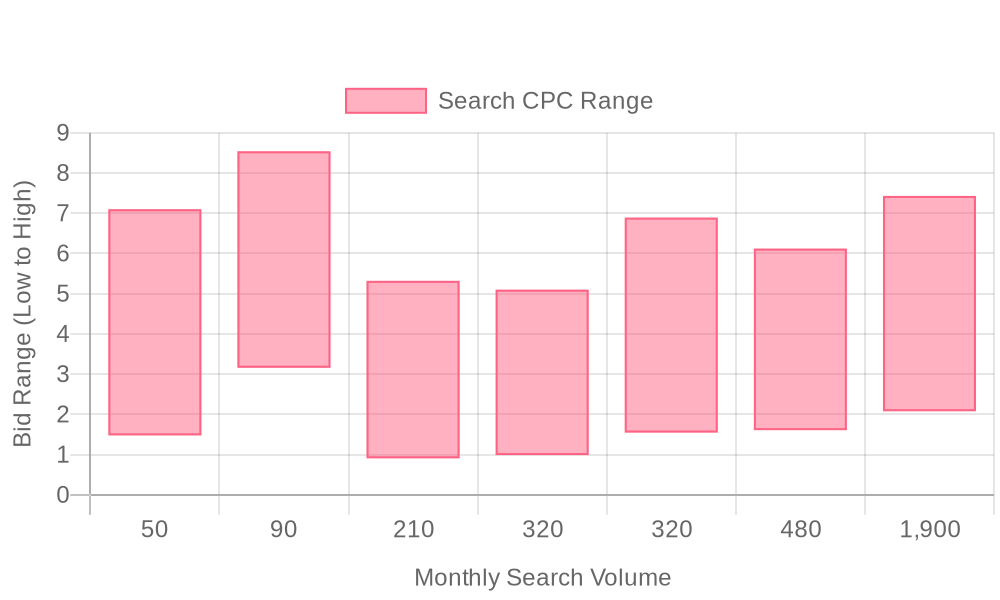
| Industry | Keyword | Monthly Search Volume | Competition Level | Low Bid | High Bid |
| Medical Equipment Repair | inogen oxygen concentrator repair service near me | 50 | MEDIUM | 1.48 | 7.1 |
| Medical Equipment Repair | ultrasound probe repair | 90 | LOW | 3.16 | 8.54 |
| Medical Equipment Repair | repair oxygen concentrator near me | 210 | MEDIUM | 0.91 | 5.32 |
| Medical Equipment Repair | oxygen concentrator repair near me | 320 | LOW | 0.99 | 5.1 |
| Medical Equipment Repair | hospital bed repair | 320 | LOW | 1.55 | 6.89 |
| Medical Equipment Repair | medical equipment repair near me | 480 | LOW | 1.61 | 6.12 |
| Medical Equipment Repair | medical equipment repair | 1900 | LOW | 2.08 | 7.43 |
Developing a high-impact keyword strategy for medical equipment repair marketing requires precision and technical fluency. Decision-makers in healthcare facilities search using urgent, problem-specific language, often referencing equipment models, error codes, or service immediacy. Capturing this demand hinges on a deep understanding of both clinical terminology and real-world operational pain points.
- High-intent repair keywords: Focused terms such as "emergency CT scanner repair," "biomedical equipment service contract," or "surgical instrument calibration" intercept buyers actively seeking solutions, not just information. Integrating granular keywords with geographic modifiers, like "ultrasound repair in Atlanta," increases relevance and lead quality. For industry-specific keyword research and sample lists, review this targeted keyword guide for medical equipment PPC.
- Device and manufacturer specificity: Targeted phrases that pair device types and brands, for example, "Philips ventilator maintenance" or "GE MRI troubleshooting," align ads with critical search moments and ensure your campaigns appear in front of those with immediate repair needs.
- Service urgency and compliance: Including urgency signals, such as "24/7 medical device repair" or "same-day autoclave service," appeals to healthcare buyers facing regulatory pressure and time-sensitive equipment failures.
Data-driven segmentation further amplifies keyword impact by matching audience segments to distinct service lines. Marketers can use Sona's Identity Resolution to pinpoint organizations and buyers demonstrating urgent intent, allowing for dynamic budget allocation toward those most likely to convert. This approach minimizes wasted spend on generic traffic and elevates your ads above less specialized competitors.
- Negative keywords: Apply comprehensive negative keyword lists to systematically filter out traffic from job seekers, DIY repair guides, equipment sales queries, and unrelated clinical services. This not only streamlines budget allocation but also protects campaign efficacy by directing ad spend toward qualified buyers. For more demand generation playbooks, explore our actionable playbooks.
- Continuous optimization: Weekly search query analysis reveals new irrelevant terms or shifting buyer language, ensuring negative keyword lists and positive targeting evolve alongside market dynamics. Such feedback loops, especially when paired with unified go-to-market data, empower revenue teams to refine campaigns rapidly and keep messaging tightly aligned with in-market demand.
Connecting your CRM and ad platforms allows marketers to sync enriched audience lists and lead data directly into Google Ads, maintaining up-to-date targeting as leads move through the funnel. Dynamic audience updates ensure campaigns remain relevant, drive higher engagement, and maximize returns on ad investments in the medical repair services sector.
Step-by-Step Campaign Execution Framework
Precision, speed, and credibility define the digital acquisition strategy for medical equipment repair providers. Executing an effective Google Ads campaign in this regulated sector demands a framework that prioritizes relevance, compliance, and actionable insights across every stage. For a comprehensive overview of medical device Google Ads strategies, explore this detailed playbook for developing effective PPC.
Step 1: Build Targeted Keyword Lists
A segmented keyword list is foundational for medical repair services seeking to drive high-intent inquiries. Cluster keywords by service line, such as "MRI calibration," "ventilator repair," or "CT scanner diagnostics", and layer geographic modifiers to ensure ads surface for local and regional healthcare buyers. Incorporating long-tail queries, like "emergency anesthesia machine repair in Dallas," aligns spend with urgent, purchase-ready prospects searching for specialized solutions. Negative keywords are equally critical, filtering out irrelevant clicks from equipment buyers, students, or job seekers. For additional keyword inspiration, review this curated list of targeted keywords for medical equipment PPC.
Data-backed targeting can be further refined by using Sona's Identity Resolution to reveal which companies and people are visiting your website, even those who don't fill out a form. This visibility transforms broad interest into actionable outreach, enabling marketers to build more granular keyword groups and prioritize budget for segments demonstrating genuine in-market intent.
The upgrade most medical equipment repair advertisers miss is going beyond raw keyword volume to layer in intent and identity signals. By connecting website-visitor data and CRM records with Sona Marketing Measurement, you can see which specific search terms bring in the accounts and customers that actually convert, and weight your keyword and bidding strategy toward those rather than the terms with the highest search volume alone.
Step 2: Develop Compelling Ad Copy
Ad copy must directly address the pain points of hospital administrators, biomedical engineers, and procurement leads, audiences for whom equipment downtime translates to operational risk. Use urgency-driven language that highlights response times, technical certifications, and compliance with industry standards. For example, phrases such as "24/7 rapid response," "ISO-certified repairs," or "minimize regulatory downtime" reinforce reliability and establish trust.
Real-time behavioral insights empower marketers to dynamically adjust messaging and highlight the most relevant service differentiators for each audience segment. By adapting creative based on the urgency and type of repair need, campaigns can deliver personalized value propositions that resonate with decision-makers facing immediate challenges. For a visual walkthrough of high-performing ad copy and campaign structure, watch this video walkthrough of Google Ads campaigns for medical device companies.
Step 3: Design Effective Landing Pages
Landing pages for medical equipment repair must demonstrate technical credibility and regulatory alignment from the first impression. Ensure on-page content mirrors the ad group’s targeted keywords, reinforcing message match and reducing bounce rates. Integrate trust elements such as certification badges, anonymized hospital testimonials, and case studies showcasing rapid resolutions for similar equipment issues.
Optimized landing experiences convert more effectively when decision-makers can immediately connect with a qualified expert or access resources tailored to their needs. Advanced visitor identification tools enable seamless routing of high-value prospects to specialized sales teams, while dynamic forms adapt to gather context-specific information, streamlining lead capture and qualification for complex B2B sales cycles. For further tips on improving landing page conversion rates, see these landing page optimization solutions for healthcare PPC campaigns.
Step 4: Implement Data-Driven Optimizations
Continuous optimization hinges on robust conversion tracking and a unified view of both online and offline engagement. Integrate phone call tracking, emergency request forms, and contract downloads to measure the true impact of each campaign. Importing offline service completion data closes the attribution loop, informing bidding adjustments and helping allocate budget to sources that drive the greatest service revenue. For guidance on importing ad platform cost data into Google Analytics, review this tutorial.
Connecting your CRM and ad platforms ensures that audiences and lead lists are continuously refreshed as accounts move through the buying journey. This dynamic sync allows for timely retargeting of decision-makers who show renewed intent, as well as suppression of audiences that have already converted, maximizing efficiency and ROI across every campaign touchpoint.
Sona Marketing Measurement closes the gap between clicks and revenue. It captures every ad click with first-party measurement, then ties that click through UTM capture and ad-platform APIs to the actual record in your CRM, and reports ROAS by keyword and campaign instead of by last-click form fill. Feeding that revenue signal back into Smart Bidding and Performance Max compounds over time: the algorithms optimize toward booked medical equipment repair revenue, not cheap leads.
Tips on Expanding Your Medical Equipment Repair Presence
Medical equipment repair providers can expand their market reach and deepen industry relationships by integrating advanced digital strategies that align with the nuanced needs of healthcare buyers. Focusing on cross-channel engagement, personalized messaging, and robust analytics ensures that every interaction resonates with the right decision-makers and supports consistent growth. For marketing teams ready to unify and activate their data across platforms, Sona Destinations offers seamless syncing of high-quality audience data, helping to align sales and marketing outreach in real time.
- Cross-promoting assets in retargeting campaigns: Continuously reinforcing your expertise throughout the sales cycle addresses drop-offs and keeps your brand top-of-mind. By leveraging visitor identification technology, marketers can move beyond anonymous web traffic, identifying which hospital procurement teams or clinical engineers have engaged with specific content or service pages. This intelligence allows for retargeting campaigns that serve relevant case studies, service videos, or value-driven offers to the right audience segments, closing critical gaps and re-engaging high-potential leads. Explore a video walkthrough of Google Ads campaigns for actionable PPC ideas to enhance your retargeting.
- Upselling additional services with segmented audiences: Segmenting your database based on service history, contract value, and engagement level enables targeted upsell opportunities. As audiences shift, such as when a facility completes its initial repair or enters a new contract phase, real-time audience syncing ensures that only the most relevant prospects receive tailored upsell messaging. For more on audience segmentation and dynamic targeting, review our playbook on buying stage segmentation.
- Partnering with industry associations and localizing by region: Collaborations with respected healthcare associations and regional organizations foster trust and credibility while tailoring outreach to local compliance requirements and equipment profiles. By enriching audience lists with association membership data or regional facility information, campaigns can be localized to highlight certifications, emergency response times, or regulatory expertise specific to each market. For additional strategies on localizing campaigns and building trust, see our comprehensive marketing guide for medical equipment manufacturers.
Successful execution in medical equipment repair marketing demands a strategic, data-driven approach that bridges keyword targeting, audience segmentation, compelling creative, and actionable analytics. Untracked conversions and fragmented data can undermine these efforts unless the right tools unify engagement signals and connect online interest with offline sales cycles. For guidance on bridging these gaps and maximizing ROI, visit our resource on measuring marketing's influence on the sales pipeline.
Beyond Google Ads: Winning the AI Answers Medical Equipment Repair Buyers Now Trust
Paid search captures demand at the moment someone types a query. But a fast-growing share of medical equipment repair buyers no longer start at Google at all, they ask ChatGPT, Gemini, or Perplexity before they ever run a search, and Google's own AI Overviews increasingly summarize an answer above the traditional results. If your business isn't referenced in those AI answers, you're invisible at the exact moment buyers build their shortlist.
Sona AI Visibility shows where your business shows up across ChatGPT, Gemini, Perplexity, Google AI Overviews, and 10+ engines, and, much like a keyword report, which prompts actually send you buyers, so you can prioritize the ones that convert. Run the two together and you cover the entire buyer path: get cited where buyers research (AI Visibility), then prove which of that demand turns into booked revenue (Marketing Measurement).
Helpful resources
Conclusion
Google Ads works for medical equipment repair because it meets buyers at the exact moment their equipment fails. Understanding your audience, following Google's advertising policies, and optimizing campaigns on an ongoing basis position your services where they're needed most, precisely when they're needed.
The repair companies that win the next few years of search will be the ones that treat Google Ads as one input among several, feeding conversion data back into bidding, connecting offline service outcomes to ad spend, and showing up in the AI-generated answers buyers now consult before they ever open a search bar. That combination, not any single tactic, is what will separate the vendors hospitals call first from the ones they never find.
To see how unified go-to-market data can drive these results for your business, start for free with Sona.
FAQ
What are the best practices for Google Ads in the medical equipment repair industry?
Best practices include using specialized terminology, refined targeting options, integrating Google Ads with CRM tactics, and focusing on high-value prospects to ensure timely engagement and efficient ad spend.
How can I target healthcare professionals effectively with Google Ads?
Target healthcare professionals by aligning ad content with decision-maker intent, using data-driven targeting, and creating ad groups that reflect segment-specific messaging to address potential conversions.
What are the compliance requirements for advertising medical equipment on Google?
Compliance requirements involve ensuring that ads and landing pages demonstrate technical credibility, regulatory alignment, and include trust-building signals such as certification badges and compliance expertise.
What keywords should I use for Google Ads focused on medical equipment repair?
Use high-intent repair keywords specific to devices and situations, such as 'emergency CT scanner repair' or '24/7 medical device repair,' and include negative keywords to filter out irrelevant traffic.
How do I measure the success of my Google Ads campaigns for medical equipment repair?
Measure success by monitoring conversion events like emergency call requests and form submissions, integrating online and offline engagement data, and using real-time analytics for ongoing optimization.







