


Marine insurance buyers, from yacht owners to fleet operators, often search only when a renewal deadline or a new vessel purchase forces the issue, and Google Ads is the tool that catches them at that exact moment. Many providers still lose these prospects because anonymous site visitors never make it into the CRM, so ad spend ends up chasing clicks instead of real decision-makers. Newer identification tools close that gap by surfacing which companies are actually on the site, and pairing that with Google Ads lets insurers intercept buyers precisely when they're comparing coverage. Done well, this means sharper targeting, better visibility for niche coverage types, and ROI measured through full conversion tracking rather than guesswork. This guide lays out a roadmap for turning Google Ads into a reliable source of qualified marine insurance leads.
How to Generate Marine Insurance Leads with Google Ads: A Step-by-Step Guide
Google Ads for Marine Insurance delivers measurable results by connecting high-intent prospects with tailored offerings at the moment of search. Revenue teams consistently see improved lead volume and conversion quality when campaigns are built on precise audience intelligence and seamless integrations across their tech stack.
A streamlined, data-driven approach eliminates the lag between lead generation and sales engagement that often plagues marine insurance advertising. By flagging visitors as soon as they engage with key content, marketers can prioritize outreach to those most likely to convert, capturing valuable opportunities that would otherwise slip away.
A robust PPC for marine insurance program starts with a granular keyword and audience strategy. Success hinges on understanding the unique language and needs of maritime businesses, yacht owners, and commercial operators, then translating these insights into targeted ad groups and negative keyword lists. Tools that surface in-market intent, such as identifying the exact companies visiting your site, enable teams to shift budget toward accounts with the highest conversion probability. For additional tactics tailored to the sector, this guide to SEO strategies for boat insurance outlines actionable ways to boost online visibility and maximize impact.
Optimized landing pages and ad creatives drive action when they are perfectly aligned with user search intent and campaign messaging. High-performing marine insurance campaigns use dynamic content that adapts to the visitor's industry segment, policy type, or geographic area, increasing relevance and boosting Quality Scores. Real-time analytics and conversion tracking further close the loop, enabling teams to measure the true ROI of their Google Ads strategies for insurance, including both online and offline policy sales.
Integrating Google Ads targeting for insurance with CRM and sales platforms allows for continuous audience enrichment and automated lead syncing. As prospects progress through the funnel, synced audiences update dynamically, ensuring that remarketing lists and lookalike segments remain accurate and actionable. Cross-channel strategies, such as retargeting high-value marine insurance leads on LinkedIn or Facebook, amplify results by meeting prospects wherever they continue their digital journey.
Marine insurance online marketing reaches its full potential when Google Ads is not an isolated tactic but a core part of a holistic demand generation ecosystem. By unifying lead data, surfacing real-time buyer intent, and embedding conversion insights into every campaign, B2B revenue teams can outpace competitors and deliver a seamless buying experience to every qualified prospect. If you're ready to elevate your approach, get started for free with Sona and see the difference firsthand.
Why Google Ads Matters for Marine Insurance

Marine insurance marketers operate in an environment where traditional digital analytics fail to reveal which businesses are truly engaging with high-value pages. Anonymous website traffic masks the intent and identity of commercial buyers, leading to missed opportunities and delayed sales cycles. The ability to identify website visitors and connect them to actual business accounts is crucial for turning hidden web traffic into qualified opportunities.
Google Ads empowers insurance teams to reach specialized maritime audiences, from yacht fleet managers to commercial vessel operators, at exactly the moment they signal purchase intent. Rapid campaign launch and keyword targeting ensure immediate visibility for marine insurance offerings, even in niche or emerging maritime regions. Explore effective SEO strategies for a boat insurance business in 2024 to complement your paid campaigns and maximize online visibility.
The platform’s integration capabilities allow teams to move beyond surface-level data, enabling identification of companies that interact with quotes, coverage calculators, or claims resources. This account-level granularity transforms follow-up by showing not just the volume, but also the quality and business context of each visitor. Using intent signal tracking helps prioritize the most engaged prospects and streamline sales outreach.
With modern data platforms, marketers can consolidate digital interactions, phone calls, and offline meetings into a single engagement view. This unified approach makes it easy to prioritize outreach to high-value leads, align sales and marketing resources, and measure ROI across every touchpoint, ensuring each marketing dollar supports both immediate conversions and long-term policy growth. For actionable insights on marketing analytics, visit the Sona blog.
The complexity of marine insurance demands agile audience building and automated response to real-time intent signals. Google Ads campaigns dynamically adjust to new market entrants, shifting regulatory requirements, and evolving customer profiles, keeping your brand at the forefront of insurance decision-makers. Integrated data analysis closes the loop between online lead generation and offline policy binding, delivering true performance clarity from initial click to signed contract. Ready to streamline your marketing? Get started for free with Sona.
Common Types of Google Ads Campaigns for Marine Insurance Services

Selecting the right Google Ads campaign type is crucial for marine insurance providers aiming to engage target audiences at every phase of their decision journey. Search, Display, Video, Performance Max, and remarketing each play a distinct role in driving marine insurance leads, nurturing prospects, and building brand credibility in a highly competitive space. For a breakdown of effective SEO strategies tailored for marine insurance, see this 2024 guide for boat insurance providers. To deepen your digital marketing expertise, explore additional expert insights on B2B marketing.
- Search Campaigns: These campaigns capture high-intent prospects actively searching for terms like “Google Ads for Marine Insurance” or “boat insurance quotes,” delivering text ads directly in relevant search results. By leveraging real-time audience and buyer intent data, marketers can prioritize spend on the most promising accounts, ensuring ads are shown precisely when decision-makers are seeking coverage solutions. Integrating CRM and ad platforms allows marine insurance providers to continuously refine their keyword targets and exclude low-fit queries, which reduces wasted ad spend and improves conversion rates.
- Display Ads: Display campaigns keep marine insurance brands visible as prospects conduct research across industry forums, news sites, and boating communities. These visually engaging banners reinforce brand awareness, educate potential buyers on specialized coverage, and maintain front-of-mind presence even after initial search interactions. Dynamic audience segmentation ensures ads are automatically updated as users move from initial interest to later funnel stages, so messaging remains relevant and increases the likelihood of conversion.
- Video Ads: Video campaigns help clarify complex marine insurance concepts and differentiate providers by showcasing expertise, claims processes, or unique coverage benefits. Short, targeted explainer videos can increase engagement on platforms like YouTube, reaching both business owners and individual boaters at scale. Detailed audience analytics enable precise budget allocation to high-performing segments, ensuring that each video dollar is spent where it matters most.
- Remarketing Campaigns: Remarketing re-engages visitors who previously explored quotes or policy details but did not convert, serving tailored ads that address their specific objections or information gaps. When visitor identification is unified across platforms, insurance marketers can deliver hyper-personalized offers based on the stage of the customer journey, increasing the impact of each touchpoint and driving more quote completions.
- Ad Assets: Assets such as sitelinks, callouts, and structured snippets enhance search and display ads with additional links, trust signals, and policy highlights. This not only improves click-through rates but also builds credibility in a field where trust is paramount. Real-time syncing of audience and intent data ensures that the most relevant assets appear for each user, supporting both lead generation and conversion goals.
By matching campaign type to funnel stage and leveraging unified audience data, marine insurance advertisers can increase qualified lead volume, reduce the cost of Google Ads for insurance, and achieve stronger ROI from their digital marketing for marine insurance.
Where to Find Growth Opportunities for Marine Insurance

Unlocking new growth in marine insurance requires a disciplined approach to keyword targeting and competitor analysis. By refining your PPC for marine insurance strategy, you can capture specialized demand across yacht, cargo, and commercial vessel segments that generic insurance campaigns routinely overlook. For actionable ideas on segmenting and prioritizing target audiences, explore our B2B marketing blog for expert guidance.
Vertical keyword targeting is a powerful first step. Expanding beyond broad terms to include policy-specific and regional intent phrases ensures visibility in high-value search moments. For example, targeting "hull coverage for fishing boats" or "marine insurance brokers in Miami" surfaces your offering to buyers with urgent, actionable needs. A comprehensive analysis of competitor gaps, using tools to map where rival policies dominate or falter, reveals untapped query spaces and ad placements. This process uncovers lucrative opportunities where your unique products and messaging can stand out, lowering cost per lead while boosting campaign relevance.
Accurately attributing ROI in marine insurance campaigns hinges on full-funnel conversion tracking. Many insurers miss revenue data from offline events, such as phone consultations or in-person quotes, skewing digital reporting and budget allocation. Advanced tracking solutions enable you to capture these interactions and tie them back to the original Google Ads touchpoint, providing a holistic view of each policy sale. When CRM and ad platforms are synchronized, enriched lead and customer data flows seamlessly into campaign audiences. This real-time sync empowers you to retarget high-potential prospects, suppress existing clients, and dynamically update audience segments as leads progress, ensuring your marine insurance advertising investment generates measurable results.
Industry-specific placements further amplify reach. Aligning your creative with digital content hubs, marina directories, and marine trade publications situates your brand within the decision-making ecosystem of boat owners and maritime businesses. Coupled with content retargeting strategies, you can re-engage website visitors who have interacted with educational resources or online quote tools, driving them back to high-conversion landing pages. As intent signals and account-level activity are unified, budget can be prioritized toward in-market leads, resulting in more efficient marine insurance online marketing and a tangible lift in both lead quality and policy close rates.
How to Apply Audience Segmentation for Marine Insurance

Audience segmentation is essential for marine insurance marketers aiming to convert specialized, high-value prospects efficiently. Segmenting audiences by vessel type, commercial versus recreational use, or geographic risk allows campaigns to align messaging and offers with the real needs of each segment, increasing relevance and conversion rates. For a deeper dive into actionable segmentation tactics, review effective SEO strategies for a boat insurance business in 2024.
Custom ad groups should reflect these distinctions. For example, separating campaigns for yacht insurance from those for commercial cargo coverage enables more precise keyword targeting and tailored ad creative. Incorporating real-time audience data, such as recent search activity or on-site engagement, further refines targeting by surfacing prospects actively researching marine insurance solutions.
Validating conversion paths requires seamless CRM integration to capture every key interaction, from initial click through to offline policy binding. When CRM and ad platforms are interconnected, enriched audience profiles can be synced into campaign targeting, ensuring follow-ups are personalized and timed to match where each prospect is in the buying journey. Unifying these data points provides revenue teams with a richer, contextual understanding of their audience, allowing for more adaptive retargeting, higher lead quality, and better attribution of both online and offline conversions.
This is also where measurement changes the economics. With Sona Marketing Measurement you can identify the companies and buyers behind your ad clicks, not just anonymous sessions, and segment audiences by who actually becomes a customer. That lets you build bid adjustments and audience signals around the segments that convert and de-prioritize the ones that don't, so you feed Google's algorithms "this click became a paying marine insurance customer" instead of just "someone filled out a form."
Keyword Strategy & Sample Target Terms
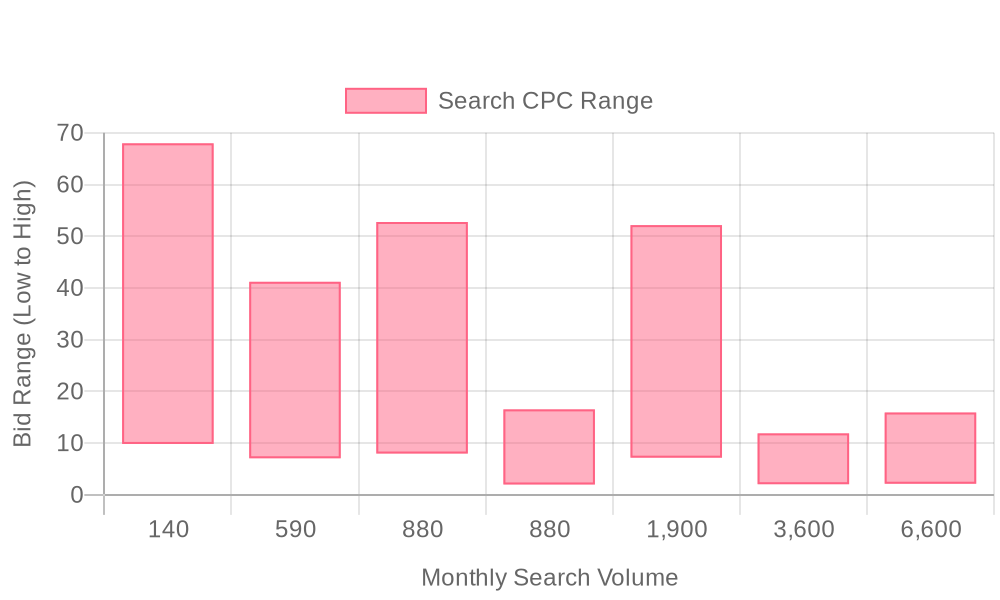
| Industry | Keyword | Monthly Search Volume | Competition Level | Low Bid | High Bid |
| Marine Insurance | small boat insurance | 140 | MEDIUM | 9.85 | 67.96 |
| Marine Insurance | marine insurance companies | 590 | LOW | 7.08 | 41.19 |
| Marine Insurance | boat insurance near me | 880 | LOW | 8 | 52.75 |
| Marine Insurance | geico marine insurance | 880 | LOW | 2.01 | 16.53 |
| Marine Insurance | marine insurance | 1900 | MEDIUM | 7.19 | 52.15 |
| Marine Insurance | geico marine | 3600 | LOW | 2.06 | 11.89 |
| Marine Insurance | inland marine insurance | 6600 | LOW | 2.16 | 15.92 |
Effective keyword strategy is the foundation of high-performing Google Ads for marine insurance. Success hinges on capturing the intent of prospects searching for specialized coverage, such as yacht protection, commercial marine liability, or vessel insurance. By focusing on specific, high-converting terms like "marine insurance advertising," "PPC for marine insurance," and "insurance marketing," marketers can ensure their ads appear precisely when decision-makers are most likely to act. A balanced approach means allocating budget between competitive, high-volume phrases and longer-tail keywords that signal urgent purchase intent or niche needs.
Targeting high-intent keywords improves lead quality and reduces wasted spend. For example, terms such as “marine insurance leads” and “digital marketing for marine insurance” attract business owners and brokers who are already evaluating providers, not just browsing. Marketers can leverage real-time audience insights to continuously refine keyword lists, shifting focus to what’s driving actual conversions. For actionable tactics tailored to this industry, review these effective SEO strategies for a boat insurance business in 2024.
Precision targeting goes beyond static keyword lists. Modern platforms enable marketers to identify website visitors at the company level, enriching audience pools with firmographic and behavioral signals. By synchronizing keyword targeting with CRM and ad platforms, marketers can update audiences and bids automatically as prospects progress from awareness to consideration, maximizing the effectiveness of every campaign and optimizing the cost of Google Ads for insurance.
Step-by-Step Campaign Execution Framework
Step 1: Build Detailed Keyword Lists
Effective marine insurance advertising begins with a focused, granular keyword strategy. Identifying service-specific queries such as "marine cargo insurance," "yacht liability coverage," or "commercial boat insurance" ensures that campaigns attract highly relevant prospects. Local modifiers like geographic regions, port cities, or coastal states refine targeting to reach buyers in specific boating communities, while negative filters exclude unrelated searches that drain budget. B2B marketers leveraging unified intent data see improved segmentation and can prioritize high-value maritime businesses or brokers, moving beyond basic keyword matching to surface in-market accounts primed for conversion. For actionable SEO tactics tailored for boat insurance providers to boost online visibility, review these effective SEO strategies for a boat insurance business in 2024.
The upgrade most marine insurance advertisers miss is going beyond raw keyword volume to layer in intent and identity signals. By connecting website-visitor data and CRM records with Sona Marketing Measurement, you can see which specific search terms bring in the accounts and customers that actually convert, and weight your keyword and bidding strategy toward those rather than the terms with the highest search volume alone.
Step 2: Develop Compelling Ad Copy
Developing ad creative for marine insurance campaigns means addressing the real risks and motivations of maritime professionals and vessel owners. Effective copy highlights industry credentials, such as years of experience insuring commercial fleets or expertise in handling complex claims for ocean-going vessels. Calls to action that emphasize urgency, such as “Protect Your Fleet Before Hurricane Season” or “Instant Quote for Dockside Liability”, increase engagement, especially when paired with confidence-boosting proof points. By integrating CRM and intent data, marketers can dynamically adjust messaging based on segment, ensuring leads see offers tailored to their risk profile or purchasing stage. This level of personalization elevates both clickthrough and conversion rates, driving measurable improvements in marine insurance leads.
Step 3: Design Effective Landing Pages
Landing pages tailored to marine insurance must maintain strict alignment with targeted ad groups and keywords. For instance, a campaign promoting yacht coverage should lead to a page featuring underwriter credentials, customer testimonials from boat owners, and clear summaries of policy benefits for maritime risks. Including trust signals, such as partnership logos, industry certifications, and regulatory compliance badges, addresses buyer skepticism and accelerates decision-making. Mobile optimization is essential, as many marine professionals access information while on the go; seamless load speeds and intuitive navigation directly correlate with higher conversion rates. Platforms that connect offline and online visitor data enable marketers to personalize landing page experiences for returning prospects, further boosting engagement and downstream policy sales.
Step 4: Implement Data-Driven Optimizations
Ongoing optimization transforms marine insurance PPC from a cost center into a scalable revenue engine. Conversion tracking must be set up to capture both online actions, like completed quote forms, and offline touchpoints, such as phone consultations or broker meetings. Integrating real-time attribution across digital and CRM sources allows revenue teams to see which campaigns accelerate pipeline, reduce cost per acquisition, and drive premium growth. For a comprehensive overview of digital marketing strategies for marine-related businesses, explore this digital marketing strategy. Automated bidding adjustments, powered by unified audience insights, let marketers shift budget toward high-converting segments or seasonal spikes in demand. As leads move through the funnel, dynamic audience updates ensure retargeting remains relevant and efficient, enabling ongoing improvement in Google Ads strategies for insurance and measurable growth in marine insurance campaigns.
Sona Marketing Measurement closes the gap between clicks and revenue. It captures every ad click with first-party measurement, then ties that click through UTM capture and ad-platform APIs to the actual record in your CRM, and reports ROAS by keyword and campaign instead of by last-click form fill. Feeding that revenue signal back into Smart Bidding and Performance Max compounds over time: the algorithms optimize toward booked marine insurance revenue, not cheap leads.
Tips on Expanding Your Marine Insurance Presence
Expanding your marine insurance presence requires a coordinated strategy that maximizes every digital touchpoint, connects with the right audiences, and leverages actionable data from each campaign. By cross-promoting assets and integrating your insights, you can ensure your marketing efforts reach high-value prospects across all digital channels.
Cross-promotion is essential for amplifying content marketing efforts in marine insurance. Promoting webinars, guides, and policy resources across social channels, email sequences, and industry partner websites not only increases visibility but also drives sustained engagement from professionals who rely on up-to-date risk management information. When these digital assets are mapped to segmented audiences, including boat owners, brokers, and maritime businesses, marketers can upsell or introduce additional services, such as liability add-ons or commercial coverage, at critical stages of the customer journey.
Audience segmentation also unlocks the ability to personalize marketing for marine insurance, ensuring that messages and offers align with the specific needs of each prospect. Advanced platforms allow marketers to identify website visitors by company and intent, going beyond anonymous web traffic. This enables teams to retarget maritime organizations that demonstrate in-market behavior, shifting budget toward high-converting accounts and maximizing the efficiency of marine insurance campaigns. As leads move through the funnel, dynamic audience lists update in real time, ensuring that remarketing efforts remain relevant and timely.
Partnering with marine industry associations further extends reach and credibility, especially when campaigns are localized to target regions with high concentrations of marinas, shipping companies, or recreational boating activity. Localization is more than just geo-targeting in Google Ads for Marine Insurance; it involves adapting ad creative, messaging, and offers based on regional risk factors, regulatory requirements, and seasonal trends. Using search data to identify trending policy topics or emerging risk concerns ensures your content pipeline stays fresh and competitive, capturing demand as new marine insurance queries arise.
A holistic approach, where every campaign, content asset, and audience segment is unified and activated with real-time data, empowers marine insurance marketers to capture more qualified leads, drive higher conversions, and grow market share in both established and emerging regions. By continually refining audience definitions, leveraging online and offline attribution, and syncing enriched lead data into both CRM and advertising platforms, teams can streamline their digital marketing for marine insurance and deliver measurable results.
Beyond Google Ads: Winning the AI Answers Marine Insurance Buyers Now Trust
Paid search captures demand at the moment someone types a query. But a fast-growing share of marine insurance buyers no longer start at Google at all, they ask ChatGPT, Gemini, or Perplexity before they ever run a search, and Google's own AI Overviews increasingly summarize an answer above the traditional results. If your business isn't referenced in those AI answers, you're invisible at the exact moment buyers build their shortlist.
Sona AI Visibility shows where your business shows up across ChatGPT, Gemini, Perplexity, Google AI Overviews, and 10+ engines, and, much like a keyword report, which prompts actually send you buyers, so you can prioritize the ones that convert. Run the two together and you cover the entire buyer path: get cited where buyers research (AI Visibility), then prove which of that demand turns into booked revenue (Marketing Measurement).
Helpful resources
Conclusion
Google Ads works for marine insurance because it meets buyers at the point of urgency, a renewal coming due, a new vessel purchase, a claim gone wrong with a current carrier. Sharpen targeting around those moments, and lead volume follows.
The providers who win in this category are the ones who treat identity and intent data as core infrastructure, not an add-on: they know which companies are researching coverage before those companies ever fill out a form, and they show up in AI-generated answers as well as search results. That combination, not just more ad spend, is what will separate market leaders in marine insurance from everyone else still guessing at attribution.
FAQ
How can I effectively use Google Ads for marine insurance?
Effectively using Google Ads for marine insurance involves targeting high-intent prospects with tailored offerings at the moment of search, prioritizing outreach to those most likely to convert, and integrating Google Ads with CRM and sales platforms for continuous audience enrichment.
What are the best practices for Google Ads in the marine insurance sector?
Best practices include understanding the unique language and needs of maritime businesses, using precise keyword targeting, optimizing landing pages, and leveraging dynamic content that aligns with user search intent and campaign messaging.
What budget should I allocate for Google Ads in marine insurance?
Budget should be allocated based on the identification of high-converting keywords and audience segments, prioritizing spend on accounts with the highest conversion probability and ensuring continuous adjustments based on campaign performance and audience insights.
How do I measure the success of my Google Ads campaigns for marine insurance?
Success is measured through comprehensive conversion tracking that includes both online and offline interactions, real-time analytics, and ROI analysis, ensuring each marketing dollar supports conversions and policy growth.
What keywords should I target for marine insurance Google Ads?
Target keywords should include specific, high-converting terms like 'marine insurance leads,' 'digital marketing for marine insurance,' and other terms that reflect urgent purchase intent or niche needs related to marine insurance.







