


Marine contractors win projects in the narrow window between a storm surge or a failed inspection and a competitor's phone ringing first. Missed opportunities often arise when high-value prospects go untracked because of thin CRM integration or manual follow-up that lets a hot lead cool. Google Ads gives contractors a way to reach port authorities, marina operators, and facility managers exactly when they're searching for seawall repair, dock construction, or emergency marine response. This guide walks through targeting, budget, and keyword strategy for Google Ads in the marine contracting trade, and how to connect that spend to the offline sales process that ultimately closes the deal.
How to Generate Google Ads for Marine Contractors Leads with Google Ads: A Step-by-Step Guide
A data-driven approach to paid search lets marine contractors target high-value prospects with precision and stop paying for unqualified clicks. Prioritizing analytics and intent signals means campaigns can be refined continuously to reach revenue that traditional advertising tends to miss.
One-size-fits-all strategies dilute ROI and miss the nuances of the marine industry, where a single storm or a failed dock inspection can turn a browsing facility manager into an urgent buyer overnight. Success demands a Google Ads plan built around that reality: campaigns that identify and engage prospects at the moment they start searching for specialized marine construction or repair work. Marine contractors can adapt this step-by-step Google Ads setup for boat ferry companies to structure campaigns for industry-specific results.
- Data-Driven Paid Search in the Marine Sector: Google Ads works best for marine contractors when it reflects market-specific patterns, seasonal demand spikes after storms, permitting cycles tied to port expansion projects, or the urgency that follows a failed Coast Guard or environmental inspection. Contractors who track these patterns can shift budget quickly to capture the surge, keeping spend aligned with real opportunity rather than a fixed monthly plan. Integrating campaign data with Sona's Buyer Journeys supports sharper audience segmentation and messaging, so every impression is built for conversion.
- Targeting High-Intent Marine Prospects: In competitive marine contractor markets, broad targeting or generic keywords waste spend and lose deals. Advanced targeting starts with high-intent queries like "emergency seawall repair" or "commercial dock construction near me," which surface urgent leads before a competitor even enters the conversation. Layering in Sona's Audiences means campaigns reach the right project managers, procurement officers, and facility owners, not just any searcher. Sona's Identity Resolution builds on this by identifying which companies are visiting your site, so target account lists update automatically as new in-market activity emerges.
- Aligning Landing Pages and Ad Creative for Maximum Impact: Marine industry buyers weigh trust, compliance, and expertise before they'll engage a contractor; generic messaging won't close that gap. Effective Google Ads for marine contractors align ad copy and landing pages with regulatory requirements, environmental standards, and project urgency. Dynamic content swaps let a facilities manager see compliance documentation while a marina owner sees maintenance offers, each version increasing the odds of conversion. This alignment reduces bounce rates and shortens the path from click to signed contract.
- Ongoing Optimization for Higher ROI: Static campaigns lose relevance as market conditions and buyer intent shift. Marine contractors maximize PPC performance by segmenting audiences on real-time intent signals, prioritizing high-value accounts, excluding irrelevant traffic, and reallocating budget as conditions change. Unified campaign and CRM data lets marketers measure both online and offline conversions, attribute real revenue to ad spend, and find optimization opportunities on an ongoing basis. Automated audience syncing means that as leads progress or drop out, targeting adjusts instantly, keeping campaigns efficient and pipeline moving.
Why Does Google Ads Matter for Marine Contractors?

Marine contractors operate in a field where niche demand and project urgency frequently dictate business success. Google Ads offers a direct line to specialized, high-value segments that generic outreach methods often overlook, enabling contractors to connect with prospects actively searching for marine construction, seawall repair, or vessel maintenance.
Digital marketing for marine contractors must prioritize lead quality and response speed to win competitive bids and urgent projects. By aligning Google Ads campaigns with CRM workflows, teams ensure that every high-intent inquiry receives immediate attention, turning time-sensitive searches into contracted work before competitors respond.
Seasonal surges and weather-driven emergencies demand fast adaptation. Google Ads lets marine businesses adjust messaging, budgets, and targeting based on real-time audience signals, cutting out the bottlenecks of slow, manual processes. With integrated analytics and dynamic audience updates, marine contractors can concentrate spend on the accounts most likely to convert, capturing peak-season demand while it lasts. To streamline campaign execution and measurement, get started for free with Sona.
Common Types of Google Ads Campaigns for Marine Contractor Services

- Search Campaigns: Search campaigns are the primary driver for capturing high-intent leads in marine contracting. These campaigns target prospects actively looking for services like seawall repair, port construction, or emergency marine response, often using the Responsive Search Ads format to test headline and description combinations. Focusing spend on keywords tied to urgent or project-based marine needs keeps budget away from generic, low-value clicks. With Sona's Identity Resolution, marketers can see which companies are searching for their services, so teams prioritize follow-up with verified commercial buyers instead of casual browsers.
- Display Ads: Display advertising keeps a marine contractor's brand visible across industry-relevant content sites and forums. These campaigns work well for nurturing early-stage buyers and building awareness among stakeholders who influence contracting decisions. Using Sona's Audiences, display ads can be shown to decision-makers in targeted segments such as port authorities, marina operators, and commercial property managers. For a deeper dive into how marine businesses can drive growth through Google Ads, see this step-by-step guide for boat ferry companies.
- Video Ads: Video campaigns give marine contractors a visual way to explain complex construction services and showcase project case studies, useful for differentiating technical capability and demonstrating safety standards. Sona's Marketing Measurement gives marketing teams visibility when a prospect watches a key segment, enabling synchronized outreach or personalized remarketing. This connects digital engagement with sales pipeline activity, leading to faster, more relevant follow-up.
- Remarketing: Remarketing campaigns allow marine contractors to re-engage site visitors who have demonstrated interest but not yet converted. Messaging can be tailored to reflect the specific services or pages viewed, increasing the relevance and urgency of each touchpoint. Dynamic Sona Audiences ensures that remarketing lists evolve as leads interact with pricing tools, download project specs, or request consultations. This ongoing segmentation improves engagement rates and accelerates the path from initial inquiry to signed contract.
- Use of Assets: Ad assets (formerly called extensions) significantly enhance the visibility and credibility of marine contractor ads. Adding location, phone, credential verification, and service-specific callouts presents the trust signals that matter in B2B decision-making. These assets help filter out unqualified leads and drive action from prospects who need proof of licensing, insurance, or regulatory compliance. Sona's Marketing Measurement ties these ad interactions directly to CRM records, giving a complete view of each lead's journey from click to contract.
Where to Find Growth Opportunities for Marine Contractors

Niche and specialty service keywords are a critical lever for marine contractors seeking reliable lead flow and reduced acquisition costs. By targeting phrases like “emergency seawall stabilization,” “commercial dock construction,” or “jetty repair for marinas,” you ensure every impression and click aligns with buyers actively searching for high-ticket marine solutions. For a deeper dive into optimizing your strategy, see this guide to Google Ads for marine customers. This approach delivers greater relevance, filters out lower-intent audiences, and preserves budget for inquiries most likely to move forward.
Competitor gap analysis helps marine businesses find overlooked segments and capitalize on gaps in the market. Auditing competing ad campaigns and SERP visibility can reveal regions, service types, or vessel classes where demand is outpacing supply. Smart advertisers use these insights to inform creative, adjust bidding, and allocate spend toward high-ROI micro-markets that competitors ignore. Explore more tactics for finding and sizing new opportunities in our guide to TAM, SAM, and SOM calculation.
Expanding placements onto trade-specific directories, industry forums, and marine engineering platforms exposes your firm to high-intent visitors during critical decision phases. These placements capture demand beyond standard search, reaching procurement officers and facility managers researching vendors or compliance partners. Paired with Sona's Identity Resolution, you can move beyond anonymous traffic, see which companies are in-market in real time, and route warm leads to sales with full context. This unified, intent-driven approach lets marine contractors focus resources on the most promising projects, shortening the path from digital engagement to signed contract. To see how this works in practice, get started for free with Sona.
How to Apply Audience Segmentation for Marine Contractors

Marine contractors require a focused approach to digital marketing that distinguishes between commercial and private sector clients. Effective audience segmentation enables teams to deliver relevant messages at every stage of the buying journey, maximizing lead quality and campaign efficiency. For more guidance on segmentation and B2B strategies, explore our essential guide to account-based marketing.
- Define core audience segments: Start by segmenting your market into commercial sectors, such as port operators, shipyards, logistics firms, and private sector clients like waterfront property owners or marina managers. Each group displays unique procurement timelines, budget sensitivities, and decision-making processes. By defining these categories, your campaigns can speak directly to the needs and priorities of each audience, ensuring your message cuts through industry noise.
- Overlay intent signals for advanced targeting: Enhance these segments by layering in intent signals such as urgent maintenance needs or upcoming project implementations. Monitoring behaviors like repeated visits to your marine construction services page or downloads of bid specification documents helps you identify prospects preparing for imminent contracts. Dynamic audience updates let you adapt to changes in real time, ensuring your ads reach stakeholders at the precise moment their intent peaks. This approach also allows you to shift spend toward in-market accounts showing high-value activity, giving you a competitive edge in critical windows. For actionable steps on campaign setup, refer to this step-by-step Google Ads guide.
- Create specialized ad groups and budgets: Build ad groups tailored to each segment, using messaging that matches their project requirements and industry language. Commercial marine contractors may respond to ads emphasizing compliance, bulk capabilities, or rapid bid response, while private-sector campaigns benefit from messaging around property value and fast turnaround. Assigning budgets by audience group prevents over-investment in low-conversion segments and allows more precise resource allocation. Enriched with CRM data and Sona's Identity Resolution, these ad groups can be further refined by company size, project type, or historical engagement, so campaigns reach only the most relevant and profitable prospects.
Audience segmentation in marine contractor advertising lets marketers personalize engagement, cut wasted spend, and move pipeline faster. Using real-time audience data, intent tracking, and continuous refinement keeps campaigns agile as the marine industry landscape shifts season to season.
This is also where measurement changes the economics. With Sona Marketing Measurement you can identify the companies and buyers behind your ad clicks, not just anonymous sessions, and segment audiences by who actually becomes a customer. That lets you build bid adjustments and audience signals around the segments that convert and de-prioritize the ones that don't, so you feed Google's algorithms "this click became a paying marine contractors customer" instead of just "someone filled out a form."
Keyword Strategy & Sample Target Terms
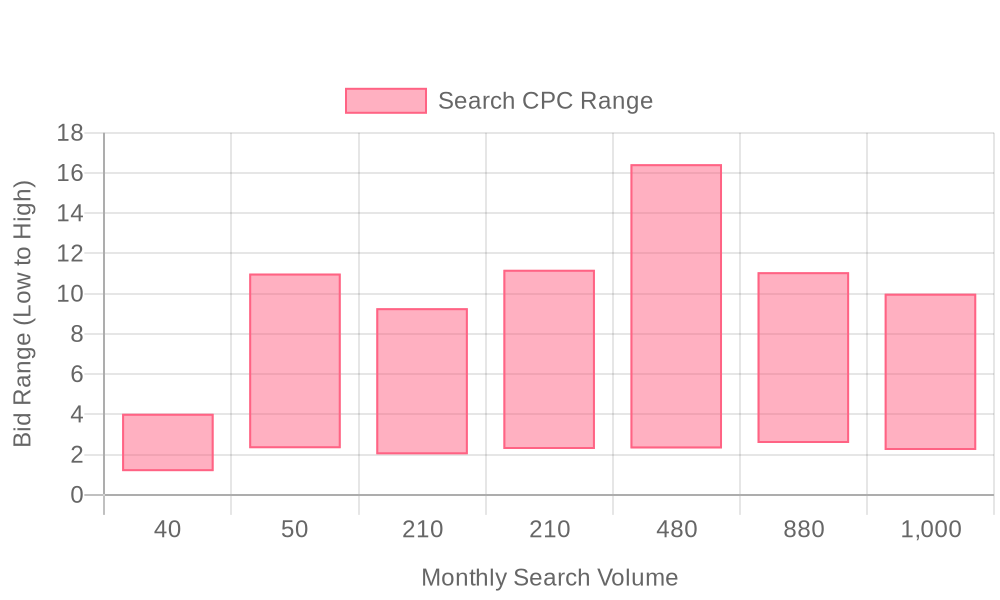
| Industry | Keyword | Monthly Search Volume | Competition Level | Low Bid | High Bid |
| Marine Contractors | marine flooring installers near me | 40 | LOW | 1.18 | 4.03 |
| Marine Contractors | marine dock builders near me | 50 | LOW | 2.32 | 11 |
| Marine Contractors | dock contractors near me | 210 | LOW | 2.02 | 9.28 |
| Marine Contractors | marine construction companies near me | 210 | LOW | 2.28 | 11.19 |
| Marine Contractors | marine contractors near me | 480 | LOW | 2.31 | 16.44 |
| Marine Contractors | marine construction near me | 880 | LOW | 2.58 | 11.07 |
| Marine Contractors | marine contractors | 1000 | LOW | 2.23 | 10 |
A precise keyword strategy for marine contractors drives high-quality leads while minimizing wasted ad spend. Selecting industry-specific, intent-driven keywords ensures ads appear for decision-makers actively seeking marine construction, repair, or specialty services. By focusing on phrases that reflect urgent needs or specialized projects, advertisers can surface offerings to procurement officers, port managers, and facility operators with immediate requirements. For more tactical guidance, explore this step-by-step guide to Google Ads for boat ferry companies. Keyword matching options let you control how closely a search term must match your selected phrases to trigger your ad, giving you fine-grained control over relevance and spend.
Long-tail keywords refine targeting by capturing the nuanced language used in commercial marine contracting. For example, targeting “emergency seawall repair Miami,” “bulkhead construction for ports,” or “commercial marina piling contractor” attracts stakeholders searching for exactly those services. These granular terms often yield lower cost-per-click and higher conversion rates by filtering out residential and non-commercial traffic. Incorporating service modifiers such as “licensed marine contractor” or “coastal erosion mitigation firm” further sharpens campaign focus, see more campaign optimization tips in our blog on maximizing Google Ads data in Analytics.
Negative keyword lists are essential for campaign efficiency. By excluding terms like “DIY,” “jobs,” “cost calculator,” or “residential,” contractors avoid irrelevant clicks from non-buyers or general inquiries. Proactive negative keyword management not only preserves budget but also boosts click-through rates and engagement, as ads reach only those with genuine purchasing intent. Regular reviews of search query reports reveal new exclusion opportunities, allowing teams to adapt quickly as market language evolves.
Company-level identification lets marketers pinpoint not just search terms but also the organizations behind each click. This insight enables a shift in budget toward high-value accounts showing in-market intent. As leads progress, dynamic audience segments update in real time, keeping ad dollars focused on the most conversion-ready prospects. When CRM and ad platforms are in sync, enriched keyword and audience data flow directly into Google Ads, maintaining campaign relevance and delivering measurable results across both online and offline interactions. To see how these strategies can work for your team, get started for free with Sona.
Step-by-Step Campaign Execution Framework
Step 1: Build Targeted Keyword Lists
Marine contractors benefit from a granular keyword approach that reflects both service specialization and the nuances of local market demand. Successful campaigns begin by categorizing keywords based on core offerings, such as "seawall repair," "dock construction," "marine piling," or "emergency barge services", then layering in location-based modifiers. This structure ensures your ads surface for high-intent searches like "marine contractor Miami" or "commercial dock repair Seattle," capturing qualified leads precisely when they are evaluating vendors. Measuring geographic performance helps track which regions and location modifiers deliver the best conversion outcomes. For a detailed walkthrough on setting up Google Ads in this industry, explore this step-by-step guide for boat ferry companies.
Applying negative keywords is equally critical to prevent wasted spend and keep analytics clean. Filtering out terms like "DIY," "jobs," or "free estimates" eliminates unqualified clicks and sharpens targeting. Syncing keyword lists with real-time audience data from CRM systems lets marketers dynamically prioritize high-value segments as market conditions shift. With Sona's Identity Resolution, teams move beyond anonymous site visits to see which companies are engaging with each service line, enabling proactive budget allocation to the most promising accounts.
The upgrade most marine contractors advertisers miss is going beyond raw keyword volume to layer in intent and identity signals. By connecting website-visitor data and CRM records with Sona Marketing Measurement, you can see which specific search terms bring in the accounts and customers that actually convert, and weight your keyword and bidding strategy toward those rather than the terms with the highest search volume alone.
Step 2: Develop Compelling Ad Copy
The marine industry’s complex challenges, tight project timelines, safety demands, regulatory compliance, should be front and center in ad headlines and descriptions. Headlines like "24/7 Seawall Emergency Response" or "OSHA-Compliant Dock Construction Crew" directly address the pain points of port authorities, facility managers, and developers. Integrating proof elements such as certifications, insurance coverage, and project success stories builds trust and reassures decision-makers that your team is equipped to deliver with precision. Explore additional best practices for optimizing Google Ads in the marine industry to maximize your ad performance.
Including dynamic callouts and structured snippets further differentiates your offering, showcasing breadth and depth of expertise without crowding the creative. By leveraging intent data, marketers can tailor messaging to reflect a prospect’s specific needs, such as referencing recent local storm surges or regulatory updates. With real-time insights into which organizations are interacting with your ads, copy variations can be rapidly tested and optimized for the highest-converting audience segments.
Step 3: Design Effective Landing Pages
Landing pages for marine contractor campaigns must align tightly with each ad group, confirming immediately that visitors are in the right place for their specific need, whether that's "bulkhead installation" or "pier restoration." Concise service summaries, trust badges, and galleries of completed projects provide clarity and authority. Lead forms should capture the essential details for prompt follow-up, while CRM-connected dynamic audience lists route prospects to the right sales rep without delay. For more inspiration, see how PPC and SEO work together to drive marine business results.
Company-level identification lets teams personalize the landing page experience based on the visiting organization or its intent. A port operator might see expedited bid request options, while a property manager is guided to maintenance packages. This data-driven personalization increases conversion rates and feeds enriched lead profiles directly into marketing automation and CRM systems, closing the loop between digital engagement and real-world project wins. If you're ready to put these strategies into action, get started for free with Sona and unlock advanced campaign insight and automation.
Tips on Expanding Your Marine Contractor Presence
Modern marine contractors can elevate their brand and capture more project-ready leads through a strategic mix of digital marketing and relationship-driven outreach. By using performance-driven Google Ads strategies tailored for marine businesses, these teams consistently engage high-value prospects, nurture them through the buying journey, and influence key decision-makers across both online and offline channels. For more proven tactics, explore our collection of actionable marketing playbooks.
- Use retargeting for education: Retargeting lets marine contractors reinforce their expertise by serving educational content to prospects who engaged but haven't yet converted. This keeps the contractor's brand top of mind while covering complex services like seawall reinforcement, dredging, or vessel maintenance. Company-level identification helps ensure educational ads reach stakeholders at commercial marinas, ports, or fleet operators, not just anonymous browsers, enabling better nurture sequences as a prospect's intent signals move from research to decision.
- Highlight upsell opportunities with CRM audiences: Using enriched CRM data, marine contractors can segment their audiences based on service history, project type, or budget cycles. This enables highly customized engagement plans, such as targeting marina owners who recently completed dock repairs with ads for ongoing maintenance contracts or corrosion prevention services. When CRM data syncs seamlessly with Google Ads, audiences automatically update as leads progress through the sales funnel, ensuring that upsell and cross-sell efforts are always relevant and timely. This dynamic approach improves both lead quality and deal velocity.
- Network and co-brand for referral growth: Collaborating with industry associations and partners opens up valuable referral traffic streams. By participating in association directories and targeted events, marine contractors can position themselves as trusted authorities. Co-branded ads, delivered to shared audiences or event participants, reinforce the contractor’s competitive strengths and broaden recognition throughout the marine industry ecosystem. Integrating campaign performance data with CRM records reveals which partnerships deliver the best-qualified traffic, allowing marketing budgets to shift toward channels with the highest ROI.
Folding Google Ads into a marine contractor's broader marketing and sales strategy sharpens targeting, budget allocation, and resource use. When campaign, CRM, and web analytics data unite, contractors get a full view of the customer journey from first ad click to signed contract. Applying these data-driven tactics and optimizing continuously on conversion signals can meaningfully improve both digital visibility and on-the-water business, giving every lead the tailored engagement that turns clicks into contracts across the marine sector.
Beyond Google Ads: Winning the AI Answers Marine Contractors Buyers Now Trust
Paid search captures demand at the moment someone types a query. But a fast-growing share of marine contractors buyers no longer start at Google at all, they ask ChatGPT, Gemini, or Perplexity before they ever run a search, and Google's own AI Overviews increasingly summarize an answer above the traditional results. If your business isn't referenced in those AI answers, you're invisible at the exact moment buyers build their shortlist.
Sona AI Visibility shows where your business shows up across ChatGPT, Gemini, Perplexity, Google AI Overviews, and 10+ engines, and, much like a keyword report, which prompts actually send you buyers, so you can prioritize the ones that convert. Run the two together and you cover the entire buyer path: get cited where buyers research (AI Visibility), then prove which of that demand turns into booked revenue (Marketing Measurement).
Helpful resources
Conclusion
The contractors who pull ahead won't just run more ads, they'll be the ones whose Google Ads spend is tied to CRM data tight enough to know which keyword, which account, and which season actually produced a signed contract. That's the difference between advertising and a pipeline.
Now take the next step. Start for free and see what a Google Ads strategy built for marine contractors, not generic B2B advice, can do for your pipeline.
FAQ
What are the best practices for using Google Ads as a marine contractor?
Marine contractors should use data-driven approaches, integrate CRM for seamless lead tracking, and align ad copy with industry-specific needs to effectively capture high-intent leads.
How can marine contractors effectively target their audience with Google Ads?
Contractors can use advanced targeting strategies with high-intent keywords like 'emergency seawall repair', and utilize tools like Sona's Audiences to focus on decision-makers in the marine industry.
What budget should marine contractors allocate for Google Ads campaigns?
Budget allocation should be dynamic and data-driven, shifting based on real-time demand spikes like seasonal surges and market opportunities to maximize ROI.
What keywords should marine contractors focus on for Google Ads?
Focus on industry-specific, intent-driven keywords such as 'commercial dock construction' or 'jetty repair for marinas' to attract decision-makers actively seeking these services.
How can I measure the success of my Google Ads campaigns as a marine contractor?
Success can be measured by integrating Google Ads with CRM systems to track both online and offline conversions, and by continuously optimizing campaigns based on real-time intent signals.







