


A homeowner shopping for coverage after a storm, or right after closing on a house, searches Google within minutes, not weeks. Google Ads matters for home insurance because it catches that buyer at the exact moment of urgency, then lets marketers tie that click through to a bound policy, not just a form fill. Home insurance companies that get this right combine precise targeting with measurement that spans both digital and offline touchpoints. Many still struggle to find high-intent prospects, measure true ROI, or keep pace in fast-growing markets. Advanced tools and integrated strategies close those gaps.
How to Generate Home Insurance Leads with Google Ads: A Step-by-Step Guide

Home insurance marketers now have access to advanced data-driven strategies that filter out noise and put ad spend in front of verified buyers, not just generic web visitors. By leveraging precise intent signals and enriching audience profiles, campaigns can target homeowners at the exact stage of their buying journey, leading to more efficient lead generation and better conversion rates.
A structured approach to Google Ads for home insurance goes beyond basic keyword bidding. Marketers who identify and import high-intent buyer signals into their advertising workflows can consistently reach real decision-makers, minimizing wasted impressions and elevating campaign ROI. Insurance PPC playbook explores strategies that help insurance marketers achieve greater efficiency as digital channels become more competitive.
- Deploy A Data-driven Approach For Home Insurance-specific Targeting: Effective home insurance advertising starts with accurately identifying in-market prospects. Instead of relying on anonymous website traffic, modern solutions let marketers pinpoint visitors at the company and individual level, matching ad delivery to those with verified purchase intent. Sona's Identity Resolution helps marketers recognize and prioritize high-converting accounts, increasing the efficiency of insurance lead generation.
- Implement Keyword And Audience Strategies Focused On Homeowners: Segmentation is key. By distinguishing between new buyers, policy renewals, and high-risk segments, marketers can tailor keywords and audience lists for maximum relevance. Dynamic audience syncing ensures that as leads move through the funnel or change intent, Google Ads audiences are updated automatically, keeping messaging hyper-targeted and preventing wasted ad spend.
- Align Landing Pages And Ad Creatives To Drive Conversions: Consistency between ad copy and landing page experience is critical for converting clicks into qualified home insurance leads. Best practices include clear value propositions, streamlined forms, and persuasive calls to action. Top insurance landing pages provide examples of high-performing layouts that increase engagement and lead quality.
- Optimize Performance Continually To Improve Roi: Advanced measurement capabilities capture both online and offline events, attributing each conversion to the correct channel or touchpoint. When home insurance marketers integrate these insights, they can pinpoint which keywords, creatives, or audience segments are driving policies, not just clicks. This full-funnel attribution delivers a clearer view of true ROI and supports smarter budget reallocation.
- Integrate Across Channels For A Cohesive Marketing Strategy: Home insurance marketing works best when Google Ads is connected seamlessly with other platforms. Syncing CRM systems and ad platforms keeps audience lists enriched and up to date, ensuring that messaging remains consistent as leads engage across email, social, and paid search. For more on multi-channel data enrichment, see our guide on cold outreach with visitor intelligence.
This guide is designed for marketers and entrepreneurs who seek efficient home insurance lead generation using the latest in data-driven targeting, dynamic audience management, and measurement innovation.
Why Does Google Ads Matter for Home Insurance?

Modern home insurance providers face a landscape where intent-driven marketing is the difference between a quote request and a lost lead. Google Ads for home insurance empowers teams to engage in-market buyers who are actively researching policies, allowing brands to reach decision-ready customers at the pivotal point of consideration.
Unlike passive awareness channels, Google Ads aligns messaging with urgent needs, such as post-disaster protection or new home purchases, capitalizing on moments when consumers are most likely to convert. Tailored campaigns adapt quickly to shifting demand, ensuring that offers remain relevant and timely as market conditions change. Insurance PPC strategy provides practical examples of campaign structures that respond to evolving consumer intent.
- Complex Audience: Insurance advertising on Google enables teams to move beyond broad demographic targeting by pinpointing users who demonstrate strong search intent. This approach increases lead quality and supports precision in reaching first-time homebuyers or those seeking policy upgrades.
- High-value Services: PPC for home insurance is uniquely positioned to attract high-intent traffic from buyers comparing coverage options. These are prospects ready to take action, making every click an opportunity for efficient customer acquisition.
- Rapid Demand Response: Home insurance marketing thrives on agility. Google Ads allows for instant campaign adjustments in response to events like storms or wildfires, so providers can surface relevant offers to homeowners affected by real-world events.
- Regional Visibility: Targeting homeowners on Google Ads has never been more precise. Geotargeting ensures campaigns reach emerging suburban markets, optimizing spend by focusing on high-growth regions and customizing messaging to local risks or regulations.
- Integrated Analytics: Data from Google Ads feeds into broader marketing intelligence, where advanced solutions identify which leads are converting and tie online engagement to offline policy sales. This integration closes the loop, providing B2B revenue teams with attribution models that reveal which tactics truly drive ROI and inform future budget allocation. For more on connecting ad performance to revenue, see our guide on revenue attribution.
Common Types of Google Ads Campaigns for Home Insurance Services
The campaign types below cover the main formats home insurance advertisers rely on. Performance Max, which pools Search, Display, YouTube, and other Google inventory into a single automated campaign, is increasingly used alongside these to widen reach without added manual management.
- Search Campaigns: Search campaigns target potential customers who are actively searching for home insurance quotes, coverage options, or local providers. These high-intent queries, such as “home insurance quotes near me,” give marketers a direct path to engage prospects ready to compare or purchase policies. When integrated with real-time visitor identification, revenue teams can shift budget toward high-converting queries and accounts, ensuring every ad dollar focuses on the most promising opportunities. Solutions such as visitor identification help teams pinpoint which site visitors are most likely to convert from these high-value queries.
- Display Ads: Display campaigns help keep your brand top-of-mind across the web for homeowners researching protection, renovations, or mortgage services. These ads are especially effective for remarketing, re-engaging users who visited your site but left without requesting a quote. Leveraging dynamic audience capabilities allows marketers to update and refine targeting as users’ online behavior signals a shift in purchase intent, maximizing the value of each impression. Insurance PPC strategies provide a deeper look at strategies for maximizing display ad effectiveness in insurance.
- Video Ads: Video campaigns enable insurers to visually convey the advantages of their services, from policy benefits to customer testimonials. Short, compelling videos create memorable impressions and can quickly build trust with homeowners considering coverage options. Dynamic segmentation ensures these visual ads reach audiences who have already shown interest in home insurance, increasing engagement and recall.
- Remarketing: Remarketing campaigns surface your brand to warm leads who previously interacted with your site or landing pages but didn’t convert. Advanced remarketing tools now allow segmentation by engagement level or specific policy interests, so messaging aligns with each prospect’s stage in the funnel. Real-time syncing between CRM and ad platforms ensures that audience lists are always current, so no valuable lead falls through the cracks. For more on intent-based remarketing, check out our guide on retargeting strategies.
- Assets: Ad assets, such as sitelinks, callouts, and review snippets, increase the footprint and credibility of your ads. This additional information reassures potential customers, highlights unique selling points, and guides users seamlessly toward conversion. When assets are automatically enriched with unified data from marketing and CRM systems, they bring timely, relevant proof points directly into search results, supporting higher click-through and conversion rates.
Where to Find Growth Opportunities?

Growth in home insurance advertising demands a shift beyond crowded, traditional channels. Revenue teams that prioritize precision targeting and data-driven expansion can secure a competitive edge by identifying underexploited digital opportunities.
- Niche Keyword Targeting: Focusing on specific, intent-rich keywords in the home insurance sector allows marketers to capture prospects overlooked by broader campaigns. For example, keywords tied to local events or specialized coverage types (like "wildfire home insurance in Colorado" or "high-value home policies") often have less competition and higher conversion rates. Insurance Google Ads provides a deeper look at this trend.
- Auction Insights Analysis: Leveraging auction insights within your PPC for home insurance campaigns identifies gaps where competitors are underserving the market. By analyzing impression share, overlap, and position above rate, marketers can pinpoint specific times, geographies, or device types where their ads can gain traction with refined messaging. For more insights on optimizing PPC campaigns, check out our guide on Boosting Google Ads ROAS.
- Industry Site Placements: Securing ad placements on high-authority home and property insurance portals builds trust while capturing prospects further down the funnel. These placements, especially when synchronized with CRM and ad platforms, enable teams to track user engagement across multiple touchpoints and attribute leads back to original sources with greater accuracy.
- Educational Retargeting: Re-engaging site visitors and high-potential prospects with targeted, educational content, think guides on flood zone coverage or bundling discounts, supports a cohesive home insurance marketing strategy. Integrating retargeting audiences with CRM data keeps messaging relevant as leads progress through the funnel. Sona Audiences helps marketers dynamically update and segment retargeting audiences for tailored campaigns. When online and offline interactions are unified, teams gain reliable attribution and clear insight into which campaigns drive qualified home insurance leads.
How to Apply Audience Segmentation for Home Insurance

Segmenting audiences elevates home insurance marketing by matching messaging and offers to each prospect’s position in the buying journey. Revenue teams that prioritize advanced segmentation consistently see higher engagement rates, improved lead quality, and greater efficiency in their Google Ads for home insurance campaigns.
- Define Segments: Start with clear distinctions such as homeowners versus renters, or new buyers versus renewal candidates. This lets new buyers receive educational content while renewal candidates see value-driven retention offers. When marketers can identify the exact visitor profile, moving well beyond anonymous traffic, they can prioritize high-value accounts and allocate spend with confidence. Sona's Identity Resolution helps reveal the real people behind anonymous web sessions, supporting more effective segmentation.
- Overlay Intent Signals: Incorporate real-time behavior and in-market actions to sharpen audience targeting. Platforms now allow integration of intent data, which means marketing teams can shift budget to prospects showing clear signs of shopping for home insurance. For further details on leveraging these insights, see our guide on intent retargeting.
- Create Customized Ad Groups: Build ad groups with creative assets and messaging tailored for each defined segment. Dynamic audiences that update as leads progress through the funnel ensure prospects see only the most relevant offers and calls to action, improving click-through and conversion rates. This also makes it possible to run highly efficient PPC for home insurance campaigns with messaging that resonates at every stage.
- Validate Conversion Paths: Link Google Ads with CRM and offline systems for full-funnel attribution. With advanced conversion tracking, organizations can measure the impact of both online and offline engagements, attributing leads and closed policies back to the original ad click. Varos benchmarks for this approach help teams set realistic expectations and track performance. Automated syncing of enriched lead data into Google Ads, HubSpot, Salesforce, and other platforms guarantees consistent nurturing and sales follow-up, closing the loop on true ROI measurement for insurance lead generation.
A segmented approach to home insurance marketing not only maximizes ad spend, but also ensures every qualified lead receives relevant, timely outreach, driving higher conversion and long-term policy growth.
This is also where measurement changes the economics. With Sona Marketing Measurement you can identify the companies and buyers behind your ad clicks, not just anonymous sessions, and segment audiences by who actually becomes a customer. That lets you build bid adjustments and audience signals around the segments that convert and de-prioritize the ones that don't, so you feed Google's algorithms "this click became a paying home insurance customer" instead of just "someone filled out a form."
Keyword Strategy & Sample Target Terms
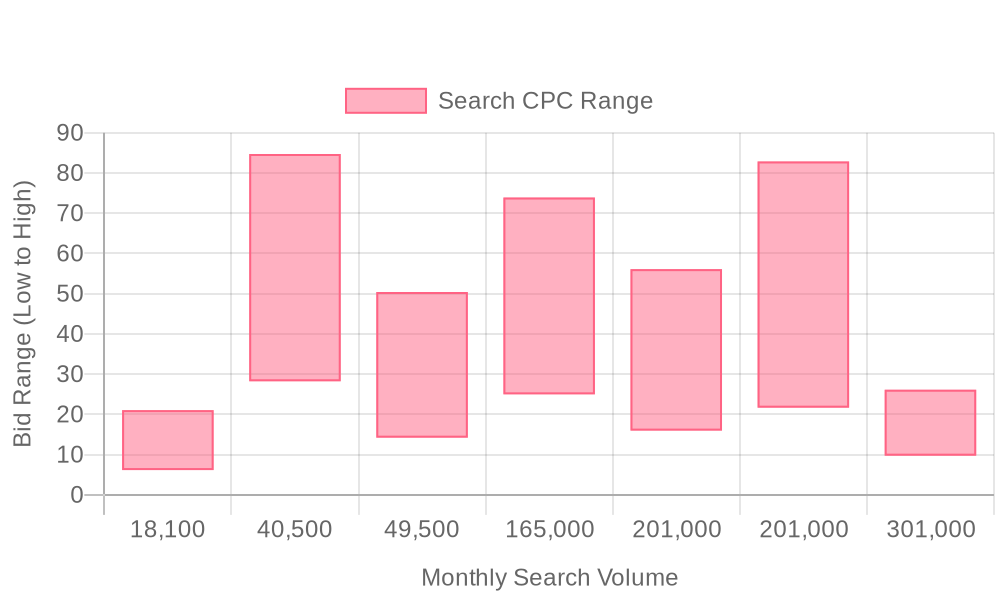
| Industry | Keyword | Monthly Search Volume | Competition Level | Low Bid | High Bid |
| Home Insurance | landlord insurance | 18100 | MEDIUM | 6.16 | 21.06 |
| Home Insurance | homeowners insurance quote | 40500 | LOW | 28.24 | 84.73 |
| Home Insurance | house insurance | 49500 | LOW | 14.22 | 50.43 |
| Home Insurance | home insurance quote | 165000 | LOW | 25 | 73.91 |
| Home Insurance | home insurance | 201000 | LOW | 15.98 | 56.12 |
| Home Insurance | homeowners insurance | 201000 | MEDIUM | 21.67 | 82.88 |
| Home Insurance | renters insurance | 301000 | MEDIUM | 9.74 | 26.14 |
Home insurance marketers face constant pressure to connect with homeowners exactly when they are evaluating coverage options. Precise keyword targeting ensures campaigns reach users with strong purchase intent, resulting in higher-quality leads and more efficient spend allocation. Data-driven teams see the greatest impact when they combine high-intent terms with ongoing audience segmentation, allowing for real-time adjustments as new insights emerge.
With an integrated approach, marketing leaders can tie every click to actual policy sales, tracking conversions across both digital and offline interactions. Unifying audience data enables marketers to retarget prospects through the funnel, strengthening engagement with contextually relevant messaging at each stage. Platforms like Sona Audiences are designed to dynamically update target lists in sync with CRM and advertising platforms, ensuring no high-value lead falls through the cracks as new information surfaces.
Strategic keyword selection is foundational for effective Google Ads for home insurance campaigns. Use a blend of core industry terms, solution-driven phrases, and long-tail keywords reflecting specific buyer needs:
- Home Insurance Leads: Attracts decision-ready homeowners seeking quotes or consultations.
- Ppc For Home Insurance: Captures interest from businesses exploring paid search strategies for their insurance services.
- Insurance Advertising: Targets broader market segments evaluating providers based on brand trust and service offerings.
- Home Insurance Marketing: Engages users interested in innovative or bundled coverage solutions.
- Google Ads For Home Insurance: Appeals to value-conscious prospects and agencies optimizing their acquisition costs.
A modern platform empowers teams to go beyond surface-level targeting by identifying anonymous site visitors, enriching profiles, and syncing qualified leads directly into their ad audiences. For more insights on optimizing paid campaigns, check out our guide on Google Ads ROI Guide. As homeowners move through the buying journey, dynamic audience updates and advanced attribution provide the clarity needed to double down on winning keywords while minimizing wasted spend.
Step-by-Step Campaign Execution Framework
Step 1: Build Targeted Keyword Lists
A well-structured keyword list is the backbone of any high-performing Google Ads for home insurance strategy. Start by meticulously organizing keywords according to insurance types, such as flood, fire, or standard homeowner coverage. Incorporate locality-based modifiers like "near me" and "in my area" to connect with prospects who have immediate intent and are searching for coverage in specific geographies. Prioritize long-tail queries that signal purchase readiness, including questions like "how much is home insurance in [city]" or "best home insurance for flood zones." To preserve budget and ensure relevancy, deploy a robust set of negative keywords that filter out traffic from unrelated searches.
Aligning this keyword structure with your broader SEO and content marketing efforts ensures a cohesive campaign direction. When integrated with advanced platforms, marketers can unify their keyword targeting with organic search insights, allowing for seamless audience identification. As real-time visitor intent is captured, campaign managers can dynamically shift ad spend toward segments demonstrating the highest likelihood to convert, while enriched company-level data supports hyper-targeted audience builds for improved insurance lead generation. Guides like Intent Retargeting provide actionable strategies for amplifying insurance lead generation with first-party signals.
The upgrade most home insurance advertisers miss is going beyond raw keyword volume to layer in intent and identity signals. By connecting website-visitor data and CRM records with Sona Marketing Measurement, you can see which specific search terms bring in the accounts and customers that actually convert, and weight your keyword and bidding strategy toward those rather than the terms with the highest search volume alone.
Step 2: Develop Compelling Ad Copy
Effective ad copy for home insurance must speak directly to the prospect’s most pressing concerns and clearly articulate the unique benefits of your offering. Highlight pain points such as extreme weather risks or unexpected property damage, and reinforce your credibility by referencing years of industry experience or positive customer testimonials. Incentives like free consultations, instant quotes, or bundled policy discounts can set your offer apart in a crowded market.
Support your core message with strategic use of ad extensions, such as callouts for customer ratings or sitelinks to specialized coverage options, to expand your ad’s footprint and provide additional context. Maintaining creative consistency across channels, social media, email, and paid search, unifies your brand voice and strengthens recall. Ad Copy Examples showcases real-world examples to inspire messaging that resonates. By leveraging a central platform that synchronizes creative assets and messaging, teams ensure each campaign touchpoint reinforces the same value proposition and trust signals, driving stronger engagement across the funnel.
Step 3: Design Effective Landing Pages
Landing pages designed for Google Ads home insurance campaigns must create a seamless journey from keyword to conversion. Each page should reflect the specific coverage type or offer mentioned in the corresponding ad, minimizing disconnects that can erode trust or cause drop-off. Personalization is critical: tailor content and imagery to different insurance segments, and use testimonials or interactive FAQs to address common objections and build credibility.
Clear calls-to-action (CTAs) and mobile-first design are non-negotiable for maximizing engagement and lead submission rates. By integrating forms directly with your CRM, every lead is captured and enriched in real time, supporting a frictionless workflow between marketing and sales. Landing Page Inspiration provides visual inspiration for high-converting layouts and messaging. Advanced platforms enable marketers to unify online and offline intent signals, providing revenue teams with a holistic view of prospect engagement and ensuring that each conversion is properly attributed and actionable within ongoing home insurance marketing efforts.
Step 4: Implement Data-Driven Optimizations
Continuous optimization is essential for extracting peak performance from PPC for home insurance. Monitor both micro conversions, such as form engagements or quote tool usage, and macro conversions like submitted applications to gain a nuanced view of campaign effectiveness. Deploy smart bidding strategies that automatically adjust for cost efficiency, and systematically A/B test ad headlines, descriptions, and landing page elements to reveal new opportunities for uplift.
Including offline conversion data, such as closed policies or agent call outcomes, enhances campaign targeting and attribution accuracy. For a deeper dive into optimizing attribution and campaign insights, see the Google Ads ROAS Guide. This feedback loop enables agile refinement of Google Ads strategies for insurance, as real-time data informs future content, targeting, and budget allocation decisions, supporting a sustainable pipeline of high-quality home insurance leads.
Sona Marketing Measurement closes the gap between clicks and revenue. It captures every ad click with first-party measurement, ties that click through UTM capture and ad-platform APIs to the actual record in your CRM, and reports ROAS by keyword and campaign instead of by last-click form fill. Feeding that revenue signal back into Smart Bidding and Performance Max compounds over time: the algorithms optimize toward booked home insurance revenue, not cheap leads.
Beyond Google Ads: Winning the AI Answers Home Insurance Buyers Now Trust
Paid search captures demand at the moment someone types a query. But a fast-growing share of home insurance buyers no longer start at Google at all, they ask ChatGPT, Gemini, or Perplexity before they ever run a search, and Google's own AI Overviews increasingly summarize an answer above the traditional results. If your business isn't referenced in those AI answers, you're invisible at the exact moment buyers build their shortlist.
Sona AI Visibility shows where your business shows up across ChatGPT, Gemini, Perplexity, Google AI Overviews, and 10+ engines, and, much like a keyword report, which prompts actually send you buyers, so you can prioritize the ones that convert. Run the two together and you cover the entire buyer path: get cited where buyers research (AI Visibility), then prove which of that demand turns into booked revenue (Marketing Measurement).
Helpful resources
Conclusion
Google Ads for home insurance works when clicks tie back to bound policies, not just quote requests. The keywords, formats, and targeting covered here turn traffic into leads worth following up on.
The next shift is already underway: buyers increasingly form their shortlist through AI answers before they ever click a search ad. Home insurance companies that show up in both channels, paid search and AI-driven research, will out-compete those still measuring success by clicks alone.
Ready to put these strategies into action? Start a free trial to see how Sona connects Google Ads clicks to booked home insurance policies.
FAQ
What is the best budget for Google Ads in home insurance?
The article does not specify a particular budget for Google Ads in home insurance, but emphasizes the importance of precise targeting and data-driven strategies to optimize ad spend.
How can I effectively target homeowners using Google Ads?
Effectively target homeowners by leveraging precise intent signals, segmenting audiences based on buying journey stages, and enriching audience profiles to focus on verified buyers.
What are the best practices for running Google Ads for home insurance?
Best practices include using data-driven targeting, aligning ad creatives with landing pages, continuous optimization for ROI, and integrating campaigns across multiple channels.
Can Google Ads help generate leads for home insurance?
Yes, Google Ads can help generate leads by capturing high-intent prospects at the right stage of their buying journey and using advanced data-driven strategies.
What types of ads work best for home insurance on Google?
Search campaigns, display ads, video ads, remarketing, and ad extensions are effective types of ads for home insurance on Google, each tailored to engage prospects at different stages.







