


A spindle failure or a control fault on a CNC line does not wait for a convenient time, and the shop that fixes it fastest usually wins the account. That urgency is exactly what Google Ads can capture, if a machine tool repair business builds campaigns around it rather than around generic industrial-services messaging. Untracked website visits and slow follow-up still cost most repair shops real business, but a Google Ads program built on precise targeting and timing closes that gap. This guide covers how machine tool repair businesses can put Google Ads to work alongside their existing online and offline marketing.
How to Generate Machine Tool Repair Leads with Google Ads: A Step-by-Step Guide

Modern machine tool repair businesses face a unique challenge: capturing high-intent prospects at the moment they need service, without wasted budget or missed opportunities. Precision targeting, paired with unified data, enables revenue teams to surface and prioritize ready-to-buy leads, creating a measurable impact on customer acquisition.
A data-driven Google Ads strategy complements other marketing channels by reaching prospects overlooked by traditional sales or organic search. Leveraging granular targeting, real-time intent signals, and dynamic audience management, your team can maximize every ad dollar spent while reducing friction in the customer journey.
- Integrated approach: Combine Google Ads with existing marketing and sales data so no high-value lead slips through. Resolving anonymous ad traffic into known companies and contacts makes outreach targeted and actionable.
- Targeting with intent: Build campaigns around service-specific keywords and local modifiers. Identify in-market buyers from their digital footprint, then shift budget toward segments showing true purchase intent.
- Landing page alignment: Sync ad messaging and landing page content for a consistent user experience. This increases trust and conversion rates, especially when landing pages are dynamically personalized based on campaign and user data.
- Continuous optimization: Use ongoing measurement to refine audience segments, creative, and bidding strategies. Integrate advanced conversion tracking, including both online and offline touchpoints, to fully attribute ROI and reveal which campaigns drive actual revenue.
- Cross-channel synergy: Reinforce your machine tool repair marketing ecosystem by synchronizing audiences and lead data across Google Ads, CRM, and email. This ensures that insights from one channel improve performance everywhere, supporting a seamless customer journey from click to close.
These principles help machine tool repair companies improve lead generation, unify attribution, and build sustainable pipelines with Google Ads. Teams that focus on actionable data and responsive targeting consistently outperform legacy approaches to Machine Tool Repair PPC and local advertising. To streamline your lead generation efforts and unify your ad data, get started for free with Sona.
Why Google Ads Matter for Machine Tool Repair Businesses
Machine tool repair companies face a distinct set of challenges when trying to reach the right prospects at the right moment. Google Ads provides a direct path to meet high-intent buyers exactly when they are searching for repair solutions, minimizing wasted spend and reducing the guesswork of traditional marketing. For real-world advice on Google Ads optimization in service industries, explore this Reddit discussion on Google Ads challenges.
- Specialized Audience Targeting: The ability to serve ads to decision-makers within manufacturing, production, or maintenance roles ensures every impression counts. By leveraging visitor identification, marketers can move beyond anonymous site traffic and pinpoint the businesses actively researching repair services, making each campaign more precise and actionable.
- Quick Demand Response: Machine tool breakdowns often demand immediate action. Advanced campaign setups enable businesses to trigger ads and offers whenever urgent needs occur in the market, allowing for real-time lead capture. When platforms provide real-time intent monitoring, marketers can shift budget toward accounts demonstrating immediate repair interest, ensuring rapid response and maximizing conversion windows.
- Regional Visibility: Many machine tool repair firms operate regionally or locally, making it critical to surface in search results across targeted areas. Dynamic audience syncing and geo-targeted campaigns adapt quickly to changes in demand, ensuring visibility in emerging industrial zones and preventing missed opportunities from fragmented campaigns.
- Complete Data Integration: Unified measurement from initial ad click through to client acquisition addresses the biggest roadblock in campaign optimization: disconnected data. Integrating online and offline attribution, including CRM and ad platform sync, provides a closed-loop view of which ads generate qualified leads and actual repair bookings, elevating campaign consistency and enabling continuous improvement. For step-by-step guidance on optimizing campaign measurement, visit our marketing analytics playbooks.
Common Types of Google Ads Campaigns for Machine Tool Repair
Modern machine tool repair companies achieve measurable growth by leveraging targeted Google Ads campaigns. Precise audience targeting and real-time engagement enable teams to capture demand at the exact moment businesses seek reliable repair services. By using advanced visitor identification, marketers can pinpoint which companies are actively searching for specialized repairs, allowing service teams to prioritize outreach where it counts most.
- Search Campaigns: Capture high-intent searches from prospects needing immediate repairs, improving the timeliness of follow-up actions. Utilizing real-time audience segmentation, you can identify and prioritize outreach to accounts actively searching for machine tool repair services.
- Display Ads: Maintain visibility across relevant content sites, addressing potential unknown leads. Display campaigns can keep your brand top-of-mind for decision-makers researching industrial maintenance, while real-time intent signals help shift budget toward accounts showing genuine purchase readiness.
- Video Ads: Visually explain complex repair services to prospective clients, providing consistency across messaging channels. Video formats enable companies to simplify technical offerings, ensuring that complex repair capabilities are clearly communicated and remembered by procurement teams. For those new to video ad campaigns, this YouTube tutorial on Google Ads basics offers step-by-step guidance to get started.
- Remarketing: Recapture interest from past site visitors and combat inefficient outreach by focusing on high-intent contacts. Dynamic audience segments update as leads progress through the sales funnel, allowing your team to serve personalized ads and nurture the right accounts until they are sales-ready. Learn how to leverage first-party intent signals for retargeting to maximize conversion rates.
- Assets: Enhance where you can show trust signals, such as certifications and response times. Ad assets let marketers display key credentials and service differentiators directly in search results, increasing trust and driving higher engagement from businesses seeking critical repairs.
Where to Find Growth Opportunities?
Revenue teams in machine tool repair face a dynamic market where simply maintaining existing channels rarely drives sustained growth. The most effective teams prioritize data-driven expansion strategies that identify untapped demand and address market gaps before competitors move in.
- Vertical keyword targeting for specialized services: Moving beyond generic "machine tool repair" keywords, high-performing marketers identify and target nuanced verticals such as CNC repair, spindle rebuilding, or industrial lathe servicing. This vertical approach surfaces high-intent prospects actively searching for niche expertise, resulting in more qualified leads and higher conversion rates. By analyzing search trends and layering in real-time behavioral data, teams can prioritize spend on emerging service lines, ensuring budget is allocated where demand is strongest.
- Analyzing competitor activities to identify gaps in service or marketing and improve lead engagement timing: Monitoring competitor ad spend, messaging, and online visibility reveals where rivals are over- or under-investing. Sophisticated marketers map these insights to their own funnel, adjusting campaigns to intercept buyers when competitors are slow to respond or lack specialized offerings. Platforms that unify marketing touchpoints and provide real-time visitor identification give teams a tactical edge: they can pinpoint high-value accounts who have engaged with competitor content, then proactively nurture those leads with personalized outreach and targeted offers. For a real-world perspective, see how an appliance repair business approaches Google Ads costs in a competitive market.
By consistently applying these strategies, machine tool repair companies unlock new revenue streams, improve their share of voice in lucrative submarkets, and optimize lead engagement for maximum return on investment. To identify your own growth opportunities and take action, get started for free with Sona.
How to Apply Audience Segmentation for Machine Tool Repair
Precision audience segmentation drives measurable results in machine tool repair marketing. Tailoring outreach to distinct buyer profiles reduces waste and accelerates the path from awareness to acquisition. Solutions that unify web, CRM, and ad data make it possible to identify not just anonymous traffic but named accounts and decision-makers. Sona's Identity Resolution is built for this, connecting buyer profiles with CRM and website activity for more efficient targeting.
- Define Segments: Differentiate audiences like small manufacturers vs. large corporates to address inefficient outreach. Small manufacturers often require responsive emergency support and quick-turn repairs, while large corporates favor proactive maintenance agreements and streamlined procurement. Segmentation ensures messaging, offers, and ad creative align with each segment's procurement process, urgency, and budget. Integrating machine tool repair CRM data with Google Ads enables marketers to pinpoint company size, industry, and operational scale for nuanced targeting. Platforms that update and sync enriched audience data like Sona Audiences allow you to reach the right segment at the right moment, automating workflows and maximizing relevance.
- Intent Signals: Incorporate signals like emergency repair needs or planned maintenance so ads match where prospects are in their buying journey. Emergency queries signal immediate, high-value intent, while maintenance-focused searches indicate a longer consideration cycle. Segmenting by intent lets you bid more aggressively on in-market accounts with urgent needs and nurture research-phase accounts with educational content. Audiences that update in real time as leads move from awareness to intent keep campaigns agile; synced directly with Google Ads, that data sharpens messaging and improves remarketing across the funnel. For additional strategies, see how first-party intent signals support high-impact retargeting.
Segmented, intent-based targeting lowers acquisition costs and lifts conversion rates because budget follows demand instead of guesswork. The next step is feeding what happens after the click, bookings, quotes, repeat contracts, back into that same segmentation so the system keeps learning which accounts are worth pursuing.
This is also where measurement changes the economics. With Sona Marketing Measurement you can identify the companies and buyers behind your ad clicks, not just anonymous sessions, and segment audiences by who actually becomes a customer. That lets you build bid adjustments and audience signals around the segments that convert and de-prioritize the ones that don't, so you feed Google's algorithms "this click became a paying machine tool repair customer" instead of just "someone filled out a form."
Keyword Strategy & Sample Target Terms
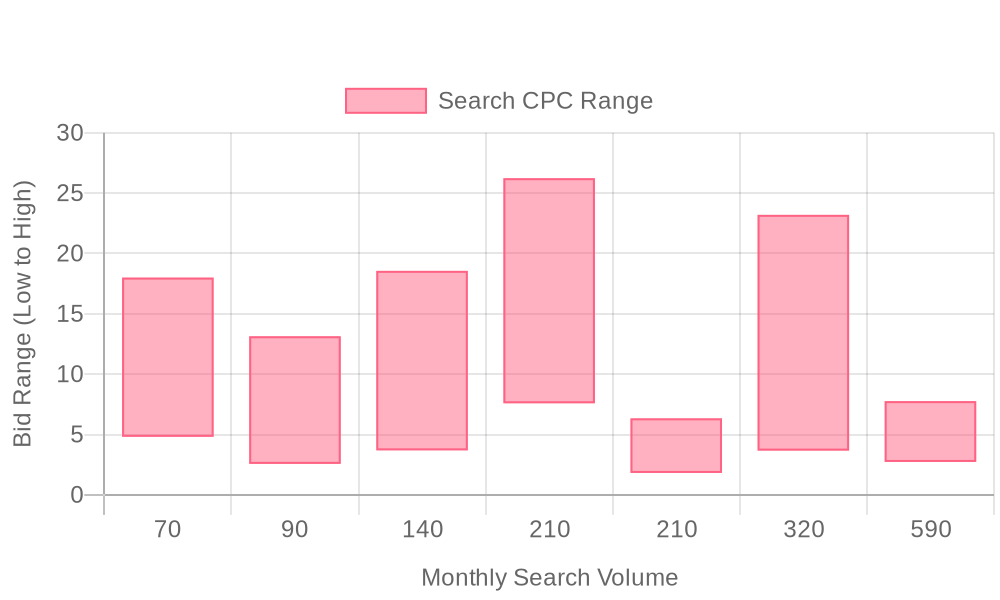
| Industry | Keyword | Monthly Search Volume | Competition Level | Low Bid | High Bid |
| Machine Tool Repair | cnc spindle repair near me | 70 | LOW | 4.81 | 18 |
| Machine Tool Repair | machine tool repair | 90 | LOW | 2.57 | 13.14 |
| Machine Tool Repair | cnc spindle repair | 140 | LOW | 3.69 | 18.56 |
| Machine Tool Repair | robinair ac machine repair near me | 210 | MEDIUM | 7.59 | 26.24 |
| Machine Tool Repair | cnc repair near me | 210 | LOW | 1.82 | 6.34 |
| Machine Tool Repair | robinair ac machine repair | 320 | LOW | 3.67 | 23.2 |
| Machine Tool Repair | cnc repair | 590 | LOW | 2.73 | 7.77 |
A high-performance Google Ads strategy for Machine Tool Repair begins with precision keyword selection. Success hinges on targeting high-intent searchers who are actively seeking solutions, rather than casting a wide net that drains budget on low-value clicks. By aligning keyword strategy with urgent buyer needs, marketing teams capture prospects at the moment of need, positioning repair services as the immediate solution.
Strategic keyword planning enables machine tool repair providers to intercept ideal buyers, those whose equipment downtime directly impacts production and revenue. This approach prioritizes keywords like "machine tool repair near me," "emergency machine tool repair," and "CNC machine repair service." Each term targets a specific, urgent scenario, maximizing the likelihood of immediate engagement. Neglecting negative keywords risks wasted spend on unrelated searches, which can dilute campaign effectiveness and obscure true performance. Reviewing real-world challenges, such as those discussed in this Reddit post about Google Ads costs, can help shape a more realistic budget strategy and expectation for PPC campaigns.
- High Intent Targeting: Capture urgent client needs by using exact-match and phrase-match keywords, ensuring ads appear only when prospects demonstrate immediate buying signals. This hyper-focus improves visibility to those most likely to convert and expedites response time, reducing costly downtime for clients.
- Measurable ROI: With robust conversion tracking, marketing teams can follow each click through to inquiry or booked service, allowing for granular analysis of which search terms drive the highest value leads. This data-driven process supports ongoing keyword refinement, prioritization of top-performing terms, and exclusion of irrelevant traffic, all contributing to a more efficient, profitable Machine Tool Repair PPC engine. For more detailed guidance, explore our step-by-step instructions for importing ad platform cost data into Google Analytics.
- Negative Keyword Management: Employing a proactive negative keyword list (e.g., "used machine tools for sale," "machine tool parts") prevents budget leakage and sharpens campaign relevance, channeling spend only to genuine repair inquiries.
- Dynamic Keyword Expansion: As campaign data accrues, regularly surface new high-intent search queries through search term reports. Integrating these insights, possibly from platforms that consolidate cross-channel data, empowers teams to flexibly extend reach to emerging customer needs without guesswork. Leverage Sona to build real-time, signal-based segments for more targeted ad campaigns.
Precise keyword targeting elevates campaign ROI and lays the groundwork for CRM-ad audience sync and broader Machine Tool Repair marketing programs. A continuous loop of keyword refinement, driven by real intent signals rather than raw volume, keeps campaigns responsive to shifting demand and competitor moves. Get started for free with Sona to put real-time, data-driven targeting to work.
Step-by-Step Campaign Execution Framework
Step 1: Build Targeted Keyword Lists
Effective Google Ads for Machine Tool Repair require a laser-focused approach to keyword selection. Segment keywords by specific service types, such as emergency repairs, scheduled maintenance, and rapid diagnostics, to align ad exposure with high-intent searches. This method ensures campaigns target prospects actively seeking immediate solutions, maximizing relevance and minimizing wasted spend. For deeper insights on segmenting and syncing with ad platforms, explore real-time audience insights.
Integrating geographic modifiers like "near me" or city-specific terms boosts local visibility, making ads appear for users searching within critical service regions. Connecting CRM and intent data into the keyword strategy allows marketing teams to pinpoint which locations and service lines drive the highest conversions. When platforms sync enriched lead data into ad groups, campaign managers can dynamically adjust bids or expand reach to previously unidentified, high-value segments. For a practical look at how service businesses approach Google Ads challenges, see this Reddit discussion on mobile mechanic PPC.
The upgrade most machine tool repair advertisers miss is going beyond raw keyword volume to layer in intent and identity signals. By connecting website-visitor data and CRM records with Sona Marketing Measurement, you can see which specific search terms bring in the accounts and customers that actually convert, and weight your keyword and bidding strategy toward those rather than the terms with the highest search volume alone.
Step 2: Develop Compelling Ad Copy
Machine tool repair marketing benefits from concise, benefit-driven ad copy that addresses urgent needs and instills trust. Highlighting rapid response times, certified technicians, and customer testimonials builds credibility and moves prospects from search to inquiry. Messages should shift from generic offers to clear value propositions, directly addressing pain points such as downtime reduction and guaranteed repairs.
Ads become more effective when backed by real-time intent signals and visitor identification. When platforms surface which companies are engaging with ads or landing pages, marketers can tailor copy dynamically and prioritize messaging for in-market accounts. For more guidance on creating high-performing ad messaging, review Sona's playbook on AI-powered personalization.
Step 3: Design Effective Landing Pages
Seamless user experience from ad click to conversion is critical in machine tool repair PPC. Landing pages must reinforce ad messaging, matching the promise made in the copy with a direct path to schedule a repair, request a quote, or download a service brochure. Streamlined forms, clear calls to action, and visible trust badges reduce friction, resulting in stronger lead capture.
Advanced visitor tracking and attribution enable teams to tie each landing page visit back to the originating keyword or campaign. When enriched contact and company data sync directly into CRM systems and Google Ads, marketers can attribute conversions to the correct source and nurture leads with targeted follow-ups. For step-by-step advice on connecting ad platform data with analytics, see this guide on importing ad platform cost data into Google Analytics.
Step 4: Implement Data-Driven Optimizations
Optimization in machine tool repair online advertising hinges on robust conversion tracking and rapid iteration. Setting up detailed event tracking, such as call requests, form completions, and chat engagements, allows for granular measurement of what drives business outcomes. Campaign managers use these insights to shift budgets toward top-performing keywords, eliminate wasted spend on underperforming segments, and refine audience targeting.
Platforms that unify online and offline conversion data show the full picture of ROI, connecting ad interactions to actual repair bookings or sales. Real-time intent and dynamic audience updates let teams retarget engaged accounts or suppress spend on already-converted leads, so budget goes toward the highest-value opportunities. For more on maximizing PPC returns, see this WordStream article on free Google Ads tools.
Sona Marketing Measurement closes the gap between clicks and revenue. It captures ad clicks with first-party measurement, ties that activity through UTM capture and ad-platform APIs to the matching company record in your CRM, and reports ROAS by keyword and campaign instead of by last-click form fill. Feeding that revenue signal back into Smart Bidding and Performance Max compounds over time: the algorithms optimize toward booked machine tool repair revenue, not cheap leads.
Tips on Expanding Your Machine Tool Repair Presence
Expanding your machine tool repair presence means putting your marketing where buyers are actually searching, often at the exact hour a machine goes down. A targeted, data-driven approach captures that market share before competitors do. For deeper tactical insights, explore this collection of actionable playbooks designed for advanced marketing and sales strategies.
- Localize ads for high-demand regions: Focusing Google Ads campaigns on specific regions or cities with rising demand for machine tool repair ensures your budget reaches the prospects most likely to convert. This approach counters the common challenge of wasted spend on generic or broad targeting, making every impression count. When using audience syncing, you can dynamically update your campaigns as new high-intent prospects emerge in those regions, ensuring that your visibility is always aligned with real-time market shifts.
- Partner with industry organizations: Collaborating with trade associations and industrial networks amplifies your outreach and builds trust with a targeted audience. These partnerships create additional channels for distributing your machine tool repair marketing content, driving higher engagement and increasing qualified lead flow. By integrating partner data with your digital campaigns, you can enhance audience segmentation, further refining your Google Ads targeting for optimal results.
- Leverage search query data for broader strategy: Analyzing the search queries that drive conversions in your Google Ads campaigns uncovers hidden patterns and emerging needs among your audience. This intelligence not only sharpens your bidding and keyword selection but also informs your broader content and SEO strategy. Syncing these insights directly into your CRM and campaign platforms lets you react swiftly to changing demand, ensuring your machine tool repair PPC and content efforts are always rooted in real user intent.
Integrating these tactics with robust technology enables machine tool repair businesses to unify their marketing data, identify high-value prospects, and orchestrate personalized engagement across multiple touchpoints. By optimizing campaign execution and leveraging seamless data sync between your CRM and ad platforms, you solve for fragmented campaigns and missed opportunities, driving sustainable growth in a competitive market. Ready to take the next step? Get started for free with Sona.
Paid search captures demand the moment someone types a query. But a growing share of machine tool repair buyers now ask ChatGPT, Gemini, or Perplexity before they ever open Google, and AI Overviews increasingly summarize an answer above the traditional results. If your business isn't referenced in those AI answers, you're invisible at the exact moment buyers build their shortlist.
Paid search captures demand at the moment someone types a query. But a fast-growing share of machine tool repair buyers no longer start at Google at all, they ask ChatGPT, Gemini, or Perplexity before they ever run a search, and Google's own AI Overviews increasingly summarize an answer above the traditional results. If your business isn't referenced in those AI answers, you're invisible at the exact moment buyers build their shortlist.
Sona AI Visibility shows where your business shows up across ChatGPT, Gemini, Perplexity, Google AI Overviews, and 10+ engines, and, much like a keyword report, which prompts actually send you buyers, so you can prioritize the ones that convert. Run the two together and you cover the entire buyer path: get cited where buyers research (AI Visibility), then prove which of that demand turns into booked revenue (Marketing Measurement).
Helpful resources
Conclusion
Google Ads works for machine tool repair businesses when it's built around the moments that actually drive bookings: a spindle down on a production line, a maintenance contract up for renewal, a plant manager searching for a specialist at 2 a.m. Targeted campaigns and disciplined optimization turn that urgency into pipeline.
The shops that win this market treat Google Ads as one input into a larger system, one that also tracks which accounts actually convert and increasingly, which AI answers send buyers their way. That combination, not any single campaign tweak, is what separates steady bookings from a marketing budget that just generates clicks.
FAQ
How do I set up Google Ads for my machine tool repair business?
Set up Google Ads by building targeted keyword lists, developing compelling ad copy, designing effective landing pages, and implementing data-driven optimizations to capture high-intent prospects.
What are the best keywords for Google Ads in the machine tool repair industry?
Best keywords include service-specific terms like 'emergency machine tool repair' and 'CNC machine repair service' to target high-intent searchers actively seeking solutions.
How can I target local customers with Google Ads for machine tool repair?
Use geographic modifiers and dynamic audience syncing to ensure ads appear for users searching within critical service regions, maximizing local visibility.
What is the average cost per click for Google Ads in the machine tool repair sector?
The article does not specify the average cost per click, but emphasizes managing costs through strategic keyword planning and negative keyword management.
How can I track and measure the success of my Google Ads campaign for machine tool repair?
Implement robust conversion tracking from ad interaction to repair booking, integrating both online and offline data for a complete view of ROI.
What are some tips for optimizing Google Ads for machine tool repair services?
Continuously optimize by refining audience segments, updating creative and bidding strategies, and syncing audience data across platforms for seamless targeting.
How can I make my Google Ads more cost-effective for machine tool repair?
Focus on precise targeting with high-intent keywords, manage negative keywords to prevent budget leakage, and use conversion tracking to prioritize top-performing terms.
What is the return on investment (ROI) for Google Ads in the machine tool repair industry?
ROI is enhanced by integrating data-driven strategies to capture high-intent prospects, aligning ad spend with segments demonstrating purchase intent.
How do I compete with larger companies in Google Ads for machine tool repair?
Compete by targeting niche verticals, leveraging local modifiers, and using precise audience targeting to capture demand at the moment businesses seek repair services.
How can I use Google Ads to increase my machine tool repair business's online visibility?
Increase visibility by synchronizing Google Ads with CRM data for enhanced targeting, utilizing local campaigns, and reinforcing marketing efforts across channels.







