


A property manager searching "emergency plumber for rental property" at 11 p.m. is not a browsing visitor; she's a buyer with a leak and a deadline. Home management marketing has to work across both patient, long-cycle channels, social media, email nurture, SEO, trade shows, direct mail, and the moment-of-need channel where Google Ads lives. Search captures the prospect who is actively comparing property managers, HVAC contractors, or maintenance vendors right now, and hands that intent off to the rest of the funnel. The common failure mode is losing the prospects who research a service but never fill out a form, so the inquiry disappears before sales ever sees it. Advanced identification tools address this by importing those anonymous researchers into customer match lists, so ad spend keeps following engaged decision-makers instead of starting over with every new visitor. Done well, Google Ads becomes the hinge between awareness and pipeline: it intercepts someone typing "home management services near me" or "property maintenance solutions," and by tracking engagement across channels, it helps prioritize the leads most likely to convert.
How to Generate Google Ads for Home Management Leads: A Step-by-Step Guide

A high-performing Google Ads strategy for home management hinges on using data-driven paid search tactics and advanced audience segmentation to target and convert the right prospects at scale. By aligning search intent with tailored landing pages and leveraging real-time audience insights, home management businesses can attract qualified leads while reducing wasted spend. Continuous creative improvement and performance monitoring ensure the highest possible ROI as market conditions shift.
Integrating Google Ads into a multi-channel marketing mix amplifies brand visibility and boosts the likelihood of conversion across different touchpoints. When audience data from CRM, website, and ad platforms is unified, marketers unlock deeper insights into visitor intent and engagement patterns, enabling dynamic optimization so campaigns adapt as leads progress through the pipeline.
A distinctive challenge in home management advertising is anonymous website traffic. Without company-level visitor identification, many high-fit prospects remain unaddressed, reducing the effectiveness of even the most sophisticated campaigns. Sona's Identity Resolution helps marketers reveal which companies are visiting, so outreach can prioritize the accounts already showing interest instead of waiting for a form fill.
This step-by-step playbook covers every critical element: data-driven paid search, high-conversion creative and landing page alignment, performance optimization, and seamless cross-channel integration. Explore actionable strategies in our playbooks to maximize Google Ads effectiveness, unify marketing data, and accelerate pipeline growth. To see how you can put these strategies into action, get started for free with Sona.
Why Does Google Ads Matter for Home Management

Digital marketing for home services is uniquely challenging due to the complexity and specialization of the audience. Google Ads stands out by capturing high-intent decision-makers precisely when they need solutions, often at critical moments like urgent repair needs or property management transitions.
Home management companies typically offer higher-margin services, making every new qualified lead significantly more valuable. While email and organic channels contribute to long-term growth, Google Ads consistently drives immediate acquisition of new, high-value projects from prospects outside your existing funnels. For actionable strategies on attracting more qualified leads with digital campaigns, explore our in-depth marketing guides.
The home management sector often serves fast-growing or newly established territories where brand equity is still forming. Google Ads enables focused visibility in these emerging regions, allowing you to efficiently target local customers and shift spend to areas where demand surges. This agility outpaces traditional media, ensuring your services are top-of-mind when urgent needs arise. If you want to create precise audience intelligence and reach the right prospects in new markets, advanced audience tools can help optimize your spend.
Integrated data analysis is essential for high-performing home management marketing. Google Ads delivers closed-loop measurement from initial click to signed contract, making it possible to optimize spend and messaging in real time. Sona surfaces intent signals from website visitors, and syncing enriched segments directly into ad campaigns keeps spend focused on the accounts most likely to convert. This lets marketing and sales prioritize high-intent leads, adjust strategy as conditions change, and consolidate insights across channels. Ready to transform your acquisition strategy? Get started for free with Sona.
Common Types of Google Ads Campaigns for Home Management Services

- Search Campaigns: Search campaigns are the foundation of digital marketing for home services. They capture urgent, high-intent queries from property owners, landlords, or facility managers actively seeking solutions, often after a system fails or a lease deadline hits. Targeting service-specific keywords and localized intent lets these campaigns intercept prospects at the moment of need, producing higher conversion rates and more qualified home management leads. Sona's Identity Resolution shows which companies or individuals are behind those searches, enabling personalized follow-up and sharper budget allocation.
- Display Ads: Display ads play a critical role in maintaining brand visibility for home management companies. These ads keep your services top-of-mind by appearing on relevant industry content sites, local news outlets, and forums frequented by property stakeholders. Consistent exposure helps reinforce your expertise and nurtures prospects who may not be ready to engage immediately. Dynamic audience updates ensure that once a lead interacts with your site or content, they enter tailored nurture streams, maximizing the value of each impression.
- Video Ads: Video campaigns offer a compelling medium for visually demonstrating complex home management solutions, such as property maintenance workflows or tenant communication platforms. These ads can build trust and clarify service value, especially when targeting prospects unfamiliar with professional management. Advanced audience segmentation allows marketers to serve specific video content based on a visitor’s stage in the decision process, ensuring that messaging remains relevant and impactful.
- Remarketing: Remarketing campaigns are essential for re-engaging past website visitors and creating multiple touchpoints across the customer journey. By leveraging real-time intent signals, marketers can prioritize budget toward accounts showing renewed interest, such as those revisiting pricing or service detail pages. For a comprehensive overview of Google Home Service Ads, including setup, eligibility, and benefits for service-based businesses, explore this guide to Google Home Service Ads. Syncing CRM and ad platforms ensures that messaging evolves as leads move through the funnel, turning initial interest into booked appointments or consultations.
- Assets: Ad assets (formerly called extensions) add credibility and drive higher engagement by showcasing location, certifications, customer reviews, and rapid response times. These enhancements provide proof points that reinforce your core claims and differentiate your offering in a crowded market. When assets are linked with enriched CRM data, they can dynamically adjust to highlight the most relevant attributes for each audience segment, further improving conversion rates.
A persistent challenge for home management advertisers is the delay or manual nature of lead follow-up, which can allow hot prospects to cool before engagement. By integrating platforms capable of syncing sales and marketing data in real time, remarketing and nurture efforts become both timely and personalized, significantly increasing the effectiveness of all campaign types.
Keyword Strategy & Sample Target Terms
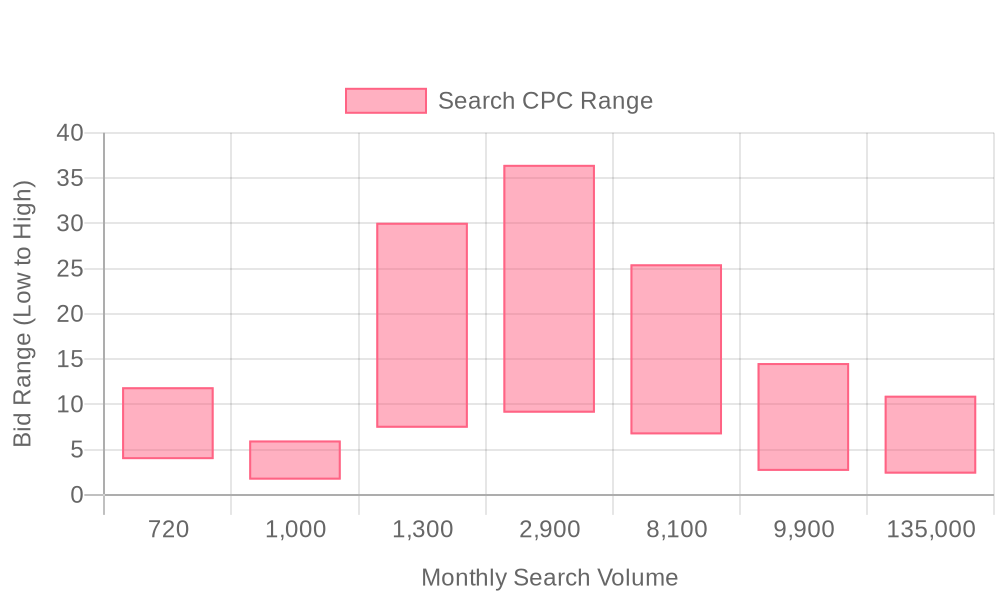
| Industry | Keyword | Monthly Search Volume | Competition Level | Low Bid | High Bid |
| Home Management | cozy property management | 720 | MEDIUM | 3.95 | 11.89 |
| Home Management | home management | 1000 | LOW | 1.69 | 6 |
| Home Management | vacation rental management companies | 1300 | LOW | 7.42 | 30.06 |
| Home Management | yardi breeze | 2900 | MEDIUM | 9.08 | 36.46 |
| Home Management | vacation rental management | 8100 | LOW | 6.69 | 25.47 |
| Home Management | rental management companies near me | 9900 | LOW | 2.65 | 14.56 |
| Home Management | property management company | 135000 | LOW | 2.35 | 10.95 |
High-performing Google Ads campaigns for home management rely on a strategic keyword approach designed to intercept buyers during their most decisive moments. Capturing this search intent means reaching property owners, landlords, or facilities managers actively seeking solutions, often with immediate needs and clear budget authority. A data-driven keyword strategy allows marketers to target these high-value prospects before competitors, yielding superior lead quality and accelerating time to close.
The precision of keyword targeting in home management advertising is critical for return on ad spend. By structuring account architecture around service categories, buyer readiness, and local markets, campaigns can deliver tailored messages that resonate with active searchers. For example, segmenting keywords by service type, such as "property management company in [city]," "emergency HVAC repair," or "commercial building maintenance", ensures that messaging matches the user's intent and urgency. Negative keywords like "DIY," "salary," or "job openings" are essential to eliminate low-quality or irrelevant clicks, which preserves budget and maintains lead quality. For deeper insights and a practical framework, explore this comprehensive guide to Google Home Service Ads.
Smart marketers leverage search volume data to prioritize keywords that combine high intent and sufficient demand. This often includes a blend of broad and exact match terms, layered with geographic modifiers to reach customers in target service areas. Integrating visitor identification enables the identification of companies and decision-makers behind search queries, revealing not only keywords but also the accounts engaging with campaigns. With real-time intent signals, teams can dynamically shift budget toward the highest-converting terms and audiences, while enriched CRM data ensures that every high-value lead is immediately actionable across the funnel. This level of targeting and responsiveness transforms Google Ads from a static channel to a dynamic engine for qualified home management leads. To experience these capabilities firsthand, get started for free with Sona.
Step-by-Step Campaign Execution Framework
This framework assumes a Search-first approach, but Performance Max deserves a place in the mix too: it lets Google's automation extend a proven home management campaign across Search, Display, and YouTube inventory from a single budget, which is useful once you have enough conversion data to trust the algorithm.
Step 1: Build Targeted Keyword Lists
Successful Google Ads for Home Management campaigns start with well-structured keyword lists that reflect your unique service offerings and customer intent. Segmenting keywords by service type, such as property management, home repairs, or facility maintenance, creates clarity in your ad groups and ensures relevant ad delivery. Local modifiers, including neighborhood names or city-specific terms, drive high-intent local traffic and outperform generic searches in both click-through and conversion rates.
Long-tail and question-based queries, like “how to schedule maintenance for rental properties” or “best home repair service in [city],” capture users closer to decision-making and result in higher-quality leads. Applying negative keywords, such as “DIY” or “free estimate,” eliminates wasteful clicks and protects your budget. Aligning keyword selection with the terminology used in your content marketing establishes a cohesive journey from search to website engagement, increasing both relevance and Quality Score. By identifying visitors and matching their search language to your owned content, you not only boost lead volume but also enhance downstream sales conversion.
For a comprehensive overview of Google Home Service Ads, including eligibility, benefits, and practical setup steps, see this Google Home Service Ads guide.
The upgrade most home management advertisers miss is going beyond raw keyword volume to layer in intent and identity signals. By connecting website-visitor data and CRM records with Sona Marketing Measurement, you can see which specific search terms bring in the accounts and customers that actually convert, and weight your keyword and bidding strategy toward those rather than the terms with the highest search volume alone.
Step 2: Develop Compelling Ad Copy
Effective ad copy for home management services addresses the specific pain points of property owners, tenants, and facility managers. Headlines referencing reliability, fast response times, or regulatory compliance resonate with prospects who prioritize trust and efficiency in service providers. Incorporating trust markers, like “licensed & insured” or “Google Guaranteed,” signals credibility and reduces hesitation to engage. Creating urgency through time-bound incentives, such as “Book today for 15% off your first service”, pushes prospects toward immediate action.
Utilizing ad extensions, including callouts, sitelinks, and structured snippets, provides additional touchpoints for users to interact with your brand and increases ad real estate on the search results page. Maintaining consistent messaging across your Google Ads, social media, and email campaigns reinforces your brand’s value proposition at every buyer journey stage. When CRM and ad platforms are connected, dynamic audience updates ensure that only the most relevant contacts see timely, personalized offers, increasing the odds of conversion.
Step 3: Design Effective Landing Pages
A high-performing landing page demonstrates 1:1 alignment between the user's search query, ad message, and on-page content. Segmenting landing pages by service, dedicated pages for property management versus emergency repairs, matters because the two buyers behave differently: one is comparing management fees and lease terms over days, the other is calling from a flooded basement and needs a phone number in five seconds. Licensing and insurance badges, response-time guarantees, and a tight FAQ build the trust that home management prospects look for before handing over an address, while mobile-friendly calls-to-action keep the emergency searcher from bouncing to a competitor.
By connecting lead forms to your CRM and marketing automation systems, you eliminate manual data entry and enable real-time lead routing to the appropriate sales or support teams. This unified data flow allows for precise nurturing and follow-up, as audience segments automatically update based on form submissions and user behavior. Marketers can also leverage visitor identification capabilities to personalize landing page experiences, boosting engagement and conversion rates.
For step-by-step guidance on optimizing your landing pages and ads for property management, see this Google Ads for property managers guide.
Step 4: Implement Data-Driven Optimizations
Tracking both micro-conversions (e.g., form fills, click-to-call actions) and macro-conversions (e.g., booked appointments, signed contracts) provides a holistic view of campaign performance. Utilizing smart bidding strategies, such as Target CPA or ROAS, leverages machine learning to automatically adjust bids toward the highest-value conversions. Routine A/B testing of ad elements, landing page layouts, and offers uncovers what resonates most with your segments, enabling continuous improvement.
Importing offline conversions, such as closed deals or completed services, into Google Ads delivers a complete attribution picture, ensuring marketing budgets are optimized for true business outcomes rather than just online signals. When all touchpoints, from ad click to offline sale, are tracked within a unified platform, marketers can reallocate spend to the highest-performing channels and refine content creation across digital properties. This integration connects insights from Google Ads back into your content development process, ensuring every campaign is shaped by real customer data and intent signals.
For a best-practices overview of Google Ads specifically for the home services industry, review this industry guide.
Sona Marketing Measurement closes the gap between clicks and revenue. It captures every ad click with first-party measurement, ties that click through UTM capture and ad-platform APIs to the actual record in your CRM, and reports ROAS by keyword and campaign instead of by last-click form fill. Feeding that revenue signal back into Smart Bidding and Performance Max compounds over time: the algorithms optimize toward booked home management revenue, not cheap leads.
Tips on Expanding Your Google Ads for Home Management Presence

Home management businesses can achieve accelerated growth by integrating advanced digital marketing tactics into their Google Ads strategy. Strategic expansion requires precise audience segmentation, value-driven messaging, and dynamic adjustments based on real-time intent signals.
- Cross-promote educational assets in retargeting campaigns: Sharing guides, checklists, or how-to videos in retargeting ads nurtures prospects who have shown initial interest but have not yet converted. When marketers leverage unified visitor identification, they can tailor educational content to segments like property owners, facilities managers, or tenants, maximizing relevance and increasing return visits. For more on setting up and optimizing Google Home Service Ads for local businesses, see this comprehensive guide.
- Upsell related services using segmented audiences: Segmenting audiences based on service history, behavior, or lifecycle stage enables accurate upsell strategies. For example, a property management firm can present landscaping or cleaning add-ons to existing clients who have booked maintenance, while move-in service offers can be targeted at recent tenant placements. With dynamic audience updates and CRM synchronization, marketers can automatically shift prospects between segments as they progress through the sales funnel, ensuring upsell messaging reaches only those with the highest likelihood to convert.
- Partner with industry associations for referral traffic: Collaborations with local real estate boards, facility management associations, or homeowner groups can drive high-quality traffic to your ads and landing pages. By tracking online and offline referrals in a unified attribution model, revenue teams can measure the true value of each partnership, reallocating budget to the highest-performing sources. This holistic view supports smarter investment decisions and tighter alignment between marketing and sales efforts.
- Localize by targeted regions to increase share-of-voice: Hyperlocal targeting, down to ZIP code or neighborhood, boosts ad visibility and outperforms broad geographic campaigns in home management. Using search query data and in-market signals, marketers can identify and prioritize regions with higher engagement or untapped demand. With dynamic audience and budget allocation, campaigns automatically scale in areas showing the strongest conversion potential, increasing share-of-voice while minimizing wasted spend.
- Use search query data to identify new content topics: Analyzing the language and intent behind high-performing search queries uncovers emerging trends and unmet needs among your audience. This data-driven approach helps inform new blog posts, landing pages, or educational resources that address timely topics, such as “pet-friendly property management” or “emergency home repairs.” By connecting these insights to campaign planning, marketers can continuously refresh ad messaging and website content, keeping their brand top-of-mind as consumer preferences evolve.
Case Studies on Successful Home Management Campaigns

Successful Google Ads campaigns in the home management sector demonstrate the measurable impact of audience segmentation, relevant messaging, and real-time optimization. Home service providers who leverage data-driven strategies consistently outperform their peers, with increased lead volumes, lower acquisition costs, and stronger lifetime value across residential and commercial segments.
One property management firm targeting multi-family rental owners used a granular location strategy, focusing budgets on five high-growth ZIP codes. By building dynamic audience lists based on website engagement and syncing these segments into their Google Ads and CRM environment, the team increased booked consultations by 42% quarter-over-quarter. The data pipeline enabled real-time updates to audience pools as prospects moved from inquiry to contract, ensuring ad spend consistently targeted the highest-intent leads. For a broader perspective on effective ad strategies in this space, see this overview of Google Home Service Ads.
A national home repair brand restructured its paid search program around intent-driven keywords and conversion-optimized landing pages for emergency services. They identified anonymous site visitors and matched incoming leads to company records, allowing for personalized ad retargeting and upsell opportunities across HVAC, plumbing, and electrical verticals. Automated CRM synchronization pushed enriched lead data directly into their sales pipeline, streamlining follow-up and reducing manual handoffs. This approach improved lead qualification rates by 28% and helped allocate spend toward channels producing the fastest closed-won jobs.
Local service providers specializing in maintenance and cleaning services have also benefited from tightly integrated data and advertising. One campaign used real-time behavioral signals to identify prospects actively searching for recurring services, then dynamically updated ad audiences as users scheduled walkthroughs or requested quotes. Performance tracking across online and offline touchpoints enabled the team to measure campaign effectiveness holistically, optimizing keyword bids and creative toward the services and geographies driving the most profitable contracts. This closed-loop process delivered a 33% reduction in wasted spend and a 19% increase in qualified appointments month-over-month.
These real-world examples show how advanced targeting, accurate attribution, and seamless data integration turn Google Ads for home management from a basic lead generation tool into a growth engine for revenue teams.
Integrating Social Media with Google Ads for Home Management
Modern home management brands amplify customer acquisition by aligning Google Ads and social media strategies. Coordinated messaging across PPC for home management and major social platforms increases brand trust, while granular tracking across these channels surfaces new opportunities to engage high-intent prospects. For an in-depth guide on optimizing Google Ads for home services, review this comprehensive resource.
Unified campaign data from Google Ads and social media reveals which touchpoints drive conversions, enabling teams to allocate budget more efficiently. By leveraging visitor identification and real-time intent signals, marketers shift ad spend to accounts demonstrating in-market behaviors, such as booking a property inspection or requesting a service quote.
Dynamic audience updates ensure that retargeting lists always reflect the latest customer journey stage. For example, as a lead clicks a Facebook ad for property management and then visits a landing page via Google Ads, Sona immediately updates the prospect's journey, serving the right offer through the optimal channel. This cross-channel sync closes the gaps between platforms that would otherwise delay follow-up or lose the opportunity entirely.
Integrating CRM data with ad platforms is central to capturing every marketing opportunity. When enriched lead and audience data automatically syncs into Google Ads, teams can activate hyper-targeted campaigns, reaching property owners or facility managers with timely, relevant messages. This closed-loop approach ensures that insights from every customer interaction inform both future audience building and real-time campaign optimization, delivering measurable growth in qualified home management leads.
Beyond Google Ads: Winning the AI Answers Home Management Buyers Now Trust
Paid search captures demand at the moment someone types a query. But a fast-growing share of home management buyers no longer start at Google at all, they ask ChatGPT, Gemini, or Perplexity before they ever run a search, and Google's own AI Overviews increasingly summarize an answer above the traditional results. If your business isn't referenced in those AI answers, you're invisible at the exact moment buyers build their shortlist.
Sona AI Visibility shows where your business shows up across ChatGPT, Gemini, Perplexity, Google AI Overviews, and 10+ engines, and, much like a keyword report, which prompts actually send you buyers, so you can prioritize the ones that convert. Run the two together and you cover the entire buyer path: get cited where buyers research (AI Visibility), then prove which of that demand turns into booked revenue (Marketing Measurement).
Helpful resources
Conclusion
The home management businesses that win the next few years of Google Ads won't be the ones bidding highest on "property management near me," they'll be the ones that can see past the click: which searches turn into signed management contracts, which anonymous site visitors are facilities managers worth calling directly, and which AI answer engines are already recommending them before a search ever happens. Start for free with Sona to connect that picture end to end.
FAQ
What are Google Ads and how can they benefit home management services?
Google Ads capture high-intent prospects precisely when they are searching for home management solutions, bridging the gap between awareness efforts and the sales process, and allowing businesses to target decision-makers with precision.
How do I set up a Google Ads campaign for my home management business?
Set up involves using data-driven paid search tactics, advanced audience segmentation, aligning search intent with tailored landing pages, and leveraging real-time audience insights to attract qualified leads.
What are the best practices for using Google Ads in the home services industry?
Best practices include using targeted keyword strategies, developing compelling ad copy, designing effective landing pages, and implementing data-driven optimizations to ensure alignment and maximize ROI.
How can I optimize my Google Ads for better local visibility?
Optimize by using hyperlocal targeting, incorporating location-specific keywords, and using search query data to identify high-engagement regions, thus increasing share-of-voice and minimizing wasted spend.
What budget should I allocate for Google Ads in home management?
Budget allocation should focus on targeting high-intent keywords and regions with strong conversion potential, ensuring ad spend is directed toward the most promising accounts and optimizing for maximum ROI.







