


Education law firms live and die by timing. A district facing a Title IX complaint or an IEP dispute needs counsel now, not after weeks of browsing search results, and Google Ads is one of the few channels that can put a firm in front of that administrator at the exact moment the need becomes urgent. The harder problem is what happens after the click: a consultation booked by phone, a case that closes offline, a decision-maker who researches for weeks before ever filling out a form. This guide walks through building Google Ads campaigns for education law services that connect that online moment of intent to the offline outcomes that actually matter, from first search to signed engagement.
How to Generate Education Law Services Leads with Google Ads: A Step-by-Step Guide

Education law firms operate in a high-stakes environment where nuanced legal expertise meets urgent, often complex client needs. Precision marketing is essential for reaching decision-makers in schools, districts, and education-related organizations when they seek counsel on compliance, disputes, or policy changes. For foundational approaches to demand generation in legal and education markets, explore playbooks on sales outreach and marketing.
This guide delivers a tactical framework for leveraging Google Ads to attract and convert high-value education law prospects. By integrating data-driven strategies into campaign planning and execution, firms avoid missed opportunities and ensure that every marketing dollar is accountable.
- Implement data-driven methods to ensure no high-value prospect is overlooked: Advanced analytics and real-time insights empower education law marketers to identify website visitors, segment them by their in-market behaviors, and prioritize outreach. With visitor identification, marketing teams move beyond generic audience assumptions and instead pinpoint specific schools or administrators browsing legal services, accelerating lead qualification and routing.
- Optimize keyword and audience targeting unique to education law clients, thus avoiding lost opportunities: Effective Google Ads strategies for law firms in this space require more than broad legal or geographic terms. Dynamic audience building uses live search intent, website interactions, and CRM data to update segments as stakeholders move from research to decision. Marketers can focus spend on those actively seeking education law support rather than wasting impressions on less relevant traffic, ensuring every campaign is aligned with the firm’s growth priorities.
- Craft landing pages and ad creatives designed for high conversion, especially important in sectors dealing with complex legal challenges: High-converting landing pages in education law marketing must balance trust-building with clear calls to action. Integrating real-time firm and visitor insights allows for personalized messaging and content modules that speak directly to the prospect’s regulatory or litigation needs. Aligning creative assets with live audience data makes advertising efforts more relevant and persuasive, increasing the likelihood of qualified consultations.
- Employ ongoing performance optimization to avoid delayed follow-ups that could cause leads to cool off: Law firm lead generation succeeds when every inquiry is tracked, attributed, and acted on without delay. Advanced conversion tracking, including online and offline touchpoints, ensures that even phone calls or in-person consultations are measured and incorporated back into audience and budget decisions.
- Integrate cross-channel efforts for amplified results, essential for reinforcing your presence across potential engagement points: Education law PPC campaigns perform best when connected with broader demand generation. Cross-channel integration ensures that high-value prospects identified on Google Ads are automatically enrolled in coordinated nurture streams across email, social, and retargeting platforms. Syncing enriched audiences and conversion data across Salesforce, HubSpot, and other systems provides a unified view of the funnel, allowing for seamless handoff between marketing and business development teams.
By focusing on these strategies, education law marketers can strengthen lead generation while sharpening the rest of their marketing efforts. Each tactic in this guide is built to help firms deliver personalized, timely outreach that turns complex legal inquiries into retained clients. To start applying these strategies now, get started for free with Sona.
Why does Google Ads matter for Education Law Services

Legal marketing for education law services faces persistent challenges due to the niche’s complexity and the high expectations of institutional clients. Precision in outreach is essential: Google Ads empowers firms to directly engage decision-makers such as school administrators, district officials, and policy stakeholders who actively seek legal counsel for education-specific issues. For a comprehensive overview of how Google Ads can support law firms in lead generation and client acquisition, see this guide on Google Ads for law firms.
The stakes in education law are exceptionally high, ranging from compliance with federal mandates to crisis management during regulatory investigations. Google Ads enables law firms to capture these urgent, high-value opportunities in real time, ensuring that marketing budgets target high-intent prospects rather than dissipating across broad, less relevant audiences. This approach is especially impactful when integrated with real-time visitor identification and in-market behavioral signals, allowing marketers to shift spend and messaging to the most promising leads as cases arise.
Expanding into new regions or underrepresented districts is often a challenge for education law practices relying solely on traditional outreach. Google Ads unlocks these untapped markets by making firm offerings visible in emerging geographies, especially when dynamic audience lists and CRM data are synced to maintain up-to-date targeting. Each click and conversion can be traced back to specific outcomes, providing a holistic ROI view that aligns digital signals with actual client acquisition, case wins, or consultations booked.
Common Types of Google Ads Campaigns for Education Law Services

- Search Campaigns: Capture leads intent on immediate legal resolution, critical when delays can cost opportunities. Search campaigns put your education law services in front of clients at the precise moment they are searching for solutions, allowing your firm to intercept high-value prospects at peak intent, whether that's a parent searching for IEP dispute help at 11 p.m. or a district administrator researching Title IX obligations during a compliance review. By unifying intent signals across web visits and CRM data, advanced platforms can prioritize budget toward keywords and queries linked to high-converting institutions or parents, ensuring your spend directly aligns with the accounts most likely to engage. Within Search, responsive search ads let you test multiple headlines and descriptions to see which combinations resonate with each audience.
- Display Ads: Enhance visibility on educational platforms, ensuring your brand stays top-of-mind. Display ads reach decision-makers across industry-specific sites, education forums, and news outlets, reinforcing your expertise even before formal engagement. With the capability to identify visitors by company and role, marketers can refine display placements to focus on districts, universities, and education nonprofits, building brand familiarity among critical buying committees.
- Video Ads: Use engaging media to simplify complex legal jargon, allowing prospects to better understand offerings. Video ads deliver digestible insights on topics like compliance, IDEA disputes, or policy changes, positioning your practice as a trusted educator as well as advocate. Real-time analytics inform which audiences watch to completion, enabling dynamic follow-up with personalized content or retargeting sequences as prospects move deeper into the funnel.
- Remarketing: Engage potentials who have shown interest, ensuring no hot lead cools off before further action. Remarketing campaigns reconnect with visitors who explored your site or resources, offering timely reminders and tailored messaging that increases conversion likelihood. By continuously updating audiences as leads engage with new resources or move through evaluation stages, remarketing ensures your outreach adapts to the latest buyer signals and keeps your services top-of-mind until decision.
- Assets: Improve credibility with certifications and ease client contact to facilitate immediate interactions. Assets (formerly called extensions) add critical details such as phone numbers, education law certifications, and client reviews directly to your ads, increasing click-through rates and building trust. Seamless integration with CRM and lead management tools allows your team to track which assets drive the highest quality engagements, optimizing for channels that consistently yield consultations and signed agreements. Adding a Performance Max campaign alongside these formats can extend reach across Search, Display, and YouTube from a single goal-based setup. To explore these campaign types in depth and see how law firms are using Google Ads to generate leads, read this overview.
Where to Find Growth Opportunities

Growth-focused teams in education law services unlock new client segments by moving beyond generic legal advertising and embracing precise, data-driven channels. Capitalizing on underutilized keywords and intent signals enables marketing investments to land in front of decision makers during critical research phases. Using real-time audience segmentation helps ensure that your campaigns are seen by those most likely to take action.
- Leverage vertical keywords: Identifying and bidding on granular, sector-specific phrases such as "IEP dispute lawyer" or "Title IX legal counsel" ensures your ads reach education administrators, HR directors, and compliance officers actively seeking expertise. Layering these keywords with custom intent signals lets marketers shift budget to accounts that have demonstrated in-market activity, increasing conversion potential and reducing wasted spend on less engaged audiences.
- Assess competitor gaps: By analyzing the competitive landscape, B2B revenue teams can spot underserved segments, such as smaller private schools or specialized education associations, where search volume is high but competition is light. Targeting these gaps means higher ad visibility and stronger lead generation without escalating costs. Resources like this guide to PPC marketing for education provide practical advice for identifying and capitalizing on such opportunities. Integrating first-party engagement data from web, CRM, and ad channels also reveals which segments are advancing through the funnel, so you can prioritize outreach based on true buying intent.
- Engage on legal and educational forums: Participating in active communities where education leaders seek legal guidance allows your content and expertise to surface organically to high-value audiences. Combining forum insights with visitor identification technology lets you connect anonymous interest to specific organizations, empowering sales teams to follow up with personalized outreach and nurturing campaigns that speak directly to the issues surfaced in these forums.
- Retarget with educational assets: Retargeting strategies become more effective when educational law services use tailored whitepapers, compliance checklists, or case studies as follow-up creatives. By dynamically updating audience lists based on prospect engagement, such as reading a guide on ADA compliance or attending a webinar, marketers deepen the narrative and drive repeated, relevant touchpoints. This continuous enrichment of retargeting audiences, synced across Google Ads and CRM, ensures your message evolves with the buyer journey, increasing the likelihood of conversion at every stage.
How to Apply Audience Segmentation for Education Law

Education law firms operate in a landscape defined by multiple client types, each with distinct priorities and decision cycles. Differentiating between these segments allows marketers to direct messaging and resources where the impact on pipeline and revenue is highest. For actionable strategies on market segmentation, explore the essential guide to account-based marketing.
- Define Segments: Segmentation must start by identifying the spectrum of client needs, from K-12 districts navigating special education compliance to higher education institutions managing Title IX or regulatory risk. Each group responds to nuanced language and service positioning, so it is essential that campaigns reflect the specific pain points and legal challenges unique to their segment. For example, marketing strategies aimed at school administrators require a focus on regulatory risk mitigation, while campaigns for parents or students should spotlight advocacy and individual rights protection. By separating these audiences, marketers can craft tailored value propositions, ensuring relevance at every stage of the engagement. Those looking for a step-by-step overview can reference this practical guide to PPC marketing for the education sector.
- Overlay Intent Signals: Modern education law marketing demands precision in targeting accounts that are actively evaluating legal services. By overlaying Sona's intent signals onto well-defined segments, revenue teams can prioritize budget and outreach toward institutions or individuals most likely to convert. Sona surfaces intent signals showing which organizations or stakeholders are consuming high-value content or signaling readiness to engage. This real-time intelligence enables the shift of spend from passive audiences to those with immediate needs, resulting in higher lead quality and improved cost efficiency.
- Create Ad Groups by Segment: Successful Google Ads for Education Law Services strategies are built around campaign architectures that reflect audience segmentation. Structuring ad groups by segment, such as K-12 administrators, higher education decision-makers, or private education stakeholders, enables highly targeted messaging and creative. This ensures each audience receives content addressing their primary legal concerns, regulatory context, and urgency. As leads move through the funnel or their interests shift, dynamic audience tools automatically update membership, keeping campaigns aligned with the most current buyer intent and preventing wasted impressions.
- Validate Conversion Paths: Effectiveness in education law PPC requires more than just clicks; it demands a closed-loop view of how prospects move from ad engagement to client intake. By using integrated CRM and advanced attribution, marketers can track which segments, campaigns, and keywords yield not only initial inquiries but actual signed engagements. Automated syncing between CRM and ad platforms streamlines follow-up and nurtures leads with personalized content. Marketers gain a clear understanding of which conversion paths drive the highest value, enabling continuous refinement of both targeting and budget allocation to optimize law firm lead generation and maximize ROI.
This is also where measurement changes the economics. With Sona Marketing Measurement you can identify the companies and buyers behind your ad clicks, not just anonymous sessions, and segment audiences by who actually becomes a customer. That lets you build bid adjustments and audience signals around the segments that convert and de-prioritize the ones that don't, so you feed Google's algorithms "this click became a paying education law services customer" instead of just "someone filled out a form."
Keyword Strategy & Sample Target Terms
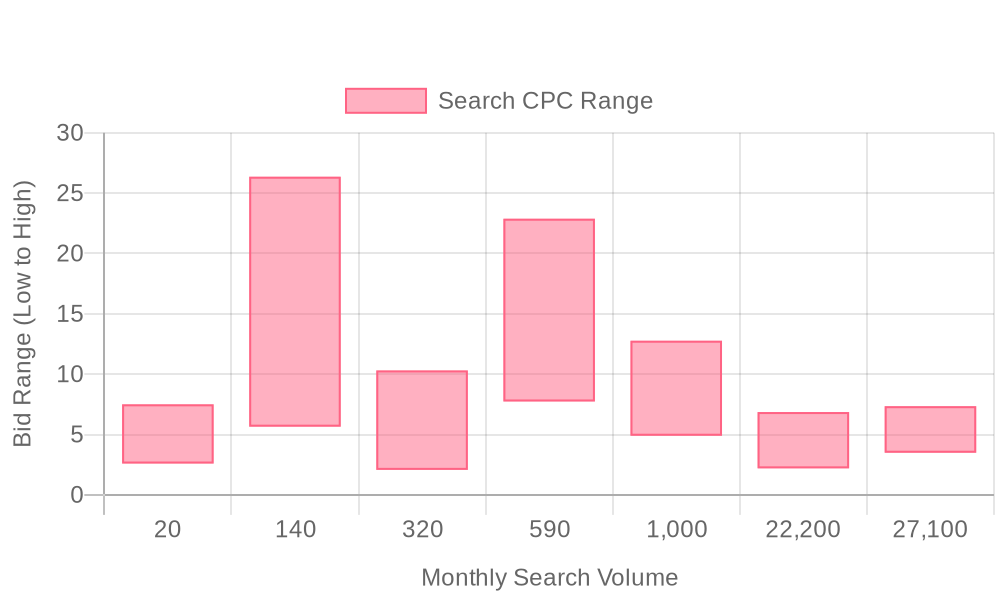
| Industry | Keyword | Monthly Search Volume | Competition Level | Low Bid | High Bid |
| Education Law Services | education law services | 20 | LOW | 2.6 | 7.5 |
| Education Law Services | criminal justice education | 140 | LOW | 5.65 | 26.36 |
| Education Law Services | lexvid cle | 320 | MEDIUM | 2.07 | 10.31 |
| Education Law Services | continuing legal education online | 590 | MEDIUM | 7.74 | 22.88 |
| Education Law Services | cle credits | 1000 | LOW | 4.9 | 12.77 |
| Education Law Services | section 504 | 22200 | LOW | 2.2 | 6.86 |
| Education Law Services | individuals with disabilities education act | 27100 | LOW | 3.49 | 7.35 |
Education law practices operate in a highly specialized environment where capturing the right intent at the right moment determines campaign success. Aligning Google Ads targeting with the nuanced language of education law ensures your firm intercepts prospective clients seeking immediate legal expertise, not just generic legal advice.
- Strategic Value in Keyword Selection: Effective keyword strategies begin by mapping the real questions and pain points of your target audience. For education law services, that means focusing on terms such as “special education attorney,” “school district legal help,” “education compliance lawyer,” and “IDEA due process legal support.” These high-intent phrases reflect urgent needs and trigger higher engagement rates, making every click more valuable to your firm’s funnel. Moving beyond broad or ambiguous terms, precise keywords ensure budget is allocated only to prospects who are actively searching for legal representation or counsel in the education sector. For a detailed guide to mastering PPC advertising for educational institutions, see this comprehensive PPC guide for education marketing.
- Precision Targeting: Precision is crucial in education law marketing. By isolating keywords that mirror the specific challenges faced by schools, districts, or parents, your campaigns sidestep wasted spend on irrelevant traffic. For example, segmenting terms like “Title IX investigation lawyer” or “504 plan legal guidance” enables your ads to appear only when prospects demonstrate immediate, relevant intent. Integrating real-time visitor identification and behavioral analytics transforms anonymous clicks into actionable company-level insights, supporting your team in prioritizing outreach and customizing messaging for every account.
- Measurable ROI: Education law firms must prove that marketing spend translates directly into qualified consultations and retained cases. Connecting keyword-driven queries to offline events, such as scheduled calls or signed retainers, creates a closed loop between digital activity and tangible business outcomes. Advanced conversion tracking lets you attribute each consultation back to the originating search term, providing data to optimize bids, pause underperforming assets, and justify ongoing investment in high-performing campaigns.
- Channel Synergy: Google Ads is most effective when it acts as the connective tissue between digital touchpoints and real-world interactions. For education law, this means leveraging audience data to sync leads into your CRM, nurture them across platforms, and deliver personalized follow-ups. As your prospects engage with emails, webinars, or resource downloads, dynamic audience updates ensure your ads remain relevant, reinforcing your expertise at every stage of their decision journey. This seamless connection between ad engagement and sales activity accelerates the path from inquiry to client, maximizing both pipeline velocity and marketing ROI.
Step-by-Step Campaign Execution Framework
Education law firms that deploy a disciplined Google Ads execution framework gain a measurable edge in acquiring qualified leads and building sustained trust in a complex legal landscape. This approach is especially effective for B2B teams seeking to convert nuanced, high-value cases where decision-makers expect both expertise and immediate responsiveness. By unifying ad performance data with intent signals and CRM context, revenue teams can prioritize the right accounts, optimize spend, and drive higher conversion rates from digital channels.
Step 1: Build Targeted Keyword Lists
Building keyword lists for education law services begins with a deep understanding of the legal issues unique to educational institutions and stakeholders. Focusing on terms that directly reference compliance, policy disputes, or specific regulations ensures ads reach decision-makers who need urgent, relevant counsel. For a deeper dive into keyword research and campaign setup, this practical guide to PPC marketing for the education sector offers actionable industry insights. Incorporating localized search modifiers, such as city names, school districts, or university identifiers, further narrows targeting, enhancing visibility among in-market prospects in your service area. Applying robust negative keywords helps eliminate unrelated traffic, safeguarding budget efficiency and ensuring only the most relevant searchers engage with your firm's message. Leveraging real-time audience data, marketers can pinpoint which keywords drive not just clicks but real pipeline impact, optimizing campaigns for both volume and lead quality.
The upgrade most education law services advertisers miss is going beyond raw keyword volume to layer in intent and identity signals. By connecting website-visitor data and CRM records with Sona Marketing Measurement, you can see which specific search terms bring in the accounts and customers that actually convert, and weight your keyword and bidding strategy toward those rather than the terms with the highest search volume alone.
Step 2: Develop Compelling Ad Copy
Effective ad copy in education law marketing must quickly address the high-stakes challenges faced by school administrators, educators, and policy stakeholders. Highlighting case studies or success metrics relevant to education compliance, while referencing industry credentials, builds immediate trust and authority. Including incentives like complimentary consultations encourages hesitant prospects to take action, while clear calls to action guide them toward the next step in their legal journey. By connecting ad creative to real-time behavioral data, revenue teams can tailor messaging for each segment, whether targeting institutions during compliance cycles or families seeking advocacy, ensuring high engagement and relevance across every touchpoint. For more on effective Google Ads strategies for legal professionals, explore this blog on Google Ads for lawyers.
Step 3: Design High-Converting Landing Pages
Landing pages for education law services should deliver a seamless transition from ad click to solution discovery, providing clarity about specific services such as Title IX defense, special education advocacy, or policy consultation. Content must be tailored to the unique needs of each audience, with testimonials from school districts or administrators instilling confidence and social proof. Streamlined forms reduce friction, and dynamic content adapts based on the visitor’s prior interactions or organization type, further boosting conversion rates. Revenue teams benefit from integrating visitor identification and intent analytics, enabling follow-up with both known contacts and previously anonymous high-value prospects.
Step 4: Implement Data-Driven Optimizations
Ongoing optimization is critical in education law advertising, where regulatory changes and client needs evolve rapidly. A/B testing different headlines, offers, or audience segments ensures campaigns remain responsive to live market dynamics, such as a new special education regulation or a district budget cycle that shifts when legal services get procured. Aligning ad engagement and conversion data with CRM insights allows for granular measurement of true lead value, beyond superficial click metrics, enabling teams to attribute ROI to specific campaigns and channels. Marketers can learn from this university Google Ads case study to see how continuous optimization delivers results. By syncing enriched lead and account data across platforms, marketers can dynamically update audience lists, retarget high-intent visitors, and shift budget toward segments with the strongest conversion signals, ensuring every dollar delivers measurable business impact.
Sona Marketing Measurement closes the gap between clicks and revenue. It captures every ad click with first-party measurement, then ties that click through UTM capture and ad-platform APIs to the actual record in your CRM, and reports ROAS by keyword and campaign instead of by last-click form fill. Feeding that revenue signal back into Smart Bidding and Performance Max compounds over time: the algorithms optimize toward booked education law services revenue, not cheap leads.
Tips on Expanding Your Education Law Services Presence
Expanding your footprint in education law requires a sophisticated blend of digital marketing and data-driven audience management. By leveraging Google Ads with strategic intent, education law firms can surface their expertise to the right institutional clients, school administrators, and advocates at pivotal decision points. For an in-depth look at PPC approaches tailored to education law, see this comprehensive guide to Google Ads for law firms.
- Cross-promotional retargeting: Aligning retargeting campaigns with highly relevant legal educational resources ensures your ads follow engaged prospects as they navigate complementary industry content. This consistent exposure positions your firm as an authority, improving recall and trust among school districts and educational organizations evaluating legal support options. Enhance retargeting by leveraging intent signals to prioritize your most engaged prospects.
- Audience-driven upselling: Utilizing granular audience insights, firms can identify which current clients are most likely to benefit from expanded service offerings, such as compliance training or policy review. Advanced platforms enable real-time segmentation, letting you dynamically serve tailored Google Ads to clients based on recent behaviors or case milestones, maximizing cross-sell and upsell opportunities without wasted impressions.
- Association partnerships: Collaborating with education law associations or related networks not only extends your reach but provides instant credibility through association-branded campaigns. Paid search efforts can be amplified by targeting audiences already vetted and nurtured by respected organizations, accelerating trust and conversion. Explore actionable marketing playbooks to discover strategies for partnership-driven lead generation.
- Search-informed content expansion: Analyzing search query data from Google Ads campaigns reveals emerging topics and pain points in education law, guiding content teams toward high-value blog posts, webinars, or downloadable guides. This feedback loop ensures your content strategy remains relevant and keyword-optimized, supporting both paid and organic lead generation. For more on performance tracking, see our guide to B2B marketing reports.
Mastery of Google Ads for education law services hinges on integrating precise keyword targeting with robust audience segmentation, allowing firms to attract more qualified leads while informing holistic marketing strategies. Through this alignment, your advertising spend is optimized, and your firm's brand becomes more visible within a competitive legal landscape. When automated audience syncing and advanced analytics are in place, campaign performance surges, allowing you to turn search intent into measurable growth and long-term client relationships.
Beyond Google Ads: Winning the AI Answers Education Law Services Buyers Now Trust
Paid search captures demand at the moment someone types a query. But a fast-growing share of education law services buyers no longer start at Google at all, they ask ChatGPT, Gemini, or Perplexity before they ever run a search, and Google's own AI Overviews increasingly summarize an answer above the traditional results. If your business isn't referenced in those AI answers, you're invisible at the exact moment buyers build their shortlist.
Sona AI Visibility shows where your business shows up across ChatGPT, Gemini, Perplexity, Google AI Overviews, and 10+ engines, and, much like a keyword report, which prompts actually send you buyers, so you can prioritize the ones that convert. Run the two together and you cover the entire buyer path: get cited where buyers research (AI Visibility), then prove which of that demand turns into booked revenue (Marketing Measurement).
Helpful resources
Conclusion
The firms winning education law clients through Google Ads five years from now will be the ones that treat search as one entry point into a longer, mostly offline relationship, tracking a click through to a booked consultation, a retained case, and eventually a referral. Build that connective tissue now, between ad platforms, CRM, and outcome data, and every dollar spent on Search or Performance Max gets smarter over time instead of just more expensive.
Ready to revolutionize your approach? Start for free to experience our platform and its capabilities today.
FAQ
What are the best practices for using Google Ads in education law?
Best practices include implementing data-driven methods to target high-value prospects, optimizing keyword and audience targeting, crafting high-conversion landing pages, and employing ongoing performance optimization.
How can education law firms effectively target their audience with Google Ads?
Firms can effectively target their audience by using precise keyword targeting, leveraging real-time visitor identification, and employing dynamic audience building to focus on prospects actively seeking education law support.
What is the cost of running Google Ads for education law services?
The article does not specify exact costs, but emphasizes optimizing marketing budgets to focus on high-intent prospects to ensure cost efficiency.
What types of ads work best for promoting education law services?
Search campaigns, display ads, video ads, remarketing, and extensions work best, with each type tailored to address specific aspects of education law services and audience engagement.
How can I measure the success of my Google Ads campaigns for education law?
Success can be measured by tracking conversions through advanced conversion tracking, integrating CRM data to see which keywords yield signed engagements, and continuously optimizing campaigns based on real-time insights.







