


Driving schools, fleet trainers, and municipal test centers don't buy simulators or assessment hardware on impulse. Purchases move through budget approval, compliance review, and often a demo request before anyone signs, which means high-intent traffic that isn't tracked properly turns into a lost deal, not just a lost click. Google Ads gives driving training equipment providers a way to reach buyers at the exact moment they're comparing simulators, test rigs, or telematics tools, and to follow up on interest that would otherwise go anonymous. Paired with offline sales data, that same targeting lets providers connect ad spend to closed revenue instead of guessing at ROI.
How to Generate Driving Training Equipment Leads with Google Ads: A Step-by-Step Guide
Buyers of driving training equipment, driving schools comparing simulators, fleet safety directors evaluating test rigs, municipalities upgrading licensing infrastructure, rarely convert on broad targeting and generic messaging. Reaching them takes precision: knowing who they are, what stage of the purchase cycle they're in, and what will move them to request a demo. Explore real-world Google Ads examples for driving schools to see what effective ad messaging looks like in practice.
A strong Google Ads strategy for driving training equipment runs on data at every stage, from identifying buyer personas to optimizing for real-time engagement, each piece tuned to the realities of a B2B purchase cycle that often includes procurement sign-off and seasonal budget cycles (many schools and fleets buy ahead of a new training season). For more on optimizing each step, visit our marketing analytics blog.
- Understand Buyer Personas: Begin by mapping out the profiles of key decision-makers in organizations seeking driving simulators, driving test equipment, and automotive training tools. Identify their pain points, budget ranges, purchase cycles, and online behavior. This clarity informs targeting and ensures ad spend focuses on accounts with the highest revenue potential. Use precise audience intelligence to build hyper-targeted segments based on intent, buying stage, and CRM data.
- Identify High-Value Prospects: Most website visitors never fill out a form, which caps how much of your traffic marketing can act on. Sona's Identity Resolution matches anonymous visits to the companies behind them, so a fleet operator or driving school researching equipment gets surfaced and added to retargeting even before they convert, keeping every serious prospect trackable and nurtured. See account identification.
- Advanced Keyword Planning: Build keyword lists by product category and by intent: someone searching "driving simulator pricing" is closer to a decision than someone searching "how driving simulators work," and both differ from a municipality searching "DMV road test equipment requirements." Use negative keywords to filter out consumer driving-lesson searches, and weight budget toward terms tied to compliance deadlines or new-season procurement, when schools and fleets are most likely to buy. See how to plan Google Ads campaigns for training equipment and adapt the approach to your audience.
- Segmented Ad Groups by Product: Organize campaigns around primary solutions, such as training simulators and assessment hardware, with ad groups for each. This segmentation keeps ad copy, keywords, and landing pages tightly aligned, boosting Quality Scores and conversion rates. As leads progress, dynamic audience updates ensure ads stay relevant, adapting creative and offers to match current buyer interests.
- Dynamic, Benefit-Focused Ad Copy: Craft messaging that clearly demonstrates the value and unique competitive advantages of your equipment. Highlight features such as advanced telemetry, compliance tracking, or modular design. A/B test headlines and descriptions to refine messaging for each audience segment, continually optimizing for engagement and qualified lead volume. For inspiration, see tips for writing high-converting ad copy.
- Conversion Tracking for Optimization: Set up conversion tracking for form fills, demo requests, and inbound calls, and connect online and offline touchpoints so a signed contract traces back to the ad that started it. Syncing CRM and ad engagement data back into Google Ads gives accurate ROI measurement and keeps sales aware of warm prospects instead of letting them go cold. Learn how conversion tracking and attribution can improve your campaign optimization.
These steps put every dollar spent on Google Ads for driving training equipment toward outcomes sales can act on. Unifying customer data with campaign insight builds a pipeline that keeps delivering leads worth a sales call. Get started for free with Sona and bring that precision to your own campaigns.
Why Google Ads Matter for Driving Training Equipment Businesses

Driving training equipment sits in a narrow, specialized market where the buyers, driving schools, fleet safety managers, procurement officers at testing agencies, are few and specific. Google Ads lets providers reach them at the moment they're actively searching, which lowers acquisition cost by putting spend in front of people who already have a need instead of a broad audience that mostly doesn't. For inspiration on ad strategies, see these Google Ads examples for driving schools.
- Niche Prospect Targeting: By leveraging Google Ads, companies gain access to individuals and institutions actively seeking driving training solutions, such as driving schools, fleet managers, and educational organizations. This precision targeting reduces wasted ad spend and boosts campaign efficiency by prioritizing users with demonstrated intent. Marketers looking to further refine their audience targeting should consider real-time audience segmentation for maximum relevance.
- Real-Time Campaign Optimization: With a data-driven approach, marketers can monitor campaign performance and make real-time adjustments based on audience engagement and search intent. This agility ensures that budgets are continuously allocated to the highest-performing segments, maximizing reach and conversion rates. Explore more insights in our marketing analytics blog.
- Enhanced Audience Visibility: Company-level identification tools reveal which organizations are visiting your site even before they fill out a form, enriching custom audiences with verified firmographic and behavioral data. That means retargeting and lookalike modeling can be built around accounts that fit your buyer profile, not just people who happened to convert. Visitor identification technology lets teams reach organizations that have shown real engagement, a fleet manager who spent time on a pricing page, for instance, without waiting for a form fill.
For providers of driving simulators, driving school equipment, and automotive training devices, Google Ads forms the backbone of scalable lead generation and account-based marketing. When paired with unified go-to-market data, every click, impression, and conversion delivers actionable insight, enabling marketers to refine messaging, optimize creative, and accelerate pipeline growth. To experience these benefits firsthand, get started for free with Sona.
Common Types of Google Ads Campaigns for Driving Training Equipment

- Search Campaigns: Capture high-intent buyers searching for specific driving training equipment or services, such as simulators or safety tools. These campaigns reach prospects actively comparing options, making it critical to keep messaging consistent across ads and landing pages. With Sona's Identity Resolution, marketers can identify not just anonymous traffic but the actual companies engaging with these keywords, enabling tailored follow-ups and increasing qualified lead volume.
- Display Ads: Build brand recognition among fleet managers, training coordinators, and procurement teams by placing visually engaging banners on industry-relevant websites. Display campaigns are effective for reaching broader audiences who may not be actively searching but have shown interest in related topics. Leveraging dynamic audience sync, display ads can target contacts as they move through the decision cycle, ensuring your brand stays top-of-mind with evolving buyer groups. For inspiration, review these Google Ads examples for driving schools.
- Video Ads: Demonstrate the benefits of driving simulators, telematics devices, or advanced driver-assistance systems with high-impact video content. Video ads excel at explaining complex features and differentiating premium equipment in a crowded B2B landscape. Sona surfaces real-time intent signals to direct spend toward viewers who show high engagement or revisit pricing and demo pages, increasing the efficiency of every advertising dollar.
- Remarketing: Reconnect with training directors and purchasing agents who visited your site but left before converting, perhaps after viewing product demos or requesting catalogs. Remarketing campaigns keep your solutions visible with tailored messaging and offers, reducing the pain of lost opportunities. By integrating CRM and site analytics, remarketing lists can automatically update as prospects move through different sales stages, delivering timely, relevant ads based on actual buying signals.
- Performance Max: Run a single campaign across Search, Display, YouTube, and Gmail to find driving training equipment buyers wherever they're active, useful when your audience (fleet operators, municipal procurement, driving schools) is too fragmented across channels for manual campaign-by-campaign management. Feed it strong conversion data, demo requests and closed deals, not just clicks, so Google's bidding optimizes toward buyers who actually purchase equipment.
Where to Find Growth Opportunities?
Pinpointing actionable growth opportunities in the driving training equipment sector requires more than surface-level market research. Teams that systematically uncover untapped demand consistently outperform competitors and secure a stronger foothold with buyers who are actively searching for solutions. Get started for free with Sona.
- Competitor gap analysis: Evaluate direct and indirect competitors to find under-served regions, specialized equipment needs, and overlooked verticals, a state with new licensing requirements but few local simulator vendors, for instance. Mapping where competitors' ads miss buyer intent lets you design campaigns that fill those gaps directly. Using unified account data and intent analytics helps marketers identify companies and decision-makers actively researching driving simulators, school equipment, or test solutions, not just impressions.
- Vertical keyword targeting: Use research-backed vertical keyword sets to reach niche audiences such as fleet trainers, commercial driving schools, or municipalities upgrading testing infrastructure. This approach surfaces new buying groups and high-margin equipment categories. Real-time tracking of keyword-level engagement helps optimize spend on the most responsive segments, ensuring budget is allocated to audiences showing strong purchase signals.
- Undervalued ad placements: Explore placements in authoritative industry forums, professional certification platforms, and targeted content hubs like these real-world Google Ads examples for driving schools. These environments attract stakeholders with clear intent, often overlooked by broader campaigns. Integrating CRM and web analytics data with Google Ads enables seamless retargeting, nurturing leads who have shown early interest in driving education tools but have yet to convert. This alignment accelerates the path from awareness to qualified pipeline, as enriched lead data automatically syncs across channels for persistent engagement.
How to Apply Audience Segmentation for Driving Training Equipment
Audience segmentation is essential for revenue teams marketing driving training equipment. The right segmentation strategy ensures outreach is purposeful, resource-efficient, and capable of delivering tailored messaging that resonates with each subset of your ideal customer profile. For more guidance on segmentation and other B2B marketing strategies, visit our blog.
- Segment by Industry Type: Divide your audience into groups such as driving schools, professional driver training centers, fleet operators, and auto safety organizations. Each sector has unique purchasing drivers: driving schools often prioritize student volume and pass rates, while professional training centers may focus on advanced simulators and compliance tools. By creating these industry-based segments within your Google Ads campaigns, you can customize ad copy and creative assets to address sector-specific needs, drastically increasing engagement and reducing wasted impressions. For inspiration, see real-world Google Ads examples for driving schools.
- Overlay Intent Signals: Enhance your segments with behavioral and intent data. Prospects searching "driving instructor certifications" are at a distinctly different stage than those researching "bulk driving simulators purchase." Aligning campaigns with these intent signals lets you serve relevant ads that move buyers through the funnel faster. Sona surfaces real-time intent signals so marketers can see not just who is visiting, but what they're ready to buy, supporting quick budget shifts toward high-conversion accounts.
- Craft Distinct Ad Groups for Each Segment: Build ad groups that address the specific needs, pain points, and desired outcomes of each segment. For example, an ad group targeting driving schools may promote entry-level training equipment bundles, while another for enterprise training centers highlights integration capabilities and advanced analytics. This structure avoids inefficient outreach to low-intent or misaligned contacts, maximizing return on ad spend. With unified audience management, dynamic updates ensure your segments are always aligned with CRM data and real-time website activity, so prospects move seamlessly into new ad groups as their engagement deepens.
By combining industry segmentation, intent overlays, and dynamic ad group management, B2B marketers can deliver highly relevant ads to buyers of driving training equipment at every stage. Integrating enriched audience data from CRM and website analytics into platforms like Google Ads ensures ongoing precision and adaptability, facilitating data-driven decisions that boost campaign performance. Ready to refine your segmentation and campaign results? Get started for free with Sona.
This is also where measurement changes the economics. With Sona Marketing Measurement you can identify the companies and buyers behind your ad clicks, not just anonymous sessions, and segment audiences by who actually becomes a customer. That lets you build bid adjustments and audience signals around the segments that convert and de-prioritize the ones that don't, so you feed Google's algorithms "this click became a paying driving training equipment customer" instead of just "someone filled out a form."
Keyword Strategy & Sample Target Terms
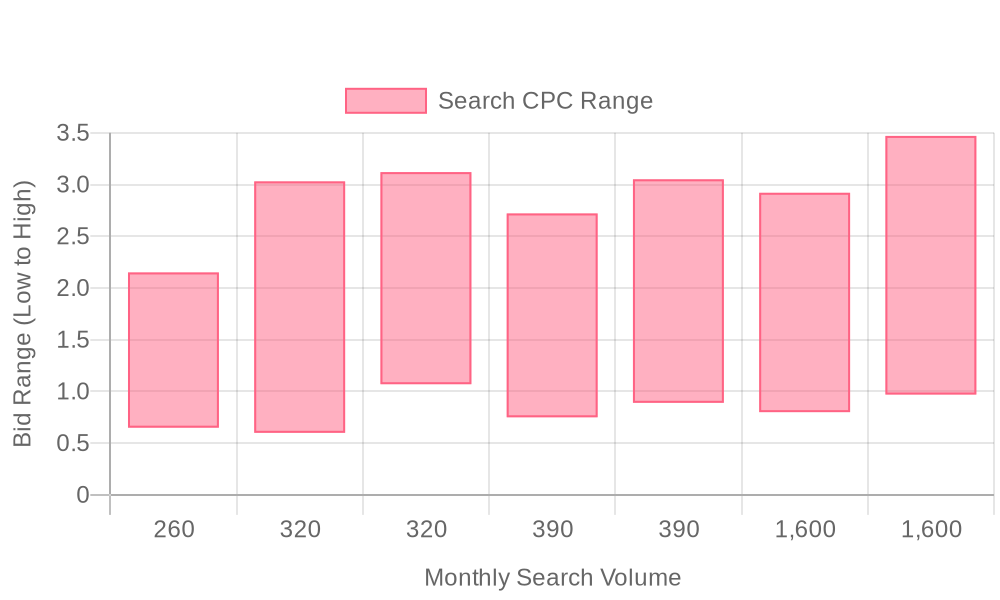
| Industry | Keyword | Monthly Search Volume | Competition Level | Low Bid | High Bid |
| Driving Training Equipment | forklift operator training near me | 260 | LOW | 0.65 | 2.15 |
| Driving Training Equipment | forklift driver training near me | 320 | MEDIUM | 0.6 | 3.03 |
| Driving Training Equipment | dump truck driver training | 320 | LOW | 1.07 | 3.12 |
| Driving Training Equipment | forklift driver training | 390 | LOW | 0.75 | 2.72 |
| Driving Training Equipment | certified forklift driver | 390 | MEDIUM | 0.89 | 3.05 |
| Driving Training Equipment | forklift operator training | 1600 | LOW | 0.8 | 2.92 |
| Driving Training Equipment | certified forklift operator | 1600 | LOW | 0.97 | 3.47 |
A robust keyword strategy is foundational for high-impact campaigns in the driving training equipment sector. Targeting intent-rich search terms such as "Google Ads for driving training equipment ROI," "driving simulators," and "training tools" ensures every ad dollar is allocated to capturing decision-makers who are ready to invest in advanced education solutions. For inspiration on ad messaging and targeting, explore these Google Ads examples for driving schools. Prioritizing these primary keywords supports visibility among commercial buyers, fleet managers, and training providers looking for specialized equipment.
Integrating organic search insights directly into ad targeting further refines audience quality. By aligning paid and organic keyword data, marketers can uncover nuanced search patterns and adapt bids for high-value prospects. This approach enables revenue teams to dynamically shift spend toward keywords that consistently attract qualified leads, maximizing marketing efficiency across digital channels with help from real-time audience segmentation.
Negative keywords are crucial for filtering out irrelevant traffic. Excluding terms like "free driving lessons" or "car rental" prevents budget waste and directs impressions toward true buyers in the driving education market. Regularly updating the negative keyword list based on real-time campaign data and CRM feedback further sharpens targeting, helping marketers focus on accounts with proven purchase intent and higher lifetime value. To experience advanced keyword and audience targeting firsthand, get started for free with Sona.
Step-by-Step Campaign Execution Framework
Success in Google Ads for Driving Training Equipment hinges on precision, data, and alignment between audience intent and offer. High-performing campaigns consistently connect the right message with the right prospect at the right time, translating digital engagement into qualified pipeline. For deeper insights on marketing analytics and attribution, visit the blog for marketing analytics.
Executing each step with an integrated approach streamlines handoffs between marketing and sales, turning web activity into actionable insight. Robust data flows ensure revenue teams can react to buyer signals and adapt strategies in real time. If you're ready to turn digital engagement into qualified pipeline, get started for free with Sona.
Step 1: Build Targeted Keyword Lists
Effective campaigns begin with deep keyword research tailored to the driving training equipment sector. Focus on terms that capture intent across the buyer journey: "Google Ads for driving school equipment," "Google Ads for driving simulators," and "Google Ads for driving education tools" all point to unique needs and readiness stages. Use both broad and phrase match to capture varied search behaviors, and deploy negative keywords to filter out irrelevant clicks, maximizing ad spend efficiency.
Audience enrichment matters here. Tools that identify the specific organizations visiting your site, not just anonymous traffic, let marketers continuously refine keyword lists based on real buyer activity and in-market intent. Sona's Identity Resolution reveals which companies are visiting your site so you can align campaigns tightly with actual buying signals. For practical inspiration, review Google Ads examples for driving schools to see how keyword targeting translates into real-world results.
The upgrade most driving training equipment advertisers miss is going beyond raw keyword volume to layer in intent and identity signals. By connecting website-visitor data and CRM records with Sona Marketing Measurement, you can see which specific search terms bring in the accounts and customers that actually convert, and weight your keyword and bidding strategy toward those rather than the terms with the highest search volume alone.
Step 2: Develop Compelling Ad Copy
Compelling ad copy for driving training equipment must directly address pain points like regulatory compliance, training efficiency, and safety outcomes. Highlight key differentiators: advanced simulator accuracy, seamless curriculum integration, or ROI from reduced accident rates. Use clear calls to action that prompt buyers to take the next step, such as downloading product specs or booking a live demo.
Dynamic audience segmentation ensures messaging adapts as prospects move through the funnel. By syncing real-time audience segments with Google Ads, teams can create hyper-relevant variations for each segment, driving higher engagement and lowering cost per acquisition. For more actionable advertising tactics tailored to the driving industry, explore driving school advertising tips.
Step 3: Design Effective Landing Pages
Landing pages for driving training equipment should reinforce ad messaging and address objections head-on. Use concise headlines, trust signals (like certifications or testimonials), and a single, visible call to action. Design each page for fast loading and seamless mobile experience, knowing that many prospects will interact via tablet or phone on the job site or in the field.
Each landing experience should match both the ad segment and the identified company or buyer persona. By integrating real-time visitor identification, marketers can personalize content, relevant case studies, pricing tiers, or product demos based on the visitor's industry or stage in the buying process. This unified journey increases conversion rates and shortens sales cycles. For a step-by-step playbook on improving conversions, check out the buying stage segmentation advantage.
Step 4: Implement Data-Driven Optimizations
Continuous optimization is critical for Google Ads in the driving training equipment space. Set up robust conversion tracking to measure form fills, downloads, demo requests, and offline sales touchpoints. Use attribution modeling to connect ad spend to pipeline and closed revenue, providing true ROI visibility.
Integrating CRM enrichment and behavioral data lets revenue teams automatically update audience lists as leads engage or disqualify. As high-intent accounts show in-market behavior, budgets can shift quickly to maximize reach and impact. Real-time syncing between campaign platforms and CRM ensures no high-value lead is missed and every conversion traces back to its source, supporting agile, data-driven optimization.
Sona Marketing Measurement closes the gap between clicks and revenue. It captures every ad click with first-party measurement, ties that click through UTM capture and ad-platform APIs to the matching company record in your CRM, and reports ROAS by keyword and campaign instead of by last-click form fill. Feeding that revenue signal back into Smart Bidding and Performance Max compounds over time: the algorithms optimize toward booked driving training equipment revenue, not cheap leads.
Tips on Expanding Your Driving Training Equipment Presence

Expanding your driving training equipment brand requires a unified approach across digital and traditional channels. Market leaders consistently outperform by aligning every touchpoint, ensuring prospects receive a seamless journey from discovery to purchase. For a deeper dive into actionable tactics, explore our marketing playbooks.
- Co-market with industry partners: Collaborate strategically with driving schools, automotive safety organizations, and training institutions. Aligning messaging across all partner channels amplifies reach while presenting a consistent value proposition to shared target audiences. This coordinated approach increases credibility and draws in high-value leads already invested in the driving education ecosystem. For inspiration on campaign ideas and real-world examples, browse Google Ads examples for driving schools.
- Utilize branded content marketing: Develop authoritative content that addresses industry pain points, showcases product capabilities, and educates audiences on emerging trends in driving simulators or testing solutions. Consistent branded content fosters trust and loyalty, minimizing the disconnect that often arises from fragmented campaigns. By integrating real-time audience insights and engagement data, marketers can adapt messaging dynamically as prospects move from awareness to decision, ensuring every asset contributes to the broader funnel.
- Leverage geo-targeting with Google Ads: Deploy precision-targeted campaigns to high-opportunity regions, focusing resources where instructor demand, school density, or regulatory changes accelerate equipment adoption. Geo-targeted campaigns for driving training equipment, such as simulators, test equipment, and education tools, deliver tailored messages to local decision-makers, resulting in higher engagement and conversion rates. Unifying Google Ads audience data with CRM insights enables marketers to identify website visitors and attribute offline sales to digital campaigns for seamless data activation.
Driving training equipment businesses that blend these strategies gain a sustainable competitive advantage. Strategic planning, refined keyword targeting, and continuous optimization, combined with a unified data foundation, ensure every marketing effort is measurable, adaptable, and directly tied to pipeline growth. Integrating these practices into a broader digital marketing strategy ensures that online lead generation and offline sales efforts work together to convert search interest into valuable, long-term customer relationships. Ready to elevate your marketing results? Get started for free with Sona.
Beyond Google Ads: Winning the AI Answers Driving Training Equipment Buyers Now Trust
Paid search captures demand at the moment someone types a query. But a fast-growing share of driving training equipment buyers no longer start at Google at all, they ask ChatGPT, Gemini, or Perplexity before they ever run a search, and Google's own AI Overviews increasingly summarize an answer above the traditional results. If your business isn't referenced in those AI answers, you're invisible at the exact moment buyers build their shortlist.
Sona AI Visibility shows where your business shows up across ChatGPT, Gemini, Perplexity, Google AI Overviews, and 10+ engines, and, much like a keyword report, which prompts actually send you buyers, so you can prioritize the ones that convert. Run the two together and you cover the entire buyer path: get cited where buyers research (AI Visibility), then prove which of that demand turns into booked revenue (Marketing Measurement).
Helpful resources
Conclusion
Harnessing the power of Google Ads to promote driving training equipment can be a game-changer for your business. By strategically using targeted advertising, you can effectively reach your desired audience, enhance your brand visibility, and drive sales conversions. The key is understanding the unique dynamics of your market and leveraging data-driven insights to optimize your campaigns.
The buyers you're chasing, driving schools sizing up a simulator purchase, fleet directors under a compliance deadline, procurement officers comparing vendors ahead of budget cycles, are also starting to ask AI tools for recommendations before they ever open Google. Campaigns that pair tight Search targeting with the identity and measurement layer described above are positioned to show up in both places: the search results today, and the AI-generated shortlist tomorrow.
FAQ
What are the best Google Ads strategies for driving training equipment?
The best strategies include audience segmentation, using high-intent keywords, crafting benefit-focused ad copy, setting up conversion tracking, and aligning campaigns with offline sales to maximize ROI.
How can I target the right audience with Google Ads for driving training equipment?
Targeting the right audience involves understanding buyer personas, using audience intelligence to build hyper-targeted segments, leveraging visitor identification, and dynamically updating audience lists.
What are some successful Google Ads examples for driving training equipment?
Successful examples include campaigns that use search, display, video, and remarketing ads tailored to driving school equipment, focusing on features like regulatory compliance and training efficiency.
How can I measure the ROI of my Google Ads campaign for driving training equipment?
Measure ROI by setting up comprehensive conversion tracking, integrating CRM and ad engagement data, and using attribution modeling to connect ad spend to pipeline and closed revenue.
What are the most effective keywords for Google Ads in the driving training equipment industry?
Effective keywords include 'driving simulators,' 'training tools,' and terms that capture intent across the buyer journey, avoiding terms like 'free driving lessons' to filter out irrelevant traffic.







