


Dance studios sell a moment, not a product: the day a parent decides their kid should try ballet, or the week after New Year's when an adult finally signs up for salsa. Google Ads plays a critical middle-funnel role in that decision, capturing prospects at the exact moment they're searching, while email nurtures existing students, trade shows and open houses build local reputation, and SEO earns the long-tail traffic that paid search can't touch cost-effectively. For dance instruction businesses, Google Ads bridges online and offline marketing: intercept decision-makers right after a promotional class event or a direct mail piece lands; target by dance style and instructor qualifications specific to your studio; track ROI from click to enrollment inquiry to student registration, connecting digital touchpoints with what happens on the studio floor; and complement other channels by remarketing to students, event attendees, and site visitors alike.
How to Generate Dance Instruction Leads with Google Ads: A Step-by-Step Guide
Dance instruction programs operate in a competitive landscape where every inquiry counts. Effective lead generation must capitalize on both search intent and digital engagement, using real-time visitor identification to prioritize high-value prospects and streamline follow-up.
This playbook delivers a robust, multi-channel approach to dance class advertising, integrating Google Ads for Dance Instruction within a unified marketing system. With a focus on precision targeting, conversion-centric creative, and measurable outcomes, dance instructors and studio owners can reach motivated learners while optimizing their overall marketing spend.
- A data-driven approach to paid search: Treat Google Ads as a lever for scalable lead generation within your broader dance school marketing mix. Combining PPC for dance studios with data from your website and CRM lets you prioritize budget toward high-intent searchers, improving both lead quality and cost efficiency. Real-time audience segmentation pinpoints prospective students and organizations directly, rather than relying on generic traffic analytics.
- Keyword and audience targeting strategies: For dance instructor marketing, rigorous keyword research is essential. Identify terms such as "online dance class promotion," "dance lesson ads," and "local dance advertising" to attract students actively seeking instruction. Audience segmentation powered by recent engagement or in-market behavior enables dynamic updates to campaign targeting, so your dance studio visibility efforts remain aligned with the most conversion-ready prospects.
- Landing page and creative alignment techniques: High-performing Google Ads for Dance Instruction require seamless alignment between ad copy and landing page experience. Craft messaging that mirrors your keywords and addresses the unique needs of dance learners. Optimized landing pages, featuring clear calls to action, mobile responsiveness, and fast load times, turn ad clicks into qualified inquiries.
- Performance optimization tactics: Continuous improvement is at the heart of successful dance instruction online ads. Implement advanced conversion tracking to capture both online registrations and offline class sign-ups, providing end-to-end attribution for every lead. This granular data enables revenue teams to refine bids, budgets, and creative assets for maximum ROI.
- Cross-channel integration methods: Synchronize your Google Ads strategies for dance with CRM and marketing automation systems to unify audience management and lead nurturing. Automated audience sync ensures leads are instantly activated across channels, while attribution modeling highlights which touchpoints drive new enrollments. This approach reinforces your dance school marketing ecosystem and increases the impact of every digital dollar.
Built for dance instructors, studio owners, and marketing professionals, this guide is meant to help you generate qualified leads efficiently. Unified data and integrated workflows let you elevate your dance lesson advertising and turn it into measurable enrollment growth. Ready to optimize your lead generation? Get started for free with Sona.
Why does Google Ads matter for Dance Instruction?

Precision paid search unlocks growth for dance studios and instructors by targeting people exactly when they are searching for classes. Unlike broad social campaigns, Google Ads for Dance Instruction provides a direct path to capture students and parents actively seeking dance opportunities in their area. This approach not only accelerates enrollment but ensures that marketing budgets focus on high-intent prospects instead of casual browsers.
Dance studios often offer a range of classes, each with different margins and appeal. While email and organic efforts nurture your existing community, PPC for dance studios allows you to spotlight your most profitable offerings, such as advanced ballet, hip-hop intensives, or specialty workshops. Paid search enables granular targeting so high-value classes get premium visibility when demand surges, maximizing revenue per seat. For ideas on optimizing your dance studio’s paid strategy, explore our marketing playbooks.
Google Ads acts as a real-time demand lever for dance schools. When enrollment windows open or new sessions launch, campaigns can be deployed or adjusted instantly to meet spikes in search activity, particularly useful around the September and January enrollment surges most studios see. This agility also helps when reaching new neighborhoods or regions where traditional marketing lacks penetration. With advanced integrations, marketers can move beyond anonymous traffic, identifying which companies or organizations are behind clicks on dance lesson ads, and shifting budget toward the segments showing the strongest intent.
Effective dance school marketing hinges on accurate measurement. Google Ads provides closed-loop analytics from first click through to registration, letting teams optimize spend and messaging across every channel. By integrating CRM and ad platforms, enriched audience segments and warm leads flow seamlessly into nurture streams and retargeting lists, so no interested dancer slips through the cracks. That integrated view turns every click into actionable insight for more strategic, profitable online dance class promotion.
Common Types of Google Ads Campaigns for Dance Instruction Services

- Search Campaigns: Capture urgent or high-intent queries at the bottom of the funnel, converting interest generated by other channels. Search campaigns matter most for dance instruction providers when someone is actively searching for classes, lessons, or a specific dance style in their area, often within days of wanting to start. Responsive search ads, an ad format within these campaigns, let you test multiple headlines and descriptions to see which resonates with parents versus adult beginners. By integrating advanced visitor identification and real-time intent data, marketers can prioritize spend on high-converting keywords and reach organizations signaling immediate interest, improving both response rates and cost efficiency.
- Display Ads: Stay top-of-mind across content sites relevant to potential students, reinforcing messages from your email and social campaigns. Display ads support upper- and mid-funnel efforts by keeping your dance studio or class visible during a prospect's research phase. With dynamic audience syncing, you can ensure that ad creative is shown only to the most relevant audience segments as they progress through the decision-making journey, increasing the likelihood of return visits and deeper engagement. Explore more actionable strategies in our marketing playbooks.
- Video Ads: Demonstrate the vibrancy and energy of dance classes visually, extending the reach of your content marketing efforts. Video ads are highly effective for showcasing class culture, instructor expertise, and student testimonials, elements that build emotional connection and credibility. Platforms that unify online and offline engagement signals allow you to measure how video views correlate with inquiries or sign-ups, providing actionable insights to further optimize creative assets and budget allocation.
- Remarketing: Re-engage past site visitors or class inquiry abandoners, creating multiple touchpoints across channels. Remarketing campaigns are crucial in dance instructor marketing to recapture the attention of prospects who explored your offerings but did not convert. By leveraging dynamic audience lists that automatically update based on real-time behaviors and CRM actions, your remarketing ads remain targeted and relevant, reducing wasted impressions and increasing the probability of enrollment or inquiry. For a detailed look at how dance instructors can increase visibility with Google Ads, check out this guide for dance instructors.
- Assets: Add trust signals like location, instructor credentials, and reviews to validate claims made elsewhere in your marketing. Ad assets (formerly called extensions) enhance the credibility of your dance lesson ads, giving searchers immediate access to directions, instructor bios, or class reviews. When assets are enriched with unified data from your CRM and marketing stack, every touchpoint stays informative and personalized, driving higher engagement and conversion for dance school marketing and local dance advertising campaigns.
Where to Find Growth Opportunities?
Dance instruction businesses can expand their digital footprint by moving beyond conventional marketing tactics. Growth comes by targeting untapped audiences and deploying granular segmentation that identifies true purchasing intent with real-time visitor identification.
- Vertical Keyword Targeting: Focus on search terms related to specific dance styles such as salsa, ballet, or hip-hop. Targeting these verticals improves discoverability for specialized classes and attracts students seeking niche expertise, not just general dance lessons. Because interest in a style like ballroom often spikes around wedding season while youth hip-hop searches rise each fall, Sona surfaces intent signals so marketers can adjust campaigns toward high-converting prospects at the right moment, directing budget where it's most likely to convert.
- Competitor Gap Analysis: Use advanced SEO tools to analyze where competitors are missing out on valuable search segments. Identifying keywords and placements your rivals overlook reveals pockets of demand for your dance studio. Syncing this insight with real-time audience data allows for agile campaign launches in those gaps, and ensures enriched audience profiles are primed for retargeting and nurture across both paid and owned channels. For more on leveraging Google Ads for dance studios, see this comprehensive strategy guide.
- Industry-Specific Placements: Dance forums, instructor directories, and local parenting or events sites offer placements for ads and content that might not rank organically, and they reach parents comparing studios or adults researching a first class before they ever type a branded search. Securing inventory in these spaces boosts visibility with an already engaged audience. Enhanced tracking and advanced attribution at the company or account level validates performance, allowing smarter budget allocation and a clear read on which channels drive actual studio visits or sign-ups.
- Content Retargeting: Deploy checklists, dance guides, or explainer videos as part of your content marketing calendar, then retarget visitors who interact with these assets. Dynamic audience segmentation ensures that as leads consume more content or demonstrate higher intent, your ads evolve in real time, serving the most relevant offers and calls to action. This continuous loop between content engagement and ad personalization not only maximizes conversion rates but also provides deep insights into what content accelerates decision-making for prospective dance students.
To further explore advanced retargeting strategies, focus on integrating behavioral signals and account-level insights to continually refine your dance class advertising and improve ROI.
How to Apply Audience Segmentation for Dance Instruction
Audience segmentation is the foundation of sophisticated dance instructor marketing and essential for maximizing the ROI of Google Ads for Dance Instruction. Segmenting your audiences unlocks deeper personalization, ensuring that every ad dollar is spent reaching people most likely to enroll and engage. Explore actionable insights on building signal-based audiences to boost targeting precision.
- Define Segments: Begin by clearly delineating your target groups. For dance instruction, this typically means separating children’s classes from adult offerings and further dividing by experience level, such as beginner, intermediate, or advanced. Each segment has distinct motivations and search behaviors: for example, parents seeking introductory ballet for kids versus adults looking for advanced salsa workshops. For more tips on structuring effective dance studio campaigns, check out this guide on Google Ads for dance studios.
- Overlay Intent Signals: Layer behavioral and contextual data atop these demographic segments. Identify routine beginners searching for "dance lessons near me" or "how to start hip hop dance," as well as competitive dancers seeking to upgrade skills before audition season. Sona surfaces intent signals in real time so marketing teams can dynamically shift budget and messaging toward the segments showing the highest propensity to convert, optimizing spend for both local dance advertising and broader online dance class promotion.
- Create Ad Groups by Segment: Structure Google Ads campaigns by these well-defined audience slices. Customize each ad group’s creative, budget, and bidding strategies to match the unique language, imagery, and offers that resonate with each segment. For example, highlight flexibility and fun for children’s ads, while emphasizing technique mastery and performance outcomes for adult or advanced classes. Leveraging a unified data platform for marketers allows teams to update audience criteria and creative assets as leads progress through the funnel, ensuring dance lesson ads remain relevant and actionable.
- Validate Conversion Paths: Robust conversion tracking closes the loop between ad engagement and actual enrollments or inquiries. Integrate online and offline touchpoints, such as landing page sign-ups, phone calls, and in-person trial bookings, directly into your CRM. With advanced attribution, teams can measure the true impact of each campaign, refining Google Ads strategies for dance studios based on which segments and channels drive the highest-quality leads. Syncing CRM and ad platforms keeps audience lists reflecting real-time lead status, making every follow-up more precise and dance school marketing campaigns more efficient.
This is also where measurement changes the economics. With Sona Marketing Measurement you can identify the companies and buyers behind your ad clicks, not just anonymous sessions, and segment audiences by who actually becomes a customer. That lets you build bid adjustments and audience signals around the segments that convert and de-prioritize the ones that don't, so you feed Google's algorithms "this click became a paying dance instruction customer" instead of just "someone filled out a form."
Keyword Strategy & Sample Target Terms
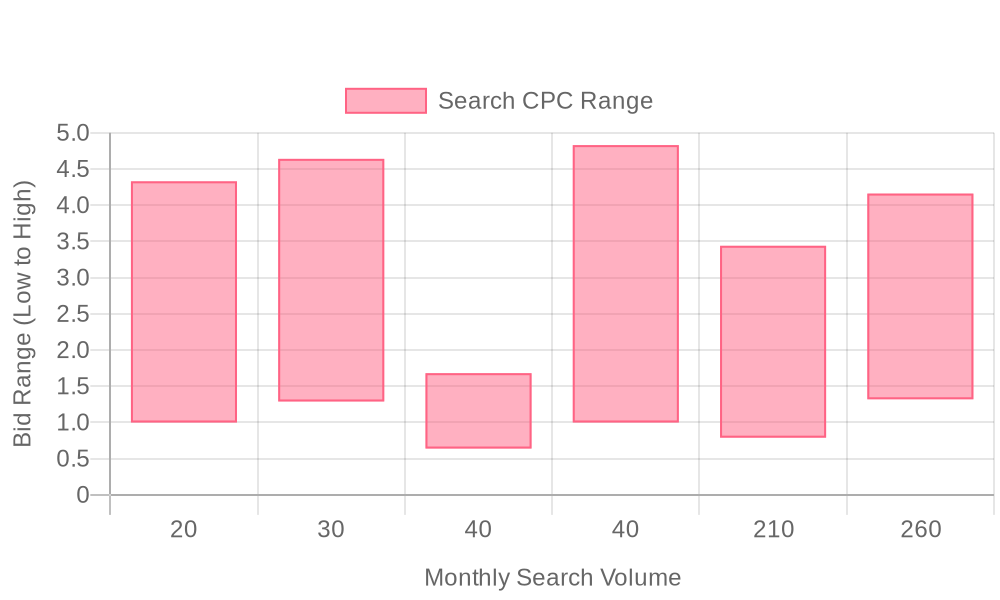
| Industry | Keyword | Monthly Search Volume | Competition Level | Low Bid | High Bid |
| Dance Instruction | adult dance instruction | 20 | LOW | 1 | 4.33 |
| Dance Instruction | ballet instruction | 30 | LOW | 1.29 | 4.64 |
| Dance Instruction | ballroom dance instruction | 40 | LOW | 0.64 | 1.68 |
| Dance Instruction | ballroom dance instruction near me | 40 | MEDIUM | 1 | 4.83 |
| Dance Instruction | dance instruction near me | 210 | LOW | 0.79 | 3.44 |
| Dance Instruction | dance instruction | 260 | LOW | 1.32 | 4.16 |
A robust keyword strategy is the foundation of effective Google Ads for Dance Instruction. Identifying high-intent search terms enables revenue teams to align ad spend with motivated prospects looking for dance classes, lessons, or instructor-led training. Unlike broad digital outreach, paid search pinpoints decision-makers ready to convert, ensuring marketing budgets drive real pipeline growth. For a comprehensive guide on building campaigns, explore this step-by-step tutorial for dance studios.
Start by mapping keyword themes directly to buyer intent. Include terms such as “dance classes near me,” “online dance lessons,” “private dance instruction,” “PPC for dance studios,” and “dance instructor marketing.” Capture both local and virtual audiences by layering geographic modifiers and class types, such as “ballet lessons in [city],” “hip hop dance class online,” or “best dance instructors for kids.” This approach enables precise segmentation for dance studio visibility and online dance class promotion. To further refine your strategy, review actionable guidance in our marketing playbooks.
Refining keyword lists with intent signals, behavioral data, and CRM insights allows marketers to dynamically optimize campaigns. Integrating with platforms that enrich audience profiles and track engagement across channels ensures keywords stay relevant as prospects move from awareness to enrollment. Leveraging advanced attribution, teams can measure which search terms drive inquiries and registrations, continually updating their keyword strategy to maximize ROI and outpace local dance advertising competition. Unlock additional campaign insights and get started for free with Sona.
Step-by-Step Campaign Execution Framework
A well-structured Google Ads strategy is crucial for dance studios and instructors aiming to maximize visibility and attract high-intent students. This framework empowers marketers to own each stage of the funnel, from precise targeting and messaging to transparent measurement and ongoing optimization. For a detailed overview of digital marketing solutions tailored to dance instruction, visit dance instructor marketing. If you want to see more strategies on marketing attribution and growth, browse our blog.
Step 1: Build Targeted Keyword Lists
Effective Google Ads for dance instruction begin with tightly clustered keyword lists. Group keywords by dance style, such as ballet, salsa, or hip-hop, and further localize by including city names and “near me” modifiers to capture students actively searching in your area. Expand coverage with long-tail and instructional queries that reflect real search intent, like “private hip-hop lessons for beginners” or “adult ballet classes near [city].” Apply negative keywords to filter out irrelevant clicks and protect your budget.
Aligning keyword clusters with the language found on your website and in your course descriptions improves ad relevance and Quality Score. By using audience segmentation, marketers can identify which keyword variants drive the most engagement, refine their lists faster, and ensure that ad dollars focus on audiences most likely to enroll. Unified keyword insights allow for continuous synchronization between what’s searched, what’s advertised, and what’s offered, driving more qualified inquiries.
The upgrade most dance instruction advertisers miss is going beyond raw keyword volume to layer in intent and identity signals. By connecting website-visitor data and CRM records with Sona Marketing Measurement, you can see which specific search terms bring in the accounts and customers that actually convert, and weight your keyword and bidding strategy toward those rather than the terms with the highest search volume alone.
Step 2: Develop Compelling Ad Copy
Targeted ad copy should address the unique pain points of prospective dance students. Use headline variations that speak to beginners’ nerves or advanced dancers’ ambitions. Highlight trust markers like instructor certifications, five-star studio reviews, and years in business to build credibility. Create urgency with incentives: feature free trials, new student discounts, or limited-time enrollment offers in your descriptions.
Leverage ad extensions such as call buttons and structured snippets to increase click-through rates and provide instant access to key information. For a practical guide on building high-performing Google Ads campaigns, see step-by-step Google Ads setup. To explore actionable playbooks for campaign messaging, visit our playbooks.
Step 3: Design Effective Landing Pages
Landing pages play a pivotal role in converting ad clicks into enrollments. Ensure 1:1 alignment between the keyword, ad, and landing page content so every visitor lands on a page tailored to their search intent, whether that’s a specific dance style or skill level. Segment landing pages to address different user personas, such as kids’ classes, adult beginners, or competitive dancers.
Include clear benefits, authentic testimonials, and a concise FAQ section to address objections and build trust. Calls-to-action should be persistent, visible, and optimized for mobile devices to capture inquiries from on-the-go users. Integrating forms on these pages with your CRM streamlines lead capture, allowing for real-time syncing of new prospects directly into sales workflows. As audiences engage, enriched lead profiles can be dynamically pushed into Google Ads for precise retargeting and audience expansion.
Step 4: Implement Data-Driven Optimizations
Continuous optimization drives sustained growth in dance class advertising. Track both micro-conversions (like free trial signups) and macro-conversions (like paid enrollments) to understand user intent and value at each stage. Use automated bidding strategies, like Target CPA or Max Conversions, to allocate budget toward the highest-performing keywords and audience segments.
A/B test headlines, ad descriptions, and CTA placements to uncover what motivates action. Importing offline conversions, such as phone enrollments or in-person signups, provides a fuller picture of campaign ROI. Advanced platforms enable marketers to unify Google Ads data with CRM and offline sales, allowing for more granular attribution and smarter budget allocation. For additional insights into optimizing your dance studio’s advertising, explore this comprehensive Google Ads guide. Get started for free with Sona.
Sona Marketing Measurement closes the gap between clicks and revenue. It captures every ad click with first-party measurement, no reliance on third-party cookies, then ties that click through UTM capture and ad-platform APIs to the actual record in your CRM, and reports ROAS by keyword and campaign instead of by last-click form fill. Feeding that revenue signal back into Smart Bidding and Performance Max compounds over time: the algorithms optimize toward booked dance instruction revenue, not cheap leads.
Tips on Expanding Your Dance Instruction Presence
Expanding the reach of your dance instruction business requires a multi-channel strategy tailored to how prospective students and decision-makers actually discover, evaluate, and enroll in classes. Effective growth means combining performance marketing, content, partnerships, and local targeting into a cohesive plan that consistently delivers measurable results. For additional inspiration, explore this guide to Google Ads for dance studios, which outlines proven strategies for boosting enrollment.
Cross-promoting educational resources in your retargeting campaigns amplifies the value of your content marketing initiatives. By identifying visitors who have shown interest in specific dance styles or class formats, you can deliver targeted content, such as technique guides or video workshops, via intent-driven retargeting. This ensures your most engaged audiences remain connected and informed, nurturing them further down the funnel.
Upselling private lessons or package deals is most successful when you segment audiences using CRM-driven insights. When your platform syncs enriched customer profiles directly into ad audiences, you can tailor offers based on class history, inquiry patterns, or lifecycle stage. For example, parents who have previously enrolled children in group classes can be targeted with private lesson promotions or bundled packages, increasing average order value and retention. Streamline this approach with Sona’s Destinations to automatically sync audience data across your marketing stack.
Partnering with local schools or community centers for referral traffic and co-branded campaigns enhances credibility and extends your audience. These collaborations allow you to reach families and individuals already interested in extracurriculars, while joint advertising efforts, like sponsored posts or co-hosted events, can be tracked and attributed using advanced conversion data. This approach not only drives new leads but also builds long-term community relationships.
Localizing your campaigns by neighborhood or city is essential for maximizing share-of-voice in your most competitive regions. Granular geo-targeting lets you adjust messaging, creative, and bidding strategies to match local search intent and seasonal peaks, ensuring your ads for dance lessons appear prominently where demand is highest. Real-time location data also informs budget allocation and creative testing at the hyperlocal level, discover more strategies in our marketing blog.
Leveraging search query data from your campaigns helps surface new content topics and marketing angles. By analyzing which keywords and queries drive the highest engagement, you can produce blog posts, video content, or landing pages that answer your audience’s most pressing questions, fueling your content engine and supporting ongoing dance instructor marketing efforts.
Effective Google Ads for Dance Instruction campaigns rely on smart keyword targeting aligned with student intent, audience segmentation tailored to decision-maker needs, high-converting creative and user experience, and real-time optimization powered by reliable conversion data. Platforms that unify CRM, site, and ad data let marketers identify high-intent visitors, dynamically update audiences, and attribute both online and offline conversions. Whether you're retargeting, upselling, or localizing, that foundation is what turns a tactic into measurable, scalable growth for your dance programs.
Beyond Google Ads: Winning the AI Answers Dance Instruction Buyers Now Trust
Paid search captures demand at the moment someone types a query. But a fast-growing share of dance instruction buyers no longer start at Google at all, they ask ChatGPT, Gemini, or Perplexity before they ever run a search, and Google's own AI Overviews increasingly summarize an answer above the traditional results. If your business isn't referenced in those AI answers, you're invisible at the exact moment buyers build their shortlist.
Sona AI Visibility shows where your business shows up across ChatGPT, Gemini, Perplexity, Google AI Overviews, and 10+ engines, and, much like a keyword report, which prompts actually send you buyers, so you can prioritize the ones that convert. Run the two together and you cover the entire buyer path: get cited where buyers research (AI Visibility), then prove which of that demand turns into booked revenue (Marketing Measurement).
Helpful resources
Conclusion
The studios pulling ahead right now are the ones treating Google Ads as one instrument in a measured system, not a standalone lead faucet. As AI tools increasingly shape how parents and adult learners shortlist a studio before they ever search by name, pairing paid search with visibility into those AI answers and clean attribution back to enrollment will separate studios that scale from those guessing at what's working.
FAQ
What are the best Google Ads strategies for dance studios?
The best strategies include precision targeting using keywords like 'online dance class promotion' and 'dance lesson ads,' integrating with CRM systems for audience segmentation, and employing remarketing to re-engage prospects.
How can I use Google Ads to attract more dance students?
You can attract more students by targeting high-intent keywords, optimizing ad copy and landing pages, and using data-driven audience segmentation to ensure your ads reach the most conversion-ready prospects.
What budget should I allocate for Google Ads in dance instruction?
Allocate your budget towards high-intent searchers by leveraging data insights from your website and CRM, ensuring efficient spending that improves lead quality.
What keywords should I target for dance class ads?
Target keywords such as 'dance classes near me,' 'online dance lessons,' and specific styles like 'ballet lessons in [city]' to capture both local and virtual audiences.
How do I measure the success of my Google Ads for dance instruction?
Measure success by implementing advanced conversion tracking to capture both online registrations and offline class sign-ups, enabling end-to-end attribution for every lead.







