


Body care shoppers rarely buy on the first search. They compare ingredient lists, read reviews about sensitive skin, and often circle back weeks later once a moisturizer runs out or a seasonal need appears, dry winter skin, post-sun repair, a gift for someone else. Google Ads is where that intent surfaces: someone typing "organic body wash for eczema" or "best body lotion for dry skin" is already close to buying, and a brand invisible in that moment loses the sale to whoever shows up. The challenge for body care marketers isn't spending more, it's connecting paid search to the rest of the funnel so those high-intent searchers become identifiable, nurturable leads rather than anonymous clicks.
How to Generate Google Ads for Body Care Products Leads: A Step-by-Step Guide
Body care marketers compete in a category where new brands launch constantly and consumer trust hinges on ingredient transparency, certifications, and reviews. The teams that win pair granular analytics with creative that speaks to specific skin concerns, aligning every paid search impression with what the buyer actually needs to hear. Real-time data lets a brand shift budget away from guesswork toward what's converting. For more on this, visit the Sona blog.
Google Ads works best for body care brands when paid search is treated as one input to a larger system rather than a standalone channel. Campaigns should sync with email, social, and organic efforts so marketers get one view of how a prospect moves from first click to purchase. With Sona's Identity Resolution, marketers can recognize high-value visitors and nurture them, turning anonymous traffic into qualified sales opportunities.
- Paid Search Alignment: Marketers must ensure Google Ads spend directly supports core demand generation goals. This approach embeds paid campaigns within the larger digital marketing ecosystem, delivering consistent messaging and measurable results across each customer journey stage. For insights into optimizing Google Ads for beauty and skincare, see this guide for beauty and skincare brands.
- Visitor Identification: Identity resolution reveals which companies are behind previously anonymous site visits, mapping behavior back to company-level profiles. This shift allows for precision targeting, focusing budget on prospects exhibiting high purchase intent and aligning messaging to their specific needs.
- Keyword & Audience Targeting: Body care audiences respond to campaigns tailored to their unique product preferences and skin concerns. By building segmented keyword portfolios and leveraging behavioral data, marketers can reach buyers at key decision-making moments, increasing conversion rates and improving ROAS for beauty brands.
- Firmographic Segmentation: Advanced tools segment prospects based on criteria such as company size, industry, and purchasing power. This granular targeting ensures that ad spend is allocated to the accounts with the highest propensity to convert, reducing wasted impressions and elevating PPC for beauty products performance.
- Landing Page and Creative Alignment: Conversion rates rise when ad creative is tightly coupled with landing page content. By ensuring seamless transitions from ad to site, marketers provide a frictionless path to purchase, optimizing the user experience for digital marketing in skincare.
- Ongoing Performance Optimization: Continuous monitoring and refinement are essential to maximize ROI. Intent data guides bidding strategy adjustments, weighting budget toward campaigns and keywords with the strongest engagement signals. Learn more about how intent signals can improve your campaigns.
- Predictive Bidding Models: Using intent data, marketers can forecast which segments are most likely to convert. This allows for dynamic budget allocation, ensuring each bid is optimized for both efficiency and scale in body care product marketing.
- Cross-Channel Data Sync: Integrating Google Ads data with CRM and sales platforms ensures marketing and sales teams operate from a single source of truth. Real-time audience updates enable more effective retargeting and nurture workflows, minimizing missed opportunities and untimely outreach.
Follow this framework and body care brands can expect higher lead quality, faster pipeline velocity, and a measurable lift in campaign performance. To streamline your Google Ads lead generation approach, you can get started for free with Sona.
Why Does Google Ads Matter for Body Care Products

Digital marketing for skincare and body care brands demands agility and precision. Google Ads excels at connecting brands with highly motivated shoppers as they search for solutions, offering direct access to audiences who already show strong purchase intent. This channel fills the gaps left by social and email, reaching anonymous searchers and turning unknown web traffic into valuable leads with tools like Sona's Identity Resolution.
Advertising body care products on Google allows brands to launch new high-margin items to fresh audiences, capturing attention at the exact moment of interest. During peak promotional periods such as holiday sales or seasonal launches, Google Ads provides the immediacy required to drive conversions and ensure no opportunity slips through. Advanced tracking solutions further empower teams to move beyond surface-level analytics, pinpointing which site visitors are most likely to buy and enabling timely follow-up with real-time audience data.
For brands entering new markets or chasing untapped demand, Google Ads targeting acts as a force multiplier. Campaigns can be dialed in to reach specific regions, demographics, and buyer personas, increasing visibility precisely where it's needed most. Closed-loop analytics connect ad clicks directly to purchases and revenue, giving revenue teams the clarity to optimize spend and double down on high-performing segments. By integrating enriched audience data and intent signals, marketers ensure every dollar invested in PPC for beauty products is accountable and performance-driven.
Common Types of Google Ads Campaigns for Body Care Products

- Search Campaigns: Capture high-intent queries from users actively seeking solutions for specific skin or body care needs, often using Responsive Search Ads to test multiple headlines and descriptions automatically. These campaigns are crucial for converting intent into immediate sales, since they target users ready to purchase or compare products. With advanced audience identification, marketers can segment these searchers by behavior and demographic data, optimizing each bid for maximum relevance and conversion.
- Display Ads: Sustain brand visibility by appearing on beauty and lifestyle sites where potential customers consume content. Display campaigns help nurture awareness at the top and middle stages of the funnel, using creative assets tailored to each audience segment. When combined with dynamic audience updates, marketers ensure that only the most relevant users are retargeted, avoiding wasted impressions and increasing engagement.
- Video Ads: Visually showcase the transformative benefits of body care products, appealing to audiences who respond to demonstrations and storytelling. Video formats are ideal for highlighting product texture, efficacy, and unique selling points across platforms like YouTube and Google partner sites. Marketers can leverage real-time intent signals to promote specific product lines, such as eco-friendly or luxury options, to the audiences most likely to convert. For a practical guide on optimizing campaigns, explore this YouTube video tutorial.
- Remarketing: Re-engage users who have previously interacted with body care product pages or initiated checkout but didn’t complete a purchase. Remarketing strategies focus on warming up these high-value prospects, using personalized messaging based on their past browsing and cart abandonment behavior. By integrating conversion data, advertisers can refine these segments for improved win-back rates and maximize return on ad spend.
- Performance Max: Run a single campaign across Search, Display, YouTube, Gmail, and Maps, letting Google's automation find high-intent body care shoppers wherever they're browsing. This format suits brands with strong product feed data and conversion history, since it relies on machine learning to allocate budget across channels. Feeding it clean signals, like which visitors actually purchase, via conversion data helps the algorithm prioritize buyers over browsers.
- Assets: Augment text and visual ads with actionable trust signals, such as location details, rapid shipping options, or third-party certifications. Well-implemented assets increase ad visibility and credibility, driving higher click-through rates. Syncing CRM and enriched audience data ensures that each asset speaks directly to the priorities of targeted segments, enhancing relevance and boosting conversion likelihood.
Where to Find Growth Opportunities for Body Care Products

Ambitious body care brands looking to scale need to move past basic demographic targeting and existing-audience spend. The most effective campaigns find incremental growth by uncovering underserved markets and using deeper behavioral and contextual data. For more on maximizing marketing ROI, explore the latest insights on marketing data.
- Vertical keyword expansion: Brands that identify and invest in highly specific, vertical keywords, such as “eczema-safe body wash” or “retinol body serum for sensitive skin”, unlock new clientele segments, drive higher intent traffic, and lower acquisition costs compared to broad, generic terms. This strategy allows marketers to align messaging with unique product benefits, presenting solutions for well-defined consumer needs. Using real-time audience and intent data, performance teams can pinpoint which verticals are underrepresented in current campaigns, then dynamically prioritize budget and creative toward the best-performing segments.
- Competitor gap analysis: By systematically reviewing competitors’ ad placements, landing pages, and keyword portfolios, marketers can surface underserved market segments and whitespace. These insights highlight sub-niches where brand positioning or ingredient transparency can set you apart. When integrated with a visitor identification layer, teams can also map high-value prospects engaging with competitors, enabling hyper-targeted outreach as soon as intent signals appear.
- Industry-specific placements: Strategic placement of ads on industry-relevant websites, forums, and content platforms increases brand authority and recall. Placing display and video ads alongside skincare education articles, ingredient research databases, or dermatology Q&A platforms ensures messaging reaches audiences in the right decision-making context. To see how targeted Google Ads placements can drive results for body care, review this case study of a bath and body brand achieving 19x ROAS.
- Educational content retargeting: Leveraging educational assets such as ingredient explainers, skin type quizzes, or dermatologist guides creates value throughout the buyer journey. By retargeting site visitors who have engaged with these resources, brands maintain top-of-mind awareness and nurture prospects with personalized product recommendations. With dynamic audience management, retargeting pools automatically refresh as users move from research to purchase, ensuring outreach stays relevant and maximizes conversion probability.
These methods, powered by unified data, intent signals, and dynamic audience updates, help revenue teams pinpoint and activate new growth vectors in a crowded market, resulting in more efficient Google Ads spend, sustainable ROAS, and a scalable foundation for future investment.
How to Apply Audience Segmentation for Body Care Products
Audience segmentation is essential to maximize return on ad spend and create impact in body care product marketing. Brands that segment their audiences experience higher engagement rates, reduced wasted budget, and sustained customer loyalty over time. Segmenting audiences based on unique attributes, such as eco-consciousness, ingredient preferences, or luxury affinity, ensures messaging is relevant and memorable across every campaign touchpoint. For further insights on effective Google Ads strategies for beauty and skincare brands, explore this guide to leveraging Google Ads.
- Define actionable segments: Start by using first-party data and behavioral insights to identify core buyer groups. For body care, this might include environmentally conscious shoppers who prioritize cruelty-free certifications, or high-value customers seeking luxury experiences and premium packaging. Avoid a generic approach, as broad targeting typically leads to lower engagement and higher costs. To go deeper on segmenting and activating audiences, review our Sona Audiences resource.
- Integrate real-time intent signals: Enhance targeting by analyzing how prospects interact with your website, landing pages, and ads. When audience segmentation leverages real-time intent signals, marketers can dynamically shift spend toward in-market buyers, prioritizing users showing strong purchase intent over those still in the research phase. This real-time adaptability elevates campaign efficiency, ensuring that ad budgets continuously support the highest-converting segments.
- Develop tailored ad groups: Build distinct ad groups mapped to each segment. Adjust creative assets and bidding strategies to match segment intent and value. For example, showcase ingredient transparency and sustainability for eco-conscious buyers, while highlighting exclusive offers and luxurious formulations for premium shoppers. By allocating budget to ad groups based on historical ROAS and current audience movement, marketers reduce wasted impressions and drive more qualified traffic. Learn more about building high-performing campaigns with Google Ads best practices.
- Ensure conversion tracking and CRM integration: Robust segmentation requires accurate tracking of every interaction, both online and offline. Integrate Sona Ad Conversions with CRM platforms to capture the full customer journey, from initial interest to repeat purchase. This enables precise measurement of true ROI and supports ongoing retargeting efforts, as enriched audiences and lead data are synced directly into ad delivery platforms for timely follow-up.
With audience segmentation at the core of your Google Ads strategy for body care products, every campaign can be optimized for relevance, efficiency, and measurable impact. This approach supports personalized journeys and unlocks higher-value opportunities across the entire marketing funnel.
This is also where measurement changes the economics. With Sona Marketing Measurement you can identify the companies behind your ad clicks, not just anonymous sessions, and segment audiences by who actually becomes a customer. That lets you build bid adjustments and audience signals around the segments that convert and de-prioritize the ones that don't, so you feed Google's algorithms "this click became a paying body care products customer" instead of just "someone filled out a form."
Keyword Strategy & Sample Target Terms
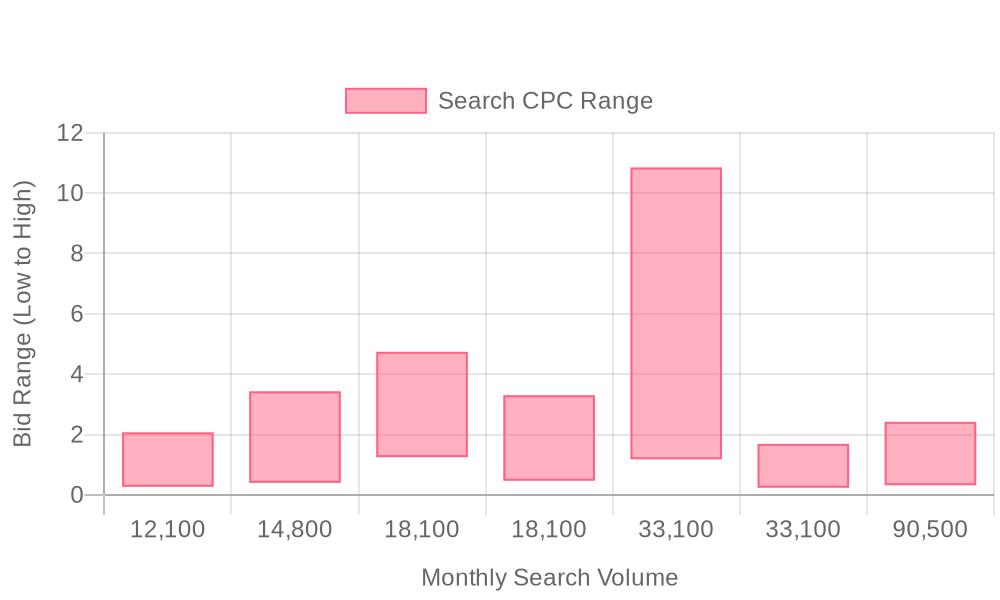
| Industry | Keyword | Monthly Search Volume | Competition Level | Low Bid | High Bid |
| Body Care Products | best stretch mark cream | 12100 | HIGH | 0.27 | 2.07 |
| Body Care Products | korean skin care products | 14800 | HIGH | 0.4 | 3.43 |
| Body Care Products | body care products | 18100 | HIGH | 1.25 | 4.74 |
| Body Care Products | current body led mask | 18100 | HIGH | 0.47 | 3.3 |
| Body Care Products | body lotion | 33100 | HIGH | 1.18 | 10.85 |
| Body Care Products | antibacterial body wash | 33100 | HIGH | 0.24 | 1.69 |
| Body Care Products | dove body wash | 90500 | HIGH | 0.32 | 2.42 |
Effective keyword strategy sits at the center of high-performing Google Ads campaigns for body care products. A well-structured approach brings clarity to which search queries drive conversions, eliminating guesswork and directly supporting revenue goals in this competitive segment. For more on building data-driven keyword lists, explore this list of high-performing Google Ads keywords for moisturizers targeting dry skin.
High-performance keywords within the body care niche ensure every campaign is primed for visibility among high-intent searchers. Terms such as "hydrating body lotion," "organic body wash," "sensitive skin moisturizer," and "antioxidant body oil" capture a spectrum of consumer needs and product features. By mapping these keywords to buyer intent and segmenting them by use case, like problem/solution or ingredient focus, marketers consistently reach prospects ready to purchase. Dynamic audience building further elevates this process: as leads interact with ads, enriched data constantly refines and updates audiences to mirror real purchase journeys, ensuring that campaigns remain relevant and effective across every stage of the funnel.
Negative keywords are equally vital, filtering out irrelevant clicks and protecting budget efficiency. Exclusions such as "homemade," "DIY," or "free samples" prevent wasted spend on low-value searches, keeping every dollar focused on high-potential opportunities. Strategically deployed negative keyword lists minimize overlap between branded and non-branded campaigns, which is critical for brands scaling PPC for beauty products. Audience enrichment platforms streamline this process by identifying patterns in historical campaign data, allowing marketers to automatically suppress unqualified segments and refocus budgets on in-market prospects showing real-time intent signals.
Optimizing campaigns with advanced keyword quadrant analysis unlocks precise targeting. By evaluating each term for search volume, competition, and historical ROI, marketers prioritize investments toward keywords with proven conversion value. For example, "best body scrub for dry skin" may have lower volume but yield higher ROAS for beauty brands due to qualified, purchase-ready searchers. Integrating real-time CRM and ad platform data enables teams to track which keywords close the most deals, while syncing enriched audience segments directly into Google Ads ensures campaigns stay agile as market trends shift. This approach not only maximizes lead quality but also provides actionable insights for rapid budget reallocation, supporting a continuous optimization loop that scales digital marketing for skincare. To experience how data-driven optimization can transform your campaigns, get started for free with Sona.
Step-by-Step Campaign Execution Framework
Step 1: Build Targeted Keyword Lists
Effective keyword selection is the critical starting point for any Google Ads campaign in body care product marketing. Group keywords by product category such as moisturizers, body washes, specialty treatments, and include local modifiers where relevant to capture both broad and area-specific intent. For a comprehensive list of high-performing keywords specifically for moisturizers, review this body care keyword guide to ensure you cover all potential high-value prospects, from broad searchers considering new brands to local customers seeking specific solutions.
Dynamic keyword management becomes a strategic advantage when audience data is unified in real time. By leveraging advanced visitor identification, marketers move beyond anonymous traffic and pinpoint exactly which companies and users are searching for target terms. This precision enables the creation of audience segments that reflect both intent signals and product interest, ensuring ad spend is directed toward the highest-potential accounts.
The upgrade most body care products advertisers miss is going beyond raw keyword volume to layer in intent and identity signals. By connecting website-visitor data and CRM records with Sona Marketing Measurement, you can see which specific search terms bring in the accounts and customers that actually convert, and weight your keyword and bidding strategy toward those rather than the terms with the highest search volume alone.
Step 2: Craft Engaging Ad Copy
Ad copy for body care products must directly address consumer pain points while clearly highlighting each product’s unique selling proposition. Use emotionally resonant language to appeal to self-care motivations, and reinforce credibility with data points or social proof when possible. Incorporating benefit-driven headlines with concise calls-to-action improves engagement and drives qualified traffic to your landing pages. Explore additional strategies in our collection of demand generation playbooks.
With real-time intent insights, marketers can dynamically adjust messaging to align with the current needs of in-market buyers. For example, as leads move through the funnel, ad creative can shift from broad brand awareness to specific solution-oriented offers or limited-time promotions. For a practical guide tailored to the beauty and skincare sector, see this Google Ads execution guide. This approach personalizes the user experience and increases conversion rates across all active campaigns.
Step 3: Design Optimal Landing Pages
Landing pages must deliver seamless user experiences and strong content alignment with ad messaging. Focus on intuitive layouts, clear product imagery, and persuasive calls-to-action that match the intent of each visitor. Optimized landing pages reduce friction, minimize bounce rates, and help convert clicks into high-value leads or purchases. For additional tips, visit our marketing attribution blog.
Integrating enriched visitor and intent data directly into the landing page experience allows for even greater personalization. For example, dynamic content modules can display tailored product recommendations or offers based on the visitor’s stage in the buying journey, as identified through unified data sources. This level of customization boosts engagement and increases the likelihood of a successful conversion.
Step 4: Conduct Data-Driven Optimizations
Continuous campaign optimization relies on tracking every touchpoint and accurately attributing conversions to the right source. Use conversion data to inform bid strategies, refine ad creative, and test new audience segments that align with predictive models of buyer behavior. For benchmarking industry costs, see Google Ads cost-per-purchase benchmarks.
By syncing conversion and lead data from both online and offline sources, marketers gain a comprehensive view of true ROI and campaign effectiveness. Integration with CRM and advertising platforms ensures that audience lists are constantly updated as leads progress, while predictive analytics highlight emerging opportunities for budget reallocation and increased return on ad spend. To streamline your digital marketing efforts, get started for free with Sona. This closed-loop approach streamlines digital marketing for skincare brands and delivers measurable business outcomes.
Sona Marketing Measurement closes the gap between clicks and revenue. It captures ad clicks with first-party measurement, then ties that click through UTM capture and ad-platform APIs to the actual record in your CRM, and reports ROAS by keyword and campaign instead of by last-click form fill. Feeding that revenue signal back into Smart Bidding and Performance Max compounds over time: the algorithms optimize toward booked body care products revenue, not cheap leads.
Tips on Expanding Your Presence in the Body Care Market
- Promote educational content through retargeting: Delivering value-driven guides and product education via retargeting deepens engagement, especially among audiences who have shown initial interest but have not yet converted. By leveraging advanced visitor identification and intent analysis, marketers can pinpoint high-fit visitors and serve them tailored content, turning unconverted leads into loyal customers. This strategy addresses the common pain of losing potential buyers by providing them with the right information at critical decision points, ultimately improving overall conversion rates. For practical guidance, see this guide on Google Ads for beauty and skincare.
- Cross-promote complementary products using CRM data: Integrating CRM insights allows brands to segment audiences based on purchase history, preferences, and engagement patterns, creating opportunities to introduce complementary products through highly targeted campaigns. Automated audience updates ensure that as customers progress through the buying journey, campaigns remain relevant and personalized. Syncing this enriched audience data into platforms like Google Ads and your CRM enables seamless campaign activation, closing the gap between marketing outreach and sales follow-up.
- Partner with beauty industry influencers or platforms: Collaborating with trusted voices in the beauty space helps drive qualified referral traffic and broadens brand exposure. By analyzing influencer-driven traffic and engagement within a unified data platform, marketers can prioritize partnerships that generate high-value leads and extend their reach to previously untapped segments.
- Customize targeting for local markets: Localizing campaigns boosts presence in strategic regions, ensuring spend is focused where demand is strongest. Enhanced targeting capabilities let marketers identify geographic clusters of high-intent buyers, enabling dynamic budget allocation and messaging that resonates with local audiences. Using real-time intent signals helps shift resources to regions where conversion likelihood is highest, overcoming the pitfalls of generic, broad-based targeting.
- Use search query analyses to identify trends: Regularly reviewing top-performing queries uncovers emerging needs and interests, guiding the creation of future content and product offerings. Marketers can act on these insights to develop campaigns that stay ahead of market shifts, ensuring relevance in a fast-evolving landscape. Predictive analytics tools further empower teams to anticipate demand, shape messaging, and refine product positioning before trends become mainstream.
Positioning digital marketing for skincare and body care products successfully requires more than isolated tactics. Cohesive integration of keyword targeting, audience segmentation, creative optimization, and real-time data ensures brands can reach ideal customers, adapt quickly, and maximize ROAS for beauty brands. Unifying these strategies with solutions that identify high-fit accounts and sync insights across platforms transforms advertising body care products into a sustainable growth engine.
Beyond Google Ads: Winning the AI Answers Body Care Products Buyers Now Trust
Paid search captures demand at the moment someone types a query. But a fast-growing share of body care products buyers no longer start at Google at all, they ask ChatGPT, Gemini, or Perplexity before they ever run a search, and Google's own AI Overviews increasingly summarize an answer above the traditional results. If your business isn't referenced in those AI answers, you're invisible at the exact moment buyers build their shortlist.
Sona AI Visibility shows where your business shows up across ChatGPT, Gemini, Perplexity, Google AI Overviews, and 10+ engines, and, much like a keyword report, which prompts actually send you buyers, so you can prioritize the ones that convert. Run the two together and you cover the entire buyer path: get cited where buyers research (AI Visibility), then prove which of that demand turns into booked revenue (Marketing Measurement).
Helpful resources
Conclusion
Google Ads works for body care brands when it's treated as the connective tissue between search intent and revenue, not just a bidding exercise. The brands that win pair targeted keywords and sharp creative with visibility into which clicks actually become customers.
The next competitive edge isn't just better keywords, it's closing the loop between ad spend and revenue, and extending that same visibility to where buyers now start their research: AI answers and chat interfaces, not just the search bar. Brands that connect those dots early will spend with more confidence while competitors are still guessing.
To experience a platform that unifies your go-to-market data and delivers actionable insights, start for free. Discover how Sona can sharpen your advertising and connect it to real revenue.
FAQ
What are the best practices for Google Ads in the beauty industry?
The best practices include aligning paid search efforts with broader marketing objectives, leveraging data-driven insights, using visitor identification for precision targeting, and ensuring landing page and creative alignment to maximize conversion rates.
How can I optimize my Google Ads for body care products?
To optimize Google Ads for body care products, use segmented keyword portfolios, real-time intent signals, and predictive bidding models to target high-intent audiences and adjust strategies based on data-driven insights.
What budget should I allocate for Google Ads for skincare?
The budget should align with demand generation goals, focusing on high-intent keywords and segments with the highest conversion likelihood, as informed by predictive models and performance data.
What targeting options are available for beauty products on Google Ads?
Targeting options include keyword and audience targeting, firmographic segmentation, and geo-targeting, allowing for precise focus on high-intent prospects and specific buyer personas.
How do I measure the success of my Google Ads campaigns for body care products?
Success can be measured by tracking conversions, using closed-loop analytics to connect ad clicks to purchases, and continuously refining campaigns based on performance data and predictive insights.







