


A water heater failure rarely waits for a convenient time. Homeowners searching for repair services are usually standing in a cold shower or watching a tank leak onto the basement floor, and they want a technician now, not a quote next week. Google Ads lets water heater repair businesses show up at that exact moment of urgency, turning a search into a booked job before a competitor's ad even loads. Done well, it closes the gap between someone's plumbing emergency and your service van pulling into their driveway, which is the whole game for lead generation and ROI in this trade.
How to Generate Water Heater Repair Leads with Google Ads: A Step-by-Step Guide

Water heater repair businesses require precision and speed when attracting customers who are often in urgent need. Google Ads offers a direct way to place your services in front of high-intent searchers, ensuring every marketing dollar targets prospects ready to act.
A systematic approach to campaign setup and optimization keeps spend focused on prospects most likely to convert. Real-time data and audience signals help marketers avoid wasted budget and capture the highest-value jobs first. For a deeper dive into maximizing your return, see Google Ads ROI for current performance benchmarks.
- Develop A Robust Keyword Strategy Tailored To High-intent Search Queries: Focus keyword lists on transactional and location-based phrases such as “emergency water heater repair,” “water heater repair near me,” and “same-day water heater replacement.” This ensures ads only trigger for searches reflecting immediate service needs, reducing low-value impressions. Connecting search query data with first-party insights enables dynamic updates to keyword sets as customer behavior shifts, so you never rely on outdated assumptions.
- Craft Ad Copy That Speaks Directly To Urgent Needs And Common Frustrations Customers Face: Use language that acknowledges pain points, such as lack of hot water or leaking units, and highlight solutions like rapid response times, certified technicians, and upfront pricing. Test ad variations continuously; this is easier when audience movement and intent signals are surfaced from unified marketing and sales data. Sona surfaces intent signals to help teams recognize and act on visitor interest in real time.
- Design Landing Pages Aligned With User Intent, Making It Easy For Users To Take Action: High-performing landing pages reinforce urgency and trust, featuring clear headlines, emergency contact options, and proof of expertise (e.g., licenses, local reviews). When visitor identification tools are layered in, teams can personalize the landing experience based on company type or lead status, driving higher conversions and reducing bounce rates.
- Implement Cross-channel Tracking To Refine Strategies Based On Real-time Performance Insights: Tracking form fills, calls, and booked jobs (not just clicks) is essential for knowing which keywords actually generate paid service calls versus tire-kicking research clicks. Attribution that connects ad spend to booked revenue lets marketers shift budget toward the keywords and creative producing real jobs, especially useful given how fast demand can spike after a cold snap or a burst tank. When first-party data is unified across web, CRM, and ad platforms, teams get accurate insight instead of relying on siloed reports. See our attribution guide for best practices on connecting marketing and sales data.
- Integrate Crm Data With Google Ads To Target Verified Audiences, Enhancing Lead Quality: Syncing enriched audience segments and closed-won leads directly into ad platforms ensures only high-potential accounts are targeted with premium offers or retargeting ads. This closed-loop approach reduces wasted spend and enables personalized engagement at every stage; as leads progress or convert, audience lists update automatically, ensuring targeting is always relevant.
Why Google Ads Matter for Water Heater Repair

Urgency defines the water heater repair industry: when equipment fails, customers search online for immediate solutions. Google Ads positions providers directly in front of these high-intent decision-makers at the critical moment of need, enabling rapid lead capture and prioritizing those ready to book services.
Targeted campaigns allow water heater specialists to secure high-margin jobs by focusing ad spend on audiences demonstrating strong purchase intent. By using granular location and keyword targeting, businesses avoid wasted impressions and maximize every advertising dollar spent on Google Ads for water heater repair.
Seasonal demand for water heater repairs fluctuates, with spikes during colder months or after severe weather. Google Ads’ flexibility enables quick adjustments to budgets and creative, ensuring consistent visibility when demand rises. Leveraging unified data systems, teams can identify underserved localities or time windows where competitors drop out, uncovering new market opportunities for expansion.
For more insights on maximizing ad performance in the trades, check out our guide on Google Ads ROI. Integrating Google Ads with broader marketing and service operations creates a seamless pipeline from online inquiry to job scheduling. This approach not only boosts measurable results in lead generation but also aligns operational capacity with real-time customer needs, making each marketing investment both actionable and accountable.
Common Types of Google Ads Campaigns for Water Heater Repair Services

- Search Campaigns: Search campaigns excel at capturing high-intent prospects actively seeking water heater repair. These ads appear at the precise moment a user searches for urgent solutions, maximizing the chance to convert leads who are ready to act. Marketers can use real-time signals to shift budget toward top-performing keywords during peak demand, and can use Responsive Search Ads, an ad format within Search campaigns, to test multiple headlines and descriptions automatically. Sona's Identity Resolution helps pinpoint the companies and buyers behind those clicks, making it easier to prioritize accounts with the highest conversion potential and sync enriched audience segments directly into Google Ads and CRM platforms for faster follow-up.
- Display Ads: Display campaigns build consistent brand awareness across relevant websites, keeping water heater repair specialists visible to homeowners and property managers. Visual banners and responsive creatives reinforce trust while targeting users who have shown prior interest or reside in specific geographic areas. Google Ads Reach Guide provides a deeper look at how Google Ads can increase reach for service businesses like water heater repair.
- Video Ads: Video campaigns engage potential customers with interactive content, such as repair tips or technician walk-throughs, that showcases expertise and builds credibility. These formats are particularly effective for educating prospects about complex repair scenarios, demonstrating problem-solving ability, and differentiating from competitors. By integrating real-time behavioral insights and advanced attribution, marketers can allocate spend to the video segments that drive the most qualified leads, measuring both online and offline conversions for a holistic view of campaign ROI.
- Remarketing: Remarketing campaigns efficiently re-engage visitors who explored service pages or initiated a quote but did not convert. Multiple touchpoints across devices and platforms keep the brand top of mind, increasing the likelihood of booking when urgency spikes. As audiences move through the pipeline, dynamic remarketing lists continuously update, allowing marketers to deliver personalized ads and offers to warm leads and sync conversion data with sales teams. This builds on the strategies outlined in Intent Retargeting, ensuring that every marketing dollar spent on remarketing contributes directly to bottom-line growth.
Where to Find Growth Opportunities

Growth in water heater repair advertising depends on identifying overlooked segments and meeting high-intent demand where it arises. Modern revenue teams that excel at this consistently outpace local competitors and capture more qualified leads.
- Niche Keyword Targeting: Focusing on keywords tied to specific repair symptoms (such as “water heater leaking from bottom” or “no hot water repair near me”) captures urgent intent searches, often before competitors can respond. Company-level identification of the businesses and buyers behind those searches lets marketers match queries to the most relevant offerings, improving conversion rates across search and display campaigns. Sona's Identity Resolution supports this by enabling accurate company matching and segmentation.
- Competitive Gap Analysis: Pinpointing underserved neighborhoods or service areas reveals local markets with less competition and lower cost per click. Using dynamic audience data, teams can shift spend and adjust creative based on in-market signals, ensuring resources target the highest-value opportunities at the optimal time. Home Service Ad Costs provides a deeper look at the cost dynamics of home service advertising.
- Industry Placements And Forums: Expanding beyond standard search ads to placements in home improvement forums or plumbing Q&A sites introduces the brand to DIY researchers and property managers. Tracking which placements drive not just clicks, but qualified leads, allows for smarter allocation of advertising budgets and the development of high-performing remarketing audiences.
- Educational Content Offers: Whitepapers, troubleshooting guides, and maintenance checklists nurture undecided prospects, driving them further down the funnel. Advanced conversion tracking, particularly with offline and online attribution, provides visibility into which content assets contribute most to pipeline growth, enabling continuous optimization of water heater repair marketing efforts.
Strategically combining these avenues with enriched audience sync into advertising platforms like Google Ads and CRMs creates a closed-loop system. For more insights on attribution and campaign optimization, check out our guide on Revenue Attribution. This approach ensures that every marketing dollar is measured, attributable, and directed at the most promising growth opportunities for water heater repair specialists.
How to Apply Audience Segmentation for Water Heater Repair

Audience segmentation enables water heater repair providers to reach the right customers with relevant messaging at the moment of need. By dividing prospects based on urgency, such as those facing emergency breakdowns versus those seeking scheduled maintenance, marketers can allocate budgets to high-converting segments while ensuring tailored experiences. Google Ads segmentation guide provides practical examples of how segmentation helps home service businesses optimize campaign performance.
Segmentation by customer type, including residential and commercial, refines messaging even further. Residential clients often want rapid, hassle-free repairs, while commercial accounts prioritize minimal disruption to operations and long-term service agreements. Customizing ad groups for each segment allows for precise targeting, such as promoting 24/7 emergency response for homeowners or maintenance contracts for property managers.
Seamless conversion tracking and CRM synchronization elevate water heater repair marketing by closing the loop between ad engagement and lead capture. For more insights on aligning marketing and sales teams through effective attribution, check out our guide on splitting revenue. This unified approach to audience management ensures that campaigns adapt as prospects move from initial inquiry to booked appointment, increasing pipeline velocity and marketing ROI. Integrating offline and online touchpoints provides a complete attribution picture, allowing teams to double down on the segments and tactics delivering measurable business impact.
This is also where measurement changes the economics. With Sona Marketing Measurement you can identify the companies behind your ad clicks, not just anonymous sessions, and segment audiences by which accounts actually become customers. That lets you build bid adjustments and audience signals around the segments that convert and de-prioritize the ones that don't, so you feed Google's algorithms "this click became a paying water heater repair customer" instead of just "someone filled out a form."
Keyword Strategy & Sample Target Terms
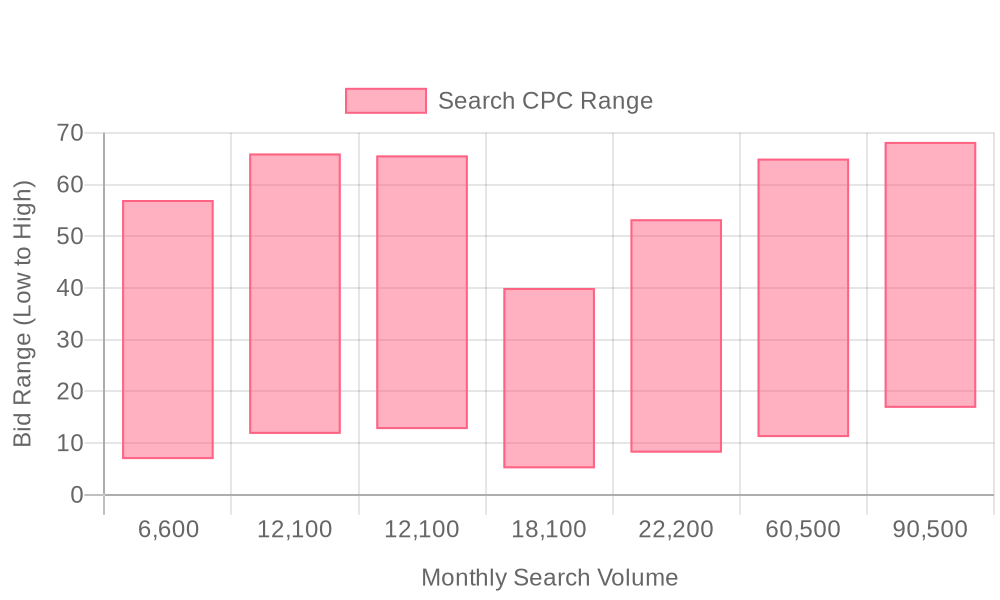
| Industry | Keyword | Monthly Search Volume | Competition Level | Low Bid | High Bid |
| Water Heater Repair | hot water heater repair near me | 6600 | MEDIUM | 6.92 | 57.01 |
| Water Heater Repair | hot water heater repair | 12100 | HIGH | 11.8 | 65.99 |
| Water Heater Repair | water heater service near me | 12100 | LOW | 12.73 | 65.62 |
| Water Heater Repair | hot water heater replacement | 18100 | HIGH | 5.15 | 40 |
| Water Heater Repair | water heater replacement near me | 22200 | LOW | 8.18 | 53.29 |
| Water Heater Repair | water heater repair near me | 60500 | LOW | 11.18 | 65 |
| Water Heater Repair | water heater repair | 90500 | LOW | 16.83 | 68.23 |
A competitive keyword strategy for water heater repair marketing ensures that every dollar spent reaches high-intent buyers. By aligning paid search efforts with specific user intent, businesses significantly boost qualified lead volume and conversion rates.
- High-intent Keyword Focus: Prioritize terms like "water heater repair service near me," "emergency water heater repair," and "best water heater repair company" to capture users actively seeking immediate solutions. These keywords consistently drive above-average click-through and conversion rates due to their transactional nature.
- Local Modifiers For Relevance: Enhance targeting efficiency by adding city, neighborhood, or ZIP code modifiers such as "water heater repair Austin TX" or "plumber for water heater in Brooklyn." This tactic narrows reach to serviceable areas, reducing wasted spend and increasing booking rates among users most likely to convert.
- Negative Keyword Lists: Systematically exclude irrelevant traffic by building negative keyword lists, such as "DIY," "manual," or "how to fix," ensuring that budget is never wasted on informational searches outside your commercial intent. This directly improves ad spend efficiency and sharpens campaign focus, as detailed in Top Plumbing Keywords.
By unifying search term reporting, company identification, and CRM data, marketers can see which target terms actually generate qualified leads, not just clicks. Sona's Identity Resolution helps pinpoint which keywords are responsible for bringing in high-value prospects and enables more accurate budget allocation for water heater service providers. As audience and keyword lists update dynamically as leads progress through the funnel, revenue teams always target the right prospects at the right stage. This precise keyword orchestration is foundational for maximizing Google Ads ROI for contractors and water heater service providers.
Step-by-Step Campaign Execution Framework
Step 1: Build Targeted Keyword Lists
Segmenting keywords by service type and geography is fundamental for high-performing google ads for water heater repair campaigns. By creating keyword clusters such as "emergency water heater repair [city]" or "tankless water heater installation near me," marketers can capture both immediate service requests and broader consideration-stage queries. Leveraging granular, long-tail keywords not only attracts more qualified leads but also minimizes wasted ad spend by filtering out generic traffic. Google Ads cost provides a deeper look at how targeting impacts efficiency for home service businesses.
Negative keywords are crucial for campaign efficiency, helping to block irrelevant queries like “DIY water heater fix” or “water heater parts.” This keeps budget focused on prospects with genuine purchase intent. Sona's Identity Resolution helps pinpoint visitors at the company and contact level, allowing marketers to refine keyword lists with intent data and optimize for segments with the highest conversion potential.
The upgrade most water heater repair advertisers miss is going beyond raw keyword volume to layer in intent and identity signals. By connecting website-visitor data and CRM records with Sona Marketing Measurement, you can see which specific search terms bring in the accounts and customers that actually convert, and weight your keyword and bidding strategy toward those rather than the terms with the highest search volume alone.
Step 2: Develop Compelling Ad Copy
Crafting ad copy that speaks directly to urgency can dramatically improve click-through and conversion rates. Phrases such as “24/7 repair service available” or “Same-day water heater repair” immediately address customer pain points and drive action. Adding certifications, licensing details, years in business, and review snippets as ad assets increases credibility, setting your service apart as reliable and trustworthy.
Sona’s ability to sync enriched lead data into Google Ads enables dynamic ad customization, copy can be tailored to highlight relevant offers or reviews for specific audience segments, reflecting where each lead is in the buying journey. This builds on the strategies outlined in Google Ads ROI Playbook, ensuring messaging resonates with both first-time searchers and returning prospects for higher engagement.
Step 3: Design Effective Landing Pages
Maintaining message continuity from ad to landing page is essential for maximizing conversions in water heater repair advertising. Clear, action-oriented calls to action such as “Call Now for Immediate Service” or “Book a Free Estimate Today” help guide visitors efficiently toward your business goals. Incorporating customer testimonials, trust badges, and transparent pricing further builds confidence, which is critical for urgent, high-stakes services like water heater repair.
Sona's Marketing Measurement supports marketers in tracking which page elements drive the highest engagement and conversion rates. By analyzing both online and offline touchpoints, teams can rapidly iterate landing page designs to align with proven buyer preferences, ensuring every ad dollar is working toward quantifiable outcomes.
Step 4: Implement Data-Driven Optimizations
Ongoing analysis of conversion data is necessary for sustainable plumbing lead generation and effective budget management. Tracking metrics such as cost per lead, conversion rate by keyword, and time-to-conversion provides the foundation for smart optimization decisions. Smart bidding further streamlines campaign management by dynamically adjusting bids to prioritize high-value leads and minimize acquisition costs.
Sona’s unified approach to data aggregation and enrichment empowers teams to connect CRM, web, and ad network data for a holistic view of campaign performance. Real-time audience updates and advanced attribution modeling give marketers the ability to dynamically shift budget, retarget high-intent accounts, and demonstrate true Google Ads ROI for contractors and water heater repair specialists. To see how these capabilities can fit your workflow, book a demo.
Sona Marketing Measurement closes the gap between clicks and revenue. It captures every ad click with first-party measurement, then ties that click through UTM capture and ad-platform APIs to the actual record in your CRM, and reports ROAS by keyword and campaign instead of by last-click form fill. Feeding that revenue signal back into Smart Bidding and Performance Max compounds over time: the algorithms optimize toward booked water heater repair revenue, not cheap leads.
Beyond Google Ads: Winning the AI Answers Water Heater Repair Buyers Now Trust
Paid search captures demand at the moment someone types a query. But a fast-growing share of water heater repair buyers no longer start at Google at all, they ask ChatGPT, Gemini, or Perplexity before they ever run a search, and Google's own AI Overviews increasingly summarize an answer above the traditional results. If your business isn't referenced in those AI answers, you're invisible at the exact moment buyers build their shortlist.
Sona AI Visibility shows where your business shows up across ChatGPT, Gemini, Perplexity, Google AI Overviews, and 10+ engines, and, much like a keyword report, which prompts actually send you buyers, so you can prioritize the ones that convert. Run the two together and you cover the entire buyer path: get cited where buyers research (AI Visibility), then prove which of that demand turns into booked revenue (Marketing Measurement).
Helpful resources
Conclusion
The water heater repair businesses winning the most jobs right now aren't just running more ads, they're feeding their campaigns better signal: which clicks turned into booked repairs, which keywords brought in customers instead of browsers, and which of tomorrow's AI-driven searches they're actually showing up in. That's the shift worth making next, not just buying more clicks, but making every click count and making sure your business is visible wherever buyers are asking for help, whether that's a Google search box or an AI assistant.
Ready to put these strategies into action? Start a free trial to see how Sona simplifies campaign management and connects your ad spend to booked water heater repair revenue.
FAQ
What are the best practices for Google Ads in water heater repair?
Best practices include developing a robust keyword strategy focused on high-intent search queries, crafting ad copy that addresses urgent needs, designing landing pages that align with user intent, implementing cross-channel tracking for real-time insights, and integrating CRM data to enhance lead quality.
How much should I budget for Google Ads for water heater repair?
Budgeting should be based on targeting high-intent keywords, adjusting for seasonal demand, and optimizing spend through advanced attribution and real-time data to ensure every dollar targets prospects ready to convert.
What targeting options are available for Google Ads in plumbing?
Targeting options include using granular location and keyword targeting, audience segmentation by urgency and customer type, and leveraging real-time signals to dynamically adjust campaigns for high-conversion segments.
Does Google Ads effectively generate leads for water heater repair services?
Yes, Google Ads effectively captures high-intent leads by positioning services in front of decision-makers at critical moments, maximizing conversion potential with targeted campaigns and strategic keyword use.
What are common mistakes to avoid in Google Ads for plumbing?
Common mistakes include not updating keywords based on real-time data, failing to craft ad copy that speaks to urgent customer needs, neglecting to track offline conversions, and not integrating CRM data for enhanced targeting.







