


A store renovation or closeout doesn't wait for a slow sales cycle: buyers need gondola shelving, checkout counters, or display racks fast, and they're often comparing several sellers within days. Google Ads lets used retail fixture dealers show up at that exact moment, whether a buyer is refitting a boutique or liquidating a big-box location, and it gives sellers a way to tie ad spend directly to closed deals rather than guessing at influence. Done well, it turns anonymous browsing into named accounts and measurable revenue.
How to Generate Used Retail Fixtures Leads with Google Ads: A Step-by-Step Guide

Capturing high-intent buyers in the used retail fixtures sector means leveraging every digital touchpoint to maximize lead flow. Companies that pair company-level visitor identification with Google Ads can intercept prospects during crucial research and purchase windows, outpacing competitors reliant on outdated lead lists.
Modern B2B marketers use company-level identification tools to see which businesses are visiting their site, mapping that engagement directly to actionable ad strategies. For best practices on building and optimizing Google Shopping campaigns to promote used retail products online, explore the Google Ads Shopping setup guide. This granular approach focuses ad spend on organizations already showing purchase signals, such as browsing shelving or fixture categories repeatedly, rather than casting a wide net and hoping for conversions.
A successful campaign starts with keyword and audience targeting designed specifically around the behaviors of buyers searching for used retail fixtures. Building on this, aligning landing pages and creative assets ensures that ad clicks turn into inquiries. By continuously optimizing for performance and leveraging real-time analytics, B2B revenue teams can respond to shifting market dynamics and sustain a healthy lead pipeline in a highly competitive marketplace.
Integrating real-time visitor data into the Google Ads ecosystem enables marketers to act on in-market signals instantly. When combined with tools that sync enriched audiences from CRM or marketing automation platforms, these strategies drive more precise retargeting and higher win rates. To see how you can improve your own results, get started for free with Sona and experience the impact of data-driven advertising firsthand.
Why Google Ads Matters for Used Retail Fixtures

Selling used retail fixtures means reaching commercial buyers, store managers, designers, procurement teams, who rarely browse casually. They search when a lease is ending, a renovation is scheduled, or a chain is closing locations, and they need equipment fast. Google Ads reaches these buyers at that moment, instead of waiting for them to stumble onto a listing site or trade show booth.
Anonymous website traffic and thin data can stall a fixtures sales cycle that already moves in fits and starts. Company-level visitor identification helps marketers see which businesses and roles are engaging with listings, turning unread traffic into named accounts worth a follow-up call.
Operating in a niche market, sellers of used retail fixtures benefit from Google Ads’ ability to trigger high-intent searches like “used retail fixtures for sale near me.” Unlike broader platforms, Google Ads aligns messaging with specific purchasing signals, ensuring that advertising spend reaches those ready to buy rather than casual browsers.
Periods of peak demand, such as store openings or renovations, demand immediate and measurable response. Google Ads delivers fast lead acquisition by aligning campaigns to real-time in-market behavior, allowing budget shifts toward accounts with the highest likelihood of conversion. Campaign reach extends to underserved or emerging geographical markets, supporting expansion and liquidation goals with precision and operational efficiency. To see how you can drive more qualified leads, get started for free with Sona.
Common Types of Google Ads Campaigns for Used Retail Fixtures

- Search Campaigns: Search campaigns capture active intent from buyers searching for used retail fixtures. By targeting specific queries such as “used gondola shelving” or “discount store fixtures,” businesses reach commercial buyers at the exact moment they express purchase interest. Marketers can further enhance these campaigns by using Sona's Identity Resolution to reveal which companies are behind high-value queries and prioritize outreach. Responsive search ads, a format within these campaigns, let you test multiple headlines and descriptions to see which combination resonates with buyers researching specific fixture types. For guidance on setting up and optimizing Google Shopping campaigns to promote retail inventory, see Google Shopping campaign setup.
- Display Ads: Display campaigns build ongoing visibility among potential buyers browsing industry publications, trade association sites, and relevant business blogs. This persistent presence increases brand recall for companies considering upgrades or liquidations. By syncing enriched CRM segments with ad platforms, teams ensure every impression targets the right personas, maximizing online advertising impact for fixtures.
- Video Ads: Video ads offer a dynamic way to showcase the durability, flexibility, and unique selling points of used retail fixtures. These campaigns engage decision-makers who may be difficult to reach via text alone, using visuals to highlight product condition and use cases. Leveraging unified go-to-market data, marketers can deliver personalized video content to accounts showing recent engagement and move prospects further down the funnel.
- Remarketing: Remarketing campaigns reconnect with buyers who have previously interacted with your listings or visited your website. This tactic extends the conversation beyond the initial visit, serving tailored ads that address specific objections or highlight new inventory. By dynamically updating remarketing audiences as leads move through the buying journey, teams avoid wasted impressions and keep messaging relevant.
- Assets: Ad assets add essential business information, such as price points, product categories, and active promotions, directly to search and display ads. These enhancements drive higher click-through rates and help buyers make faster decisions by surfacing key details up front. When asset data is mapped directly from inventory management or CRM systems, updates stay accurate and promotional timing aligns with inventory turnover.
Ready to put these strategies into action? Get started for free with Sona.
Where to Find Growth Opportunities

Modern B2B marketers in the used retail fixtures sector can unlock growth by identifying untapped channels and targeting in-market buyers with precision. Success hinges on combining intent data, vertical-specific targeting, and real-time engagement to reach decision-makers early and often.
- Vertical Keyword Targeting: Moving beyond generic terms, focusing on specialized keywords such as "used gondola shelving," "discount store fixtures," or "liquidation display racks" brings your ads in front of buyers searching for unique solutions. This ensures your Google Ads for Used Retail Fixtures campaigns attract decision-makers with high purchase intent, not just casual browsers. Marketers using unified data platforms can spot which search terms are trending, useful when a wave of store closures in one region suddenly pushes up demand for used shelving and counters, and shift budget accordingly.
- Competitor Gap Analysis: By analyzing search share and mapping out your competitors’ paid and organic footprint, you can identify neglected keyword clusters or underserved market segments. This approach surfaces opportunities where demand is high but competition is low. Unified intent data from across your website, CRM, and ad accounts enables you to spot patterns and emerging opportunities faster than manual research, shifting budget to high-converting accounts as soon as they become active.
- Industry-Specific Placements: Advertising on retail industry forums, liquidation marketplaces, or business directories puts your brand in front of buyers who may not see your organic content. These placements enable highly targeted outreach to procurement managers and store owners actively seeking fixtures, often at the decision stage. When integrated with dynamic audience syncing, platforms can update ad audiences in real time as new leads engage with these industry-specific channels, ensuring sustained visibility throughout the buying process.
- Content Retargeting: Educational assets such as setup guides, ROI calculators, or whitepapers can be deployed as retargeting tools to re-engage site visitors who have shown interest but have not yet converted. Advanced visitor identification allows marketers to pinpoint which companies are engaging with high-value content, making it possible to retarget decision-makers with tailored offers across Google Ads, email, and CRM touchpoints. This approach keeps your solution top-of-mind and nurtures prospects through a longer, more consultative sales cycle, critical in the used retail fixtures market where purchases are often high-value and infrequent.
For teams seeking to maximize Google Ads ROI in used retail fixture sales, unifying campaign data, intent signals, and audience updates streamlines every stage of the customer journey. This data-driven approach accelerates opportunity identification, improves targeting precision, and elevates the effectiveness of every advertising dollar spent.
How to Apply Audience Segmentation for Used Retail Fixtures

Precise audience segmentation allows revenue teams to connect their marketing efforts to real business opportunities in the used retail fixtures market. By focusing on intent-driven buyers and aligning messaging to distinct customer profiles, marketers can increase conversion rates while reducing wasted ad spend.
- Define Segments: Begin by mapping your customer base into distinct sectors such as fashion retailers, grocery chains, independent shop owners, or franchise operators. Each group has different purchasing triggers: fashion retailers often prioritize visual merchandising fixtures, while grocery chains need shelving or refrigeration units, and franchise operators may buy on a set replacement schedule tied to corporate standards. Segmenting audiences at this level lets you build campaigns that speak to the pain points and buying motivations of each vertical. Explore actionable segmentation techniques in this playbook.
- Overlay Intent Signals: Incorporate predictive intent data to distinguish between prospects actively searching for store upgrades and those with cyclical restocking needs. For example, by analyzing search queries, browsing patterns, and industry signals, you can identify which businesses are preparing for renovations or expansion. With real-time intent monitoring, revenue teams can shift budget toward accounts showing immediate purchase signals, driving more efficient Google Ads for Used Retail Fixtures and boosting ROI. For strategies tailored to retail, reference Google Ads for retail.
- Create Ad Groups by Segment: Structure your Google Ads campaigns with ad groups dedicated to each identified segment. Tailor creative, offers, and calls-to-action to reflect the challenges of each audience: a campaign for closing stores may emphasize quick liquidation and bulk discounts, while campaigns for expanding chains might highlight logistical support and inventory variety. Dynamic audience management ensures that as prospects move through the funnel, say, from research to purchase, your targeting and messaging evolve in parallel, maintaining relevance.
- Validate Conversion Paths: Robust conversion tracking is essential to measure which segments and campaigns drive actual sales. Set up tracking to capture both online and offline transactions, attributing leads to their correct source. By integrating enriched lead data with your CRM and syncing those insights back into Google Ads, you gain a holistic view of customer journeys. This unified approach lets you refine segment definitions, optimize creative, and accurately report on the true impact of your campaigns. For more on maximizing ROI, see measuring marketing's influence.
Audience segmentation for used retail fixtures turns generic outreach into targeted, data-driven marketing that gives B2B revenue teams a clearer read on which accounts are worth pursuing.
This is also where measurement changes the economics. With Sona Marketing Measurement you can identify the companies behind your ad clicks, not just anonymous sessions, and segment audiences by which accounts actually become customers. That lets you build bid adjustments and audience signals around the segments that convert and de-prioritize the ones that don't, so you feed Google's algorithms "this click became a paying used retail fixtures customer" instead of just "someone filled out a form."
Keyword Strategy & Sample Target Terms
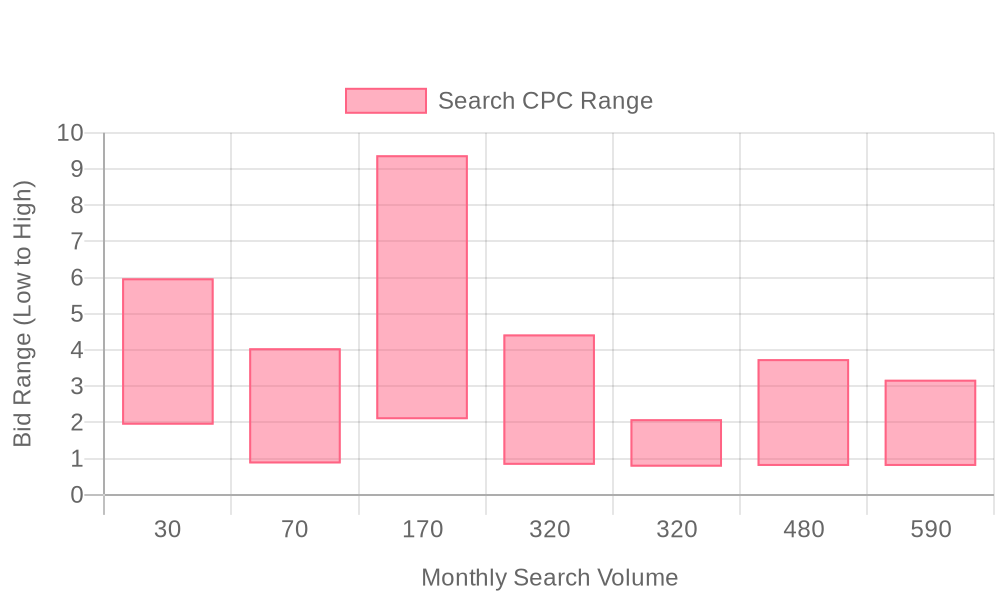
| Industry | Keyword | Monthly Search Volume | Competition Level | Low Bid | High Bid |
| Used Retail Fixtures | retail clothing racks wholesale | 30 | HIGH | 1.94 | 5.98 |
| Used Retail Fixtures | used gondola shelving for sale near me | 70 | HIGH | 0.87 | 4.05 |
| Used Retail Fixtures | commercial retail shelving | 170 | HIGH | 2.09 | 9.38 |
| Used Retail Fixtures | used retail fixtures | 320 | HIGH | 0.83 | 4.43 |
| Used Retail Fixtures | used store fixtures | 320 | HIGH | 0.78 | 2.09 |
| Used Retail Fixtures | used gondola shelving | 480 | HIGH | 0.8 | 3.75 |
| Used Retail Fixtures | used store fixtures near me | 590 | MEDIUM | 0.8 | 3.18 |
Effective keyword selection is the cornerstone of successful online advertising for used retail fixtures. By aligning campaign terms with commercial intent and buyer needs, marketers can increase qualified leads and maximize ad spend efficiency. Explore more on optimizing your keyword approach in our marketing strategy blog.
- High-Intent Keywords: Focus on terms such as ‘affordable retail fixtures’, ‘used store display units’, and ‘discount store shelving’. These phrases signal active buying intent, drawing users who are ready to make purchasing decisions. Integrating real-time intent data allows teams to identify which specific queries drive conversions, enabling strategic budget shifts toward the best-performing keywords.
- Local Keywords: Incorporate geographic modifiers like city, region, or neighborhood (e.g., ‘used retail fixtures in Chicago’ or ‘store shelving Los Angeles’). Targeting by location not only narrows competition but also elevates relevance for buyers seeking fixtures in their immediate area. Using visitor identification and dynamic audience updates, marketers can refine ads to target high-value prospects as they emerge in key local markets. Learn how to set up and optimize Google Shopping campaigns to further enhance your local targeting strategy.
- Niche Terms: Include specialized phrases that reflect unique inventory or industry verticals, such as ‘boutique clothing racks’, ‘grocery store cooler units’, or ‘pharmacy display cabinets’. These long-tail terms capture demand from segments with specific requirements, including buyers who need fixtures that meet health code or ADA compliance for their category. By syncing CRM and ad platforms, teams can automatically build and refresh segmented audiences, ensuring that niche campaigns reach the most relevant buyers throughout the sales funnel.
Tips on Expanding Your Used Retail Fixtures Presence
Businesses in the used retail fixtures sector can achieve significant growth by adopting a modern, data-driven approach to digital marketing. Leveraging targeted advertising and actionable insights allows teams to connect directly with decision-makers, streamline outreach, and increase overall deal velocity in a competitive market.
Refine and scale your marketing with these actionable strategies:
- Promote Educational Assets: Content marketing should reinforce your unique value propositions and demonstrate expertise in used retail fixtures. High-value resources such as whitepapers, interactive guides, or ROI calculators can establish trust and help prospects justify purchases internally, leading to more qualified inbound leads. For additional guidance, explore the Sona blog for actionable content marketing best practices.
- Upsell Related Services: Segmenting audiences using CRM data enables you to introduce additional services like delivery, installation, or liquidation management to existing customers. By identifying purchase patterns and engagement triggers, marketers can launch automated campaigns that surface relevant upsell offers at the optimal time, leveraging real-time audience segmentation for precision targeting.
- Localize Campaigns: Customizing campaigns for different regions, cities, or states increases relevance and click-through rates. Tailored messaging and local inventory listings drive higher engagement from nearby businesses looking for immediate solutions, while advanced audience syncing ensures that ad spend is focused on the highest-potential markets.
- Leverage Data-Driven Insights: Analyzing search query reports and campaign performance helps uncover emerging trends, new product demand, and fresh content opportunities. Real-time intent data lets marketers shift budget dynamically, prioritize high-converting segments, and maintain a competitive edge in a fluctuating retail landscape.
Implementing an effective Google Ads for Used Retail Fixtures strategy requires integrating keyword optimization, segmented audience targeting, and compelling ad creative within a holistic marketing framework. Technologies that unify CRM, web, and campaign data empower teams to identify in-market buyers, personalize outreach, and attribute conversions across channels. By continually refining campaigns with these best practices, revenue teams can boost their digital footprint, engage more qualified prospects, and accelerate used fixture sales. To see how you can operationalize these strategies, get started for free with Sona.
Implementing an effective Google Ads for Used Retail Fixtures strategy requires integrating keyword optimization, segmented audience targeting, and compelling ad creative within a holistic marketing framework. Technologies that unify CRM, web, and campaign data help teams identify in-market buyers, personalize outreach, and attribute conversions across channels. By continually refining campaigns with these best practices, revenue teams can boost their digital footprint, engage more qualified prospects, and accelerate used fixture sales.
Paid search captures demand at the moment someone types a query. But a fast-growing share of used retail fixtures buyers no longer start at Google at all, they ask ChatGPT, Gemini, or Perplexity before they ever run a search, and Google's own AI Overviews increasingly summarize an answer above the traditional results. If your business isn't referenced in those AI answers, you're invisible at the exact moment buyers build their shortlist.
Sona AI Visibility shows where your business shows up across ChatGPT, Gemini, Perplexity, Google AI Overviews, and 10+ engines, and, much like a keyword report, which prompts actually send you buyers, so you can prioritize the ones that convert. Run the two together and you cover the entire buyer path: get cited where buyers research (AI Visibility), then prove which of that demand turns into booked revenue (Marketing Measurement).
Helpful resources
Conclusion
The used retail fixtures market keeps shifting, retail bankruptcies and store closures free up inventory in waves, and demand for that inventory doesn't wait around. Search will stay the fastest way to reach a buyer mid-renovation, but the more durable advantage lies in tying every click back to which company actually bought, so budget keeps moving toward the segments and keywords that produce real deals rather than form fills.
To take your advertising strategy to the next level and connect ad spend to closed revenue, start for free today.
FAQ
What are the best Google Ads strategies for selling used retail fixtures?
The best strategies include using search campaigns to target high-intent keywords, leveraging display ads for brand visibility, engaging through video ads, remarketing to past visitors, and using ad extensions for detailed product information.
How can I set up a Google Ads campaign for retail fixtures?
Set up a Google Ads campaign by targeting specific keywords related to used retail fixtures, creating segmented ad groups for different customer profiles, and using real-time analytics to optimize performance.
What budget should I allocate for Google Ads in retail?
The budget allocation should be dynamic, shifting towards accounts with high likelihood of conversion as identified by real-time intent signals and performance analytics.
What keywords should I target for used retail fixtures?
Target high-intent keywords such as 'affordable retail fixtures', 'used store display units', and local keywords like 'used retail fixtures in Chicago'.
How can I measure the success of my Google Ads campaigns for retail fixtures?
Success can be measured by tracking conversions both online and offline, using enriched lead data, and syncing insights back into Google Ads for a comprehensive view of customer journeys.







