


Short-term health insurance sells to people who need coverage now, not in six weeks. A laid-off worker between jobs, a new graduate off a parent's plan, someone who missed open enrollment: these buyers search with urgency, and Google Ads is often the fastest way to reach them before a competitor does. But healthcare advertising carries real compliance weight, and short-term plans in particular draw scrutiny over what they promise. This guide covers how to build Google Ads campaigns that capture these high-intent leads while keeping messaging accurate and compliant, and how to fold that work into a broader marketing strategy.
How to Generate Google Ads for Short Term Health Insurance Leads: A Step-by-Step Guide

Reaching qualified prospects in short-term health insurance means turning anonymous site traffic into leads you can actually act on. Sona's Intent Signals and audience segmentation let marketers identify the companies and buyers behind that traffic and deliver timely, personalized offers instead of generic ones.
A successful Google Ads strategy for short-term health insurance unifies keyword targeting, compelling creative, and real-time optimization. Leveraging integrated data sources and dynamic audience updates, teams can move beyond traditional lead generation and prioritize prospects most likely to convert. For more practical guidance on these tactics, explore our B2B marketing playbooks.
Keyword and Audience Targeting
Precise keyword research is the foundation for high-performing health insurance campaigns. Focus on terms such as "affordable short-term health insurance" and "temporary medical coverage" to attract high-intent traffic. Audience segmentation further refines reach, ensuring messaging resonates with consumers experiencing life transitions, like job changes or recent graduates.
Sona's Identity Resolution identifies the companies and individuals behind previously anonymous visits, shifting campaigns from broad targeting toward something closer to account-based precision. As in-market behaviors emerge, budgets can shift toward prospects displaying real buying signals rather than being spread evenly across cold traffic. For a fuller look at healthcare PPC practices, see this healthcare PPC guide.
Ad Copy and Landing Page Strategy
Ad copy should speak to the two things short-term buyers actually care about: how fast coverage starts and what it costs. Someone searching after a missed open-enrollment deadline or a job change wants to know they won't have a gap in coverage, and hedged or vague language reads as a red flag in a category already viewed with suspicion. Keep keyword, ad copy, and landing page tightly aligned. Beyond conversion, that consistency matters for Google's healthcare ad certification review.
Intent data now enables dynamic tailoring of messaging to match each visitor’s context. Landing pages can automatically display personalized content based on search terms and user profiles, increasing relevance and trust. Integrating enriched lead data into CRM and advertising platforms ensures that follow-up outreach is both timely and personalized, bridging the gap between digital engagement and offline sales teams.
Optimization Tactics
Continuous optimization is crucial for maximizing campaign ROI. Performance data should inform refinements to keyword lists, ad groups, and bidding strategies. Predictive analytics help identify which leads are sales-ready, enabling teams to focus efforts on the highest-value opportunities. Learn more about optimizing Google Ads in healthcare.
Conversion tracking that measures both online and offline actions gives a full view of ROI. As leads interact with campaigns across devices and channels, integrating that data with CRM systems lets marketers attribute revenue accurately and refine targeting. This closed-loop process creates a feedback cycle, so teams can adjust spend, messaging, and outreach for sustained lead generation.
Why Does Google Ads Matter for Short Term Health Insurance?

Short-term health insurance requires agile marketing that adapts to changing regulations and fluctuating consumer demand. Google Ads provides a direct path for health insurance providers to connect with in-market audiences, ensuring every campaign aligns with evolving compliance standards while capturing high-intent leads at scale. The ability to measure both online and offline conversions delivers a comprehensive view of campaign performance, which is essential for optimizing spend in a highly regulated industry.
This segment of the health insurance market is driven by urgency: individuals searching for coverage often need immediate solutions, whether due to employment changes, missed open enrollment, or other life transitions. Google Ads enables providers to reach these prospects at the critical moment of need, closing the gap between search and enrollment by surfacing tailored offers and qualifying prospects with minimal delay. When advanced lead management and offline tracking are integrated, follow-up times shorten, and no qualified lead is left unworked.
Precision targeting and robust measurement are crucial for maximizing ROI in short-term health insurance advertising. Google Ads’ granular targeting options allow marketers to identify qualified segments based on intent, demographics, and geography, ensuring every dollar is directed toward high-value prospects. Unified data platforms further enhance these efforts by bridging intent signals across online and offline touchpoints, syncing enriched audience insights directly into Google Ads and CRM systems. This alignment empowers sales teams to act on context-rich data, driving stronger engagement and higher conversion rates. To see how automated audience syncing can improve your campaigns, get started for free with Sona.
Common Types of Google Ads Campaigns for Short Term Health Insurance

- Search Campaigns: High-intent search campaigns are the backbone of digital advertising for health insurance, especially for short-term coverage. These campaigns connect your offer with people actively researching immediate coverage, often during a job change, a lapse in benefits, or a missed enrollment window. Responsive search ads, the standard ad format within Search campaigns, let marketers test multiple headlines and descriptions to find what resonates with each intent segment. With Sona's Intent Signals, marketers can narrow targeting to users who are ready to decide, cutting wasted spend. When search campaigns run alongside Sona's Identity Resolution, clicks can be traced back to the company or individual, so sales teams can prioritize outreach and personalize follow-up.
- Display Campaigns: Display advertising is crucial for health insurance marketing because it maintains brand visibility beyond the search results page. These campaigns use visually compelling creatives to reach potential customers browsing healthcare, finance, or lifestyle content. With dynamic audience technology, display campaigns automatically update targeting lists as prospects engage with your brand across channels, ensuring messaging remains relevant at every touchpoint. For insights into current top-performing strategies, explore this guide to top PPC strategies. Marketers can further enhance display performance by mapping in-market behaviors, shifting impressions to accounts most likely to convert based on recent activity and profile enrichment.
- Remarketing Campaigns: Remarketing is essential for reinforcing your value proposition to site visitors and ad engagers who have not yet converted. In short-term health insurance, where decision cycles can be brief but competitive, consistent reminders across search, display, and video help keep your offer top-of-mind. Advanced retargeting strategies now allow for dynamic audience updates, so as leads move through the funnel or become sales-qualified, ad messaging adapts in real time. Integrating CRM and ad platforms ensures every remarketing impression is shown to the right contact, at the right time, maximizing both engagement and the likelihood of policy applications.
- Performance Max Campaigns: Performance Max lets health insurance advertisers bid across Search, Display, YouTube, and Gmail from a single campaign, which suits a category where buyers move between a quick search and a longer research session before enrolling. Feeding it strong conversion signals, ideally tied to actual policy applications rather than just form fills, keeps Google's automated bidding focused on the leads likeliest to convert rather than the cheapest clicks.
Where to Find Growth Opportunities in Short Term Health Insurance

Short-term health insurance advertising in Google Ads requires more than a standard playbook. Teams that embrace a data-driven approach can discover untapped segments and optimize spend for maximum impact. The most effective growth strategies blend competitive insight, targeted keyword expansion, and granular audience activation.
- Vertical Keyword Expansion: Break out of traditional keyword silos by identifying related services, pain points, and contextual queries that competitors have overlooked. Real-time search trend analysis can uncover emerging topics such as “temporary coverage for job transition” or “short-term medical insurance for families,” which align with evolving consumer needs. When marketing teams leverage unified intent data, they can spot shifts in market behavior and quickly test new keyword themes. Responsive audience lists update in sync with these discoveries, keeping acquisition efforts aligned with the highest-potential prospects.
- Competitor Analysis: A thorough review of competitor ad strategies, messaging, and coverage gaps reveals actionable opportunities. By combining competitive research with predictive lead scoring, revenue teams can prioritize segments where competitors underperform or ignore altogether. Advanced platforms allow marketers to identify not just which companies are clicking, but which are actively in-market and moving toward purchase. For a deeper understanding of current PPC strategies, marketers can adapt their approach to stay ahead of the competition. With this intelligence, teams can shift budgets and creative focus to high-converting verticals and suppress spend where intent is weak or competition is saturated.
- Niche Placements: Industry-specific forums, health-focused directories, and specialty content networks offer unique inventory that can outperform standard placements in terms of engagement and qualified lead volume. Technology enables marketers to map visitor identities to niche communities, ensuring ads are delivered to audiences with a demonstrated interest in short-term health coverage. Automated workflows update placements and retargeting pools as users progress through the funnel, maximizing relevance and cost efficiency across the campaign lifecycle.
Growth in short-term health insurance Google Ads is driven by an agile, insight-powered approach. Teams that continuously mine data for keyword, audience, and placement opportunities outperform those relying on static lists or intuition. Real-time unification of ad, CRM, and intent signals ensures every impression and click is tied to measurable business value. If you're ready to discover actionable opportunities and optimize your campaigns, get started for free with Sona.
How to Apply Audience Segmentation for Health Insurance

Audience segmentation elevates health insurance campaigns by ensuring every message aligns with the needs of a specific prospect group. Marketers who invest in granular segmentation consistently outperform generic campaigns, driving higher engagement and stronger lead quality. For actionable frameworks on segmentation, review our practical guides and playbooks.
- Define Target Customer Segments: Advanced segmentation starts with clearly distinguishing between individual policy seekers and those searching for family coverage. For health insurance advertisers, this means analyzing historical data to uncover nuanced preferences, such as young professionals preferring digital-first enrollment or families prioritizing pediatric coverage. Granular differentiation extends to identifying which traffic sources deliver the most engaged visitors, allowing for refined budget allocation and creative strategy. With unified go-to-market data, teams can pinpoint not just who is visiting, but which organizations and buyer personas repeatedly show purchase signals.
- Intent Signal Integration: Integrating CRM enrichment into health insurance campaigns empowers marketers to map real-time search intent to actionable profiles. By connecting in-market activity with first-party data, it's possible to dynamically identify prospects researching short-term health insurance, recent job changers, or parents with upcoming coverage gaps. This intelligence lets marketing teams deliver hyper-relevant ad creative and content at the exact moment a prospect begins evaluating options. For best practices on running effective and compliant campaigns, see Google Ads in healthcare. When enriched audience data syncs directly into paid channels, ad delivery becomes both timely and contextually precise, minimizing wasted impressions and maximizing campaign ROI.
- Custom Ad Groups: Building ad groups around these refined segments produces a significant lift in relevance and conversion rates. For example, separate ad groups can target students aging off parental plans versus freelancers needing gap coverage between contracts. Each group receives tailored messaging, imagery, and call-to-action, speaking directly to their unique pain points and decision triggers. As leads progress through the funnel, dynamic audience updates ensure ad exposure and nurturing sequences reflect their latest engagement signals. With real-time syncing to Google Ads and connected CRM systems, health insurance marketers maintain campaign alignment across channels and continuously optimize toward the highest-value opportunities.
This is also where measurement changes the economics. Sona Marketing Measurement identifies the companies and buyers behind your ad clicks, not just anonymous sessions, and segments audiences by who actually becomes a customer. That lets you build bid adjustments and audience signals around the segments that convert and de-prioritize the ones that don't, so you feed Google's algorithms "this click became a paying short term health insurance customer" instead of just "someone filled out a form."
Keyword Strategy & Sample Target Terms
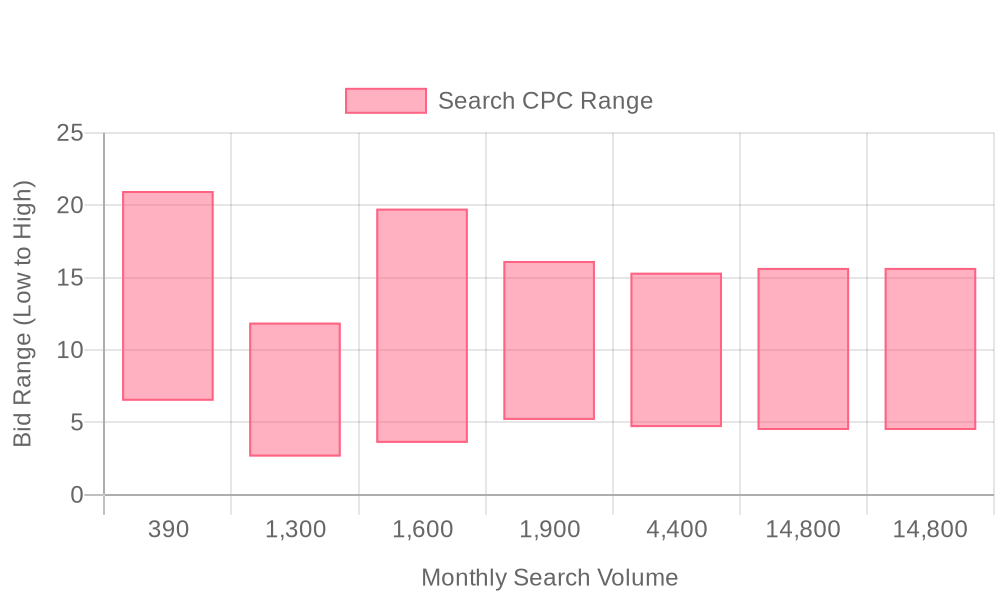
| Industry | Keyword | Monthly Search Volume | Competition Level | Low Bid | High Bid |
| Short Term Health Insurance | temporary insurance coverage | 390 | MEDIUM | 6.5 | 20.98 |
| Short Term Health Insurance | temporary health insurance between jobs | 1300 | HIGH | 2.65 | 11.89 |
| Short Term Health Insurance | united healthcare short term insurance | 1600 | MEDIUM | 3.59 | 19.76 |
| Short Term Health Insurance | short term insurance plans | 1900 | HIGH | 5.18 | 16.15 |
| Short Term Health Insurance | temporary health insurance | 4400 | HIGH | 4.68 | 15.34 |
| Short Term Health Insurance | short term health insurance | 14800 | MEDIUM | 4.48 | 15.67 |
| Short Term Health Insurance | short term medical insurance | 14800 | MEDIUM | 4.48 | 15.67 |
Effective keyword strategy is foundational for digital advertising in short-term health insurance. Campaigns that prioritize intent-driven targeting deliver higher lead quality and maximize budget efficiency, especially in industries where regulatory compliance and consumer trust are paramount. Leveraging predictive insights from unified go-to-market data, marketers can anticipate which search terms signal serious purchase readiness and allocate spend accordingly.
- Focus on High-Intent Keywords: Short-term health insurance campaigns require a sharp focus on terms that reflect immediate action. Phrases like "best short-term health plans," "apply for short-term health insurance," and "temporary health coverage near me" consistently attract users who are actively evaluating providers or ready to enroll. Predictive models trained on engagement history help surface the highest value terms, ensuring ad spend is concentrated where conversion likelihood is highest. When visitor intent is identified in real time, teams can move quickly to capture in-market demand, shifting budget dynamically to the most effective keywords and messaging. Learn more about best practices for Google Ads in health care to further improve your campaign effectiveness.
- Utilize Negative Keywords: Filtering is just as critical as targeting in health insurance advertising. By systematically excluding terms such as "health insurance jobs," "health policy news," or "ACA-compliant plans," marketers prevent wasteful impressions and preserve compliance with Google Ads certification standards. Applying negative keywords at both campaign and ad group levels blocks low-intent or misaligned queries, while advanced platforms enable ongoing refinement as audience behavior shifts. The result is a leaner, more qualified pipeline and improved ROI across all health insurance campaigns.
- Local Modifiers for Precision: Geographic specificity elevates campaign performance in the health insurance sector. Integrating location-based keywords, like "short-term health insurance in Texas" or "temporary coverage Chicago", increases local relevance and boosts ad quality scores. Geographic segmentation ensures that messaging, eligibility details, and plan recommendations align with state-level regulations and consumer expectations. When platforms sync CRM insights and behavioral data into Google Ads, audience lists are dynamically updated as leads move through the funnel, so local campaigns always target the right segments with the most current information. This approach delivers higher conversion rates, reduces compliance risk, and ensures each impression serves a strategic business objective. To see how these strategies can be implemented for your team, get started for free with Sona.
Step-by-Step Campaign Execution Framework for Short Term Health Insurance
Step 1: Build a Comprehensive Keyword List
A precise keyword list forms the core of effective Google Ads for short-term health insurance. Segment keywords by service offering, such as temporary gap coverage, student health plans, or short-term medical insurance, and layer in geographical modifiers for state and city targeting. This structure ensures campaigns reach prospects searching for coverage options relevant to their location and life event. For additional strategies on building a high-performing keyword foundation, review the top PPC strategies for digital marketing ROI.
Negative keywords are essential for filtering out irrelevant searches, preventing wasted spend on unqualified traffic. For example, exclude terms related to long-term or ACA-compliant plans if the focus is strictly on short-term products. Advanced tools that provide real-time audience insights enable marketers to refine keyword selection dynamically, uncovering trending queries and intent shifts as they happen. By integrating enriched prospect data, teams can further expand high-converting keyword sets while reducing low-quality clicks. Explore more practical guides for keyword segmentation and campaign setup in our marketing playbooks.
The upgrade most short term health insurance advertisers miss is going beyond raw keyword volume to layer in intent and identity signals. By connecting website-visitor data and CRM records with Sona Marketing Measurement, you can see which specific search terms bring in the accounts and customers that actually convert, and weight your keyword and bidding strategy toward those rather than the terms with the highest search volume alone.
Step 2: Craft High-Impact Ad Copy
Ad copy must communicate the unique value of short-term health insurance while maintaining compliance with healthcare advertising policies. Highlight core benefits such as immediate coverage, customizable plan lengths, and competitive premiums. Use trusted endorsements, ratings, or partner badges to build credibility and address trust barriers that are common in health insurance marketing. For tips on compliant and effective messaging, see best practices for Google Ads in healthcare.
Maximize ad visibility with sitelink assets, call assets, and structured snippets. These assets improve click-through rates and put more information in front of the searcher before they click. Feeding Sona's Intent Signals into your creative process keeps messaging aligned with in-market behavior. As audiences shift, dynamic ad personalization can reflect updated plan details or regional offers in response to real-time market and regulatory changes.
Step 3: Optimize Landing Pages for Conversions
Landing pages must deliver a seamless transition from ad click to lead capture. Ensure messaging consistency by matching ad promises with on-page content, avoiding any disconnect that could disrupt user trust. Use clear, action-oriented CTAs that guide visitors toward quote requests or application starts. Mobile optimization is critical, as a significant portion of traffic originates from smartphones, requiring responsive layouts and fast load times. To compare typical plan options and coverage, visit this short-term health insurance marketplace.
Enrich landing pages with contextual data signals, such as visitor location, referral source, or recent browsing behavior. This allows for deeper personalization, displaying relevant plan options or testimonials based on user segment. Integrating visitor identification technology enables revenue teams to recognize returning companies or high-value individuals, tailoring offers and streamlining the qualification process. These enhancements collectively drive higher conversion rates and improve the efficiency of health insurance campaigns.
Step 4: Implement and Monitor Insights-Driven Data Optimizations
Tracking and optimization are the linchpins of digital advertising for healthcare. Set up comprehensive conversion tracking to capture both online actions, such as form submissions and click-to-call events, and offline touchpoints, like call center enrollments. Use these insights to adjust bidding strategies and reallocate budget toward the highest-performing segments. For guidance on optimizing campaign compliance and ROI, refer to this Google Ads compliance guide for healthcare.
Feed offline conversion data back into your analytics tools for closed-loop measurement of true ROI. Predictive models refine audience targeting further, identifying accounts most likely to convert and cutting wasted spend. When enriched audiences and leads are automatically synced between Google Ads, CRM, and marketing automation platforms, optimization becomes continuous rather than a quarterly exercise, directing spend toward the prospects with real purchase intent.
Sona Marketing Measurement closes the gap between clicks and revenue. It captures ad clicks with first-party, company-level measurement, ties each one through UTM capture and ad-platform APIs to the actual record in your CRM, and reports ROAS by keyword and campaign instead of by last-click form fill. Feeding that revenue signal back into Smart Bidding and Performance Max compounds over time: the algorithms optimize toward booked short term health insurance revenue, not cheap leads.
Tips on Expanding Your Presence in Google Ads for Short Term Health Insurance
Short-term health insurance marketers gain efficiency by pairing strategic campaign design with precise audience intelligence. Distinct data insights let teams identify and prioritize in-market prospects instead of spreading spend across low-intent traffic. Unified data environments streamline execution, so budget goes toward the audiences most likely to convert. For practical frameworks on optimizing digital strategy, explore our playbooks.
Cutting-edge digital advertising solutions let marketers reach beyond surface-level lead generation. By surfacing real-time intent signals, teams can retarget high-value visitors with tailored content immediately, moving them through the funnel faster. Automated workflows remove manual bottlenecks from lead qualification, so revenue teams can focus on the most promising opportunities. For current best practices on Google Ads in healthcare, see this external guide.
- Cross-Promote Content Assets: Retargeting campaigns can do more than chase abandoned visitors. Using visitor identification and behavioral tracking, marketers can promote relevant whitepapers, webinars, or explainer videos to segmented audiences across channels. Dynamic audience updates keep content offers aligned with each prospect's current needs, increasing engagement and nurturing leads until they're sales-ready.
- Localize Campaigns: Campaigns that adapt to geography consistently outperform generic national efforts, especially since short-term health insurance rules vary by state, some states restrict or ban these plans outright. Marketers can use location-based audience segmentation to adjust bids and creative for regional regulations, plan availability, and market demand, while real-time performance analytics flag the best-performing regions for incremental investment.
- Leverage Partnerships: Collaborating with industry associations and trusted partners amplifies campaign credibility and reach. By integrating lead insights from partner channels, marketers can enrich their audience lists and coordinate outreach, creating a unified experience for prospects. Shared data infrastructure makes it easier to align messaging and measure joint campaign impact, building mutual growth and a stronger brand presence in the health insurance sector.
Marketers using these strategies in Google Ads for short-term health insurance don't just improve lead quality, they build a scalable foundation for ongoing performance gains. Combining data-driven targeting, localized messaging, and partnership-driven audience development positions campaigns to capture high-intent opportunities without sacrificing compliance or cost efficiency.
Beyond Google Ads: Winning the AI Answers Short Term Health Insurance Buyers Now Trust
Paid search captures demand at the moment someone types a query. But a fast-growing share of short term health insurance buyers no longer start at Google at all, they ask ChatGPT, Gemini, or Perplexity before they ever run a search, and Google's own AI Overviews increasingly summarize an answer above the traditional results. If your business isn't referenced in those AI answers, you're invisible at the exact moment buyers build their shortlist.
Sona AI Visibility shows where your business shows up across ChatGPT, Gemini, Perplexity, Google AI Overviews, and 10+ engines, and, much like a keyword report, which prompts actually send you buyers, so you can prioritize the ones that convert. Run the two together and you cover the entire buyer path: get cited where buyers research (AI Visibility), then prove which of that demand turns into booked revenue (Marketing Measurement).
Helpful resources
Conclusion
The short-term health insurance buyers most worth chasing are the ones searching under real time pressure, a lapsed job, a missed enrollment deadline, a gap between plans. Google Ads works for this category because it meets that urgency directly, but only when keyword targeting, compliant ad copy, and honest landing pages are pulling in the same direction. The teams that win aren't the ones bidding the most, they're the ones who can prove which clicks actually became paying policyholders and feed that signal back into the campaign.
That's increasingly where the real advantage sits: not in reaching more people, but in knowing which of the people you already reach are worth the follow-up call. As AI tools start answering coverage questions before a search ever happens, the advertisers who keep both their paid campaigns and their measurement sharp will be the ones still visible when a buyer is ready to enroll.
To fully experience the capabilities of a unified data approach, start for free with Sona.
FAQ
What are the requirements for advertising short-term health insurance on Google Ads?
Advertisers must adhere to Google Ads' compliance standards, ensuring their messages align with healthcare advertising policies and target high-intent audiences effectively.
How can I get certified to advertise health insurance on Google?
To advertise health insurance on Google, you must follow Google Ads' certification standards, which include compliance with regulatory requirements and demonstrating credibility in your ad content.
What strategies can I use for Google Ads campaigns for short-term health insurance?
Strategies include precise keyword targeting, audience segmentation, crafting compelling ad copy, optimizing landing pages, and continuously refining campaigns based on performance data.
What are the common pitfalls in Google Ads for health insurance?
Common pitfalls include targeting low-intent keywords, failing to maintain compliance with advertising policies, not utilizing audience segmentation, and neglecting continuous campaign optimization.
How do I ensure compliance with Google Ads policies for health insurance?
Ensure compliance by aligning ad content with healthcare advertising policies, using precise targeting to avoid misleading claims, and continuously monitoring campaign performance for adherence to standards.







