


Retail security buyers rarely browse. A store manager dealing with organized retail crime, a loss-prevention director comparing camera vendors after a spike in shrinkage, a regional operator who needs guards on-site before the weekend, these searches happen fast and with urgency. Online channels like SEO and social media build long-term visibility, email nurtures existing accounts, and trade shows and industry publications establish credibility offline. Google Ads sits at the intersection of these efforts, capturing prospects at the exact moment they search for a solution and connecting broader awareness work to your sales pipeline. The value of Google Ads in retail security services shows up in a few concrete ways:
How to Generate Retail Security Service Leads with Google Ads: A Step-by-Step Guide

Driving consistent, high-quality leads for retail security services requires precise targeting paired with real-time data adaptability. Teams that combine granular ad strategy with unified data can surface in-market buyers and act on the strongest signals by using Sona's Identity Resolution to reveal which companies are researching their solutions.
This framework delivers a proven approach for B2B marketers, service providers, and local operators to streamline retail security service lead generation. It balances campaign setup, creative, and ongoing optimization with advanced data flows for maximized ROI and measurable business outcomes. For a deeper dive into aligning your demand generation process, see our marketing playbooks.
- A data-driven approach to pay-per-click marketing within your overall marketing strategy: Retail security buyers move quickly once a decision is triggered, often by a recent theft, a failed audit, or a new compliance requirement. Unifying ad data with CRM and sales activity lets marketers see which accounts are actively researching solutions, shifting budget toward those high-intent moments and away from casual browsing traffic. Digital advertisers in the security space can find actionable strategies in this overview of security business advertising.
- Techniques for keyword and audience targeting tailor-fitted for potential retail security clients: Retail security buyers have distinct search intent and decision cycles. Advanced audience segmentation and dynamic keyword targeting help surface ads to decision-makers at key moments, while integrating real-time audience segments empowers marketers to reach both anonymous and known companies engaging with your ads.
- Align landing pages and ad creativity to optimize conversions: Conversion rates improve when landing pages and ad copy reflect the prospect's industry, pain points, and urgency. Data-enriched audience profiles allow marketers to dynamically personalize messaging and offers, creating a seamless experience from ad click to form fill. Learn more about optimizing performance in our blog on measuring marketing's influence.
- Implement continuous performance optimization tactics to maximize ROI: High-performing campaigns require rigorous A/B testing, real-time intent analysis, and closed-loop attribution. Leveraging advanced intent signals helps marketers refine audience segments and creative while tying ad spend to actual pipeline results.
- Strategies for cross-channel integration to enhance the full spectrum of marketing efforts: Retail security service lead generation is most efficient when Google Ads activity is connected with email, social, and sales outreach. Audience sync between platforms ensures high-intent leads receive timely, relevant follow-up, while unified reporting surfaces which channels and touchpoints actually drive revenue.
This playbook gives retail security companies a foundation for measurable growth on Google Ads, built on a unified data ecosystem that keeps marketing and sales working from the same picture. To unlock these capabilities for your team, get started for free with Sona.
Why Google Ads Matter for Retail Security Services Businesses

Retail security providers operate in a landscape where timing, precision, and visibility determine contract wins. Digital marketing for retail security demands more than generic outreach; it requires agile tactics that surface high-value opportunities and convert urgent demand into measurable revenue. For a closer look at how leading security businesses generate more leads with digital ads, review this effective digital advertising strategies resource, or explore the latest marketing, analytics, and growth strategy articles to stay ahead.
- Complex, Specialized Audience: Retail security services must connect with decision-makers like store managers, procurement directors, and safety officers when they are actively seeking solutions. While LinkedIn is useful for brand awareness, Google Ads intercepts these buyers in their critical research moments. Advanced campaign strategies now empower marketers to identify and engage valuable prospects, even if those individuals have never filled out a form or interacted directly with your site. Visitor identification, paired with behavioral analytics, ensures that no potential lead slips through the cracks.
- Higher Margin Services: Traditional email marketing is effective for nurturing existing accounts, but Google Ads excels at driving new business for premium service lines, such as integrated surveillance systems or multi-site security contracts. Real-time visitor insights reveal high-intent companies as they evaluate vendors, enabling sales teams to prioritize outreach before competitors can respond. This level of intelligence turns anonymous clicks into actionable sales conversations, fueling retail security service lead generation with prospects most likely to convert.
- Faster Demand Response: Seasonal spikes and urgent incidents create unpredictable surges in demand for retail security. Google Ads optimization for security services allows marketing teams to capture these time-sensitive leads at the precise moment they begin their search. Integrated data flows deliver instant notifications to sales, allowing for immediate engagement and faster deal cycles. This responsiveness not only secures more contracts but also positions your brand as the go-to solution for rapid deployment needs.
- Visibility in Emerging Regions: Expanding into new metropolitan areas or underserved markets requires more than broad outreach. With Google Ads, retail security firms can target geo-specific keywords, tailoring campaigns for local search intent and regional nuances. Dynamic audience building keeps targeting aligned with shifting demand, ensuring campaigns remain efficient as market footprints evolve.
- Integrated Data Analysis: Closed-loop measurement is critical for retail security marketing strategies. Google Ads provides granular analytics from first click through to signed contract, informing budget allocation and campaign optimization across all channels. Connecting Google Ads with CRM and analytics solutions enables true online/offline attribution, so marketers can prove ROI and continuously refine their approach for maximum impact.
Common Types of Google Ads Campaigns for Retail Security Services

- Search Campaigns (including Responsive Search Ads): Search campaigns capture high-intent prospects searching for retail security solutions, alarm system installation, or urgent loss prevention services. Using Responsive Search Ads, an ad format that tests combinations of headlines and descriptions, alongside precise keyword targeting, these campaigns intercept decision-makers at the moment of need. When integrated with real-time visitor identification and intent data, marketers can shift spend toward organizations already showing signs of interest, making budget allocation significantly more efficient. For a deeper understanding of effective search ad strategies in the security industry, see this guide on optimizing Google Ads campaigns for security companies.
- Display Ads: Display campaigns keep your brand present across relevant industry sites, helping reinforce your value proposition as prospects browse content outside of direct search. Using high-fit company profile data, you can target ads to organizations that have interacted with your site or marketing materials, focusing impressions where conversion likelihood is highest. For more strategies and expert playbooks, explore the Sona blog.
- Video Ads: Video formats allow retail security providers to showcase solutions that are often complex or highly visual, such as integrated CCTV monitoring or remote access systems. These ads excel on platforms like YouTube, driving awareness and credibility in a crowded market. By aligning video distribution with account-level engagement signals, marketers ensure that outreach efforts reach stakeholders most likely to influence purchasing decisions. Learn more about best practices for attribution in video and omnichannel campaigns in this guide to measuring marketing's influence on the sales pipeline.
- Remarketing: Remarketing campaigns enable you to reengage previous website visitors, form-fill abandoners, or quote request drop-offs. Dynamic audience updates ensure that as leads move through your funnel, messaging adapts to their latest actions and interests. This not only increases conversion rates but provides multiple touchpoints across the buyer journey, reinforcing your authority in retail security solutions. For actionable retargeting strategies, review this intent-driven retargeting playbook.
- Assets: Assets such as location, certifications, and response time indicators act as trust signals, differentiating your offering in a competitive landscape. Incorporating organizational data into these assets can showcase relevant credentials or proximity, giving buyers the confidence needed to take the next step. These enhancements complement core ad messaging and improve click-through rates, especially in local or time-sensitive security service searches. To learn how local businesses leverage Google's tools, see the Local Service Ads platform overview.
Ready to make your retail security marketing smarter? Get started for free with Sona.
Where to Find Growth Opportunities

Maximizing growth in the retail security industry requires proactive expansion beyond established channels. Innovative marketers benefit from surfacing niche segments, targeting precise buyer intent, and leveraging advanced attribution to guide budget allocation with confidence.
- Vertical Keyword Targeting: Prioritize specialty services that complement your main offerings. For retail security, this means building campaigns around terms like "retail loss prevention consulting," "mall security patrol," or "shoplifting deterrence systems." These vertical keywords capture intent from buyers who are actively evaluating specific solutions and are less saturated than broad terms, driving higher-quality inbound leads. For more strategies, review this post on effective advertising for security businesses.
- Competitor Gap Analysis: Use advanced analytics platforms to monitor market share and identify gaps where competitors underperform. By analyzing both paid and organic keyword coverage, security service providers can uncover underserved queries or verticals. Targeting neglected segments enables your team to reach new audiences, fill conversion gaps, and establish a presence where competition is minimal.
- Industry-Specific Placements: Increase visibility by engaging audiences where they actively seek peer recommendations or industry insights. Placing digital content and ads on retail security and loss prevention forums, vendor directories, and professional association sites raises brand awareness among vetted decision-makers. These placements often result in higher engagement rates and shorter sales cycles compared to general digital channels.
Modern attribution tools provide a clear view of which channels and campaigns drive pipeline and revenue. By unifying ad, CRM, and website data, revenue teams can credit conversions accurately, ensuring marketing budgets are optimized toward activities with the greatest impact. Explore ways to measure marketing's influence on the sales pipeline for enhanced budget confidence.
Content Retargeting: Retarget site visitors with educational assets such as whitepapers or explainer videos highlighting the ROI of advanced retail security services. Dynamic audience solutions update targeting in real time as leads engage with content, move through the funnel, or meet qualification criteria. Integrating CRM and ad platforms ensures sales-ready leads receive personalized follow-ups, improving conversion rates and maximizing retail security service lead generation.
Ready to discover new market segments and streamline your campaign strategy? Get started for free with Sona.
How to Apply Audience Segmentation for Retail Security Services
Retail security services demand a strategic approach to audience segmentation that aligns with complex buyer journeys. Precision targeting ensures marketing resources drive measurable engagement with prospects most likely to convert. Marketers who segment by business type can direct tailored offers and case studies to relevant decision-makers, increasing response rates and qualification speed. To refine this approach, consider leveraging real-time audience segmentation for dynamic targeting.
- Define Segments: Differentiate between types of facilities, such as large shopping malls, boutique retailers, and standalone stores. Each segment faces unique security challenges and decision-making dynamics, requiring tailored messaging and resource allocation. By tailoring content and offers to each segment, you can accelerate qualification and drive engagement. Access actionable frameworks in this marketing playbook library.
- Overlay Intent Signals: Track key intent indicators, such as whether a retailer is planning a security upgrade, responding to recent incidents, or reviewing new compliance standards. Platforms that integrate real-time intent signals allow you to prioritize outreach and budget for accounts showing the highest likelihood to purchase. For additional context on digital ad strategies in security, see effective digital advertising for security businesses.
- Create Ad Groups by Segment: Develop specific ad groups that map to each audience segment's needs and buying triggers. Dynamic audience management ensures that as leads progress through the funnel or shift priorities, they are automatically updated in relevant Google Ads campaigns, maintaining message relevance and maximizing conversion potential. Learn how to auto-sync audiences to ad platforms for more effective campaign execution.
Segmentation methodologies that focus on purchase intent accelerate the qualification process and concentrate sales efforts on high-value leads. Integrating advanced visitor identification tools enables marketers to move beyond anonymous website traffic, pinpointing which organizations are engaging and at what stage of the journey. For further tactical insight, explore the account identification guide.
Validate Conversion Paths: Ensure every conversion event, such as quote requests, phone inquiries, and demo bookings, is tracked and attributed accurately. Seamless integration between ad platforms and CRM systems ensures offline and online touchpoints are unified, giving teams a complete view of pipeline performance. Syncing enriched lead data into platforms like Google Ads and Salesforce creates a feedback loop that continuously refines audience segments and messaging to drive higher ROI for retail security service campaigns.
Ready to accelerate your segmentation strategy and campaign efficiency? Get started for free with Sona.
This is also where measurement changes the economics. With Sona Marketing Measurement you can identify the companies behind your ad clicks, not just anonymous sessions, and segment audiences by which accounts actually become customers. That lets you build bid adjustments and audience signals around the segments that convert and de-prioritize the ones that don't, so you feed Google's algorithms "this click became a paying retail security services customer" instead of just "someone filled out a form."
Keyword Strategy & Sample Target Terms
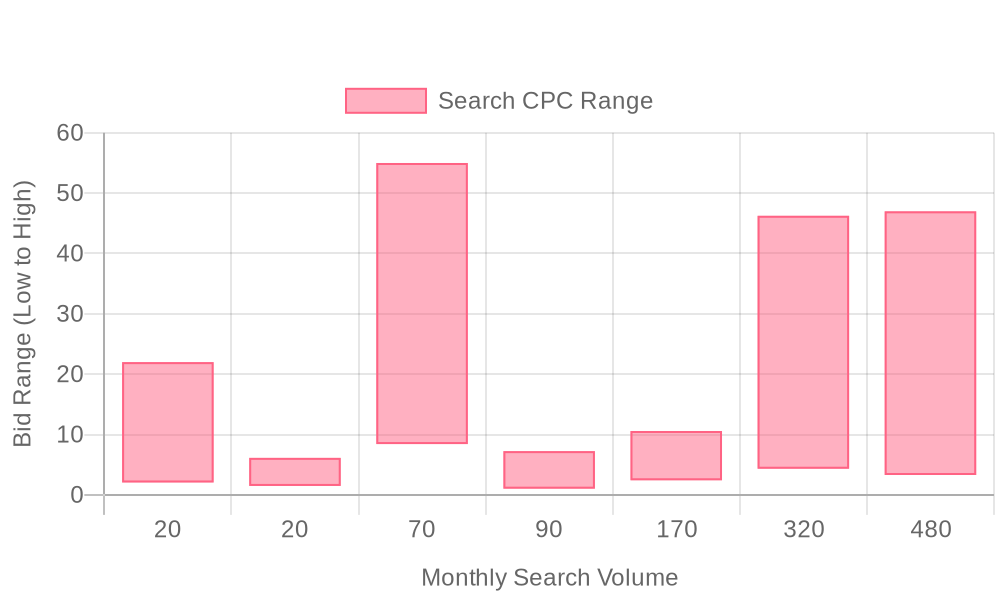
| Industry | Keyword | Monthly Search Volume | Competition Level | Low Bid | High Bid |
| Retail Security Services | security guard retail | 20 | LOW | 2.06 | 22 |
| Retail Security Services | retail security group | 20 | LOW | 1.48 | 6.13 |
| Retail Security Services | retail security companies | 70 | LOW | 8.42 | 55 |
| Retail Security Services | retail security officer | 90 | LOW | 1.03 | 7.25 |
| Retail Security Services | retail security guard | 170 | LOW | 2.42 | 10.59 |
| Retail Security Services | retail security services | 320 | LOW | 4.33 | 46.25 |
| Retail Security Services | retail security | 480 | LOW | 3.3 | 46.99 |
Retail security services operate in a highly competitive landscape where buyers are often searching for solutions with immediate intent. Success hinges on capturing these high-value moments with targeted, relevant messaging that meets prospects at their precise point of need. For deeper insight on capturing in-market leads, explore this security advertising strategies guide.
Effective keyword strategy forms the backbone of digital marketing for retail security. By focusing on commercial-intent search terms like "retail security services," "store security guard companies," and "retail security system installation," marketers can position offerings directly in front of business owners and decision-makers as they evaluate vendors. This approach filters out unqualified clicks and concentrates spend on those most likely to convert, optimizing both budget efficiency and lead quality. For more on B2B marketing, visit our blog on strategic growth.
- Precision Targeting: Connect with decision-makers as they actively seek retail security solutions. Advanced audience insights allow marketers to move beyond broad demographic targeting, identifying not just anonymous site visitors but also the companies and roles behind each inquiry. This level of detail enables campaign managers to align messaging and offers with the unique needs of enterprise buyers, increasing conversion rates and accelerating the sales cycle.
- Measurable ROI: Map every interaction from first click to signed contract using robust attribution models. By integrating advanced conversion tracking, both online and offline, retail security marketers gain a comprehensive view of campaign performance. This closed-loop measurement links ad spend directly to revenue outcomes, providing the clarity needed to justify budget allocation and refine strategy over time.
- Channel Synergy: Maintain consistent engagement across multiple digital touchpoints, from search to display to video. With dynamic audience management, segments update in real time as leads move through the funnel, making it possible to retarget previous visitors or nurture interested prospects across Google's ecosystem. This approach drives higher recall and fosters trust, which is critical in high-stakes buying cycles like retail security procurement.
A unified campaign management solution further streamlines this process by syncing enriched audiences and lead data across Google Ads and CRM platforms. This ensures that high-intent leads are engaged with timely, personalized messages, creating a seamless path from initial search to sales-qualified opportunity. For teams focused on retail security service lead generation, these strategies are essential for maximizing every ad dollar and driving predictable, scalable pipeline growth. Ready to optimize your retail security lead generation? Get started for free with Sona.
Step-by-Step Campaign Execution Framework
Step 1: Build Targeted Keyword Lists
Precise keyword selection is the foundation of any high-performing Google Ads campaign for retail security services. Organizing by service type, such as installations, surveillance setups, or alarm monitoring, ensures ads surface for prospects searching for those specific solutions. Incorporating geographic modifiers like city, neighborhood, or "near me" aligns campaigns with local buying intent, capturing high-converting searches from decision-makers seeking immediate solutions. For a deeper dive into effective digital advertising strategies, review security advertising strategies for lead generation.
Long-tail queries and question-based keywords deliver even more granularity, bringing in prospects who signal clear intent and urgency in their searches. Rigorously applying negative keyword filters prevents budget waste on irrelevant clicks, sustaining campaign efficiency. When keyword lists align with the terms present in your content marketing, you build a unified message across your funnel. By leveraging platforms that enrich visitor identity and intent data, marketers can further refine keyword targeting based on real-time engagement signals, ensuring budget flows towards accounts most likely to convert.
The upgrade most retail security services advertisers miss is going beyond raw keyword volume to layer in intent and identity signals. By connecting website-visitor data and CRM records with Sona Marketing Measurement, you can see which specific search terms bring in the accounts and customers that actually convert, and weight your keyword and bidding strategy toward those rather than the terms with the highest search volume alone.
Step 2: Develop Compelling Ad Copy
Ad copy should immediately address the unique pain points faced by retail security decision-makers, using headlines that call out threats like theft, vandalism, or inventory shrinkage. Trust signals, such as industry certifications, client ratings, or insurance coverage, should be woven into descriptions to establish immediate credibility, which is critical in high-stakes B2B purchasing cycles. Offers like free consultations or instant quotes create urgency and encourage prompt engagement, while ad extensions such as call buttons and service highlights streamline the path from click to conversion.
Consistency is essential: messaging across Google Ads, social, and email campaigns must reinforce the same value propositions and differentiators. With unified data pipelines, marketers can ensure every touchpoint reflects recent interactions and buyer stage, dynamically tailoring ad copy as prospects move through the funnel and demonstrating advanced personalization that resonates with high-value leads. If you're ready to enhance your campaign management, get started for free with Sona.
Step 3: Design Effective Landing Pages
Landing pages for retail security service campaigns must deliver on the promise made in the ad and match the visitor's search intent precisely. Segmenting pages by service or vertical, such as loss prevention, CCTV systems, or 24/7 monitoring, keeps the experience relevant and clear. For practical examples on optimizing landing pages and boosting conversions, see how security companies leverage Google Ads.
Embedding ROI calculators, third-party validations, and frequently asked questions addresses common objections and streamlines the decision-making process for busy procurement teams. Clear, simple calls-to-action must be optimized for both mobile and desktop, reducing friction at every conversion point. By connecting landing page forms directly with your CRM and integrating real-time audience data, lead capture becomes automated and actionable, enabling sales teams to prioritize high-intent opportunities.
Step 4: Implement Data-Driven Optimizations
Continuous campaign optimization is essential for maximizing ROI in retail security marketing. Monitoring both micro-conversions, like brochure downloads or callback requests, and macro-conversions, such as booked demos or signed contracts, reveals which audience segments and keywords drive true business value. Smart bidding strategies, including Target CPA or Maximize Conversions, dynamically allocate budget toward the most profitable opportunities. Explore the Google Ads homepage to access tools for campaign optimization.
Regular A/B testing, of ad copy, landing page layouts, and calls-to-action, identifies incremental improvements that compound over time. Importing offline conversion data back into Google Ads provides a full-funnel view, allowing for accurate attribution and more informed bidding decisions. When ad and conversion data flows directly into your broader analytics ecosystem, it powers coordinated content strategies and audience updates across all marketing channels, ensuring every dollar spent is accountable and optimized for growth.
Sona Marketing Measurement closes the gap between clicks and revenue. It captures ad clicks with first-party measurement, ties that click through UTM capture and ad-platform APIs to the matching account in your CRM, and reports ROAS by keyword and campaign instead of by last-click form fill. Feeding that revenue signal back into Smart Bidding and Performance Max compounds over time: the algorithms optimize toward booked retail security services revenue, not cheap leads.
Tips on Expanding Your Retail Security Presence

Modern retail security providers face increasingly complex buying cycles and fragmented audiences. Growth depends on combining precise digital marketing, robust data, and innovative partnerships to attract and retain high-value clients. For actionable ideas on driving growth, visit our marketing, analytics, and growth strategy articles.
Strategic expansion demands more than basic outreach. Success hinges on leveraging advanced audience insights, localized campaigns, and ongoing optimization to maximize every marketing dollar and create a defensible presence in competitive markets.
- Cross-Promote Assets: Run educational campaigns and retargeting ads that reinforce your content strategy. These ads not only drive direct conversions but also build long-term authority, especially when campaigns dynamically update to target visitors who have engaged with specific assets. Leveraging unified data platforms allows you to pinpoint which resources resonate with decision makers and tailor follow-up ads accordingly, pushing prospects further down the funnel through personalized messaging.
- Upsell Related Services: Use CRM data to create segmented audiences for targeted upsell campaigns. When CRM and Google Ads audiences are synchronized, marketers can deliver tailored offers, such as remote monitoring or emergency response bundles, right when a client's engagement signals peak interest. This level of integration ensures that upsell messaging appears only to relevant accounts, increasing cross-sell rates and lifetime value by responding in real time to evolving intent signals.
- Industry Partnerships: Collaborate with complementary service providers for co-marketing initiatives and referral traffic. Partnering with access control technology vendors or facility management consultants extends your reach, generating new leads and building credibility in the retail security ecosystem. Joint webinars, case studies, or co-branded content can be amplified through paid campaigns, with unified attribution tracking measuring the impact of each partner touchpoint and optimizing future initiatives.
- Localization Tactics: Tailor campaigns to specific regions and local needs for maximum visibility. Hyperlocal targeting, down to city blocks or zip codes, ensures your ads speak directly to retailers facing unique security challenges in their area. Combining location-based targeting with real-time intent data allows rapid budget shifts toward high-performing markets, while local landing pages improve quality scores and conversion rates. For more, see Google's Local Service Ads platform.
- Search Queries as Inspiration: Analyze top search queries to fuel new content and campaign ideas. By regularly reviewing the language prospects use, marketers can identify emerging concerns or service gaps, quickly deploying new ad groups and landing pages that address these needs. Integrating this feedback loop into your digital marketing for retail security keeps your messaging relevant and ensures that campaigns adapt as the market evolves, capturing demand as it shifts.
Ready to accelerate your growth? Get started for free with Sona.
Final Thoughts
Executing Google Ads well for retail security services means aligning keyword strategy, creative, and real-time data with the sales process behind it. Retail security brands that identify anonymous website visitors and connect them to buyer accounts, using tools like Sona's Identity Resolution, gain a real edge in retail security service lead generation.
- Smart, intent-focused keyword targeting: Retail security companies benefit from targeting high-intent commercial keywords that directly match the needs of decision-makers seeking security solutions. Leveraging unified search data with real-time behavioral signals ensures budget prioritization toward accounts most likely to convert, while filtering out low-value clicks. For actionable strategies on campaign structure and keyword selection, see this guide for security companies.
- Audience segmentation to meet decision-maker needs: Segmentation goes beyond basic demographics. Strategies that use rich company data, historical engagement, and in-market signals keep audiences current. When CRM and ad platforms sync seamlessly, Sona's Audiences lets audience lists refresh automatically as leads progress through the sales funnel, keeping campaigns relevant and cost-efficient.
- High-impact creative content and user experience: Compelling creative is essential, but performance hinges on delivering personalized messaging to segmented audiences at the right time. Retail security brands that dynamically adapt ad copy and landing page experiences based on visitor profile and intent, enabled by real-time buyer journeys, can significantly boost engagement and conversion rates.
- Continuous real-time optimization through dependable conversion data: Accurate attribution, including both online and offline events, empowers retail security marketers to measure true ROI. Advanced tracking solutions such as Sona's Ad Conversions unify touchpoints across search, display, and direct interactions, enabling real-time budget shifts to the best-performing channels and creative.
- Seamless integration within a unified marketing strategy: Retail security service providers maximize Google Ads ROI when campaigns are part of a broader, connected marketing ecosystem. Integrating ad data with CRM and analytics platforms, using Sona's Destinations feature, allows teams to orchestrate nurture flows, retargeting, and reporting from a single source of truth, eliminating data silos and manual work.
Effective Google Ads execution for retail security services is not about isolated tactics but about orchestrating keyword strategy, audience targeting, creative, and optimization within a unified, data-driven framework. To experience this unified approach, get started for free with Sona and unlock greater precision, operational efficiency, and measurable business growth.
Beyond Google Ads: Winning the AI Answers Retail Security Services Buyers Now Trust
Paid search captures demand at the moment someone types a query. But a fast-growing share of retail security services buyers no longer start at Google at all, they ask ChatGPT, Gemini, or Perplexity before they ever run a search, and Google's own AI Overviews increasingly summarize an answer above the traditional results. If your business isn't referenced in those AI answers, you're invisible at the exact moment buyers build their shortlist.
Sona AI Visibility shows where your business shows up across ChatGPT, Gemini, Perplexity, Google AI Overviews, and 10+ engines, and, much like a keyword report, which prompts actually send you buyers, so you can prioritize the ones that convert. Run the two together and you cover the entire buyer path: get cited where buyers research (AI Visibility), then prove which of that demand turns into booked revenue (Marketing Measurement).
Helpful resources
Conclusion
The advantage now belongs to retail security marketers who treat Google Ads as one part of a connected system, tying ad spend to which accounts actually sign contracts, not just which ads get clicks. As AI-driven search reshapes how buyers find vendors, that same underlying data, who's in-market, who's converting, who's ready to buy, will matter as much for showing up in an AI-generated answer as it does for winning a Search auction.
To put data-driven insights to work in your own campaigns, start for free with Sona and see what your ad spend is actually earning.
FAQ
How can I target the right audience for my retail security services using Google Ads?
You can target the right audience by using advanced audience segmentation and dynamic keyword targeting to reach decision-makers at key moments, and integrating real-time audience segments to engage both anonymous and known companies interacting with your ads.
What are the best practices for creating Google Ads for retail security services?
Best practices include aligning landing pages and ad creativity to optimize conversions, using precise keyword selection, and implementing data-driven optimizations like A/B testing and advanced intent signals to refine audience segments and creative.
How can I measure the success of my Google Ads campaign for retail security services?
Success can be measured by mapping every interaction from first click to signed contract using robust attribution models, integrating advanced conversion tracking for both online and offline interactions, and analyzing unified reporting to track which channels drive revenue.
What are some effective ad copy examples for retail security services on Google Ads?
Effective ad copy should address unique pain points faced by decision-makers, include trust signals like certifications, and offer incentives such as free consultations. Consistency across all marketing channels is essential for reinforcing value propositions.
How can I optimize my Google Ads budget for maximum ROI in retail security services?
Optimize your budget by shifting spend toward high-converting opportunities, using smart bidding strategies, applying negative keyword filters, and ensuring the seamless integration of ad data with CRM systems for accurate attribution and real-time budget adjustments.







