


A custom banner order and a bulk business-card reprint start the same way: someone typing a search into Google, ready to buy now. Printing businesses juggle digital and traditional channels, social media and SEO for visibility, trade shows and print ads for direct relationships, but the hardest problem is catching high-intent prospects at the exact moment they're ready to act. Miss that window and the spend goes to waste. Google Ads solves this by putting print shops in front of buyers the instant they search for a solution, bridging brand awareness and the sales process. For printing services, that means targeting decision-makers precisely, measuring ROI across scattered touchpoints, and reinforcing other channels through remarketing.
How to Generate Printing Services Leads with Google Ads: A Step-by-Step Guide

Printing businesses compete for visibility and qualified leads against a crowded field of national chains, local shops, and online-only print brokers. Audience fragmentation, inefficient ad spend, and poor data integration limit the effectiveness of even well-funded Google Ads campaigns.
A data-driven approach transforms online marketing for print services by identifying high-intent prospects and activating precision targeting. Companies maximizing their ad performance focus on granular keyword and audience segmentation, blending automation with actionable insights to reach buyers at the right moment. This methodology increases relevance, lowers wasted spend, and positions printing companies as the clear choice for commercial and B2B customers. Learn more about this trend.
Why Google Ads Drives Results for Printing Services
Google Ads remains a critical engine for print business visibility and customer acquisition. Unlike organic tactics that require long ramp-up periods, paid search campaigns immediately place your offers in front of buyers searching for services like custom business cards, direct mail, or large-format printing. By tapping into high-intent queries and leveraging detailed demographic filters, printing businesses can efficiently generate qualified leads and outpace competitors in local and national markets.
The platform’s adaptability also supports full-funnel strategies, including retargeting site visitors, capturing abandoned quote requests, and nurturing repeat orders. As part of a multi-channel approach, Google Ads amplifies reach and provides real-time feedback on audience behavior, enabling agile campaign optimization and continuous improvement in cost of Google Ads for printing. For more insights, check out our guide on boosting Google Ads ROAS.
Common Types of Google Ads Campaigns for Printing Services

- Search Campaigns: These ads appear atop Google’s results when users search for terms like "business card printing near me" or "bulk flyer printing." Search campaigns capture users with immediate purchase intent, making them essential for PPC for printing companies seeking fast lead generation.
- Display Campaigns: Display ads reach a broader audience by showing banners or visuals across websites your prospects visit. For printing services, this is valuable for brand awareness and retargeting visitors who didn’t convert on the first visit.
- Remarketing Campaigns: By targeting users who previously interacted with your site or ads, remarketing recaptures attention and drives repeat engagement. This approach is particularly effective for complex B2B print jobs with longer sales cycles.
- Local Campaigns: For print shops with physical locations, local campaigns promote store visits and phone calls from customers in the immediate vicinity, syncing ad delivery with in-market demand.
Advanced tools now enable marketers to go beyond anonymous clicks by identifying visitors and companies engaging with their print offerings. Solutions such as Sona's Identity Resolution support accurate visitor identification, allowing for tighter targeting and more effective ROI measurement. This level of integration reduces manual effort and ensures every marketing dollar is traceable from click to closed deal.
Why Google Ads Matters for Printing Services

Printing companies face mounting pressure to justify every marketing dollar and secure measurable growth in a crowded marketplace. With rising expectations for targeted outreach, the ability to precisely track campaign performance and attribute revenue directly to digital channels is now non-negotiable.
Google Ads offers print providers a proven path to actionable analytics, letting them identify which keywords, locations, and customer segments deliver the highest returns. Marketers can swiftly optimize campaigns in response to shifts in demand, capturing time-sensitive opportunities such as seasonal promotions or emerging business orders. Learn more about print media keywords and how keyword strategies can impact campaign success.
For B2B print businesses, campaign-level visibility means decision-makers see exactly how advertising spend translates into qualified leads and sales pipeline growth. For more insights on boosting return from digital ad spend, check out our guide on Google Ads ROI.
Access to granular data is critical for capturing niche audiences, such as corporate procurement teams or creative agencies, who often search for specialized print solutions. The immediacy of Google Ads reduces friction between online research and conversion, positioning a print business as a top choice at the exact moment of need. With enriched audience insights and real-time intent data, campaigns can target in-market buyers, ensuring resources are focused on the highest-value prospects.
Integrating advanced platforms streamlines the process of tying ad engagement to actual sales, both online and offline, by unifying conversion data in a single dashboard. Tools like Sona's Marketing Measurement help connect advertising activity to real revenue outcomes, empowering revenue teams to demonstrate clear ROI and iterate strategies with confidence, driving consistent customer acquisition and sustained print business visibility in highly competitive markets.
In the fast-paced print industry, buyers move quickly from research to purchase, making precise audience segmentation essential for campaign profitability. Print service providers benefit from distinguishing between high-intent prospects, casual browsers, and repeat visitors, enabling tailored messaging that matches each user's stage in the decision process. When marketing teams can identify the companies visiting their website, not just anonymous sessions, they can allocate budget to the most valuable opportunities, ensuring advertising spend yields measurable results.
- Search Campaigns: Search campaigns target users actively searching for print-related solutions, such as “business card printing” or “custom banner services.” By focusing on these high-intent search queries, print businesses capture prospects who are closest to making a purchase decision. Integrating real-time intent data allows marketers to adjust keyword bids and creative to prioritize in-market accounts or specific verticals, improving lead quality and driving higher Google Ads ROI for printing services. For a deeper dive into maximizing paid search efficiency, boost Google Ads ROI explores actionable strategies for print companies.
- Display Campaigns: Display ads keep print businesses top-of-mind as prospects research options across industry websites, blogs, and forums. These campaigns help maintain brand awareness among a broader audience, including potential buyers who may not be ready to convert immediately. Dynamic audience syncing ensures creative and messaging remain relevant as contacts move through the buyer’s journey, while enriched company data enables more granular targeting of decision-makers in priority segments.
- Remarketing Campaigns: Remarketing re-engages users who previously visited your site but didn’t convert. This approach is highly effective for print services customer acquisition, as it reinforces your value proposition and addresses lingering hesitations. Advanced conversion tracking provides a complete view of online and offline actions, allowing revenue teams to attribute print order revenue to specific touchpoints in the retargeting funnel. Remarketing for printers provides a practical overview of how remarketing supports conversion and retention in this industry.
By leveraging these campaign types with enriched data and intent-driven segmentation, printing companies can optimize budget allocation, engage prospects at the right moment, and maintain a consistent presence throughout the customer acquisition journey. This strategic approach to Google Ads for printing services not only improves lead quality but also drives sustained business growth.
Where to Find Growth Opportunities

Growth in the printing services sector hinges on a company’s ability to uncover channels that others overlook. Success requires nuanced market intelligence, not just increased ad spend. Teams that invest in vertical-specific keyword research and precise targeting consistently outperform those using generic, broad-match strategies. With highly specialized search terms such as "custom trade show booth printing" or "on-demand packaging labels," marketers can reach motivated prospects who are actively searching for niche solutions, reducing wasted impressions and boosting cost efficiency. Print Media Keywords provides a deeper look at how industry-specific keywords drive higher-value conversions.
Competitor analysis is essential for discovering untapped segments in printing services advertising. By mapping where rivals allocate budgets and which audiences they prioritize, organizations can identify under-served verticals and emerging trends. Print buyer networks, trade association forums, and B2B directories offer access to audiences that mainstream channels miss, especially procurement teams sourcing packaging or corporate print runs on a recurring basis. Solutions such as Sona's Identity Resolution support accurate identification of high-value accounts showing buying signals across multiple digital touchpoints.
Sophisticated online marketing for print services is further enhanced through unified data environments. By dynamically updating audiences as leads progress through the funnel, teams can avoid redundant outreach and focus on accounts most likely to convert. Real-time syncing of enriched audience data into Google Ads and CRM systems creates a seamless bridge between prospecting and nurturing, which streamlines print services customer acquisition and maximizes the ROI of every Google Ads campaign for printing. For more insights on maximizing returns in this channel, check out our guide on Google Ads ROI. This approach empowers revenue teams to target, engage, and convert high-value prospects with unmatched precision, transforming isolated marketing activities into a connected growth engine for the print business.
How to Apply Audience Segmentation for Printing Services

Audience segmentation is fundamental to maximizing the impact of Google Ads for printing services. By grouping prospects based on behavior, company size, industry, or stage in the buying journey, print businesses can deliver messaging that is relevant and timely. This approach reduces wasted ad spend and ensures that marketing budgets are focused on segments most likely to convert, driving stronger print services customer acquisition and greater efficiency across campaigns, see printing ads for a deeper look at this trend.
Creating audience segments enables the construction of tailored ad groups that align with unique needs across the sales funnel. For example, new visitors searching for "custom business cards" can be served educational content or introductory offers, while returning users with past purchases receive upsell or loyalty-focused messaging. As users move through the funnel, dynamic audiences update in real-time, allowing for responsive retargeting and engagement at every touchpoint. For more insights on segmenting by buyer stage, check out our guide on segmentation advantage.
Integrating segmentation with CRM and advertising platforms brings precision to both targeting and measurement. When enriched audience data is synced into Google Ads, marketers gain the ability to identify visitors and companies by name rather than relying solely on anonymous traffic. This clarity supports advanced conversion tracking, attributing offline and online actions back to specific segments. With this approach, print companies can optimize Google Ads ROI for printing services, confidently scaling campaigns that deliver measurable business outcomes and improved print business visibility.
This is also where measurement changes the economics. With Sona Marketing Measurement you can identify the companies and buyers behind your ad clicks, not just anonymous sessions, and segment audiences by who actually becomes a customer. That lets you build bid adjustments and audience signals around the segments that convert and de-prioritize the ones that don't, so you feed Google's algorithms "this click became a paying printing services customer" instead of just "someone filled out a form."
Keyword Strategy & Sample Target Terms
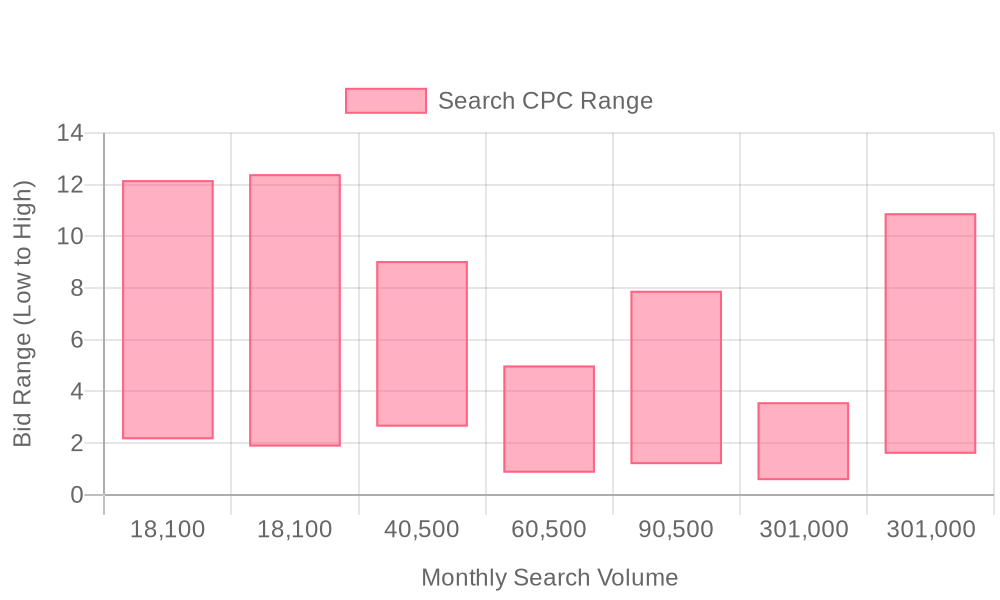
| Industry | Keyword | Monthly Search Volume | Competition Level | Low Bid | High Bid |
| Printing Services | sticker printing | 18100 | HIGH | 2.15 | 12.17 |
| Printing Services | banner printing | 18100 | HIGH | 1.87 | 12.4 |
| Printing Services | business card printing | 40500 | HIGH | 2.64 | 9.04 |
| Printing Services | poster printing | 60500 | HIGH | 0.86 | 5 |
| Printing Services | printing services | 90500 | MEDIUM | 1.19 | 7.89 |
| Printing Services | printing near me | 301000 | MEDIUM | 0.57 | 3.58 |
| Printing Services | printing | 301000 | MEDIUM | 1.59 | 10.89 |
A robust keyword strategy is essential for printing services seeking to maximize their Google Ads investment. Relevance and precision in keyword selection directly impact campaign efficiency, helping businesses attract high-intent prospects while filtering out low-value clicks. By focusing on service-specific keywords such as "brochure printing," "custom business cards," and "flyer printing," marketers can ensure alignment with actual customer demand.
To further refine targeting, modifiers like "same-day," "eco-friendly," or "bulk order" can segment audiences based on urgency or unique value drivers. Incorporating negative keywords such as "free templates" or "DIY printing" prevents wasted spend on unrelated searches, preserving the budget for genuine purchase intent. Negative keywords guide provides a deeper look at this trend. This approach not only streamlines traffic quality but also supports more accurate reporting on Google Ads ROI for printing services.
Sona users gain an additional layer of insight by identifying which companies and visitors are interacting with these targeted keywords in real time. Sona's Identity Resolution reveals actionable visitor data, enabling marketing teams to dynamically shift budget toward segments that show in-market intent, increasing the likelihood of conversion. As prospects engage and move through the funnel, audience lists are automatically updated, ensuring that ads remain relevant to each stage of the buyer journey. This continuous data enrichment translates into highly targeted PPC for printing companies, boosting both print business visibility and customer acquisition efficiency.
Step-by-Step Campaign Execution Framework
A high-performing Google Ads campaign for printing services requires more than basic setup. Strategic execution transforms online marketing for print services from a routine channel into a scalable engine for customer acquisition and ROI. The following step-by-step framework details how B2B revenue teams can systematically build, refine, and optimize their Google Ads campaign for printing, driving consistent business growth.
Step 1: Build Targeted Keyword Lists
Effective campaign execution starts with curated keyword lists tailored to the intent and needs of those seeking printing services. Start by analyzing current search trends, customer queries, and competitor activity to uncover high-value keywords such as "custom brochure printing," "business card printing services," and "large format printing." Long-tail keywords lower acquisition costs and attract buyers closer to a decision. Trending Print Keywords provides a deeper look at trending print media keywords and audience interests.
Use dynamic audience tools to refresh keyword lists in real time as market behavior shifts, ensuring targeting remains sharp. With unified go-to-market data, marketers can identify not only high-intent keywords, but also the companies and buyers behind each search, unlocking advanced targeting for PPC for printing companies.
The upgrade most printing services advertisers miss is going beyond raw keyword volume to layer in intent and identity signals. By connecting website-visitor data and CRM records with Sona Marketing Measurement, you can see which specific search terms bring in the accounts and customers that actually convert, and weight your keyword and bidding strategy toward those rather than the terms with the highest search volume alone.
Step 2: Craft Compelling Ad Copy
Ad copy must clearly communicate value, differentiate your print business, and prompt action. Highlight turnaround speed, quality guarantees, eco-friendly practices, or bulk discounts. Address buyer pain points with clear calls to action: "Request a Quote Today" or "Order Custom Flyers." Leverage insights from visitor identification tools to personalize messaging for different company sizes, industries, or lifecycle stages. Sona's Identity Resolution supports personalized ad messaging based on real visitor data.
This level of precision increases engagement and click-through rates, maximizing every dollar spent on Google Ads for printing services.
Step 3: Design Conversion-Optimized Landing Pages
Every click should deliver prospects to a purpose-built landing page matching their intent. Use dedicated pages for each service, like business card printing or promotional signage, to streamline the conversion process. Incorporate trust elements such as customer testimonials, sample galleries, and industry certifications. Google Ad assets shares industry benchmarks for using Google Ad assets to boost landing page performance.
Integrate real-time data from ad interactions and CRM systems to dynamically update offers, forms, and content. As leads engage, enriched data feeds back into the audience pool, allowing for instant retargeting and continuous funnel optimization.
Step 4: Set Up Advanced Conversion Tracking and Attribution
Robust conversion tracking is critical for measuring the true impact of printing services advertising. Implement both online and offline attribution to capture phone orders, form completions, and in-person visits. Syncing Google Ads with CRM platforms ensures every lead is tracked across the sales journey, revealing which campaigns deliver the highest-value accounts. As discussed in our Attribution Guide, integrating attribution tools helps teams connect ad spend to revenue outcomes.
Real-time reporting enables agile budget allocation and identifies untapped segments. This holistic approach supports revenue teams in proving Google Ads ROI for printing services with precision.
Sona Marketing Measurement closes the gap between clicks and revenue. It captures every ad click with first-party measurement, no reliance on third-party cookies, then ties that click through UTM capture and ad-platform APIs to the actual record in your CRM, and reports ROAS by keyword and campaign instead of by last-click form fill. Feeding that revenue signal back into Smart Bidding and Performance Max compounds over time: the algorithms optimize toward booked printing services revenue, not cheap leads.
Step 5: Activate Dynamic Retargeting and Audience Sync
Retargeting remains one of the most effective Google Ads strategies for printing. Deploy dynamic audiences that update automatically as leads move through the sales funnel or change behavior. Sync enriched audience data from web, CRM, and ad platforms to ensure ongoing engagement with high-intent prospects. One analysis in ThriveSearch Guide explores this further with actionable examples for print companies.
When a visitor shows strong in-market intent, such as requesting a print quote or viewing price lists, shift budget and creative toward those accounts to accelerate conversion. This unified strategy keeps campaigns relevant and cost-effective, directly improving print business visibility and customer acquisition.
Tips on Expanding Your Printing Services Presence
Expanding your printing services presence requires a unified strategy that capitalizes on the strengths of both digital and traditional marketing channels. By integrating actionable data from Google Ads with offline insights, printing businesses can bridge the gap that often limits cross-channel growth and customer engagement.
Google Ads for printing services delivers granular audience data that can be leveraged to guide cross-promotion of in-depth educational assets, such as how-to guides or industry trend reports. The importance of connecting these insights with CRM intelligence is explored in printing ads guide, which highlights practical tactics for identifying upsell opportunities and personalizing offers to existing customers based on print order history and engagement patterns. This approach supports smarter online marketing for print services, where campaign messaging and offers are dynamically tailored to the interests and lifecycle stage of each segment.
A critical tactic for expanding market share in the printing sector is forging partnerships with local industry associations and event organizers. By using Google Ads targeting for printing, marketers can align campaign geographies to association events or trade shows, ensuring that their educational content and offers reach the right prospects at the right time. Integrating identity resolution and real-time intent signals allows teams to pinpoint which companies are engaging most with these joint initiatives, so budget can be shifted to high-converting accounts for maximum impact. Sona's Identity Resolution supports this by revealing which companies are engaging with your assets, enabling smarter budget allocation.
Consistency across every customer touchpoint enhances print business visibility and fosters trust throughout the buyer journey. We’ve covered best practices for measuring and optimizing Google Ads ROI in detail in this guide, including strategies for syncing enriched audience segments and offline leads into your campaigns for cohesive messaging and accurate attribution. This holistic approach enables printing companies to bypass traditional market barriers, increase share-of-voice in key regions, and drive measurable growth.
Beyond Google Ads: Winning the AI Answers Printing Services Buyers Now Trust
Paid search captures demand at the moment someone types a query. But a fast-growing share of printing services buyers no longer start at Google at all, they ask ChatGPT, Gemini, or Perplexity before they ever run a search, and Google's own AI Overviews increasingly summarize an answer above the traditional results. If your business isn't referenced in those AI answers, you're invisible at the exact moment buyers build their shortlist.
Sona AI Visibility shows where your business shows up across ChatGPT, Gemini, Perplexity, Google AI Overviews, and 10+ engines, and, much like a keyword report, which prompts actually send you buyers, so you can prioritize the ones that convert. Run the two together and you cover the entire buyer path: get cited where buyers research (AI Visibility), then prove which of that demand turns into booked revenue (Marketing Measurement).
Helpful resources
Conclusion
Google Ads works for printing businesses when it's treated as a precision instrument, not a budget line. The shops winning share right now are the ones feeding their bidding algorithms real signal: which clicks became paying customers, which keywords fill the pipeline with procurement teams instead of template shoppers, which accounts are worth a retargeting push before a competitor's quote lands first.
The next shift is already underway: buyers researching print vendors through AI assistants before they ever open Google. Pairing Marketing Measurement with AI Visibility means a print business can prove what's working today and stay visible in how buyers search tomorrow. Start a free trial to see both in action.
FAQ
How can printing services benefit from Google Ads?
Google Ads helps printing services capture high-intent prospects by targeting decision-makers precisely when they are searching for print solutions, improving lead generation and aligning online and offline marketing efforts.
What are the best practices for Google Ads in the printing industry?
Best practices include using granular keyword and audience segmentation, leveraging automation with actionable insights, and employing full-funnel strategies such as retargeting and local campaigns to capture high-intent prospects.
How much should a printing company budget for Google Ads?
While the article does not specify exact budgets, it emphasizes the importance of efficient ad spend by focusing on high-intent keywords, precise targeting, and reducing wasted impressions through audience segmentation.
What keywords should printing services target in Google Ads?
Printing services should target service-specific keywords such as 'custom business cards,' 'brochure printing,' and modifiers like 'eco-friendly' to attract high-intent prospects while using negative keywords to avoid irrelevant searches.
Are there specific Google Ads features that benefit printing services?
Specific features include search campaigns for capturing immediate purchase intent, display campaigns for brand awareness, remarketing for repeat engagement, and local campaigns for promoting physical store visits.







