


Prepaid credit card providers compete for a buyer who is often researching under pressure, a parent loading a teen's first card, a gig worker who can't get approved for traditional credit, a small business owner managing employee expenses. Google Ads reaches these people at the moment they search, which is precisely when generic brand marketing fails them. The challenge isn't just showing up in results; it's staying visible through a buying process that can stall over trust, fees, or compliance questions. Done well, Google Ads lets prepaid providers match specific offers to specific searches instead of competing on broad, expensive terms. This guide walks through the strategy and mechanics for building campaigns that convert, and for fixing the tracking gaps that let good prospects disappear.
How to Generate Google Ads for Prepaid Credit Card Providers Leads: A Step-by-Step Guide
High-value prospects in the prepaid card space often slip away unnoticed when CRMs lack the sophistication to capture company-level behaviors and intent. This missed granularity results in lost revenue opportunities, especially in a market where customer acquisition costs are high and product differentiation is subtle.
Modern digital marketing for prepaid cards now leverages platforms designed to unify data and provide real-time visibility into every engaged visitor. By integrating advanced tracking with your Google Ads for Prepaid Credit Card Providers strategy, you can ensure that even anonymous website traffic is mapped to identifiable companies, allowing sales and marketing teams to act on signals before interest fades.
A structured framework is essential for incorporating Google Ads into your broader financial marketing plan. Begin by laying a data-driven foundation: segment your audience using real-time signals unique to prepaid card buyers, then identify high-value prospects through behavioral analysis. This approach lets you prioritize advertising spend on segments with the highest conversion potential, reducing waste on broad, generic targeting. Platforms that sync CRM data and website behavior into Google Ads enable seamless updates to custom audiences as leads progress, keeping campaigns tightly aligned with real-time pipeline movement.
Keyword and audience targeting require precision, given the nuanced buyer journeys in prepaid debit card advertising. Avoid one-size-fits-all strategies by building keyword clusters around specific use cases, such as "business prepaid cards" or "reloadable cards for teens", and layering them with custom intent audiences. This keeps campaigns aligned with search behaviors that signal purchase readiness, not just curiosity.
To drive higher conversion rates, optimize landing pages to reflect the exact messaging and creative used in your targeted ads. Address pain points such as security, ease of funding, and fee transparency directly on the page, and use dynamic content that updates based on the visitor’s source and funnel stage. When enriched lead data from ad clicks flows automatically into your CRM and triggers tailored follow-up sequences, you close the gap between ad engagement and sales outreach, addressing the common issue of demo requests stalling due to slow or generic responses.
Performance optimization for online advertising for prepaid cards hinges on integrating campaign data with downstream sales outcomes. Use advanced attribution to measure not just clicks or form fills, but actual account activations and transaction volumes. Real-time alerts for high-intent engagement let teams adjust bids, creative, or nurture sequences within minutes, so budget stays allocated toward the prospects most likely to convert. This responsive approach matters most for growth teams tasked with maximizing Google Ads ROI while keeping every qualified lead moving through the pipeline.
Why Google Ads Matters for Prepaid Credit Card Providers

Google Ads delivers a direct line to decision-makers actively searching for prepaid card solutions, allowing providers to engage high-quality leads at the crucial moment of intent. This immediacy empowers marketing teams to cut through noise and connect with niche audiences who are far more likely to convert, learn more about using prepaid cards for Google Ads payments.
Precision targeting within Google Ads enables prepaid card providers to promote higher-margin products through Sona’s Audiences tool and finely tailored messaging for distinct customer segments, such as small businesses, parents, or frequent travelers. By aligning creative assets and offers with real-time behavior, marketers ensure that ad spend consistently reaches those most likely to generate revenue.
Leveraging Google Ads' rapid demand response capabilities, prepaid credit card companies can instantly shift budget to capitalize on emerging opportunities, especially during peak promotional periods or product launches. This dynamic allocation strategy maximizes ROI by focusing resources on the highest-value segments in real time.
Expanding into new or underserved territories is streamlined with Google Ads’ advanced geographic filters, giving providers a competitive edge in markets where awareness is low but demand is rising. Sophisticated campaign structures mitigate the risk of missed opportunities by ensuring relevant offers surface precisely where they are needed most.
Integrated data analysis through a unified platform transforms fragmented marketing efforts into a cohesive whole, improving visibility across the funnel from ad click to card activation. With seamless attribution and CRM sync, teams can measure the true impact of digital marketing for prepaid cards and continuously refine strategies for increased efficiency and growth.
Common Types of Google Ads Campaigns for Prepaid Credit Card Providers

- Search Campaigns: Search campaigns are the cornerstone for prepaid credit card providers seeking to capture high-intent prospects. By targeting urgent queries such as “best prepaid credit card” or “reloadable card for travel,” providers capitalize on users already comparing solutions, ensuring their offer surfaces at the moment of decision. Connecting these campaigns to identification tools allows marketers to pinpoint specific companies and high-value individuals searching for branded terms, shifting budget to those most likely to convert and preventing missed revenue opportunities.
- Display Ads: Display ads sustain continuous brand visibility across financial news outlets, personal finance blogs, and comparison sites. This omnipresent approach keeps prepaid card products top-of-mind even as prospects research alternatives or encounter competing offers. Leveraging real-time audience insights, marketers can dynamically adjust audience segments so that display spend targets users who have demonstrated relevant digital behaviors, reducing wasted impressions on low-value or disengaged users.
- Video Ads: Video campaigns enable prepaid card providers to visually demonstrate product benefits, educate prospects on unique features, or address common objections before a purchase decision. Effective video creative can highlight ease of use, instant card issuance, or security features, resonating with both consumers and corporate buyers. By integrating advanced conversion tracking, B2B teams can attribute video-driven interest directly to downstream applications and card activations, measuring true ROI across multiple touchpoints.
- Remarketing: Remarketing campaigns re-engage previous website visitors who explored card features or initiated applications but did not convert. Persistent, tailored messages, such as fee waivers or bonus load promotions, remind prospects of their interest and encourage them to return. Automated audience updates, based on CRM and site engagement data, ensure that only those who remain qualified and in-market receive remarketing messages, strengthening conversion rates while minimizing ad fatigue.
- Assets: Ad assets, including structured snippets and callouts, enhance credibility for prepaid card providers by showcasing features like "FDIC insured," "no credit check," or "24/7 support." These elements address common concerns around trust and transparency, improving click-through rates and reinforcing brand legitimacy. To ensure your campaigns comply with Google's policies and payment requirements, review the accepted payment methods for Google Ads. Tightly synced assets with real-time product updates reflect the latest offers and compliance messaging, keeping campaigns effective and up to date.
Looking to streamline your Google Ads campaigns and audience targeting? Get started for free with Sona.
Where to Find Growth Opportunities

Identifying untapped growth avenues is essential for prepaid card providers navigating a crowded financial services landscape. Uncovering overlooked ad opportunities allows teams to reach high-value prospects who might otherwise slip through the cracks, driving incremental results and accelerating account acquisition. For actionable strategies and the latest insights on digital marketing for prepaid cards, explore the Sona blog.
Unlocking these opportunities begins with a vertical keyword analysis tailored to the nuances of prepaid debit card advertising. Providers can focus on specialized terms such as “instant virtual prepaid cards,” “reloadable travel cards,” or “youth prepaid accounts,” aligning efforts with content strategies that resonate across the funnel. A review of the benefits of using virtual cards to manage Google Ads spending highlights how fintech brands can optimize campaign budgets and reach. This precision ensures campaigns target only the most relevant segments, reducing wasted ad spend and maximizing conversion potential.
Competitor analysis using auction insights further sharpens this approach. By examining impression share and uncovering which search terms or placements are underserved, marketers can pinpoint segments where rivals are absent or underperforming. This enables providers to allocate budget to high-yield areas, increasing visibility and engagement with valuable prospects. When enriched with real-time behavioral intent data, these insights let teams dynamically shift spend toward accounts showing immediate purchase signals, increasing the probability of conversion.
Industry-specific placements and trade directories add another layer of strategic reach. Featuring ads in targeted financial publications, fintech directories, and trusted aggregator sites ensures the brand remains top of mind among prospective customers actively researching solutions. By integrating advanced visitor identification and CRM-ad sync, marketers can engage known companies more effectively, ensuring outreach is both timely and personalized. This approach not only boosts engagement rates but also supports sustainable growth by continually feeding qualified leads into the sales pipeline for tailored follow-up and nurturing. To see how your team can seamlessly activate these strategies, get started for free with Sona.
How to Apply Audience Segmentation for Prepaid Credit Card Marketing

Audience segmentation is foundational for prepaid credit card providers seeking to elevate their digital marketing performance. By aligning segmentation with the full spectrum of customer journeys, marketers avoid generic campaigns and ensure each touchpoint resonates with real customer needs. This approach not only fosters relevance but also increases efficiency, as messaging and budget are directed toward segments most likely to convert and deliver value. For further insights on digital marketing and analytics best practices, explore the latest articles and insights.
Defining segments based on card usage type, such as travel, student, payroll, or gift, empowers revenue teams to overlay additional intent signals like spending frequency, digital engagement, or interest in specific card features. For example, targeting users who frequently reload cards or seek multi-currency support can dramatically improve campaign ROI. Marketers can also leverage virtual credit cards to simplify and secure campaign payments, as described in this guide on virtual credit cards for Google Ads campaigns. Integrating real-time behavioral signals allows teams to respond to shifts in demand, reallocating spend to segments exhibiting in-market activity and reducing wasted impressions.
Building segment-specific ad groups within Google Ads for Prepaid Credit Card Providers enables tailored messaging that reflects the language, needs, and motivations of each audience. Customizing creative and offers for families, gig workers, or businesses ensures higher engagement rates and more qualified inbound leads. Budgeting at the segment level further sharpens resource allocation, emphasizing high-potential groups while containing costs in less responsive cohorts. Dynamic audience management keeps these segments updated as leads progress through the funnel, ensuring ongoing relevance and maximizing touchpoint personalization.
Validating conversion pathways is essential to maintain data integrity and drive revenue outcomes. By mapping every stage of the customer journey and syncing enriched audience data into connected CRMs and ad platforms, marketers can accurately attribute conversions, track both online and offline actions, and eliminate inconsistencies. This alignment between campaign data and backend systems keeps teams from chasing low-value leads and supports precise retargeting of prepaid card customers.
This is also where measurement changes the economics. With Sona Marketing Measurement you can identify the companies and buyers behind your ad clicks, not just anonymous sessions, and segment audiences by who actually becomes a customer. That lets you build bid adjustments and audience signals around the segments that convert and de-prioritize the ones that don't, so you feed Google's algorithms "this click became a paying prepaid credit card providers customer" instead of just "someone filled out a form."
Keyword Strategy & Sample Target Terms
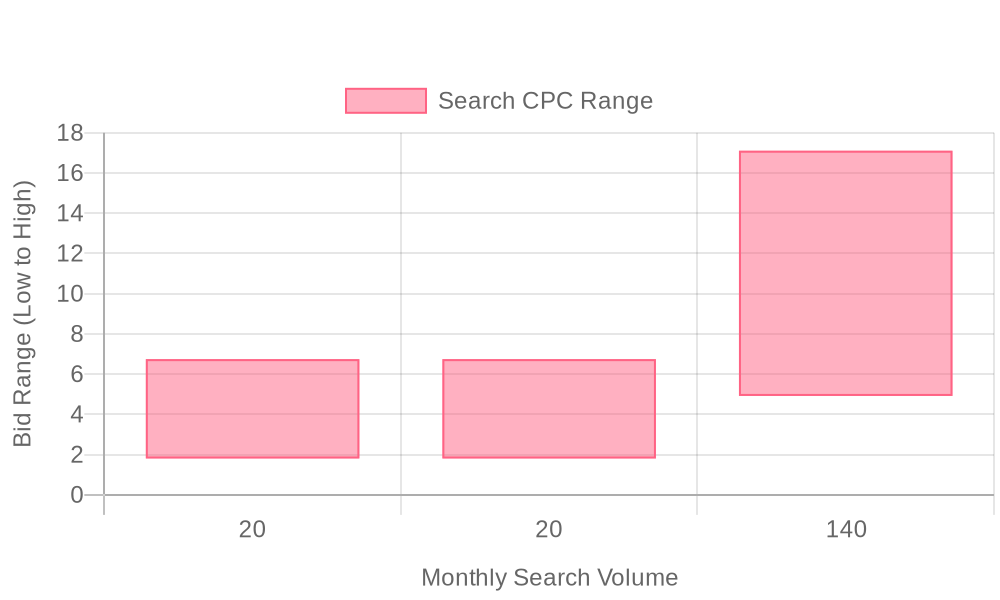
| Industry | Keyword | Monthly Search Volume | Competition Level | Low Bid | High Bid |
| Prepaid Credit Card Providers | prepaid credit card companies | 20 | LOW | 1.81 | 6.75 |
| Prepaid Credit Card Providers | prepaid credit card company | 20 | LOW | 1.81 | 6.75 |
| Prepaid Credit Card Providers | my prepaid center merchants list mastercard | 140 | LOW | 4.92 | 17.11 |
Modern prepaid credit card providers operate in a digital landscape where every click can be measured and every audience can be refined. Maximizing Google Ads performance starts with a keyword strategy built on intent, relevance, and measurable business impact. Success comes from attracting high-value prospects through terms that directly address user pain points and purchasing motivations, rather than casting a wide net with generic financial keywords. For an in-depth look at how Google Ads billing and payment processes work, see basics of Google Ads billing and payments, or explore the latest marketing articles.
- Niche keyword focus: Terms like “prepaid debit card advertising” and “google ads payment methods” consistently capture audiences searching for specific solutions. By layering in keywords such as “google ads for financial services,” “targeted advertising for prepaid cards,” and “digital marketing for prepaid cards,” campaigns draw in users who are actively seeking providers or payment options relevant to their needs. This approach also reduces wasted spend on unqualified traffic and positions the brand in front of prospects more likely to convert.
Selecting the right keywords goes beyond volume: it’s about balancing search frequency, competition, and cost-per-click to optimize for ROI. “Google ads campaign strategies,” “prepaid card promotions,” and “online advertising for prepaid cards” are terms that not only bring in qualified leads but also signal commercial intent. Integrating real-time audience data platforms allows marketers to identify in-market behavior and allocate budget toward high-converting segments, while automated syncing between CRM and ad platforms means that enriched audience profiles and new leads update dynamically, ensuring campaigns remain aligned with the most current opportunities. To see how you can start leveraging advanced targeting and audience management, get started with Sona.
Step-by-Step Campaign Execution Framework
Step 1: Build Targeted Keyword Lists
Precise keyword targeting is essential for prepaid credit card providers aiming to maximize Google Ads ROI. Begin with long-tail keywords and local modifiers tailored to your unique offerings, such as “reloadable prepaid card for families in Austin” or “business prepaid debit card with no fees.” This approach narrows focus to high-value, in-market searches, reducing wasted impressions and improving cost-efficiency. Incorporate negative keywords to filter out unrelated queries like “gift cards” or “credit card loans,” ensuring your budget is reserved for qualified prospects actively seeking prepaid solutions.
Advanced targeting benefits from real-time visitor identification and intent analysis. When you connect website analytics with Google Ads, you can pinpoint which companies or individuals are researching prepaid card options and segment audiences accordingly. Data-driven audience lists update automatically as leads progress from initial research to high purchase intent, allowing for precise retargeting and messaging adjustments as prospects move through the funnel.
The upgrade most prepaid credit card providers advertisers miss is going beyond raw keyword volume to layer in intent and identity signals. By connecting website-visitor data and CRM records with Sona Marketing Measurement, you can see which specific search terms bring in the accounts and customers that actually convert, and weight your keyword and bidding strategy toward those rather than the terms with the highest search volume alone.
Step 2: Develop Compelling Ad Copy
Effective ad copy for prepaid card promotions must address core industry pain points such as high fees, fraud risk, or limited acceptance. Highlight unique selling propositions, like “instant card delivery,” “zero monthly fees,” or “enhanced spending controls”, to differentiate your brand and speak directly to the most common customer objections. Use clear calls-to-action aligned with user intent, such as “Apply now,” “Compare prepaid cards,” or “Start budgeting smarter.”
Integrating behavioral insights from previous interactions enables dynamic ad personalization. For example, if a visitor previously explored cards for freelancers, your ads can emphasize business expense tracking or fast approvals. This level of personalization boosts both relevance and conversion rates, ensuring your ad spend consistently targets prospects most likely to convert.
Step 3: Design Effective Landing Pages
Landing pages should mirror your ad messaging to reinforce trust and maintain a seamless user journey. Create dedicated pages for each ad group, ensuring content and offers directly reflect search intent, whether it’s a student prepaid card or a business expense solution. Prominently feature accepted payment methods, including supported Google Ads payment methods, to reduce friction and prevent drop-offs during the application or purchase process.
Integrate conversion tracking and real-time user behavior data to pinpoint where prospects engage or abandon the funnel. With enriched visitor profiles, you can dynamically adjust landing page content and offers based on account-level attributes, such as company size or industry, leading to higher form fill rates and more qualified leads.
Step 4: Implement Data-Driven Optimizations
The foundation of effective Google Ads conversion optimization for prepaid debit card advertising is granular measurement. Track both macro conversions (e.g., completed applications) and micro conversions (e.g., demo requests, pricing page views) to understand the full customer journey. Leverage predictive analytics to refine bidding strategies and shift budget to high-intent audiences in real time, ensuring top prospects receive priority.
Continuous improvement comes from rigorous A/B testing and iterative optimization. Test different ad formats, headlines, and landing page layouts to identify combinations that deliver the highest engagement and conversion rates. By syncing enriched lead and conversion data from your CRM directly with Sona, you unlock closed-loop attribution, allowing you to measure true campaign ROI and make data-backed decisions at every stage. This approach ensures that digital marketing for prepaid cards remains agile, scalable, and consistently aligned with evolving business goals. To streamline your campaign analytics and audience activation, get started for free with Sona.
Sona Marketing Measurement closes the gap between clicks and revenue. It captures every ad click with first-party tracking that doesn't depend on individual cookies, then ties that click through UTM capture and ad-platform APIs to the actual record in your CRM, and reports ROAS by keyword and campaign instead of by last-click form fill. Feeding that revenue signal back into Smart Bidding and Performance Max compounds over time: the algorithms optimize toward booked prepaid credit card providers revenue, not cheap leads.
Tips on Expanding Your Prepaid Credit Card Advertising Presence
A strong digital marketing strategy for prepaid credit card providers requires more than just broad reach; it demands persistent engagement with high-value prospects. By leveraging cross-promotional assets and targeted retargeting, providers can nurture relationships with decision-makers who have already expressed interest, ensuring that brand exposure remains consistent throughout the buyer journey. Retargeting strategies are most effective when fueled by unified data that pinpoints previously anonymous visitors, allowing marketers to focus budget on accounts demonstrating real intent with website visitor identification.
Upselling complementary financial services becomes seamless when CRM insights are used for precise audience segmentation. This approach minimizes wasted ad spend by excluding low-value or unqualified leads and prioritizing those most likely to convert. When CRM and ad platform data are fully synchronized, such as with real-time audience updates, marketing teams can dynamically adjust offers for prepaid debit card advertising, adapting campaigns as leads progress through the funnel. This results in a measurable lift in conversion rates and a reduction in acquisition costs.
Partnering with reputable financial industry bodies is a powerful strategy for expanding both referral traffic and brand credibility. Co-branded campaigns or sponsorships with recognized organizations help build trust with new audiences and drive qualified visitors to your site. These partnerships also create valuable inbound links, which boost search engine visibility for key terms like online advertising for prepaid cards. For more marketing strategies, explore the Sona blog.
Employing localized, state, or city-level strategies enables prepaid card providers to dominate voice share within high-potential regions. Customizing Google Ads for Prepaid Credit Card Providers to target specific geographies ensures that messaging is highly relevant, increasing engagement and response rates. Geographic targeting, combined with granular audience data, helps providers allocate budget efficiently and maximize the impact of both local and national campaigns. For organizations using advanced audience sync, this localized approach further refines reach, connecting live CRM segments directly to Google Ads for timely and relevant communication. To see how you can streamline localized campaigns, get started for free with Sona.
Final Thoughts
Maximizing the utility of Google Ads for Prepaid Credit Card Providers requires an approach that aligns campaign tactics with the broader goals of high-velocity customer acquisition and data-driven growth. Leveraging granular keyword targeting and audience segmentation, providers can engage prospects at critical decision points and build campaigns that outperform generic financial services advertising. For those looking to streamline ad spend management, using virtual cards for Google Ads can offer greater control and budget oversight.
Success in this sector depends on the continuous integration of actionable insights into every campaign touchpoint. Mastering the nuances, from keyword intent analysis and tailored landing pages to seamless CRM-ad sync with real-time destination data, enables marketers to replace traditional mass-market tactics with precision strategies that adapt to evolving consumer behavior. When real-time engagement is paired with enriched audience profiles and advanced conversion tracking, providers can ensure that every impression and click contributes measurably to revenue outcomes. Ready to unlock the full potential of your Google Ads campaigns? Get started for free with Sona.
Beyond Google Ads: Winning the AI Answers Prepaid Credit Card Providers Buyers Now Trust
Paid search captures demand at the moment someone types a query. But a fast-growing share of prepaid credit card providers buyers no longer start at Google at all, they ask ChatGPT, Gemini, or Perplexity before they ever run a search, and Google's own AI Overviews increasingly summarize an answer above the traditional results. If your business isn't referenced in those AI answers, you're invisible at the exact moment buyers build their shortlist.
Sona AI Visibility shows where your business shows up across ChatGPT, Gemini, Perplexity, Google AI Overviews, and 10+ engines, and, much like a keyword report, which prompts actually send you buyers, so you can prioritize the ones that convert. Run the two together and you cover the entire buyer path: get cited where buyers research (AI Visibility), then prove which of that demand turns into booked revenue (Marketing Measurement).
Helpful resources
Conclusion
The prepaid card providers who win in Google Ads aren't the ones bidding highest on generic terms, they're the ones who've closed the loop between ad click and card activation. That loop is what turns a keyword list into a revenue engine: campaign strategy, payment method compliance, and conversion tracking all matter, but only insofar as they feed accurate signal back into bidding.
The providers pulling ahead right now are treating attribution as core infrastructure, not an afterthought bolted on at reporting time. As AI answer engines start shaping how buyers shortlist financial products, that same closed-loop data will decide who gets cited and who gets overlooked. Start for free and see what your ad spend actually produces.
FAQ
What are the best practices for using Google Ads for prepaid credit card providers?
Best practices include precise keyword targeting, using advanced audience segmentation, integrating CRM data for real-time updates, and optimizing landing pages to reflect ad messaging.
How can prepaid credit card providers optimize their Google Ads campaigns?
Providers can optimize their campaigns by leveraging real-time data, refining audience targeting, using enriched lead data for tailored follow-up, and continuously testing ad formats and landing pages for better conversion rates.
What payment methods can be used for Google Ads?
Google Ads accepts various payment methods, including credit and debit cards, bank transfers, and digital wallets. Specific details can be found on Google's support page.
Are there specific targeting strategies for prepaid card advertising on Google Ads?
Yes, targeting strategies include building keyword clusters around specific use cases and layering them with custom intent audiences to align with search behaviors that indicate purchase readiness.
What are the common challenges faced by prepaid credit card providers in Google Ads?
Common challenges include attracting and maintaining customer engagement, optimizing marketing spend, and ensuring campaigns align with real-time consumer behavior and needs.







