


Pet owners searching for "eco-friendly dog toys" or "orthopedic cat beds" tend to know exactly what they want, and they want it fast. That urgency, paired with a crowded field of DTC brands and big-box retailers, makes Google Ads one of the few channels that can put a pet accessories business in front of a buyer at the instant they're ready to purchase. Social media builds awareness, email nurtures existing customers, SEO earns organic traffic over time, and trade shows or direct mail create offline touchpoints, but none of these intercept a shopper mid-search the way paid search does. The risk for most pet accessories brands isn't a lack of channels; it's missing high-value prospects because campaigns are too broad to catch the specific intent behind a search like "eco-friendly pet toys."
How to Generate Pet Accessories Leads with Google Ads: A Step-by-Step Guide

Pet accessories businesses operate in a fast-moving, highly competitive environment where digital visibility drives sales. Winning in this market requires precise attention to both buyer intent and real-time behavioral signals so every advertising dollar goes toward shoppers who are actually ready to buy.
A systematic, data-driven approach combines paid search with broader digital marketing tactics, moving beyond surface-level metrics to unlock deeper customer insights. Marketers can now identify the companies behind anonymous website visits and map that activity to specific accounts, ensuring ad spend is focused on genuine pet accessory decision-makers rather than untraceable traffic.
- Keyword and audience targeting strategies: For pet accessories, generic campaigns often fail to resonate due to the diversity of pet owners and their nuanced preferences. Segmenting Google Ads accounts using firmographics and behavioral signals allows for tailored messaging that reflects whether an audience is searching for premium dog beds, eco-friendly cat toys, or small animal accessories. For a detailed guide on setting up and optimizing campaigns for pet products, see this comprehensive Google Ads guide for pet products. With dynamic audience updates, segments stay current as prospects progress through the consideration funnel, keeping outreach relevant and timely.
- Landing page and ad language alignment: Pet accessory buyers respond best when landing pages and ad copy reflect their specific needs, such as breed, product use, or health benefits. Aligning creative assets with granular keyword intent not only improves conversion rates but also enhances the customer experience. Real-time enrichment of audience data allows for more personalized ad messaging that adapts to changing buyer signals.
- Performance optimization tips: Continual ROI gains come from tying offline events, in-store purchases, phone inquiries, curbside pickups, back to online conversion tracking. Attribution models that combine both give a complete view of marketing effectiveness across digital and physical touchpoints. For practical advice, explore best practices for measuring marketing's influence on the sales pipeline. This closed-loop measurement lets revenue teams shift budget toward the channels and campaigns that actually convert.
- Cross-channel integration techniques: A unified data ecosystem is critical for scaling pet accessories sales. Seamless syncing of enriched audiences and new leads into Google Ads, CRM platforms, and sales tools ensures that all prospect touchpoints are actionable. This integration enables synchronized, personalized engagement across email, paid media, and sales outreach, resulting in more efficient demand generation and accelerated deal cycles.
Why Does Google Ads Matter for Pet Accessories Businesses
Pet accessories businesses operate in a dynamic, highly segmented market where digital discovery drives the majority of new purchases. Effective online marketing for pet accessories requires targeting specialized audiences who are actively searching for unique products, from orthopedic beds to eco-friendly collars. For marketers seeking a comprehensive overview of setting up and optimizing campaigns, this Google Ads guide for pet products offers actionable strategies.
Google Ads enables brands to capture these high-intent buyers at the moment they signal readiness to purchase, providing a measurable boost to pet accessories sales. By leveraging advanced analytics and real-time audience insights, businesses can prioritize premium product campaigns and adjust spend based on live demand, especially during high-traffic periods such as holidays or product launches.
- Audience connection: Google Ads for pet products allows advertisers to reach pet owners and enthusiasts as they search and browse across platforms, minimizing wasted spend and increasing conversions through company-level visitor identification. Marketers can move past anonymous clicks to see which accounts and buyer personas are engaging, aligning messaging and offers to the right segments.
- High-margin product targeting: For luxury pet accessories and custom items, PPC for pet accessories provides the ability to identify and prioritize leads likely to convert at higher average order values. Real-time intent data ensures that campaigns dynamically shift focus toward accounts exhibiting strong purchase signals, maximizing the ROI on premium inventory.
- Immediate demand response: During flash sales, new launches, or peak seasonal windows, Google Ads strategy for pets delivers instant visibility. Campaigns can be rapidly scaled or narrowed in response to market activity, ensuring that pet store advertising always aligns with live consumer interest and competitive trends.
- Regional expansion: For brands expanding into new geographic markets, digital marketing for pet stores using Google Ads opens up fresh revenue streams. Localized targeting and dynamic audience updates allow campaigns to reflect shifting demand, address underserved pet owner populations, and test offers that resonate in emerging regions.
- Integrated analytics and attribution: True Google Ads ROI for pet products comes from comprehensive measurement across the buyer journey. Advanced conversion tracking links online engagement with offline events, while CRM and ad sync enable continuous enrichment of audiences and closed-loop reporting. This unified approach empowers teams to optimize spend, validate pet product marketing strategies, and confidently scale winning campaigns.
Common Types of Google Ads Campaigns for Pet Accessories Businesses

- Search Campaigns: Search campaigns capture high-intent traffic by targeting pet owners actively seeking products like "durable dog collars" or "eco-friendly cat toys." Within Search, Responsive Search Ads let you test multiple headlines and descriptions so Google can serve the combination most likely to convert, useful for a market where buyer language ranges from "heavy-duty" to "eco-friendly" to "orthopedic." These campaigns convert interest generated by awareness channels into measurable sales, solving the problem of leads who browse but don't purchase. When integrated with unified data platforms, marketers can identify site visitors and match them to specific companies and decision-makers, allowing for hyper-personalized follow-up and increased conversion rates.
- Display Ads: Display ads extend your brand’s reach on pet blogs, forums, and related industry sites, keeping your business top-of-mind as shoppers move through their decision journey. Display placements reinforce your value proposition with consistent visuals and messaging, even when visitors aren’t actively searching. By leveraging real-time audience updates, teams can automatically shift spend to nurture high-value leads who have demonstrated strong in-market behavior for pet accessories.
- Video Ads: Video ads showcase new product features, highlight unique selling points, and create emotional resonance with pet owners who prefer visual content. Short product demos or customer testimonials drive engagement and build trust, especially in competitive markets where differentiation is key. With advanced attribution and conversion tracking, marketers can directly measure how video viewers progress to purchase, even across devices or after offline interactions. For actionable tips on running video ads for pet supply businesses, see this video tutorial.
- Remarketing: Remarketing campaigns re-engage visitors who previously interacted with your online store, serving relevant ads that reflect their browsing patterns and cart activity. This approach personalizes outreach and addresses the challenge of generic messaging, increasing the likelihood of conversion on a later visit. Using dynamic audience sync, remarketing lists automatically update as leads move through the funnel, ensuring timely and tailored touchpoints that accelerate sales cycles.
- Assets: Ad assets add valuable information to your search and shopping ads, such as customer reviews, certifications, or store locations. These enhancements provide trust signals that help overcome skepticism, especially for new or premium pet accessory products. By connecting first-party data and customer feedback into ad platforms, assets can dynamically highlight offers or accolades most likely to influence conversion for each segment, maximizing the impact of every impression.
Where to Find Growth Opportunities

Expanding your digital marketing strategy for pet accessories requires precision and creativity. By moving beyond saturated channels, pet accessory businesses can identify new, conversion-ready audiences and reduce wasted spend. Accessing real-time audience data empowers your team to build signal-based segments that adapt to emerging trends and buyer intent.
- Keyword targeting for niche pet products: Focusing on specialized search terms such as “eco-friendly cat collars” or “custom dog harness for small breeds” allows you to reach highly motivated buyers. These keywords typically face lower competition, resulting in improved ROI and a higher conversion rate compared to generic terms. Using essential Google Ads keywords for pet brands gives marketers a solid foundation for targeting, while dynamic keyword lists ensure you continually adapt as market demand shifts.
- Analyze competitor gaps: Deep competitive analysis uncovers opportunities where your rivals are under-invested or absent, such as emerging product lines or underserved regions. By using enriched data mapped to these gaps, you can deploy hyper-targeted ads that fulfill unmet needs and drive higher engagement. Monitoring intent signals helps you allocate budget to segments most likely to convert, minimizing overspending on low-yield audiences.
- Place ads on industry-specific forums or directories: Directories and niche forums dedicated to pet owners often attract highly engaged visitors seeking solutions for specific pet care challenges. Placing tailored ads in these environments both increases visibility and positions your brand as an authority within the pet accessories market. Syncing audience data with ad platforms enables efficient targeting, ensuring your message resonates with buyers at the right moment.
- Retarget leads with informative content: Not every visitor converts on their first interaction, especially in the considered purchase environment of pet accessories. Retargeting using educational guides, how-to videos, or product comparison content keeps your brand top of mind and moves buyers closer to purchase. Leveraging visitor identification lets you pinpoint which companies or individuals are returning, enabling dynamic audience updates and more relevant retargeting sequences that reduce anonymous traffic loss and maximize your Google Ads ROI for pet products.
Growth in pet accessories often comes from the channels competitors haven't bothered to test, niche forums, underserved regions, retargeting sequences built on real purchase intent rather than generic follow-up.
How to Apply Audience Segmentation for Pet Accessories Businesses
Audience segmentation is the cornerstone of high-performing online marketing for pet accessories. By breaking down your customer base into actionable groups, you can deliver messaging that resonates with each segment’s unique priorities. This ensures that every ad dollar is invested in genuine intent, not wasted on generic outreach or misaligned offers. For pet accessories brands, this means outpacing competitors and achieving stronger ROI with every campaign, discover additional strategies in our pet store advertising guide.
- Define segments: Begin by categorizing your customers by pet type, dog, cat, or exotic pet owners. Each group exhibits distinctive shopping behaviors, preferences, and product needs. Dog owners may respond to rugged, heavy-duty products, while cat owners are drawn to interactive toys or litter solutions. Identifying these core segments creates a foundation for targeted campaigns, ensuring your budget is allocated where demand is highest. Modern data platforms allow marketers to move beyond anonymous web traffic by revealing which companies and people are visiting your website.
- Overlay intent signals: Layering behavioral and contextual data, such as interest in 'eco-friendly', 'premium', or 'heavy chewer' products, unlocks a new level of relevance. Shoppers who engage with sustainable materials or high-end accessories should see messaging tailored to those values. By monitoring in-market actions, like browsing premium collections or clicking on sustainability badges, marketers can shift budgets in real time to audiences most likely to convert. This approach solves common engagement drop-off by using intent signals to show the right message at pivotal moments in the buyer journey.
- Develop ad groups for segments: Crafting separate ad groups for each defined segment enables highly specific creative and offers. For example, campaign copy targeting cat owners can focus on “quiet, space-saving cat trees,” while those for dog owners highlight durability or outdoor compatibility. As leads engage, dynamic audiences adjust automatically, so your campaigns always reflect the latest funnel stage. This method not only increases pet accessories sales but also reduces wasted impressions, as budgets are concentrated on the segments with the highest purchase likelihood.
- Validate conversion paths and CRM sync: To maximize Google Ads ROI for pet products, it’s essential to accurately track every step from ad click to sale. Advanced platforms integrate both online and offline conversion data, syncing enriched leads directly into Google Ads, Salesforce, or HubSpot. This ensures that high-value prospects are never lost due to fragmented attribution or manual errors. Unified data provides a seamless view of which segments drive the most revenue, learn more about maximizing ROI through offline channels, empowering continued optimization and improved campaign performance across all pet product marketing initiatives.
This is also where measurement changes the economics. With Sona Marketing Measurement you can identify the companies and buyers behind your ad clicks, not just anonymous sessions, and segment audiences by who actually becomes a customer. That lets you build bid adjustments and audience signals around the segments that convert and de-prioritize the ones that don't, so you feed Google's algorithms "this click became a paying pet accessories businesses customer" instead of just "someone filled out a form."
Keyword Strategy & Sample Target Terms
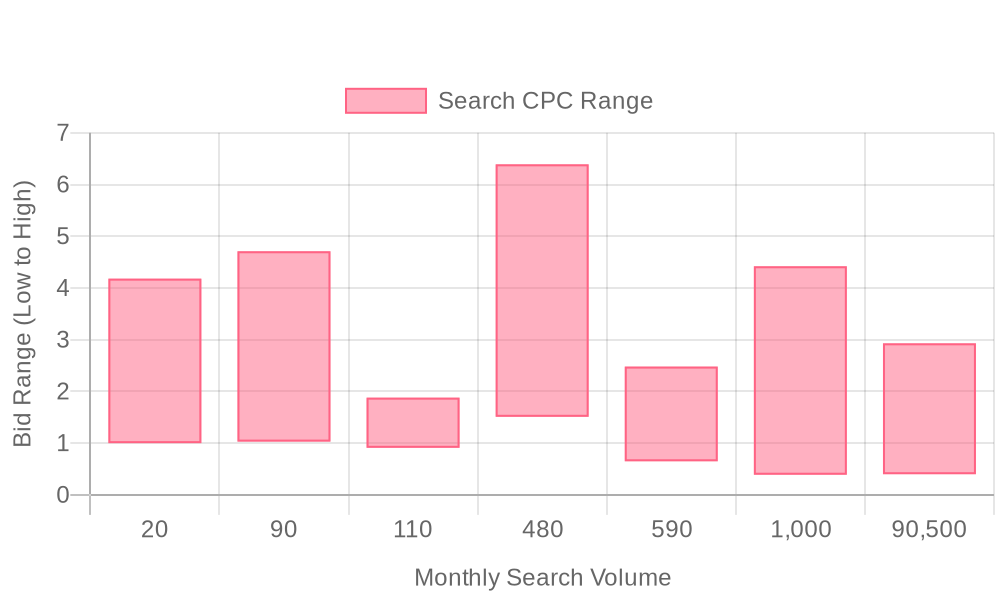
| Industry | Keyword | Monthly Search Volume | Competition Level | Low Bid | High Bid |
| Pet Accessories Businesses | wholesale pet supply companies | 20 | HIGH | 1 | 4.18 |
| Pet Accessories Businesses | drop shipping pet supplies | 90 | MEDIUM | 1.03 | 4.71 |
| Pet Accessories Businesses | dog apparel manufacturers | 110 | MEDIUM | 0.91 | 1.88 |
| Pet Accessories Businesses | dog supply companies | 480 | HIGH | 1.51 | 6.39 |
| Pet Accessories Businesses | dog breeding supplies | 590 | MEDIUM | 0.65 | 2.48 |
| Pet Accessories Businesses | pet supply company | 1000 | HIGH | 0.39 | 4.42 |
| Pet Accessories Businesses | pet supply shop | 90500 | LOW | 0.4 | 2.93 |
An effective keyword strategy sets the trajectory for Google Ads for Pet Accessories Businesses. Buyer language in this category splits clearly by intent: broad terms like "dog collars" attract browsers, while specific ones like "adjustable cat harness for kittens" or "chew-proof dog leash" signal someone close to buying. For a list of essential search terms and how to incorporate them, review this Google Ads keywords for pet food and treat brands. Seasonal spikes, new puppy or kitten ownership, holiday gifting, back-to-school pet routines, also shift which terms carry the most intent, so keyword lists need regular review rather than a set-it-and-forget-it approach.
Regional modifiers are indispensable for local pet accessory retailers aiming to boost in-store visits or drive local delivery. Examples like "dog toys near me," "pet store in Austin," or "cat treats NYC" sharpen campaign relevance and ensure ads reach buyers with intent to purchase nearby. For more insights on optimizing campaigns to reach local buyers, explore our geographic performance measurement guide.
Implementing negative keywords is a non-negotiable best practice to protect budget efficiency. By excluding terms like "DIY pet collar," "dog collar tutorial," or "free cat harness," marketers prevent irrelevant clicks that typically drain ad spend. Use negative keyword management to ensure your budget is directed toward high-intent users, learn more about intent signals to further refine your targeting and maximize conversion rates.
Modern platforms now enable marketers to move beyond anonymous traffic, identifying the companies and accounts engaging with pet product marketing campaigns. This precision allows for dynamic audience refinement: as leads move through the funnel or signal new intent, audience lists update in real time, ensuring that high-value segments are always prioritized. To experience these capabilities, get started for free with Sona.
Step-by-Step Campaign Execution Framework
Step 1: Build Targeted Keyword Lists
For Google Ads for Pet Accessories Businesses, constructing precise keyword lists is foundational. Grouping keywords by product type, such as leashes, feeders, toys, beds, and specialty items, ensures your ads are matched to relevant shopper intent. Strategic segmentation of these lists enables each ad group to address distinct buyer motivations, showcase tailored value propositions, and maximize relevance. For further guidance on keyword selection, review this essential Google Ads keywords for pet food and treat brands list, which provides a strong foundation for targeting searchers ready to buy.
Incorporating location-specific terms, like "buy pet accessories in Seattle" or "cat toys near Brooklyn," further narrows your targeting to high-value geographic areas. This tactic is critical for brick-and-mortar retailers and regional e-commerce sellers aiming to convert nearby audiences. Additionally, integrating specialized long-tail keywords and question-based phrases, such as "best eco-friendly dog collars" or "how to choose a pet water fountain", captures highly motivated buyers who are closer to making a purchase decision. Explore additional actionable playbooks to complement your keyword strategy.
Aligning keywords with your ongoing content marketing efforts creates a unified funnel, guiding prospects from discovery to conversion. Including both online and offline conversion signals builds a more complete attribution picture, allowing your team to see the real impact of campaign investments. Advanced integration with platforms that unify CRM and ad data, like Sona, enables dynamic audience segmentation based on real-time engagement, purchase intent, or lifecycle stage, ensuring your budget is prioritized toward the most promising prospects and your messaging remains relevant as leads progress.
The upgrade most pet accessories businesses advertisers miss is going beyond raw keyword volume to layer in intent and identity signals. By connecting website-visitor data and CRM records with Sona Marketing Measurement, you can see which specific search terms bring in the accounts and customers that actually convert, and weight your keyword and bidding strategy toward those rather than the terms with the highest search volume alone.
Tips on Expanding Your Pet Accessories Presence

Expanding your pet accessories business requires a blend of data-driven outreach and tailored content strategies. Effective digital marketing for pet stores starts with precise targeting and evolves through consistent audience engagement based on real-time audience insights.
- Cross-Promote: Use educational content in retargeting campaigns to nurture prospects and reinforce brand authority. By integrating intent data, marketers can identify visitors most likely to convert and deliver relevant guides or care tips that build trust, support strategic goals, and improve overall engagement.
- Upsell Products: Segment audiences using CRM insights to identify buyers with high lifetime value and tailor cross-selling efforts accordingly. Syncing enriched audience data into ad platforms enables dynamic audience updates as contacts move through the funnel, ensuring upsell offers reach the right shoppers at the optimal moment for maximum impact.
- Partnerships: Collaborate with pet organizations and local shelters to drive additional traffic and build credibility. These partnerships can be amplified online by targeting lookalike audiences and leveraging shared event data to identify new engaged segments. For more actionable digital ad strategies, explore this pet store advertising guide.
- Localization: Focus campaigns on state or city levels to capture untapped demand and rapidly increase market share. Geo-targeting combined with visitor identification technology allows marketers to pinpoint high-converting regions, optimize spend, and deliver highly relevant messaging to each local audience.
- Content Ideas: Analyze search queries to surface new content topics that attract the right traffic and expand organic reach. Feeding these insights back into your campaign strategy ensures that each piece of content addresses a proven need, driving both engagement and conversions for your pet accessories sales funnel.
Mastering Google Ads for pet accessories businesses means building a feedback loop between audience insights, campaign performance, and creative strategy. As teams unify CRM and ad data, each customer interaction becomes an opportunity to refine segmentation, personalize messaging, and improve ROI at every stage of the pet product marketing journey.
Beyond Google Ads: Winning the AI Answers Pet Accessories Businesses Buyers Now Trust
Paid search captures demand at the moment someone types a query. But a fast-growing share of pet accessories businesses buyers no longer start at Google at all, they ask ChatGPT, Gemini, or Perplexity before they ever run a search, and Google's own AI Overviews increasingly summarize an answer above the traditional results. If your business isn't referenced in those AI answers, you're invisible at the exact moment buyers build their shortlist.
Sona AI Visibility shows where your business shows up across ChatGPT, Gemini, Perplexity, Google AI Overviews, and 10+ engines, and, much like a keyword report, which prompts actually send you buyers, so you can prioritize the ones that convert. Run the two together and you cover the entire buyer path: get cited where buyers research (AI Visibility), then prove which of that demand turns into booked revenue (Marketing Measurement).
Helpful resources
Conclusion
Google Ads works for pet accessories businesses because it meets buyers at the moment they've already decided to look, but the businesses that win aren't the ones spending the most. They're the ones connecting keyword data, audience signals, and closed-loop measurement so every dollar chases a buyer who actually converts.
The next shift in this market is happening outside Google Search entirely, as pet owners increasingly ask AI tools for product recommendations before they ever type a query. Brands that show up in those AI answers, and can prove which of that traffic turns into revenue, will hold an edge that pure keyword bidding can't match.
To put a unified view of keyword performance, audience signals, and AI visibility to work for your pet accessories business, start for free.
FAQ
What are the best practices for using Google Ads in the pet accessories market?
Best practices include segmenting Google Ads accounts using firmographics and behavioral signals, aligning landing page and ad language, integrating offline events with online conversion tracking, and using advanced attribution models for a comprehensive view of marketing effectiveness.
How can I optimize my Google Ads for pet products?
Optimization can be achieved by targeting specific keywords, aligning ad copy with buyer needs, using real-time audience insights, and employing cross-channel integration to ensure personalized engagement and efficient demand generation.
What budget should I allocate for Google Ads for my pet store?
The budget should focus on high-converting channels and campaigns by using advanced analytics to prioritize premium product campaigns and adjust spend based on live demand, particularly during high-traffic periods like holidays or product launches.
What keywords should I target for pet accessories in Google Ads?
Targeting specialized search terms such as 'eco-friendly cat collars' or 'custom dog harness for small breeds' can reach highly motivated buyers, as these keywords typically face lower competition and yield higher conversion rates.
How do I measure the success of my Google Ads campaigns for pet products?
Success can be measured by integrating online and offline conversion tracking, using advanced attribution models to capture digital and physical touchpoints, and continuously optimizing spend toward high-converting segments.







