


Network security buyers rarely browse. They search when a breach hits, an audit deadline looms, or a contract is up for renewal, and they expect a vendor to be ready the moment they type the query. Google Ads lets network security firms meet IT managers, CISOs, and compliance leads at that exact moment, then connect the resulting click to the offline conversations, demos, and contracts that follow. This guide covers how network security companies can use Google Ads to generate leads, win project-level deals, and tie paid search into the rest of their marketing stack, including how to track high-value prospects and follow up before the window closes.
How to Generate Network Security Leads with Google Ads: A Step-by-Step Guide

Modern network security providers compete in an environment where technical expertise alone no longer secures the lead pipeline. Precision marketing backed by actionable data is now essential to capture enterprise buyers whose intent signals shift rapidly across digital touchpoints. For a deeper dive into demand generation tactics, explore our marketing analytics blog.
This guide details a proven, data-driven playbook for Google Ads in network security services. It covers fit scoring, real-time targeting, seamless conversion experiences, and integrated follow-ups, all aimed at higher-quality leads and shorter sales cycles. You can get started for free with Sona to see these strategies in action.
Common Types of Google Ads Campaigns
- Search Campaigns: These campaigns appear directly in Google’s search results when potential buyers seek network security solutions. They capture high-intent demand and allow granular control over targeting, messaging, and budget. For campaign setup tailored to cybersecurity, see this step-by-step Google Ads guide.
- Display Campaigns: Visual banners and responsive ads reach IT decision-makers as they browse relevant industry sites. Display campaigns nurture awareness among key accounts and can be finely tuned to retarget previous site visitors. Harness dynamic audience segments to ensure high-fit prospects see your ads.
- Remarketing Campaigns: By serving tailored ads to users who previously engaged with your site or landing pages, remarketing brings warm prospects back to conversion points. Dynamic audience updates based on recent activity ensure messaging aligns with evolving buyer journeys.
- Video Campaigns: Use YouTube and video placements to explain complex security solutions, demonstrate expertise, and build trust. Video is especially effective for differentiating advanced offerings such as managed detection or compliance services.
- Performance Max Campaigns: Unified campaigns that let Google's AI optimize placements across all networks at once. These help security firms extend reach while maintaining performance, especially when Sona's Intent Signals feed CRM and enrichment data back into targeting.
Data-Driven Approaches to Paid Search

- Intent-Driven Targeting: Use real-time search and site behavior to identify buyers researching security solutions, then prioritize spend toward those segments. Sona's Identity Resolution shows marketing teams which companies and, where available, which named accounts are behind a visit, not just an anonymous click.
- Fit Scoring by Firmographics: Integrate firmographic data, such as company size, industry, and technology stack, into audience segments. Automated tools sync these enriched lists into Google Ads, ensuring only qualified prospects see conversion-focused campaigns. Learn more in the account-based marketing guide.
- Offline and Online Conversion Attribution: Track all touchpoints, including phone calls, demos, and offline conversations, to accurately measure campaign ROI. Attribute pipeline and closed-won deals to the original paid search interaction for a full-funnel view with advanced ad conversions solutions.
Targeting Strategies for Network Security Buyers
- Buyer Persona Refinement: Go beyond broad IT audiences by segmenting campaigns for CISOs, network architects, and compliance managers. Real-time data enables updating audience lists as leads progress from awareness to evaluation. Use dynamic segmentation to automate this process.
- Geographic and Vertical Targeting: Prioritize high-value locations such as business districts or regulated industries. Layer in additional intent signals, recent industry events, technology adoption, or surge in security incidents, to shift budget toward accounts with immediate needs.
- Custom Intent Audiences: Build audiences based on recent searches, on-site engagement, and CRM data. With seamless CRM and ad platform sync, marketers can move users out of prospecting campaigns and into retargeting or nurture streams the moment they convert.
Landing Page Alignment and Conversion Techniques
- Message Match: Ensure every click from Google Ads for Network Security Services lands on a page tailored to the specific solution and pain point. Dynamic content adapts based on the visitor’s company, industry, or past interactions, increasing relevance and conversion rates.
- Trust Signals and Conversion Flow: Prominently feature certifications, client logos, and case studies. Short forms, clear CTAs, and risk-free offers reduce friction. Sona's Identity Resolution can pre-fill known data and route high-fit leads straight to sales for immediate follow-up.
- Continuous Optimization: Analyze on-page behavior, drop-off points, and conversion rates. Automated tools identify which segments or channels underperform, reallocating budget in real time for maximum efficiency. For optimization best practices, review these PPC tips for cybersecurity.
Performance Optimization and Follow-Up
- Lead Scoring and Routing: Score leads based on engagement, company fit, and recent activity. High-value accounts are prioritized for direct outreach, while nurture tracks keep mid-funnel prospects engaged until they’re sales-ready. Enhance your process with intent signals.
- Automated Follow-Ups: Trigger timely emails, LinkedIn messages, or retargeting ads based on user actions. Integration between ad platforms and CRM ensures no high-intent lead is lost due to manual delays or misalignment.
- ROI Measurement and Budget Reallocation: Attribute pipeline value to each campaign, keyword, and creative. Shift budget dynamically toward the ads and audiences driving the most qualified pipeline, not just clicks. For more on tracking marketing impact, read about revenue attribution.
Cross-Channel Integration for Maximum Impact

- Unified Intent Data: Aggregate signals from paid search, organic visits, and outbound activity. Merge these into a single profile to understand which accounts are truly in-market for network security services. Intent data strategies can help drive better decisions.
- Audience Sync Across Platforms: Move high-fit leads seamlessly between Google Ads, email, and social channels. Audiences are updated in real time as buyers engage or convert, maintaining relevance at every stage thanks to automatic audience sync.
- Closed-Loop Reporting: Connect CRM outcomes to marketing activities. This enables precise measurement of which Google Ads strategies and messages generate pipeline and revenue, informing continuous optimization.
For network security firms, integrating advanced data and audience management throughout every Google Ads campaign step ensures that high-intent leads are captured, nurtured, and converted with efficiency and scale. This approach reduces wasted spend, accelerates sales cycles, and supports growth in a highly competitive market.
Why Does Google Ads Matter for Network Security Services?
Network security providers operate in a crowded, fast-evolving environment where timing, precision, and credibility determine which vendors win high-value contracts. Google Ads empowers these companies to connect with IT managers, security officers, and compliance leaders at the exact moment they are actively researching or addressing network threats. To maximize the value of these interactions, marketers can leverage step-by-step Google Ads strategies for cybersecurity to capture demand when urgency is highest and intent is clear.
The decision cycle for security solutions is complex, involving rigorous evaluation by multiple stakeholders. Google Ads gives network security firms direct access to decision-makers, surfacing their solutions ahead of competitors and enabling real-time engagement. Marketers can identify the companies behind anonymous website visits, turning web traffic into named accounts and fueling personalized follow-up and nurture sequences.
High-margin projects, such as system integration, managed detection, and advanced threat protection, are won by targeting the right segments, not simply generating volume. With data-driven audience creation and dynamic updates, campaigns can focus budget on buyers with the greatest likelihood to convert. This ensures every ad dollar accelerates pipeline velocity and captures in-market accounts as they move from research to purchase.
Security events and compliance deadlines create spikes in demand, and immediate fulfillment is vital. Google Ads enables providers to place offers in front of prospects within minutes of a breach or regulatory change, keeping solutions top-of-mind during critical decision windows. Regional targeting further boosts efficiency, allowing security vendors to prioritize emerging markets, underserved geographies, or industry hubs where needs are acute. For more inspiration on optimizing campaigns, explore our marketing playbooks.
Integrating conversion data across digital touchpoints reduces manual gaps and accelerates lead progression. Advanced conversion tracking and online-to-offline attribution reveal true ROI, allowing teams to optimize spend based on the most valuable sources. When enriched CRM data syncs automatically into Google Ads, sales and marketing teams can act on unified insights, closing the loop from initial click to closed deal. This holistic approach to Google Ads for Network Security Services transforms isolated ad impressions into a continuous, data-driven growth engine. To start turning your ad data into actionable revenue insights, get started for free with Sona.
Common Types of Google Ads Campaigns for Network Security Services

Search Campaigns: Search campaigns are the foundation of PPC for network security, putting your firm in front of high-intent prospects the moment they search terms like "enterprise firewall protection" or "zero trust network security." Sona's Identity Resolution matches those clicks to companies, so your team can prioritize outreach and personalize follow-up instead of working from anonymous form fills. For a fuller walkthrough of campaign setup and optimization in this industry, see this Google Ads guide for cybersecurity companies.
Display Ads: Display ads extend your network security brand across industry-specific websites and forums, building top-of-mind awareness among IT influencers and decision-makers. With advanced targeting, display placements reinforce your message to audiences researching cybersecurity topics. Leveraging real-time intent signals allows you to prioritize ad spend on segments demonstrating readiness to engage, reducing wasted impressions and ensuring every dollar supports pipeline growth.
Video Ads: Video campaigns provide a dynamic platform to communicate the value of complex security solutions, such as managed detection and response or cloud network monitoring. Through concise explainer videos or customer testimonials, you can address common pain points and demonstrate outcomes visually. Dynamic audience lists ensure your video content surfaces for both new prospects and those progressing through the buying cycle, keeping your brand relevant as needs evolve.
Remarketing: Remarketing campaigns re-engage visitors who explored your network security offerings but didn’t convert, guiding them back with targeted messaging and timely offers. By leveraging dynamic audience updates, you can tailor creative based on each lead’s journey stage, ensuring prospects see content that resonates with their current concerns. Conversion tracking closes the loop, attributing sales meetings or demos back to initial ad interactions and revealing true campaign ROI.
Assets: Ad assets enhance visibility and credibility by adding layers of information to your ads: certifications (e.g., SOC 2, ISO 27001), service guarantees, and rapid response claims. These additions assure potential clients of your capabilities and reliability at a glance. Seamless CRM and ad platform syncing ensures that enriched audience data powers asset relevance, aligning every ad with a client’s most pressing security needs and maximizing conversion potential.
Where to Find Growth Opportunities
Identifying growth opportunities within network security marketing requires a data-driven approach that closes the gap between lead generation and true revenue impact. Modern B2B teams are moving beyond surface-level metrics to prioritize high-value activities that accelerate pipeline and eliminate friction in the buyer journey.
- Vertical Keyword Targeting: Targeting niche services unique to the network security sector unlocks new segments where competition is less saturated. For example, campaigns focused on "zero trust architecture consulting" or "SD-WAN vulnerability assessments" attract enterprise buyers often overlooked by broad cybersecurity advertising. By integrating advanced visitor identification, marketers can connect these high-intent keyword searches with actual company names and decision-makers, allowing for immediate sales follow-up and tailored nurture strategies. As these prospects are recognized, dynamic audience updates keep paid campaigns focused on accounts most likely to convert, even as buyers progress through complex sales cycles.
- Competitor Analysis: Leveraging robust market analysis tools helps pinpoint gaps in competitors’ strategies and emerging trends that matter to your target buyers. Instead of guessing which accounts are ready to engage, real-time intent signals from website and ad interactions enable revenue teams to shift budget toward opportunities showing active research behavior. This ability to allocate spend to high-converting accounts in the moment reduces wasted impressions and ensures your Google Ads for Network Security Services strategy is always aligned with the market’s pulse.
- Industry-Specific Ad Placements: Placing ads directly on niche platforms and forums used by network security professionals drives visibility where organic reach is limited. These channels attract engaged audiences looking for solutions to urgent threats, compliance mandates, or infrastructure upgrades. When unified audience data flows seamlessly between your CRM, Google Ads, and other marketing systems, it ensures that every qualified lead, no matter where it originated, is tracked, enriched, and routed to the appropriate sales workflow for immediate action.
- Content Retargeting: Retargeting users who engage with whitepapers, case studies, or technical videos maximizes the impact of your content marketing investments. By synchronizing audience segments in real time, marketers can deliver personalized ads and follow-up offers to prospects who have shown clear buying signals but have not yet converted. Advanced attribution models can connect these engagements to both online form fills and offline sales activity, giving revenue leaders a full view of what drives pipeline and where to double down on spend for maximum ROI.
How to Apply Audience Segmentation for Network Security
Modern revenue teams in network security achieve outsized impact by honing outreach on the right audience segments. Effective segmentation turns generic advertising into precision-targeted engagement, lifting pipeline velocity and cutting spend on unqualified leads.
- Define Segments: Distinguishing between public sector and corporate clients is fundamental for network security providers. Public sector buyers often prioritize compliance and procurement transparency, while corporate clients focus on rapid deployment and advanced threat protection. By clearly defining these segments, teams ensure that high-value prospects are prioritized, maximizing the relevance and efficiency of every marketing dollar.
- Overlay Intent Signals: Layering real-time behavioral and intent data lets marketers distinguish between prospects seeking immediate security patching versus those planning long-term infrastructure upgrades. For example, prospects browsing urgent breach response resources or submitting forms for vulnerability assessments are routed to conversion-focused campaigns. This approach enables budget and messaging to dynamically shift toward prospects who are most likely to convert, leveraging in-market signals for maximum marketing effectiveness.
- Ad Groups by Segment: Customizing Google Ads ad groups and budgets for each audience segment amplifies engagement and accelerates sales cycles. Dedicated ad groups for CISO-level decision makers, IT administrators, or procurement officers allow for tailored creative and bid strategies. When these segments are dynamically updated as leads advance through the funnel, marketers can deliver sequential messaging that guides prospects from education to conversion, improving nurture outcomes and deal velocity.
- Track Conversion Paths: Seamless integration between ad platforms and CRM systems ensures that every lead interaction, online or offline, is captured and attributed accurately. By syncing enriched lead data into both Google Ads and CRM platforms, teams close the loop on attribution and prevent high-value prospects from slipping through operational cracks. This unified tracking enables precise ROI measurement and supports continuous optimization of both audience segments and campaign strategy, ultimately strengthening network security lead generation.
This is also where measurement changes the economics. With Sona Marketing Measurement you can identify the companies and buyers behind your ad clicks, not just anonymous sessions, and segment audiences by who actually becomes a customer. That lets you build bid adjustments and audience signals around the segments that convert and de-prioritize the ones that don't, so you feed Google's algorithms "this click became a paying network security services customer" instead of just "someone filled out a form."
Keyword Strategy & Sample Target Terms
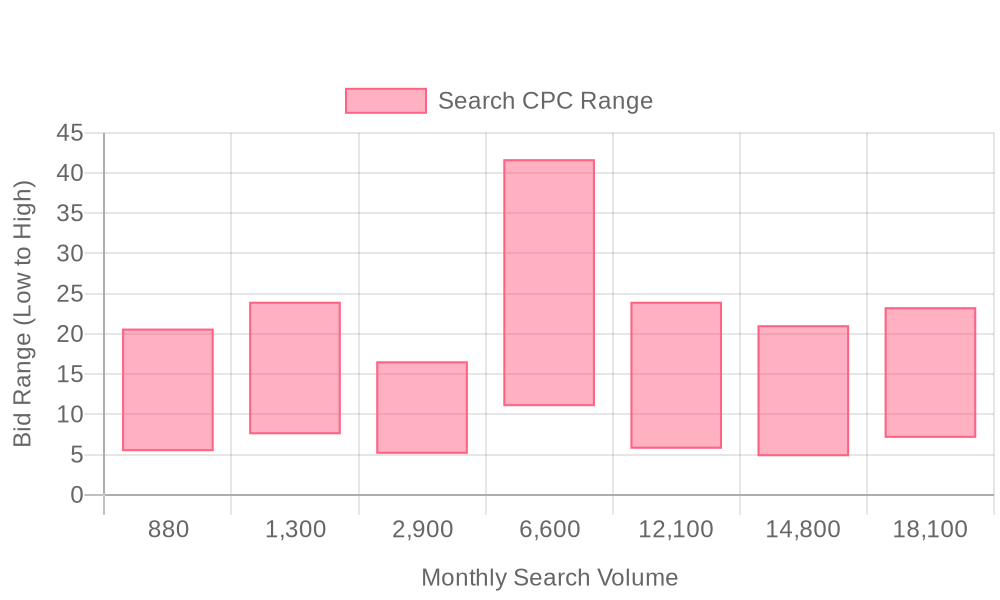
| Industry | Keyword | Monthly Search Volume | Competition Level | Low Bid | High Bid |
| Network Security Services | network security services | 880 | LOW | 5.44 | 20.66 |
| Network Security Services | zero trust network | 1300 | LOW | 7.54 | 24 |
| Network Security Services | cloudflare zero trust | 2900 | LOW | 5.11 | 16.59 |
| Network Security Services | cyber security programs | 6600 | MEDIUM | 11.03 | 41.71 |
| Network Security Services | network security | 12100 | LOW | 5.74 | 24 |
| Network Security Services | sase | 14800 | LOW | 4.81 | 21.08 |
| Network Security Services | cyber security companies | 18100 | LOW | 7.09 | 23.32 |
Precision targeting is the cornerstone of successful Google Ads for network security services. By focusing campaigns on high-intent, service-specific keywords, marketers ensure their spend reaches IT decision-makers and enterprise buyers actively seeking solutions. This approach cuts through generic search noise and positions your brand at the moment of highest urgency, maximizing relevance while minimizing wasted impressions. For a detailed list of high-performing keyword ideas, review top Google Ads keywords for IT security companies.
Measurable ROI is achieved when every click can be attributed to a contract, trial, or sales conversation. Utilizing updated audience scoring metrics, teams can continuously refine keyword lists based on which terms consistently drive pipeline and revenue. Instead of relying on surface-level metrics like click-through rate, sophisticated marketers map keyword performance to actual closed-won deals, ensuring ongoing optimization aligns with business outcomes. Explore methods to measure marketing’s impact in the marketing influence on the sales pipeline guide.
Channel synergy amplifies reach and brand recall across web, email, and paid channels. Integrating Google Ads with website analytics and CRM systems enables marketers to reinforce messaging to engaged accounts and unify intent signals. By leveraging real-time audience segmentation, teams can keep prospects moving through the funnel and guard against drop-off as audience segments update dynamically based on real-time behavior and engagement.
**Strategic Tips:**
- High Volume, Low Competition: Prioritize keywords such as "enterprise network monitoring," "zero trust security provider," and "managed firewall services" where intent is strong but competition is less saturated. This improves cost-efficiency and increases the probability of connecting with decision-makers looking for immediate solutions.
- Tailored Use of Negative Keywords: Protect your ad budget by excluding terms like "free tools," "open-source firewall," and "basic antivirus." Negative keywords ensure your ads are shown to prospects with the capacity and urgency to invest in robust network security solutions, not to casual browsers or low-budget seekers.
Marketers gain an edge by identifying not just which keywords drive traffic, but which convert to qualified leads and revenue. Using Sona's Identity Resolution, teams can trace the path from anonymous site visitor to named account, enriching audience data and informing future keyword investment. Real-time intent scoring lets budget shift toward keywords spiking in demand, capitalizing on emerging threats and compliance deadlines as they happen. When CRM and ad platforms are synchronized, enriched audiences flow straight into Google Ads, so every dollar targets verified, high-priority accounts.
Step-by-Step Campaign Execution Framework
Network security providers face a dynamic digital landscape where achieving measurable results requires a disciplined, data-driven approach. Campaigns built on granular insight and seamless audience activation outperform generic efforts, driving qualified pipeline and maximizing every ad dollar. Modern revenue teams gain a competitive edge by blending advanced targeting with real-time optimization, ensuring each impression reaches the right decision-maker at the precise moment of need.
Below is a proven framework for executing high-performing Google Ads for Network Security Services. Each step is designed to support the full buyer journey, from initial intent capture to conversion and closed revenue, with every tactic shaped by actionable data and attribution best practices.
Step 1: Build Targeted Keyword Lists
- Long-tail and localized focus: Start by identifying keyword opportunities that reflect specific buyer intent, such as "managed network security for banks" or "enterprise firewall solutions NYC." These phrases attract high-fit leads and minimize wasted spend on broad or non-commercial searches.
- Strategic content integration: Align keywords with core content themes and service offerings. This ensures that campaigns surface for searches closely tied to your expertise, amplifying both SEO gains and paid performance.
- Dynamic audience sync: As leads engage with your website or sales collateral, their behavioral data feeds into real-time audience lists that automatically update in Google Ads. This keeps targeting sharp and responsive to real-time buying signals and supports remarketing to accounts showing intent but not yet converted.
The upgrade most network security services advertisers miss is going beyond raw keyword volume to layer in intent and identity signals. By connecting website-visitor data and CRM records with Sona Marketing Measurement, you can see which specific search terms bring in the accounts and customers that actually convert, and weight your keyword and bidding strategy toward those rather than the terms with the highest search volume alone.
Step 2: Craft High-Impact Ad Copy
- Address security pain points: Use ad copy to call out real challenges, such as delayed response to breaches or inconsistent lead quality from previous providers. Show how your team delivers rapid, reliable support and a proven track record of threat mitigation.
- Highlight engagement strengths: Incorporate ad extensions, like callouts and structured snippets, to display response times, certifications, and unique value propositions. This builds trust and improves click-through rates.
- Personalized messaging: With visitor identification, ad creative can be tailored to industries or roles, ensuring each prospect sees the most relevant benefits and proof points.
Step 3: Design Conversion-Ready Landing Pages
- Keyword-ad-page alignment: Landing pages must mirror the promise of your ad, featuring the same keywords and value drivers. This alignment improves Quality Score and ensures seamless tracking from click to conversion.
- Trust signals and CTAs: Prominently display industry certifications, client testimonials, and case studies. Use clear, actionable CTAs, such as "Book a Security Audit", to minimize friction and accelerate lead capture.
- Full-funnel attribution: Advanced conversion tracking connects online form fills, phone calls, and even offline sales meetings back to the original ad click, providing clear ROI data for every campaign.
Step 4: Optimize Using Data
- Intent-driven bidding: Use smart bidding strategies that automatically adjust bids based on signals like device, time of day, and user engagement history. This ensures your budget is allocated to the highest-propensity accounts.
- A/B testing for continuous improvement: Routinely test headlines, ad copy, and landing page variants. Analyze which combinations yield the best conversion rates and double down on top performers.
- Unified reporting: All campaign outcomes, from impression to closed sale, are tracked in a single dashboard. This enables fast pivots, granular segmentation, and ongoing budget reallocation to maximize network security lead generation.
Following this framework, network security providers consistently outperform generic PPC approaches. Integrated data, precise targeting, and adaptive optimization let revenue teams capture more qualified leads, shorten sales cycles, and grow in a market where technical differentiation alone rarely closes a deal.
Sona Marketing Measurement closes the gap between clicks and revenue. It captures ad clicks with first-party measurement, ties them through UTM capture and ad-platform APIs to the matching record in your CRM, and reports ROAS by keyword and campaign instead of by last-click form fill. Feeding that revenue signal back into Smart Bidding and Performance Max compounds over time: the algorithms optimize toward booked network security services revenue, not cheap leads.
Tips on Expanding Your Network Security Presence
B2B network security providers need more than technical excellence to stand out in a saturated digital landscape. Strategic campaign synergy and data-driven outreach empower teams to capture high-intent leads and outperform competitors in the cybersecurity sector.
- Cross-Promote Assets: Drive engagement by retargeting visitors across your core content ecosystem. When a decision-maker interacts with a high-value resource or solution page, dynamic retargeting sequences can surface case studies, demos, or industry guides matched to their stage in the buying journey. With Sona's Identity Resolution, marketers can move past anonymous clicks and tailor retargeting campaigns directly to key accounts and known contacts, sharpening relevance and lifting conversion rates.
- Upsell Services: Use CRM data to segment audiences and prioritize upsell opportunities. By syncing enriched account and lead lists with advertising platforms, you ensure that recent buyers or current customers receive targeted offers for premium features, managed services, or compliance upgrades. Continuous data integration lets sales and marketing teams identify hot leads quickly, deploy timely cross-sell campaigns, and track movement through the sales funnel in real time.
- Localize Campaigns: Increase your service footprint by targeting campaigns to regions with high demand for network security solutions. Hyper-local targeting, down to city blocks or specific technology parks, ensures that your message reaches IT decision-makers where they are most active. Automated location-based segmentation, enriched with firmographic data, allows for tailored messaging that resonates with local compliance requirements, industry events, or regional security trends.
- Leverage Data Insights: Turn search and engagement data into actionable content and campaign ideas. Behavioral signals and keyword trends reveal emerging cybersecurity concerns, letting you build landing pages, webinars, and whitepapers that attract high-intent searches. Real-time intent monitoring, via Sona's Intent Signals, helps shift budget toward audiences actively researching solutions, keeping campaigns agile as the market evolves.
Beyond Google Ads: Winning the AI Answers Network Security Services Buyers Now Trust
Paid search captures demand at the moment someone types a query. But a fast-growing share of network security services buyers no longer start at Google at all, they ask ChatGPT, Gemini, or Perplexity before they ever run a search, and Google's own AI Overviews increasingly summarize an answer above the traditional results. If your business isn't referenced in those AI answers, you're invisible at the exact moment buyers build their shortlist.
Sona AI Visibility shows where your business shows up across ChatGPT, Gemini, Perplexity, Google AI Overviews, and 10+ engines, and, much like a keyword report, which prompts actually send you buyers, so you can prioritize the ones that convert. Run the two together and you cover the entire buyer path: get cited where buyers research (AI Visibility), then prove which of that demand turns into booked revenue (Marketing Measurement).
Helpful resources
Conclusion
Google Ads works for network security services when the targeting reflects how these buyers actually decide: under time pressure, against a compliance clock, and with multiple stakeholders who need different proof points. Firms that pair that targeting with real attribution close more of what they generate, and waste less chasing clicks that were never going to become contracts.
The firms pulling ahead now are the ones treating paid search as one input into a larger measurement system, connecting search intent, AI visibility, and closed-won revenue so every campaign decision is grounded in what actually turned into a contract, not just what generated a click.
If you're ready to transform your advertising approach and see tangible results, consider exploring our platform's comprehensive capabilities. Start for free
FAQ
What are the best practices for Google Ads in network security?
The best practices include leveraging intent-driven targeting, fit scoring by firmographics, seamless conversion experiences, and integrated follow-ups to maximize qualified lead generation and streamline sales cycles.
How can I optimize my Google Ads for cybersecurity services?
Optimize your Google Ads by focusing on precision targeting, message match, trust signals, continuous optimization, and data-driven audience segmentation to ensure high-intent leads are captured and converted.
What budget should I allocate for Google Ads in network security?
Budget allocation should be dynamic, shifting towards ads and audiences that drive the most qualified pipeline, based on real-time performance metrics and campaign ROI analysis.
What keywords should I target for Google Ads in cybersecurity?
Target high-intent, service-specific keywords such as 'enterprise firewall protection' and 'zero trust network security' while excluding low-value terms like 'free tools' to ensure your spend reaches decision-makers.
How do I measure the success of my Google Ads campaigns for network security?
Measure success by tracking offline and online conversion attribution, using advanced conversion tracking to connect interactions to closed-won deals and ensuring continuous optimization based on detailed ROI data.







