


A guitar shopper who searches "buy acoustic guitar near me" at 9pm is closer to a sale than one who walks past a storefront during the day. Music stores live and die by catching that moment: a parent renting a beginner clarinet before the school year starts, a gigging musician who needs an amp fixed by Friday, a band director filling out a bulk order. Google Ads exists to meet these buyers exactly there, while foot traffic and flyers miss them entirely. This guide lays out how music stores can use Google Ads to turn that intent into sales, both online and in the store.
How to Generate Music Store Leads with Google Ads: A Step-by-Step Guide
Music retailers operate in a competitive environment where digital visibility directly impacts foot traffic and sales. Forward-thinking stores rely on Google Ads to engage motivated buyers at the precise moment they express intent, removing barriers to purchase and shortening sales cycles.
A strategic Google Ads approach elevates music store advertising beyond traditional methods by combining precise targeting, real-time engagement, and measurable outcomes. This step-by-step framework empowers music retailers to navigate shifting market demands, ensuring every ad dollar is optimized and every lead is actionable.
- Adopt A Data-driven Approach: Pairing Google Ads with your broader marketing mix fixes the two most common problems in music retail advertising: wasted spend on the wrong audience and weak organic visibility. Unifying campaign data with CRM records lets revenue teams pinpoint segments such as school band programs or working musicians, spot in-market behavior, and direct budget toward accounts most likely to buy. Sona Attribution connects campaign data to revenue, so decisions are grounded in what's actually converting, not guesswork.
- Employ Keyword And Audience Targeting: Successful Google Ads strategies for music stores begin with intent-driven keyword research. By mapping products and services to search demand (such as "buy acoustic guitars near me" or "music lessons for beginners"), retailers attract buyers ready to engage. Audience targeting becomes far more dynamic when enriched with behavioral and firmographic data, enabling teams to update customer segments as leads move through the funnel. Google Ads strategy for retailers provides a practical look at keyword selection and audience strategies.
- Align Landing Pages And Creatives: Conversion rates soar when ad messaging and landing experiences are tightly integrated. For example, an ad promoting music store promotions on digital pianos should bring users to a landing page featuring current offers, testimonials, and easy purchase options. Advanced conversion tracking tools capture every interaction, both online and in-store, allowing teams to attribute revenue to specific campaigns and creatives. This comprehensive measurement fuels ongoing optimization and ensures that each customer touchpoint is leveraged for maximum ROI.
- Implement Performance Optimization Tactics: Maximizing the return on your Google Ads budget for music stores requires a relentless focus on performance data. By testing creative variations, adjusting bids in real time, and leveraging automated attribution, marketing teams can continually improve cost-per-acquisition metrics. Guide to boosting Google Ads ROAS covers best practices for optimizing ad spend and tracking results.
- Use Cross-channel Integration: Google Ads works hardest when it's tied to email, social, and CRM workflows rather than run in isolation. Syncing enriched audience lists and lead data across platforms keeps messaging consistent and makes multi-touch attribution possible across the buyer journey, from a first click on a guitar ad to an in-store trade-in months later. That connective tissue is what lets a music store nurture someone from browser to repeat customer instead of losing them after one sale.
Why Does Google Ads Matter for Music Stores?

Music stores operate in a fast-paced landscape where timing and buyer intent determine sales outcomes. Digital advertising empowers these businesses to engage with musicians, educators, and institutions exactly when they are actively searching for instruments, lessons, or repairs, driving more qualified prospects through both online and in-store channels.
- Complex Audience: Traditional outreach struggles to pinpoint the right buyers, often wasting budget on broad, disengaged audiences. Google Ads lets music retailers target specific segments, school band directors sourcing instruments for the semester, semi-professional musicians upgrading gear, at the moment they're searching. That focus improves response rates by concentrating spend on who's actually likely to convert. Sona's Identity Resolution helps music retailers match engaged site visitors to company profiles for more tailored follow-up.
- Increased Margins: As music retail margins are heavily influenced by seasonality and buyer type, digital marketing for music stores ensures that promotions reach those most likely to make high-ticket purchases. For example, campaigns timed around back-to-school or holiday shopping can be dynamically adjusted in real time based on buyer intent signals. Search Marketing Trends provides a deeper look at this trend and how stores maximize ROI with targeted campaigns.
- Visibility In New Areas: Expanding into new or emerging neighborhoods often outpaces the reach of traditional local advertising. Google Ads allows for precise geographic targeting, enabling music stores to launch hyper-localized campaigns and test demand in underserved areas. Audience segments can be dynamically updated as leads advance through the funnel, ensuring that targeting remains relevant as market conditions shift.
- Analytics Integration: Measuring true marketing ROI requires visibility from the first click to the final sale, including offline conversions like in-store purchases or lesson sign-ups. For more insights on tracking and attributing revenue across channels, check out our guide on Revenue Attribution. Real-time CRM and ad sync keeps audience and lead data enriched and actionable, further unifying digital and physical sales insights for a complete performance picture.
Common Types of Google Ads Campaigns for Music Store Services

- Search Campaigns: Search campaigns capture high-intent customers actively looking for specific instruments, lessons, or repairs, giving music retailers a direct path to buyers at the exact moment of need. Layering in real-time visitor identification moves targeting from anonymous searchers to verified individuals and organizations, so bids can shift toward those showing genuine buying intent. Sona's Identity Resolution helps music retailers recognize and target verified visitors, putting budget where it's most likely to convert.
- Display Ads: Display ads keep your brand visible across music blogs, forums, and relevant sites, which is critical for music retailers working in highly competitive markets with fluctuating demand. This visibility supports brand recall and ensures your products or services remain top-of-mind for both casual browsers and niche music communities. Display ad strategies provide a deeper look at how display advertising can boost awareness and traffic for music stores.
- Video Ads: Video ads allow music stores to showcase instruments, accessories, or lessons with immersive content that educates and entertains. This format is particularly effective for demonstrating sound quality, craftsmanship, or instructional expertise, which drives stronger engagement among musicians and educators. By leveraging in-market behavioral data, video campaigns can prioritize viewers who show immediate purchase intent, allocating budget to those most likely to convert and maximizing the effectiveness of every ad dollar.
- Remarketing: Remarketing campaigns target individuals who have already interacted with your site or product listings, nurturing them back toward purchase or inquiry. This tactic is essential for music stores with longer sales cycles, as it maintains engagement and encourages repeat visits from high-value prospects. With CRM and ad platform sync, remarketing audiences are enriched in real time, allowing stores to automatically segment past visitors based on product interest, purchase stage, and readiness to buy.
- Assets: Ad assets (formerly called extensions) surface key information, store location, contact details, current promotions, directly within your ads. Location and promotion assets are especially useful for driving in-store traffic and flagging time-sensitive sales or events. Enhanced conversion tracking measures both online and offline interactions accurately, giving music retailers a full view of campaign ROI to inform future marketing strategies.
Where to Find Growth Opportunities?

Music store advertising thrives when growth opportunities are identified outside the usual channels. Expanding reach requires a blend of data-driven tactics and adaptive campaign management that targets both emerging and established audiences.
- Vertical Keyword Targeting: Shifting from broad, generic keywords to vertical-specific terms aligns campaigns with your content strategy and improves relevance. For music stores, focusing on instrument types, lesson formats, or genre-related queries attracts buyers with clear purchase intent. Dynamic audience segmentation ensures ad spend is always directed toward segments most likely to convert, updating in real time as user interests and behaviors shift. Google Ads strategies provides practical examples of tailoring keyword strategies for this niche.
- Competitor Analysis Tools: Competitor insight reveals underserved markets and gaps rivals are missing. Spotting where other music stores are advertising thinly, say, on repair services or lesson packages, lets you position your own campaigns to capture that share. Visitor identification adds to this by surfacing which companies and decision-makers are visiting your site, sharpening which segments to prioritize. Sona's Identity Resolution can help uncover which businesses are engaging with your site, supporting more targeted outreach.
- Industry-specific Online Directories: Placing ads in directories catering specifically to musicians, educators, or music retailers exposes your offerings in high-intent environments often missed by organic search. Tapping into these directories ensures your brand is visible where customers are actively researching solutions, especially when organic rankings are still developing.
- Retargeting Past Visitors: Engaging previous site visitors with highly relevant content, such as instructional videos, sheet music downloads, or exclusive promotions, increases the likelihood of re-engagement and eventual purchase. For more insights on optimizing retargeting strategies, check out our guide on retargeting campaigns. Integrating CRM and ad platforms creates seamless audience sync, ensuring every retargeting ad is timely, relevant, and based on unified data that spans both online and offline interactions.
How to Apply Audience Segmentation for Music Stores
Music retailers operate in a landscape where buyer needs, purchasing cycles, and intent signals shift rapidly. Segmenting your advertising strategy ensures that every marketing dollar targets the right audience at the right time, driving measurable growth and reducing wasted spend.
- Define Customer Segments: Start by identifying your key audiences, such as individual buyers seeking instruments for personal use, school music departments making bulk purchases, and professional musicians requiring specialized gear. Each segment presents distinct purchasing behaviors and priorities, which must be reflected in your Google Ads campaigns. For example, individuals may respond to limited-time offers on accessories, while institutional buyers look for volume discounts and service guarantees. Google Ads strategies provides a deeper look at effective strategies for these segments.
- Overlay Intent Signals: Intent shifts with the school calendar, recital season, and routine instrument maintenance. Layering in real-time data helps catch school departments sourcing new inventory at the start of a semester or parents researching beginner kits before a recital. Sona surfaces intent signals so marketers can shift budget toward high-converting accounts as that intent spikes, keeping promotions timely instead of generic.
- Create Customized Ad Groups: Reflect segment nuances by building dedicated ad groups for each audience within your Google Ads campaigns. Individual buyers may see ads highlighting flexible financing or trial periods, while school departments receive messaging about procurement support and preferred pricing. As leads move through the funnel, dynamic audience capabilities update group membership automatically, keeping your ads relevant and personalized. This approach minimizes manual effort and keeps your music retail marketing agile as customer profiles evolve.
- Validate Conversion Paths: Accurate measurement is critical, especially when customer journeys span online research and in-store purchases. Track all interactions, from initial ad click to final sale, using advanced conversion tracking that attributes both online and offline touchpoints. For more insights into maximizing ad ROAS, check out our guide on Google Ads ROAS. This unified view eliminates fragmented data visibility and empowers data-driven optimization across all music store promotions.
This is also where measurement changes the economics. Sona Marketing Measurement identifies the companies and buyers behind your ad clicks using first-party data, not just anonymous sessions, and lets you segment audiences by who actually becomes a customer. That lets you build bid adjustments and audience signals around the segments that convert and de-prioritize the ones that don't, so you feed Google's algorithms "this click became a paying music stores customer" instead of just "someone filled out a form."
Keyword Strategy & Sample Target Terms
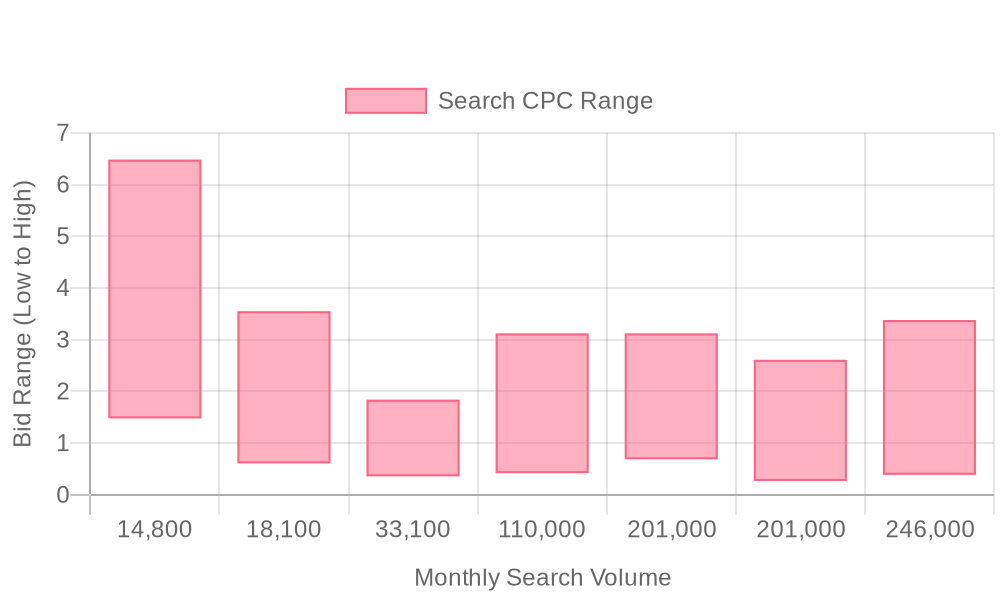
| Industry | Keyword | Monthly Search Volume | Competition Level | Low Bid | High Bid |
| Music Stores | piano store near me | 14800 | HIGH | 1.48 | 6.48 |
| Music Stores | music shop | 18100 | LOW | 0.61 | 3.55 |
| Music Stores | guitar shop | 33100 | HIGH | 0.36 | 1.84 |
| Music Stores | guitar store near me | 110000 | HIGH | 0.42 | 3.12 |
| Music Stores | music stores | 201000 | LOW | 0.69 | 3.12 |
| Music Stores | guitar center near me | 201000 | LOW | 0.27 | 2.61 |
| Music Stores | music store near me | 246000 | LOW | 0.39 | 3.38 |
Music store advertising faces unique challenges: niche audiences, competitive local markets, and shifting buyer intent. A robust keyword strategy addresses these pain points by focusing on high-volume, low-competition terms that connect directly with shoppers searching for specific products or services. This approach ensures that ad budgets are not wasted on generic clicks, but instead drive engagement from musicians, educators, and enthusiasts ready to buy.
Leveraging long-tail keywords such as “best acoustic guitars for beginners” or “music store near me with piano lessons” enables music retailers to capture nuanced search intent. These phrases reflect real-world needs and purchasing signals, resulting in higher conversion rates compared to broad, high-competition terms. Musicshop360 Blog provides a deeper look at this trend and how keyword granularity impacts campaign results. Integrating negative keywords, like “free music downloads” or “sheet music PDFs,” further refines targeting and eliminates wasted spend on unqualified traffic.
Sona empowers marketing teams to identify not just what visitors are searching, but also who they are. By pinpointing in-market buyers and updating audience lists as prospects show higher purchase intent, music retailers can dynamically shift budget toward high-value segments. This enhances campaign efficiency, ensuring each click has the highest possible potential to convert. Platforms like Sona Audiences are designed to help marketers retarget qualified segments and maximize the impact of search campaigns.
- High-volume, Low-competition Terms: Focus on “music store advertising,” “Google Ads strategies for music equipment,” and “music retail marketing” to tap into targeted, actionable queries.
- Long-tail Keywords: Use phrases like “local Google Ads for music stores near me” to reach intent-driven buyers in your immediate area.
- Negative Keywords: Add terms unrelated to sales (e.g., “music theory worksheets,” “free instrument samples”) to preserve budget and eliminate irrelevant clicks.
Precision in keyword selection is the foundation of successful digital marketing for music stores, allowing every campaign to adapt as audience behaviors and intent signals evolve. For more insights on refining your approach, check out our guide on Intent Retargeting.
Step-by-Step Campaign Execution Framework
A structured Google Ads approach empowers music retailers to capture motivated buyers and drive measurable results, bridging in-store and online activity. Precision targeting and analytics transform generic ad spend into curated, high-ROI campaigns that fuel growth in a competitive landscape. Digital ads for music stores provides a deeper look at this trend.
Each step below addresses critical touchpoints for music store advertising: from building conversion-focused keyword lists to measuring true ROI across every channel and sale.
Step 1: Build Targeted Keyword Lists
Music retailers elevate campaign efficiency by focusing on keywords that reflect purchase intent and local demand. Instrument-specific terms, such as “buy digital piano in [city]” or “guitar rental near me,” reach shoppers actively seeking products or services. Including accessories and lesson-related keywords further broadens reach, capturing both new musicians and seasoned professionals. By using live visitor identification and intent analysis, marketers can pinpoint which keywords drive the highest engagement and quickly adjust lists as trends shift. Tools like visitor identification help music retailers identify high-value website visitors, enabling data-driven keyword refinement as trends change. This approach ensures that spend is concentrated on queries with the strongest potential to convert, increasing quality traffic and minimizing wasted budget.
The upgrade most music stores advertisers miss is going beyond raw keyword volume to layer in intent and identity signals. By connecting website-visitor data and CRM records with Sona Marketing Measurement, you can see which specific search terms bring in the accounts and customers that actually convert, and weight your keyword and bidding strategy toward those rather than the terms with the highest search volume alone.
Step 2: Develop Compelling Ad Copy
Effective ad copy for music stores highlights timely promotions, exclusive inventory, and value-added services like free setup or lessons. Emphasizing urgency (“Limited stock on Yamaha keyboards!”) alongside trust signals (“Family-owned since 1982”) builds credibility and encourages immediate action. Personalizing messages based on real-time audience insights enables music retailers to dynamically tailor their offers, spotlighting relevant products as users move through the funnel. This ongoing alignment of messaging to audience intent not only increases click-through rates but also strengthens brand loyalty and repeat engagement. For more insights on aligning ads to buyer intent, check out our guide on retargeting strategies.
Step 3: Design Effective Landing Pages
Landing pages should tightly align with ad messaging, featuring comprehensive product details, benefit-driven copy, and clear calls-to-action such as “Reserve your instrument now” or “Start your free lesson trial.” Visual consistency and fast loading times are essential, as is the ability to personalize landing page content for different audience segments. By leveraging unified go-to-market data, music retailers can create landing experiences that reflect previous touchpoints, optimizing for each visitor’s stage in the buying journey. This relevance drives higher conversion rates and maximizes the impact of every ad dollar.
Step 4: Implement Data-Driven Optimizations
Continuous analysis of campaign performance is foundational to digital marketing for music stores. Regularly reviewing bidding strategies, keyword performance, and ad placements allows marketers to identify underperforming segments and reallocate budget to top-performing audiences. By harnessing real-time behavioral signals and intent data, teams can shift spend toward high-converting accounts or product categories as trends emerge. Google Ads benchmarks shares industry benchmarks for this approach. This proactive approach not only preserves budget but also ensures music store promotions remain competitive, timely, and relevant throughout the sales cycle.
Sona Marketing Measurement closes the gap between clicks and revenue. It captures ad clicks with first-party, privacy-compliant measurement, ties that click through UTM capture and ad-platform APIs to the matching company record in your CRM, and reports ROAS by keyword and campaign instead of by last-click form fill. Feeding that revenue signal back into Smart Bidding and Performance Max compounds over time: the algorithms optimize toward booked music stores revenue, not cheap leads.
Step 5: Integrate CRM
Integrating CRM data enables music retailers to connect the dots between online engagement and offline sales, a key challenge in music retail marketing. When conversion data is synced with CRM systems, teams gain a holistic view of each customer's journey, from ad click to in-store purchase or lesson signup. This enriched, real-time data allows for dynamic audience updates and more precise retargeting, ensuring follow-up campaigns reach leads with the highest propensity to buy. For more on measuring marketing ROI across channels, explore our guide on channel attribution. By unifying campaign and CRM insights, music store teams can measure true ROI, optimize cross-channel performance, and drive more valuable long-term customer relationships.
Tips on Expanding Your Music Store Presence

Music stores face increasing pressure to capture market share as online competition intensifies and customer expectations evolve. Strategic digital marketing enables retailers to connect with high-intent audiences while maximizing the impact of every marketing dollar. Platforms like Sona Audiences are designed to help music stores reach the most relevant segments, ensuring campaigns deliver strong returns.
- Cross-promote In-store Promotions Online: Amplifying in-store promotions through channels like paid search and social advertising drives awareness beyond foot traffic. When these campaigns are tightly integrated with digital tools, every special offer, exclusive bundle, or event reaches an audience actively searching for music products, lessons, or events. By identifying which visitors are in-market for specific product lines, stores can dynamically adjust online messaging, ensuring that ad budgets target those most likely to convert.
- Upsell Related Services Using Segmentation: Every customer touchpoint becomes an opportunity to deliver targeted offers for lessons, repairs, or community events. By segmenting audiences based on purchase history and engagement, music stores can personalize upsell campaigns and boost relevance. Synchronized CRM and ad platforms allow marketers to update audience lists and trigger new offers in real time, adapting messaging as customers move through the funnel and increasing lifetime value. Google Ads tips provides a deeper look at using Google Ads for targeted music promotions.
- Collaborate With Music Organizations For Referrals: Partnerships with local music schools, community orchestras, or event organizers drive valuable referral traffic and expand reach. Joint campaigns, such as sponsored events or co-branded workshops, can be amplified with geo-targeted ads that identify and engage musicians, students, and educators in the region. Real-time insights into which partnerships generate the most engaged traffic enable marketing teams to double down on high-performing collaborations.
- Localize Campaigns To Target Neighborhoods: Hyper-local targeting helps music stores avoid wasted spend on irrelevant audiences and ensures that ads resonate with nearby shoppers. By analyzing visitor data and intent signals, campaigns can be tailored to the interests and needs of specific metro areas or neighborhoods. This builds on the strategies outlined in the retargeting guide, which explores how intent signals power more precise, effective campaigns.
Beyond Google Ads: Winning the AI Answers Music Stores Buyers Now Trust
Paid search captures demand at the moment someone types a query. But a fast-growing share of music stores buyers no longer start at Google at all, they ask ChatGPT, Gemini, or Perplexity before they ever run a search, and Google's own AI Overviews increasingly summarize an answer above the traditional results. If your business isn't referenced in those AI answers, you're invisible at the exact moment buyers build their shortlist.
Sona AI Visibility shows where your business shows up across ChatGPT, Gemini, Perplexity, Google AI Overviews, and 10+ engines, and, much like a keyword report, which prompts actually send you buyers, so you can prioritize the ones that convert. Run the two together and you cover the entire buyer path: get cited where buyers research (AI Visibility), then prove which of that demand turns into booked revenue (Marketing Measurement).
Helpful resources
Conclusion
Google Ads works for music stores when it treats search intent as a map of real moments: a school ordering instruments before the semester starts, a musician who needs a same-week repair, a parent comparing beginner kits before a recital. Campaigns built around those moments turn browsers into buyers more reliably than broad, generic targeting ever will.
The stores that pull ahead won't be the ones spending the most, they'll be the ones that know which keywords, audiences, and campaigns actually turn into paying customers, and keep shifting budget toward them as intent moves with the seasons.
Ready to see how powerful your ads can be? Get started for free with Sona to experience the platform and its capabilities.
FAQ
What are the best practices for using Google Ads for music stores?
Best practices include adopting a data-driven approach, employing keyword and audience targeting, aligning landing pages with ad creatives, optimizing performance, and using cross-channel integration to ensure consistent messaging and maximize ROI.
How can I optimize my Google Ads for a music retail business?
Optimization can be achieved by using precise targeting, real-time engagement, data-driven decision-making, keyword and audience strategies, and performance optimization tactics like testing creative variations and adjusting bids.
What budget should I allocate for Google Ads in a music store?
The budget should focus on high-intent prospects, targeting precise audience segments, and prioritizing spending on high-potential accounts to ensure every ad dollar is optimized and impactful.
What types of ads work best for promoting music products?
Search campaigns, display ads, video ads, remarketing, and extensions are effective for promoting music products, each serving different purposes such as capturing high-intent customers, maintaining brand visibility, and nurturing leads.
How do I measure the success of my Google Ads campaigns for a music store?
Success is measured by tracking conversion rates, integrating campaign and CRM data, using advanced conversion tracking, and analyzing performance data to attribute revenue to specific campaigns and optimize strategies.







