


Medical records requests move on deadlines: a discharge, a subpoena, an insurance claim, a new provider who needs a chart transferred before an appointment. Google Ads reaches the administrators, compliance officers, and IT buyers making those requests at the moment they search, but only if the campaign is built for the way this trade actually buys. This guide covers how to structure Google Ads for medical records services so you catch high-value prospects instead of losing them to slower follow-up, stay within healthcare advertising rules, and tie ad spend to signed contracts rather than form fills.
How to Generate Medical Records Leads with Google Ads: A Step-by-Step Guide

Healthcare organizations seeking to acquire high-value medical records leads must operate with precision and agility. A data-driven Google Ads strategy helps pinpoint actionable demand from decision-makers at clinics, hospitals, and medical service providers while minimizing wasted spend and missed opportunities. For a deeper dive on Google Ads requirements and compliance challenges in the healthcare sector, review this Google Ads and HIPAA compliance overview.
Integrating Google Ads into your healthcare marketing mix allows you to reach prospects at moments of active search, capturing engagement before competitors or alternative solutions. When campaign data is unified with sales and CRM systems, revenue teams gain unprecedented clarity on which sources and messages are driving conversions, refining budget allocation and supporting continuous growth. For more on connecting ad platform data with analytics, see our step-by-step guidance.
- Use a data-driven approach to integrate Google Ads into your marketing mix, addressing challenges like missed high-value prospects: Success in medical records lead generation depends on more than ad spend; it requires merging intent signals from Google Ads with your owned data ecosystem. Identifying not just anonymous clicks but specific companies and in-market contacts lets marketers engage true buyers, not just traffic. Sona's Identity Resolution reveals which companies and decision-makers are visiting your website, even without form submissions, turning anonymous activity into actionable pipeline.
- Develop keyword and audience targeting strategies specific to healthcare providers and medical services to capture timely engagement and prevent leads from cooling off: Targeting must reflect the language and priorities of healthcare decision-makers, think "EMR implementation partners," "secure medical records software," or "medical records management for clinics." By layering on real-time audience segmentation and dynamically updating lists as leads move through the buying journey, marketers ensure outreach remains relevant and personalized, maximizing conversion potential.
- Align landing page and ad creative for maximum conversion, ensuring that your messaging is tailored to each segment and avoids the pitfalls of one-size-fits-all campaigns: Personalization extends from the first ad impression to the final submission on your landing page. Tailored messaging that addresses security, compliance, and integration establishes trust and drives action. When unified intent signals power both ad creative and on-site experience, marketers close the gap between the two and support a seamless path to conversion.
- Optimize performance with continuous data analysis, and tackle the issue of incomplete ROI picture by incorporating offline conversion tracking for comprehensive insights: Revenue-focused healthcare teams require measurement that captures both digital touchpoints and offline sales activities. Offline attribution best practices help bridge the gap between Google Ads engagements and sales outcomes, providing a closed-loop view of ROI for smarter decision-making.
- Integrate Google Ads insights with CRM for a seamless marketing ecosystem enhancement: Pushing enriched lead and audience data from Google Ads directly into your CRM or marketing automation platform enables real-time follow-up and advanced segmentation. Solutions like Sona Destinations automate this process, ensuring sales teams can prioritize outreach based on verified in-market activity, while marketing continuously refines targeting based on downstream results.
Ready to unify your ad, CRM, and sales data for smarter healthcare lead generation? Get started for free with Sona.
Why Does Google Ads Matter for Medical Records?

Healthcare decision-makers often search online for specialized medical records solutions, making digital ad channels an essential part of a modern go-to-market playbook. Capturing these high-intent searches is vital in a sector where prospects may be researching in stealth mode, and every qualified lead represents a significant revenue opportunity. For actionable tips on maximizing ROI from digital campaigns, explore our playbooks.
Medical records providers face unique challenges: niche offerings, complex buyer journeys, and a need for tailored outreach. Precision targeting in Google Ads allows healthcare marketers to engage segmented audiences based on real-time audience intent, rather than relying on generic campaigns that dilute messaging and waste budget. For an overview of Google Ads healthcare advertising policies and compliance guidelines, see this compliance resource.
Optimizing for higher-margin services is possible when marketing teams can instantly identify and prioritize the most urgent inquiries. Rapid follow-up, powered by visitor identification and in-market behavior analysis, ensures no opportunity is lost to a competitor or left to grow cold.
Geographic targeting in Google Ads enables providers to reach underserved or newly regulated regions, driving visibility where competitors may be absent. By tracking offline events and connecting every interaction, from initial click to signed contract, revenue teams can attribute ROI accurately and justify spend on channels that move the needle. Learn more about measuring offline attribution to strengthen your reporting.
Integrating first-party and third-party data sources means marketers no longer operate in silos. Every engagement, digital or offline, becomes a measurable touchpoint, and campaign analytics reflect the full patient or client lifecycle. This data-driven approach powers continuous optimization, so marketing investment delivers value across the entire healthcare marketing funnel. Ready to see how unified data can transform your results? Get started for free with Sona.
Common Types of Google Ads Campaigns for Medical Services

- Search Campaigns: Search campaigns let medical practices and healthcare providers target high-intent queries, such as "medical records release" or "records request form." These campaigns put services in front of decision-makers at the moment they're actively seeking a solution, whether that's a records custodian evaluating a release-of-information vendor or a clinic comparing EMR-integrated request tools. By leveraging visitor identification, marketers can pinpoint which organizations are most likely to convert, focusing budget on the highest-value opportunities while maintaining HIPAA compliance as outlined in this overview of Google Ads healthcare policies.
- Display Ads: Display ads strengthen brand presence by consistently positioning messaging across relevant healthcare industry sites and patient-focused forums. This format helps address challenges with top-of-funnel engagement, keeping the brand visible to both prospects and existing patients. With real-time audience segments, marketers can dynamically update audiences as leads progress through the patient journey, ensuring that only the most relevant ads are shown to each segment.
- Video Ads: Video ads offer an immersive way to illustrate medical services, explain complex processes, and build trust with prospective patients. For medical records solutions or specialized practices, video content can clarify offerings and highlight differentiators. Real-time intent signals from video engagement data help marketers optimize spend by shifting resources toward the most engaged, high-converting segments.
- Remarketing: Remarketing campaigns re-engage visitors who previously interacted with a healthcare provider's website or digital assets but did not convert. This tactic addresses delayed decision-making by keeping services top-of-mind and nurturing leads through consistent, tailored communication. Integrating offline and online conversion tracking ensures that follow-up efforts are aligned with actual patient actions, not just digital clicks. For guidance on optimizing offline attribution, explore best practices for measuring and maximizing ROI through offline channels.
- Assets: Ad assets, such as call extensions, sitelinks, and structured snippets, add credibility and make it easier to act on an ad. Including certifications, contact information, appointment links, and patient testimonials reduces friction in the conversion process. When synced with CRM and enriched audience data, assets can be tailored to the specific needs and compliance requirements of each medical audience, supporting a seamless transition from ad interaction to booked appointment or records request.
Where to Find Growth Opportunities

Identifying growth opportunities in the medical records and healthcare technology space requires a precise blend of data-driven research and tactical execution. Revenue teams that invest in vertical-specific analysis consistently outperform those relying on generic strategies, as they are able to uncover nuanced, high-potential segments that competitors often overlook. By leveraging comprehensive keyword and competitor gap analysis, organizations can systematically prioritize efforts toward the most valuable opportunities, ensuring resources are allocated for maximum impact.
Exploring industry-specific placements is crucial for medical records providers and healthcare marketers aiming to reach the right decision-makers. Investing in targeted placements extends campaign reach beyond standard channels and connects your solution with audiences who are already engaging with related healthcare content. Content retargeting further expands influence by re-engaging both known and anonymous visitors, closing the loop between first touch and eventual conversion. Advanced platforms now make it possible to identify companies and individuals behind those sessions, which allows for far more accurate targeting and follow-up.
Accounting for offline conversions is often a missing link in healthcare digital marketing. Unifying online and offline data ensures that every meaningful interaction, such as a phone inquiry or an in-person demo, is captured and attributed back to the original source. Real-time intent signals can instantly flag when certain accounts move into buying mode, enabling teams to shift budget and messaging to capitalize on active opportunities. As leads progress through the funnel, dynamic audience updates keep every campaign relevant, while integrated CRM and ad platform syncs allow for seamless nurture and retargeting across channels.
Continuous keyword refreshment is essential in the evolving healthcare landscape. By aligning updated keyword data with content marketing initiatives, medical records and service providers can stay ahead of shifts in search behavior and regulatory trends. This approach closes gaps between website engagement, sales outreach, and final conversion, driving measurable improvements in demand generation and pipeline velocity. For organizations managing Google Ads for healthcare providers or Google Ads for medical records, this unified approach to data and strategy is foundational for long-term growth. Ready to capture new opportunities and accelerate your pipeline? Get started for free with Sona.
How to Apply Audience Segmentation for Medical Records

Effective audience segmentation is foundational for healthcare marketers seeking to drive performance in medical records advertising. By structuring campaigns around clearly defined segments, organizations can ensure each message reaches decision-makers with the highest relevance and impact, supporting both compliance and engagement goals. For deeper strategic insight, explore this in-depth guide to account identification.
- Segment by Firmographics: Start by defining core buyer groups, hospital administrators, private practice managers, and health IT procurement teams. Use firmographic data, company size, location, ownership type, specialty focus, to build segment-specific Google Ads for medical records campaigns. This moves beyond generic targeting, letting marketers craft value propositions that speak to the person responsible for EMR adoption, compliance sign-off, or a records-system upgrade. For a comprehensive overview of Google Ads healthcare advertising policies and compliance guidelines, visit Google Ads healthcare policy compliance.
- Overlay Intent Signals: Enhance segments by identifying intent, such as the need for record maintenance improvements or compliance solutions. Monitor digital behaviors, including content consumption and solution research, to detect when administrators or practice managers are actively evaluating medical records platforms. Sona surfaces intent signals so marketers can dynamically prioritize budget and messaging toward accounts showing in-market behavior, improving campaign efficiency and accelerating pipeline velocity.
- Align Ad Groups and Conversion Paths: Differentiate ad groups for each segment, tailoring creative and landing experiences to their specific challenges and decision criteria. Ensure that each conversion path is mapped to CRM tracking, allowing for high-precision attribution and nurturing. Audience lists should update automatically as leads progress through the buying stages, keeping campaigns aligned with real opportunity and enabling deeper personalization at every touchpoint. To learn more about tracking every key touchpoint and optimizing campaign impact, see buyer journeys.
- Integrate CRM and Ad Platforms: Unifying CRM data with Google Ads allows marketers to sync enriched audience lists and lead records across platforms. This integration ensures that high-value leads from hospital systems or private practices are immediately added to relevant campaigns and nurtured with segment-specific messaging. Marketers gain visibility into which segments drive the most conversions and revenue, helping optimize spend and refine audience strategies for greater ROI with audiences.
By combining granular segmentation, real-time intent signals, and CRM-ad sync, healthcare organizations can execute compliant, high-performing medical advertising strategies. This lets B2B revenue teams reach the right healthcare decision-makers at scale, measure full-funnel impact, and continually improve campaign management for medical records solutions.
This is also where measurement changes the economics. Sona Marketing Measurement identifies the companies behind your ad clicks, not just anonymous sessions, and segments audiences by which accounts actually become customers. That lets you build bid adjustments and audience signals around the segments that convert and de-prioritize the ones that don't, so you feed Google's algorithms "this click became a paying medical records customer" instead of just "someone filled out a form."
Keyword Strategy & Sample Target Terms
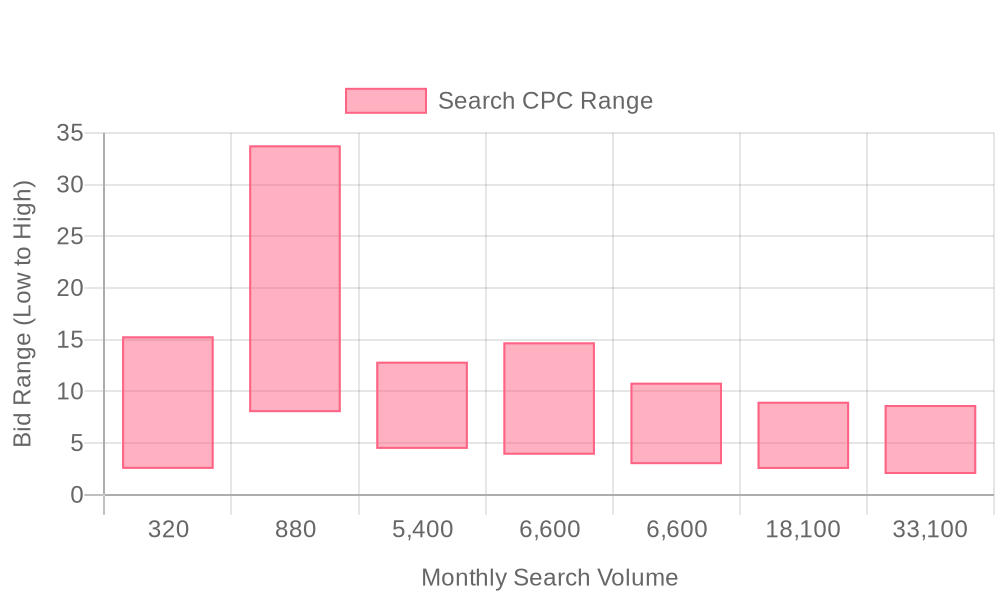
| Industry | Keyword | Monthly Search Volume | Competition Level | Low Bid | High Bid |
| Medical Records | athena emr system | 320 | LOW | 2.52 | 15.32 |
| Medical Records | free emr | 880 | MEDIUM | 8 | 33.78 |
| Medical Records | electronic health records | 5400 | LOW | 4.45 | 12.87 |
| Medical Records | electronic medical records | 6600 | LOW | 3.89 | 14.74 |
| Medical Records | epic emr system | 6600 | LOW | 2.97 | 10.84 |
| Medical Records | medical records | 18100 | LOW | 2.51 | 9 |
| Medical Records | emr system | 33100 | MEDIUM | 2.02 | 8.69 |
Precision in keyword strategy is essential for healthcare organizations aiming to capture qualified leads searching for Google Ads for Medical Records, healthcare digital marketing, and medical advertising compliance. Focusing on targeted search terms ensures marketing efforts attract decision-makers responsible for compliance, privacy, and records management, rather than wasting spend on low-intent queries. This approach prevents high-value prospect attrition and increases the relevance of every ad impression by surfacing website visitor identification and intent data.
The most effective campaigns leverage a blend of high-intent, compliance-driven, and service-specific keywords. For example, incorporating terms like "Google Ads healthcare providers," "Google Ads for doctors," "Google Ads targeting for medical services," and "medical practice advertising" addresses a spectrum of search behaviors, from executives seeking compliant ad solutions to practitioners exploring digital outreach. Marketers benefit from staying updated on Google Ads healthcare policy compliance to ensure campaigns remain effective and compliant as regulations evolve.
- Precision Targeting: Focus on keywords that attract hospital administrators, compliance officers, and IT leaders responsible for safeguarding patient information and evaluating advertising tools. Keyword variations such as "Google Ads regulations," "medical advertising compliance," and "HIPAA-compliant healthcare marketing strategies" ensure ads appear when stakeholders research compliant digital solutions. Leverage audience segmentation tools to dynamically align keyword targeting with evolving prospect profiles.
- Measurable ROI: Select conversion-focused terms such as "Google Ads campaign management," "healthcare digital marketing," and "track medical ads ROI" to align with buyers seeking transparent performance analytics. These keywords support advanced attribution models that follow leads from initial click through offline engagement, giving a clearer picture of true campaign value.
- Channel Synergy: Integrate retargeting keywords like "healthcare retargeting strategies," "medical records remarketing," or "cross-channel healthcare ads" to maintain engagement with high-intent visitors across platforms. Maximize reach by orchestrating coordinated messages throughout the buyer journey, and streamline audience data activation to ensure timely follow-up and continuous engagement with decision-makers.
As search intent fluctuates and regulatory requirements intensify, marketers benefit from platforms that identify website visitors beyond anonymous clicks and update audience segments in real time. When CRM and ad data are unified, high-value healthcare prospects can be nurtured with tailored messaging, while attribution models accurately reflect campaign impact from click to closure. To see how these strategies work in practice, get started for free with Sona.
Step-by-Step Campaign Execution Framework
Step 1: Build Targeted Keyword Lists
Effective Google Ads for Medical Records campaigns rely on precision in keyword targeting to attract relevant inquiries and avoid wasted spend. Start with research-driven core keywords, then layer on intent modifiers such as “HIPAA compliant,” “secure EMR,” or “medical records software” to reach buyers actively seeking solutions. Incorporate negative keywords to filter out irrelevant traffic, such as “free,” “template,” or “jobs,” ensuring the budget is focused only on high-value prospects. For a comprehensive overview of Google Ads healthcare advertising policies and compliance guidelines, refer to Google Ads healthcare compliance.
Marketers gain a real advantage by identifying not just anonymous clicks but the organizations and decision-makers behind each search. Using Sona's Identity Resolution, it becomes possible to prioritize spend on accounts with high intent, shifting resources dynamically as new buying signals emerge. This targeting approach helps medical records vendors consistently engage the right stakeholders at the right stage of the funnel.
The upgrade most medical records advertisers miss is going beyond raw keyword volume to layer in intent and identity signals. By connecting website-visitor data and CRM records with Sona Marketing Measurement, you can see which specific search terms bring in the accounts and customers that actually convert, and weight your keyword and bidding strategy toward those rather than the terms with the highest search volume alone.
Step 2: Craft Compelling Ad Copy
Ad copy is most effective when it directly addresses industry-specific pain points, like delays in patient data access, privacy concerns, or regulatory headaches. Use clear, concise language that highlights solutions such as “instant access to compliant records” or “trusted by healthcare providers nationwide.” Incorporate trust signals, including certifications, case studies, and HIPAA compliance, to assure cautious buyers in a heavily regulated field. Explore actionable copywriting strategies in our marketing playbooks.
Leverage real-time audience data to tailor messaging by segment and intent. As in-market prospects move closer to a decision, update ad language to reflect their journey: from awareness (“Discover secure EMR solutions”) to conversion (“Book a demo for HIPAA-compliant records management”). Continuous audience enrichment ensures ad relevance and maximizes engagement among diverse healthcare decision-makers.
Step 3: Design Landing Pages Aligned with Ad Groups
A cohesive user journey starts with landing pages that mirror ad group themes and speak directly to medical organizations’ concerns. Each landing page should feature a prominent, relevant call-to-action, such as scheduling a consultation or accessing a compliance checklist, and display visible trust badges, testimonials, and security credentials. Messaging should reflect the searcher’s original query, reinforcing relevance and building confidence. For a summary of Google’s policies for healthcare and medicine ads, see Google’s healthcare advertising policies.
Dynamic audience insights allow for tailored landing page experiences that match the visitor's stage in the buying cycle, job role, or organizational type. By integrating CRM and ad data, healthcare marketers can personalize content for returning visitors, accelerate pipeline velocity, and drive higher conversion rates. Every touchpoint is tracked and refined against measurable outcomes, not guesswork.
Step 4: Implement Data-Driven Optimizations
Continuous optimization is essential for high-performing Google Ads for Medical Records campaigns. Deploy structured A/B tests on ad copy, landing pages, and audience segments to surface the highest-converting combinations. Offline conversion tracking connects marketing activity to closed deals, measuring true ROI from initial click through to signed contract and patient onboarding. For more on HIPAA compliance and Google Ads, visit HIPAA compliance and Google Ads.
By syncing enriched leads and conversion data with Google Ads and CRM platforms using Sona destinations, revenue teams close attribution gaps and rapidly iterate on what works. Real-time feedback loops empower marketers to move budget toward campaigns driving qualified pipeline and away from underperforming segments. With granular attribution, every opportunity is fully realized and supported by actionable insights.
Sona Marketing Measurement closes the gap between clicks and revenue. It captures every ad click with first-party measurement, then ties that click through UTM capture and ad-platform APIs to the actual record in your CRM, and reports ROAS by keyword and campaign instead of by last-click form fill. Feeding that revenue signal back into Smart Bidding and Performance Max compounds over time: the algorithms optimize toward booked medical records revenue, not cheap leads.
Tips on Expanding Your Medical Records Presence
Healthcare organizations seeking to grow their presence in the medical records space benefit from a multi-layered approach that blends strategic campaign management with data-driven personalization. A unified view of engagement across touchpoints drives more informed decisions, allowing teams to allocate resources where they deliver the highest impact. To achieve this, leveraging dynamic audience segmentation can help marketers identify and target high-intent prospects, while staying informed with expert marketing analytics insights.
- Cross-promotion with educational content: Integrating educational resources into retargeting campaigns builds trust and keeps medical records solutions top of mind throughout a prospect’s journey. By analyzing real-time visitor behavior, marketers can identify which topics resonate most and serve tailored content that nurtures interest and advances buyers through the funnel. For healthcare marketers navigating HIPAA and ad policy requirements, resources such as this overview of Google Ads healthcare policy compliance can help ensure messaging aligns with industry standards.
- CRM data for upselling and personalization: Tapping into enriched CRM data enables teams to identify upselling opportunities within existing accounts and segment audiences for highly personalized outreach. Syncing CRM insights with campaign platforms ensures that high-value leads receive timely, context-aware follow-ups, improving the prioritization of outreach efforts. As audiences evolve, automated updates to targeting criteria, using tools like Sona Destinations, ensure that messaging stays relevant, increasing conversion potential while maintaining compliance with healthcare advertising regulations.
- Localized campaigns and healthcare partnerships: Localizing campaigns to target specific regions or practitioner types maximizes relevance and drives higher engagement rates for medical records solutions. Partnerships with reputable healthcare associations expand reach and reinforce credibility in a compliance-sensitive industry. These collaborations can unlock new distribution channels for content and joint marketing initiatives, supporting both brand authority and lead generation in key geographic markets.
Beyond Google Ads: Winning the AI Answers Medical Records Buyers Now Trust
Paid search captures demand at the moment someone types a query. But a fast-growing share of medical records buyers no longer start at Google at all, they ask ChatGPT, Gemini, or Perplexity before they ever run a search, and Google's own AI Overviews increasingly summarize an answer above the traditional results. If your business isn't referenced in those AI answers, you're invisible at the exact moment buyers build their shortlist.
Sona AI Visibility shows where your business shows up across ChatGPT, Gemini, Perplexity, Google AI Overviews, and 10+ engines, and, much like a keyword report, which prompts actually send you buyers, so you can prioritize the ones that convert. Run the two together and you cover the entire buyer path: get cited where buyers research (AI Visibility), then prove which of that demand turns into booked revenue (Marketing Measurement).
Helpful resources
Conclusion
Medical records advertising rewards precision: the right keyword in front of the right compliance officer or IT buyer, backed by messaging that treats HIPAA and security as the point, not a footnote. Search campaigns and Performance Max find that buyer; assets, tight landing pages, and audience segmentation keep the message relevant once they arrive.
The bigger shift is measurement. As more medical records buyers research through AI assistants before they ever type a query into Google, the campaigns that win will be the ones that can prove which keywords, which prompts, and which accounts actually turned into signed contracts, not just which ads got clicked. Build toward that closed loop now, and every dollar you spend gets smarter.
To further enhance your marketing capabilities and unify your go-to-market data, we invite you to start for free.
FAQ
How to run Google Ads for medical practices?
Running Google Ads for medical practices involves leveraging a data-driven strategy to target high-intent queries, ensuring compliance with industry regulations, and integrating campaign data with CRM systems for improved engagement and conversions.
What are the compliance requirements for Google Ads in healthcare?
Compliance requirements for Google Ads in healthcare include adhering to HIPAA regulations and Google Ads healthcare advertising policies, ensuring that all advertising activities protect patient information and meet legal standards.
What types of medical services can be advertised on Google Ads?
Medical services that can be advertised on Google Ads include search campaigns for high-intent queries, display ads for brand presence, video ads for illustrating services, and remarketing campaigns to re-engage visitors.
How to optimize Google Ads for healthcare campaigns?
Optimizing Google Ads for healthcare campaigns involves using targeted keyword lists, crafting compelling ad copy that addresses industry-specific concerns, designing aligned landing pages, and implementing continuous data-driven optimizations.
What are the best practices for Google Ads in the medical field?
Best practices for Google Ads in the medical field include precision targeting with relevant keywords, aligning ad and landing page messages, leveraging real-time audience data, integrating CRM with ad platforms, and ensuring compliance with healthcare advertising policies.







