


Medical gas suppliers win contracts through a mix of channels working together, not any single one. Social media builds awareness, email nurtures long procurement cycles, and SEO drives organic visibility, while trade shows, direct mail, and industry publications create the offline credibility hospital buyers expect. Google Ads sits in the middle of that mix, catching hospital procurement teams and facility managers at the exact moment they search for a new vendor, bridging the gap between early awareness and a signed contract.
How to Generate Medical Gas Supplier Leads with Google Ads: A Step-by-Step Guide

Medical gas suppliers operate in a specialized B2B market where lead quality directly impacts long-term revenue and contract stability. Generating qualified leads requires a strategy that balances compliance, technical specificity, and precision targeting to reach decision-makers in hospitals, clinics, and research institutions. For foundational strategies and best practices tailored to healthcare advertising, review this comprehensive guide to healthcare Google Ads, and explore our blog library for in-depth demand generation insights.
Successful Google Ads campaigns for medical gas suppliers must account for strict healthcare advertising regulations while leveraging data-driven tactics to engage high-intent procurement teams. By pairing Sona's Identity Resolution, which identifies the companies behind anonymous site visits, with intent data, suppliers can dynamically shift budget toward accounts showing real purchase signals, improving conversion rates and shortening sales cycles.
A unified data approach allows marketers to build granular audience segments based on industry, organization size, and historical engagement. Syncing CRM and ad platforms ensures that campaign audiences automatically update as leads progress through qualification stages, enabling personalized messaging and reducing wasted spend. This closed-loop process also supports advanced conversion tracking, linking digital interactions to offline sales and providing a true picture of ROI for complex, high-value contracts.
The following framework covers each step for launching and optimizing Google Ads campaigns for medical gas suppliers, from keyword development through compliance checks and ongoing performance analysis. To see how you can streamline campaign management and sharpen targeting at every stage, get started for free with Sona. Each stage relies on actionable data, cross-channel integration, and regulatory alignment to sustain lead generation in this tightly regulated sector.
Why Google Ads Matters for Medical Gas Suppliers

Medical gas suppliers operate in a tightly regulated, high-stakes environment where procurement cycles are long and buying committees are complex. Google Ads offers a direct channel to reach hospital buyers, facility managers, and clinical procurement specialists, ensuring suppliers appear at the exact moment these stakeholders research new vendors or prepare tenders. For an overview of key advertising restrictions that can impact your campaigns, see the most common Google Ads restrictions for pharma.
Compliance, safety, and reliability come first in this industry, so digital advertising has to do more than generate generic impressions. Sona surfaces intent signals and contextual targeting so medical gas suppliers can connect efficiently with decision-makers actively evaluating installation partners, equipment upgrades, or emergency response solutions, cutting wasted spend and speeding up qualified pipeline growth. To explore how you can reach the right buyers, get started for free with Sona.
Common Types of Google Ads Campaigns for Medical Gas Services

Medical gas suppliers benefit from a focused array of Google Ads campaign types designed to match the decision cycles and compliance standards of healthcare procurement. Each campaign format enables suppliers to reach distinct buyer personas, from hospital facility managers to clinical procurement teams, while supporting seamless compliance with healthcare advertising regulations. To further refine campaign strategies and stay current on digital marketing trends, explore our collection of articles on marketing and attribution best practices.
- Search Campaigns: These campaigns prioritize high-intent keywords such as "bulk medical oxygen supplier" or "medical gas pipeline installation." By segmenting search queries for technical buyers and facility administrators, suppliers can ensure their ads appear at critical moments in the procurement process. Integrating real-time audience insights allows search campaigns to dynamically shift budget toward accounts demonstrating real purchase intent, minimizing wasted spend and driving qualified leads.
- Display Campaigns: Display ads increase top-of-mind awareness among hospital procurement departments and large health systems. Placement on relevant medical and industrial sites, combined with compliance-focused creative that highlights certifications and safety records, reinforces supplier credibility. Dynamic audience syncing ensures display ads continue to reach contacts as they progress from initial research to RFP consideration, keeping the supplier visible throughout the lengthy sales cycle.
- Remarketing Campaigns: Remarketing keeps medical gas suppliers in front of procurement professionals who have visited key product or compliance pages but have not yet converted. By identifying anonymous visitors and attributing them to specific hospital networks or healthcare groups, marketers can personalize follow-up ad copy and adjust messaging based on previous engagement. For more tactics on optimizing retargeting efforts, review our intent-driven retargeting guide.
- Video Campaigns: Video ads provide a platform for educating healthcare buyers on complex medical gas delivery systems, highlighting technical differentiators, and reassuring audiences about compliance with standards like NFPA 99 and ISO 15001. Targeted video content can demonstrate reliability through virtual site tours or explain backup system protocols for emergency response teams. Advanced tracking and attribution links engagement back to CRM records, enabling follow-up with viewers who show high interest in specific solutions.
- Call-Only Campaigns: For urgent medical gas needs, particularly in emergency or outage scenarios, call-only campaigns allow procurement teams to connect directly with suppliers via prominent click-to-call buttons. These campaigns can be geo-targeted to hospital districts or regions experiencing supply disruptions, and integrated with real-time intent data to prioritize ad delivery to the most urgent buyers.
- Performance Max Campaigns: Performance Max leverages automation to serve ads across multiple Google channels, optimizing for conversion events like form submissions, technical document downloads, or inbound calls. By syncing CRM and ad platform data, suppliers can measure the true ROI of these campaigns, attributing both online and offline activity to closed deals and recurring contracts.
Combining these campaign types with modern data integration and real-time audience enrichment gives medical gas suppliers a cohesive digital marketing approach, one where every ad dollar targets the highest-opportunity accounts, supports strict compliance, and maximizes lead generation efficiency for complex B2B sales cycles.
Where to Find Growth Opportunities?

Growth in this market comes from targeting the right segments with precision: hospital networks, surgical centers, and research labs actively searching for compliant gas solutions. Marketers who track which companies and procurement teams are visiting key pages, not just how much traffic arrives, gain a much clearer read on real in-market interest.
Successful campaigns for medical gas suppliers start with high-value keyword research focused on commercial buying signals. Terms such as "bulk medical oxygen supplier," "emergency gas resupply," and "NFPA 99 compliant pipeline installation" attract procurement professionals ready to engage. Supplementing this with negative keyword lists prevents wasted budget on irrelevant searches like job postings or consumer-focused terms, ensuring spend is directed at true buyers. For additional insight, review this list of high-performing keywords for medical equipment.
Growth accelerates when suppliers move beyond static targeting and adopt dynamic audience segmentation. By tracking how healthcare organizations interact with technical documents and RFQ forms, teams can update remarketing audiences as leads progress through their decision cycle. Integration with real-time visitor identification enables the pinpointing of specific hospital systems, alerting sales to high-intent behaviors such as specification sheet downloads. This translates into prioritized outreach and tailored messaging, directly impacting conversion rates and contract velocity.
Synchronizing CRM and Google Ads data eliminates blind spots in the sales funnel. Offline activities, site visits, demos, compliance consultations, connect to digital touchpoints, giving a full view of each account's journey. This lets marketers spot gaps in the pipeline, find nurture opportunities, and direct spend toward segments most likely to convert, building a more resilient demand generation engine suited to the compliance standards of the medical gas sector.
How to Apply Audience Segmentation for Medical Gas Suppliers
Audience segmentation is essential for medical gas suppliers competing in a niche, highly regulated market. Reaching decision makers at hospitals, clinics, and research facilities requires a granular understanding of buying roles, procurement cycles, and clinical application needs. When segmentation is guided by real-time audience data, such as which organizations are downloading spec sheets or requesting compliance documentation, marketers can dynamically adjust spend and messaging to prioritize high-value accounts.
Advanced segmentation strategies begin by mapping target accounts into distinct cohorts: hospital procurement leads, biomedical engineers, clinical operations managers, and facilities teams. Each group has unique decision drivers, from compliance and uptime guarantees to technical installation requirements. By integrating visitor identification technology, marketers can pinpoint which organizations visit key landing pages or interact with product selectors, going beyond anonymous traffic to identify specific companies evaluating solutions. For insight on medical gas systems and their applications in healthcare environments, see this introduction to medical gas systems.
Segmented campaigns benefit from synchronized CRM and ad platform workflows. When a lead downloads a pipeline compliance whitepaper or books a demo, enriched profile data can sync with Sona Destinations, triggering tailored retargeting and lookalike campaigns. This keeps budget concentrated on accounts showing active intent, driving higher conversion rates and more efficient spend. For medical gas suppliers, segmenting by organization type, geography, and real-time engagement data consistently delivers a stronger pipeline and measurable lift in sales-qualified opportunities.
This is also where measurement changes the economics. With Sona Marketing Measurement you can identify the companies behind your ad clicks, not just anonymous sessions, and segment audiences by which accounts actually become customers. That lets you build bid adjustments and audience signals around the segments that convert and de-prioritize the ones that don't, so you feed Google's algorithms "this click became a paying medical gas suppliers customer" instead of just "someone filled out a form."
Keyword Strategy & Sample Target Terms
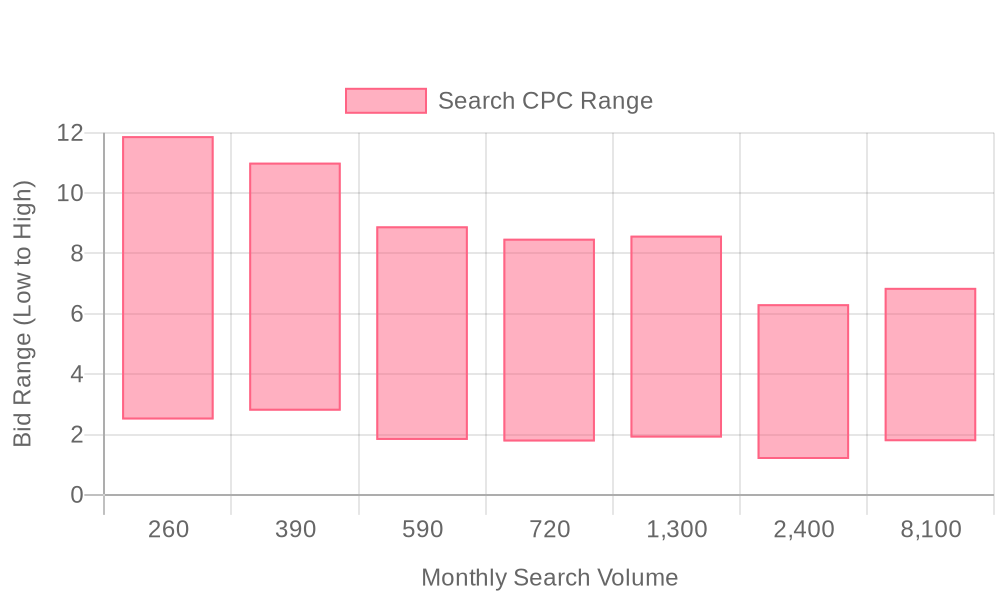
| Industry | Keyword | Monthly Search Volume | Competition Level | Low Bid | High Bid |
| Medical Gas Suppliers | medical gas suppliers near me | 260 | LOW | 2.5 | 11.89 |
| Medical Gas Suppliers | medical gas suppliers | 390 | LOW | 2.79 | 11.01 |
| Medical Gas Suppliers | oxygen suppliers for home use | 590 | HIGH | 1.82 | 8.9 |
| Medical Gas Suppliers | medical oxygen suppliers | 720 | HIGH | 1.77 | 8.49 |
| Medical Gas Suppliers | medical oxygen supply near me | 1300 | HIGH | 1.9 | 8.59 |
| Medical Gas Suppliers | oxygen suppliers | 2400 | HIGH | 1.19 | 6.32 |
| Medical Gas Suppliers | oxygen suppliers near me | 8100 | HIGH | 1.78 | 6.86 |
Effective keyword architecture is the backbone of any high-performing Google Ads program for medical gas suppliers. Medical gas buyers use highly specific and commercially driven queries, often tied to technical requirements, compliance standards, and urgent healthcare needs. Winning strategies focus on intent-rich, industry-specific search terms and build negative lists that filter out irrelevant or non-commercial traffic. For a comprehensive list of high-performing terms, reference this medical equipment keywords list to inform your campaigns, and explore the Sona blog for additional keyword targeting strategies.
- Commercial intent keywords: Target terms like “bulk medical oxygen supplier,” “medical gas pipeline installation,” and “medical gas delivery for hospitals” to reach procurement teams and facilities managers who are actively sourcing new vendors or contracts. These high-converting keywords typically reflect urgent demand and larger contract values.
- Technical specification keywords: Include phrases such as “NFPA 99 compliant gas systems,” “ISO 15001 certified medical gas,” and “anesthetic gas blenders” to attract clinical and engineering staff evaluating system upgrades or ensuring regulatory compliance.
- Emergency services and reliability: Capture urgent procurement and maintenance opportunities with keywords like “emergency oxygen supply hospital,” “24/7 medical gas resupply,” and “medical gas system backup.” These reflect time-sensitive needs often triggered by facility incidents or compliance audits.
- Industry vertical modifiers: Integrate modifiers such as “hospital,” “surgery center,” “dental practice,” and “veterinary clinic” to tailor campaigns for different healthcare segments, improving ad relevance and conversion rates.
Refining keyword lists with negative terms is critical for budget efficiency. Exclude searches related to job seeking (“medical gas technician jobs”), academic use (“properties of medical oxygen”), and home consumer applications (“portable oxygen for home”). This ensures spend is focused on high-value B2B buyers rather than unrelated audiences.
With advanced platforms, marketers can use real visitor identification to observe which keywords drive engagement from hospital procurement teams or clinical engineers. By linking anonymous site visits to real accounts and layering real-time audience intent data, teams can dynamically adjust keyword bids to prioritize prospects showing immediate buying signals. As buyers engage with technical resources, dynamic audiences update in real time, allowing medical gas suppliers to retarget decision-makers with relevant ad copy and offers, while syncing these enriched segments directly into CRM and Google Ads workflows for seamless sales follow-up. This precision targeting not only elevates ROI but also reduces wasted spend by ensuring only qualified, in-market healthcare buyers see your campaigns. To experience this workflow, get started for free with Sona.
Step-by-Step Campaign Execution Framework
Launching a high-performing Google Ads program for medical gas suppliers requires a methodical approach that addresses both industry compliance and precision targeting. Each step in the execution framework is tailored to maximize reach among healthcare procurement teams, ensure regulatory adherence, and drive measurable ROI across complex sales cycles. For more strategies on driving demand and optimizing campaigns, explore our marketing best practices.
Step 1: Build Targeted Keyword Lists
Effective campaigns begin by constructing keyword lists that reflect both the technical specificity and commercial intent unique to medical gas buyers. Focus on terms such as "bulk medical oxygen supply," "medical gas pipeline installation," and "NFPA 99 compliant gas systems," while excluding unrelated queries through negative keywords like “home oxygen concentrator” or “gas technician jobs.” By regularly analyzing search term reports and layering in new industry phrases, marketers stay ahead of shifting demand and keep ad spend tightly aligned with high-value prospects. For inspiration, review this list of high-performing keywords for medical equipment.
Leveraging visitor identification allows marketers to correlate inbound searches with actual healthcare organizations and procurement contacts. As a result, keyword prioritization becomes far more data-driven, ensuring that ad groups are refined around the search behaviors of decision-makers most likely to convert.
Most medical gas suppliers advertisers stop at keyword volume. The bigger gain comes from layering in intent and identity signals: connecting website-visitor data and CRM records through Sona Marketing Measurement shows which search terms bring in accounts that actually convert, so you can weight keyword and bidding strategy toward those terms rather than the highest-volume ones alone.
Step 2: Segment and Layer Audiences
Precision audience segmentation is critical in medical gas advertising, where buyer roles and intent vary by facility type and procurement cycle. Create layered audiences using parameters such as hospital size, geographic region, and job function, procurement, facilities management, and clinical engineering. Pairing these segments with behavioral indicators (e.g., recent RFQ activity, technical document downloads) improves ad relevance and increases conversion probability. For more on dynamic segmentation, see how real-time audience creation can empower your targeting.
Dynamic audience updates based on engagement data mean that as leads progress from research to purchase intent, they automatically receive tailored messaging. Integrating CRM data with Google Ads ensures that high-value targets receive timely follow-up ads, while stagnant accounts are reallocated budget elsewhere. To deepen your segmentation strategy, discover buying stage segmentation advantages.
Step 3: Develop Compliant Ad Copy and Assets
Crafting ad copy for medical gas suppliers demands a balance of technical detail, compliance, and buyer reassurance. Reference credentials such as FDA or ISO certifications, highlight emergency delivery capabilities, and use structured snippets to showcase service lines like pipeline installation or compliance audits. Use callout and location assets to reinforce trust and guide buyers to regional distribution centers. Get insights into common Google Ads restrictions for pharma that may also impact medical gas campaigns.
Continuous monitoring of healthcare advertising policies and content approval workflows reduces disapproval rates and protects campaign integrity. Landing page messaging should mirror ad claims and be validated for compliance, with technical resources gated behind verification flows to ensure access by qualified professionals. For more on advertising guidelines, review the official Google Ads policy.
Step 4: Set Up Conversion Tracking and Attribution
Robust conversion tracking is essential for accurately measuring funnel performance in the medical gas sector, where sales cycles frequently span months and involve multiple stakeholders. Implement tracking for both immediate actions, such as RFQ submissions and callback requests, and longer-term touchpoints like technical document downloads or demo bookings. Learn how to track conversions and attribution effectively across your campaigns.
Synchronizing Google Ads conversion data with CRM platforms enables full-funnel attribution, connecting online engagement to offline sales outcomes. This unified view empowers marketers to identify which campaigns and keywords drive the largest contracts and highest-value accounts, refining budget allocation for maximum impact. Accelerate your data-driven approach by connecting ad conversion data directly to your CRM and reporting systems.
Sona Marketing Measurement closes the gap between clicks and revenue. It captures ad clicks with first-party measurement, ties each click through UTM capture and ad-platform APIs to the matching record in your CRM, and reports ROAS by keyword and campaign instead of by last-click form fill. Feeding that revenue signal back into Smart Bidding and Performance Max compounds over time: the algorithms optimize toward booked medical gas suppliers revenue, not cheap leads.
Step 5: Launch, Monitor, and Optimize
After launching campaigns, continuous monitoring ensures timely adjustments based on real-time performance. Track key metrics such as cost per qualified lead, conversion rate by keyword, and engagement by audience segment. Automated alerting can signal when specific facilities or regions show surges in demand, allowing for rapid budget reallocation to capitalize on urgent needs. For a comprehensive guide, review PPC optimization strategies for healthcare sectors.
Using real-time intent signals and visitor identification, marketers can immediately recognize high-value hospital networks engaging with ads or landing pages. This proactive approach accelerates sales outreach and improves close rates, as sales teams receive prioritized alerts tied directly to high-intent activity.
Step 6: Integrate with Content and Sales Workflows
For sustained growth, align Google Ads efforts with broader marketing and sales programs. Use insights from paid campaigns to inform content creation, developing case studies, compliance guides, and technical webinars that address common buyer concerns. Integrate lead data with sales automation tools, ensuring that every high-intent interaction triggers a tailored nurture sequence or sales callback, driving seamless progression from first click to contract.
This closed-loop approach bridges digital and offline engagement, letting medical gas suppliers build authority, capture demand at every stage, and demonstrate clear ROI to executive stakeholders. For additional best practices in optimizing healthcare PPC, review ppc for medical suppliers strategies.
Tips on Expanding Your Medical Gas Supplier Presence

Expanding your reach as a medical gas supplier requires precision across every digital touchpoint. Focused strategies in Google Ads can boost visibility to procurement professionals, hospital administrators, and specialized clinic buyers who drive meaningful conversions. For actionable insights on optimizing PPC campaigns in healthcare, explore this comprehensive guide to healthcare PPC advertising and stay updated on the latest marketing best practices.
- Invest in Targeted Keyword Research: Build keyword lists that match industry-specific search behavior. Prioritize terms such as "bulk medical oxygen delivery," "medical gas system installation," and "NFPA 99 compliant gas supplier" to attract high-value leads. Use this medical equipment keywords list to find top-performing terms, and Sona's Audiences tool to sharpen campaign precision.
- Leverage Geo-Targeting for Localized Demand: Medical gas contracts are frequently awarded to suppliers with distribution hubs near healthcare facilities. Use advanced geographic targeting to focus campaigns within key hospital and research center regions. Implement real-time audience segmentation to ensure your ads reach decision makers as their procurement cycles evolve.
- Highlight Compliance and Certifications in Messaging: Trust is paramount in medical gas procurement. Feature FDA, ISO, and NFPA certifications prominently in ad copy and extensions. Structured snippets and callouts can spotlight emergency delivery capabilities and third-party inspection documentation, reinforcing your reliability to risk-averse buyers. For more on compliance in healthcare marketing, see Google Ads policy guidelines.
- Integrate Visitor Identification and CRM Data: Move beyond anonymous traffic by identifying companies visiting your site. Sync enriched audience segments to Google Ads for retargeting, ensuring follow-up with hospital procurement teams and facility managers who show intent. This approach increases conversion rates by connecting high-value leads to tailored content and sales outreach.
- Optimize for Both Online and Offline Conversions: Track every touchpoint, from RFQ forms to sales calls and in-person site assessments. Use advanced attribution models to measure the true impact of each campaign and guide budget reallocations to the highest-performing audience segments. Real-time intent signals, such as specification sheet downloads, can trigger immediate engagement from your sales team, accelerating deal cycles.
- Expand Content and Educational Outreach: Build a library of technical resources, case studies, and compliance guides. Use these assets as landing page content to capture leads and nurture them through the long medical procurement cycle. For inspiration, review this case study on large-scale Google Ads campaigns for medical suppliers and access additional demand generation playbooks.
- Monitor Regulatory Shifts and Policy Updates: Stay ahead of evolving healthcare advertising regulations. Regularly review Google Ads policy updates and adjust campaigns to comply with new requirements, such as prescription gas restrictions or geographic limitations. Proactive compliance reduces the risk of ad disapprovals and protects your reputation among healthcare buyers.
A data-driven approach, unifying visitor data, intent signals, and CRM insights, lets medical gas suppliers capture market share, streamline demand generation, and deliver measurable ROI in a highly regulated environment.
Beyond Google Ads: Winning the AI Answers Medical Gas Suppliers Buyers Now Trust
Paid search captures demand at the moment someone types a query. But a fast-growing share of medical gas suppliers buyers no longer start at Google at all, they ask ChatGPT, Gemini, or Perplexity before they ever run a search, and Google's own AI Overviews increasingly summarize an answer above the traditional results. If your business isn't referenced in those AI answers, you're invisible at the exact moment buyers build their shortlist.
Sona AI Visibility shows where your business shows up across ChatGPT, Gemini, Perplexity, Google AI Overviews, and 10+ engines, and, much like a keyword report, which prompts actually send you buyers, so you can prioritize the ones that convert. Run the two together and you cover the entire buyer path: get cited where buyers research (AI Visibility), then prove which of that demand turns into booked revenue (Marketing Measurement).
Helpful resources
Conclusion
Google Ads works for medical gas suppliers when the targeting matches how hospital procurement actually happens: long cycles, multiple stakeholders, and searches driven by compliance and urgency rather than casual browsing. Tailoring keyword strategy, ad copy, and audience segmentation to that reality is what turns clicks into signed contracts.
The suppliers who pull ahead next will be the ones who pair paid search with visibility into AI-driven research, buyers increasingly ask ChatGPT or Gemini before they ever type a query into Google, and who tie every click back to which accounts actually signed contracts, not just which forms got filled out.
FAQ
What are the best practices for Google Ads targeting medical gas suppliers?
Best practices include leveraging precise keyword targeting, utilizing audience segmentation, ensuring compliance with healthcare regulations, and integrating CRM data for dynamic retargeting.
How can medical gas suppliers optimize their Google Ads campaigns?
Suppliers can optimize campaigns by using data-driven tactics, real-time intent signals, audience segmentation, and syncing CRM data with ad platforms to enhance targeting and personalization.
What restrictions apply to advertising medical gases on Google?
Advertising medical gases involves adhering to strict healthcare advertising regulations and Google Ads policies, which can include restrictions related to compliance, safety, and prescription gas advertising.
What keywords should medical gas suppliers use in their Google Ads?
Keywords should focus on commercial intent and technical specifications, such as 'bulk medical oxygen supplier,' 'NFPA 99 compliant gas systems,' and emphasize urgency and compliance.
How do I create effective Google Ads for the healthcare industry?
Effective ads should balance technical detail, compliance, and buyer reassurance, highlighting certifications and emergency capabilities, while using structured snippets and audience insights.







